
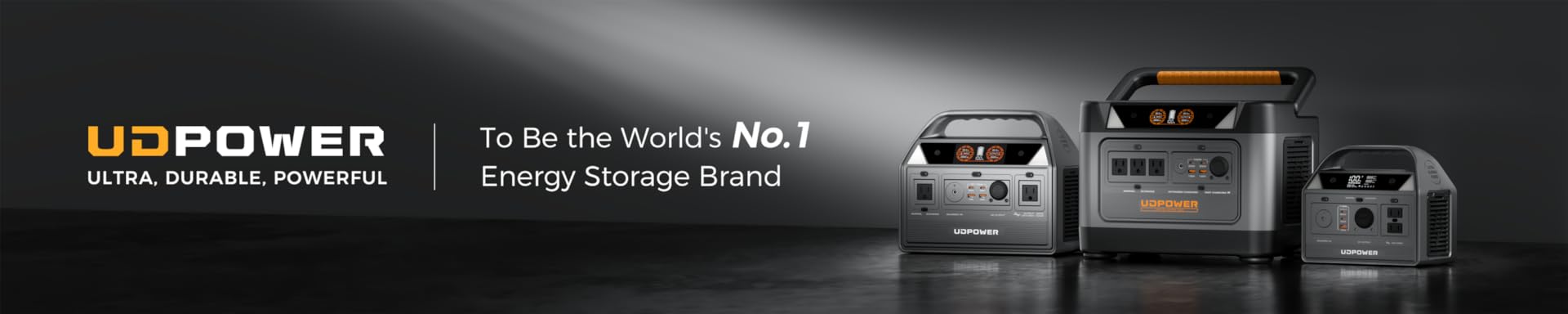
What is a Portable Power Station? A Beginner's Guide
ZacharyWilliamA portable power station is basically a “battery + outlets” box you can use anywhere—camping, road trips, work sites, or power outages. This guide explains what it is, what it isn’t, and how to pick the right size without getting lost in specs.

Quick start: the 30-second definition
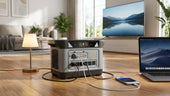
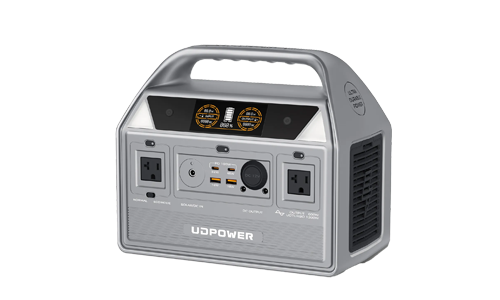
A portable power station stores energy in a rechargeable battery (measured in watt-hours, Wh) and delivers it through common outputs like AC outlets, USB ports, and sometimes DC car ports. Unlike a gas generator, it’s quiet, has no fumes, and can be used indoors. Unlike a small phone power bank, it can run larger devices through AC outlets and recharge in multiple ways (wall, car, solar).
If you’re shopping right now, keep this in mind: you’re choosing both how much you can run (watts) and how long you can run it (watt-hours). UDPOWER’s runtime calculator makes this easy: Portable Power Station Runtime Calculator.

What a portable power station is (and isn’t)
It is
- A rechargeable battery you can move around.
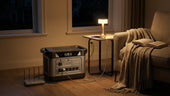
- A clean way to power essentials indoors (Wi-Fi, lights, phones, laptops).
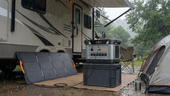
- A flexible travel/camping power source that doesn’t need gasoline.
- A “battery buffer” you can recharge from the wall, car, solar, or even a generator.
It isn’t
- A whole-house replacement for a generator (most people underestimate heater/AC loads).
- Unlimited runtime—when the battery is empty, you must recharge it.
- Waterproof (most units should be kept dry and ventilated).
- Automatically “plug-and-forget” for every setup—some devices need surge headroom.

Consumer Reports puts it simply: portable power stations are cleaner/safer to use than conventional generators, but they still have real limitations (power output and charging time being the big ones). If you want a deeper comparison for outages, see: Portable Power Station vs Generator for Power Outages and Consumer Reports: Things to Know.
Power bank vs power station vs generator vs UPS

| Tool | Best for | Where it struggles | Beginner tip | Learn more |
|---|---|---|---|---|
| Phone power bank | Phones/tablets on USB | No AC outlets; limited energy | Great for pockets, not for home essentials | Wh basics |
| Portable power station | Indoor essentials + light appliances + travel power | High-watt loads drain fast; recharge takes time | Choose by W (can it run it?) + Wh (how long?) | Runtime calculator · Outage planning |
| Gas generator | Big loads, long outages (with fuel) | Noise, fumes (outdoor only), fuel storage | Hybrid setups are underrated: generator for short recharge blocks + battery indoors at night | UDPOWER comparison · CR generator buying guide |
| Dedicated UPS | Short power blips for PCs/network gear | Limited runtime for multi-hour outages | If outages last hours, you’ll care more about Wh than UPS watt rating | Power station vs UPS |
How it works
Think of a portable power station as four parts working together:
- Battery stores energy (Wh). Many modern units use LiFePO4 (LFP) chemistry for long life.
- Inverter turns battery power into household-style AC power (your “wall outlet” power). “Pure sine wave” is the friendliest for sensitive electronics.
- Charge controller manages how the battery recharges (from the wall, car, or solar). Solar charging depends on input limits.
- BMS safety system monitors temperature, current, and voltage to protect the battery and your devices.

If you want the practical safety basics (ventilation, moisture, correct chargers/cables), UDPOWER’s safety guide is written for normal people: Power Station Safety Guide. For how safety standards are commonly used in portable power testing: UL: Portable Power Pack Testing (UL 2743).
The 6 specs beginners should understand
| Spec | What it means | How to use it | Common beginner mistake |
|---|---|---|---|
| Capacity (Wh) | Your “fuel tank.” Bigger Wh = longer runtime. | Estimate runtime: Wh ÷ device watts (then plan a buffer). | Assuming Wh equals exact usable time on AC (it’s usually less). |
| Output (W) | How much power it can deliver continuously. | If your device needs more watts than the station can output, it won’t run. | Buying huge Wh but too-low W for the appliance you care about. |
| Surge / peak | Extra burst power for startup (motors/compressors). | Important for fridges, pumps, some tools. | Only checking “running watts” and ignoring startup spikes. |
| Solar input range (V/A) | The safe window your solar setup must stay within. | Match panel voltage to your model’s limits. Treat it as a hard rule. | Worrying only about panel watts and accidentally exceeding voltage. |
| Ports | AC outlets + USB + DC outputs determine what you can plug in. | Match ports to your devices so you don’t live in “adapter soup.” | Buying first, then realizing you don’t have the ports you need. |
| Battery chemistry + cycle life | How long it lasts over years of use. | LiFePO4 is popular for longevity and stability in portable power. | Ignoring long-term durability when the goal is emergency readiness. |
If you want a friendly “Wh → runtime” walkthrough (with simple formulas): How to Calculate Watt-Hours (Wh) and a one-page conversion toolbox: Battery Unit Conversion Tools.
How charging works: wall, car, solar, generator
Most beginners don’t get disappointed by the power station itself—they get disappointed by recharge reality. Here’s how to think about it:
- Wall charging is the fastest and most predictable.
- Car charging is convenient, usually slower.
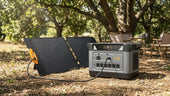
- Solar charging is amazing in good sun and inconsistent in poor conditions.
- Generator charging can be a smart hybrid strategy (generator outside for short recharge windows; battery indoors for quiet hours).

| Charging method | What you need | Why beginners like it | What to watch out for | Helpful link |
|---|---|---|---|---|
| Wall (AC outlet) | Included AC adapter / built-in charger | Fast, simple, predictable | Ventilation matters during fast charging | Safety basics |
| Car (12V) | Car charging cable | Great for road trips, quick top-ups | Usually slower than people expect | Plan runtime |
| Solar | Portable panel + correct connector | Off-grid capable, fuel-free | Voltage limits + weather variability | Voltage safety guide |
| Generator (hybrid) | Generator + station AC charger | Multi-day resilience without constant noise | Generator must stay outdoors; follow safety rules | When hybrid makes sense |
For a realistic “multi-day outage” strategy that blends daytime solar with nighttime battery use: Solar Recharging During a Power Outage. If you want to estimate sun potential by location: NREL PVWatts.
Solar input limits: the #1 beginner mistake
Solar setups fail in a weird way: your panel “watts” might look reasonable, but your voltage can still exceed your power station’s input limit. That’s why input range matters more than marketing wattage.
| UDPOWER model | Solar input range | Max solar input (as listed) | Planning takeaway | Source |
|---|---|---|---|---|
| C200 | 11V–28V | 150W max | Great for compact panels; keep wiring simple | C200 product page |
| C400 | 11V–28V | 150W max | Compact solar + emergency jump starter use | C400 product page |
| C600 | 11V–28V | Up to ≈240W (listed on page guidance) | More panel headroom for weekend trips and outages | C600 product page |
| S1200 | 12V–75V (12A) | 400W max | Wider voltage range; still treat max voltage as a hard limit | S1200 product page |
| S2400 | 12V–50V (10A) | Up to 400W solar charging | Stricter voltage ceiling; double-check panel Voc before connecting | S2400 product page |
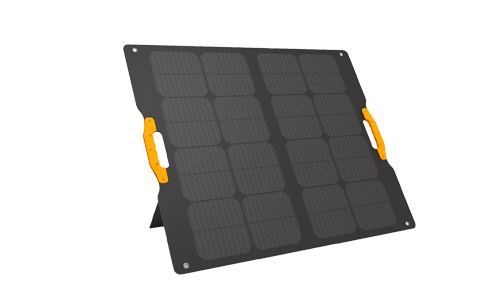
Want TÜV-certified portable panels designed for UDPOWER units? UDPOWER 120W Portable Solar Panel and UDPOWER 210W Portable Foldable Solar Panel.
What can it run? Realistic examples (without fantasy promises)
Portable power stations shine when you’re powering low-to-medium watt essentials for a long time. They struggle when you try to power heat or other heavy loads continuously.
Great matches
- Wi-Fi router + modem/ONT
- Phones, tablets, laptops
- LED lights
- CPAP (especially with an efficient setup)
- Small fans
Usually a bad match
- Space heaters, hair dryers, kettles
- Large microwaves / toaster ovens (long runs)
- Central AC / electric dryer
- Anything that needs 240V (most portable stations are 120V output)
A starter wattage table (with sources)
These are “planning numbers,” not promises. Your best number is always the device label or a watt meter. For how to estimate from labels: Energy.gov: Estimating Energy Use.
| Device | Typical power draw | Surge? | Quick note | Source |
|---|---|---|---|---|
| Wi-Fi router | ~5–20W | No | Perfect “always-on” load for outages | EnergySage router watts |
| Modem / ONT / gateway | ~5–15W (gateways often under ~20W) | No | Use the power brick label or measure for certainty | UDPOWER modem watt guide |
| LED TV (50"–60" 4K UHD) | ~120W average (0.12 kWh per hour) | Low | Brightness changes watts more than most people expect | Silicon Valley Power chart |
| LED light (60W equivalent bulb) | ~15W | No | Lighting is where batteries feel “huge” | Silicon Valley Power chart |
| Streaming stick / Roku (average) | ~3W average (from annual kWh) | No | Small load; don’t forget the TV is the main draw | Silicon Valley Power chart |
| Refrigerator (nameplate) | Often listed ~300–800W (but cycles on/off) | Yes (compressor start) | Actual running draw is usually much lower than “nameplate” because it cycles | EnergySage refrigerator watts |
If your priority is internet uptime, start here: Keep Wi-Fi Running During a Power Outage. For fridge strategy (it’s about temperature protection, not “run 24/7”): Best Refrigerator Power Backup Options. For CPAP users: CPAP Battery Backup for Power Outages.
How to choose the right size (step-by-step)
- Make a “must-run” list (Wi-Fi, phones, lights, medical).
- Write down watts from labels or a watt meter.
- Pick your target runtime (hours you want those essentials running).
- Check surge for anything with a compressor/motor (fridge, pump).
- Decide your recharge plan (wall only vs solar vs hybrid).
UDPOWER beginner-friendly model picks
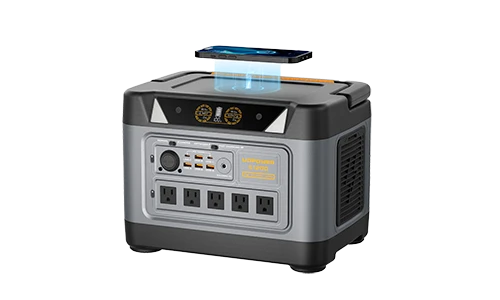
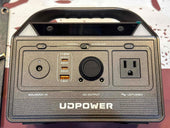
Below is a quick model snapshot so you can match your plan to the right “size class.” All specs are linked to the official UDPOWER pages.
| Model | Picture | Capacity | Output / surge | Fast charging | Weight (approx.) | Solar input (as listed) | Best for | Source |
|---|---|---|---|---|---|---|---|---|
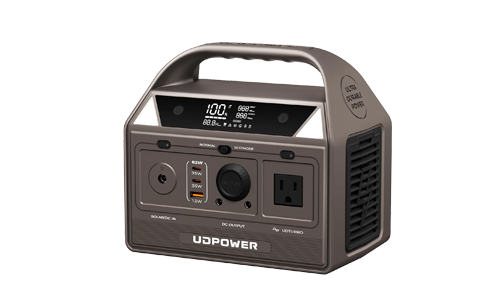
| C200 |  |
192Wh | 200W / surge up to 400W | 2.5H | 5.40 lbs | 11V–28V, 150W max | Phones/laptops, router backup, day trips, light essentials | C200 product page |
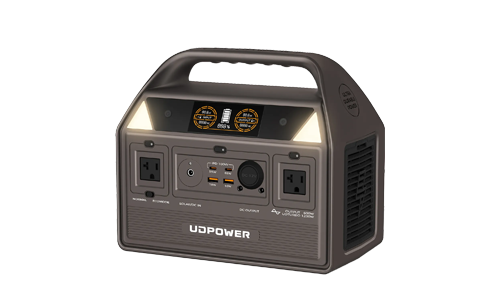
| C400 |  |
256Wh | 400W / surge 800W | 1.5H | ~6.88 lbs | 11V–28V, 150W max | Compact outage kit + car emergency (jump starter) | C400 product page |
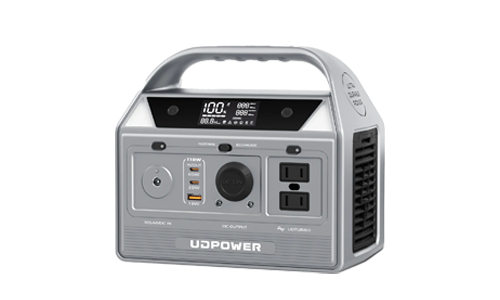
| C600 |  |
596Wh | 600W / peak 1200W | See page | ~12.3 lbs | 11V–28V, up to ≈240W (page guidance) | Weekend trips, longer essentials runtime, multi-device charging | C600 product page |
| S1200 |  |
1,190Wh | 1,200W / surge 1,800W | 1.5H | ~25.8 lbs | 12V–75V, 12A, 400W max | Serious outage essentials (Wi-Fi, fridge strategy, medical, lights) | S1200 product page |
| S2400 |  |
2,083Wh | 2,400W / surge support up to 3,000W | 1.5H | ~40.8 lbs | 12–50V, 10A max, up to 400W (DC7909) | Higher-watt appliances in short windows + longer multi-device runtime | S2400 product page |
Looking for bundles with solar? UDPOWER lists solar panel compatibility and bundle options on product pages. Popular starter panels: UDPOWER 120W panel and UDPOWER 210W portable foldable panel.
The 15-minute test that prevents buyer’s remorse
Do this once and you’ll know immediately if you bought the right size. It also makes power outages feel boring (which is the goal).
- Charge the station to full.
- Plug in your “must-run chain” (modem/ONT + router, plus a lamp and phone charging).
- Check the watt display and write down the total.
- If you bought it for a fridge: plug the fridge in and watch for any overload during compressor startup.
- Unplug wall power for 30 seconds if you plan to use UPS-style backup for internet.
If anything fails, it’s usually one of two things: (1) the station’s output/surge is too small for the device, or (2) your plan includes high-watt loads that are better served by a generator (or a hybrid setup).
For a quick “internet stays up” drill with step-by-step guidance: Keep Wi-Fi Running During a Power Outage.
FAQ (beginner-focused)
1) What’s the difference between watts (W) and watt-hours (Wh)?
Watts are “how hard it pulls right now.” Watt-hours are “how long you can keep pulling before the battery is empty.” If you remember only one thing: W decides whether it can run the device; Wh decides how long.
2) Can I use a portable power station indoors?
Yes—this is one of the main reasons people buy them. They’re quiet and don’t produce fumes like gas generators. Keep it dry and make sure vents aren’t blocked.
3) Why does runtime look shorter than the battery’s Wh rating?
Real-world use includes conversion losses and overhead. Plan with a buffer instead of expecting perfect math. UDPOWER’s runtime planning guide is built around realistic expectations: Runtime Planning for Outages.
4) What appliances are the hardest for a power station?
Anything that makes heat (space heaters, kettles, hair dryers) or runs a compressor/motor continuously. Those loads either drain batteries very fast or require more surge headroom.
5) Can a portable power station run a refrigerator?
Often yes, but you must account for compressor startup surge and the fact that fridges cycle on and off. Most outage wins come from “fridge cycle strategy” (protecting temperature) instead of trying to power it nonstop. Start here: Refrigerator Power Backup Options.
6) How do I know if solar will work for me?
Solar can extend runtime dramatically, but output depends on sun conditions and your panel setup. Use a realistic solar plan (and keep voltage safe): Solar Recharging During a Power Outage. For location-based estimates: PVWatts.
7) What’s the #1 solar charging mistake?
Exceeding your model’s solar input voltage limit (often by wiring panels in series without checking voltage). Treat input voltage range as a hard rule: Solar input voltage safety guide.
8) Do I need “pure sine wave” output?
For most modern electronics, pure sine wave is the safer, more compatible option—especially for sensitive devices and certain motor loads. UDPOWER models listed above use pure sine wave output (see each product page).
9) Can I use a portable power station as a UPS?
Some models support UPS-style backup for essentials, but a dedicated UPS can be better for ultra-short blips. If you’re deciding between them: Portable Power Station vs UPS.
10) What’s a good first setup for outages?
Start with “keep life functional” essentials: internet chain (modem + router), phone charging, and 1–2 LED lamps. Then decide whether you want to add fridge support. For a ready-to-use checklist: Power Outage Checklist (24/48/72 Hours).
11) Which UDPOWER model is the easiest beginner pick?
For lightweight “stay connected” needs, C200 or C400 are common entry points. For longer outage essentials, S1200 is a strong step up. If you need higher-watt appliances in short windows, S2400 adds major output headroom. Compare quickly here: C-Series · Portable Power Stations.
12) What should I do the day it arrives?
Run the 15-minute drill (Wi-Fi + light + phone charging, plus fridge startup test if relevant). That single test tells you more than hours of spec reading.












![How to Live In The Woods [Complete Guide]](http://udpwr.com/cdn/shop/articles/Off-Grid_Cabin_Option_f6c94fe7-1ae7-4c3a-baf5-ed9fe684c832.png?v=1763523215&width=170)





2 comments
Well…a power station of 4,000kWh will power your:
- 3.5ton AC unit for 1hr pure running time (the actual usage time depends on your duty cycle dictated by how your house is insulated, how hot the weather is and what temperature you set)
- Your fridge for 40hrs pure time
- Your furnace blower for 6hrs pure time (see about A/C)
- Electric heater – yes it will, but again, if it is baseboard in the whole house, this will be 30 minutes pure time. A spaceheater of 1.5kW – about 3 hrs. Again, see above about the A/C.
Whe using these appliances with the station, set the temperature to minimally acceptable. It is a survival mode, not usual life.
Can indoor powerstation run a electric heater ?