How Long Does a 1000W Power Station Last?
A 1000W power station can last from less than an hour to more than a full day, depending on battery capacity, device wattage, inverter efficiency, and how the appliance runs. This guide explains the difference between watts and watt-hours, shows practical runtime charts, compares common devices like CPAP machines, refrigerators, routers, laptops, TVs, and microwaves, and helps readers choose between UDPOWER C600, S1200, and S2400 based on real backup power needs.
Portable Power Runtime Guide
Last updated:
Fast Answer
A 1000W power station can last from less than 1 hour to more than a full day. The “1000W” rating tells you what it can power, not how long it will run. Runtime depends mainly on battery capacity in watt-hours, your device wattage, inverter efficiency, and whether the device runs continuously or cycles on and off.
If a power station has around 1000Wh of battery capacity, a realistic planning estimate is about 0.85 hours at 1000W, 1.7 hours at 500W, 8.5 hours at 100W, or 28 hours at 30W. For the UDPOWER S1200, which has a larger 1,190Wh battery and 1,200W AC output, a practical 90% efficiency estimate gives about 1.1 hours at 1000W, 2.1 hours at 500W, 10.7 hours at 100W, or 35.7 hours at 30W.
1000W = output power Wh = runtime fuel tank High heat drains fast Fridges cycle on/off

What 1000W Actually Means
A 1000W power station is not the same thing as a 1000Wh power station. That one letter changes the entire buying decision.
| Term | Plain-English Meaning | Why It Matters | Example |
|---|---|---|---|
| Watts (W) | How much power your device needs at a moment in time | Decides whether the power station can run the device | A microwave may need 900W–1200W while heating |
| Watt-hours (Wh) | How much energy is stored in the battery | Decides how long the device can run | A 1000Wh battery has roughly twice the energy of a 500Wh battery |
| Surge watts | A short burst of extra power for startup | Important for fridges, pumps, compressors, and some tools | A fridge may start harder than it runs |
| Usable energy | The battery energy left after conversion loss and operating overhead | Makes runtime estimates more realistic | UDPOWER runtime estimates in this guide use 90% efficiency for UDPOWER models |
The simple takeaway: 1000W tells you what it can handle. Watt-hours tell you how long it lasts. A small 600Wh unit and a larger 1,200Wh unit can both feel similar at low loads, but they will not last the same number of hours.
The Runtime Formula
Use this formula when you know the battery capacity and the device wattage:
Runtime hours = Battery capacity Wh × usable efficiency ÷ device watts
For unknown or generic 1000Wh power stations, 85% is a conservative AC planning factor. For UDPOWER model examples in this article, runtime estimates use 90% usable efficiency.
| Example | Math | Estimated Runtime | Best Use |
|---|---|---|---|
| Generic 1000Wh station + 100W device | 1000Wh × 0.85 ÷ 100W | About 8.5 hours | TV, router bundle, light appliance |
| Generic 1000Wh station + 1000W device | 1000Wh × 0.85 ÷ 1000W | About 0.85 hours | Short-burst heating or cooking only |
| UDPOWER S1200 + 100W device | 1190Wh × 0.90 ÷ 100W | About 10.7 hours | Overnight essentials, work-from-home backup |
| UDPOWER S1200 + 1000W device | 1190Wh × 0.90 ÷ 1000W | About 1.1 hours | Short microwave, coffee, or appliance use |
Helpful tool: UDPOWER Portable Power Station Runtime Calculator
1000W Power Station Runtime Chart
The table below compares a generic 1000Wh power station with two practical UDPOWER reference models. It is designed for planning, not laboratory testing. Real runtime changes with temperature, battery age, device cycling, and whether you use AC, DC, or USB output.
| Running Load | Generic 1000Wh Station 85% Usable AC |
UDPOWER S1200 1190Wh × 90% |
UDPOWER S2400 2083Wh × 90% |
What This Feels Like |
|---|---|---|---|---|
| 10W | ~85.0 hours | ~107.1 hours | ~187.5 hours | LED light, small accessory, trickle charging |
| 20W | ~42.5 hours | ~53.5 hours | ~93.7 hours | Modem or router-only backup |
| 30W | ~28.3 hours | ~35.7 hours | ~62.5 hours | Low-draw CPAP settings, small fan, light device mix |
| 60W | ~14.2 hours | ~17.9 hours | ~31.2 hours | CPAP with some heating, laptop, compact TV |
| 100W | ~8.5 hours | ~10.7 hours | ~18.7 hours | TV, work setup, small fridge average load |
| 150W | ~5.7 hours | ~7.1 hours | ~12.5 hours | Mixed outage essentials or a heavier appliance |
| 300W | ~2.8 hours | ~3.6 hours | ~6.2 hours | Heavier electronics or short appliance sessions |
| 500W | ~1.7 hours | ~2.1 hours | ~3.7 hours | Battery starts dropping faster than many buyers expect |
| 800W | ~1.1 hours | ~1.3 hours | ~2.3 hours | Short-burst kitchen use, not long-duration backup |
| 1000W | ~0.85 hours | ~1.1 hours | ~1.9 hours | Near-max draw for many 1000W-class units |
| 1200W | Usually above rating | ~0.9 hours | ~1.6 hours | Within S1200 output, but still a fast-drain load |
| 1500W | Usually above rating | Above rated continuous output | ~1.2 hours | Better suited to larger output models |
Product data source: UDPOWER S1200 official product page and UDPOWER S2400 official product page.
Real Device Runtime Examples
Most people do not run one perfect 1000W load. They run a router, a CPAP, a laptop, a fan, a fridge, a TV, or short kitchen bursts. That is why a device-based chart is more useful than a single “how many hours” answer.
| Device or Setup | Planning Wattage | Generic 1000Wh Station | UDPOWER S1200 | What to Know |
|---|---|---|---|---|
| Wi-Fi router or modem | 20W | ~42.5 hours | ~53.5 hours | One of the best uses for a power station because the load is steady and low. |
| CPAP without heated humidifier | 30W | ~28.3 hours | ~35.7 hours | Often practical for multi-night use, but confirm your machine and settings. |
| CPAP with humidifier or heated tube | 60W–80W | ~10.6–14.2 hours | ~13.4–17.9 hours | Heating features can cut runtime sharply. |
| Laptop work setup | 60W–100W | ~8.5–14.2 hours | ~10.7–17.9 hours | USB-C output can be more efficient than running everything through AC. |
| TV or entertainment setup | 80W–150W | ~5.7–10.6 hours | ~7.1–13.4 hours | Brightness, screen size, speakers, and streaming gear all add power draw. |
| Small refrigerator average load | 80W–120W | ~7.1–10.6 hours | ~8.9–13.4 hours | Average load can be lower than active compressor draw because fridges cycle. |
| Coffee maker while heating | 900W–1000W | ~0.85–0.94 hours | ~1.1–1.2 hours | Use in short bursts. Do not treat it like an all-day load. |
| Microwave | 1000W–1200W | ~0.85 hours at 1000W | ~0.9–1.1 hours | Check actual input watts, not only the cooking watt label. |
| Space heater | 750W–1500W | Short runtime only | Short runtime only | Technically possible on some models, but usually a poor battery use case. |
For your own setup, verify the label on the device or use a plug-in watt meter. You can also estimate with the UDPOWER runtime calculator.
Why Refrigerator Runtime Is Different
A refrigerator is not like a lamp. It does not pull the same wattage every second. The compressor turns on, cools the cabinet, shuts off, and then starts again later. That cycling behavior is why fridge runtime can look confusing.
The key difference: running watts vs. average watts
A fridge may draw more power while the compressor is active, but the average power over several hours may be much lower. Room temperature, door openings, food load, fridge age, and thermostat settings all affect the final number.
| Fridge Situation | Why Runtime Changes | 1000W-Class Fit | Source / Reference |
|---|---|---|---|
| Door stays closed during outage | Cold air is preserved, so the battery may not need to power the fridge continuously from the first minute. | Good strategy for short outages | CDC food safety guidance |
| Full-size fridge with frequent door opening | The compressor runs more often, increasing average watts. | May need S1200 or S2400 depending on runtime goal | FDA outage food safety guidance |
| Older or inefficient fridge | Higher energy use can shorten runtime and require more surge headroom. | Verify watts before relying on estimates | ENERGY STAR refrigerator guidance |
| Small efficient fridge or cooler | Lower average power makes battery backup much more practical. | Often a good match for S1200 | UDPOWER fridge outage guide |
The smarter outage plan is not always “run the fridge nonstop.” In many homes, the better plan is to keep the doors closed, run the fridge in planned windows, and save the battery for the loads that matter most overnight: Wi-Fi, phones, lights, CPAP, and a fan.
Real-World Backup Plans
Here are practical planning examples based on how people actually use portable power during outages, camping, RV trips, and work-from-home interruptions.
| Use Case | Example Load | Energy Needed | UDPOWER S1200 Fit | Better Step-Up |
|---|---|---|---|---|
| Keep internet on overnight | 20W router/modem × 12 hours | 240Wh | Excellent; several nights possible | S2400 if you also run fridge or TV |
| CPAP overnight without heavy heating | 35W × 8 hours | 280Wh | Excellent; multiple nights possible | S2400 for longer outage planning |
| CPAP with heated tube or humidifier | 70W × 8 hours | 560Wh | Good for about one to two nights depending on settings | S2400 for more margin |
| Work-from-home backup | Router 20W + laptop 60W + monitor 30W | 110W running load | About 9.7 hours | S2400 for fridge plus office loads |
| Night outage kit | Router 20W + fan 40W + lights 24W + phone charging 15W | About 99W running load | About 10.8 hours | S2400 if the outage may extend into the next day |
| Kitchen burst use | 900W coffee maker for 10 minutes | About 150Wh | Fine as a short burst | S2400 if multiple high-watt appliances are used |
| Continuous heat | 1500W space heater | 1500Wh per hour | Not a good match | Consider non-electric heat strategy or larger backup plan |
For a more complete outage plan, use the portable power station runtime planning guide. If your main goal is internet backup, read how to keep Wi-Fi running during a power outage. For medical sleep equipment, see the CPAP battery backup guide.
Recommended UDPOWER Power Stations
If you are shopping around the 1000W class, do not buy by the watt label alone. Match the unit to the devices you actually need to run, the hours you need, and whether you need extra surge headroom.
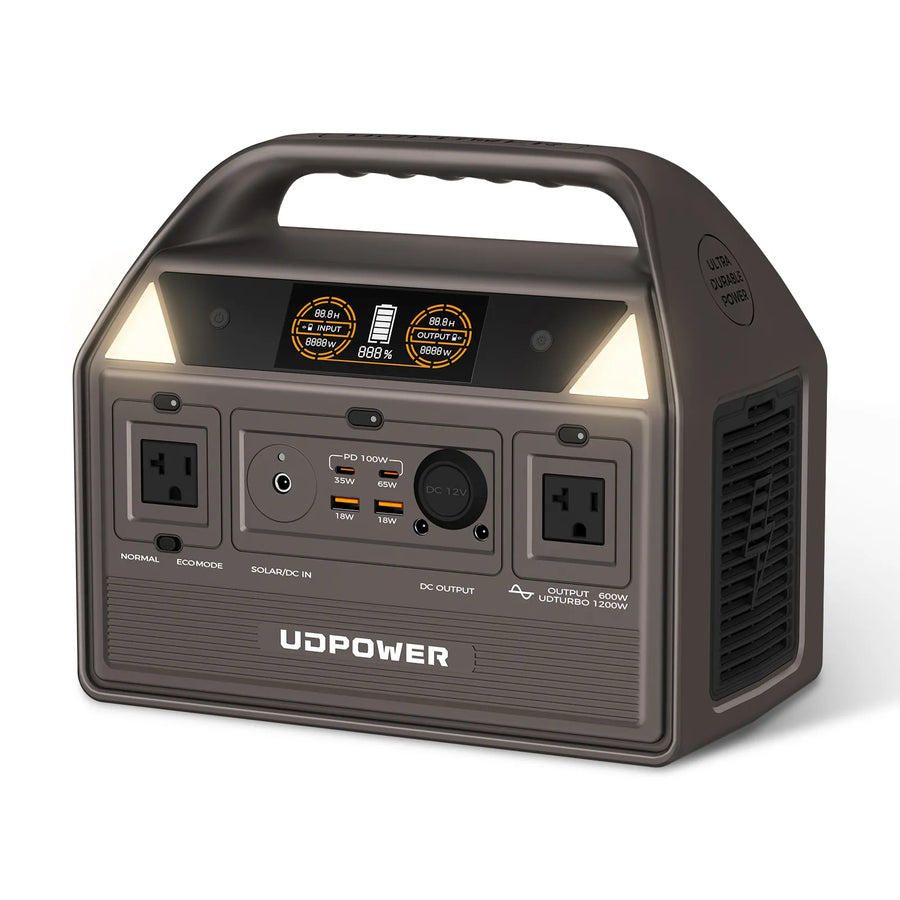
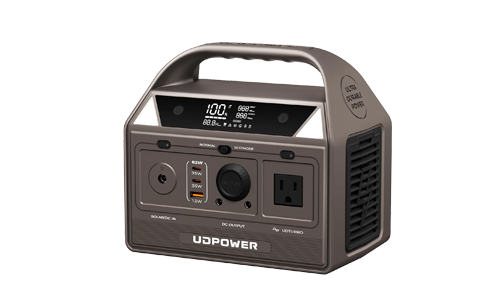
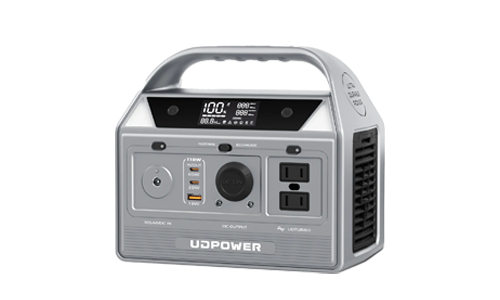
UDPOWER C600 Portable Power Station
596Wh capacity | 600W output | 1200W surge | LiFePO4
Choose C600 when your real loads are routers, phones, laptops, cameras, fans, lights, and modest camping power. It is not the right pick for a 1000W appliance, but it is a good lower-cost option when your actual load is under 600W and runtime expectations are modest.
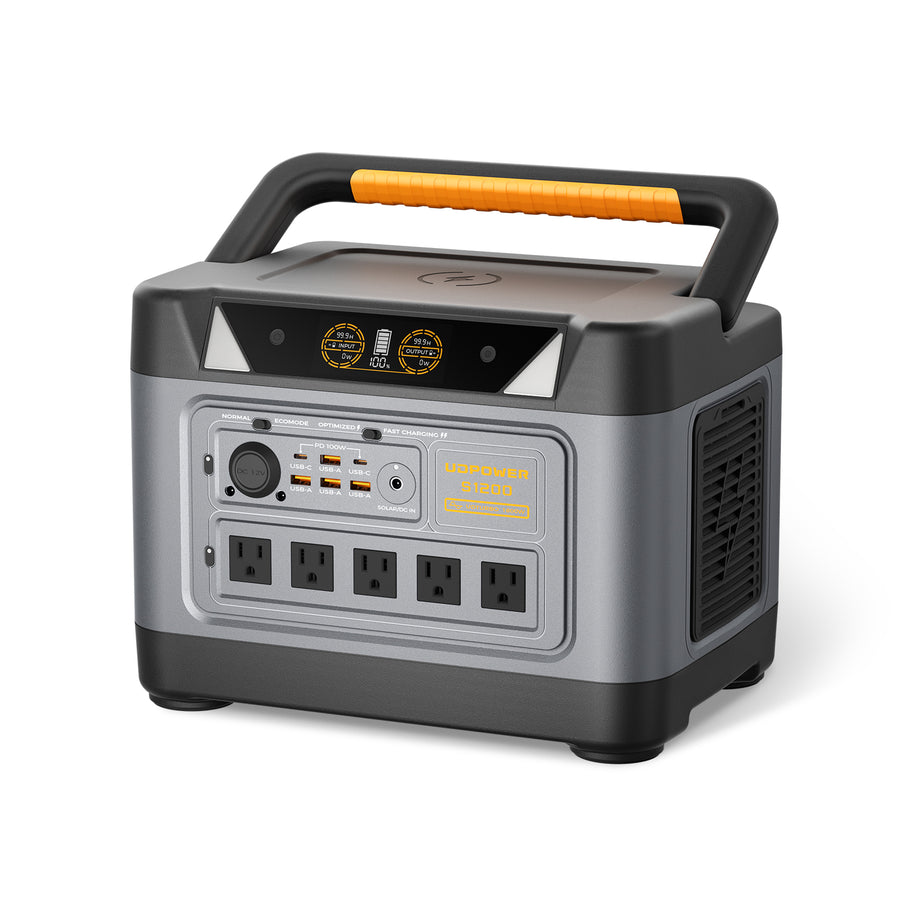
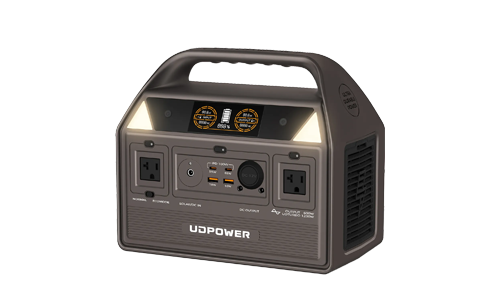
UDPOWER S1200 Portable Power Station
1,190Wh capacity | 1,200W output | 1,800W surge | 400W max solar input | LiFePO4
This is the strongest fit for most shoppers asking how long a 1000W power station lasts. It gives more battery capacity and output headroom than many basic 1000W-class models, while staying portable enough for home backup, camping, RV, CPAP, router, TV, and small appliance use.

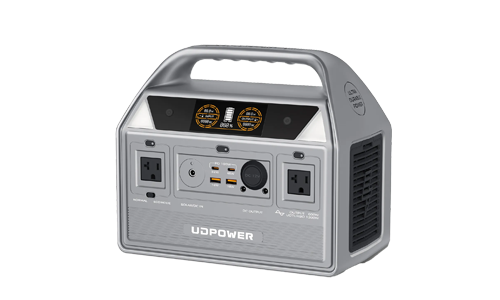
UDPOWER S2400 Portable Power Station
2,083Wh capacity | 2,400W output | 3,000W surge | 40.8 lbs | LiFePO4
Choose S2400 when you keep running into the same problem: the wattage is enough, but the runtime is not. The larger battery and higher output make it a better fit for longer outage windows, fridge plus internet backup, short kitchen appliance use, and heavier home essentials.
| Model | Official Capacity | Official Output | Best For | Source |
|---|---|---|---|---|
| UDPOWER C600 | 596Wh | 600W | Light camping, routers, laptops, fans, short backup jobs | Official C600 page |
| UDPOWER S1200 | 1,190Wh | 1,200W | Best 1000W-class step-up for home backup, CPAP, router, TV, fridge support | Official S1200 page |
| UDPOWER S2400 | 2,083Wh | 2,400W | Longer runtime, bigger appliances, more surge headroom | Official S2400 page |
How to Make a 1000W Power Station Last Longer
The biggest runtime gains usually come from behavior, not from complicated math.
- Use the battery for essentials first. Prioritize Wi-Fi, phones, lights, CPAP, fan, and fridge support before entertainment or heating loads.
- Avoid continuous heat. Space heaters, kettles, hair dryers, and hot plates drain batteries quickly.
- Use short bursts for kitchen appliances. A coffee maker or microwave is fine for minutes, not hours.
- Use USB-C or DC output when possible. For laptops and small electronics, avoiding unnecessary AC conversion may help efficiency.
- Turn off CPAP heating features when safe and comfortable. Heated humidifiers and heated tubes can greatly increase draw.
- Keep fridge and freezer doors closed. This preserves cold air and reduces the need for constant compressor runtime.
- Recharge with solar when practical. Match panel wattage to the station’s solar input limit and expect real-world solar output to vary with sun angle, shading, temperature, and weather.
- Plan by daily energy, not just watts. A 100W load for 10 hours uses about the same energy as a 1000W load for 1 hour.
Ready to Choose the Right Runtime?
Start with the devices you must keep running, estimate the watts, then choose the battery capacity that gives you enough hours with a safety margin.
Calculate Runtime View Portable Power Stations Get the Outage Planning Guide
FAQ
Does a 1000W power station last 1 hour?
Only if the battery is close to 1000Wh, the load is close to 1000W, and you account for conversion loss. A generic 1000Wh station at 85% usable AC energy would run a 1000W load for about 0.85 hours. The UDPOWER S1200, with 1190Wh capacity, is estimated at about 1.1 hours at a 1000W load using 90% efficiency.
What matters more for runtime, watts or watt-hours?
Watt-hours matter more for runtime. Watts tell you whether the power station can run the device. Watt-hours tell you how long it can keep running.
Can a 1000W power station run a refrigerator?
Often, yes, but you need to check both startup surge and average running power. A fridge cycles on and off, so its real runtime depends on compressor behavior, room temperature, door openings, and fridge efficiency.
Can a 1000W power station run a microwave?
Sometimes. Many microwaves draw around 1000W or more from the wall, even if the cooking wattage sounds lower. A 1000W-class station may handle only some models, while a stronger unit such as UDPOWER S1200 or S2400 gives more headroom.
Can a 1000W power station run a CPAP all night?
Usually yes, especially if the humidifier and heated tube are off or set low. A 30W CPAP load may run for over a day on a 1000Wh-class battery. Heated settings can raise draw and shorten runtime.
Why does a space heater drain a power station so fast?
Heat uses a lot of energy. A 1500W heater uses 1500Wh in one hour before efficiency loss. That is more energy than many 1000W-class stations can deliver for a full hour.
Is the UDPOWER S1200 a good 1000W-class choice?
Yes. It is a strong step-up option because it has 1190Wh capacity, 1200W rated output, and 1800W surge power, giving more practical runtime and output headroom than many basic 1000W-class units.
Should I buy S1200 or S2400?
Choose S1200 for most 1000W-class backup needs such as CPAP, Wi-Fi, TV, laptops, lights, fans, and short appliance use. Choose S2400 if you need longer runtime, higher output, fridge plus multiple devices, or more appliance headroom.
Can solar panels make a 1000W power station last longer?
Yes, if sunlight and panel wattage are strong enough to replace part of the energy being used. Solar input does not change the battery capacity, but it can extend runtime during the day or recharge the station between use periods.
What is the easiest way to estimate my own runtime?
Find your device wattage, multiply the power station capacity by usable efficiency, then divide by watts. For example: 1190Wh × 0.90 ÷ 100W = about 10.7 hours for the UDPOWER S1200 at a 100W load.
Related Articles