Portable Power Station 1000W Price: What You’re Really Paying For
Shopping for a portable power station 1000W price can be confusing if you only compare watt labels. This guide explains what really affects value, including battery capacity, runtime, output, solar charging, and warranty, so you can judge whether a unit is truly worth the price. It also shows where the UDPOWER S1200 fits in the 1000W-class market for home backup, camping, and everyday emergency use.
If you’re comparing portable power station 1000W price, the biggest mistake is shopping by the watt label alone. In real life, the better question is: how much battery do you get, how long will it run, and does the price still make sense once you look at the full spec sheet?
That is where many buyers get tripped up. A unit can say “1000W,” but the everyday experience still depends on battery size, surge headroom, charging speed, solar input, and how you plan to use it at home, on the road, or during a power outage.

Why 1000W Price Shopping Gets Confusing
People search for “1000W power station price” because they want a simple number. What they really need is a clearer way to compare products. A 1000W label sounds straightforward, but it does not tell you how long the battery lasts, whether it can handle startup surges, or whether it fits the loads you actually care about.

UDPOWER’s own guides on how long a 1000W power station lasts, what a 1000W power station can run, and how long a 1kWh battery lasts all point back to the same idea: the right price only makes sense after you separate output from stored energy.
1000W
This is output. It tells you how much power the station can deliver at one time. That matters for things like kitchen appliances, small tools, coffee makers, or compressor startup.
1000Wh or 1kWh
This is battery capacity. It tells you how much run time you have to work with. That matters for routers, laptops, lights, CPAP, and longer outage planning.
What Actually Decides Value
Once you move past the front-of-box watt number, price comparisons get much easier. These are the numbers that matter most when you’re trying to decide whether a 1000W-class power station is cheap, fair, or overpriced.
| What to Compare | Why It Matters | What to Look For | Helpful UDPOWER Page |
|---|---|---|---|
| Battery capacity | This decides how long the station lasts once the power is out or you leave the wall outlet behind. | Check the Wh number before you compare price tags. | How Long Will a 1kWh Battery Last? |
| Rated output | This decides whether the station can run the device at all. | Match the station to your real loads, not your wish list. | What Can a 1000W Portable Power Station Run? |
| Surge headroom | Some appliances draw extra power when they start, especially fridges and motor-based devices. | Look beyond continuous watts if you want backup for kitchen or home essentials. | Refrigerator Power Backup Guide |
| Recharge options | A lower purchase price feels less attractive if recharge is slow or solar input is too limited for your plan. | Check AC input and solar input before buying bundles. | Runtime Calculator |
| UPS behavior | If you want always-ready backup for modem, router, desk gear, or medical basics, this matters a lot. | Useful for internet continuity and short switchover backup. | Keep Wi-Fi Running During a Power Outage |
| Warranty | Price is only part of value. Long-term support changes the real cost of ownership. | Read the warranty page before you assume two low-priced units are equal. | Warranty Policy |
If you prefer a value-first angle before you buy, the article Best Bang for Buck 1000 Watt Power Station is also worth a read. It helps frame the difference between a low sticker price and a station that actually feels useful once you start plugging things in.
UDPOWER S1200 Pricing and Bundle Breakdown
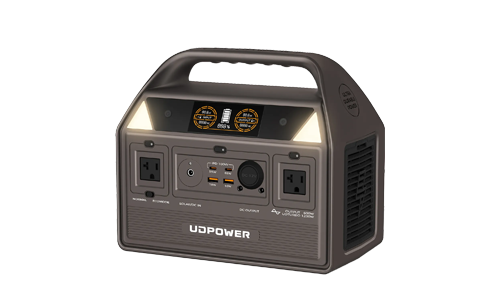
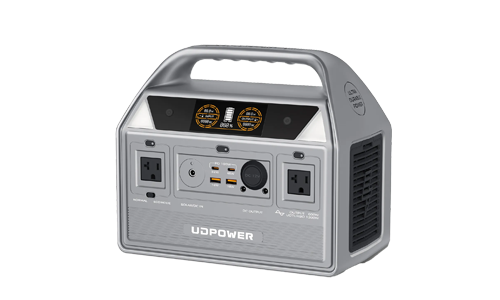
If you’re looking for a strong answer to the “portable power station 1000W price” question inside the UDPOWER lineup, the S1200 is the most natural place to start. It gives you a larger-than-basic battery for this search category, practical output, and multiple package options depending on whether you want the station alone or with solar.

| Option | Price | Who It Fits Best | What You’re Paying For |
|---|---|---|---|
| S1200 3-AC Unit Only | $349.99 | Buyers focused on backup value first | Lowest entry price into the S1200 platform with 1,191Wh capacity and 1,200W output |
| S1200 5-AC Unit Only | $399.99 | Buyers who want more outlet flexibility | Extra AC convenience without moving up to a larger station |
| S1200 + 120W Solar Panel | $549.99 | Light outdoor use and casual recharge support | A simpler solar entry point if you want occasional sunlight top-ups |
| S1200 + 210W Solar Panel | $599.99 | Home backup buyers who want a more practical solar bundle | Better daytime recovery potential than a smaller panel setup |
| S1200 + 240W Solar Panel | $699.99 | Buyers taking off-grid use more seriously | Stronger refill potential when sunlight matters |
| S1200 + 420W Solar Panel | $799.99 | Buyers building a more serious recharge plan | A better fit if solar isn’t just a backup idea |
For most readers, the easiest split is simple: unit-only if you want the best upfront value, or solar bundle if you already know recharge flexibility matters. If you’re still deciding, start with the S1200 product page and then use the runtime calculator to match the station to your actual loads.
What That Price Buys You in Real Runtime
This is the part that makes price feel real. A station’s value becomes much easier to judge when you turn the battery size into estimated runtime. For the S1200, a practical planning approach is to assume about 85% usable energy on AC loads. That gives you roughly 1,012Wh of usable energy for real-world estimates.
| Load | Estimated Runtime on S1200 | What That Usually Looks Like | Related Guide |
|---|---|---|---|
| 30W | About 33.7 hours | Router, modem, small light, or other very light essentials | Wi-Fi Backup Guide |
| 60W | About 16.9 hours | Light electronics or overnight low-draw backup | 1kWh Battery Guide |
| 100W | About 10.1 hours | Laptop blocks, communication gear, and small everyday loads | 1000W Runtime Guide |
| 300W | About 3.4 hours | TV plus internet gear, short kitchen use, or mixed essentials | Outage Runtime Planning |
| 500W | About 2.0 hours | Short windows for bigger appliances rather than all-day continuous use | 1000W Runtime Guide |
| 1000W | About 1.0 hour | High draw, short duration, best used in controlled bursts | 1200W Load Guide |
What a 1000W-Class Station Can Realistically Power
Price makes more sense when you connect it to real use. Most buyers are not trying to power everything at once. They are trying to cover the things that actually matter first: cold food, internet, medical basics, phone charging, a laptop, and a few small comforts.
| Use Case | Why a 1000W-Class Unit Makes Sense | Where to Learn More |
|---|---|---|
| Home outage basics | Enough for a smart essentials-first plan instead of trying to power the whole house. | Runtime Planning for Outages |
| Wi-Fi and communication | One of the strongest uses for this size: long runtime on low-power devices. | Keep Wi-Fi Running |
| Refrigerator backup | Works best when used with a realistic food-safety and cycling plan rather than assuming endless continuous power. | Refrigerator Power Backup |
| CPAP backup | A very practical category where runtime planning matters more than headline output. | CPAP Battery Backup |
| Road trips and day use | Useful for laptops, lights, small appliances, and general portable power without jumping into a heavier platform. | 1000W Device Guide |
| Mixed small-appliance use | The S1200’s 1,200W output gives you more room than a basic 1000W label suggests. | 1200W Device Guide |
If your plan is mainly outage-focused, pair this article with What to Run First During a Power Outage. It helps you decide what deserves battery first so you can judge price against actual priorities instead of a vague “just in case” list.
How to Know if the Price Is Worth It

- Start with your real loads. A buyer backing up Wi-Fi and laptops should shop very differently from a buyer planning fridge support.
- Compare battery size before you compare brand names. Capacity changes the whole value story.
- Check output and surge together. That is where a lot of appliance disappointment comes from.
- Think through recharge before you add solar. A bundle only makes sense if it matches how you expect to use the station.
- Read the warranty page. A lower sticker price is not always the lower ownership cost.
When the S1200 looks especially strong
It makes a lot of sense when you want more than a bare-bones 1000W-class box, but you still want the purchase to stay practical. The combination of 1,191Wh, 1,200W output, solar support, UPS-ready behavior, and 5-year warranty gives the price more substance.
When to size up instead
If your plan is longer fridge coverage, bigger kitchen loads, or more than one major appliance window at a time, it may be smarter to step up rather than force a 1000W-class budget to do a 2000W-class job.
FAQ
Is a 1000W portable power station enough for home backup?
It can be a very practical size for essentials-first backup. Think internet gear, phones, laptops, lights, CPAP, and short appliance windows, not whole-home coverage.
Why do two “1000W” power stations feel so different in use?
Because the label does not tell you the full battery size, surge behavior, recharge options, or how much real runtime you will get once AC losses are involved.
Is the UDPOWER S1200 part of the 1000W shopping category?
Yes. Even though it is rated at 1,200W, it belongs in the same real buying conversation because shoppers looking at 1000W prices are usually comparing the broader 1kWh-class market.
Should I buy the station alone or with solar?
If you mainly want outage backup at the best entry price, station-only is usually the cleaner move. If you already know you want outdoor recharge or longer outage flexibility, a solar bundle is easier to justify.
What is the smartest way to compare power station price before buying?
Compare four things in order: battery capacity, output, recharge options, and warranty. That gives you a much truer picture than shopping by watts or sale percentage alone.
Final Take
If you searched portable power station 1000W price, what you really want is confidence that the number on the page matches the job you need done. For buyers who want a practical balance of capacity, output, flexibility, and long-term peace of mind, the UDPOWER S1200 is one of the clearest answers in this range.
Related Articles