

Power Outage Checklist: What to Do in 24, 48 & 72 Hours

The Direct Answer
During the first few minutes of a power outage, check for immediate hazards, confirm whether the outage is limited to your home, report it to the utility, unplug sensitive electronics, preserve phone power, and keep the refrigerator and freezer closed.
By the end of the first 24 hours, your priorities should be safe drinking water, temperature control, medical needs, food protection, lighting, communication, and a realistic backup-power budget. At 48 hours, begin treating the outage as an extended emergency. By 72 hours, be ready to relocate if the home is becoming dangerously hot or cold, drinking water is uncertain, medical equipment cannot be supported, or local officials recommend leaving.
The most important deadlines are often not at 24, 48, or 72 hours. An unopened refrigerator generally protects perishable food for only about four hours, while a full unopened freezer may hold a safe temperature for about 48 hours and a half-full freezer for about 24 hours.
The First 10 Minutes: Stabilize the Situation
Do not immediately start connecting every appliance to a battery or generator. Spend the first few minutes identifying what happened and protecting people, food, equipment, and remaining energy.
| Action | What to Do | Why It Matters |
|---|---|---|
| Check for danger | Look and smell for smoke, fire, damaged wiring, gas odors, sparking equipment, flooding, or downed utility lines. | A power failure may be connected to storm damage, an electrical fault, a fire, or a damaged utility line. |
| Confirm the outage | Check whether neighboring homes and streetlights are also dark. Inspect your breaker panel only if it is safe and dry. | A tripped breaker inside one home requires a different response from a neighborhood outage. |
| Report the outage | Use your utility's app, website, or outage phone number. Save the outage reference number when one is provided. | Utility updates can help you decide whether to preserve supplies for hours or prepare for several days. |
| Protect medical needs | Check oxygen equipment, CPAP devices, refrigerated medicine, mobility equipment, and other electrically powered medical devices. | A medical power requirement may make early relocation safer than waiting for batteries to run low. |
| Unplug sensitive electronics | Unplug televisions, computers, game systems, desktop equipment, and nonessential chargers. Leave one lamp switched on. | This helps reduce damage from restoration surges and lets you know when utility power returns. |
| Close cold storage | Keep refrigerator and freezer doors closed. Move only items that are immediately needed. | Every unnecessary door opening releases stored cold air and shortens the food-safety window. |
| Preserve communication | Enable phone battery-saving mode, lower screen brightness, and avoid streaming video. | Your phone may become your weather radio, flashlight, utility connection, navigation tool, and emergency contact. |
| Start a written log | Record the outage start time, utility updates, refrigerator openings, battery levels, and important household needs. | Accurate timing makes food-safety and power-budget decisions easier later. |
Call for immediate help when necessary
Stay away from downed power lines and anything touching them. Call 911 for fire, suspected gas leaks, serious injury, or a medical emergency. Report damaged utility equipment through the appropriate emergency or utility channel.
Power Outage Timeline: 0 to 72 Hours
A useful outage checklist should be based on decisions, not just supplies. The right action at hour two may be wasteful or unsafe at hour 40.
0–4 Hours: Protect People, Food, and Information
- Use flashlights, headlamps, and rechargeable lanterns instead of candles.
- Verify that everyone in the home is safe and accounted for.
- Check weather alerts and utility restoration estimates.
- Keep the refrigerator and freezer closed.
- Charge phones only when needed rather than leaving them connected continuously.
- Run only essential backup loads.
- Fill clean containers with tap water if a storm or infrastructure problem may interrupt water service and local officials have not issued a contamination warning.
- Move trip hazards away from hallways, stairs, and exits.
If the outage is expected to last less than four hours, the safest approach is often to avoid disturbing cold food and conserve stored energy rather than immediately running large appliances.
4–24 Hours: Move From Reaction to Rationing
At four hours, food safety becomes a more active concern. The house may also begin heating or cooling significantly, especially during extreme weather.
- Evaluate refrigerated food rather than assuming everything remains safe.
- Use shelf-stable foods before opening the freezer repeatedly.
- Group family activity into one room to reduce lighting and comfort-power needs.
- Assign a daily drinking-water allowance while keeping additional water for food preparation, pets, medicine, and hygiene.
- Reduce the number of devices connected to backup power.
- Check indoor temperature, outdoor temperature, and the forecast.
- Contact vulnerable relatives or neighbors when safe to do so.
- Identify open cooling centers, warming centers, shelters, fuel stations, pharmacies, and grocery stores.
Use a cold-storage plan
Do not stand in front of an open refrigerator deciding what to eat. Write down the items you need first, open the door once, remove them quickly, and close it immediately.
24–48 Hours: Treat It as an Extended Outage
- Review every household member's remaining water, food, medicine, and battery needs.
- Discard unsafe refrigerated perishables rather than relying on smell or appearance.
- Use freezer food that has begun thawing only when it remains at a safe temperature or still contains ice crystals.
- Recheck the utility restoration estimate instead of relying on an earlier message.
- Recharge backup batteries only through a safe, supported source.
- Use solar panels outdoors in unobstructed sunlight and within the power station's supported voltage and current limits.
- Preserve at least one charged phone or power bank for emergency communication.
- Decide whether staying is still safer than relocating.
This is also the point when improvised solutions become risky. Do not connect a portable power station or generator to a wall outlet to energize household wiring. Never create a homemade backfeed connection.
48–72 Hours: Reassess Whether the Home Is Still Habitable
- Calculate how many hours of drinking water remain.
- Check whether indoor temperature is becoming unsafe for children, older adults, pets, or people with health conditions.
- Verify access to working toilets, safe water, medicine, food, and communication.
- Review road conditions and shelter availability before traveling.
- Move remaining frozen food into a properly iced cooler only when doing so offers a real temperature benefit.
- Keep carbon monoxide alarms working anywhere fuel-burning equipment is in use nearby.
- Relocate before backup power, fuel, water, or medical supplies reach a critical level.
Never use outdoor combustion equipment indoors
A gasoline, propane, or dual-fuel generator must remain outside and well away from doors, windows, vents, garages, porches, and carports. The U.S. Consumer Product Safety Commission recommends operating a portable generator at least 20 feet from the home with the exhaust directed away from the building.
Never use a gas oven, charcoal grill, camp stove, or vehicle engine to heat an enclosed living space.
Refrigerator and Freezer Food Safety During an Outage
Food safety should be managed by time and temperature—not by smell, taste, or appearance. When in doubt, throw it out.
| Storage Area | Typical Safe Window When Unopened | Recommended Action | Source |
|---|---|---|---|
| Refrigerator | About 4 hours | After four hours without power or another cold source, discard temperature-sensitive perishables unless you know they remained at 40°F or below. | FoodSafety.gov guidance |
| Full freezer | About 48 hours | Keep the door closed. Food may remain usable longer when the freezer is full and unopened. | CDC food safety guidance |
| Half-full freezer | About 24 hours | A partially filled freezer warms faster. Plan to inspect or transfer food earlier. | FoodSafety.gov guidance |
| Food with ice crystals | Depends on temperature | Frozen food that still contains ice crystals or remains at 40°F or below may generally be refrozen or cooked, although quality may decline. | CDC emergency food guidance |
| Food above 40°F | Time dependent | Perishable food held above 40°F for two hours or more should generally be discarded. | FoodSafety.gov chart |
Foods That Usually Require the Most Caution
Meat, poultry, seafood, milk, soft cheeses, eggs, cooked leftovers, cut fruit, cooked rice, cooked pasta, creamy dressings, and many opened refrigerated foods can become unsafe even when they still look normal.
Condiments and other foods vary. Use the detailed item-by-item chart in the FoodSafety.gov power outage food chart rather than applying one rule to everything in the refrigerator.
How to Prepare Before the Next Outage
- Place appliance thermometers inside the refrigerator and freezer.
- Freeze containers of water to fill empty freezer space.
- Keep coolers and reusable ice packs ready.
- Photograph freezer contents so you do not need to hold the door open.
- Store shelf-stable meals that require little or no cooking.
- Read the complete power outage refrigerator and freezer food safety guide.
How Much Emergency Water Do You Need?
The CDC recommends storing at least one gallon of water per person per day for three days when possible. A two-week supply is preferable when storage space allows. More may be needed in hot weather, during pregnancy, for illness, for medical use, or for pets.
| Household Size | Minimum for 24 Hours | Minimum for 48 Hours | Minimum for 72 Hours | Does Not Include |
|---|---|---|---|---|
| 1 person | 1 gallon | 2 gallons | 3 gallons | Extra water for pets, heavy heat, medical use, or extensive cooking |
| 2 people | 2 gallons | 4 gallons | 6 gallons | Extra water for pets, heavy heat, medical use, or extensive cooking |
| 3 people | 3 gallons | 6 gallons | 9 gallons | Extra water for pets, heavy heat, medical use, or extensive cooking |
| 4 people | 4 gallons | 8 gallons | 12 gallons | Extra water for pets, heavy heat, medical use, or extensive cooking |
| 5 people | 5 gallons | 10 gallons | 15 gallons | Extra water for pets, heavy heat, medical use, or extensive cooking |
| 6 people | 6 gallons | 12 gallons | 18 gallons | Extra water for pets, heavy heat, medical use, or extensive cooking |
Source: CDC emergency water storage guidance.
Water Planning Mistakes to Avoid
- Counting carbonated drinks, alcohol, or highly caffeinated drinks as the main water supply.
- Forgetting water for pets, infant formula, medicine, wound cleaning, and food preparation.
- Assuming a private well will continue operating without electricity.
- Using floodwater, pool water, or questionable tap water for drinking without proper treatment.
- Waiting until stored water is nearly gone before identifying a safe refill source.
A power outage does not automatically mean tap water is unsafe. Follow local water-utility and public-health notices. When authorities issue a boil-water or do-not-use advisory, follow the exact instructions provided.
For storage amounts, container selection, treatment options, and household planning, read How Much Water Should You Store for a Power Outage?
Should You Stay Home or Leave?
Leaving is not automatically safer. Severe weather, flooded roads, downed lines, wildfire conditions, icy streets, and traffic congestion may make travel dangerous. The decision should be based on whether the home can safely support the people inside it.
| Condition | Staying May Be Reasonable When | Consider Leaving Early When |
|---|---|---|
| Medical equipment | Required equipment has tested backup power, enough runtime, and a safe recharge plan. | Battery time is uncertain, equipment cannot operate properly, or a healthcare provider recommends relocation. |
| Indoor temperature | The home remains tolerable and vulnerable household members are not showing heat- or cold-related symptoms. | The home is becoming dangerously hot or cold, especially for infants, older adults, pets, or people with medical conditions. |
| Water | Enough safe drinking water remains for the expected outage duration. | The water supply is contaminated, the well cannot operate, or stored water is running critically low. |
| Fire or carbon monoxide risk | No combustion equipment is being used improperly and working alarms are present. | A carbon monoxide alarm sounds, anyone develops possible exposure symptoms, or fuel-burning equipment cannot be operated safely. |
| Local orders | Officials advise residents to remain in place and the home is safe. | Authorities issue an evacuation order or recommend relocation to a cooling, warming, or emergency center. |
| Travel conditions | Roads are unsafe and staying does not create a greater immediate hazard. | A safe route and safe destination are available, and conditions at home are expected to worsen. |
Do not wait for the final battery percentage
When power supports a critical medical need, relocation should happen while communication, transportation, and equipment power are still available—not after the last battery is nearly empty.
What Should You Power First?
Backup power should be assigned according to consequence. A device is not essential merely because it is used every day.
| Priority | Typical Loads | Recommended Strategy |
|---|---|---|
| Priority 1: Life and safety | Approved medical equipment, essential mobility devices, emergency communication, carbon monoxide alarms, critical lighting | Reserve enough energy to cover these needs before powering comfort or entertainment devices. |
| Priority 2: Communication | Phones, weather radio, modem, router, emergency alert devices | Charge in planned sessions. Turn off Wi-Fi overnight when it is not needed. |
| Priority 3: Food and medicine | Refrigerator, freezer, medically necessary refrigeration | Account for compressor startup power and cycling behavior. Avoid unnecessary door openings. |
| Priority 4: Temperature relief | Efficient fan, electric blanket, low-power heating pad when appropriate | Prefer targeted personal comfort over high-wattage whole-room heating or cooling. |
| Priority 5: Food preparation | Small cooker, microwave, coffee maker, kettle | Use high-wattage appliances for short, planned sessions rather than leaving them connected. |
| Priority 6: Convenience | Television, gaming systems, decorative lighting, nonessential computers | Use only after the essential energy budget is protected. |
For a more detailed priority method, see What to Run First During a Power Outage.
High-Wattage Loads That Can Empty a Battery Quickly
Portable power stations are generally better suited to targeted essential loads than continuous electric heating, whole-home air conditioning, electric water heaters, clothes dryers, large electric ranges, or other major household loads.
| Appliance Type | Why It Is Difficult | More Practical Outage Strategy |
|---|---|---|
| Portable space heater | Often draws around 1,500 watts continuously at its highest setting. | Use blankets, layered clothing, one occupied room, or relocate to a safe heated location. |
| Central air conditioner | May require 240 volts and substantial startup power. | Use efficient fans, close sun-facing blinds, or go to a cooling center when needed. |
| Electric water heater | Usually a high-wattage 240-volt hardwired load. | Preserve hot water already in the tank and avoid attempting an improvised connection. |
| Electric range or oven | Individual elements can consume several thousand watts. | Use shelf-stable meals or a compatible small cooking appliance for brief sessions. |
| Clothes dryer | Electric models are commonly high-power 240-volt appliances. | Delay laundry until utility power is restored. |
| Well or large sump pump | May have high startup demand, hardwired connections, or 240-volt requirements. | Confirm voltage, startup watts, connection method, and backup requirements before an emergency. |
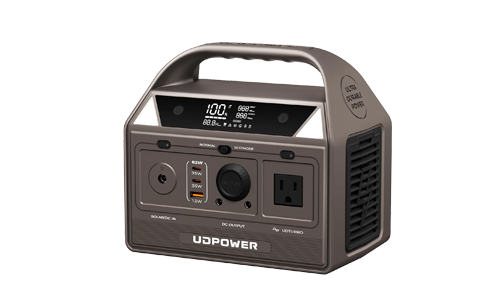
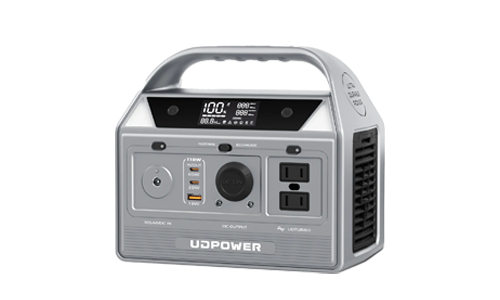
Portable Backup Power for a 24–72 Hour Outage
A portable power station can support selected 120-volt appliances without the fumes, fuel storage, pull-starting, or engine noise associated with a combustion generator. It should still be sized according to actual appliance wattage, startup demand, and required runtime.
The examples below use current UDPOWER product specifications and an estimated 90% conversion efficiency. Actual runtime varies with appliance cycling, temperature, battery condition, inverter losses, charging activity, and load behavior.
Battery capacity in watt-hours × 0.90 ÷ average appliance watts
Learn how the calculation works in the battery runtime and watt-hour guide, or enter your appliance data in the portable power station runtime calculator.
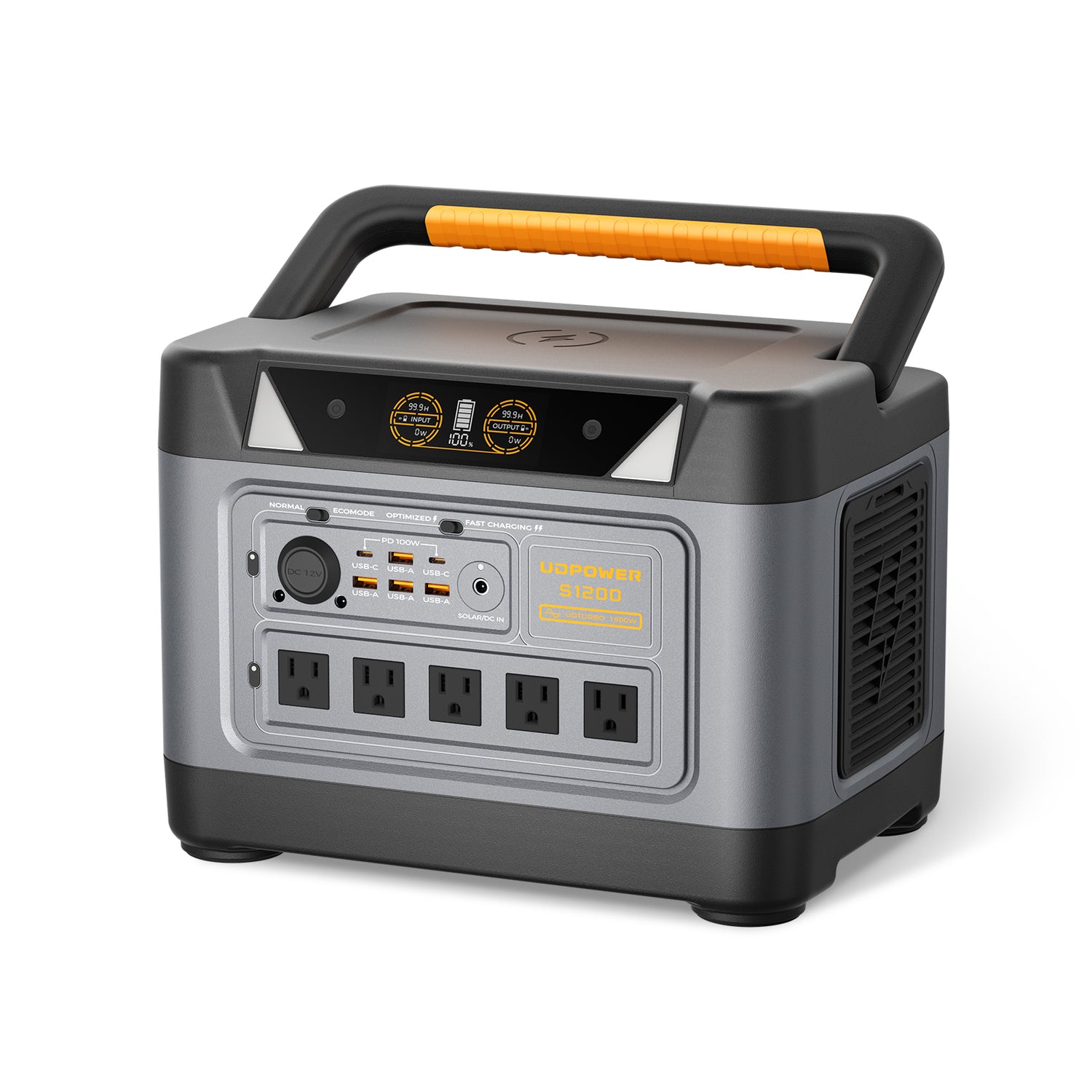
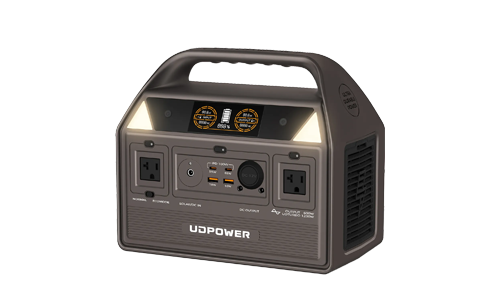
UDPOWER S1200: Focused Essential-Load Backup
The S1200 is suited to households that want to preserve communication, lighting, CPAP use, fans, electronics, or limited refrigerator operation without moving to a much larger unit.
- Battery capacity: 1,191Wh
- Continuous AC output: 1,200W pure sine wave
- Maximum startup output: 1,800W
- Output ports: 5 AC outlets and 10 DC/USB outputs
- USB-C: Two ports supporting up to 100W
- UPS transfer time: 10 milliseconds or less
- Maximum solar input: 400W through the supported DC7909 input range
- Battery chemistry: LiFePO4
- Weight: Approximately 26 pounds
The official product page lists an estimated refrigerator runtime of approximately 10–15 hours, depending on the appliance and operating conditions.
View the UDPOWER S1200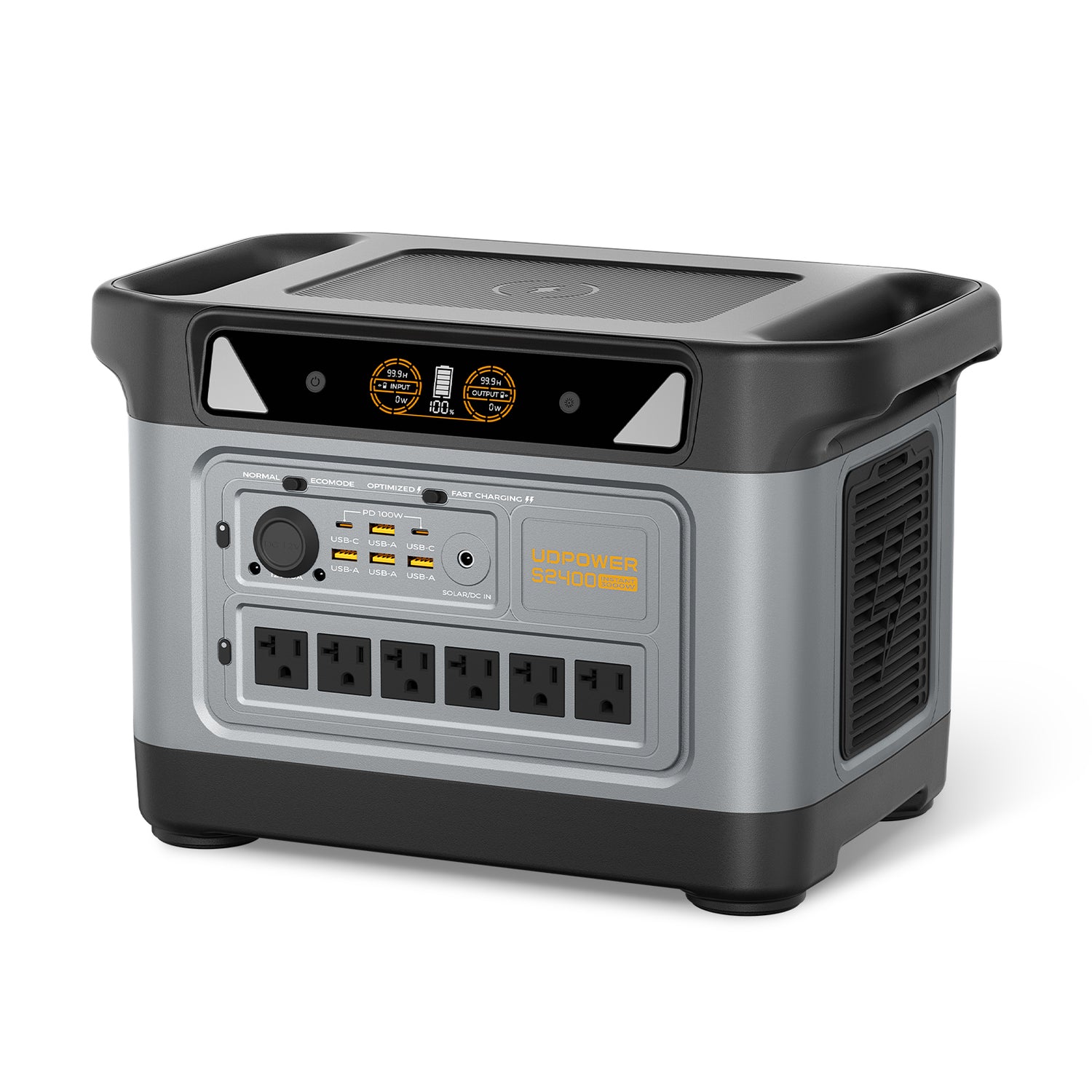
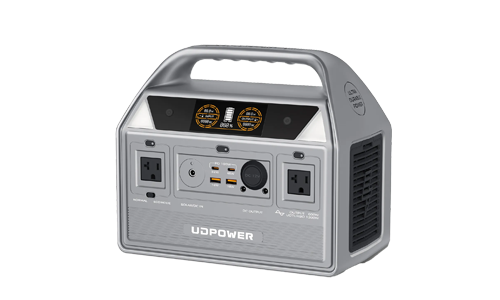
UDPOWER S2400: Longer Runtime and Higher Appliance Capacity
The S2400 provides more stored energy and higher AC output for households that need to support a refrigerator, communications, lighting, medical equipment, and other selected loads through a longer outage.
- Battery capacity: 2,083Wh
- Continuous AC output: 2,400W pure sine wave
- Maximum startup output: 3,000W
- Output ports: 6 AC outlets and 10 DC/USB outputs
- USB-C: Two ports supporting up to 100W
- UPS transfer time: 10 milliseconds or less
- Maximum solar input: Up to 400W within the supported input range
- Battery chemistry: LiFePO4
- Weight: Approximately 40.8 pounds
The official product page lists an estimated refrigerator runtime of approximately 18–30 hours, depending on the refrigerator, cycling pattern, ambient temperature, and other conditions.
View the UDPOWER S2400Estimated Runtime Examples
| Example Load | Assumed Average Draw | S1200 Estimated Runtime | S2400 Estimated Runtime | Planning Note |
|---|---|---|---|---|
| Modem and Wi-Fi router | 25W | About 42.9 hours | About 75 hours | Turn off overnight when constant connectivity is unnecessary. |
| CPAP without heated humidifier | 40W | About 26.8 hours | About 46.9 hours | Use the actual label or measured power of your specific machine. |
| Efficient household fan | 50W | About 21.4 hours | About 37.5 hours | Use lower speed when adequate to extend runtime. |
| Cycling refrigerator | 80W average | About 13.4 hours | About 23.4 hours | Actual startup watts and duty cycle vary substantially. |
| Combined essential load | 120W average | About 8.9 hours | About 15.6 hours | Reduce simultaneous loads to extend the outage window. |
| Medium cooking appliance | 600W | About 1.8 hours of cumulative use | About 3.1 hours of cumulative use | Use in short sessions rather than continuously. |
| High-power cooking appliance | 1,000W | About 1.1 hours of cumulative use | About 1.9 hours of cumulative use | Confirm that startup and continuous power stay within the unit's limits. |
These figures are planning estimates, not guaranteed runtimes. A refrigerator's compressor cycles on and off, a CPAP may draw more with heat and humidification enabled, and some appliances require a startup surge well above their normal running wattage.
S1200 vs. S2400 for Outage Planning
| Planning Factor | UDPOWER S1200 | UDPOWER S2400 |
|---|---|---|
| Battery capacity | 1,191Wh | 2,083Wh |
| Continuous AC output | 1,200W | 2,400W |
| Best fit | Phones, lights, network equipment, CPAP, fans, electronics, limited refrigeration | Longer refrigeration, larger combined loads, more devices, extended emergency coverage |
| Portability | Approximately 26 pounds | Approximately 40.8 pounds |
| Maximum solar input | 400W | 400W |
| Whole-home or 240V use | No | No |
Portable power station connection warning
The S1200 and S2400 provide 120-volt output for directly connected compatible devices. They are not whole-home 240-volt systems. Never plug a portable power station into a household wall outlet to energize home wiring. Whole-home integration requires properly rated equipment and installation by a qualified professional.
Adjust the Checklist for Your Home and Household
Apartment or Condo
- Never operate a combustion generator on a balcony, hallway, roof area, garage, or near another unit's doors or windows.
- Know how building entry, elevators, garage doors, water pumps, and access systems behave during an outage.
- Keep a flashlight and shoes beside the bed.
- Identify two exit routes in case stairwells are dark or obstructed.
- Use a portable power station only according to its indoor ventilation and operating instructions.
Home With a Private Well
A well may stop supplying water when its pump loses power. Many well pumps are hardwired, have substantial startup demand, or require 240 volts. Do not assume a small portable power station can operate one.
- Store drinking water before severe weather.
- Find the pump's running watts, startup watts, voltage, and connection type.
- Know whether toilets can be flushed manually with stored non-drinking water.
- Protect the pressure tank and plumbing according to the manufacturer's instructions during freezing weather.
Home With a Sump Pump
A sump pump can become a higher priority than food storage during heavy rain or flooding. Check the pump's startup demand and backup configuration before storm season. A battery system should be tested under realistic pump cycling rather than assumed to work from the wattage label alone.
Household With Medical Equipment
- Ask the equipment provider for the exact backup-power requirements.
- Test the complete setup before an emergency.
- Include humidifiers, heated tubing, pumps, chargers, and accessories in the power calculation.
- Keep provider, pharmacy, utility, emergency-contact, and transportation information on paper.
- Ask the utility whether a medical notification or priority program is available, while understanding that enrollment may not guarantee faster restoration.
CPAP users can also review the CPAP battery backup guide for power outages.
Household With Babies, Older Adults, or Pets
- Store additional water and ready-to-use food.
- Plan for formula preparation, medication, mobility aids, incontinence supplies, and temperature sensitivity.
- Keep pet carriers, leashes, medication, food, and water accessible.
- Identify pet-friendly shelters or lodging before an emergency.
- Do not leave children, older adults, or animals in a parked vehicle during extreme temperatures.
Winter Outage
- Close unused rooms and gather in a smaller occupied area.
- Wear layered, dry clothing and cover the head and feet.
- Prevent exposed pipes from freezing where possible.
- Do not use grills, generators, ovens, or camp stoves as indoor heaters.
- Leave before roads become impassable when indoor temperature cannot be maintained safely.
Summer Outage
- Close blinds on sun-facing windows during the hottest part of the day.
- Use efficient fans only when indoor conditions allow them to provide meaningful relief.
- Drink water regularly and monitor for heat illness.
- Use a safe cooling center when the home cannot remain tolerable.
- Never rely on a running vehicle inside a garage for air conditioning or device charging.
What to Do When the Power Comes Back On
Restoration is not the end of the checklist. Power can return briefly and fail again, and reconnecting every appliance at once can create unnecessary load.
- Confirm that power is stable. Leave one light on and wait a few minutes before reconnecting sensitive or high-power devices.
- Check for electrical damage. Do not use wet, scorched, sparking, unusually hot, or damaged outlets, cords, panels, or appliances.
- Reconnect major loads gradually. Restore refrigerators, freezers, network equipment, HVAC controls, and other appliances in stages.
- Inspect food. Use time and temperature records to decide what can be kept. Do not taste food to test safety.
- Follow water notices. Continued utility power does not automatically cancel a boil-water or contamination advisory.
- Recharge backup equipment. Recharge power stations, power banks, radios, lights, and medical-device batteries.
- Restock consumed supplies. Replace water, shelf-stable food, batteries, medicine, pet supplies, and sanitation items.
- Review what failed. Write down which appliance used more power than expected, what was difficult to find, and which supplies ran low.
Turn the outage log into a better plan
Record actual power-station percentage changes, refrigerator cycles, indoor temperature, water use, and communication problems. Real household data is more useful than a generic emergency-kit list when preparing for the next outage.
Printable 24-, 48-, and 72-Hour Power Outage Checklist
Immediate Actions: First 10 Minutes
- Check for fire, gas odor, damaged wiring, flooding, or downed lines.
- Confirm whether the outage affects only the home or the surrounding area.
- Report the outage to the utility.
- Record the outage start time.
- Check medical devices and refrigerated medicine.
- Unplug sensitive electronics.
- Leave one lamp switched on.
- Keep the refrigerator and freezer closed.
- Switch phones to battery-saving mode.
- Use flashlights instead of candles.
First 24 Hours
- Check the utility restoration estimate and weather forecast.
- Protect at least one charged emergency phone.
- Review drinking-water quantities.
- Use shelf-stable food first.
- Evaluate refrigerated food after the four-hour window.
- Run only priority backup loads.
- Monitor indoor temperature.
- Contact vulnerable household members, relatives, or neighbors.
- Identify nearby cooling centers, warming centers, shelters, and pharmacies.
- Keep a record of refrigerator openings and battery use.
24–48 Hours
- Recalculate remaining water, food, medicine, and battery runtime.
- Discard unsafe perishable food.
- Check freezer food for ice crystals and safe temperature.
- Recharge backup batteries only through a supported, safe source.
- Preserve energy for medical needs and communication.
- Check fuel, shelter, road, and store availability.
- Reassess indoor heat or cold risk.
- Prepare transportation and essential documents if relocation may be necessary.
48–72 Hours
- Confirm how many hours of safe drinking water remain.
- Check medicine supply and storage conditions.
- Review local emergency instructions.
- Confirm that carbon monoxide alarms are working.
- Reassess whether the home remains safe for every person and pet.
- Relocate before critical power, water, or medical supplies are exhausted.
- Take identification, medicine, chargers, water, food, clothing, and pet supplies when leaving.
After Power Is Restored
- Wait briefly to confirm that electricity is stable.
- Reconnect appliances gradually.
- Inspect outlets and equipment for damage.
- Evaluate food using time and temperature.
- Continue following active water advisories.
- Recharge all backup batteries and lights.
- Restock emergency food, water, and medicine.
- Update the household outage plan using lessons from the event.
Frequently Asked Questions
How long is food safe in the refrigerator during a power outage?
An unopened refrigerator generally keeps food cold for about four hours. After that point, temperature-sensitive perishables should be discarded unless you know they remained at 40°F or below. Never taste food to decide whether it is safe.
How long does a freezer stay cold without power?
A full unopened freezer may maintain a safe temperature for about 48 hours. A half-full unopened freezer may last about 24 hours. Door openings, room temperature, freezer condition, and how full it is can change the result.
How much water should a family store for a 72-hour outage?
Use at least one gallon per person per day as a baseline. A four-person household therefore needs at least 12 gallons for three days, plus additional water for pets, hot weather, illness, pregnancy, medical needs, and food preparation.
Can a portable power station run a refrigerator?
Many portable power stations can run a refrigerator when the refrigerator's running wattage and compressor startup demand remain within the power station's limits. Runtime depends on battery capacity, inverter losses, room temperature, door openings, and the refrigerator's duty cycle.
Should I run my refrigerator continuously from backup power?
Continuous operation may be useful during a long outage, but it is not always the best use of a limited battery. Compare food value, expected outage duration, refrigerator temperature, available battery energy, and higher-priority medical or communication needs.
Can I run a generator in a garage with the door open?
No. A portable combustion generator should never be operated in a garage, carport, porch, basement, or other enclosed or partly enclosed area, even when doors are open. Operate it outdoors, at least 20 feet from the home when possible, with exhaust directed away from doors, windows, and vents.
Can I use a gas stove or oven to heat my home?
No. A gas stove or oven should not be used as a space heater. Doing so can create fire, burn, indoor-air, and carbon monoxide hazards.
What should I power first during a blackout?
Start with life-safety and medical equipment, essential communication, critical lighting, refrigerated medicine, and food preservation. Comfort and entertainment devices should come only after essential energy needs are protected.
Can a portable power station power an entire house?
Typical portable power stations are designed for selected directly connected appliances, not an entire home's hardwired circuits. The UDPOWER S1200 and S2400 provide 120-volt output and do not supply whole-home 240-volt loads.
Can I plug a power station into a wall outlet to power my home?
No. Never connect a power station or generator to a household outlet to backfeed home wiring. This can expose utility workers and occupants to dangerous voltage and can damage equipment. A properly designed transfer system must be installed by a qualified professional.
How can I keep Wi-Fi working during an outage?
A modem and router usually require much less power than major household appliances, so they may run for many hours from a suitable battery. However, internet service will work only if the provider's local network is still operating. See the guide to keeping Wi-Fi running during a power outage.
Can I recharge a power station with solar panels during a blackout?
Yes, when the panel voltage, current, connector, polarity, and total input remain within the power station's supported specifications. Place portable panels in clear outdoor sunlight and do not mix incompatible panels. Review the solar charging voltage safety guide before connecting third-party panels.
When should I leave home during an extended outage?
Consider relocating before conditions become critical if the home cannot safely support medical equipment, indoor temperature is becoming dangerous, safe water is unavailable, carbon monoxide risk exists, or emergency officials recommend leaving.
What should I do first when electricity returns?
Confirm that power is stable, inspect for damage, reconnect major appliances gradually, check food safety, continue following water advisories, and recharge all emergency batteries and lights.
Safety and Preparedness Sources
- Ready.gov: Power Outages
- Ready.gov: Build an Emergency Kit
- CDC: Protect Yourself During a Power Outage
- CDC: Keep Food Safe After an Emergency
- FoodSafety.gov: Food Safety During a Power Outage
- CDC: Creating and Storing an Emergency Water Supply
- CPSC: Generator Carbon Monoxide and Fire Safety
- American Red Cross: Power Outage Safety
Build a Backup Plan Around Your Actual Essentials
List the devices your household truly needs, record their running and startup watts, estimate the required hours, and choose a backup system with enough capacity left for unexpected delays.
View Portable Power Stations View the UDPOWER S1200 View the UDPOWER S2400 Calculate Your Expected RuntimeRelated Articles


