

What Does IP65 Mean on a Power Station? (Splash-Proof vs “Waterproof”)
Portable Power • RV • Outdoor Gear
Quick translation: IP65 means the enclosure is dust-tight (the “6”) and protected against water jets (the “5”). It’s a strong weather-resistance rating—but it’s not a free pass to leave your power station in the rain, and it does not mean “submersible.”
The most common mistake: People see IP65 and assume “waterproof.” In practice, IP65 usually means “okay around dust + splashes + light hose spray,” not “camp in a downpour with the ports open.”

Table of contents
- 1) What IP65 actually means
- 2) How IP ratings work (in plain English)
- 3) “Splash-proof” vs “waterproof” (why wording matters)
- 4) Power-station gotchas: ports, fans, condensation, and cable entry
- 5) What to check before you trust IP65 on a listing
- 6) Real examples: IP65 solar panels + keeping the power station dry (UDPOWER)
- 7) Practical wet-weather setup for RV & camping
- 8) If your power station gets wet: what to do
- 9) FAQ
- Sources & further reading
1) What IP65 actually means

IP stands for Ingress Protection. It’s a two-digit code that describes how well an enclosure resists intrusion from solids (first digit) and water (second digit). The higher the number, the stronger the protection.
- 6 (solids) Dust-tight — designed to prevent dust from entering.
- 5 (water) Protected against water jets — designed to resist water projected toward the enclosure (think “spray,” not “soak”).
That’s the definition—but your real-world outcome depends on the fine print: Is the entire power station IP65-rated, or just a component (like a solar panel, connector, or accessory bag)? And does the rating assume covers closed and seals intact?
2) How IP ratings work (in plain English)
IP ratings come from the IEC 60529 system used to classify how well enclosures resist dust and moisture intrusion. In that system, the first digit covers solids, the second covers water, and “X” means “not rated for that digit.” For example, IPX4 has a water rating but no published dust rating.

| Code | What it typically handles | What it’s not for | How shoppers usually interpret it |
|---|---|---|---|
| IPX4 | Splashes from any direction | Dust protection, water jets, immersion | “Okay if it gets splashed” |
| IP54 | Limited dust protection + splashes | Heavy rain, jet spray, immersion | “Light outdoor use” |
| IP65 | Dust-tight + water jets | Immersion, long rain exposure with open ports | “Strong weather resistance” |
| IP67 | Dust-tight + temporary immersion (device-specific conditions) | Hot water, pressure washers, deep/long submersion | “Can survive a dunk” |
| IP68 | Dust-tight + continuous immersion (conditions defined by maker) | Assuming it’s identical across brands | “Built for serious water exposure” |
Key idea: An IP rating is about enclosure sealing. It doesn’t automatically tell you anything about battery chemistry, inverter quality, surge capability, or charging performance. It’s one piece of the buying decision—important, but not the whole story.
3) “Splash-proof” vs “waterproof” (why wording matters)

In product listings, you’ll see words like “waterproof,” “weatherproof,” and “splash-proof.” The problem is those terms can be vague. IP ratings are more specific, but even IP ratings can be misunderstood if you don’t know what the digits mean.
Simple rule: If a listing says “waterproof” but doesn’t show an IP rating (or NEMA rating), treat it like marketing—not a spec.
Another rule: IP65 is often called “waterproof” in casual conversation, but it’s more accurate to call it water-resistant against spray/jets.
If you want a practical mental model: IP65 is “hose spray,” not “swimming.” For submersion scenarios, you’re looking more toward IP67/IP68—and even then, only under the manufacturer’s stated conditions.
4) Power-station gotchas: ports, fans, condensation, and cable entry

This is where shoppers get burned. Even if a product claims IP65, the rating may assume the enclosure is sealed—and portable power stations have a lot going on:
- Open ports defeat the seal. AC outlets, DC ports, USB ports—if covers are open (or don’t exist), you’ve created a water path.
- Cooling vents are the weak point. Many higher-watt stations rely on airflow. Ventilation and “fully sealed” don’t naturally coexist.
- Condensation is sneaky. Moving a cold unit into warm humid air can create internal moisture without a single raindrop.
- “Rated” may mean “rated as a system.” A solar panel might be IP65 while the power station is not. Or the casing might be rated, but not the ports.
- Salt, mud, and grit still cause problems. IP65 is about ingress under test conditions—not corrosion, residue buildup, or connector wear.
Bottom line for RV/camping: Unless a manufacturer clearly states the entire power station is IP-rated and explains what must be closed/covered, the safest approach is: keep the station itself dry and put only the solar panels outside.
5) What to check before you trust IP65 on a listing

Here’s the quick checklist I use (and it saves time):
- What exactly is IP65? The power station body? The solar panel? The connector? The accessory bag?
- Are the ports covered? If there are no port covers, ask how the rating applies during normal use.
- Does it mention fans/vents? If it relies on airflow, “fully sealed IP65 power station” deserves extra scrutiny.
- Is there a test standard reference? Credible listings reference IEC 60529 (or provide a lab/test statement).
- What’s the warranty language around water exposure? Many brands still exclude liquid damage even if accessories are rated.
Also, in the U.S., you’ll sometimes see NEMA enclosure types used alongside IP ratings. They’re related, but they’re not a 1:1 translation—the test methods and requirements differ.
6) Real examples: IP65 solar panels + keeping the power station dry (UDPOWER)
Most RV setups don’t need the power station sitting in rain. A smarter setup is: panel outside, power station inside (or under cover), and run the solar cable through a window/door pass-through.
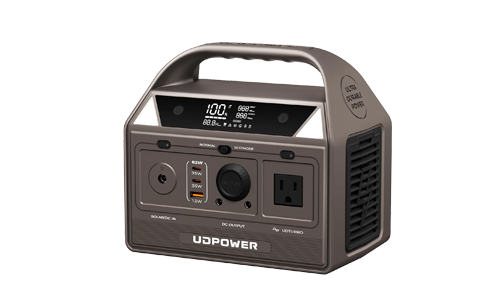
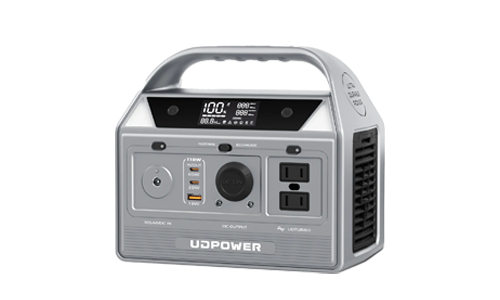
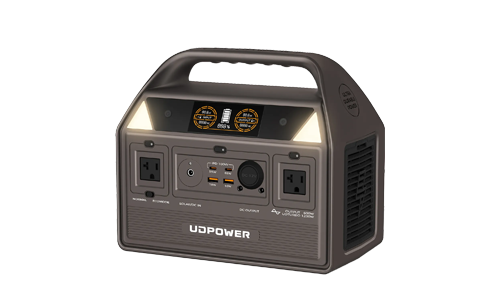
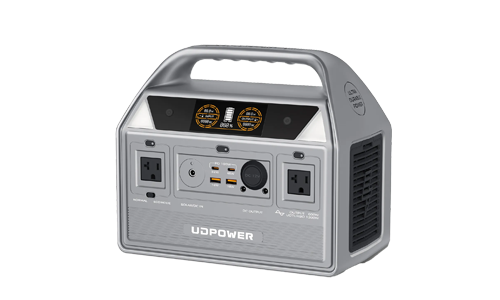
On UDPOWER, you’ll see IP65 used most clearly on portable solar panels (the part that’s meant to live outside), while the power stations focus on performance specs like capacity, output, and solar input limits.

UDPOWER solar panels that list IP65 (example specs)
| Product | Rated power | IP rating (listed) | Key electrical specs (listed) | Portability (listed) | Source |
|---|---|---|---|---|---|
| UDPOWER 120W Portable Solar Panel | 120W | IP65 | Vmp 20.24V • Imp 5.93A • Voc 24.3V • Isc 6.32A | 8.93 lb • Folds to 18.7 × 31.5 × 0.59 in | udpwr.com |
| UDPOWER 210W Portable Foldable Solar Panel | 210W | IP65 | Vmp 40V • Imp 5.25A • Voc 48V • Isc 5.52A | 15.32 lb • Folds to 23.66 × 23.15 × 0.79 in | udpwr.com |
Practical takeaway: IP65 on a portable panel is exactly what you want for camping and RV use—dusty sites, occasional splashes, morning dew, and the general mess of outdoor life. But you still protect the power station (the expensive electronics) by keeping it under cover.
Match the panel to the station: solar input limits matter
Weather resistance is only half the story. The other half is electrical compatibility. Your panel voltage has to stay inside the station’s solar input range.

| Power station | Solar input (listed) | Why this matters | Source |
|---|---|---|---|
| UDPOWER S1200 | 12V–75V • 12A • 400W max | Sets the safe window for panel voltage/current and how much solar it can accept. | udpwr.com |
| UDPOWER S2400 | 12V–50V • 10A max • supports 75W–400W solar | Same idea: stay within the input range so charging is stable and safe. | udpwr.com |
If you want a deeper (but still practical) walk-through on wiring and connector matching, these UDPOWER guides are useful:
- Solar Panel Connector Types: What They Are, How to Identify Them, and How to Connect Safely
- How to Set Up a Foldable Portable Solar Panel for Maximum Efficiency
- Is It Worth Getting a Portable Solar Panel? (real-world output + durability checklist)
7) Practical wet-weather setup for RV & camping

If your trip includes coastal weather, mountain storms, or unpredictable rain, here’s a setup that works without pretending your power station is a marine battery box:
- Put the solar panel outside, put the power station inside. This one change eliminates most “waterproof” anxiety.
- Create a drip loop. Let the cable dip below the entry point before it rises into your RV/tent—so water runs off the low point instead of into your gear.
- Keep the station off the floor. A small crate or shelf helps if water tracks in or if condensation forms.
- Avoid “sealed in a tote” overheating. Cover from rain is good; suffocating ventilation is not. If you must use a cover, leave airflow space.
- Be cautious with AC in damp environments. If you’re using AC loads outdoors, consider GFCI-protected circuits and keep connections dry.
Reality check: Even with IP65-rated gear, don’t use a pressure washer, don’t blast ports/vents, and don’t store wet cables plugged into your station. “Water-resistant” is about exposure—not about inviting water inside.
8) If your power station gets wet: what to do

Not fun, but it happens. Here’s the safe, conservative approach:
- Power off immediately and unplug all cables.
- Do not keep charging it “to see if it’s fine.” Electricity + moisture is how small issues become expensive ones.
- Dry the exterior with a clean towel and place it in a dry, ventilated area.
- Wait before powering back on (longer if water may have entered ports/vents).
- Contact the manufacturer if you suspect internal moisture or see any abnormal behavior (error codes, smell, heat, corrosion).
9) FAQ
Q1) Is IP65 “waterproof”?
Not in the everyday sense people mean it. IP65 is strong protection against dust and water spray/jets, but it is not an immersion rating. For dunking/immersion scenarios, you’re looking at IP67/IP68—and even those depend on the manufacturer’s stated conditions.
Q2) Can I leave an IP65 solar panel out in the rain?
IP65 is designed for outdoor exposure like dust and spray. That said, treat it like outdoor equipment: keep connectors clean, avoid standing water at the plug ends, and dry it before packing it away to reduce corrosion risk over time.
Q3) If my “solar generator kit” says IP65, does that include the power station?
Not automatically. Many kits bundle an IP65-rated solar panel with a non-IP-rated power station. Always confirm what the rating applies to.
Q4) What does the “6” in IP65 protect against?
It means the enclosure is rated as dust-tight. In dusty campsites, desert trails, or unpaved roads, that’s a meaningful durability spec—especially for gear that lives in a trunk or RV storage bay.
Q5) What does the “5” in IP65 protect against?
It means protection against water jets (spray projected toward the enclosure). It does not mean “safe to submerge,” and it doesn’t mean water can’t get in through open ports.
Q6) Does IP65 mean it’s safe to wash the power station with a hose?
No. Even for IP65-rated enclosures, blasting water at seams, ports, or vents is asking for trouble. For power stations, cleaning should be “wipe down,” not “wash down,” unless the manufacturer explicitly says otherwise.
Q7) Is IP rating the same as NEMA?
No. They’re related systems used to describe enclosure protection, but the test methods and requirements differ. If you see both, treat them as separate specifications and follow the manufacturer’s intended use.
Q8) What IP rating should RVers care about most?
For most RV users, the most important move is keeping the power station under cover and choosing a portable solar panel that can tolerate outdoor conditions (dust, splashes, dew). That’s where an IP65-style panel rating is genuinely helpful.
Sources & further reading
External references below are informational and linked with nofollow.
- Interpower: Ingress Protection (IP) — IEC 60529 overview + digit meaning
- Polycase: Difference between water-resistant and waterproof (and how IP ratings help)
- NEMA: Enclosure Types (PDF) — notes on NEMA vs IP differences
- Bud Industries: IP65/IP66/IP67 explained (includes why “waterproof” is confusing)
Related UDPOWER reading:
- Is It Worth Getting a Portable Solar Panel?
- How to Set Up a Foldable Portable Solar Panel for Maximum Efficiency
- Solar Panel Connector Types (identify + connect safely)
- Solar and Power Inverters: How They Work Together (and how to size them)
Related Articles


