How to Keep Wi-Fi and Internet Running During a Power Outage (Router + Modem Runtime)
ZacharyWilliam
If your power goes out, keeping the internet up can mean staying on top of alerts, checking outage maps, or just letting family know you’re okay. This guide shows a practical setup (no guesswork), what usually breaks first (hint: it’s not always your router), and realistic runtime estimates.
Step 1Plug your modem/ONT and Wi-Fi router into backup power.
Use their original power adapters.
Keep cords together in one labeled bag.
Don’t add high-draw stuff “just because it fits.” Your runtime depends on keeping the load small and steady.
Step 2Test it once (before you need it).
Unplug the wall power to your modem/router for 30 seconds.
Confirm Wi-Fi stays up and internet returns normally.
Write down the total watts from your setup (or the adapter ratings) and keep it with your checklist.
Best habit: During an outage, keep the “network setup” separate from everything else. A small, dedicated load is how you get hours (or days) of uptime instead of burning through your battery fast.
What you need to keep internet running
For most homes, “internet” is really a chain:
Cable/DSL: Modem + router (or a single combo gateway)
Fiber: ONT (optical network terminal) + router (or an all-in-one gateway)
Optional: Mesh nodes, a small network switch, and one “must-have” device (phone charger/laptop)
If you use fiber, the ONT matters. If it’s not powered, your router can still broadcast Wi-Fi… but there’s nothing behind it.
How much power does a router/modem use?
Most modern home routers are low draw. Many are in the single-digit to teens of watts, and even “busy” routers are often under ~20W. Modems (or gateways) are usually in a similar range.
Don’t guess your exact number. Use one of these quick checks:
Adapter label method: Look at the power brick. Example: “12V ⎓ 1A” ≈ 12W max (real use is often lower).
Watt meter method: A plug-in watt meter gives the most realistic reading for your exact setup.
Below are realistic “planning” numbers using common home-network loads. Actual results vary with your equipment, inverter losses, and whether your modem/ONT is working hard. Use this as a starting point, then refine with your measured watts.
Setup (examples)
Estimated total load
What it includes
Why it matters
Modem/ONT + Wi-Fi router
20W
Basic internet chain
Best “days not hours” candidate if your ISP stays up
Gateway (all-in-one) only
25W
Single box from ISP
Often a little higher draw than separate modem/router
Router + modem + 1 mesh node
35W
Adds coverage for larger homes
Mesh is convenient, but it costs runtime
Router + modem + mesh + small switch
45W
Home office / wired devices
Still manageable, but you’ll notice the difference
Network chain + phone charging
30–60W
Routers + a few devices topping up
Charging “extras” is usually the silent runtime killer
Mobile tip: swipe the table sideways.
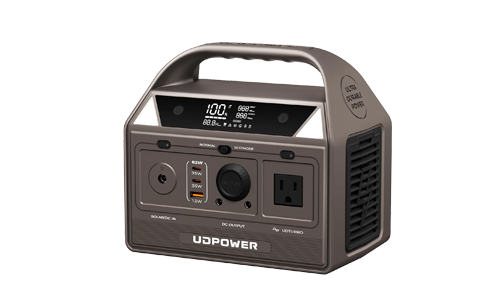
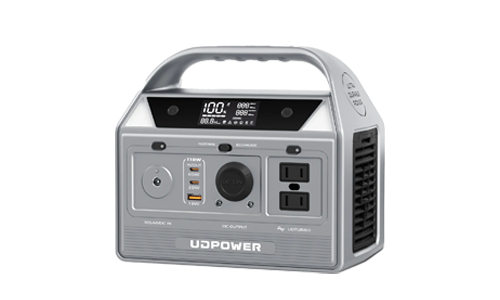
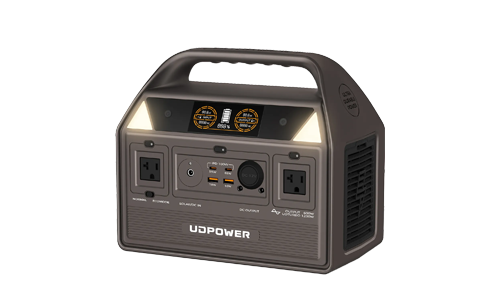
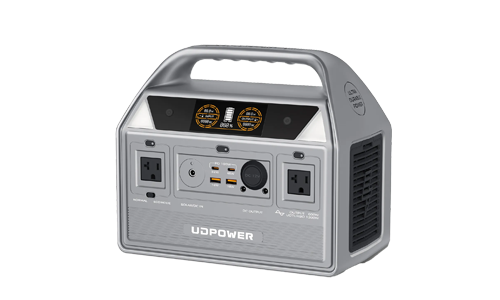
Estimated runtimes by UDPOWER power station size
These estimates assume typical AC conversion losses. If you can power your network gear via DC efficiently (when appropriate), you may see better results. For exact planning, plug your watts into the Runtime Calculator.
Model (capacity)
20W load
35W load
45W load
Notes
C200 (192Wh)
~8 hrs
~4.5 hrs
~3.5 hrs
Good for short outages or “keep Wi-Fi up while you work”
C400 (256Wh)
~11 hrs
~6 hrs
~5 hrs
Small footprint, solid for a simple network chain
C600 (596Wh)
~25 hrs
~14 hrs
~11 hrs
Often the sweet spot for “overnight + morning” coverage
S1200 (1,190Wh)
~50 hrs
~29 hrs
~22 hrs
Includes UPS-style switchover (<10ms) for brief interruptions
S2400 (2,083Wh)
~88 hrs
~51 hrs
~39 hrs
Higher capacity + UPS-style switchover; also supports solar input up to 400W for longer outages
Where the capacity numbers come from: UDPOWER model listings (C200 192Wh, C400 256Wh, C600 596Wh, S1200 1,190Wh, S2400 2,083Wh) and product pages. Shop links: S1200 · S2400.
Best setup: clean, safe, and low-loss
1) Keep your “network backup” as a dedicated mini-system
One power station + two plugs (modem/ONT + router).
Label the cords. Put them in a zip bag next to the power station.
Keep the setup in a ventilated spot (don’t bury power bricks under blankets).
2) Use the simplest output that matches your equipment
Safest default: use the original AC adapters into an AC outlet.
If your power station supports DC outputs: you can sometimes reduce losses, but only if you match voltage/polarity correctly. When in doubt, stick with the original adapter.
3) If your outage is frequent: consider UPS-style continuity
If you get quick “blips” that reset your router/modem, a UPS-style setup prevents constant reboots. Some portable power stations include UPS-like switchover for brief outages (for example, UDPOWER S1200 and S2400 list UPSPRIME switchover around <=10ms on their product pages).
Quick test: With everything running on backup power, unplug the wall power and confirm your Wi-Fi stays live. If you still lose internet, your ISP gear outside your home may be down (next section).
The ISP reality check (why Wi-Fi can be “on” but internet is “down”)
A common surprise: your router is powered, Wi-Fi is broadcasting, but the internet doesn’t work. That can happen when your provider’s neighborhood equipment loses power or battery backup.
Cable: street nodes/amplifiers may go down if local backup is exhausted.
Fiber: your ONT must be powered at home, but upstream equipment can still go down depending on the provider’s backup.
Voice services: many providers specifically disclose that service can be unavailable during outages without backup power.
If you’re planning for longer outages, don’t rely on a single path. Keep a hotspot option (next section), plus a way to receive emergency info (battery radio).
Plan B: hotspot + charging plan
If your ISP goes down, your phone’s hotspot can keep one laptop online (when cellular service is available). The trick is to control the load so your phone and hotspot device don’t drain fast.
Hotspot checklist
Turn off nonessential Wi-Fi devices and streaming.
Lower laptop screen brightness (it matters).
Charge in short bursts instead of leaving everything plugged in all day.
If cell service is weak, keep the phone near a window (or higher point) and reduce background apps.
Print this section and keep it with your power cords.
FAQ
Will a power station automatically keep my internet on like a UPS?
It depends on the model and how you connect it. A traditional UPS is designed for seamless handoff during brief outages. Some portable power stations offer UPS-style switchover for short interruptions—check your model’s specs and test your setup.
Is it better to run a router on AC or DC?
Using the original adapter on AC is the safest and most universal approach. DC can be efficient, but only when the voltage, polarity, and connector match exactly—otherwise, don’t improvise.
Why does my router stay on but the internet stops working?
Your router can broadcast Wi-Fi even if the modem/ONT loses power or if your provider’s neighborhood equipment is down. Try power-cycling the modem/ONT once, then switch to a hotspot plan if service doesn’t return.
How can I estimate runtime fast?
Use your measured watts and the quick formula in this article, or plug your numbers into the UDPOWER Runtime Calculator.
Should I keep mesh nodes on during a long outage?
Only if you truly need the coverage. Mesh nodes are convenient, but they add steady load. For longer runtimes, run only the main router and one critical device.