Skip to content

Free Shipping | US Warehouse | 24-Hour Fast Dispatch

Portable Power Station Runtime Planning for Outages (Priority Loads + Tables)

ZacharyWilliam

Power Outage Prep · Runtime planning worksheet + printable tables

The goal isn’t to “power the whole house.” It’s to keep the right things running as long as possible. This guide helps you build a simple priority list, estimate real watts, and calculate runtime with tables you can print.

Part of the topic cluster: food safety guide · keep Wi-Fi running · power station vs generator vs UPS

Power outage runtime planning with a watt meter, printed priority list, and a portable power station on a table

The runtime mindset (what actually drains your battery)

In outages, batteries usually get wasted in two ways: big heating loads (space heaters, kettles, hair dryers) and silent “extras” (TVs, game consoles, multiple chargers plugged in all day).

The best strategy is boring (and it works)

  • Pick a short list of must-run essentials.
  • Measure or confirm watts (don’t guess).
  • Run high-draw appliances in short, planned windows when needed (not continuously).

If you want the bigger framework (24/48/72 hours), start with the pillar: Power Outage Checklist (24/48/72 Hours) + Printable List.

Build a priority list (Tier 1–3)

This structure keeps your decision-making simple when you’re tired and the house is dark. Put your own devices into the tiers, then plan runtime around Tier 1 first.

Tier What belongs here Examples Why it’s prioritized
Tier 1
Survive + communicate
Health needs, light, phone charging, basic communications CPAP/medical device, phone(s), LED lanterns, modem/ONT + router Safety + staying reachable
Tier 2
Protect food + comfort
Food preservation and small comfort items Refrigerator “burst cooling,” fan, small blanket warmer (low draw), laptop for work Prevents expensive loss + keeps you functional
Tier 3
Nice-to-have
Entertainment, convenience, nonessential charging TV, gaming, decorative lights, multiple devices charging constantly Usually the first place runtime disappears
Tip: If your Tier 1 list is longer than a sticky note, you’ll break your own plan. Keep it tight, then add Tier 2 only if you have capacity to spare.

How to find watts without guessing

Method A: read the label

  • Adapter label: “12V ⎓ 1A” ≈ 12W max
  • Device label: look for “W” or “A” + “V”
  • Use label numbers as a conservative ceiling (real usage is often lower)

Method B: use a watt meter (best)

  • Plug the device into a watt meter for a few minutes
  • For cycling loads (like a fridge), watch long enough to see a full cycle
  • Write down both running watts and peak/surge if shown

Want a deeper “will it run my device?” walkthrough? Read this guide.

Runtime math (simple + realistic)

Here’s a practical planning formula that bakes in typical conversion losses:

Runtime (hours) ≈ (Capacity Wh × Efficiency) ÷ Load W

Pick an efficiency factor

  • 0.85 is a good “planning” number for many AC setups
  • DC-to-DC can be more efficient when matched correctly
  • Heavy loads can reduce efficiency and shorten runtime

For cycling loads (fridges)

  • Use average watts over time, not just compressor peak
  • Plan “burst cooling” windows and keep the door closed
  • More: fridge runtime guide
Reality check: If your plan requires running a space heater, kettle, or microwave for long stretches, you’re not planning “runtime” anymore—you’re planning “fuel.” That’s when generator vs battery tradeoffs matter more. See: Portable power station vs generator vs UPS.

Planning tables: common outage loads (use as a starting point)

These are planning ranges to help you build a first-pass runtime plan. Your exact devices may differ—use label or watt meter data when you can.

Load (typical) Planning watts (range) Tier Notes for better runtime
Modem/ONT + Wi-Fi router 15–35W Tier 1 Keep it dedicated; don’t plug a bunch of chargers into the same “network” setup.
Phone charging (1–2 phones) 10–30W Tier 1 Charge in short bursts; avoid leaving everything plugged in all day.
LED lantern / small lights 5–20W Tier 1 Prefer LED; one bright room beats many dim rooms.
CPAP (no heated humidifier) 20–60W Tier 1 Heated humidifiers can raise draw a lot—check your settings and adapter label.
Fan (box or pedestal) 25–75W Tier 2 Use the lowest comfortable setting; aim airflow where people are.
Refrigerator (average) 60–150W (average) Tier 2 Plan burst cooling and keep doors closed. Use the food safety guide.
Laptop + hotspot work session 40–120W Tier 2 Lower brightness and close heavy apps; use Wi-Fi when ISP is up.
TV / streaming 60–200W Tier 3 Often not worth the runtime tradeoff during long outages.
Heating appliances (kettle/heater) 800–1500W+ Tier 3 Huge drain. If heating is a must, plan a different solution.

Mobile tip: swipe the table sideways.

Food note: If your outage plan includes a fridge, pair this with: Food Safety During a Power Outage.

Printable worksheet + quick estimator

Fill this out once, print it, and keep it with your charging cables. When an outage happens, you’ll already know what to run and for how long.

Step 1: Enter your numbers


Tip: Start with Tier 1 only (router + lights + phone charging). Add Tier 2 later if your runtime looks healthy.

Estimated runtime

hours (planning estimate)


What to do next

  • If runtime is short, reduce load: remove Tier 3 first.
  • If you need multi-day coverage, plan recharge (solar or scheduled charging windows).
  • For internet continuity details: Keep Wi-Fi running during a power outage.

If you’re planning for 24/48/72 hours

24 hours
  • Keep Tier 1 running continuously.
  • Use short fridge “burst cooling” windows if needed.
48–72 hours
  • Assume you’ll need a recharge plan (solar or scheduled charging).
  • Reduce Tier 2 to only what changes outcomes (food safety, heat risk, medical).

Where UDPOWER fits (light, practical)

Most outage plans fall into two buckets: small essentials (communications + lights) and bigger essentials (longer runtime + more headroom). Here are two simple starting points—then refine with your own watt numbers.

Essentials-first coverage

  • Focus: Wi-Fi/communications + lights + device charging
  • Good fit when you want “hours to days” on small loads

Example models: C200 (192Wh, 200W) · C400 (256Wh, 400W) · C600 (596Wh, 600W)

More headroom for longer outages

  • Focus: longer runtime + higher output for more devices
  • Better when you expect multi-day outages or want more flexibility

Example models: S1200 (1,190Wh, 1,200W) · S2400 (2,083Wh, 2,400W)

If you plan to extend outages with solar, keep your inputs within your model’s solar limits and use a realistic “daylight” plan. Companion guide: Solar charging during an outage.

Keep recommendations honest: Your best “model size” comes from your Tier 1 watts and how many hours you want—then you add margin. That’s it. Use the worksheet above to avoid buying capacity you don’t actually need.

FAQ

Why does my runtime look shorter than the battery’s Wh rating?

The Wh rating is stored energy. Real-world runtime can be reduced by conversion losses, inverter overhead, high peaks, and heat. Planning with an efficiency factor keeps your estimate realistic.

Should I run everything on AC outlets?

AC is the universal approach and easiest to keep safe (use original adapters). DC can be efficient, but only when voltage/polarity match correctly. When unsure, stick with AC.

How do I plan for a refrigerator without draining the battery?

Use a “burst cooling” strategy and keep doors closed. Pair that plan with food safety decisions so you’re not powering a fridge just to store food you should toss. See: food safety guide.

What if I need multi-day coverage?

You either reduce load dramatically or add a recharge plan. Solar can extend runtime if your system stays within input limits and you plan around actual daylight. Start here: solar charging during an outage.

What’s the single biggest mistake in runtime planning?

Treating “nice-to-have” as “must-have.” A TV or high-draw appliance can erase a careful plan fast. Lock in Tier 1 first, then add only what changes outcomes.

Sources & further reading

External links open in a new tab and are marked nofollow.

Topic cluster: 24/48/72 outage checklist · food safety · keep Wi-Fi running · power station vs generator vs UPS

Back to blog

Leave a comment

Our Best Portable Power Station

Save 35% OFF
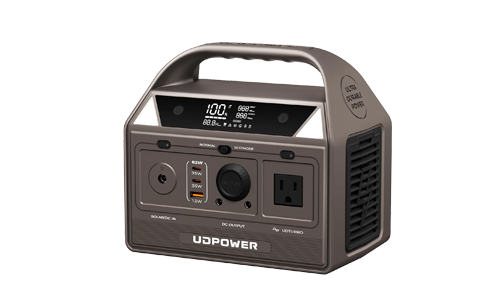
UDPOWER C200 Portable Power Station, 200W Pure Sine Wave
192Wh 200W 5.4 lbs
$129.99 $199.99
Save 19% OFF
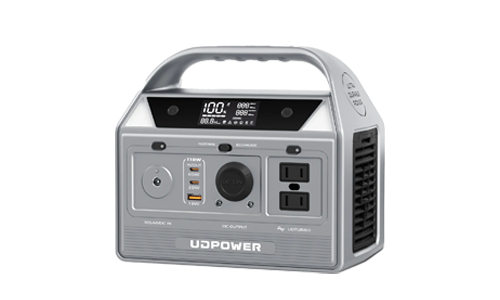
UDPOWER C400 Portable Power Station
256Wh 400W 6.88 lbs
$169.99 $209.99
Save 19% OFF
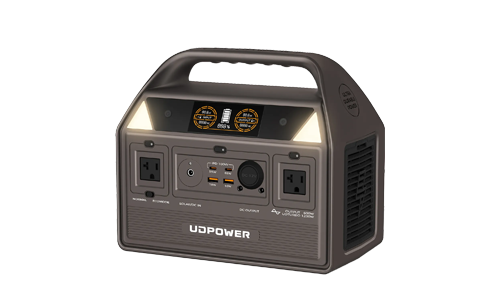
UDPOWER C600 Portable Power Station - Brown
596 Wh 600W 12.3 lbs
$289.99 $359.00
Save 46% OFF
UDPOWER S1200 Portable Power Station
1,190Wh 1,200W 26.0 lbs
$349.99 $649.00
My Cart(0 items)

Our Best Sellers
  • Save 35% OFF
    UDPOWER C200 Portable Power Station, 200W Pure Sine Wave
    192Wh 200W 5.4 lbs
    $129.99 $199.99
  • Save 19% OFF
    UDPOWER C400 Portable Power Station
    256Wh 400W 6.88 lbs
    $169.99 $209.99
  • Save 19% OFF
    UDPOWER C600 Portable Power Station
    596 Wh 600W 12.3 lbs
    $289.99 $359.00
  • Save 19% OFF
    UDPOWER C600 Portable Power Station - Brown
    596 Wh 600W 12.3 lbs
    $289.99 $359.00
  • Save 19% OFF
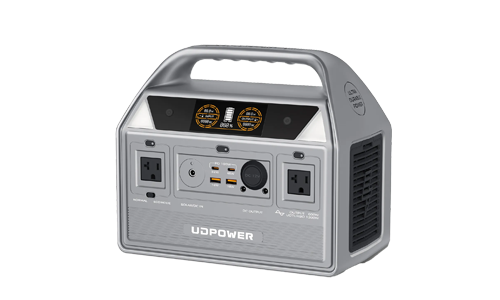
    UDPOWER C600 Portable Power Station - Grey
    596 Wh 600W 12.3 lbs
    $289.99 $359.00