

What are the disadvantages of a portable power station?
Quick Answer: What Are the Disadvantages of Portable Power Stations?
The biggest disadvantages of portable power stations are limited stored energy, short runtime with high-watt appliances, recharge delays, output limits, weather-dependent solar charging, battery aging, temperature restrictions, weight, and higher upfront cost. Most portable models also provide 120V rather than the 240V power required by many large household appliances.
There are also less obvious drawbacks. The energy available at an AC outlet is lower than the battery's advertised watt-hour capacity because of conversion losses. Cooling fans and the inverter consume some power. Very small loads may trigger automatic shutoff on some models. UPS-style operation is not identical to a dedicated computer UPS, and large lithium battery stations cannot simply be taken aboard a passenger aircraft.
None of those limitations automatically make a portable power station a bad purchase. They become a problem when the station is expected to do the wrong job. For phones, Wi-Fi, laptops, CPAP equipment, lighting, refrigeration and controlled emergency loads, a correctly sized station can be very practical. For continuous electric heat, central air conditioning, whole-home 240V loads or several days of heavy electricity use without reliable recharging, another backup solution may make more sense.

Portable Power Station Disadvantages at a Glance
Search results often reduce the subject to three points: batteries run out, charging takes time, and large models are expensive. Those are real drawbacks, but they do not explain why two people can buy the same power station and have completely different experiences.
The practical disadvantage depends on the job you are asking the battery to do.
| Disadvantage | Who notices it most? | What actually happens | Best response |
|---|---|---|---|
| Limited stored energy | Users running heaters, cookers, air conditioners or tools | High-watt loads can consume an entire battery surprisingly quickly | Reserve battery energy for priority loads |
| Conversion losses | Anyone estimating runtime directly from the Wh label | Usable AC energy is lower than rated battery capacity | Use a realistic efficiency factor |
| Output limits | Refrigerator, pump, microwave and tool users | An appliance may overload the inverter even when the battery is full | Check running power and startup demand separately |
| No standard 240V output on many models | Whole-home backup users | Central AC, dryers, ranges and other large loads may not be supported | Use selected 120V loads or a purpose-built home backup system |
| Recharge bottleneck | Multi-day outage and off-grid users | The battery may use energy faster than you can replace it | Calculate daily consumption and daily recovery |
| Variable solar production | Users relying primarily on solar | Clouds, heat, shade, season and panel angle reduce charging | Keep reserve capacity and another charging option where practical |
| Solar compatibility limits | People mixing panels, adapters or brands | A connector may fit even when voltage or current is incompatible | Verify Voc, current, polarity and input range before connection |
| Temperature restrictions | Winter campers and hot-vehicle storage | Charging or output may be restricted outside the rated range | Keep the battery within its published operating range |
| Weight | Solo travelers and people moving the station frequently | Large batteries can become movable rather than truly handheld | Buy enough capacity, not simply the largest model available |
| Higher upfront cost | Occasional-use buyers | Battery, inverter, charger and safety electronics are all included in one purchase | Compare cost against actual frequency of use |
| Battery aging | Long-term emergency-preparedness buyers | Available capacity gradually declines with age and cycling | Choose suitable battery chemistry and follow storage guidance |
| Fan and standby consumption | Bedroom and very-low-load users | Fans can be audible and inverter overhead matters at tiny loads | Test the actual overnight setup |
| UPS limitations | Computer and sensitive-electronics users | A portable station may not offer every feature of a dedicated UPS | Perform a real transfer test before relying on it |
| Integrated design | Permanent off-grid and DIY users | Individual internal components are usually not user-replaceable | Choose a modular system when repairability and expansion are priorities |
| Transportation restrictions | Air travelers and remote-location buyers | Large lithium battery systems are regulated during transportation | Check carrier, airline and return rules before purchase |
The Four Numbers Buyers Should Check Before Anything Else
The easiest way to avoid disappointment is to stop treating one wattage number as the whole specification. A useful backup plan has four separate limits.
Continuous output in watts
This determines how much power the station can normally provide at one time. Add together devices that may operate simultaneously.
Startup or high-power demand
Refrigerators, freezers, pumps, compressors and tools can demand substantially more power while starting than while running normally.
Battery capacity in watt-hours
Watt-hours determine how long the battery can support the load. A station with a 2,400W inverter does not contain unlimited energy simply because it can operate a 2,400W appliance.
Recharge rate versus daily consumption
This determines whether the system can survive a multi-day outage. A large battery only postpones depletion if your daily charging cannot replace the energy you use.
For UDPOWER planning examples in this guide, we use a 90% conversion-efficiency estimate for loads within the unit's normal rated operating range. Actual runtime can still change with temperature, appliance cycling, inverter overhead, battery condition and operating mode.
For a deeper explanation of the difference between watts and watt-hours, see how to calculate watt-hours .
1. High-Watt Appliances Drain the Battery Quickly
Limited runtime is the disadvantage most likely to surprise a first-time owner. The relationship is simple: when appliance wattage rises, runtime falls quickly.
This is why resistance-heating equipment is particularly demanding. Space heaters, kettles, hair dryers, toaster ovens, hot plates and many electric cooking appliances may consume 1,000–1,500W or more while operating.
A 1,500W heater example
A 2,083Wh battery such as the UDPOWER S2400 provides approximately 1,875Wh using the 90% planning method:
That means a battery can have enough inverter output to operate the heater while still having far too little stored energy to use it as an all-night heating source.
| Continuous load | C600 596Wh / 600W |
S1200 1,190Wh / 1,200W |
S2400 2,083Wh / 2,400W |
Planning takeaway |
|---|---|---|---|---|
| 10W | About 53.6 hr | About 107 hr | About 187 hr | Standby consumption and low-load behavior become important |
| 40W | About 13.4 hr | About 26.8 hr | About 46.9 hr | Typical of modest overnight electronics or some CPAP configurations |
| 100W | About 5.4 hr | About 10.7 hr | About 18.7 hr | Useful for continuous essentials |
| 300W | About 1.8 hr | About 3.6 hr | About 6.2 hr | Battery size starts to matter much more |
| 600W | About 54 min | About 1.8 hr | About 3.1 hr | C600 is already at its rated AC output |
| 1,200W | Exceeds rated output | About 54 min | About 1.6 hr | High-power use is best kept short |
| 1,500W | Exceeds rated output | Above normal rated-output range | About 1.25 hr | Not a practical all-night heating strategy |
These are mathematical planning estimates for steady loads. Refrigerators, CPAP humidifiers, pumps and other cycling devices do not draw one constant wattage.
How to reduce the runtime disadvantage
- Prioritize refrigeration, communication, medical equipment and lighting.
- Use high-watt cooking appliances in short sessions instead of continuously.
- Avoid treating electric resistance heating as an efficient battery-backup load.
- Turn off output sections you are not using.
- Use direct USB-C or DC power where appropriate instead of unnecessarily running the AC inverter.
- Measure actual appliance consumption instead of relying only on a generic wattage chart.
For refrigerator-specific planning, see Can a Portable Power Station Run Your Refrigerator?
2. You Do Not Get Every Advertised Watt-Hour at the AC Outlet
The battery capacity printed on a portable power station describes the energy stored in its battery pack. Your AC appliance does not receive every one of those watt-hours.
Energy is consumed by the inverter, voltage conversion, cooling system, battery-management electronics and normal electrical losses. Keeping the AC inverter active also requires energy even when the attached load is small.
That is why simply dividing battery watt-hours by appliance watts usually produces an optimistic runtime figure.
| UDPOWER model | Rated battery capacity | 90% planning energy | Rated AC output | Official source |
|---|---|---|---|---|
| C600 | 596Wh | About 536Wh | 600W | C600 specifications |
| S1200 | 1,190Wh | About 1,071Wh | 1,200W | S1200 specifications |
| S2400 | 2,083Wh | About 1,875Wh | 2,400W | S2400 specifications |
Why low-watt loads can make the difference more noticeable
Imagine an inverter itself needs a small amount of power to remain active. At a 500W appliance load, that overhead is a small percentage of total consumption. At a 5W load, the same overhead can become a meaningful share of the energy budget.
This is one reason direct USB-C power can be more sensible for a compatible laptop or tablet than switching on the AC inverter solely to operate a wall charger.
3. Output Limits Can Stop an Appliance Even With a Full Battery
Battery capacity answers, “How long can it run?” Output power answers, “Can it run at all?”
Confusing those two numbers is one of the most common portable power station buying mistakes.
Motor-driven equipment makes the problem harder
Refrigerators, freezers, water pumps, compressors, air conditioners and power tools can require significantly more power while starting than during normal operation.
A refrigerator may average well under 200W over a full day, yet its compressor can demand much more for a short period when it starts. An undersized inverter can therefore shut down even though the average energy use looks low.
Do not confuse rated output with higher-power support
The current UDPOWER S1200 is rated for 1,200W pure sine wave AC output and uses UDTURBO to support compatible higher-power devices up to 1,800W. Operation above the normal rated-output range can involve lower conversion efficiency, so do not use the same 90% runtime assumption for those loads.
The S2400 provides 2,400W rated AC output with surge support up to 3,000W. Even with that additional headroom, the appliance's actual requirement still needs to be checked.
For additional appliance examples, see What Can a 1200W Portable Power Station Run? and What Can a 2000W Power Station Run? .
4. Most Portable Power Stations Are Not Whole-Home 240V Systems
Most portable power stations designed for the U.S. market focus on standard 120V plug-in equipment. That covers many useful outage loads:
- Refrigerators and freezers within compatible startup limits
- CPAP machines
- Wi-Fi routers and modems
- Televisions and computers
- Lights and fans
- Selected kitchen appliances
- Battery chargers and electronics
It does not automatically cover large hardwired equipment such as central air conditioners, electric dryers, many water heaters, electric ranges or other 240V appliances.
UDPOWER S1200 and S2400 models provide U.S. standard 120V AC output. The S2400 gives considerably more 120V output headroom than the S1200, but it should not be mistaken for a standard 240V whole-home battery.
If you are deciding between battery backup and a fuel-powered unit, see Portable Power Station vs. Generator .
5. Recharging Can Become the Real Bottleneck
A large battery can delay a power shortage, but it cannot fix an energy deficit.
During normal use, fast wall charging can make a portable power station feel almost effortless. During a blackout, however, the wall outlet may be the one charging source that is unavailable.
Vehicle charging is useful but generally limited by the vehicle's available DC output. Solar can restore significant energy, but only during suitable daylight and weather conditions.
The daily energy balance test
| Energy used per day | Energy recovered per day | Daily balance | What happens | Better response |
|---|---|---|---|---|
| 500Wh | 800Wh | +300Wh | Battery can recover if conditions remain similar | Keep reserve for bad weather |
| 1,000Wh | 1,000Wh | 0Wh | Balanced on paper but little margin remains | Add charging headroom or reduce nonessential loads |
| 1,200Wh | 700Wh | -500Wh | Battery becomes 500Wh emptier each day | Reduce consumption or add recovery capacity |
| 2,500Wh | 1,000Wh | -1,500Wh | Large battery only postpones depletion | Move major loads to another energy source |
Why this matters more than battery capacity during long outages
Suppose you own a 2,083Wh station but consume 1,200Wh each day and can recover only 700Wh. Your net deficit is roughly 500Wh every day. Buying another 1,000Wh of battery capacity gives you more time, but the system is still losing energy every day.
For multi-day resilience, the better question is: “Can my charging system replace yesterday's essential consumption?”
6. Solar Charging Is Variable—and Compatibility Has Hard Limits
A solar panel's nameplate wattage is not a promise that it will produce that number continuously. Real output changes throughout the day.
Important variables include:
- Sun angle
- Cloud cover and haze
- Panel temperature
- Season
- Partial shading
- Panel orientation
- Cable losses
- The power station's own input limit
The National Renewable Energy Laboratory PVWatts calculator is useful for understanding how location, season and solar conditions change energy production, although a foldable portable panel will not behave exactly like a permanently installed solar array.
Partial shade is more serious than it looks
A branch, tent pole, vehicle, roof rack or nearby panel can shade part of a folding solar panel. The resulting output loss can be much larger than a user expects from the visibly shaded area.
For best charging performance, place the entire active panel surface in direct sunlight and adjust the angle while watching the power station's live input reading.
A physically fitting connector is not enough
Before attaching a third-party solar panel, verify the panel's open-circuit voltage (Voc), current, polarity, connector and wiring configuration.
| Model | Published solar input range | Maximum solar input | Main planning concern | Official source |
|---|---|---|---|---|
| C600 | 11–28V | 240W | Third-party panels must stay within the relatively narrow voltage range | C600 |
| S1200 | 12–75V, 12A | 400W | Check total Voc before combining panels | S1200 |
| S2400 | 12–50V, 10A max | 400W | Stay within both voltage and current limits | S2400 |
Browse current UDPOWER portable solar panels or read Is It Worth Getting a Portable Solar Panel? before building a larger solar setup.
7. Heat and Cold Affect Portable Power Station Operation
Portable power stations are not designed to operate at full capability under every temperature condition. Battery chemistry, inverter electronics and charging systems all have operating limits.
Cold weather can reduce available performance and may prevent charging below the manufacturer's specified threshold. Excessive heat can increase cooling demand and contribute to faster battery aging.
| Model | Discharging | Charging | Storage | Official source |
|---|---|---|---|---|
| C600 | -4°F to 113°F | 32°F to 104°F | 32°F to 104°F | C600 specifications |
| S1200 | -4°F to 113°F | 23°F to 104°F | 32°F to 104°F | S1200 specifications |
| S2400 | -4°F to 113°F | 32°F to 104°F | 32°F to 104°F | S2400 specifications |
Better storage habits
- Do not leave the station inside a closed vehicle in direct summer sun.
- Avoid long-term storage in a freezing garage or extremely hot shed.
- Let a very cold battery return to a suitable charging temperature before charging it.
- Keep cooling vents unobstructed.
- Do not cover the station with clothing, bedding or luggage while it is operating.
8. More Capacity Usually Means More Weight
“Portable” covers a very wide range of products. A 12-pound battery and a 40-pound battery are both technically portable, but they serve different kinds of mobility.
| Model | Capacity | Rated output | Published weight | How portable it feels in practice |
|---|---|---|---|---|
| C600 | 596Wh | 600W | 12.3 lb | Easy to move regularly between home, car and campsite |
| S1200 | 1,190Wh | 1,200W | About 26 lb | Manageable home and vehicle backup with noticeably more carrying weight |
| S2400 | 2,083Wh | 2,400W | About 40.8 lb | Movable backup equipment rather than something most people want to carry far |
This creates one of the most important buying tradeoffs:
Too large: unnecessary cost, storage space and carrying weight.
The best portable power station is usually the smallest model that comfortably covers the required output and runtime with reasonable reserve.
9. The Real Purchase Cost Can Extend Beyond the Power Station
Upfront cost remains a genuine disadvantage compared with a simple power bank or an inexpensive entry-level fuel generator.
A portable power station combines several expensive components in one enclosure:
- Battery cells
- Battery-management system
- Pure sine wave inverter
- AC charging electronics
- Solar charge controller
- USB and DC conversion hardware
- Cooling system
- Display and monitoring electronics
- Protective enclosure and safety systems
The station itself may also not be the entire system cost.
| Possible extra cost | When it matters | How to avoid wasting money |
|---|---|---|
| Solar panels | Camping or multi-day outages without wall charging | Buy solar only when off-grid recovery is actually part of the plan |
| Compatible cables or adapters | Third-party solar equipment and specialized devices | Confirm compatibility before ordering accessories |
| Excess battery capacity | Buying “the biggest one” without measuring loads | Calculate watt-hours before choosing the model |
| Second purchase after undersizing | Choosing based only on price | Include output, startup demand and runtime before buying |
| Return transportation | Large lithium battery products | Read the current return terms before purchase |
For a fuller breakdown, see How Much Does a Portable Power Station Cost?
10. Battery Capacity Gradually Declines With Age and Use
No rechargeable battery permanently retains its original capacity. Capacity gradually changes with calendar age and repeated charging cycles.
Battery aging is affected by:
- Battery chemistry
- Operating temperature
- Storage temperature
- Charge and discharge behavior
- Cycle count
- Depth of discharge
- How long the battery remains at extreme states of charge
Modern LiFePO4 chemistry provides long cycle life and is well suited to frequent portable power use, but “long life” is not the same as “no degradation.”
Emergency-only batteries have their own problem
A power station purchased for emergencies can sit unused for months. That makes periodic inspection more important, not less.
- Check the battery level periodically.
- Recharge according to the manufacturer's storage guidance.
- Keep the unit in a moderate, dry storage environment.
- Run a real equipment test instead of assuming a stored unit will work exactly as expected years later.
- Do not continue operating a unit that shows physical swelling, unusual odor or obvious damage.
11. Fans, Standby Draw and Low-Load Behavior Can Matter
Portable power stations are much quieter than combustion generators, but they are not always completely silent. Cooling fans may turn on during fast charging, higher output or warm operating conditions.
That can matter in a bedroom, tent, quiet RV or recording environment.
Very small loads create a different problem
Some power stations use automatic low-load shutdown to prevent the battery from wasting energy while an output remains enabled with almost nothing connected.
The UDPOWER S2400, for example, includes low-power auto-shutoff behavior. If AC output remains below roughly 5W or DC output below roughly 3W for a specified period, the relevant output may turn off depending on the selected operating mode.
This is useful for preventing unnecessary battery drain, but it also means you should test very small or intermittent devices before relying on them overnight.
Run an overnight test for these loads
- CPAP equipment
- Routers and network devices
- Security equipment
- Monitoring sensors
- Small DC refrigerators with long idle cycles
- Other equipment that spends long periods in standby
12. UPS Mode Is Not Automatically the Same as a Dedicated Computer UPS
Some portable power stations can switch to battery power quickly when wall power fails. This can be useful for routers, computers, CPAP machines and other equipment that should remain operating through brief outages.
The current UDPOWER S1200 and S2400 publish UPS response times of 10 milliseconds or less.
But a transfer-time specification alone does not guarantee compatibility with every device. Different computer power supplies and electronics can respond differently to a short interruption.
Dedicated UPS products may also provide features specifically designed around computer protection, monitoring and controlled shutdown that a general-purpose portable battery may not provide.
Do an unplug test before relying on UPS mode
- Charge the power station.
- Connect the exact equipment you intend to protect.
- Allow everything to operate normally.
- Disconnect the power station's wall input.
- Check whether the connected equipment reboots, disconnects or loses data.
- Repeat the test under the normal workload you expect during an outage.
If preventing data loss is critical, a dedicated UPS may still be the more appropriate layer of protection.
13. An All-in-One Power Station Is Convenient but Less Modular
One reason portable power stations are easy to use is that the battery, inverter, solar controller, AC charger, display, BMS, cooling system and output ports are all built into one enclosure.
That convenience creates a tradeoff: the system is generally less modular than a purpose-built off-grid battery installation.
If one major internal component fails
A user normally cannot open the unit and replace the inverter, charge controller or individual battery module as easily as they could with a properly designed modular system.
An all-in-one station makes sense when:
- You want plug-and-play backup.
- You need portable or movable power.
- You do not want to design an inverter, fuse, battery and solar controller system.
- You value factory-integrated controls and warranty support.
A modular system may be better when:
- You are building a permanent off-grid cabin.
- You want substantial future battery expansion.
- You need individual components to be replaceable.
- You need 240V household loads.
- You need automatic circuit-level home integration.
14. Air Travel, Shipping and Returns Are More Complicated
Portable power stations contain large lithium batteries, so transportation rules are different from those for ordinary consumer electronics.
Full-size portable power stations are not normal airline power banks
Current U.S. Federal Aviation Administration guidance states that rechargeable lithium batteries from 0–100Wh are generally permitted under passenger rules, batteries from 101–160Wh require airline approval in applicable cases, and batteries exceeding 160Wh are forbidden on passenger aircraft.
The FAA specifically lists lithium battery-powered generators exceeding the 160Wh limit as forbidden on passenger aircraft.
That means full-size stations such as a 596Wh C600, 1,190Wh S1200 or 2,083Wh S2400 should not be treated like an ordinary travel power bank.
Source: Federal Aviation Administration — Airline Passengers and Batteries
Returns also require more planning
A 40-pound lithium battery station is not as simple or inexpensive to ship as a small electronic accessory. Packaging, carrier requirements, weight and location all matter.
UDPOWER's current return policy states that non-quality-related returns can involve return shipping and transaction costs. Special after-sales shipping rules apply to Alaska and Hawaii, where actual shipping costs associated with returns, exchanges or replacements are the customer's responsibility under the current policy.
Always review the latest UDPOWER Return & Refund Policy before purchasing, and keep the original shipping carton and protective material while you test the unit.
Which Portable Power Station Disadvantages Matter Most for Your Use Case?
Not every drawback matters equally. This table is a faster way to decide where to focus before buying.
| Use case | Biggest limitation | Secondary concern | What to test before buying |
|---|---|---|---|
| Weekend camping | Weight and battery capacity | Solar recovery | Daily Wh use and how far you actually need to carry the station |
| CPAP backup | Overnight runtime | Fan noise and low-load behavior | Run your exact CPAP setup for a full night before relying on it |
| Refrigerator backup | Compressor startup | Total daily energy consumption | Running watts, startup surge and real cycling behavior |
| Home office | UPS compatibility | Runtime | Perform a live unplug test with the computer and network equipment |
| RV travel | Daily energy balance | Solar input limits | Calculate daily Wh consumption and realistic solar recovery |
| Multi-day blackout | Recharge deficit | Battery capacity | Determine how many Wh can realistically be restored each day |
| Power tools | Output and startup demand | Runtime at high load | Measure the highest real power draw |
| Whole-home backup | 120V / 240V and circuit integration | Total household energy demand | Determine whether a portable station is the correct technology at all |
| Air travel | Lithium battery passenger limits | None | A full-size power station is generally the wrong product category for airline travel |
When a Portable Power Station Is the Wrong Choice
A battery station is not automatically the best solution simply because it is quiet and easy to use. Another power system may be more appropriate if your main requirement is:
- Running a 1,500W electric space heater continuously for many hours
- Operating central air conditioning
- Running a standard 240V electric dryer or range
- Powering an entire household electrical panel without load selection
- Operating several days with heavy electricity consumption and little opportunity to recharge
- Building a permanent off-grid system that needs easy field repair or major future expansion
- Regularly charging an electric vehicle as the primary charging source
- Traveling by passenger aircraft with the battery
Depending on the situation, a fuel generator, professionally installed home battery, modular solar-battery system or combination of technologies may be a better match.
When the disadvantages are usually acceptable
Portable power stations remain particularly useful when the goal is controlled backup rather than unlimited electricity:
- Refrigerator or freezer support during shorter outages
- CPAP backup
- Wi-Fi and communication
- Phones and laptops
- Lighting and fans
- Camping and RV electronics
- Cameras and mobile work equipment
- Solar-assisted daytime recovery
For a broader value assessment, read Is It Worth Buying a Portable Power Station?
Which UDPOWER Size Reduces Which Disadvantage?
A larger battery solves some problems while creating others. More capacity increases runtime. More inverter power improves appliance compatibility. But both usually increase price, physical size and weight.
The goal is therefore not to buy the largest UDPOWER model. It is to match the model to the limitation that actually matters in your situation.

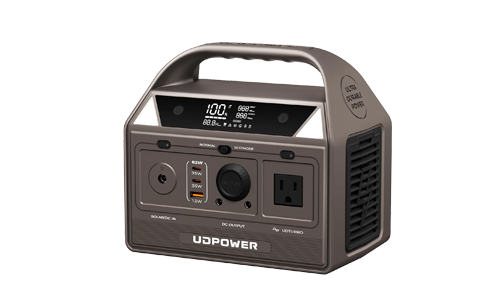
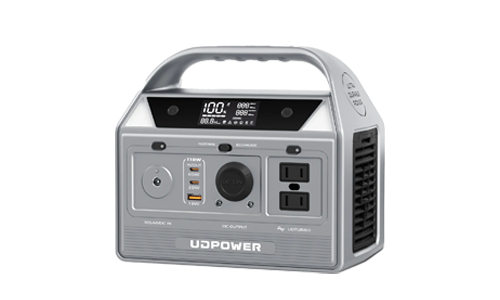
UDPOWER C600: Reduce the Weight Disadvantage
- Capacity: 596Wh
- Rated AC output: 600W
- Battery: LiFePO4
- Weight: 12.3 lb
- Maximum solar input: 240W
The C600 makes the most sense when portability is the main concern. It is easier to carry than a 1–2kWh home-backup unit and provides enough stored energy for laptops, routers, lighting, cameras, phones, CPAP planning and other moderate loads.
What it solves: weight, storage space and everyday portability.
What it does not solve: high-watt appliance compatibility or long-duration heavy-load backup. Its normal rated AC output remains 600W.
View UDPOWER C600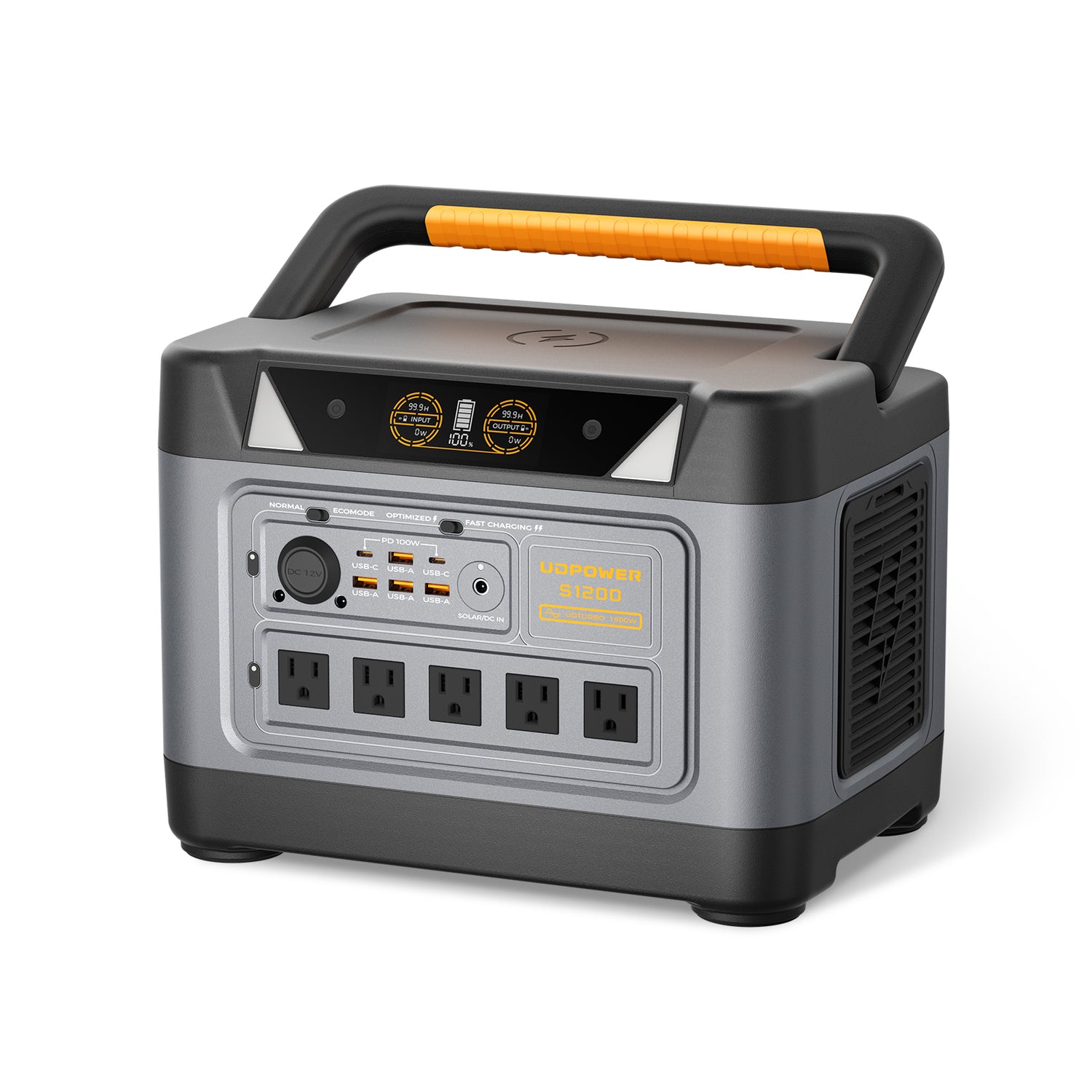
UDPOWER S1200: Reduce the Undersizing Risk
- Capacity: 1,190Wh
- Rated AC output: 1,200W pure sine wave
- UDTURBO: up to 1,800W for compatible higher-power devices
- Weight: approximately 26 lb
- Maximum solar input: 400W
- UPS response: ≤10ms
The S1200 is the stronger middle ground when the C600 does not provide enough capacity or output but a 40-pound 2kWh-class unit is more than you want to move.
What it solves: modest-station runtime, appliance compatibility and limited output headroom while remaining reasonably movable.
What it does not solve: 240V household loads, unlimited runtime or multi-day heavy consumption without reliable recharging.
View UDPOWER S1200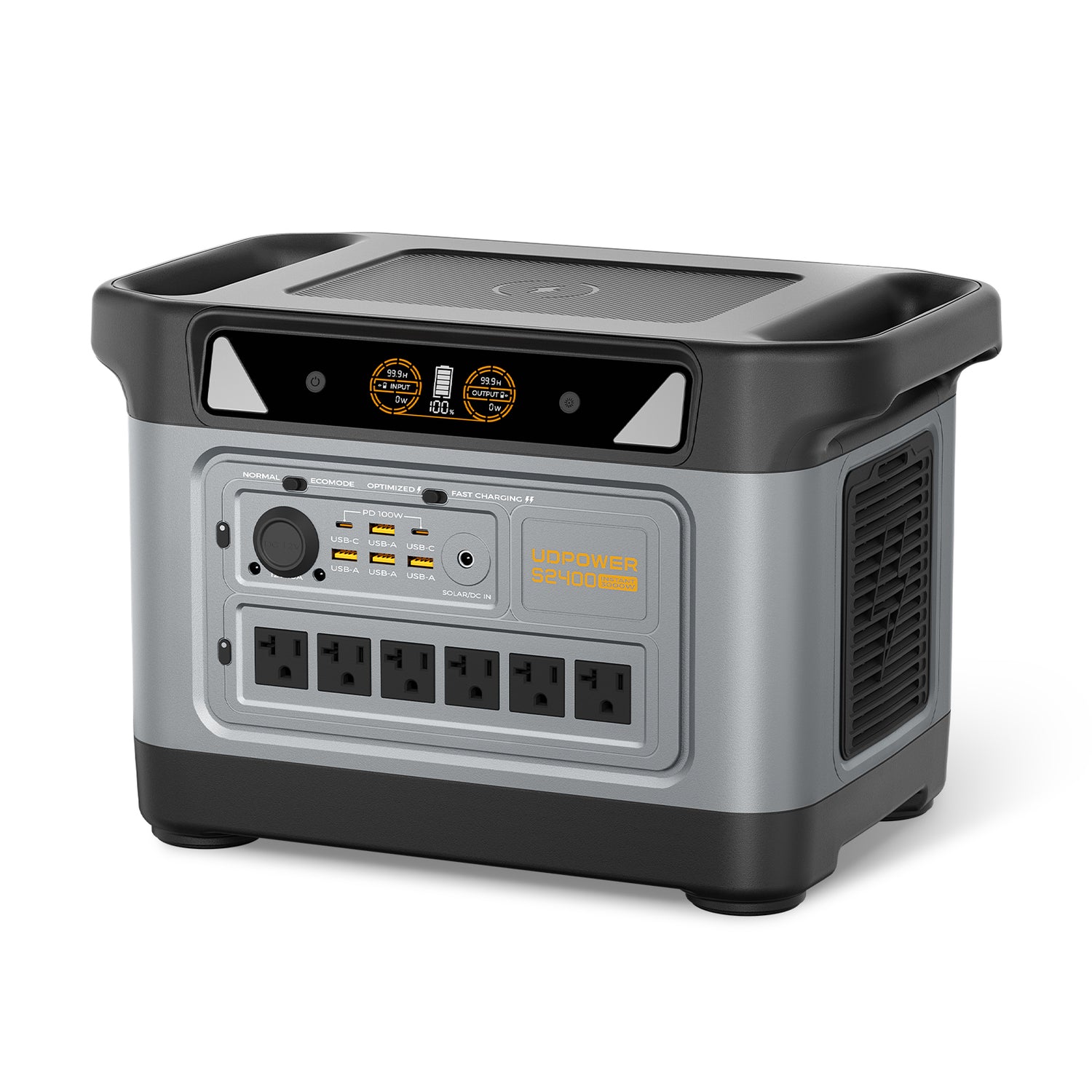
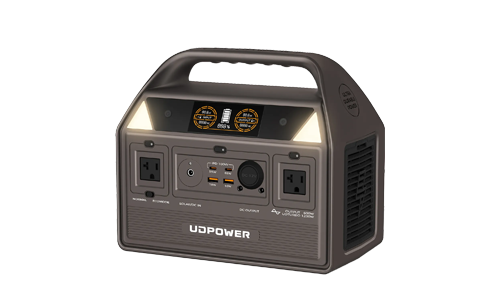
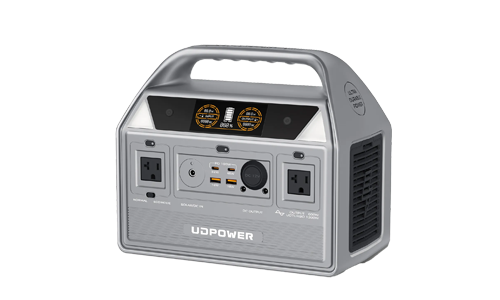
UDPOWER S2400: Reduce Runtime and Output Limitations
- Capacity: 2,083Wh
- Rated AC output: 2,400W pure sine wave
- Surge support: up to 3,000W
- AC outlets: 6
- Weight: approximately 40.8 lb
- Maximum solar input: 400W
- UPS response: ≤10ms
The S2400 is the better fit when the primary disadvantages you are trying to overcome are short runtime and insufficient AC output.
It provides more headroom for refrigerators, microwaves, coffee makers, tools and multiple simultaneous loads than smaller portable stations.
What it solves: output headroom and battery runtime.
What it makes worse: portability. At about 40.8 lb, it is better described as movable backup equipment than a lightweight carry-around battery.
View UDPOWER S2400Side-by-side: the tradeoff never completely disappears
| Model | Capacity | Rated AC output | Weight | Main disadvantage it reduces | Tradeoff that remains |
|---|---|---|---|---|---|
| C600 | 596Wh | 600W | 12.3 lb | Weight and portability | Limited high-watt capability and shorter runtime |
| S1200 | 1,190Wh | 1,200W | About 26 lb | Balances runtime, output and portability | Still a finite 120V battery system |
| S2400 | 2,083Wh | 2,400W | About 40.8 lb | Runtime and high-load compatibility | Higher weight and storage burden |
Compare all current models in the UDPOWER Portable Power Station collection .
If off-grid recovery is important, compare complete solar generator configurations rather than considering battery capacity alone.
The 15-Minute Buyer's-Regret Test
Specifications help you select a model. Testing tells you whether the setup actually works. Complete this check soon after receiving a new station while the original packaging is still available.
Charge the station fully
Confirm that AC charging behaves normally and the display reaches the expected state of charge.
Connect your real priority devices
Do not test with a random lamp if the real purpose is refrigerator, CPAP or home-office backup.
Record the stabilized load
Write down the actual output wattage rather than relying on an online appliance estimate.
Start motor-driven appliances
Confirm that refrigerators, pumps or other motor loads start without triggering overload protection.
Estimate runtime
Use battery capacity × 0.90 ÷ measured watts as an initial planning estimate for normal rated-load operation.
Test UPS transfer if you need it
Disconnect wall power and confirm that your exact equipment remains operating normally.
Check overnight behavior
For CPAP, routers or tiny loads, confirm the output remains active and that fan noise is acceptable.
Confirm your recharge plan
Ask where the next 500Wh, 1,000Wh or 2,000Wh will come from if the grid remains unavailable tomorrow.
Frequently Asked Questions
What is the biggest disadvantage of a portable power station?
The biggest disadvantage is limited stored energy. A portable power station may have enough inverter output to operate a high-watt appliance but still run out of battery quickly. Buyers should calculate both appliance wattage and required runtime before choosing a station.
Can a portable power station replace a gas generator?
It can replace a gas generator for many selected low- and medium-power essentials, especially when quiet indoor-compatible power is important. A fuel generator usually has an advantage for continuous high-watt loads or multi-day operation because additional fuel can restore its energy supply much faster than a depleted battery can always be recharged.
Why does a portable power station not provide all of its advertised watt-hours?
The watt-hour rating describes energy stored in the battery. Some energy is consumed by the inverter, voltage conversion, cooling system, display and battery-management electronics before electricity reaches an AC appliance. Runtime planning should therefore include a conversion-efficiency allowance.
Can a portable power station run a space heater?
A sufficiently powerful model can run many space heaters, but runtime is usually short because heaters often consume 750W to 1,500W continuously. For example, a 2,083Wh battery using a 90% planning efficiency provides roughly 1.25 hours at a constant 1,500W load.
Can a portable power station run a refrigerator?
Yes, when the power station's rated and high-power capability can handle the refrigerator's compressor startup and the battery contains enough watt-hours for the required outage duration. Actual runtime depends heavily on compressor cycling, room temperature, refrigerator efficiency and door opening.
Why does solar charging produce fewer watts than the panel rating?
Solar panel ratings are measured under standardized conditions. Real-world production changes with sunlight intensity, sun angle, temperature, clouds, haze, partial shade, season, cable loss and the power station's charging-input limit.
Can I connect any solar panel to a portable power station?
No. The panel's open-circuit voltage, current, polarity, connector and wiring configuration must remain within the power station's published input limits. A connector that physically fits does not guarantee electrical compatibility.
Do portable power stations work in freezing weather?
Some models can discharge below freezing within their published operating range, but charging limits are often stricter. Cold conditions can also reduce available performance. Always follow the manufacturer's specified charging and discharging temperature ranges.
Are portable power stations completely silent?
No. They do not produce combustion-engine noise, but internal cooling fans may operate during fast charging, high output or warm conditions. Fan noise can be noticeable in a very quiet bedroom or camper.
Can I use a portable power station as a UPS?
Some models include fast UPS-style transfer capability. The UDPOWER S1200 and S2400 list response times of 10 milliseconds or less, but compatibility can vary by connected device. Test your exact computer, router, CPAP machine or other equipment before relying on the setup.
Can I take a portable power station on an airplane?
Most full-size portable power stations exceed passenger-aircraft lithium battery limits. Current FAA guidance states that lithium battery-powered generators exceeding 160Wh are forbidden on passenger aircraft. Always check current FAA and airline rules before traveling with battery-powered equipment.
Is it better to buy the largest portable power station I can afford?
Not necessarily. More capacity improves runtime and usually adds output headroom, but it also increases weight, storage requirements and cost. The better approach is to choose the smallest model that comfortably meets your required output, runtime and recharge plan with practical reserve.
How long do LiFePO4 portable power stations last?
Lifespan varies with cell quality, cycle count, temperature, storage, charging behavior and depth of discharge. LiFePO4 batteries are well suited to long-cycle applications, but they still gradually lose usable capacity with age and use.
Are portable power stations worth buying despite the disadvantages?
Yes, when you need quiet, rechargeable power for specific essentials such as a refrigerator, CPAP machine, Wi-Fi router, phones, laptops, lighting, camping equipment or RV electronics. They are less suitable when the goal is unlimited power, continuous electric heating, standard 240V whole-home backup or several days of heavy electricity use without reliable recharging.
Final Verdict
Portable power stations have real disadvantages. Batteries eventually run out. High-watt appliances shorten runtime dramatically. Solar production changes with weather. Large stations become heavy. Batteries age. Recharging can become the limiting factor during an extended blackout.
What makes these disadvantages manageable is that most of them are predictable.
If you know your continuous watts, startup demand, daily watt-hours and realistic charging opportunities, you can usually tell before purchase whether a portable power station is the correct solution.
For most households, the strongest strategy is not to attempt to power everything. Build an essentials-first plan around refrigeration, medical needs, communication, lighting and limited comfort loads. Then choose enough battery capacity and output to support that plan without buying substantially more equipment than you need.
Choose the Right Size Before You Buy
Start with your appliances rather than the power station. Calculate how many watts they need, how many hours they must run and how you will recharge the battery if the outage continues.
View Portable Power Stations Compare Solar Generator Options Get the Appliance Sizing GuideSources and Further Reading
- UDPOWER C600 Official Specifications
- UDPOWER S1200 Official Specifications
- UDPOWER S2400 Official Specifications
- UDPOWER Return & Refund Policy
- Federal Aviation Administration — Airline Passengers and Batteries
- National Renewable Energy Laboratory — PVWatts
- Consumer Reports — Portable Power Stations
Runtime figures in this article are planning estimates rather than guaranteed operating times. Actual results vary with the appliance, operating mode, temperature, battery condition, inverter overhead, appliance cycling and charging environment.
Related Articles


