Skip to content
Solar Generators (Solar-Powered / Sun-Powered)

Solar Generators

Portable sun power for camping, RV, and home backup—charged by wall, car, or solar.
A solar generator is a portable power station paired with solar panels—store energy in a battery and use it when you need it.
LiFePO4 battery
4000+ Cycles
Clean Energy
5-Year Warranty

Solar Power Generator Kits

Choose a kit based on how you plan to charge and what you plan to run.

Find your sun powered generator in 30 seconds

Choose a real-world scenario first—then pick the kit variant (power station + panel) that matches your typical devices.

How long can a portable solar generator run common devices?

Estimates use battery capacity (Wh) × efficiency ÷ device watts. Update each row’s watts to match your real devices.
Runtime ≈ (Battery Wh × Efficiency) ÷ Device Watts 90% efficiency
Tip: swipe left/right to see more models.
Device Typical watts
S2400 2083Wh • 2400W
S1200 1190Wh • 1200W
C600 596Wh • 600W
C400 256Wh • 400W
C200 192Wh • 200W
Notes
Phone charging
10W 187.5 hrs (7.8 days) 107.1 hrs (4.5 days) 53.6 hrs (2.2 days) 23.0 hrs 17.3 hrs
Use your charger’s wattage (5–20W is common).
Laptop (charging + light use)
60W 31.2 hrs (1.3 days) 17.9 hrs 8.9 hrs 3.8 hrs 2.9 hrs
Higher when gaming or heavy workloads.
Wi-Fi router
12W 156.2 hrs (6.5 days) 89.3 hrs (3.7 days) 44.7 hrs (1.9 days) 19.2 hrs 14.4 hrs
Good for outage comms + internet gear.
LED light (1–2 bulbs)
10W 187.5 hrs (7.8 days) 107.1 hrs (4.5 days) 53.6 hrs (2.2 days) 23.0 hrs 17.3 hrs
Adjust watts by bulb count.
CPAP (no heated humidifier)
40W 46.9 hrs (2.0 days) 26.8 hrs (1.1 days) 13.4 hrs 5.8 hrs 4.3 hrs
Humidifier/heated hose can increase draw a lot.
Portable fan
30W 62.5 hrs (2.6 days) 35.7 hrs (1.5 days) 17.9 hrs 7.7 hrs 5.8 hrs
Box fans can be higher (40–80W+).
Camera battery charger
15W 125.0 hrs (5.2 days) 71.4 hrs (3.0 days) 35.8 hrs (1.5 days) 15.4 hrs 11.5 hrs
Varies by brand; check label.
12V cooler / car fridge (avg)
45W 41.7 hrs (1.7 days) 23.8 hrs 11.9 hrs 5.1 hrs 3.8 hrs
Compressor cycles; average varies by ambient temperature.
Mini fridge (avg)
60W 31.2 hrs (1.3 days) 17.9 hrs 8.9 hrs 3.8 hrs 2.9 hrs
Start-up surge can be higher; use average watts for planning.
TV (LED, 32–50 in.)
100W 18.7 hrs 10.7 hrs 5.4 hrs 2.3 hrs 1.7 hrs
HDR/large screens can be higher.
Electric blanket (low/med)
100W 18.7 hrs 10.7 hrs 5.4 hrs 2.3 hrs 1.7 hrs
More battery-friendly than space heating.
Blender
300W 6.2 hrs 3.6 hrs 1.8 hrs 0.8 hrs Over limit
Motor loads can surge; keep within output limits.
Coffee maker
800W 2.3 hrs 1.3 hrs Over limit Over limit Over limit
Heating loads drain fast; typically used briefly.
Microwave
1000W 1.9 hrs 1.1 hrs Over limit Over limit Over limit
Check input watts on the label; cooking is short bursts.
Electric kettle
1500W 1.2 hrs Over limit Over limit Over limit Over limit
Often exceeds 1200W-class units; better on higher-output models.
Space heater (low)
1500W 1.2 hrs Over limit Over limit Over limit Over limit
Not battery-friendly. Consider an electric blanket instead.
These are planning estimates. Real runtime varies with inverter losses, temperature, battery age, and appliances that cycle (fridges, heaters). If your device has start-up/surge wattage, ensure it stays within the model’s output capability.

Charging Time Comparison

Compare estimated 0→100% charging times across different models and charging methods.

Estimated 0→100% charge time (hours)
Solar uses the configured SolarArrayW per model and applies SolarDerate. Times are estimates.
Model Capacity Solar array used Solar input cap Solar time AC time Car time USB-C time Notes
S2400 2083Wh 420W 400W AC derived from 120V×15A max; Solar up to 400W.
S1200 1190Wh 420W 400W Spec: AC 800W Max; Solar 400W Max; DC7909 144W Max.
C600 596Wh 240W 240W Spec lists Solar 240W Max and Car 120W Max; AC depends on the adapter.
C400 256Wh 120W 150W Inputs: Solar 150W; Car 120W; Adapter 100W; USB-C PD 65W (Fastest 165W via Adapter+USB-C).
C200 192Wh 40W 150W Spec lists Solar 150W Max and Car 120W Max; AC depends on the adapter.

Estimates only. Real-world charge time varies with sunlight, temperature, cable loss, charger behavior, and battery conditions.

Solar Generator FAQs

Quick answers to common questions about solar generators, charging, compatibility, and choosing the right size.

What is a solar generator (and how is it different from a gas generator)?

A solar generator (sun powered generator) usually refers to a portable power station that can be charged by solar panels. Unlike a gas generator, it runs quietly, produces no exhaust fumes, and can be used indoors (with sensible ventilation for heat).

How do I choose the right size solar generator?

Start with two numbers:

  • Running watts of the devices you’ll power at the same time (this must stay under the unit’s AC output).
  • Energy needed (Wh): device watts × hours of use (this determines battery capacity).

If you’re unsure, list your top 5 devices and how long you use them—then choose a model with extra headroom.

What can a solar generator run?

Most people use solar generators for essentials like phones, laptops, lights, routers, CPAP, small fridges/coolers, and TVs. Higher-output models can handle more demanding appliances (within the unit’s rated AC output and surge capability).

How long will it run my devices?

Runtime depends on battery capacity (Wh) and device draw (W). A simple estimate is:

Runtime (hours) ≈ Battery Wh × efficiency ÷ Device watts

Real results vary with inverter losses, temperature, and cycling loads like fridges.

Can I use it while it’s charging (pass-through charging)?

In many cases, yes—people commonly charge the power station while running light to moderate loads. For best results, keep the load reasonable and avoid repeatedly pushing the unit to its max output while charging.

Which solar panels are compatible?

Compatibility depends on the unit’s solar input requirements (voltage/current limits) and connector type. Use solar panels whose operating voltage stays within the unit’s allowed input range, and use the correct adapter cable if needed.

When combining panels (series/parallel), always confirm the final voltage and current stay within the unit’s spec.

How long does solar charging take?

Solar charging time depends on battery size, solar input limit, and real sunlight. A practical estimate is:

Hours ≈ Battery Wh ÷ (Solar watts × real-world factor)

In real use, solar panels often deliver less than rated watts due to angle, temperature, clouds, and cable losses.

Does a bigger solar panel always charge faster?

Only up to the power station’s solar input cap. If your panels can produce more wattage than the unit can accept, the unit will simply limit the input. The fastest setup is a panel/array that matches (or slightly exceeds) the unit’s max solar input.

Can I charge from a wall outlet or car as well?

Most portable power stations support multiple recharge methods—AC wall charging, car charging, and solar charging. The actual charge time depends on the maximum input power for each method and the battery capacity.

Will it power high-watt kitchen appliances (microwave, kettle, air fryer)?

It depends on the appliance’s running watts and surge/start-up power. Heating appliances can draw 1000–1500W+ and may exceed smaller models’ AC output. Check the appliance label and choose a unit with enough continuous output and surge capacity.

Is it safe to use indoors?

Battery-based solar generators do not produce exhaust fumes like gas generators, so they’re commonly used indoors. Still, keep the unit in a cool, dry place with airflow and avoid blocking vents.

What affects performance in cold weather?

Low temperatures can reduce battery performance and slow charging. For winter trips, keep the unit above freezing when possible (e.g., inside the vehicle or insulated space) and avoid charging a very cold battery at high power unless the manufacturer recommends it.

Can I extend solar cable length?

Longer cables can cause voltage drop and reduce charging power. If you need extra length, use a proper solar extension designed for the connector type, keep runs as short as practical, and avoid undersized cable gauges.

Will my order arrive in one box?

Depending on availability and warehouse handling, power stations and solar panels/accessories may ship separately. If you receive multiple tracking numbers, they usually correspond to split shipments.

My Cart(0 items)

Our Best Sellers
  • Save 35% OFF
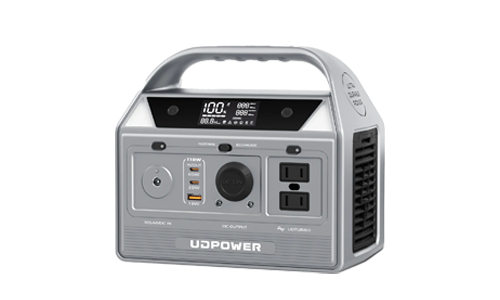
    UDPOWER C200 Portable Power Station, 200W Pure Sine Wave
    192Wh 200W 5.4 lbs
    $129.99 $199.99
  • Save 19% OFF
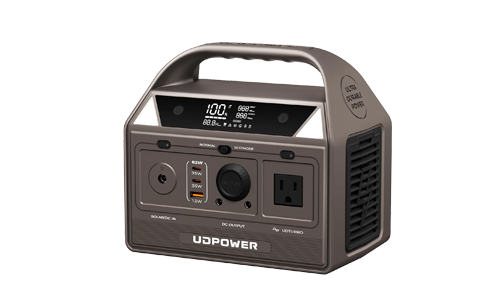
    UDPOWER C400 Portable Power Station
    256Wh 400W 6.88 lbs
    $169.99 $209.99
  • Save 19% OFF
    UDPOWER C600 Portable Power Station
    596 Wh 600W 12.3 lbs
    $289.99 $359.00
  • Save 19% OFF
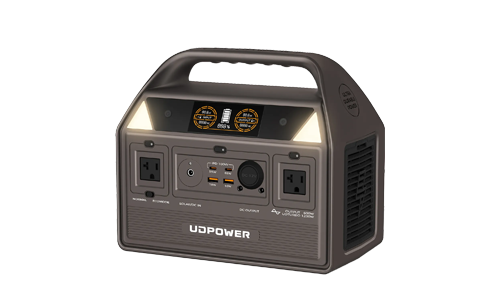
    UDPOWER C600 Portable Power Station - Brown
    596 Wh 600W 12.3 lbs
    $289.99 $359.00
  • Save 19% OFF
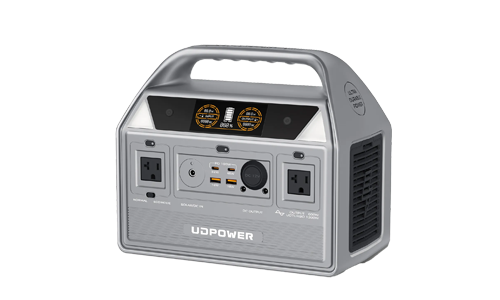
    UDPOWER C600 Portable Power Station - Grey
    596 Wh 600W 12.3 lbs
    $289.99 $359.00