

How to Calculate Watt-Hours of a Power Bank
Latest updated: July 21, 2026
Quick Answer: How Do You Calculate Watt-Hours of a Power Bank?
Multiply the power bank's milliamp-hour capacity by its battery voltage, then divide the result by 1,000.
Watt-hours (Wh) = Milliamp-hours (mAh) × Voltage (V) ÷ 1,000Example: A 20,000mAh power bank rated at 3.7V stores approximately:
20,000 × 3.7 ÷ 1,000 = 74WhThe most important detail is using the correct voltage. For a typical lithium-ion power bank, that is often the internal battery's nominal voltage—usually around 3.6V, 3.7V, or 3.85V—not the 5V, 9V, 12V, or 20V USB output setting.
If the label already shows a watt-hour rating, such as 74Wh, you do not need to convert it again.

What Does Wh Mean on a Power Bank?
A watt-hour measures the amount of electrical energy stored in a battery. It combines battery capacity and voltage into one number, which makes it more useful than mAh when comparing different batteries.
One watt-hour means the battery can theoretically supply:
- 1 watt for 1 hour;
- 5 watts for 12 minutes;
- 10 watts for 6 minutes; or
- 60 watts for 1 minute.
A 74Wh power bank does not necessarily run a 74W device for exactly one hour. Some stored energy is lost through voltage conversion, cable resistance, heat, battery protection limits, and the receiving device's own charging circuit.
Still, Wh is the best starting point because it lets you compare the actual energy class of power banks, laptop batteries, camera batteries, and portable power stations.
| Unit | What It Measures | What It Tells You | Typical Example |
|---|---|---|---|
| W | Power at a specific moment | How quickly a device uses or receives energy | A USB-C port can supply up to 100W |
| Wh | Total stored or consumed energy | How much energy is available | A power bank stores 74Wh |
| mA | Electrical current | How much current is flowing | A charger supplies 3,000mA |
| mAh | Electrical charge capacity | Capacity at a specified voltage | A power bank is rated for 20,000mAh |
The Watt-Hour Formula
The basic battery-energy relationship is:
Wh = Volts × Amp-hoursBecause small batteries are usually labeled in milliamp-hours rather than amp-hours, divide mAh by 1,000 before multiplying by voltage.
Wh = mAh × V ÷ 1,000You can also use these reverse formulas:
| Conversion | Formula | Example |
|---|---|---|
| mAh to Wh | Wh = mAh × V ÷ 1,000 | 20,000mAh × 3.7V ÷ 1,000 = 74Wh |
| Ah to Wh | Wh = Ah × V | 15Ah × 12.8V = 192Wh |
| Wh to mAh | mAh = Wh × 1,000 ÷ V | 74Wh × 1,000 ÷ 3.7V = 20,000mAh |
| Wh to Ah | Ah = Wh ÷ V | 192Wh ÷ 12.8V = 15Ah |
You can check any result with UDPOWER's free battery and power unit conversion tools.
How to Calculate Watt-Hours of a Power Bank Step by Step
Step 1: Find the mAh Capacity
Look on the back or bottom of the power bank. You may see a value such as 10,000mAh, 20,000mAh, or 26,800mAh.
Use the battery or cell capacity that is paired with a voltage on the label. Do not automatically use a separate “rated output capacity” unless that is the figure you specifically want to evaluate.
Step 2: Find the Matching Battery Voltage
Look for wording such as “battery capacity,” “cell capacity,” “nominal voltage,” or “battery energy.” Common values include 3.6V, 3.7V, and 3.85V.
Do not use a USB-C output profile such as 5V, 9V, 12V, 15V, or 20V unless the manufacturer explicitly pairs that voltage with the listed capacity.
Step 3: Multiply mAh by Voltage
For a 20,000mAh power bank rated at 3.7V:
20,000 × 3.7 = 74,000Step 4: Divide by 1,000
74,000 ÷ 1,000 = 74WhThe power bank's nameplate energy is therefore approximately 74Wh.
Step 5: Account for Conversion Loss When Estimating Real Use
If you use an 85% planning efficiency for a USB charging example:
74Wh × 0.85 = 62.9Wh of estimated usable output energyThis is a planning estimate, not a guaranteed test result. Actual efficiency changes with output voltage, charging speed, temperature, cable quality, battery age, and the device being charged.
Common Power Bank mAh-to-Wh Conversion Chart
The following table uses a 3.7V nominal battery voltage. Always replace 3.7V with the voltage printed on your own power bank when it differs.
| Advertised Capacity | Voltage Used | Calculated Energy | Typical Use Class | Calculation Source |
|---|---|---|---|---|
| 5,000mAh | 3.7V | 18.5Wh | Emergency phone top-ups | UDPOWER conversion tool |
| 10,000mAh | 3.7V | 37Wh | Daily phone charging | UDPOWER conversion tool |
| 15,000mAh | 3.7V | 55.5Wh | Phone, tablet, and travel use | UDPOWER conversion tool |
| 20,000mAh | 3.7V | 74Wh | Multiple phone charges or limited laptop charging | mAh-to-Wh guide |
| 24,000mAh | 3.7V | 88.8Wh | High-capacity USB-C travel bank | UDPOWER conversion tool |
| 25,000mAh | 3.7V | 92.5Wh | Phone and laptop travel bank | UDPOWER conversion tool |
| 26,800mAh | 3.7V | 99.16Wh | Near the common 100Wh airline threshold | FAA battery guidance |
| 27,000mAh | 3.7V | 99.9Wh | Near the common 100Wh airline threshold | FAA battery guidance |
| 30,000mAh | 3.7V | 111Wh | Airline approval may be required | FAA battery guidance |
| 40,000mAh | 3.7V | 148Wh | Large portable battery | FAA battery guidance |
| 50,000mAh | 3.7V | 185Wh | Above the normal passenger-baggage limit | FAA battery guidance |
Which Voltage Should You Use?
Use the voltage that the manufacturer pairs with the battery's mAh capacity. In most pocket power banks, this is the nominal voltage of the internal lithium cells.
Why You Usually Should Not Use the USB Output Voltage
A modern USB-C power bank may support several output profiles:
- 5V for standard USB charging;
- 9V or 12V for faster phone charging;
- 15V or 20V for laptop charging; and
- variable PPS output for compatible devices.
Those output voltages describe how the power bank delivers energy. They do not change the amount of energy stored in its internal battery.
Example: The 20V USB-C Mistake
Suppose a power bank is labeled 20,000mAh and supports 20V USB-C output.
The incorrect calculation would be:
20,000mAh × 20V ÷ 1,000 = 400Wh — incorrectIf the internal battery is rated at 3.7V, the correct calculation is:
20,000mAh × 3.7V ÷ 1,000 = 74Wh — correctHow the Result Changes With Battery Voltage
| Capacity | Battery Voltage | Calculated Wh | Difference From 3.7V Result |
|---|---|---|---|
| 20,000mAh | 3.6V | 72Wh | 2Wh lower |
| 20,000mAh | 3.7V | 74Wh | Reference value |
| 20,000mAh | 3.85V | 77Wh | 3Wh higher |
| 20,000mAh | 5V | 100Wh | Only valid if the manufacturer rates 20,000mAh at 5V |
| 20,000mAh | 12V | 240Wh | Only valid for a genuine 20Ah, 12V battery system |
This is why mAh alone is not enough. A 20,000mAh, 3.7V power bank and a 20,000mAh, 12V battery do not store the same amount of energy.
How to Read a Power Bank Label Without Mixing Up the Numbers
A power bank label may show several different capacity and output figures. Each describes something different.
| Label Wording | What It Usually Means | How to Use It |
|---|---|---|
| Cell capacity or battery capacity | Total internal cell charge, often stated at 3.6V, 3.7V, or 3.85V | Use the paired mAh and voltage to calculate stored Wh |
| Battery energy | Total energy already expressed in Wh | Use the Wh number directly |
| Rated capacity | Expected deliverable capacity at a specified output voltage | Use it to estimate output after conversion losses |
| USB-C output: 5V, 9V, 12V, 15V, 20V | Supported charging voltages | Use these to check device compatibility and charging speed, not stored energy |
| 65W, 100W, 140W, or 300W | Maximum output power | Use it to determine whether the bank can charge a laptop or other high-power device |
| Input power | How quickly the power bank can be recharged | Use it to estimate charging time, not battery capacity |
Example Label
Imagine a power bank label showing:
- Cell capacity: 20,000mAh at 3.7V;
- Battery energy: 74Wh;
- Rated capacity: 12,000mAh at 5V; and
- USB-C output: 5V/3A, 9V/3A, 15V/3A, and 20V/3.25A.
The 74Wh value is the stored energy. The 12,000mAh at 5V figure equals 60Wh of rated output capacity. The difference does not automatically mean the product is defective; it reflects conversion losses, voltage cutoffs, and the manufacturer's rating method.
What If the Label Lists More Than One Battery Pack?
Some multi-cell batteries connect cells in series to raise voltage or in parallel to raise amp-hour capacity. Do not rebuild the pack specification from individual cell numbers unless the label is clear about the configuration.
The safest order is:
- Use the printed Wh rating when available.
- Otherwise, use the total mAh and voltage the manufacturer pairs together.
- Check the manual or official product page when the label is unclear.
- Do not multiply advertised mAh by a USB output voltage.
Stored Watt-Hours vs. Usable Watt-Hours
The nameplate Wh rating describes the energy stored in the battery before output conversion. Your phone, tablet, or laptop receives less than that amount.
Energy can be lost through:
- boosting the internal battery voltage to 5V, 9V, 15V, or 20V;
- the power bank's control electronics;
- cable resistance and connector losses;
- heat generated during fast charging;
- wireless charging coils;
- the receiving device's own battery-charging circuit;
- low-load standby consumption; and
- protective shutdown before the internal cells reach absolute zero.
For planning, use:
Estimated usable Wh = Nameplate Wh × Assumed efficiency| Power Bank | Nameplate Energy | 80% Planning Result | 85% Planning Result | 90% Planning Result |
|---|---|---|---|---|
| 10,000mAh at 3.7V | 37Wh | 29.6Wh | 31.45Wh | 33.3Wh |
| 20,000mAh at 3.7V | 74Wh | 59.2Wh | 62.9Wh | 66.6Wh |
| 25,000mAh at 3.7V | 92.5Wh | 74Wh | 78.63Wh | 83.25Wh |
| 26,800mAh at 3.7V | 99.16Wh | 79.33Wh | 84.29Wh | 89.24Wh |
These percentages are planning examples, not fixed specifications. A low-power USB device may produce a different result from a laptop charging at maximum USB-C PD output.
How Many Times Can a Power Bank Charge a Phone?
First calculate the power bank's Wh. Then calculate the phone battery's Wh using the same formula.
Suppose you have:
- a 20,000mAh power bank rated at 3.7V; and
- a phone with a 5,000mAh battery rated at 3.85V.
Step 1: Calculate the Power Bank Energy
20,000mAh × 3.7V ÷ 1,000 = 74WhStep 2: Calculate the Phone Battery Energy
5,000mAh × 3.85V ÷ 1,000 = 19.25WhStep 3: Apply an End-to-End Efficiency Estimate
74Wh × 0.85 = 62.9WhStep 4: Divide Usable Power Bank Energy by Phone Battery Energy
62.9Wh ÷ 19.25Wh = approximately 3.27 full chargesIn everyday use, you may see fewer complete charges because the phone consumes energy while its screen, cellular radio, apps, GPS, or hotspot are running.
| Power Bank | Stored Energy | Usable Energy at 85% | Estimated Charges for a 19.25Wh Phone |
|---|---|---|---|
| 5,000mAh at 3.7V | 18.5Wh | 15.73Wh | About 0.8 charge |
| 10,000mAh at 3.7V | 37Wh | 31.45Wh | About 1.6 charges |
| 20,000mAh at 3.7V | 74Wh | 62.9Wh | About 3.3 charges |
| 25,000mAh at 3.7V | 92.5Wh | 78.63Wh | About 4.1 charges |
| 26,800mAh at 3.7V | 99.16Wh | 84.29Wh | About 4.4 charges |
For a more accurate estimate, use the phone battery's actual Wh rating rather than assuming every 5,000mAh phone stores the same energy.
How to Estimate Device Runtime From Watt-Hours
Once you know the power bank's Wh rating, estimate runtime with:
Runtime in hours = Battery Wh × Efficiency ÷ Device wattsFor a 74Wh power bank using an 85% efficiency assumption:
Usable energy = 74Wh × 0.85 = 62.9Wh| Device Load | Estimated Usable Energy | Simple Runtime Estimate | Important Limitation |
|---|---|---|---|
| 5W | 62.9Wh | About 12.6 hours | Low-load auto-shutoff may affect some banks |
| 10W | 62.9Wh | About 6.3 hours | Actual device draw may vary |
| 20W | 62.9Wh | About 3.1 hours | Fast-charging losses may increase |
| 45W | 62.9Wh | About 1.4 hours | The power bank must support at least 45W output |
| 65W | 62.9Wh | About 1 hour | Laptop power can vary with workload and battery level |
| 100W | 62.9Wh | About 0.6 hour | The power bank must support 100W continuously |
A device's maximum charger wattage is not always its continuous power consumption. A laptop may briefly draw 65W while charging quickly and then reduce its draw as the battery fills.
For appliances and larger battery systems, use the UDPOWER portable power station runtime calculator.
Power Bank Watt-Hours and Airline Rules
Airlines and aviation authorities use watt-hours rather than mAh because Wh provides a consistent energy measurement across different battery voltages.
Under current FAA guidance for ordinary spare lithium-ion batteries and power banks:
| Battery Rating | General FAA Treatment | Where It Must Be Packed | Additional Action | Official Source |
|---|---|---|---|---|
| 0–100Wh | Generally allowed for personal electronic devices | Carry-on baggage | Protect against damage and short circuit | FAA airline passenger battery guidance |
| 101–160Wh | May be allowed with airline approval | Carry-on baggage | FAA guidance permits up to two approved larger spare batteries | FAA PackSafe lithium battery guidance |
| Above 160Wh | Not permitted as an ordinary passenger spare battery or power bank | Not permitted in normal carry-on or checked baggage | Special exceptions may apply to certain mobility devices | FAA PackSafe lithium battery guidance |
Example: Is a 26,800mAh Power Bank Under 100Wh?
At 3.7V:
26,800mAh × 3.7V ÷ 1,000 = 99.16WhAt 3.85V:
26,800mAh × 3.85V ÷ 1,000 = 103.18WhThe first calculation is below 100Wh. The second is above 100Wh and may require advance airline approval. This is why you must use the power bank's actual printed voltage and Wh rating rather than assuming every 26,800mAh model is airline-friendly.
Common Power Bank Watt-Hour Calculation Mistakes
1. Multiplying mAh by the USB Output Voltage
A 20,000mAh bank with 20V USB-C output is not automatically a 400Wh battery. The 20V figure is an output setting, not necessarily the internal battery voltage.
2. Ignoring Voltage Completely
There is no accurate universal conversion from mAh to Wh without voltage. The same mAh capacity can represent very different amounts of energy at 3.7V, 12V, or 24V.
3. Confusing W With Wh
A 100W power bank does not necessarily contain 100Wh. It may supply up to 100W while storing 74Wh, 88.8Wh, or another amount.
4. Treating the Nameplate Wh as Fully Deliverable
Some energy is consumed by voltage conversion, cables, electronics, heat, and the receiving device's charging circuit.
5. Comparing mAh Across Different Voltages
A 10,000mAh battery at 7.4V stores the same 74Wh as a 20,000mAh battery at 3.7V. The larger mAh number does not always mean more energy.
6. Using Charger Wattage as Device Consumption
A laptop supplied with a 100W charger may not continuously draw 100W. Actual power changes with workload, battery state, display brightness, and charging limits.
7. Ignoring Output Compatibility
A power bank can have enough stored Wh but still fail to charge a device because it lacks the required USB-C PD voltage, connector, or output wattage.
8. Assuming Every 26,800mAh Power Bank Is Below 100Wh
At 3.7V it is about 99.16Wh, but at 3.85V it is about 103.18Wh. Use the printed Wh rating whenever possible.
9. Calculating a Multi-Cell Pack Twice
If the manufacturer already lists total battery voltage and total pack capacity, do not multiply the result again by the number of internal cells.
10. Assuming a Product Is Defective Because Rated Output Capacity Is Lower
A label may show 20,000mAh internal cell capacity but a lower rated capacity at 5V output. The difference can reflect voltage conversion and realistic discharge limits.
When a Pocket Power Bank Is Not Enough
A pocket power bank is a practical choice for phones, tablets, cameras, and limited laptop charging. It becomes less suitable when you need AC outlets, overnight CPAP backup, a portable refrigerator, a router during an outage, or several devices for an extended period.
That is where a portable power station becomes more useful. In addition to higher Wh capacity, a power station provides a rated AC inverter, multiple output types, stronger battery management, and larger charging inputs.
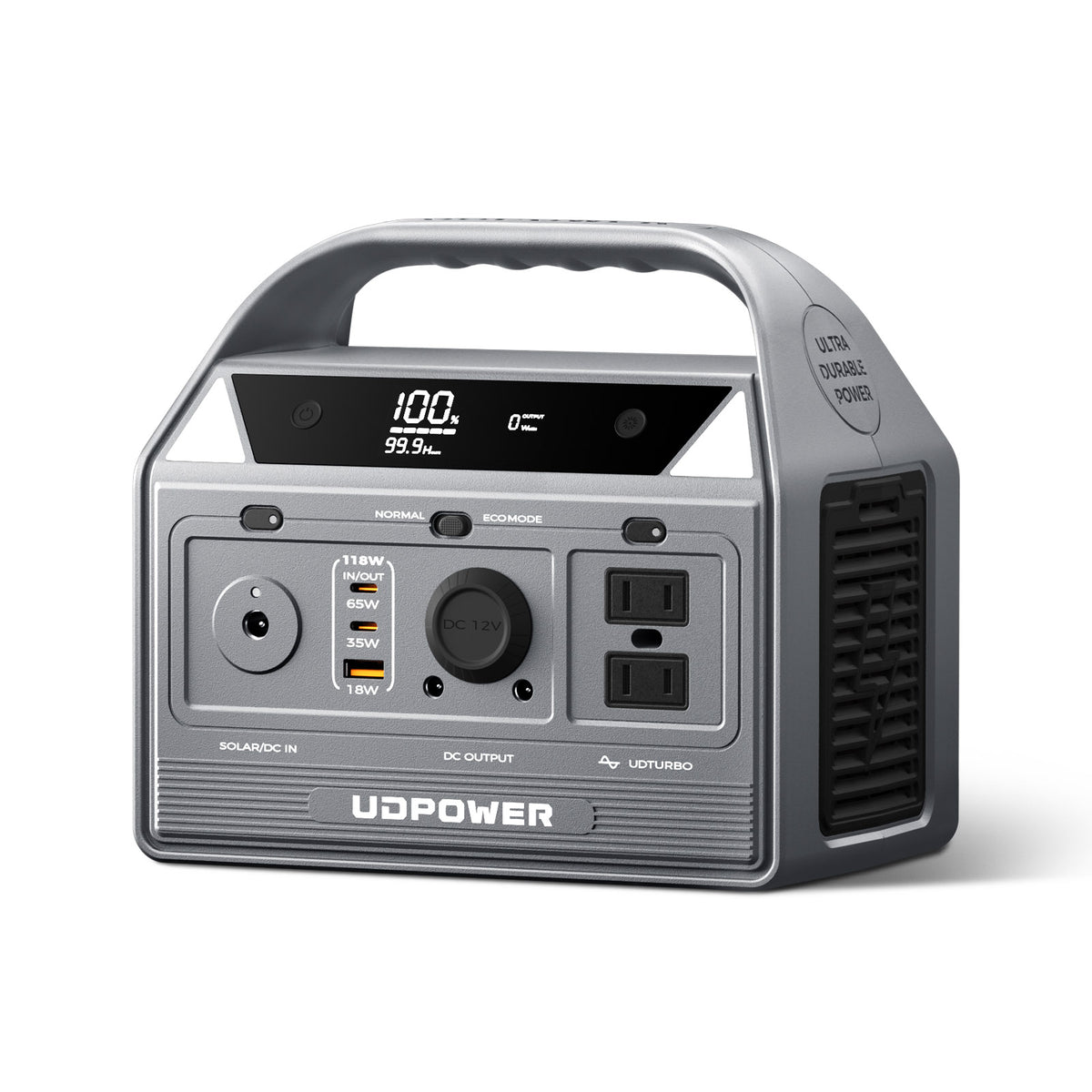
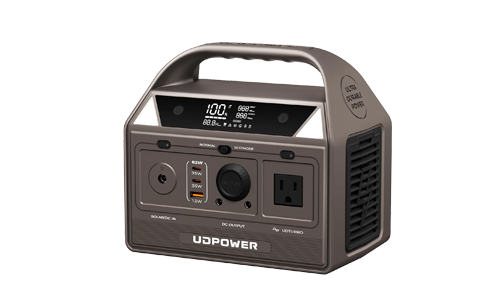
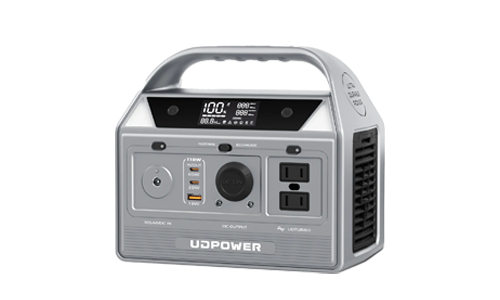
UDPOWER C400: Compact Step Up From a Power Bank
The C400 is suited to short camping trips, cameras, laptops, lights, fans, limited CPAP use, and roadside backup. It also includes a 12V vehicle jump-start function.
Rough energy comparison: 256Wh is about 3.5 times the stored energy of a 20,000mAh, 3.7V power bank.
View UDPOWER C400 View Power Stations Under 300Wh
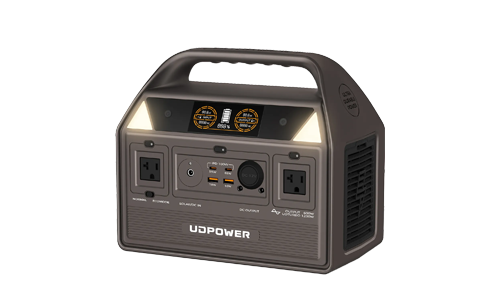
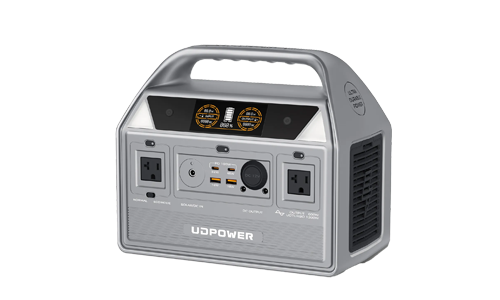
UDPOWER C600: Better for Overnight and Weekend Power
The C600 offers a more practical balance for overnight CPAP backup, a portable refrigerator, drone batteries, laptops, cameras, campsite lighting, and emergency communication devices.
Rough energy comparison: 596Wh is about eight times the stored energy of a 20,000mAh, 3.7V power bank.
View UDPOWER C600 View 300–1,000Wh Power Stations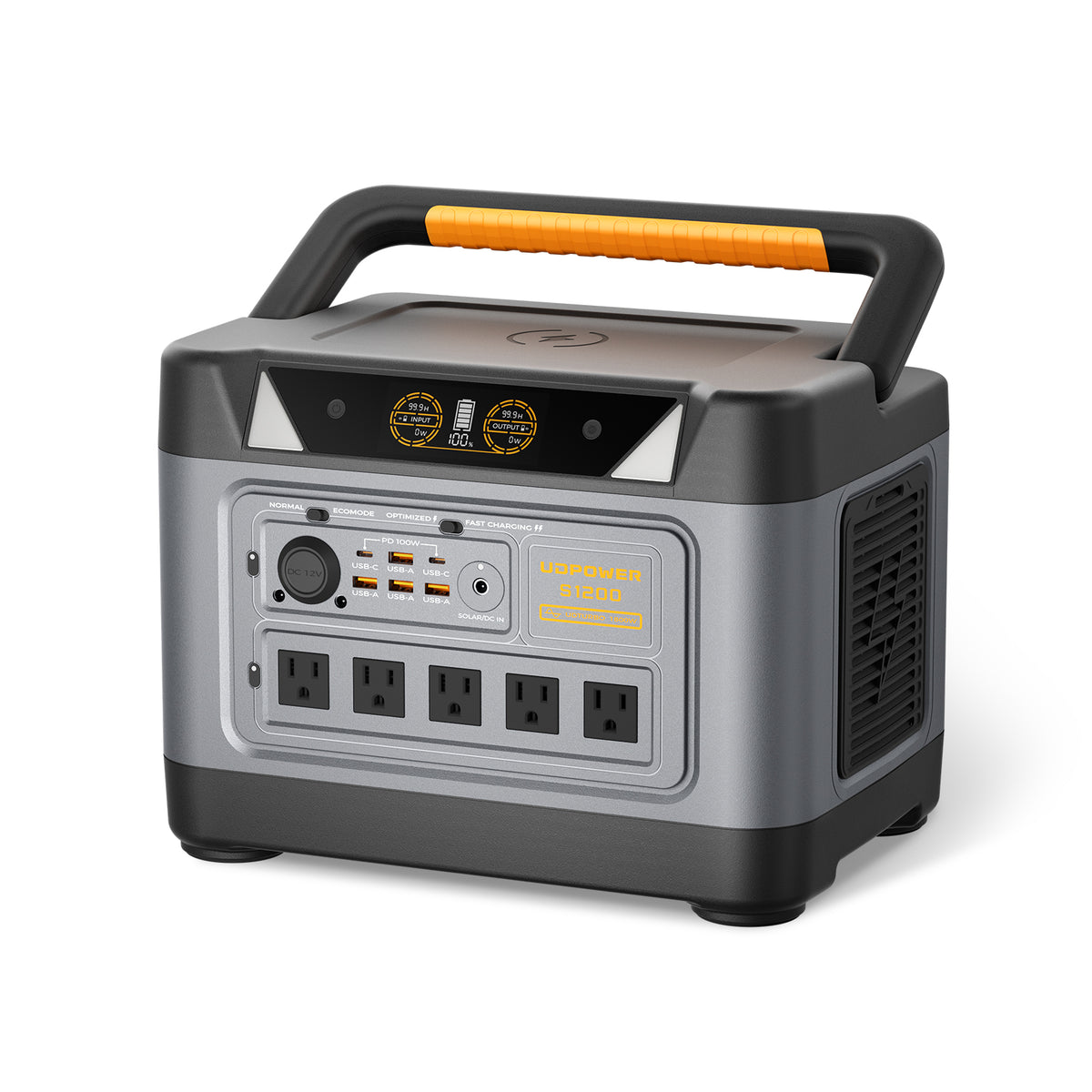
UDPOWER S1200: Higher-Capacity Backup for Essential Devices
The S1200 is better suited to refrigerator backup, longer CPAP use, routers, TVs, lighting, RV trips, multi-device charging, and selected home essentials during outages.
Rough energy comparison: 1,190Wh is about 16 times the stored energy of a 20,000mAh, 3.7V power bank.
View UDPOWER S1200 See What a 1,200W Station Can RunUDPOWER product capacities, output ratings, battery specifications, weights, and images are taken from the corresponding official UDPOWER product pages. Usable-energy figures are planning estimates calculated at 90% efficiency and are not guaranteed runtimes.
How Many Watt-Hours Do You Actually Need?
Start with the energy used by every device, not the largest mAh number advertised on a product page.
Required Wh = Device watts × Hours of useThen add a realistic reserve for conversion losses, variable loads, cold weather, battery aging, and unexpected use.
| Use Case | Example Energy Need | Practical Capacity Class | Suggested Starting Point | Related Guide or Category |
|---|---|---|---|---|
| Emergency phone top-up | About 10–20Wh | 20–40Wh | 5,000–10,000mAh power bank | mAh-to-Wh conversion guide |
| Phone and tablet for a travel day | About 30–60Wh | 50–100Wh | 15,000–27,000mAh power bank | Wh-to-mAh conversion guide |
| Laptop plus phone | About 70–150Wh | 90–250Wh | High-output USB-C bank or compact station | Portable power stations under 300Wh |
| Router and lights during an outage | About 150–400Wh | 250–600Wh | UDPOWER C400 or C600 | Battery-powered outlets |
| One night of CPAP use | About 120–720Wh depending on settings | 300–1,200Wh | C600 or S1200 for a stronger reserve | CPAP battery backup selection |
| Weekend camping | About 500–1,500Wh | 600–2,000Wh | C600, S1200, or a solar generator kit | How many Wh do I need for camping? |
| Refrigerator and outage essentials | Often 800Wh or more per day | 1,000Wh+ | S1200 or higher-capacity station | Shop portable power stations |
A Simple Three-Step Sizing Method
- List each device's watts. Use the product label, power adapter, manual, or a plug-in watt meter.
- Multiply watts by hours. A 10W router used for 12 hours needs approximately 120Wh.
- Add reserve capacity. Do not select a battery whose nameplate capacity exactly equals your calculated load.
Example: Basic Overnight Outage Setup
| Device | Power | Use Time | Energy Needed |
|---|---|---|---|
| Wi-Fi router | 10W | 10 hours | 100Wh |
| LED lights | 15W total | 5 hours | 75Wh |
| Two phones | Approximately 20Wh each | One full charge each | 40Wh |
| Laptop | 60Wh battery | One full charge | 60Wh |
| Total device energy | — | — | 275Wh |
A 300Wh battery would leave little room for conversion loss or unexpected use. A station in the 400–600Wh class would provide a more practical reserve.
Before connecting an appliance, also confirm that its running and startup wattage are below the power station's output limits. Read how to know whether a portable power station can run your device.
Frequently Asked Questions
Do I need voltage to calculate the watt-hours of a power bank?
Yes. Milliamp-hours measure electrical charge, not total energy. You need the battery voltage to convert mAh into Wh using Wh = mAh × V ÷ 1,000.
Why is a 20,000mAh power bank usually around 74Wh?
Many 20,000mAh lithium-ion power banks rate their cell capacity at 3.7V. The calculation is 20,000 × 3.7 ÷ 1,000, which equals 74Wh.
Should I use 3.7V or 5V to calculate power bank Wh?
Use the voltage paired with the stated mAh capacity. For many power banks, that is the internal cell voltage of approximately 3.7V. Do not use 5V simply because the power bank has a 5V USB output.
What if my power bank uses 3.85V cells?
Use 3.85V in the formula. For example, 20,000mAh at 3.85V equals 77Wh. Using 3.7V would understate its stored energy.
How many watt-hours is a 10,000mAh power bank?
At 3.7V, a 10,000mAh power bank is 37Wh. At 3.85V, it is 38.5Wh. Check the label for the correct voltage.
How many watt-hours is a 30,000mAh power bank?
At 3.7V, a 30,000mAh power bank is 111Wh. This is above the common 100Wh airline threshold and may require advance airline approval.
Is a 26,800mAh power bank under 100Wh?
At 3.7V, it is approximately 99.16Wh. At 3.85V, it is approximately 103.18Wh. Use the Wh and voltage printed on the actual product label.
Is a 100W power bank the same as a 100Wh power bank?
No. A 100W rating describes maximum output power or charging speed. A 100Wh rating describes stored energy. A power bank can deliver 100W while storing less than 100Wh.
Why does a power bank provide fewer phone charges than the Wh calculation suggests?
Some energy is lost during voltage conversion, cable transmission, heat generation, and charging inside the phone. The phone may also consume power while it is being charged.
Can I take a power bank in checked baggage?
Power banks are treated as spare lithium batteries and generally must be carried in carry-on baggage. Check current FAA guidance and the specific rules of your airline before traveling.
How do I calculate how long a power bank will run a device?
Use runtime = battery Wh × efficiency ÷ device watts. Also confirm that the power bank supports the connector, voltage protocol, and required output wattage.
What should I do if the label already lists Wh?
Use the printed Wh rating directly. You only need the mAh conversion formula when the watt-hour rating is missing or when you want to verify the manufacturer's figures.
Can I compare two power banks using mAh alone?
Only when both mAh ratings are stated at the same voltage. Wh is a more reliable comparison because it already includes voltage.
When should I choose a portable power station instead of a power bank?
Choose a portable power station when you need AC outlets, more than roughly 100Wh of practical energy, overnight medical-device backup, refrigerator power, multiple devices, or longer emergency and camping runtime.
Choose Power by Watt-Hours, Not Marketing Numbers
Start by converting the battery capacity into Wh, estimate your real device energy use, add a practical reserve, and then confirm that the output wattage and ports match your equipment.
View Portable Power Stations Use the Conversion Tools Get the Capacity Selection Guide View Solar Generator KitsRelated Articles


