

Florida Bioluminescence Guide: Best Places, 2026 Moon Dates, and Night-Kayaking Safety
Last updated:
The answer in one minute
Florida's most established bioluminescence trip area is the Space Coast, especially around the Mosquito Lagoon, Indian River Lagoon, Banana River, Titusville, Cocoa Beach, and Merritt Island National Wildlife Refuge. Summer dinoflagellate glow can begin in late May or June and is usually strongest from July through September. Cooler months can bring glowing comb jellies.
For the best odds, choose a dark night within about a week of the new moon, then confirm the current glow, recent rainfall, wind, and thunderstorm forecast with a local operator. A perfect moon phase cannot rescue a washed-out, windy, or stormy night.
First visit? Book a guided kayak, clear-kayak, raft, or pontoon tour. It removes the hardest parts of the trip: finding a legal night launch, navigating dark water, carrying required safety gear, and locating the brightest patch of water that evening.

What Florida bioluminescence actually looks like
Bioluminescence is light produced by living organisms. On Florida's Space Coast, summer glow is commonly associated with microscopic dinoflagellates in brackish lagoon water. When a paddle, fish, hand, or kayak disturbs the water, the organisms can flash blue-green for a moment. In cooler months, comb jellies may create a softer glow.
The experience is usually more interactive than a glowing beach. You may see bright streaks around a paddle blade, sparkling droplets falling from the paddle, glowing wakes behind fish, or a luminous outline under the kayak. The water will not necessarily look like a continuously illuminated swimming pool.
Best time to see bioluminescence in Florida
The easiest planning answer is summer, on a dark and calm night. Visit Space Coast lists June through September as the main viewing season and notes that the season may begin in late May or June. It also warns that rain and storms can weaken visibility by changing or diluting lagoon conditions.
| Period | What you may see | Planning value | Main limitation | Source |
|---|---|---|---|---|
| Late May to June | Dinoflagellate season may begin | Good early-season option when local reports are strong | Brightness can still be inconsistent | Visit Space Coast |
| July to September | Typical peak dinoflagellate glow | Best overall period for first-time visitors | Heat, mosquitoes, storms, and high demand | Visit Space Coast |
| October to fall transition | Possible lingering dinoflagellates and transition conditions | Useful for travelers avoiding the busiest summer dates | More dependent on current local conditions | Local operator calendar |
| Cooler months | Comb-jelly bioluminescence may be available | Can make the experience possible outside summer | Different look and less predictable trip-to-trip | Local operator calendar |
A new moon helps because less moonlight reflects from the water. It is not the only factor. A partly cloudy night after a bright moonrise may still offer dark sections, while a new-moon night after heavy rain or during gusty weather may disappoint.
Remaining 2026 dark-sky windows
The dates below come from a 2026 planning calendar published by a local Space Coast tour operator. Use them to shortlist dates, not as a guarantee. Recheck the moon, weather, access, and current glow before driving to the launch.
| Month | Suggested low-moon window | New moon | Season context | Planning note |
|---|---|---|---|---|
| August 2026 | August 3–16 | August 12 | Peak summer season | Strong target month; reserve early and watch the storm forecast. |
| September 2026 | September 2–15 | September 10 | Peak-to-late summer season | Good balance of darkness and seasonal glow; recent rain still matters. |
| October 2026 | October 1–14 and October 30–31 | October 10 | Fall transition | Ask what has been glowing during the previous few nights. |
| November 2026 | October 30–November 14 and November 29–30 | November 9 | Cool-season transition | Confirm whether the trip is targeting comb jellies, dinoflagellates, or both. |
| December 2026 | November 29–December 13 and December 28–31 | December 8 | Cooler-season viewing | Bring a dry layer and verify that the operator is actively running glow tours. |
Source: 2026 Florida Bioluminescence Moon Calendar. Dates may be revised by the publisher; local conditions change independently of the moon.
Best places to see bioluminescence in Florida
For a trip built specifically around bioluminescence, start with Florida's Space Coast rather than assuming any dark beach will glow. The Indian River Lagoon system includes the Indian River, Banana River, and Mosquito Lagoon, with multiple tour departure areas near Titusville, Cocoa Beach, Cape Canaveral, and Merritt Island.
| Area | Best fit | What makes it appealing | Trade-offs | Access note |
|---|---|---|---|---|
| Mosquito Lagoon / Merritt Island National Wildlife Refuge | Travelers prioritizing a dark, natural setting | Refuge landscape, limited shore lighting, wildlife-rich lagoon environment | More mosquitoes, fewer services, strict launch access, possible NASA restrictions | Only Bair's Cove and Beacon 42 are listed by the refuge as night-launch ramps; a refuge pass is required for these launches. Check current USFWS access. |
| Indian River Lagoon / Titusville | First-time visitors who want several guided-tour formats | Central Space Coast access and proximity to refuge waters | The best launch can change with weather and glow reports | Confirm the exact meeting point with the operator; do not assume all public ramps allow night access. |
| Banana River / Cocoa Beach area | Families, couples, and travelers combining the trip with a beach stay | Convenient tourism base and clear-kayak options | Some areas have more ambient light than refuge launches | Use a reputable operator or verify the launch's posted hours and parking rules before arrival. |
| Other Florida locations | Travelers already staying elsewhere in the state | Seasonal tours may be available near St. Augustine or South Florida | Availability and intensity can be less consistent than the Space Coast | Ask for a recent, location-specific glow report rather than relying on statewide claims. |
The five-factor trip-success scorecard
Most guides stop at “go during a new moon.” A better decision uses five checks in order. This order is a practical planning framework, not a scientific brightness formula.
- Current local glow report: Ask what guests saw during the last few nights and whether the operator plans to use the same launch.
- Season and organism: Summer is the strongest all-around bet for dinoflagellates. In cooler months, ask whether comb jellies are currently present.
- Recent rain and water conditions: Heavy rain and storms can reduce visibility. A calendar cannot show what happened in the lagoon yesterday.
- Moonlight and nearby artificial light: Favor the week around a new moon or a departure before moonrise. Darker shorelines improve contrast.
- Wind and thunderstorm risk: Calm water improves paddling and viewing. Thunderstorms are a reason to postpone, not a minor inconvenience.
Guided tour or DIY launch?
A guided trip is not just a convenience purchase. At night, local access rules, navigation, weather judgment, wildlife awareness, and finding the active glow all matter. DIY can work for experienced paddlers who already understand the area and verify every launch requirement.
| Question | Guided tour | DIY launch |
|---|---|---|
| Best for | First-timers, families, visitors without boats, and anyone unfamiliar with the lagoon | Experienced night paddlers with appropriate gear and local route knowledge |
| Glow location | Guide can adjust the route based on recent observations | You must find productive water yourself |
| Equipment | Boat, paddle, and PFD are commonly supplied; confirm exactly what is included | You provide and inspect all required gear |
| Night launch access | Operator manages its approved meeting point and timing | You must confirm legal night access, fees, parking, and closures |
| Weather decision | Operator may reschedule or cancel under its policy | You are fully responsible for the go/no-go decision |
| Navigation risk | Lower when following an experienced local guide | Higher in darkness, especially around channels and motorboat traffic |
When comparing tours, ask about departure duration, tandem versus single boats, clear kayaks, raft or pontoon alternatives, child age and weight limits, mobility assistance, restroom access, cancellation rules, and whether photos are included.
Florida night-kayaking safety and legal basics
Florida treats human-powered canoes, kayaks, and paddleboards as vessels for safety purposes. The Florida Fish and Wildlife Conservation Commission lists the following equipment for nonmotorized vessels:
- One U.S. Coast Guard-approved wearable life jacket for every person.
- A whistle, horn, or other sound-producing device audible for at least one-half nautical mile.
- A lantern or flashlight capable of showing a white light when operating between sunset and sunrise or during restricted visibility.
- A white all-around light when anchored away from a dock between sunset and sunrise.
See the current requirements directly from the Florida Fish and Wildlife Conservation Commission. Rules can vary with the type of craft, location, age of passengers, and whether the vessel is motorized.
Night-paddling habits that matter
- Wear the PFD rather than storing it under a seat.
- Stay with the group and avoid crossing marked channels unless the route requires it.
- Keep the required white light available, but do not shine it continuously across the water unless needed for safety; bright light reduces night vision and can spoil the view for others.
- Tell someone on shore where you are launching, your route, and when you expect to return.
- Protect keys, phone, medication, and identification in a sealed dry bag.
- Do not touch, chase, scoop, or remove wildlife to force a brighter reaction.
A practical step-by-step trip plan
- Two to six weeks before: Pick the Space Coast area, shortlist a dark-sky date, and reserve a reputable tour with a weather policy you understand.
- Three days before: Check the moonrise, hourly wind, thunderstorm probability, and recent rainfall. Do not focus on the nightly low temperature while ignoring wind and lightning.
- Twenty-four hours before: Ask the operator how the glow looked recently, confirm the exact launch pin, arrival time, parking instructions, and what equipment is included.
- Before leaving the hotel or campsite: Fully charge phones and cameras, download the map for offline use, eat a light meal, and apply insect repellent before handling camera gear.
- At check-in: Tell the guide about swimming ability, mobility limitations, medication, pregnancy, prior injuries, or anxiety around dark water.
- On the water: Keep your screen dim, follow spacing instructions, paddle gently, and let your eyes adjust. Watch the wake behind the paddle and fish rather than staring only at the horizon.
- After the tour: Dry equipment, recharge devices at a dry basecamp, rinse salt or brackish spray from approved gear, and avoid connecting wet cables.
Portable power for a Florida bioluminescence trip
A portable power station is useful for the dry side of the trip: charging phones, camera batteries, action cameras, lights, a laptop, or a small fan at a hotel, campsite, RV, or vehicle staging area. It is not necessary for a typical 90-minute paddle, and it should not be treated as kayak equipment.

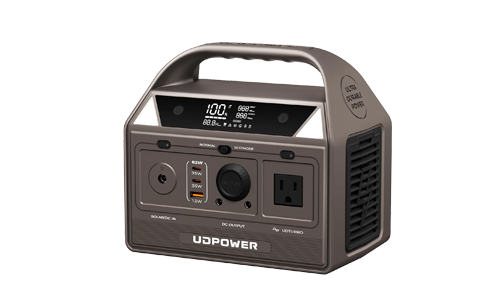
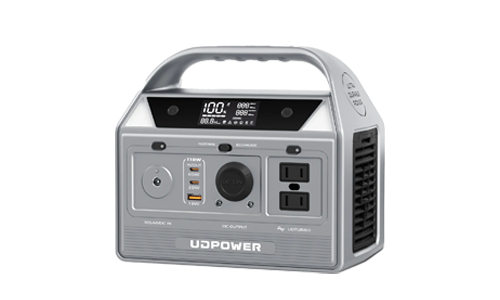
UDPOWER C400: best fit for a day trip or compact camera kit
The C400 is the practical choice when you need a small charging base for a phone, mirrorless camera batteries, action cameras, and a laptop without carrying a large station.
- Capacity: 256Wh
- AC output: 400W pure sine wave, 800W surge
- Weight: approximately 6.88 lb
- USB-C: two ports, 100W combined
- Solar input: up to 150W
- Battery: LiFePO4, with 80%+ capacity listed after 3,000 cycles

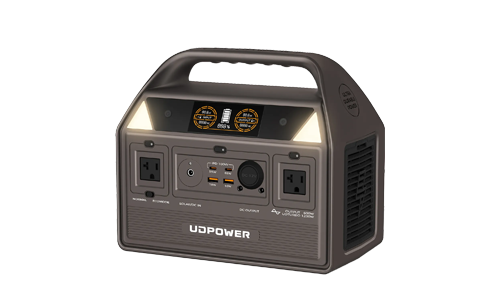
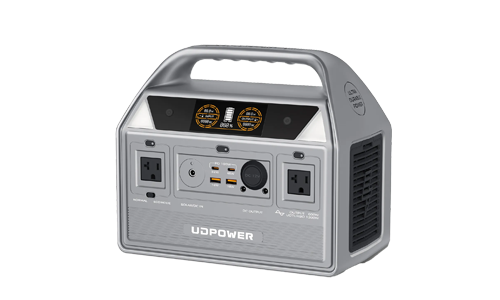
UDPOWER C600: best fit for a weekend, family, or multi-camera basecamp
The C600 provides more reserve capacity for a two- or three-night Florida stay, especially when several people are charging phones, cameras, a laptop, and small campsite electronics.
- Capacity: 596Wh
- AC output: 600W pure sine wave; the product page lists up to 1,200W through UDTURBO
- Weight: 12.3 lb
- USB-C: two ports, 100W combined
- Solar input: up to 240W
- Battery: LiFePO4, with 80%+ capacity listed after 3,000 cycles
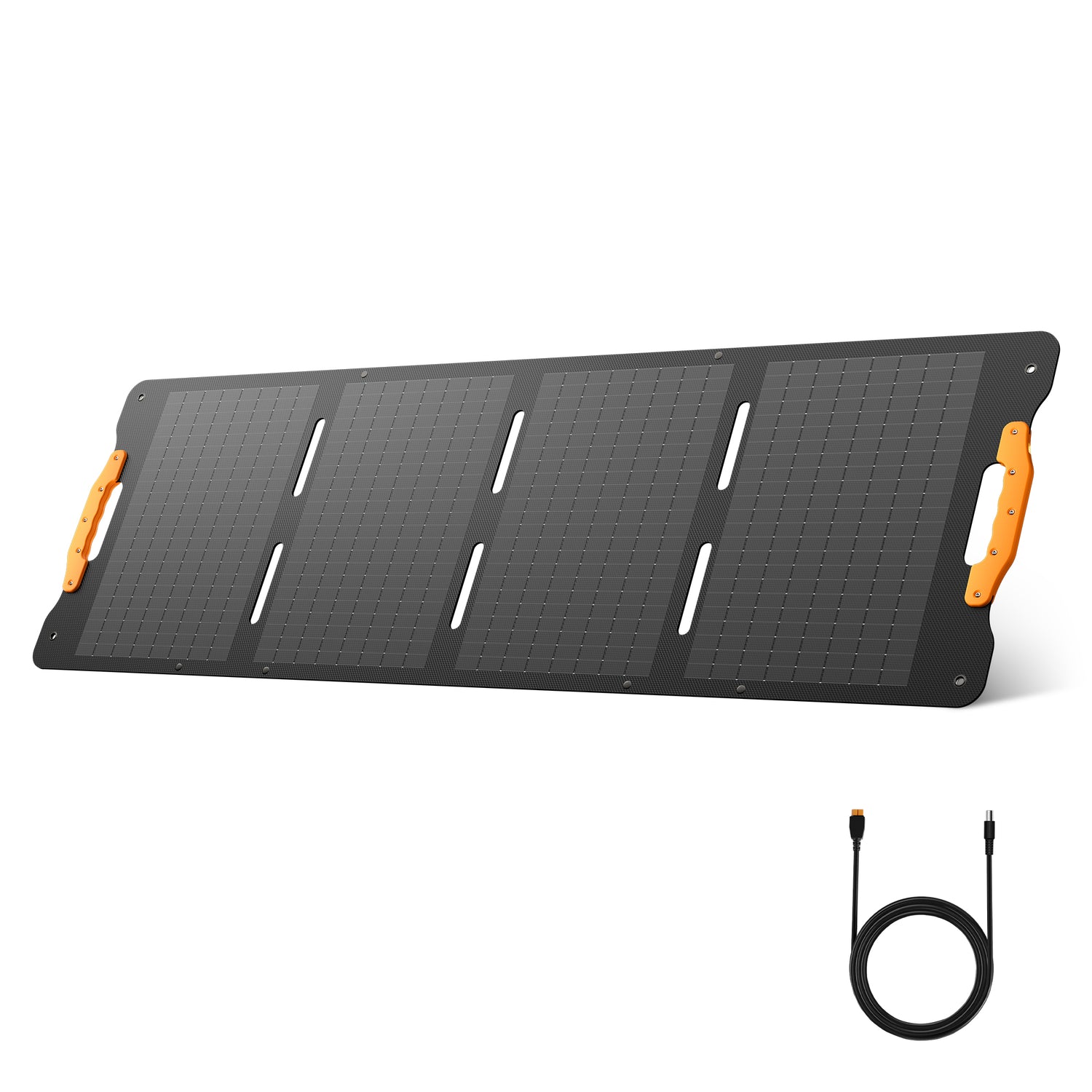
UDPOWER 120W solar panel: optional daytime recharge for a longer stay
Solar is most useful when the bioluminescence trip is part of a longer camping or RV itinerary. Set the panel up during daylight at a dry basecamp, not at the night launch.
- Rated output: 120W
- Open-circuit voltage: 21.5V
- Cell efficiency: at least 22%
- Weather rating: IP65 for the panel
- Design: folding format with adjustable 60°–90° support angle
How much charging reserve do you actually need?
The examples below use 90% conversion efficiency and represent full-charge equivalents. Real results vary with battery size, cable losses, temperature, station idle draw, and whether devices are used while charging.
| Device assumption | UDPOWER C400, 256Wh | UDPOWER C600, 596Wh | How to interpret it |
|---|---|---|---|
| 15Wh smartphone | About 15 full-charge equivalents | About 35 full-charge equivalents | Enough for navigation, check-in, emergency calls, and trip photos across several days |
| 16Wh mirrorless-camera battery | About 14 full-charge equivalents | About 33 full-charge equivalents | Actual charger efficiency can reduce the count |
| 60Wh laptop battery | About 3.8 full-charge equivalents | About 8.9 full-charge equivalents | Useful for backing up photos after the tour |
| 20W small fan | About 11.5 hours | About 26.8 hours | Runtime decreases when other devices are charging at the same time |
For more camera-specific planning, read Portable Power Solutions for Outdoor Camera Charging . For a broader campsite setup, see the portable power supply for camping guide .
What to bring on a Florida bioluminescence tour
| Item | Why it matters | Where to keep it |
|---|---|---|
| Quick-dry clothing | Paddle drips and launch areas can leave you wet even without capsizing | Wear it; leave a dry change of clothes in the vehicle |
| Closed-toe water shoes or secure sandals | Improves footing at dark, muddy, or shell-covered launches | Wear them |
| Insect repellent | Lagoon and refuge launches can have intense mosquitoes and biting insects | Apply before handling camera gear; reseal away from food |
| Water | Florida nights can remain hot and humid | Secure the bottle in the boat or use the operator's recommended setup |
| Small dry bag | Protects phone, keys, ID, and medication | Clip or secure it as instructed |
| Required white light and whistle | Night-visibility and sound-device requirements apply to human-powered vessels | Immediately reachable, not buried under gear |
| Dim red light, if permitted | Helps with close tasks while preserving night vision | Use sparingly; it does not replace required white-light capability |
| Towel and dry layer | Useful after the trip, especially in shoulder or cool seasons | Leave in the vehicle or dry staging area |
| Fully charged phone | Navigation, operator contact, weather, and emergency communication | Sealed dry bag or waterproof case |
Visit Space Coast also recommends insect repellent, a change of clothes, water, and snacks. Confirm whether your operator allows personal cameras, tripods, loose bags, or phone mounts before arrival.
How to photograph bioluminescence without missing the experience
Bioluminescence is difficult to photograph because the light is faint, the subject is moving, and the kayak is rarely stable. Start with the goal of seeing it well. Treat usable images as a bonus.
| Camera type | Starting approach | What usually goes wrong |
|---|---|---|
| Smartphone | Turn off flash, dim the display, use night mode, brace the phone, and try a short exposure when the kayak is still | Long exposures smear paddle movement; the preview may look darker than your eyes perceive |
| Mirrorless or DSLR from shore | Use a wide-aperture lens, high ISO, manual focus, and a stable support; test exposures before the group launches | Autofocus hunts in darkness and long exposures blur moving water |
| Mirrorless or DSLR in a kayak | Use a fast shutter compared with shore shooting, accept more noise, attach a secure strap, and keep the camera protected from spray | Camera movement ruins slow exposures and loose gear creates a capsize hazard |
| Action camera | Use the best low-light mode available, 24 or 30 fps, and the least aggressive stabilization that still looks usable | Small sensors often record less color and brightness than the eye sees |
- Do not use a flash or bright video light to “help” the glow.
- Do not hold a phone over open water without a secure lanyard or case.
- Record a few short clips, then put the camera away and let your eyes adapt.
- Back up files after returning to a dry location, not at the water's edge.
How to protect the lagoon while you visit
The Indian River Lagoon is a living estuary, not an amusement display. The best low-impact trip is quiet, controlled, and guided by wildlife-first behavior.
- Do not scoop organisms into bottles or containers.
- Do not chase dolphins, manatees, fish, or rays to create glowing wakes.
- Avoid dragging paddles or feet through seagrass and shallow habitat.
- Carry out every wrapper, cable tie, bottle, and disposable light.
- Use lights only when needed for navigation or safety.
- Follow refuge, operator, and launch-site instructions even when another group ignores them.
Frequently asked questions
Where is the best place to see bioluminescence in Florida?
The Space Coast offers the most established cluster of bioluminescence trips, especially around Mosquito Lagoon, Indian River Lagoon, Banana River, Titusville, Cocoa Beach, and Merritt Island National Wildlife Refuge. The best launch on a specific night depends on current water and glow conditions.
What month is best for bioluminescence in Florida?
July through September is the strongest general target for summer dinoflagellate glow. The season can begin in late May or June, and cooler months may offer glowing comb jellies. Ask a local operator what has been visible during the previous few nights.
Does the water glow every night?
No brightness level is guaranteed. Organism concentration, rainfall, storms, wind, water conditions, moonlight, shoreline lighting, and the exact route can all change what you see.
Do I have to go on the exact night of the new moon?
No. The week around a new moon is a useful target, and a trip before moonrise can also work. A recent local glow report and safe weather are more important than hitting one exact calendar date.
Can I see Florida bioluminescence from shore?
Sometimes, but the classic Space Coast experience is usually better from a kayak, raft, or boat because movement activates the glow and guides can reach darker, more productive water. Shore access may also close at sunset.
Is bioluminescent kayaking safe for beginners?
It can be appropriate for beginners on a guided trip with suitable weather, properly fitted PFDs, and an operator that matches the craft to your ability. Tell the operator about swimming ability, mobility limits, injuries, and children before booking.
Can children join a bioluminescence tour?
Many operators accept children, but minimum age, weight, seating, and adult-supervision rules vary. Raft or pontoon options may be easier for some families than a tandem kayak. Confirm the exact policy before paying.
Are comb jellies dangerous or likely to sting?
Comb jellies are not the same as true jellyfish and are generally known for not having the stinging cells associated with true jellyfish. Still, leave all wildlife in the water and follow the guide's instructions rather than handling it.
What happens if it rains?
Light rain does not automatically cancel every trip, but heavy rain and storms can reduce visibility and create unsafe conditions. Thunderstorm risk, lightning, wind, and the operator's safety decision should control the plan.
Why does my phone show less glow than I can see?
Phone sensors struggle with faint, fast-moving light in a moving kayak. Night mode may brighten the scene but blur the water. Turn off flash, stabilize the phone, and accept that the memory may look better than the recording.
Can I launch my own kayak at Merritt Island National Wildlife Refuge after dark?
Only specific ramps are listed for night launching. The refuge currently identifies Bair's Cove and Beacon 42, requires a refuge pass for those launches, and may restrict access during NASA operations. Verify the official refuge page on the day of the trip.
Should I take a portable power station on the kayak?
No. Keep the station at a dry hotel, campsite, RV, or vehicle staging area. Charge your phone and camera before launching, then recharge after returning with dry hands and dry connectors.
Build the right dry-basecamp power setup
Choose by trip length, number of devices, and whether you will have daytime solar access. Keep the station dry and off the water.
Compare UDPOWER models View portable power stations Get the camping power guidePlanning sources
- Visit Space Coast: Bioluminescence
- VISIT FLORIDA: Bioluminescent Kayaking
- U.S. Fish & Wildlife Service: Merritt Island National Wildlife Refuge visitor information
- Florida Fish and Wildlife Conservation Commission: Human-powered vessel requirements
- National Weather Service: Safe boating and thunderstorms
- Local operator: 2026 Florida bioluminescence moon calendar
Related Articles


