Best Affordable Portable Power Stations (2026): Real Value Picks + What to Compare
ZacharyWilliamUpdated: January 2026
“Affordable” in 2026 doesn’t just mean a low price tag. The best budget-friendly portable power stations give you the right mix of usable watt-hours, honest continuous output, and solar + wall charging options without paying for features you’ll never touch.
Quick reality check: Prices and stock move fast (especially during promos). In the tables below, prices are “as listed” on UDPOWER in January 2026. If you’re reading later, treat the price column as a baseline and re-check the live page before buying.

30-second picks (by budget & use)

Under $200Day tripsLight AC
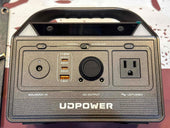
UDPOWER C200 (192Wh / 200W)
Best when you mainly charge phones, cameras, laptops, small fans, and occasional light AC loads. If your “must run” list includes a kettle, space heater, or microwave—skip this tier.

Under $200Car kitJump-start
UDPOWER C400 (256Wh / 400W + jump starter)
A practical “glovebox + outage” unit if you want a little more inverter headroom plus jump-start capability. Great for travel chargers, small appliances, and emergency car use.

Under $300WeekendSmall fridge
UDPOWER C600 (596Wh / 600W)
The “sweet spot” for many people: enough battery to matter, enough inverter to handle more real-world stuff, and solar input that can actually refill at a reasonable pace on a good day.

Under ~$400Home backupUPS
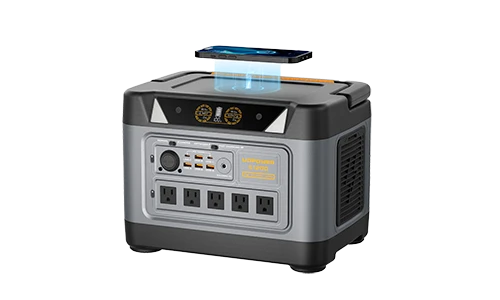
UDPOWER S1200 (1190Wh / 1200W, UPS ≤10ms)
If you want “affordable but serious,” this tier is where outage backup becomes comfortable: Wi-Fi + fridge time, CPAP-friendly setups, and a bigger solar input ceiling.
Note: UDPOWER lists multiple S1200 variants; pricing can differ (for example, a 3-AC-outlet version may appear separately when in stock).

If your “affordable” target still includes running higher-watt appliances (coffee makers, air fryers, power tools), you’re usually in the 2000W+ class. That’s where a model like UDPOWER S2400 makes sense—but it’s not a “budget” buy in the traditional sense.
Affordable shortlist comparison table

| Model | Best for | Battery (Wh) | Inverter (continuous / surge) | Solar input (max) | Solar input range | Weight (approx.) | Price (as listed Jan 2026) |
|---|---|---|---|---|---|---|---|
| C200 | Day trips, light AC, travel charging | 192Wh | 200W / 400W | 150W | 11V–28V | 5.4 lbs | $129.99 |
| C400 | More headroom + car emergency (jump start) | 256Wh | 400W / 800W | 150W | 11V–28V | 6.88 lbs | $169.99 |
| C600 | Weekend trips, higher daily energy, small fridge time | 596Wh | 600W / 1200W | 240W | 11V–28V | 12.3 lbs | $289.99 |
| S1200 | Home backup, CPAP setups, UPS use, bigger solar | 1191Wh | 1200W / 1800W | 400W | 12V–75V | ~26.0 lbs | $399.99 (variant-dependent) |
| S2400 | Higher-watt appliances + longer runtime | 2083Wh | 2400W / 3600W | 400W | 12V–50V | ~46.7 lbs | $749.99 |
Value math: $/Wh and $/W (why “cheap” can be expensive)
A fast way to spot real value is to compare price per watt-hour (how much stored energy you’re buying) and price per watt (how much inverter output you’re buying). It’s not perfect—but it stops you from overpaying for tiny batteries with shiny marketing.

| Model | Price used | $/Wh (lower is better) | $/W (lower is better) | What this usually means |
|---|---|---|---|---|
| C200 | $129.99 | $0.677 | $0.650 | Very portable; best when loads are small and you value weight over runtime. |
| C400 | $169.99 | $0.664 | $0.425 | Better inverter value than C200; makes sense if you want more AC headroom. |
| C600 | $289.99 | $0.487 | $0.483 | Often the “best affordable” tier because both battery and inverter start feeling practical. |
| S1200 | $399.99 | $0.336 | $0.333 | Strong value if you actually need backup runtime and UPS-style behavior. |
| S2400 | $749.99 | $0.360 | $0.312 | Not “cheap,” but good output-per-dollar when you truly need higher watts. |
How to choose in 2026 (the 6 checks that prevent regret)

- Continuous watts > peak watts. Ignore “surge” unless you know your device needs startup bursts (fridges, pumps, some tools). Most of your buying decision should be based on continuous output.
- Battery (Wh) decides “how long,” not marketing phrases. A “1000W” label doesn’t tell you runtime. The battery number does.
- Solar input range is a compatibility gate. Your panel’s voltage must stay inside the station’s supported range (and not exceed it even in cold, bright sun).
- Look for LiFePO4 for long-term value. In 2026, LiFePO4 is the baseline for people who want durability and calmer ownership.
- Charging matters as much as capacity. If you can only recharge slowly, a larger battery can become frustrating. (UDPOWER S1200, for example, lists up to 800W AC input and up to 400W solar input.)
- Support & warranty are part of “affordable.” Paying less up front isn’t a win if replacement, documentation, or warranty is vague. If you want a UDPOWER overview page to start browsing models, use: Portable Power Stations collection.
Runtime: the simple way to estimate
For a fast estimate, you can use: runtime (hours) ≈ capacity (Wh) × 0.85 ÷ load (W). The 0.85 is a practical “loss factor” for inverter + conversion overhead.

Want it faster? UDPOWER has a runtime calculator you can use to sanity-check your numbers: Portable Power Station Runtime Calculator. For “how long to recharge,” this is also handy: Battery Charge Time Calculator.
Solar pairing (voltage range matters more than panel watts)
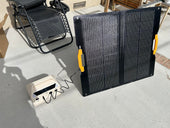
The biggest solar mistake is buying a “higher-watt” panel that doesn’t match your station’s voltage window. Example: C-series models list solar input windows like 11V–28V, while S1200 lists 12V–75V. That’s why the right pairing is about electrical compatibility first—and speed second.

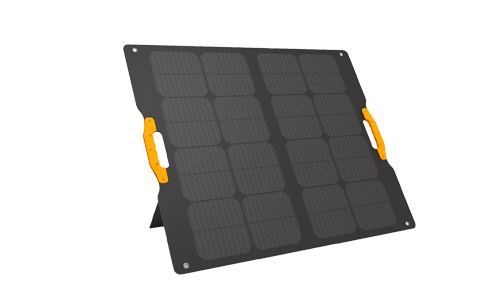
- If you want a compact solar starter setup, the 120W suitcase-style option is here: UDPOWER 120W Portable Solar Panel.
- Need a faster refill plan for bigger stations? UDPOWER also lists a 210W foldable panel (often backordered during peak seasons): UDPOWER 210W Portable Foldable Solar Panel (listing).
- If you’re using third-party panels, read connector and voltage basics first: Solar Panel Connector Types guide.
FAQ
What’s the best “cheap but not disappointing” power station size?
For most buyers, disappointment happens when the battery is too small (not the inverter). If you want something that feels meaningfully useful, the 500–1200Wh range is where “backup power” becomes comfortable.
Can an affordable power station run a refrigerator?
Sometimes—if you’re realistic. Fridges cycle on/off; the inverter must handle startup surge, and the battery decides total runtime. For many households, the “affordable but practical” fridge tier starts around the C600/S1200 class rather than pocket-size units.
Is $/Wh the only metric that matters?
No. Use it as a filter, then confirm the real decision points: continuous watts, solar input range, charging speed, ports, warranty/support, and noise/heat behavior.
What’s the most common beginner mistake?
Buying by “peak watts” or “marketing size,” then realizing your real need was either more battery (Wh) or faster recharge. The second most common mistake: solar voltage mismatch.
Can I fly with a portable power station?
Usually not if it’s large. Airlines and security rules are based on watt-hours (Wh). Many power stations are far above typical carry-on limits. Always check the latest guidance from TSA/FAA and your airline before traveling.
Do I need a UPS feature?
If you want to keep Wi-Fi, a workstation, or sensitive electronics from rebooting during short outages, UPS-style switchover can help. If you only care about charging phones and lights, you can skip it and spend more of your budget on battery capacity instead.
Sources & further reading
- UDPOWER Portable Power Stations collection
- UDPOWER C-Series collection
- UDPOWER C200 product page
- UDPOWER C400 product page
- UDPOWER C600 product page
- UDPOWER S1200 product page
- UDPOWER S2400 product page
- TSA: lithium battery limits (Wh-based)
- FAA PackSafe: lithium batteries guidance
- UL: Portable power pack testing (UL 2743)
- CDC: food safety timing during outages
Disclosure: This guide uses UDPOWER product pages for specs/pricing and includes UDPOWER recommendations. Use the comparison checklist to evaluate any brand fairly.
Related Reading (UDPOWER)
Budget & Buying (Affordable-focused)
- Best Budget Portable Power Station (2025): How to Choose + UDPOWER Picks – A budget-first framework for choosing capacity, output, and charging without overspending.
- Best Portable Power Stations Under $500 (2025 Buyer’s Guide) – Under-$500 shortlist with practical decision criteria and comparisons.
- How Much Does a Portable Power Station Cost? (Complete Price Breakdown) – What actually drives price: battery size, inverter, chemistry, charging speed, and ports.
- Is a Portable Power Station Better Than a Generator? – A clear comparison for shoppers deciding between battery power vs. fuel generators.
Sizing & Compatibility (What can it run?)
- How Do You Know if a Portable Power Station Can Power Your Device? – The most useful “will it run it?” checklist: continuous watts, surge, and efficiency.
- What Can a 200W Portable Power Station Run? – Perfect companion for the “affordable starter” tier (phones, lights, router, small loads).
- What Can a 600W Portable Power Station Run? – A realistic look at what the mid-tier can power and what it can’t.
- What Can a 1000W Portable Power Station Run? – When you step up to “more universal” home/outdoor usage.
- Guide to the Portable Power Supply for Camping – Camping-focused sizing tips (battery Wh, inverter W, and practical device planning).
Runtime & Charging (How long / how fast)
- Portable Power Station Runtime Calculator – Let readers plug in watts and get a quick runtime estimate (great for reducing bounce).
- How Long Does a Power Station Last? (In-Depth Guide) – Battery longevity, cycles, aging, and what impacts real-life performance.
- How Long Will a 1kWh Battery Last? – A practical baseline for 1kWh-class buyers (typical loads and expectations).
- Battery Charge Time Calculator: How to Calculate Battery Charging Time – The simple charging-time formula, plus real-world factors that slow charging near 100%.
Solar Pairing (Panels, connectors, inverter sizing)
- Solar and Power Inverters – Solar + inverter basics and how to size a setup without guessing.
- Solar Panel Connector Types – Connector compatibility and safe connection basics (great for reducing support tickets).
- Is It Worth Getting a Portable Solar Panel? – Helps readers decide if solar is worth it for their budget and usage pattern.
Home Backup & Appliance Planning
- How Many Watts Does a Fridge Use? – Fridge running watts vs. startup surge, and how to plan realistically.
- How Long Will a 1000W Portable Solar Generator Run a Refrigerator? – A focused runtime expectation guide for fridge backup scenarios.
- Top 10 Appliances that Use the Most Electricity in Your Home – Helps readers understand which loads drain batteries fastest (planning-friendly).
Model Comparison & Real-World Proof
- Product Comparison: UDPOWER S1200 vs. S2400 – A clear upgrade-path comparison for shoppers deciding between 1kWh vs 2kWh class.
- C400 Portable Power Station Review: Reliable Power Solution for Outdoor Adventures – A customer story that adds credibility next to your “affordable picks” section.






















![How to Live In The Woods [Complete Guide]](http://udpwr.com/cdn/shop/articles/Off-Grid_Cabin_Option_f6c94fe7-1ae7-4c3a-baf5-ed9fe684c832.png?v=1763523215&width=170)