

Portable Power Supply for Camping: Size, Solar & Runtime Guide
Last updated: September 4, 2026
Quick Answer: For most campers, a portable power station between 300Wh and 1,500Wh is the practical range. A light overnight trip with phones, lights, and camera batteries may need only 200–300Wh. A weekend campsite with a fan, laptop, and several devices is usually easier with 500–1,200Wh. If your setup includes a camping fridge, CPAP, multiple people, or several nights away from hookups, 1,000–2,000Wh+ provides much more breathing room.
The best camping power supply is not automatically the biggest battery. Start with three numbers: daily watt-hours, maximum simultaneous watts, and how much energy you can realistically recharge each day.
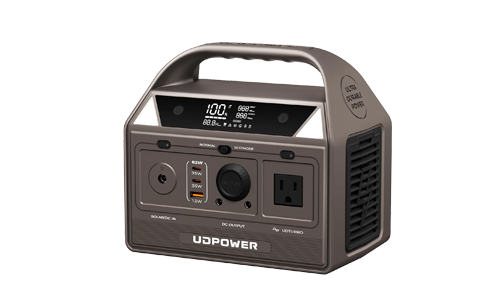
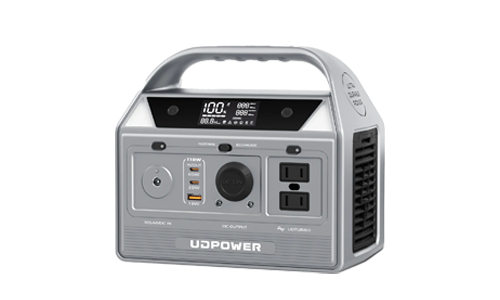
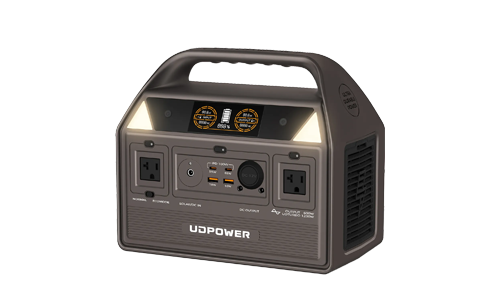
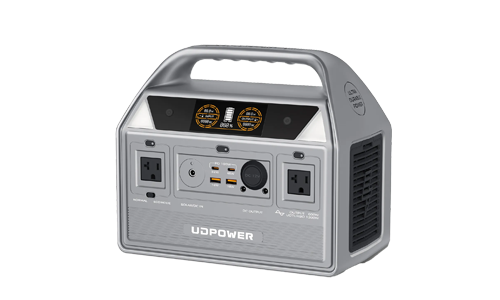
For UDPOWER, the C400 is the lightweight option for basic campsite electronics, the S1200 is the strongest all-around choice for family and multi-night camping, and the S2400 makes more sense for a fridge, CPAP, several users, higher-wattage equipment, or extended basecamp use.

What Is a Portable Power Supply for Camping?
When most U.S. campers say “portable power supply,” they are talking about a portable power station: a rechargeable battery system with a built-in inverter, battery management system, charging electronics, and multiple output ports.
That makes it different from both a small phone power bank and a gas generator.
A modern camping power station can typically provide:
- 120V AC outlets for ordinary plug-in devices
- USB-C for laptops, phones, tablets, cameras, and other electronics
- USB-A for smaller accessories
- 12V DC output for compatible camping refrigerators and other vehicle-style equipment
- Solar charging input for longer off-grid stays
- Car charging while traveling between campsites

The biggest advantage at a campsite is that battery power does not require a combustion engine. There is no gasoline to store, no engine to start, and no generator exhaust at the point of use.
It is still electrical equipment, however. Keep the unit dry, allow its cooling system to breathe, stay inside its operating limits, and follow the manufacturer instructions.
What Kind of Camper Actually Needs a Portable Power Station?
Portable power makes the most sense when the campsite is supported by a vehicle or when your equipment genuinely needs more energy than a small USB battery can provide.
| Camping Style | Typical Power Needs | Best Power Approach | Why |
|---|---|---|---|
| Backpacking | Phone, GPS, headlamp, camera | USB power bank | Weight matters more than AC output |
| Walk-in campsite | Phones, lights, fan, small electronics | Compact power station | Useful if the carry distance is short |
| Car camping | Lights, phones, laptop, fan, fridge, camera gear | 300–1,200Wh power station | Vehicle handles the battery weight |
| Family campsite | Multiple phones, lights, fan, fridge, laptop, projector | 1,000Wh+ station | Several users quickly increase daily Wh |
| CPAP camping | CPAP plus phone and lighting | Size from measured overnight Wh | Reliability matters more than general capacity rules |
| Overlanding | 12V fridge, electronics, camera gear, lights, laptop | Large station plus vehicle and solar charging | Long trips benefit from daily recharging |
| RV or basecamp | Fridge, electronics, cooking appliances, CPAP, multiple devices | 1,000–2,000Wh+ | Capacity and AC output matter more than minimum weight |
Do not carry a 20–40 lb power station miles into the backcountry just because it is called portable. For genuine backpacking, a USB power bank is usually the smarter tool. Larger power stations are primarily car-camping, RV, overland, cabin, and basecamp equipment.
The 3 Numbers That Matter Most: Wh, W, and Charging Watts
Most camping power mistakes come from looking at only one number on the product page.
1. Watt-Hours Tell You How Much Energy You Have
Battery capacity is measured in watt-hours.
Device watts × hours used = watt-hours consumed
A 30W fan running for six hours uses:
30W × 6 hours = 180Wh.
2. Watts Tell You Whether the Device Can Run
AC output is measured in watts. The power station needs enough output to handle the equipment running at the same time.
A 1,000Wh battery with a 400W inverter still cannot normally operate an 800W appliance through that 400W rated AC output.
3. Charging Watts Tell You How Quickly You Can Recover
This is the number campers often forget.
A large battery is useful on the first night. On day three, what matters is how much electricity you have managed to put back into it.
| Specification | Question It Answers | Camping Example |
|---|---|---|
| 256Wh | How much energy is stored? | Useful for phones, lights and other light loads |
| 400W AC output | How large a normal AC load can it run? | Laptop, fan, chargers and other lower-power devices |
| 150W solar input | How quickly can solar potentially recharge it? | Important on multi-day trips |
How to Calculate How Much Camping Power You Need
The most reliable method takes about five minutes.
Step 1: Make Three Lists
Divide campsite devices into:
- Must run: CPAP, food refrigerator, phone, emergency communication
- Useful: fan, lights, laptop, camera chargers
- Optional comfort: projector, coffee maker, heated blanket, entertainment
This prevents a coffee maker or movie night from using the electricity you needed for overnight equipment.
Step 2: Find the Actual Watts
Use the device label, power adapter, manual, or measured consumption whenever possible.
If a label gives volts and amps:
Watts ≈ Volts × Amps
Step 3: Multiply by Daily Use
Daily Wh = Watts × Hours used per day
Step 4: Multiply by the Number of Days Between Recharges
If you need 450Wh each day and will not recharge for two days:
450Wh × 2 = 900Wh.
Step 5: Account for Conversion Losses
For UDPOWER AC runtime planning, this guide uses a 90% conversion-efficiency estimate.
Required battery capacity ≈ Required AC Wh ÷ 0.90
That 900Wh example becomes:
900 ÷ 0.90 ≈ 1,000Wh.
Add additional reserve when electricity is important for sleep, refrigeration, communication, cold weather, or an uncertain solar forecast.
Camping rule that works better than “buy 1,000Wh”: daily energy × days between reliable charging ÷ efficiency. The right battery changes immediately when solar, driving, or campground hookups enter the plan.
Camping Device Power and Daily Energy Table
The numbers below are planning examples. Check your actual gear before the trip, especially for CPAP machines, refrigerators, heating equipment, and cooking appliances.
| Camping Device | Planning Load | Example Daily Use | Example Energy | What to Watch |
|---|---|---|---|---|
| Phone | About 10–20Wh per full charge | 1–2 charges | 10–40Wh | Use battery Wh rather than charger maximum watts |
| LED lantern | 5–10W | 5 hours | 25–50Wh | Lower brightness can reduce consumption |
| String lights | 10–20W | 4 hours | 40–80Wh | LED strings are preferable for battery use |
| Portable fan | 20–40W | 6–8 hours | 120–320Wh | Fan speed changes consumption substantially |
| Laptop | 45–100W while charging or working | 2 hours | 90–200Wh | Gaming and heavy workloads use more power |
| Camera charger | 10–25W | 2 hours | 20–50Wh | Multiple batteries add up quickly |
| Drone battery | Varies | One recharge | Often 50–120Wh+ | Check the battery's Wh rating |
| CPAP without heated features | Often 20–40W | 8 hours | 160–320Wh | Pressure and model change consumption |
| CPAP with heated humidifier or hose | Often 60–90W | 8 hours | 480–720Wh | Heating can more than double battery demand |
| 12V compressor fridge | Often 35–60W while compressor runs | Cycles over 24 hours | Highly variable | Use average daily Wh, not running watts × 24 |
| Electric blanket | 40–100W | 8 hours | 320–800Wh | Thermostat cycling can reduce actual use |
| Coffee maker | 600–1,500W | Minutes | Moderate total Wh | Needs high inverter output despite short runtime |
| Electric kettle | 1,000–1,500W+ | Minutes | High short-duration use | Large instantaneous load |
For more detailed camping capacity planning, see How Many Wh Do I Need for Camping?.
Real Campsite Power Budgets
Looking at complete campsite setups is more useful than looking at isolated appliances.
Setup 1: One-Night Light Camping
| Device | Energy |
|---|---|
| Two phone charges | 30Wh |
| LED lantern | 35Wh |
| Camera batteries | 40Wh |
| Small fan | 90Wh |
| Total | 195Wh |
A 256Wh-class unit such as the C400 is a reasonable fit when these are the main loads.
Setup 2: Two-Day Weekend Car Camping
| Device | Daily Energy |
|---|---|
| Family phone charging | 40Wh |
| LED lights | 40Wh |
| 30W fan for 6 hours | 180Wh |
| Laptop | 130Wh |
| Camera or drone charging | 65Wh |
| Daily total | 455Wh |
| Two-day total | 910Wh |
Using a 90% planning factor:
910Wh ÷ 0.90 ≈ 1,011Wh of battery capacity.
This is why a roughly 1,000Wh station often feels much easier to live with for a real weekend than a 300Wh unit, even though both can technically charge the same phone or laptop.
Setup 3: Fridge + CPAP + Family Basecamp
| Device | Daily Planning Energy |
|---|---|
| Camping fridge | 480Wh |
| 40W CPAP × 8 hours | 320Wh |
| 30W fan × 8 hours | 240Wh |
| Phones | 60Wh |
| Lighting | 50Wh |
| Laptop | 130Wh |
| Daily total | 1,280Wh |
A campsite using roughly 1,280Wh per day is no longer a “small electronics” setup. A 2,000Wh-class battery or a smaller battery with substantial daily recharging becomes much more appropriate.
The important shift: once you add refrigeration or overnight medical equipment, stop choosing battery size from generic “weekend camping” labels. Calculate those loads separately first, then add comfort equipment with whatever capacity remains.
What Size Portable Power Station Do You Need for Camping?
| Camping Scenario | Practical Capacity Range | Typical Equipment | UDPOWER Starting Point |
|---|---|---|---|
| Day trip | 100–300Wh | Phones, cameras, speaker, lights | C400 |
| Light overnight | 200–400Wh | Phones, lights, small fan, camera | C400 |
| Weekend basics | 500–1,000Wh | Phones, fan, lights, laptop, camera gear | Move toward S1200 as energy needs increase |
| Family weekend | 1,000–1,500Wh | Multiple devices, fan, laptop, fridge or CPAP | S1200 |
| Fridge + CPAP basecamp | 1,500–2,500Wh+ | 24-hour refrigeration, overnight medical equipment, phones, lights | S2400 |
| RV or extended off-grid camp | 2,000Wh+ | Multiple appliances and continuous loads | S2400 plus solar |
These are starting ranges, not fixed requirements. A camper who recharges 700Wh every afternoon may need a smaller battery than someone who uses only 500Wh per day but spends four days under dense forest with no reliable solar.
AC vs. DC: One of the Easiest Ways to Stretch Camping Runtime
Your power station stores DC electricity. When you use a household-style AC outlet, the inverter converts that DC energy to AC. That conversion consumes some energy.
If a camping refrigerator already accepts 12V DC directly, using the compatible DC output can avoid the unnecessary path of:
Battery DC → inverter AC → refrigerator adapter DC.
The same idea applies to USB-C laptops and phones. If the device can charge directly from USB-C, you do not always need to plug its wall charger into the AC outlet.
| Device | Preferred Connection When Compatible | Reason |
|---|---|---|
| Phone | USB-C / USB-A | Avoids running the AC inverter just for a phone charger |
| USB-C laptop | USB-C PD | Simple direct charging path |
| 12V camping fridge | 12V DC car outlet | Avoids AC adapter conversion when the fridge supports DC |
| Household coffee maker | AC outlet | Requires household AC |
| Standard AC CPAP adapter | AC unless approved DC cable is available | Use only manufacturer-compatible power accessories |
For a deeper fridge-specific explanation, see How to Power a Camping Fridge.
Camping Fridge Power Planning: Do Not Multiply Running Watts by 24 Hours
A compressor refrigerator is one of the easiest camping loads to calculate incorrectly.
If the compressor draws 50W while running, that does not mean the fridge necessarily consumes:
50W × 24 hours = 1,200Wh every day.
The compressor normally cycles on and off. Its actual daily energy use depends on:
- Outside temperature
- Fridge temperature setting
- Fridge size and insulation
- How often the lid or door is opened
- Whether warm food is loaded
- Direct sun exposure
- Ventilation around the compressor
A Better Way to Size for a Camping Fridge
- Pre-cool the fridge at home.
- Load already-cold food and drinks.
- Measure energy use over a realistic 12–24 hour period if possible.
- Repeat in warm conditions if summer camping is your main use.
- Use the measured daily Wh rather than the compressor's maximum watts.
Useful field trick: keep the refrigerator in shade while leaving its ventilation openings clear. Reducing heat entering the fridge is often more valuable than carrying another charger.
Camping With a CPAP: Size for the Entire Night
A CPAP changes the priority of a camping power plan because it needs to run while you are asleep.
Many CPAP setups use roughly 20–40W without heated humidification. Heated humidifiers and heated tubing can move many setups into the 60–90W range or higher.
| Average CPAP Load | 8-Hour Energy | Battery Capacity Needed at 90% Planning Efficiency |
|---|---|---|
| 20W | 160Wh | About 178Wh |
| 40W | 320Wh | About 356Wh |
| 65W | 520Wh | About 578Wh |
| 90W | 720Wh | About 800Wh |
That is before allocating energy to your phone, lights, fan, refrigerator, or the next night.
For CPAP-specific planning, read CPAP Power Consumption: How Much Power Does Your CPAP Use?.
Do not rely on a new CPAP battery setup for the first time at a remote campsite. Test your actual machine, pressure settings, humidifier, heated hose, cable, and expected overnight runtime at home first.
High-Wattage Camping Appliances Can Empty a Battery Surprisingly Fast
Many campsite appliances run only briefly but demand a lot of power while they are on.
| Appliance | Example Load | 10 Minutes of Use | Camping Impact |
|---|---|---|---|
| Electric kettle | 1,500W | 250Wh | A large chunk of a 1,000Wh-class battery |
| Hair dryer | 1,500W | 250Wh | High inverter demand plus substantial energy use |
| Electric heater | 1,500W | 250Wh | Very inefficient use of limited stored battery energy for long heating periods |
| 700W cooking appliance | 700W | 117Wh | Manageable for short use if the power station supports the load |
A 1,500W device used for 10 minutes needs about 250Wh before conversion losses. That is almost the entire nominal capacity of a 256Wh C400.
This is why the question “Can my power station run a kettle?” is different from “Should I use my camping battery to run a kettle?”
For multi-day camping, reserve electricity for jobs electricity does uniquely well: medical equipment, refrigeration, communication, lights, electronics, fans, cameras, and charging. Using another safe campsite-approved method for high-energy heating and cooking can dramatically reduce the battery capacity you need.
How Much Solar Do You Need for Camping?
Solar changes camping power planning because you no longer have to carry every watt-hour you will use for the entire trip.

The useful question is not “How many watts is my panel?” It is:
How many watt-hours can I put back into the battery during a normal campsite day?
Planning solar harvest ≈ Panel watts × equivalent full-sun hours × field efficiency
Portable panels rarely produce their nameplate wattage continuously. Clouds, panel angle, temperature, shade, cable loss, battery state of charge, and the station's input limit all affect the result.
The examples below use a conservative 70% field-planning factor and 3–4.5 equivalent full-sun hours. They are planning ranges rather than guaranteed output.
| Solar Array | 3 Full-Sun-Hour Example | 4.5 Full-Sun-Hour Example | Practical Use |
|---|---|---|---|
| 120W | About 252Wh | About 378Wh | Phones, lights, partial fan or CPAP recovery |
| 210W | About 441Wh | About 662Wh | Useful weekend campsite replenishment |
| 400W accepted input | About 840Wh | About 1,260Wh | Meaningful recovery for 1–2kWh-class batteries |
For location-specific solar-resource estimates, use the PVWatts calculator. Its long-term weather data also illustrates why solar production should be treated as a range rather than a guaranteed daily number.
Solar Should Be Sized From Daily Consumption
If your campsite uses 450Wh per day, a panel setup that reliably puts roughly 450Wh back into the battery can make a moderate-size power station sustainable for a much longer trip.
If your campsite uses 1,300Wh every day but your panel only recovers 250Wh, you are still losing roughly 1,050Wh of stored energy each day.
For more detail, see Is It Worth Getting a Portable Solar Panel?.
Use All Three Charging Opportunities: Home, Vehicle, and Solar
A good off-grid system does not depend on perfect weather.
| Charging Source | Best Time to Use It | Strength | Limitation |
|---|---|---|---|
| AC wall outlet | Before leaving home or at powered stops | Fast and predictable | Requires grid access |
| Vehicle 12V charging | While driving between locations | Works regardless of sunshine | Usually much slower than AC charging |
| Portable solar panel | At camp during daylight | Extends off-grid stay without fuel | Weather and shade affect output |
The Best Time to Charge From the Car Is While You Are Already Driving
Avoid idling a vehicle solely to charge the battery unless the vehicle manufacturer, campsite rules, and local requirements allow it.
Some campgrounds specifically restrict idling and generator use during quiet hours. For example, the National Park Service's current Assateague campground rules prohibit generator use during quiet hours and prohibit generators entirely in some campground areas. Rules differ by location, so check the campground before you leave. See NPS campground regulations example.
Do Not Wait Until the Battery Is Empty to Think About Charging
If tomorrow's weather forecast is cloudy, recharge while driving today. If the battery is nearly full at noon, save solar deployment until you have enough capacity available to accept the energy.
Camping power works best as an energy schedule, not an emergency reaction.
Cold Weather, Heat, Rain, and Outdoor Battery Use
Outdoor conditions can change both battery performance and charging behavior.
Cold Weather
Discharging and charging temperature limits are not always the same.
| UDPOWER Model | Discharging Range | Charging Range | Official Source |
|---|---|---|---|
| C400 | -4°F to 113°F | 32°F to 104°F | C400 specifications |
| S1200 | -4°F to 113°F | 23°F to 104°F | S1200 specifications |
| S2400 | -4°F to 113°F | 32°F to 104°F | S2400 specifications |
A battery may therefore still power equipment at a temperature where charging should not continue.
Heat
Do not leave a power station baking in a closed vehicle or direct summer sun unnecessarily. Keep ventilation openings clear and follow the listed temperature range.
Rain and Moisture
Do not assume a power station is waterproof because it is marketed for outdoor use. Keep the unit, connectors, AC outlets, and charging equipment protected from rain, standing water, and plumbing or cooler leaks.
A simple campsite location works best: dry, shaded, ventilated, off the bare wet ground, close enough to your devices that you do not create a maze of cords across a walking path.
Portable Power Station vs. Generator vs. Power Bank for Camping
| Power Source | Best For | Main Advantages | Main Limits |
|---|---|---|---|
| USB power bank | Backpacking and personal electronics | Small, light, inexpensive | Limited energy and no large AC loads |
| Portable power station | Car camping, family camping, CPAP, fridge, RV and basecamp | Quiet, rechargeable, multiple ports, no combustion exhaust during operation | Finite stored energy and greater weight as capacity rises |
| Gas generator | Extended heavy loads where fuel operation is allowed | Can keep producing power while fuel is available | Noise, fuel, maintenance, exhaust and campground restrictions |
A power station is usually the better campsite tool for phones, lights, fans, laptops, CPAP equipment, refrigeration, cameras, and other moderate loads.
A generator may remain more practical for long-duration high-wattage loads, but generator operation comes with carbon-monoxide risk. The CDC states that fuel-powered generators must be operated outdoors and warns against using gasoline, propane, natural-gas, or charcoal-burning equipment inside campers or enclosed spaces. See CDC carbon monoxide safety guidance.
For a detailed comparison, read Portable Power Station vs. Generator.
Recommended UDPOWER Portable Power Stations for Camping
The best model depends mainly on how far you need to carry it and what must remain powered after sunset.
| Model | Capacity | Rated AC Output | Higher-Power Support | Solar Input | Weight | Best Camping Role |
|---|---|---|---|---|---|---|
| C400 | 256Wh | 400W | Up to 800W supported mode | Up to 150W | 6.88 lbs | Day trips, light overnight use, electronics and short carry distances |
| S1200 | 1,190Wh | 1,200W | UDTURBO up to 1,800W for compatible loads | Up to 400W | 26.0 lbs | Family weekends, CPAP, fridge, remote work and multi-night camping |
| S2400 | 2,083Wh | 2,400W | Up to 3,000W higher-power support | Up to 400W | 40.8 lbs | Basecamp, RV, fridge + CPAP, multiple users and heavier loads |
UDPOWER C400
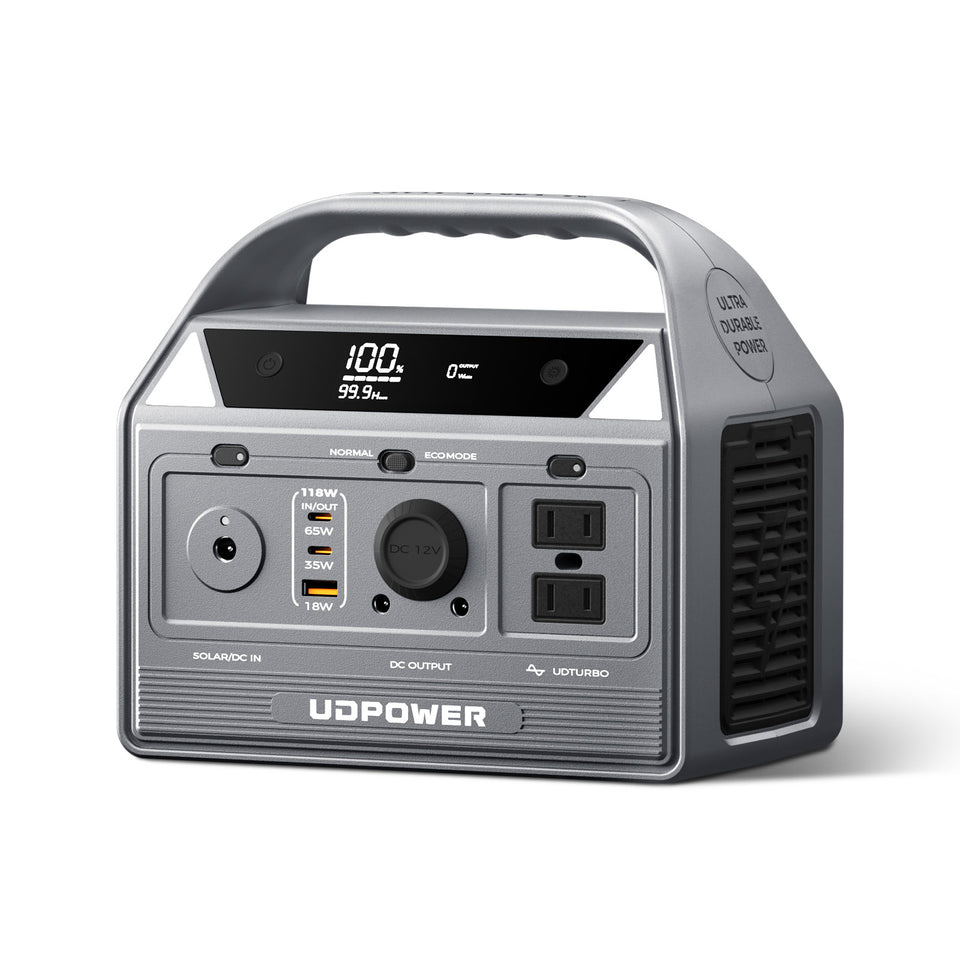
The C400 makes sense when you want enough battery for personal campsite electronics without carrying a 20–40 lb station.
- Capacity: 256Wh
- Rated AC output: 400W
- Higher-power support: up to 800W
- Battery chemistry: LiFePO4
- Solar input: up to 150W
- Weight: approximately 6.88 lbs
- Best for: phones, laptops, cameras, lighting, small fans, charging gear and light overnight use
It is much easier to carry from the parking area to a campsite than an S-Series station, but its 256Wh capacity means you need to be disciplined about overnight heating, refrigeration, and other long-running loads.
View UDPOWER C400UDPOWER S1200
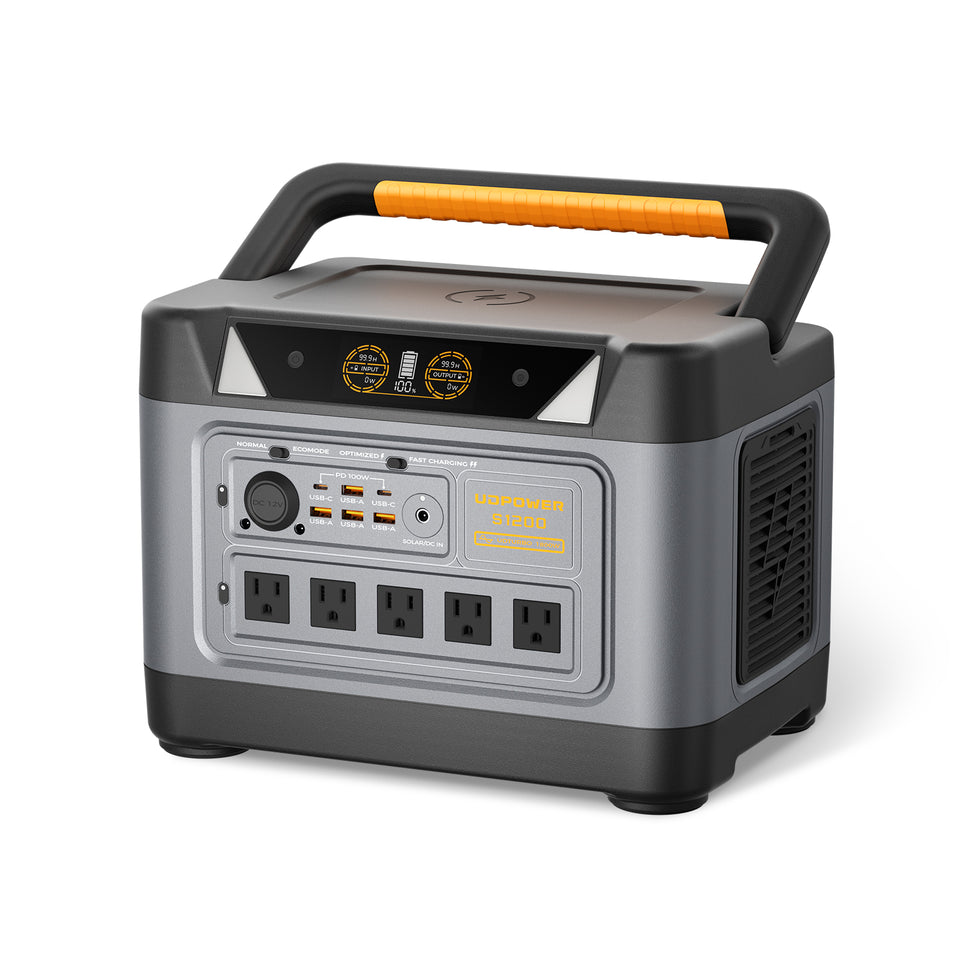
For vehicle-supported camping, the S1200 sits in the most useful middle ground. The 1,190Wh battery is large enough for meaningful overnight use, while the 26 lb weight is still manageable around a campsite.
- Capacity: 1,190Wh
- Rated AC output: 1,200W pure sine wave
- UDTURBO: compatible higher-power loads up to 1,800W
- Solar input: up to 400W
- Weight: approximately 26.0 lbs
- AC outlets: 5
- Best for: weekend family camping, CPAP, fridge, laptops, fans, electronics and longer stays
It is the model to consider when a 256Wh battery feels too restrictive but a 40.8 lb S2400 would be more battery than you want to move around camp.
View UDPOWER S1200UDPOWER S2400
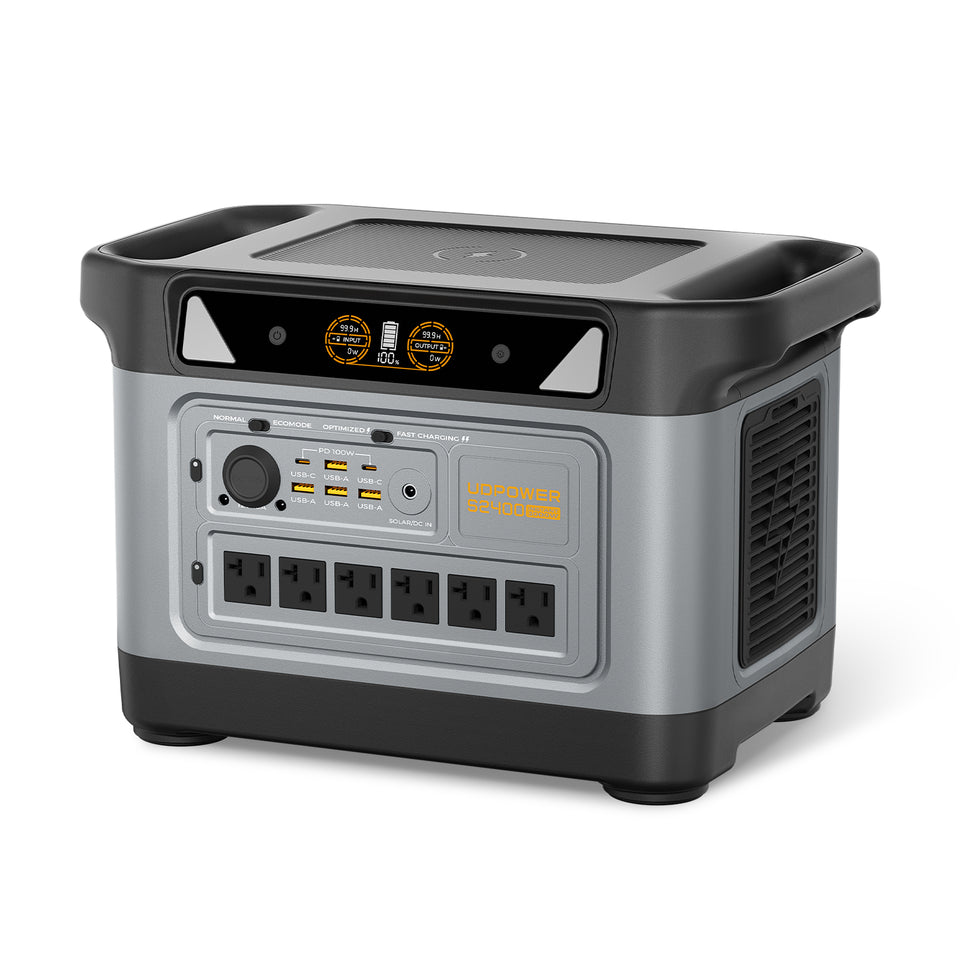
The S2400 is designed for a different kind of camping trip. At 40.8 lbs, it is better treated as basecamp or RV equipment than something you repeatedly carry down a trail.
- Capacity: 2,083Wh
- Rated AC output: 2,400W pure sine wave
- Higher-power support: up to 3,000W for compatible loads
- Solar input: up to 400W
- Weight: approximately 40.8 lbs
- AC outlets: 6
- Best for: fridge + CPAP combinations, family basecamps, RV trips, higher-wattage appliances and extended off-grid use
The larger battery becomes especially useful when several people are sharing one power source or when your camp has loads that must continue running after everyone goes to sleep.
View UDPOWER S2400You can also browse the dedicated UDPOWER Camping Power Station collection, compare all portable power stations, or see ready-to-use solar generator kits.
How Long Will a UDPOWER Power Station Run Camping Gear?
The estimates below use:
Runtime ≈ Battery capacity × 0.90 ÷ steady device load
| Steady Load | C400 256Wh | S1200 1,190Wh | S2400 2,083Wh | Camping Example |
|---|---|---|---|---|
| 10W | About 23 hrs | About 107 hrs | About 187 hrs | LED lighting or low-power electronics |
| 30W | About 7.7 hrs | About 35.7 hrs | About 62.5 hrs | Small fan |
| 40W | About 5.8 hrs | About 26.8 hrs | About 46.9 hrs | CPAP planning example |
| 60W | About 3.8 hrs | About 17.9 hrs | About 31.2 hrs | Laptop or running fridge compressor |
| 100W | About 2.3 hrs | About 10.7 hrs | About 18.7 hrs | Projector or larger electronics |
| 300W | About 0.8 hr | About 3.6 hrs | About 6.2 hrs | Higher-power campsite appliance |
These are steady-load mathematical estimates, not guaranteed appliance runtimes.
A camping refrigerator cycles. A fan changes consumption with speed. A laptop charger does not always draw its label maximum. A CPAP changes with pressure and heating settings.
Use the UDPOWER Runtime Calculator with the wattage of your own equipment.
How to Set Up a Portable Power Station at Camp
Before Leaving Home
- Charge the station fully.
- Test every essential device.
- Confirm the wattage of your largest load.
- Confirm all charging cables are packed.
- Test your solar panel and charging cable before depending on them remotely.
- Save the operating manual or key specifications offline.
When You Arrive
- Choose a dry, shaded, ventilated location.
- Keep the unit away from standing water and direct campfire heat.
- Place cables where people will not trip over them.
- Connect 12V and USB equipment directly when appropriate.
- Turn on AC output only when you need AC devices.
- Check the display after the first hour to compare actual battery use with your plan.
Before Sunset
This is the most useful campsite battery check of the day.
Ask:
- What battery percentage remains?
- What must run overnight?
- How much energy did solar actually replace?
- Will tomorrow be sunny?
- Will the vehicle be driven tomorrow?
If the answer looks tight, cut optional loads before the battery reaches a critical level.
Do not discover your energy shortage at 2 a.m. The best time to ration campsite power is before dinner, when you still have daylight, solar, vehicle charging, or time to change the plan.
12 Camping Power Station Mistakes to Avoid
1. Buying by Watts Alone
A 2,000W output rating tells you what the inverter can support, not how long the battery will last.
2. Buying by Watt-Hours Alone
A huge battery still needs enough inverter output for the equipment you intend to plug in.
3. Ignoring Carry Distance
A 40 lb station may be perfectly portable from an SUV to an RV but completely impractical for a quarter-mile walk-in campsite.
4. Assuming Solar Panel Watts Equal Real Charging Watts
Shade, clouds, temperature, angle, cable losses, and charging limits reduce actual input.
5. Putting Solar Panels Under Trees Because the Campsite Is Cooler
The best place for your tent and the best place for your solar panel may be different.
6. Running a 12V Fridge Through AC When Direct DC Is Available
Extra conversion can waste battery energy.
7. Using the Fridge's Compressor Wattage as Its 24-Hour Average
Measure daily Wh or account for compressor cycling.
8. Forgetting CPAP Heated Features
Humidification and heated tubing can dramatically increase overnight consumption.
9. Spending Emergency Reserve on Heating Appliances
Electric kettles, heaters, blankets, and hair dryers can use hundreds of watt-hours quickly.
10. Letting the Battery Sit in Direct Summer Sun
Use shade while keeping the ventilation openings clear.
11. Assuming “Outdoor” Means Waterproof
Protect electrical equipment and connectors from rain and standing water unless a specific product rating states otherwise.
12. Never Testing the Full Setup Before Leaving
A remote campsite is the wrong place to discover that a connector does not fit or your CPAP consumes twice as much as expected.
Camping Power Packing Checklist
- Portable power station fully charged
- AC charging cable or adapter
- Vehicle charging cable
- Solar panel and correct solar charging cable if needed
- USB-C and USB-A cables
- Approved device-specific DC cables
- Weather-protected place for the power station
- Device wattage list or saved manual pages
- Daily Wh estimate
- Backup plan for essential equipment
- Campground rules checked before departure
Related UDPOWER Camping Guides
| Guide | When to Read It |
|---|---|
| How Many Wh Do I Need for Camping? | When battery capacity is your main question |
| How to Power a Camping Fridge | When refrigeration is your main continuous load |
| How to Get Power When Camping Off-Grid | When planning several charging methods for remote trips |
| CPAP Power Consumption Guide | When overnight medical-device runtime matters |
| Is a Portable Solar Panel Worth It? | When deciding whether solar makes sense for your trip |
| Portable Power Station vs. Generator | When choosing between battery and fuel power |
| Portable Power Station Runtime Calculator | When you know your device wattage and want a runtime estimate |
| Portable Power Stations for Camping | When you are ready to compare camping-focused models |
| Solar Generator Kits | When you need battery storage plus solar charging |
Frequently Asked Questions About Portable Power for Camping
What size portable power station do I need for camping?
A light overnight camper may need only 200–300Wh, while a weekend campsite with fans, laptops, lights, and several devices may need 500–1,200Wh. If you use a fridge, CPAP, or multiple devices for several days, 1,000–2,000Wh+ is a more practical range. Calculate your actual daily watt-hours before buying.
Is 300Wh enough for camping?
Yes, 300Wh can be enough for an overnight trip focused on phones, lights, camera batteries, and a small fan. It becomes restrictive for a refrigerator, heated CPAP setup, electric blanket, or several people sharing one battery.
Is 500Wh enough for a weekend camping trip?
It can be enough for a carefully managed weekend with phones, lighting, camera gear, a fan, and limited laptop use. If you expect overnight refrigeration or CPAP use, calculate those loads separately because they can consume most of a 500Wh-class battery.
Is 1000Wh enough for camping?
About 1,000Wh is a strong starting point for family car camping, CPAP use, moderate fridge use, fans, laptops, and multi-night trips. Whether it lasts the full trip depends on daily energy consumption and whether you recharge from solar, a vehicle, or a campground outlet.
How many watts should a camping power station have?
Choose the AC output from the highest wattage you expect to run at the same time. Phones, laptops, fans, lights, and camping fridges need relatively modest output. Coffee makers, kettles, hair dryers, electric cookers, and heating appliances can require 700–1,500W or more.
Can a portable power station run a camping fridge?
Yes. A portable power station is one of the most practical ways to run a 12V compressor camping fridge. If the fridge supports 12V DC input, using the compatible DC output can avoid unnecessary AC conversion. Size the battery from the fridge's actual daily watt-hour use rather than its compressor running wattage alone.
Can I run a CPAP while camping?
Yes. Calculate the CPAP's overnight energy use before the trip. A machine averaging 40W for eight hours needs about 320Wh before conversion losses. Heated humidification and heated tubing can substantially increase power consumption, so test the actual setup at home first.
Do I need solar panels for a weekend camping trip?
Not necessarily. If the battery stores enough energy for the entire trip, solar may be optional. Solar becomes much more useful for multi-day trips, refrigeration, CPAP use, remote work, or any setup where daily consumption would otherwise exceed the energy stored in the battery.
How much can a 120W solar panel recharge in one day?
Real output depends on location, weather, shade, panel angle, temperature, and charging losses. As a planning example, a 120W panel with three to 4.5 equivalent full-sun hours and a 70% field factor would recover roughly 250–380Wh in a day. Actual results can be higher or lower.
Can I charge a portable power station from my car while camping?
Yes, when the power station supports vehicle charging. Car charging is especially useful while driving between campsites because it does not depend on sunshine. Use the supplied or approved charging cable and follow both vehicle and power-station instructions.
Can I leave a portable power station outside overnight?
Do not leave it exposed to rain, standing water, condensation, excessive heat, or temperatures outside its specified operating range. Keep the station in a dry, protected, ventilated location and do not assume outdoor-oriented equipment is waterproof unless the manufacturer provides an appropriate rating.
Can I use a portable power station inside a tent?
A battery power station does not create combustion exhaust like a gasoline generator, but it is still electrical equipment that produces heat while operating. Keep it dry, maintain ventilation around the cooling system, keep it away from bedding and water, and follow the manufacturer's operating instructions.
Is a portable power station better than a gas generator for camping?
For phones, lights, laptops, CPAP equipment, fans, cameras, and refrigeration, a portable power station is usually quieter and easier to manage because it requires no fuel and produces no combustion exhaust during operation. A gas generator may still be more practical for sustained high-power loads, but it must be operated outdoors according to safety rules and campground restrictions.
Which UDPOWER power station is best for camping?
The C400 is best for light camping and personal electronics because it weighs only about 6.88 lbs. The S1200 is the strongest all-around option with 1,190Wh capacity and 1,200W rated AC output. The S2400 is better for basecamp, RV, fridge-plus-CPAP setups, multiple users, and higher-wattage equipment because it provides 2,083Wh capacity and 2,400W rated output.
How long will the UDPOWER S1200 last while camping?
Runtime depends on the load. Using a 90% planning efficiency, the 1,190Wh S1200 provides about 1,071Wh of estimated AC energy. That corresponds to roughly 35.7 hours at a steady 30W load, 26.8 hours at 40W, 17.9 hours at 60W, or 10.7 hours at 100W. Real devices may cycle or change power consumption.
Sources and Further Reading
| Source | Information Used |
|---|---|
| PVWatts | Location-specific solar resource and energy-production estimation |
| U.S. National Park Service | Example of campground generator and quiet-hour restrictions |
| CDC Carbon Monoxide Safety | Fuel-powered generator and enclosed-space carbon monoxide safety |
| UDPOWER C400 Product Page | Current capacity, rated output, solar input, weight, ports and temperature specifications |
| UDPOWER S1200 Product Page | Current capacity, output, solar input, weight, ports and operating temperature specifications |
| UDPOWER S2400 Product Page | Current capacity, output, solar input, weight, AC outlets and operating temperature specifications |
| UDPOWER Camping Power Stations | Current camping-focused product positioning |
| UDPOWER Solar Generator Kits | Current power-station and portable-solar combinations |
Build Your Camping Power Setup From Your Actual Gear
List what must run, calculate daily watt-hours, decide how many days you may go without reliable charging, then choose enough capacity and AC output for that real campsite. If you plan to stay off-grid for several days, add solar or vehicle charging before simply buying a larger battery.
View Camping Power Stations Compare UDPOWER Models View Solar Generator Kits Calculate Your Camping RuntimeRelated Articles


