What Can a 2000W Portable Power Station Run?
ZacharyWilliamA 2000W-class portable power station sits in one of the most useful real-world size ranges. It is strong enough for refrigerators, microwaves, coffee makers, CPAP machines, TVs, laptops, routers, and most everyday outage essentials, but still far more manageable than larger whole-home backup gear.
The part people usually get wrong is simple: 2000W tells you what it can power. Watt-hours tell you how long it will last. That difference decides whether a setup feels practical or disappointing once the power is actually out.

Table of Contents
What “2000W” Really Means
The “2000W” label is about power, not stored energy. Power is how much your devices demand at a given moment. Stored energy is the battery capacity that determines runtime.
If you want the simplest explanation of runtime planning, start with Battery Runtime Basics: Watts → Watt-hours + Real-World Efficiency.
For big appliances, the yellow EnergyGuide label is a practical shortcut for estimating average consumption. FTC overview: EnergyGuide labels.
Fast Answer: What a 2000W-Class Power Station Can Usually Run
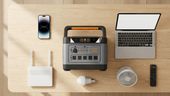
In real homes, this size class usually covers the things people care about first during an outage:
The two things that trip people up are just as important:
- Heat-heavy appliances drain battery fast. A space heater may fit the power rating and still be a bad battery use case.
- Motors and compressors start harder than they run. Refrigerators and window AC units often need more headroom at startup.

If your backup plan is mostly refrigerator + Wi-Fi + lights + charging, compare this page with the 1200W guide. If you want more margin for overlapping kitchen loads and heavier mixed-use scenarios, the 3000W guide is the closest step up.
Big Table: Common Devices + Can It Run Them?
These are typical ranges, not guarantees. Always verify your specific device. “Yes” assumes the running watts stay under the inverter’s continuous output and that startup behavior is within the station’s surge capability.
| Device | Typical running watts | Startup / surge notes | Can a 2000W-class run it? | Source / reference |
|---|---|---|---|---|
| Modem + router | 10–30W | No surge | Yes | UDPOWER Wi-Fi runtime guide |
| LED lighting | 5–15W per bulb | No surge | Yes | DOE energy-use basics |
| Laptop charging | 45–100W | No surge | Yes | Check the charger label |
| TV + streaming | 60–200W | No surge | Yes | Check device label |
| Refrigerator (modern) | Average often ~40–120W | Compressor startup can spike | Usually | FTC EnergyGuide overview |
| Microwave | 900–1500W input varies | Minimal surge; heavy draw while running | Often | Check the input wattage label |
| Electric kettle | ~1500W common | No surge; heavy continuous draw | Yes, briefly | DOE example using 1500W kettle |
| Coffee maker | ~1400–1500W common | No surge; short heating cycle | Yes, briefly | Keurig example |
| Blender | 300–1200W | Motor startup spike | Often | Check the nameplate |
| Space heater | ~1500W common | No surge; drains battery fast | Power-wise yes | Consumer Reports |
| Hair dryer | 1200–1875W | No surge; very high draw | Sometimes | Check the label and keep other loads low |
| Window A/C | Often 500–1500W | Compressor surge matters | Sometimes | Verify nameplate + surge headroom |
| Central A/C, electric dryer, oven | Typically beyond 2000W or 240V | Not a good fit for most portable stations | Usually no | These are usually whole-home backup territory |
Mobile tip: you can swipe the table sideways.

How Long Will It Run? The Runtime Math People Actually Use
Once you know the total watts of your load, the basic planning math is still straightforward:
Runtime (hours) ≈ usable watt-hours ÷ total watts
What matters is the word usable. Converting battery DC power to household AC costs energy, and it is smart to leave a small reserve instead of planning all the way to zero.
For fridges, a simple “running watts” number can be misleading because compressors cycle on and off. If fridge runtime is your biggest concern, pair this article with How Long Will a 2000W Power Station Run a Refrigerator?.

Runtime Examples Using a 2,000Wh-Class Station
Below are realistic planning examples using a 2,083Wh-class unit with conservative assumptions around conversion losses and reserve.
| Load | Assumed watts | Estimated runtime / sessions | Why it varies |
|---|---|---|---|
| Modem + router | 20W | ~79 hours | Traffic load and outlet efficiency matter a bit |
| LED lamp | 10W | ~159 hours | Brightness and bulb count change the math |
| Laptop charging | 60W | ~26 hours | High-performance laptops can pull more |
| TV + streaming | 120W | ~13 hours | Screen size and brightness matter |
| Refrigerator (average draw) | 60–100W | ~16–26 hours | Compressor cycles, room temperature, and door openings |
| CPAP (optimized setup) | 30–60W | ~26–53 hours | Heated hose and humidifier can raise draw sharply |
| Microwave cooking time | 1000W | ~1.6 hours total on-time | Short bursts are practical; repeated use adds up |
| Electric kettle | 1500W | ~1.1 hours total on-time | Useful in short windows, but not battery-friendly all day |
| Space heater | 1500W | ~1.1 hours | Heat is one of the fastest ways to empty a battery |
If you want to plan a whole outage day instead of one device at a time, UDPOWER’s Portable Power Station Runtime Planning for Outages is the right companion page.
Real-Life Bundles: Outage, RV, and Everyday Backup
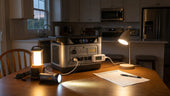
1) Keep life normal during an outage
Goal: protect food, keep internet alive, charge devices, and avoid living in the dark.
- Fridge
- Modem + router
- Two LED lamps
- Phone + laptop charging
This is where a 2000W-class unit feels meaningfully better than smaller stations. You can keep essentials running without turning every single plug-in into a math problem.
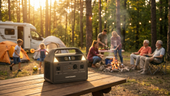
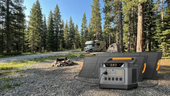
2) RV or campsite use
Goal: lights, device charging, fan use, and short cooking bursts without noise.
- Phones, tablets, and laptops via USB-C
- Portable cooler or compact fridge
- Fan
- Coffee maker or kettle in short sessions
For solar recharging, the only hard rule is staying inside the station’s voltage and current limits.
3) CPAP nights
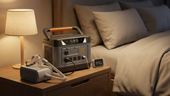
A 2000W-class station is far more about energy than power here. CPAP does not need huge output, but multiple nights of runtime can absolutely justify this size class.
For setup tips and runtime planning, read CPAP Battery Backup for Power Outages.
4) Tool and garage use
Many tools are fine on paper and still frustrating in real life because startup surge is what exposes weak inverter headroom. That is why nameplate watts alone are never the full story for motor-driven gear.
Related reading: If this page feels close but not quite right, the 1200W guide shows the lighter essentials-first range, while the 3000W guide is the better comparison if your goal is more appliance overlap, more kitchen freedom, or more output headroom.
What It Usually Won’t Run Well
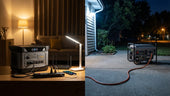
Even with a “2000W” label, most portable power stations in the U.S. are built around 120V household use, not whole-home electrical systems. That means:
- Central A/C is usually out of reach because of both wattage and startup behavior.
- Electric dryers, ovens, and water heaters are generally not realistic battery loads.
- Long space-heater runs are possible on paper but usually disappointing in practice.
If your real goal is all-day heating/cooling or 240V appliances, you are not choosing between portable power stations anymore. You are choosing between a battery backup strategy and something closer to generator or whole-home backup planning.
How to Choose the Right Size
Choose 1200W if…
Your real priority is essentials-first backup: refrigerator support, Wi-Fi, lights, laptops, phones, TV, and lighter appliance use. The 1200W guide is the right comparison point.
Choose 2000W if…
You want more comfort and overlap: fridge in the background, microwave in short bursts, coffee maker, CPAP, TV, router, lights, and device charging without micromanaging watts all day.
Choose 3000W-class if…
You expect heavier appliance overlap, larger backup plans, or simply want more margin. The 3000W guide shows where that extra headroom starts to matter.
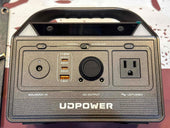
A Practical Example: UDPOWER S2400
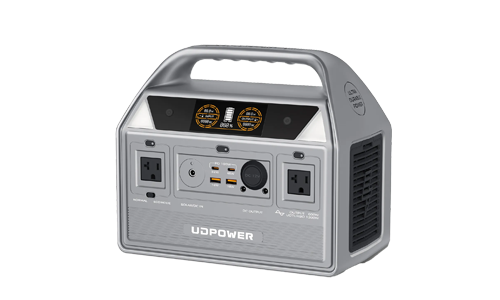
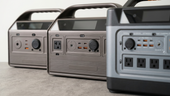
If you are shopping this class, the UDPOWER S2400 is the closest practical reference point in the current lineup. It is rated at 2,400W AC output with a 2,083Wh battery, which is why it feels more comfortable than a strict “just enough” 2000W-class setup once you start overlapping real home loads.

Why it matters on paper
- 2,400W pure sine wave AC output
- 2,083Wh LiFePO₄ battery
- Useful surge headroom for startup-heavy loads
- Solar input support for extended outages
Why it matters in real life
- Fridge plus short microwave use feels less tight
- Multiple small loads can stay on without constant watt budgeting
- It is a more forgiving choice if your real list keeps growing
FAQ
Can a 2000W portable power station run a refrigerator and a microwave at the same time?
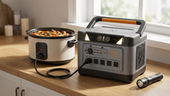
Often yes. This is one of the clearest reasons people move into the 2000W class in the first place. A fridge can stay running in the background while a microwave is used in short bursts, as long as the microwave’s actual input wattage stays reasonable and the fridge’s startup surge is within the station’s surge handling.
How long will a 2000W power station run a refrigerator?
The inverter size tells you whether the station can handle the fridge. Runtime depends on battery capacity, room temperature, compressor cycling, and how often the door opens. For a fridge-specific breakdown, read How Long Will a 2000W Power Station Run a Refrigerator?.
Is 2000W enough for real home backup?
For many households, yes. This is the size where backup stops feeling purely emergency-only and starts feeling genuinely useful. It is usually enough for a refrigerator, Wi-Fi, lights, device charging, TV, CPAP, and short kitchen bursts. It is not the same thing as whole-home backup for central A/C, electric heat, dryers, or 240V appliances.
Can a 2000W portable power station run a coffee maker or electric kettle?
Usually yes. Many coffee makers and kettles fall around the 1400W to 1500W range, which is within the comfort zone of this class. The catch is runtime, not raw output. They are best used in short bursts rather than repeated heating cycles all day.
Can it run a space heater?
Power-wise, often yes. Practical-wise, usually not for long. Space heaters are one of the fastest ways to empty a battery, so they are a poor match if your goal is lasting backup instead of a quick burst of heat.
Can a 2000W portable power station run a window air conditioner?
Sometimes. Smaller or more efficient window A/C units may work well, but startup behavior is what usually decides success or failure. Always check the nameplate and leave headroom for compressor startup.
What can I realistically run at the same time on a 2000W-class unit?
A common practical mix is a refrigerator, modem/router, a few LED lights, phone charging, and a TV or laptop. Problems usually start when several heat-heavy loads overlap, such as a kettle plus microwave plus hair dryer.
Should I buy a 1200W, 2000W, or 3000W portable power station?
Choose 1200W if your plan is essentials-first backup and lighter appliance use. Choose 2000W if you want a more comfortable mix of home essentials plus short kitchen use. Choose 3000W-class if you expect heavier overlap, more demanding appliances, or simply want more margin so you are not budgeting watts as tightly every time you plug something in.










![How to Live In The Woods [Complete Guide]](http://udpwr.com/cdn/shop/articles/Off-Grid_Cabin_Option_f6c94fe7-1ae7-4c3a-baf5-ed9fe684c832.png?v=1763523215&width=170)