How Long Will a 2000Wh Power Station Last?
ZacharyWilliamPortable Power Station Knowledge
A 2000Wh power station can last anywhere from about 1 hour to well over 100 hours. That is not a vague answer. It is the honest one.
A router and a few lights barely touch a battery this size. A fridge can be very manageable. A CPAP can often run for multiple nights. But a space heater, kettle, or hair dryer can tear through the same battery fast enough to make the whole setup feel smaller than buyers expected.
For ordinary home backup, camping, and RV use, the best way to think about a 2000Wh station is this: it is usually big enough to matter, but only if you match it to the right loads and plan around real-world losses instead of lab-perfect math.

Quick answer
If you only remember one thing from this article, remember this:
For a plain-English planning number, a 2000Wh station is usually smartest to treat as about 1530Wh of usable AC planning energy when you use a default planning factor of 0.85 efficiency and keep a 10% reserve.
2000Wh ÷ 100W = 20 hours
2000 × 0.85 × 0.90 ÷ 100W = 15.3 hours
Planning with the full rated battery often makes real-world runtime look better on paper than it feels at home.
| Load | Clean math from 2000Wh | Better planning estimate | What that really means |
|---|---|---|---|
| 20W router | 100 hours | 76.5 hours | Excellent use of a 2000Wh-class station. |
| 60W laptop charging | 33.3 hours | 25.5 hours | Plenty for work, travel, or outages. |
| 100W average fridge draw | 20 hours | 15.3 hours | Usually workable, especially with smart cycling. |
| 1000W microwave | 2 hours total on-time | 1.5 hours total on-time | Fine for short bursts, not for all-day cooking. |
| 1500W space heater | 1.3 hours | 1.0 hour | This is why people think big batteries feel small. |
Want the longer version of the math? Pair this page with Battery Runtime Basics: Watts → Watt-hours and Portable Power Station Runtime Planning for Outages.
2000Wh vs 2000W: the number most buyers mix up
2000Wh tells you how much energy is stored in the battery. Think of it as the size of the fuel tank.
2000W tells you how much power can be delivered at one time. Think of it as how hard the station can work at once.
That difference matters because a battery can have enough energy for a long outage but still not have enough output for a heavy appliance. It can also have enough output for a kettle or microwave, yet still run them for a surprisingly short amount of time because those appliances use so much power so quickly.
Simple rule: runtime comes mostly from Wh. What you can run at one time comes mostly from W.
This is also why people searching “2000Wh” often end up needing these companion pages next: What Can a 2000W Portable Power Station Run? and How Long Will a 2000W Power Station Run a Refrigerator?.
Simple runtime calculator
Use this for a fast estimate. For a true 2000Wh-class station, leave the battery at 2000. For the UDPOWER S2400, change it to 2083.
Estimated runtime: 15.3 hours
How long common devices will run on a 2000Wh power station
These are planning numbers, not promises. That is exactly how you should use them. If you want the one-line summary, it is this: a 2000Wh station feels big on electronics and small on heat.
| Device | Assumed load | Better planning estimate | Why the number moves | Source |
|---|---|---|---|---|
| LED lamp | 10W | About 153 hours | Bulb type and brightness level change the draw. | UDPOWER |
| Modem + router | 20W | About 76.5 hours | One of the most battery-friendly outage loads. | UDPOWER |
| Laptop charging | 60W | About 25.5 hours | USB-C PD is usually more efficient than using an AC brick. | UDPOWER |
| CPAP (optimized setup) | 30–60W | About 25.5–51 hours | Humidifier and heated hose can cut runtime hard. | UDPOWER · ResMed |
| TV + streaming box | 120W | About 12.8 hours | Screen size, brightness, and audio gear all matter. | UDPOWER |
| Refrigerator (average draw) | 60–100W | About 15.3–25.5 hours | Compressor cycling, room temp, and door openings matter more than people expect. | UDPOWER · ENERGY STAR |
| Microwave cooking | 1000W | About 1.5 hours total on-time | Perfectly fine in short bursts. Expensive if you use it like a stove. | UDPOWER |
| Space heater | 1500W | About 1 hour | Heat is one of the fastest ways to empty a battery station. | UDPOWER |
One useful reality check: a 2000Wh battery is usually not “too small.” It is just often used on the wrong category of appliances. For lights, communications, charging, CPAP, and fridge management, it can be excellent. For resistance heating, it is almost always the wrong tool.
What this looks like in real life
Most people do not buy a power station to run one single device for one continuous block of time. They buy it to keep life moving. These example bundles are usually more helpful than single-device math.
| Real-life setup | Approx. total load | Better planning estimate | Who this setup fits | Source |
|---|---|---|---|---|
| Router + modem + two LED lamps + light phone charging | 50W | About 30.6 hours | Apartment outages, storm prep, communications-first backup. | UDPOWER Wi‑Fi guide |
| Work-from-home essentials: router + laptop + monitor + lamp | 120W | About 12.8 hours | Remote work during a daytime outage. | UDPOWER runtime planner |
| Refrigerator only, average draw | 60–100W | About 15.3–25.5 hours | People shopping mainly for food protection. | UDPOWER fridge guide |
| Fridge + Wi‑Fi + a couple of lights | 95–135W | About 11.3–16.1 hours | Very common starter home-backup plan. | UDPOWER priority guide |
| CPAP overnight, optimized setup | 30–60W | About 25.5–51 hours | Roughly 3 to 6 nights at 8 hours per night, depending on settings. | UDPOWER CPAP guide · ResMed |
| Quiet camping setup: 12V fridge + fan + lights + device charging | 105W | About 14.6 hours | Overnight RV or campsite use without noise. | UDPOWER |
Daily energy budget matters more than people think
If you are planning for a 24-hour outage, this table is often more useful than “how long will it run” by itself.
| Daily energy budget | How long a 2000Wh station can cover it | What that looks like |
|---|---|---|
| 300Wh/day | About 5.1 days | Communications, light charging, and minimal lighting. |
| 500Wh/day | About 3.1 days | Lean apartment backup with disciplined use. |
| 800Wh/day | About 1.9 days | Fridge strategy plus lights, internet, and charging. |
| 1000Wh/day | About 1.5 days | Heavier daily use or a more comfort-focused outage plan. |
| 1500Wh/day | About 1 day | You are using most of the battery in a single day and will need a recharge plan. |
If multi-day backup is your real goal, do not stop at runtime math. Read Solar Recharging During a Power Outage, Power Outage Checklist (24/48/72 Hours), and How Much Water to Store for a Power Outage so the article does not leave readers with a battery but no plan.
What changes runtime the most
Small electronics usually last longer when you skip the AC brick and charge directly through USB-C or DC. Less conversion loss means more useful battery.
A fridge does not pull the same wattage every second. Compressors cycle. That is why average draw matters more than startup drama for runtime planning.
Space heaters, kettles, hot plates, hair dryers, and electric ovens are the fastest way to make a big battery feel small.
Planning all the way to 0% looks good on paper and feels bad in the dark. A 5% to 15% reserve is smarter for real outages.
Extreme heat or cold can shave down performance. Real-world batteries do not always behave like lab numbers.
A 2000Wh station is much more valuable if you can refill it by AC, car, or solar instead of treating one full charge as your entire plan.
The mistake that wastes the most runtime: buying for peak wattage instead of buying for your real daily energy budget.
Best strategy if your main goal is fridge runtime
If you are shopping because you want to protect food during an outage, do not make the common mistake of thinking “bigger battery means leave the fridge on nonstop.” The better plan is usually more strategic:
- Keep the fridge and freezer doors closed as much as possible.
- Use a fridge thermometer if you have one.
- Run the fridge in short windows if needed instead of assuming 24/7 powering is always the best move.
- Know the food-safety timeline before you need it.
FDA guidance says refrigerated food is generally safe for about 4 hours if the refrigerator stays unopened, and a full freezer can often hold temperature for about 48 hours if unopened. That is why behavior matters almost as much as battery size in a blackout.
Best internal path from here: How Long Will a 2000W Power Station Run a Refrigerator?, Food Safety During a Power Outage, and Power Priorities: What to Run First. External reference: FDA food safety guidance.
Best UDPOWER options for this kind of use
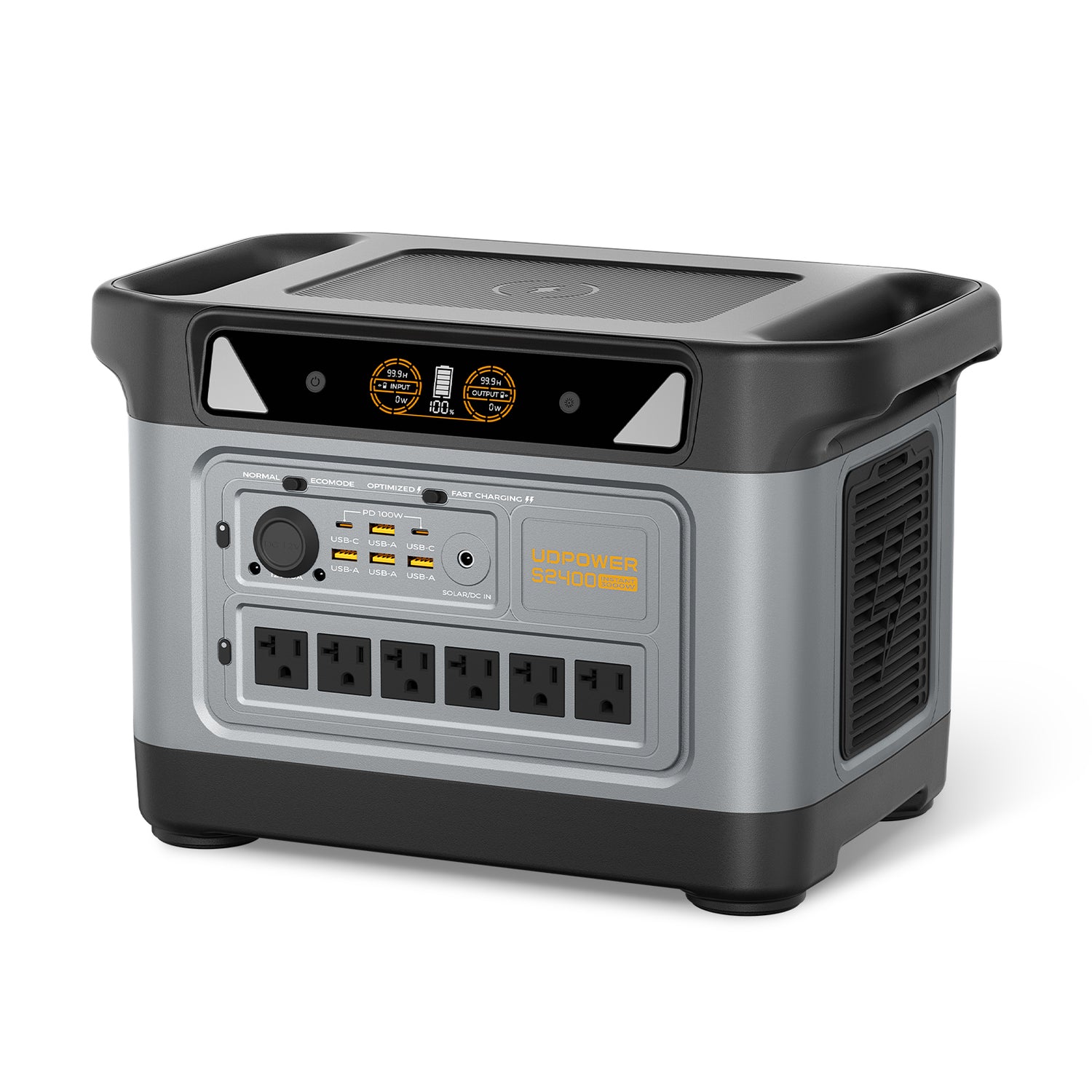
If your search started with “How long will a 2000Wh power station last?”, the most relevant real product in the current UDPOWER lineup is the S2400. It sits right in the 2000Wh-class conversation while giving you a little extra battery overhead at 2083Wh.
Best fit for this article
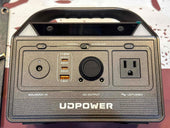
UDPOWER S2400 Portable Power Station
Why it fits: This is the one to look at if you want a genuine 2000Wh-class solution for fridge backup, CPAP, Wi‑Fi, short cooking bursts, RV use, or a more comfortable outage setup.
- Capacity: 2083Wh
- Output: 2400W pure sine wave
- Surge: 3000W
- Solar input: up to 400W
- Ports: 6 AC outlets + DC/USB outputs
- UPS: response time ≤10ms
- Battery: LiFePO4, 4000+ cycle class
Using the same conservative planning method from this article, the S2400 gives you about 1593Wh of practical AC planning energy instead of 1530Wh. That small bump matters when your main load is a fridge, medical device, or overnight essentials.
Smarter buy if your loads are lighter
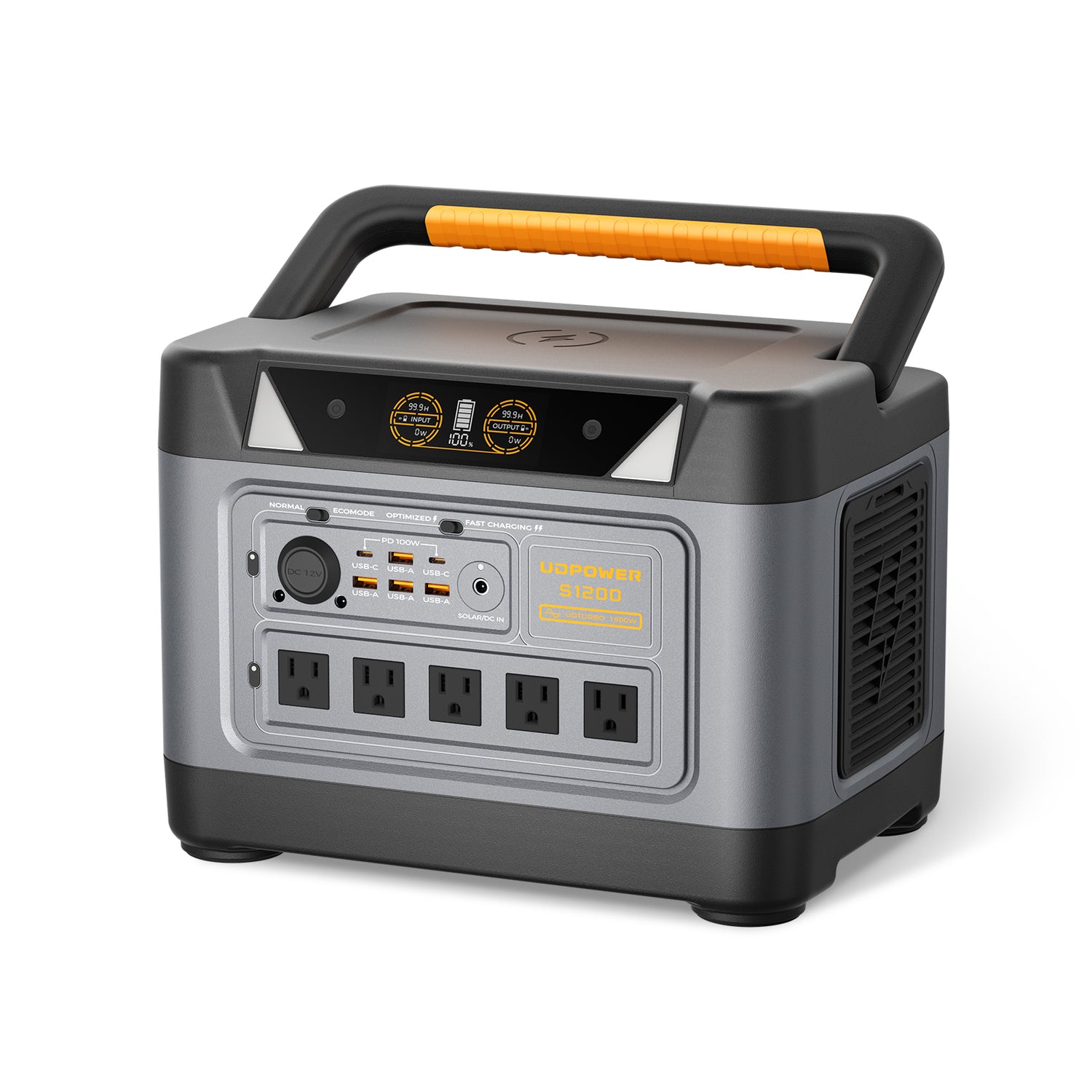
UDPOWER S1200 Portable Power Station
Why it still deserves a look: A lot of shoppers think they need a 2000Wh battery when what they actually need is clean, quiet backup for internet, lights, laptops, phones, and occasional CPAP use. If that sounds like you, the S1200 can save money and weight.
- Capacity: 1190Wh
- Output: 1200W pure sine wave
- Surge: 1800W
- Fast AC charging: from 0–100% in about 1.5 hours
- Solar pairing: supports 120W, 210W, or 420W panel options
- UPS: under 10ms class
- Battery: LiFePO4, 4000+ cycle class
It is not a replacement for a 2000Wh-class battery when your plan centers on a fridge or longer outages. But for lighter backup needs, it can be the better-value pick.
| Model | Best for | Capacity | Output | Why choose it |
|---|---|---|---|---|
| S2400 | Fridge backup, CPAP, RV, outage comfort, short cooking bursts | 2083Wh | 2400W / 3000W surge | The closest direct match for people shopping in the 2000Wh class. |
| S1200 | Wi‑Fi, lights, laptop, phones, lighter emergency use | 1190Wh | 1200W / 1800W surge | Better if your real-world loads are modest and portability matters more. |
FAQ
Can a 2000Wh power station run a refrigerator overnight?
Often, yes. If the fridge averages around 60W to 100W over time, a 2000Wh station can usually cover roughly 15 to 25.5 hours with conservative planning. A lot depends on cycling behavior, room temperature, how often the door opens, and whether you run it strategically instead of nonstop.
How many CPAP nights can a 2000Wh power station handle?
With an optimized setup and lower draw, often several nights. Using a 30W to 60W range, a 2000Wh station can land around 25.5 to 51 hours in conservative planning terms, which works out to roughly 3 to 6 nights at 8 hours per night. Heated humidifiers and heated hoses can cut that down fast.
Can it run a microwave or coffee maker?
Yes, if the station’s output rating is high enough. But that does not mean it will run them for long. High-wattage kitchen gear is usually fine in short bursts and a poor match for long battery-only use.
Is a 2000Wh power station enough for a 24-hour power outage?
It can be, especially if you focus on essentials instead of comfort loads. Internet, phones, lights, a laptop, and strategic fridge use are usually realistic. Running electric heat, large AC loads, or lots of kitchen appliances will change the answer fast.
Does solar charging really extend runtime?
Absolutely, but only if you treat solar as a recharge plan, not a magic trick. Real sun, panel angle, weather, cable losses, and the station’s solar input limit all matter. A good solar setup can stretch a 2000Wh-class station from a one-day backup tool into a much more resilient multi-day plan.
What is the best UDPOWER model if I’m shopping in the 2000Wh range?
The most direct fit is the UDPOWER S2400. It gives you 2083Wh of capacity, 2400W output, 3000W surge, LiFePO4 chemistry, and UPS support, which makes it a strong match for home backup, RV use, fridge planning, and longer overnight essentials.
What drains a 2000Wh power station the fastest?
Anything that makes heat. Space heaters, kettles, coffee makers, hot plates, and hair dryers chew through stored energy far faster than lights, routers, phones, laptops, or even many refrigerators.
Related reading on UDPOWER
These are the strongest next-click pages for readers who start with runtime but usually need a fuller backup plan after that:
- Battery Runtime Basics: Watts → Watt-hours
- Portable Power Station Runtime Planning for Outages
- Power Priorities: What to Run First
- How to Keep Wi‑Fi Running During a Power Outage
- Food Safety During a Power Outage
- CPAP Battery Backup During a Power Outage
- Portable Power Station vs Generator for Power Outages
- Solar Recharging During a Power Outage
- How Long Will a 2000W Power Station Run a Refrigerator?
- What Can a 2000W Portable Power Station Run?
Sources
All external links below open in a new tab and use nofollow. Internal UDPOWER links were selected to keep readers inside the same topic cluster without sending them to weakly related pages.
- UDPOWER S2400 product page
- UDPOWER S1200 product page
- UDPOWER runtime basics
- UDPOWER outage runtime planning
- UDPOWER priority-load planning
- UDPOWER Wi‑Fi outage guide
- UDPOWER food safety guide
- UDPOWER CPAP backup guide
- UDPOWER generator comparison
- FDA: Food and Water Safety During Power Outages
- ENERGY STAR refrigerator database
- ResMed AirSense 11 user guide













![How to Live In The Woods [Complete Guide]](http://udpwr.com/cdn/shop/articles/Off-Grid_Cabin_Option_f6c94fe7-1ae7-4c3a-baf5-ed9fe684c832.png?v=1763523215&width=170)