How Long Does an 800Wh Power Station Last?
Wondering how long an 800Wh power station will last? This guide breaks down real-world runtime by wattage and device type, including CPAPs, Wi-Fi routers, TVs, and refrigerators. You’ll also learn what affects runtime, how to stretch battery life, and which UDPOWER models make the most sense if you need more backup time.
The honest answer: an 800Wh power station can last anywhere from under 1 hour to well over 2 days. It all depends on what you plug into it.
For simple real-world planning, treat an 800Wh unit as having about 680Wh of usable AC energy after normal inverter losses. That means roughly:
50W load: about 13.6 hours
100W load: about 6.8 hours
200W load: about 3.4 hours
500W load: about 1.4 hours
So if you are backing up a router, lights, a laptop, or a CPAP without heated humidity, 800Wh can feel surprisingly useful. If you are trying to run a fridge, TV, fan, and charge everything at once, it will disappear much faster.

Table of Contents
- What 800Wh means in plain English
- 800Wh runtime chart by wattage
- Real device examples
- Everyday setups that actually matter
- Can an 800Wh power station run a fridge?
- What changes your real runtime
- How to make 800Wh last longer
- Is 800Wh enough for your situation?
- UDPOWER picks that make sense here
- FAQ
- Sources
What 800Wh means in plain English
Watt-hours tell you how much energy is stored in the battery. If your device pulls 100 watts continuously, 800Wh of battery capacity looks like 8 hours on paper. In real use, though, you do not get every last watt-hour out of the AC outlets. Some energy is lost when the power station converts battery power into household AC power.
That is why a realistic planning method is:
Using 85% is a practical planning shortcut for AC loads. It is not perfect, but it is much better than pretending every 800Wh battery gives you a full 800Wh at the wall outlet.
Also worth knowing: many “800Wh-class” products on the market are not exactly 800Wh. Some are closer to 768Wh. Some are a little above 800Wh. If your unit is smaller or larger, just scale the results:
- 768Wh model: multiply the table below by 0.96
- 700Wh model: multiply by 0.875
- 1000Wh model: multiply by 1.25
800Wh runtime chart by wattage
This is the fastest way to sanity-check an 800Wh power station. The “paper math” column assumes you somehow get the full 800Wh. The “better planning” column uses a more realistic 85% usable-energy assumption for AC output.
| Device Load | Paper Math | Better Planning Number | What That Feels Like |
|---|---|---|---|
| 10W | 80 hours | 68 hours | LED lights, small electronics, low-power network gear |
| 20W | 40 hours | 34 hours | Router + modem territory, light charging duty |
| 30W | 26.7 hours | 22.7 hours | Light laptop use, some CPAP setups, small DC gear |
| 50W | 16 hours | 13.6 hours | Comfortable overnight backup for a small essentials kit |
| 70W | 11.4 hours | 9.7 hours | Small TV or heavier steady electronics |
| 100W | 8 hours | 6.8 hours | Common “why did it drain so fast?” load level |
| 150W | 5.3 hours | 4.5 hours | Some mini-fridges, fans + TV + charging together |
| 200W | 4 hours | 3.4 hours | A small appliance can chew through 800Wh quickly |
| 300W | 2.7 hours | 2.3 hours | Heavy use, short backup window |
| 500W | 1.6 hours | 1.4 hours | This is emergency-use-only territory for 800Wh |
| 800W | 1 hour | 0.8 hour | About 50 minutes; high draw drains fast |
Need your exact number instead of table math? Use UDPOWER’s runtime calculator or read Battery Runtime Basics: Watts → Watt-hours + Real-World Efficiency.
Real device examples: what an 800Wh power station can actually run
People do not shop in watts. They shop in situations: “Can this keep the Wi-Fi on?”, “Will it get me through the night with my CPAP?”, or “Can I still watch TV if the power goes out?” The table below turns those questions into something more useful.
| Device | Benchmark Used | Estimated Runtime on 800Wh | Reality Check | Source |
|---|---|---|---|---|
| LED bulb | 8.5W | About 80 hours | One reason battery backup feels great for lighting | Philips Hue bulb specs |
| Wi-Fi router | 7–10W class | About 68–93 hours | Router backup is usually one of the easiest wins | eero power table |
| MacBook Air charging benchmark | 30W | About 22.7 hours at that draw | Actual laptop use can be lower or higher than the charger rating | Apple adapter guide |
| 43-inch LED TV | 70W typical | About 9.7 hours | Very reasonable for outage entertainment if you keep the load simple | Samsung spec sheet |
| CPAP without heated humidity | Often around 20–40W range | Usually overnight and often more | One of the best use cases for this battery size | ResMed battery guide |
| CPAP with humidifier / heated hose | Often much higher, roughly 40–60W+ range | Often around 11–17 hours depending on settings | Heat settings are the runtime killer | ResMed battery guide |
The big takeaway is simple: an 800Wh power station is excellent for low-watt essentials and much less impressive for heat-heavy or compressor-heavy appliances.
Everyday setups that actually matter
Most people are not running a single device. They are running a small stack of things. That stack is what decides whether 800Wh feels generous or small.
| Setup | Approx. Combined Load | Estimated Runtime | Good Fit for 800Wh? |
|---|---|---|---|
| Router + LED bulb + basic phone charging allowance | About 25.8W | About 26.4 hours | Yes, very strong fit |
| Router + MacBook Air charging benchmark + LED bulb | About 45.8W | About 14.8 hours | Yes, very practical for outages or travel |
| 43" TV + router | About 77.3W | About 8.8 hours | Yes, as long as that is your main load |
| CPAP without heated humidity | About 30W benchmark | About 22.7 hours | Usually yes |
| CPAP with heated humidity | About 60W benchmark | About 11.3 hours | Sometimes yes, but settings matter a lot |
Can an 800Wh power station run a fridge?
Sometimes yes. Sometimes no. And sometimes it can run the fridge but not for nearly as long as people expect.
A refrigerator is tricky because it does not draw the same wattage every second. The compressor cycles on and off, and startup surge matters. That is why the smartest way to estimate fridge runtime is not by guessing “running watts,” but by checking the EnergyGuide annual kWh number on the fridge.
Here is the simple version:
Estimated days of backup = 680 usable Wh ÷ daily Wh
| EnergyGuide Example | Approx. Daily Energy Use | What 800Wh Can Cover | What It Means in Real Life | Source |
|---|---|---|---|---|
| 200 kWh/year efficient compact fridge example | About 548Wh/day | About 1.24 days | Possible, especially if you keep the door shut and the unit is already cold | ENERGY STAR refrigerator finder |
| 286 kWh/year efficient smaller fridge example | About 784Wh/day | About 0.87 day | Roughly overnight to about a day, depending on cycling and room temperature | ENERGY STAR refrigerator finder |
| 420 kWh/year larger full-size fridge example | About 1,151Wh/day | About 0.59 day | Think half a day or so, not multi-day backup | ENERGY STAR refrigerator finder |
So yes, an 800Wh power station can help with a fridge. But for most households, it is better as a fridge-support battery than a “leave it plugged in and forget it” solution.
For food safety, remember the public-health side too: if the doors stay closed, a refrigerator keeps food safe for about 4 hours, while a full freezer can hold safe temperatures for about 48 hours and a half-full freezer for about 24 hours. That changes how much battery you may actually need. See CDC guidance and FoodSafety.gov.
Related UDPOWER reads: Best Refrigerator Power Backup Options, Food Safety During a Power Outage, and Power Priorities: What to Run First.
What changes your real runtime
Two people can own “the same” 800Wh power station and get very different results. These are the usual reasons:
1) AC vs. DC output
Running devices through the AC inverter usually wastes more energy than using native DC or USB outputs. If your device can run directly from USB-C or DC, that often stretches runtime.
2) Compressor and heating loads
Fridges, coolers, and some medical gear cycle on and off. Coffee makers, kettles, heaters, and hot plates draw large amounts of power fast. High-wattage heat is the fastest way to make 800Wh feel tiny.
3) Standby waste and “extra stuff”
A single phone charge barely matters. But TV + router + soundbar + a couple of chargers + leaving the AC inverter on all night adds up more than people think.
4) Temperature, age, and charging habits
Batteries do not love extreme heat or cold. Real-world battery performance also changes over time. A well-treated LiFePO4 unit usually ages much better than older chemistries, but no battery is magic.
How to make 800Wh last longer
If you already own an 800Wh power station, these habits stretch it the most:
- Run only the loads that truly matter first: medical gear, internet, lights, phones.
- Use USB-C or DC when possible instead of AC.
- Turn off heated CPAP humidity and heated hose if safe and comfortable for you.
- Lower TV brightness and skip the soundbar during an outage.
- Keep fridge and freezer doors closed; do not try to “check on it” every 15 minutes.
- Recharge during daylight if you have solar instead of waiting until the battery is nearly empty.
If you plan to stretch an 800Wh station through a longer outage, pairing it with solar makes a real difference. UDPOWER’s current 210W foldable panel is rated at 210W with 22%+ efficiency, and UDPOWER’s own solar pairing guide suggests planning around roughly 70%–85% of nameplate output in good real-world conditions. That means one good panel can meaningfully refill this battery class during the day instead of just slowing the drain.
Good companion reads: Solar Recharging During a Power Outage and UDPOWER Solar Panel Pairing Guide.
Is 800Wh enough for your situation?
Here is the plain-English answer.
800Wh is usually enough if you want to:
- Keep Wi-Fi, phones, tablets, and a few lights going
- Run a laptop through a workday
- Cover many CPAP setups for a night
- Have quiet backup power for car camping or short outages
800Wh starts to feel tight if you want to:
- Run a full-size refrigerator continuously
- Power a TV, fan, internet gear, and multiple chargers all night long
- Use electric heat devices
- Treat it like a whole-kitchen or whole-bedroom replacement power source
UDPOWER picks that make sense for shoppers looking at 800Wh
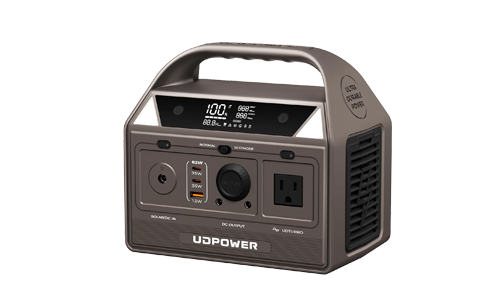
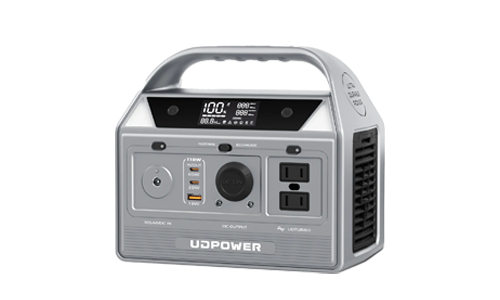
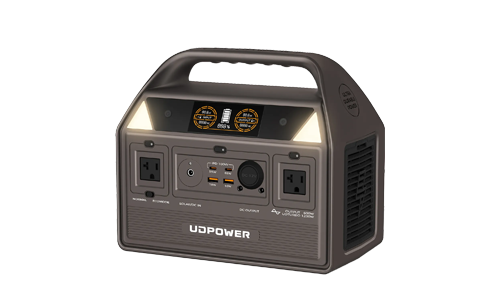
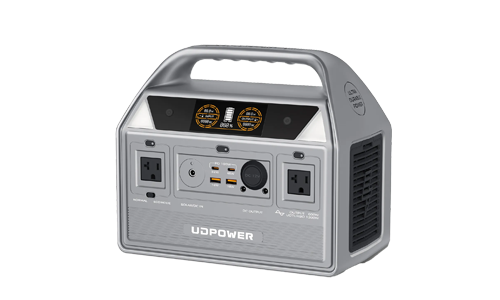
UDPOWER does not currently have an exact 800Wh model on the pages reviewed for this article. The more honest recommendation is to choose based on what you actually want the battery to do: go smaller for grab-and-go portability, or step up for real backup headroom.

UDPOWER C600 Portable Power Station
If you came here wanting something in the “small but useful” range, this is UDPOWER’s closest match on the lighter side. It is a better fit for camping, internet backup, laptop work, lights, phones, and lighter-duty overnight use than for refrigerator-heavy plans.
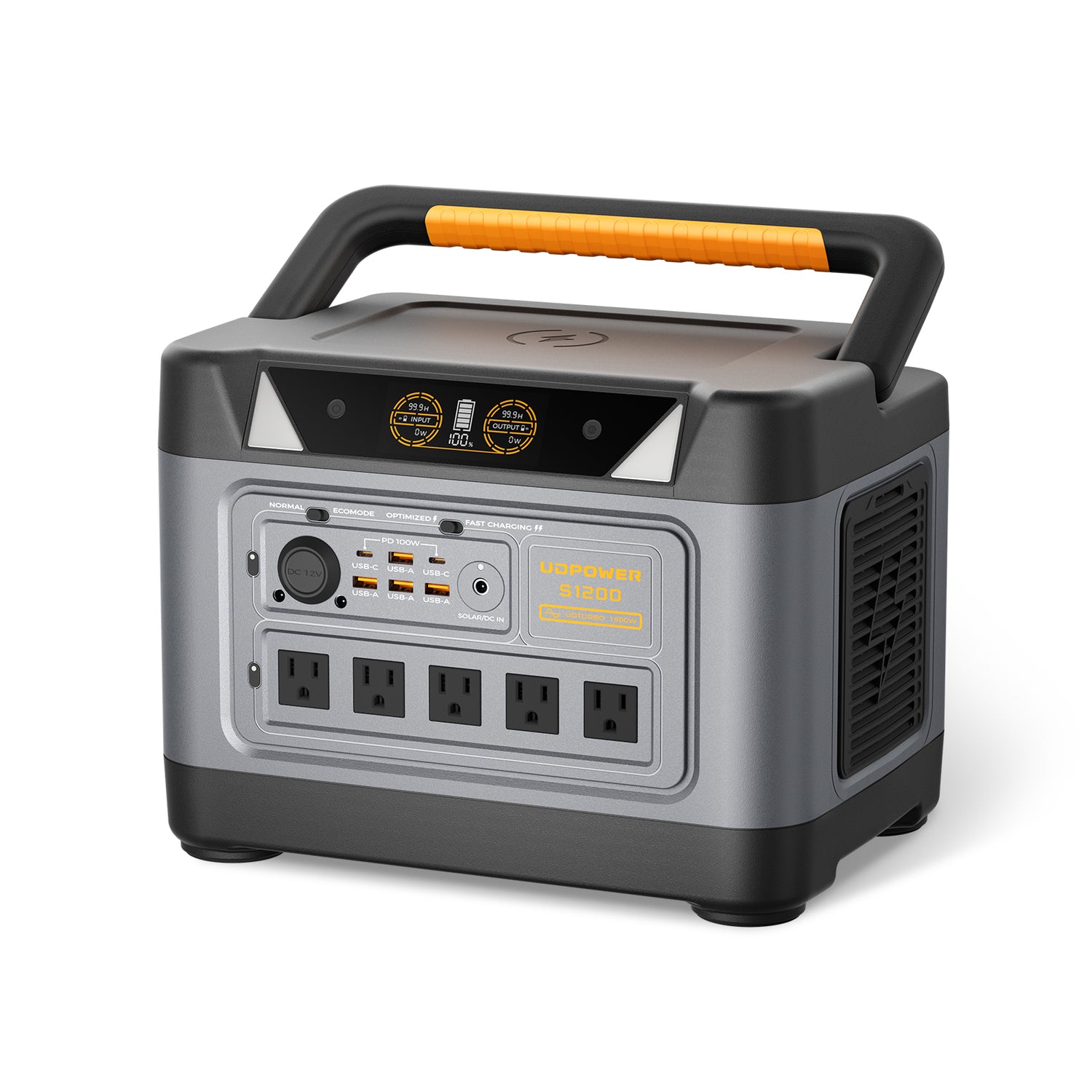
UDPOWER S1200 Portable Power Station
For most people searching “how long does an 800Wh power station last,” this is the more future-proof answer. It gives you noticeably more breathing room for CPAP, internet, TV, laptop work, and longer outages without jumping all the way into a much larger system.
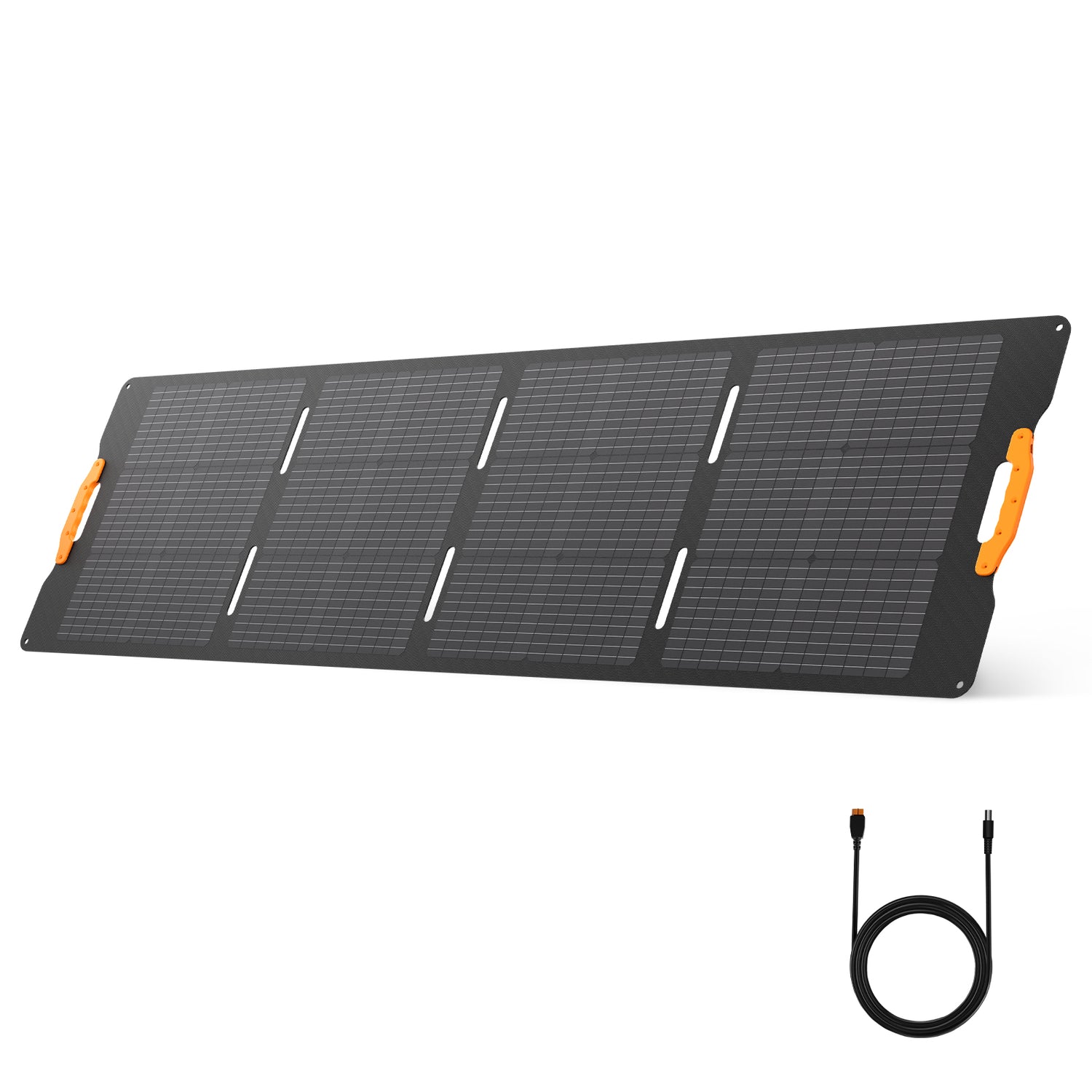
UDPOWER 210W Portable Foldable Solar Panel
If your power station is meant for outages, camping, or RV days instead of just one-night backup, solar is what turns a finite battery into a system. A panel in this range makes much more sense than trying to live on stored power alone.
More helpful UDPOWER reads: Portable Power Station Runtime Planning for Outages, How to Keep Wi-Fi Running During a Power Outage, CPAP Battery Backup for Power Outages, Portable Power Station vs Generator for Power Outages.
FAQ
How long will an 800Wh power station last at 100W?
On paper, 8 hours. For more realistic planning through AC outlets, about 6.8 hours.
How long will an 800Wh power station last at 50W?
About 13.6 hours using a practical 85% usable-energy estimate.
Can an 800Wh power station run a CPAP all night?
Often yes. Many CPAP setups without heated humidity can fit comfortably inside this battery size. With humidifier and heated hose on, runtime drops a lot faster.
Can an 800Wh power station run a refrigerator?
Sometimes, but usually for less time than people hope. Check your fridge’s EnergyGuide annual kWh number, not just the running watts. For many households, 800Wh is better for short support than long continuous fridge backup.
Is 800Wh enough for camping?
Usually yes for lights, phones, camera gear, laptops, fans, and small electronics. It becomes limiting only when you start adding cooking devices, electric heat, or compressor loads.
What is the best way to estimate runtime without guessing?
Use this formula: 800Wh × 0.85 ÷ device watts. Or use the exact label data from your device, especially for refrigerators and medical equipment.
Sources
- Apple — power adapters for Mac
- Samsung — 43-inch TV power spec sheet
- eero — router power consumption table
- Philips Hue — LED bulb wattage
- ResMed — CPAP battery guide
- ENERGY STAR — refrigerator annual energy use finder
- CDC — food safety after emergency or power outage
- FoodSafety.gov — food safety during power outage
- UDPOWER — Battery Runtime Basics
- UDPOWER — Runtime Calculator
- UDPOWER C600 product page
- UDPOWER S1200 product page
- UDPOWER 210W foldable solar panel product page
Related Articles