

How Long Does a 500Wh Battery Last?
Battery Runtime Guide
A 500Wh battery can last about 4 to 5 hours on a 100W device, about 7 to 8 hours on a 60W device, or less than 1 hour on a 500W load. That is the real-world answer most shoppers want.
Here is the part many articles skip: a “500Wh battery” does not mean you get a perfect 500Wh out of the wall outlet. If you run AC devices, inverter losses usually trim usable energy. In plain English, a 500Wh battery often behaves more like about 425Wh on AC and about 475Wh on DC/USB. That is why a 500Wh unit feels excellent for routers, laptops, lights, phone charging, and some CPAP setups, but much less impressive for coffee makers, heaters, microwaves, or all-day fridge backup.
Want to check your own setup instead of relying on averages? Plug your device into the UDPOWER Portable Power Station Runtime Calculator, and use the Battery Unit Conversion Tools if your label shows amps, volts, Ah, or mAh instead of a clean watt number.

The Short Answer in One Table
If you only want the fast planning version, use this table. These estimates assume 85% efficiency for AC output and 95% efficiency for DC/USB output, which matches the kind of real-world math that is more useful than ideal lab math.
| Device load | Ideal runtime (500Wh ÷ load) | More realistic on AC | More realistic on DC/USB | What this feels like | Source |
|---|---|---|---|---|---|
| 5W | 100h | 85h | 95h | LED lights, tiny electronics, slow trickle charging | Runtime formula |
| 10W | 50h | 42h 30m | 47h 30m | Router, modem, phone charging hub | Runtime calculator |
| 20W | 25h | 21h 15m | 23h 45m | Small monitor, brighter LED lighting, networking gear | Real-world efficiency guide |
| 40W | 12h 30m | 10h 38m | 11h 53m | Many CPAP setups without heated extras, small fan | CPAP planning guide |
| 60W | 8h 20m | 7h 05m | 7h 55m | Laptop charging, TV on the efficient side, average small cooler load | Runtime calculator |
| 100W | 5h | 4h 15m | 4h 45m | TV, stronger fan, multiple small devices at once | Runtime math |
| 200W | 2h 30m | 2h 08m | 2h 23m | Portable fridge plus extras, bigger monitor setup | Load planning guide |
| 300W | 1h 40m | 1h 25m | 1h 35m | Heavy small-appliance use, short bursts only | Wh formula |
| 500W | 1h | 0h 51m | 0h 57m | The battery drains fast at this level | 500W example |
Practical read: once you cross 100W to 200W, a 500Wh battery starts feeling small. At 10W to 60W, it becomes much more useful.
The Runtime Formula That Actually Matters
The clean formula is simple:
So if your battery is 500Wh and your device pulls 100W, the ideal math says 5 hours. But if you are using an AC outlet, real runtime is usually closer to:
That one correction fixes most unrealistic battery expectations.
For USB and DC ports, losses are usually lower, so a 500Wh battery can feel noticeably stronger. That is why a power station can run a router or charge phones for a long time, yet still disappoint you if you try to run a space heater or coffee maker.
If you want to sanity-check the math before buying, UDPOWER’s watt-hour guide explains the basic formula in plain English, and the runtime calculator lets you test your own wattage in seconds.
What Changes Runtime in Real Life
Two people can buy a “500Wh battery” and get very different results. Here is why.
| Factor | What it does to runtime | Why ordinary buyers notice it | Source |
|---|---|---|---|
| AC vs DC output | AC usually loses more energy than USB/DC | The same battery often lasts longer when you skip the AC inverter | UDPOWER efficiency guide |
| Cycling appliances | Fridges and some coolers do not draw the same power all day | A fridge may average much less than its startup or running wattage | U.S. DOE appliance use guide |
| Temperature | Heat and cold can reduce real performance | Camping, garages, and cars rarely match ideal indoor conditions | Runtime basics |
| Battery reserve and protection | Not every watt-hour is delivered to the outlet | BMS protection helps battery health but lowers perfect-paper runtime | Wh calculation guide |
| Device settings | Power draw can swing a lot | CPAP humidifier, TV brightness, fan speed, and laptop charging state all matter | CPAP backup guide |
The biggest planning mistake is treating every appliance like a simple light bulb. A lamp is easy. A fridge, CPAP, or laptop is not. Some devices cycle. Some surge. Some pull much more power only during charging or startup.
Common 500Wh Battery Examples Most People Care About
The numbers below use example loads, not one exact brand or one exact model. They are here to help you plan realistically, then compare that plan against the label on your own device.
| Use case | Example draw | Estimated runtime | What that means in plain English | Source |
|---|---|---|---|---|
| Wi-Fi router + modem | 10–20W | About 21 to 47 hours | Very realistic overnight or multi-day backup on low draw | Wi-Fi outage guide |
| Laptop | 45–60W average while charging/working | About 7 to 10 hours | Good for remote work, travel, and flight delays; not ideal for high-power gaming loads | Runtime calculator |
| CPAP without heated humidifier | 30–40W | About 10 to 15 hours | Often enough for one full night, sometimes more | CPAP outage planning |
| CPAP with heated humidifier/hose | 60–90W or more | About 4 to 8 hours | This is where a 500Wh battery starts losing overnight margin fast | CPAP runtime factors |
| TV | 70–100W | About 4 to 6 hours | Fine for a movie night; not a whole-day entertainment plan | Runtime math |
| Fan | 30–60W | About 7 to 15 hours | Strong use case for summer outages and camping | Runtime calculator |
| Portable fridge or efficient mini cooler | Average 40–60W, but not steady | Often around 7 to 12 hours, sometimes more if cycling lightly | Possible, but the real answer depends heavily on ambient heat and duty cycle | DOE cycling note |
| Full-size refrigerator | Often manageable in short windows, not ideal as a long-duration plan on 500Wh | Varies too much for one honest number | A 500Wh battery is usually a bridge solution, not a comfortable all-day fridge solution | Fridge backup sizing |
| Coffee maker / space heater / microwave | High draw, often 700W and up | Usually the wrong job for a 500Wh battery | Even if wattage fits, runtime disappears quickly | Outage buying guide |
If your question is really “what can this size actually power?”, pair this article with What Can a 500W Power Station Run? and How Long Does a 500W Portable Power Station Last?. Those two pages are the fastest way to compare runtime limits with appliance compatibility before you buy.
What a 500Wh Battery Can Realistically Run
For everyday buyers, this is the easiest way to think about the size:
Good fitrouter + modem, laptops, camera gear, phones, tablets, LED lighting, portable fans, some CPAP setups, car fridges, and light camping loads.
BorderlineTVs for several hours, mini-fridges, stronger CPAP setups, and mixed loads where several devices are running together.
Poor fitspace heaters, hair dryers, electric kettles, coffee makers, most microwaves, induction cooktops, and long fridge backup for a family kitchen.
If your real-life goal sounds like one of these, you are probably thinking about the right size:
- “I need overnight internet and phone charging during outages.”
- “I want a small backup for my desk, van, or camp table.”
- “I need one-night CPAP coverage if I manage the settings.”
- “I want quiet backup power, not a gas generator.”
If your goal sounds more like this, 500Wh is usually too small:
- “I want to forget about runtime and just run everything.”
- “I need full-day fridge coverage without worrying.”
- “I want to run kitchen appliances whenever I feel like it.”
- “I need a bigger safety margin for medical devices and multi-night outages.”
If you are building around internet gear, read How to Keep Wi-Fi Running During a Power Outage and Portable Power Station vs UPS for Home Backup. If your bigger concern is food protection, jump to Best Refrigerator Power Backup Options and Food Safety During a Power Outage. Those guides help readers move from “How long will it last?” to “What should I power first?” without leaving the UDPOWER site.
500W vs 500Wh: The Easy Mistake That Confuses Buyers
This mix-up causes a lot of bad purchases.
500Wh tells you how much energy is stored. That affects how long the battery lasts.
500W tells you how much power it can deliver at one time. That affects what the battery can run.
A battery could be:
- 500Wh and 300W output: decent runtime on small gear, but cannot run higher-watt appliances.
- 500Wh and 600W output: can handle more kinds of devices, but still empties quickly at higher loads.
- 1200Wh and 1200W output: more headroom for both runtime and appliance choice.
Best UDPOWER Picks Around This Size
If you are shopping around the 500Wh range, UDPOWER’s current lineup makes the decision pretty straightforward:
| Model | Capacity | Rated output | Weight | Who it fits best | Source |
|---|---|---|---|---|---|
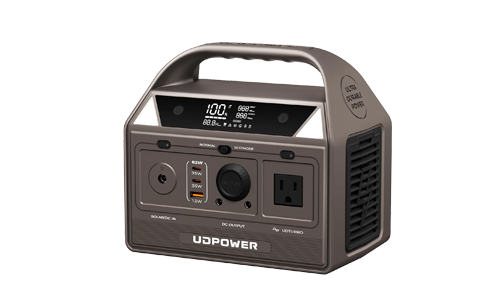
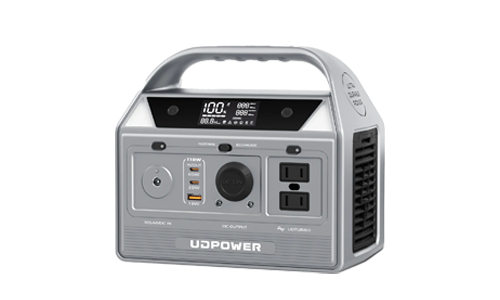
| UDPOWER C400 | 256Wh | 400W | 6.88 lbs | Ultra-light trips, day use, jump-start convenience, very small backup needs | Official product page |
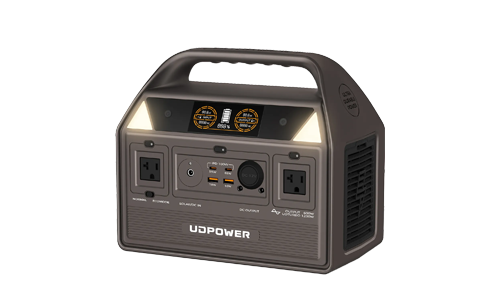
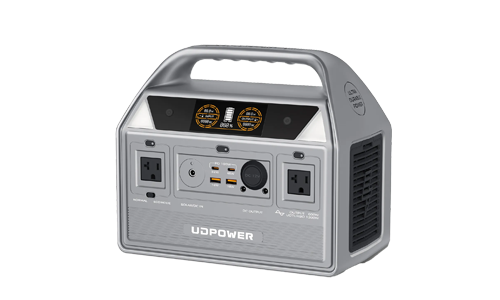
| UDPOWER C600 | 596Wh | 600W | 12.3 lbs | The closest true fit for shoppers who think they want “about 500Wh” | Official product page |
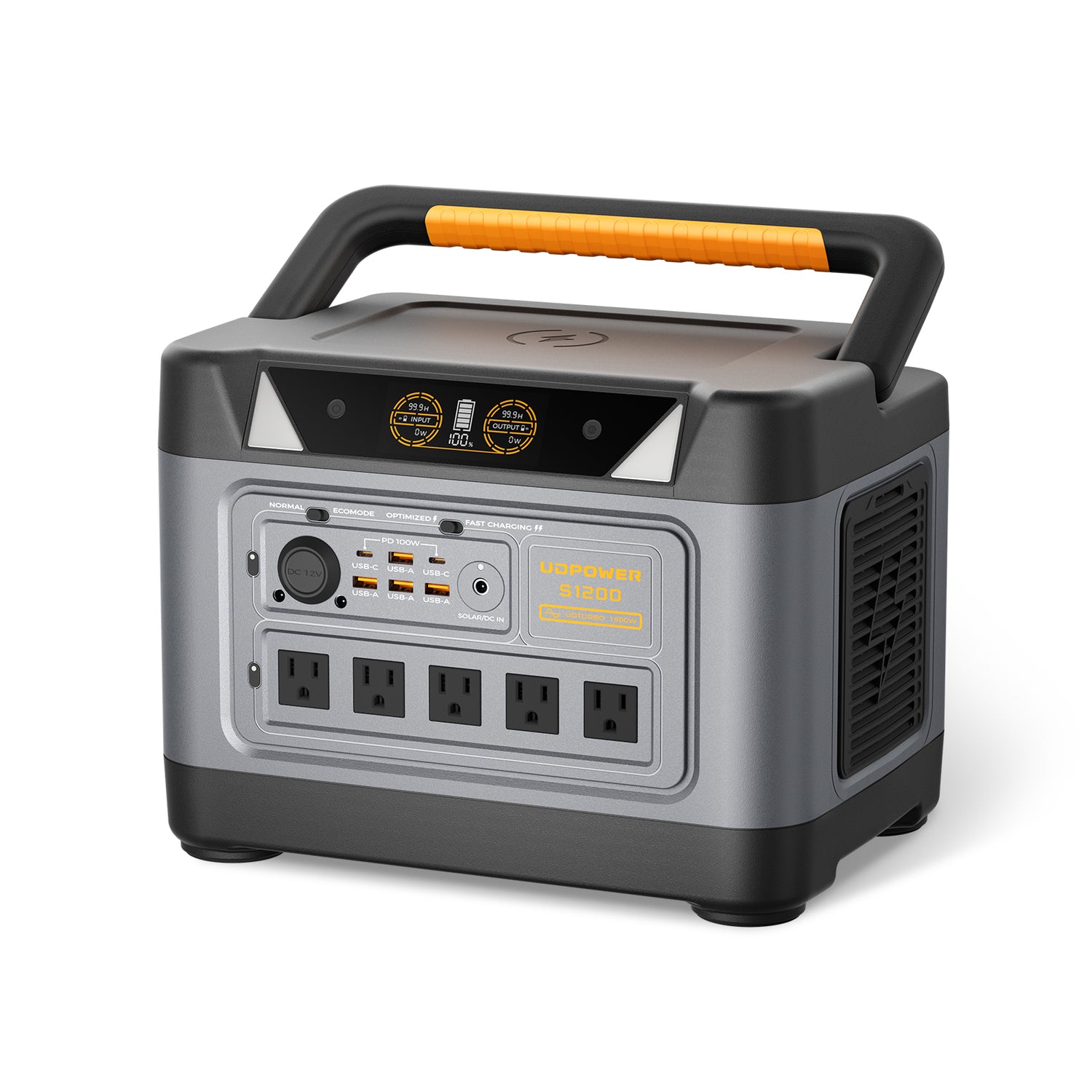
| UDPOWER S1200 | 1,190Wh | 1,200W | 26.0 lbs | Home backup, better overnight margin, heavier everyday loads, more outlets | Official product page |
For this exact topic, the UDPOWER C600 is the most natural recommendation because it lands just above the 500Wh class at 596Wh, gives you 600W output, uses LiFePO4, and keeps the weight manageable. It is a much more comfortable buy than trying to squeeze every last minute out of a smaller 256Wh unit.

UDPOWER C600: the smart match for 500Wh shoppers
If you want the feel of a 500Wh-class power station without ending up underpowered, the C600 is the sweet spot. It gives you more breathing room for laptops, routers, portable fridges, fans, and small medical-use scenarios than a sub-300Wh model can offer.
- 596Wh capacity
- 600W rated output
- LiFePO4 battery
- 4,000+ cycle life
- 30-day returns and 5-year warranty on the official site
UDPOWER S1200: when 500Wh starts to feel too tight
If you already know your loads are closer to “overnight and no stress,” stepping up to the S1200 makes more sense than forcing a 500Wh-class battery to do a bigger job. The extra capacity helps most with fridges, longer outages, and mixed family loads.
- 1,190Wh capacity
- 1,200W output
- Fast charging and multiple AC/DC ports
- LiFePO4 battery with 4,000+ cycles
- UPS support for backup-style use
Related UDPOWER reads: runtime planning for outages, what to run first during an outage, portable power station vs generator.
How Solar Changes the Math
A 500Wh battery feels a lot more useful when you can refill part of it during the day. That is especially true for camping, RV use, and outages that may last more than one night.
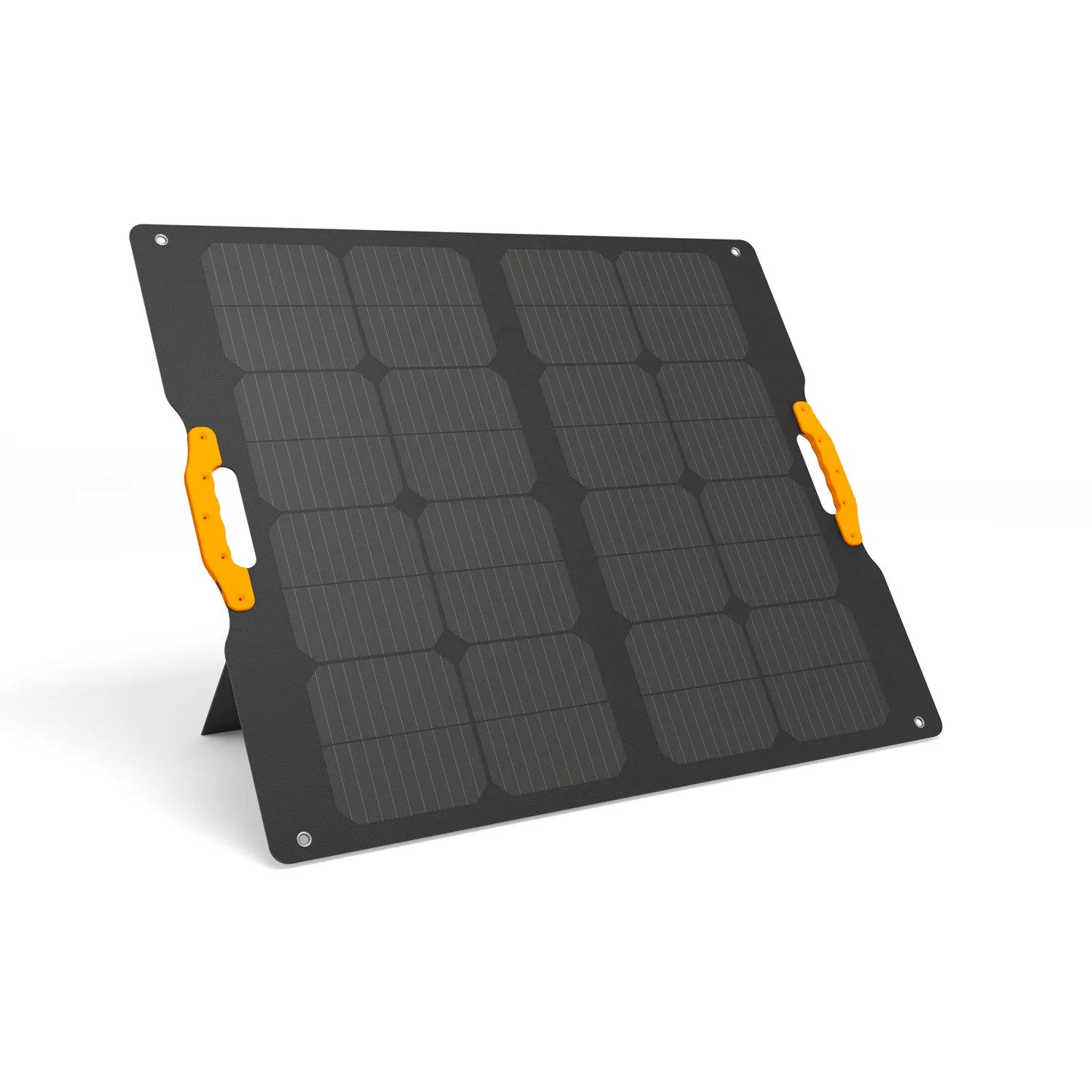
For the UDPOWER C600, the easiest official pairing is the UDPOWER 120W Portable Solar Panel. The official page lists it as compatible with the C-series and notes that the C600 supports 18V solar input, which is why the 120W panel is the clean, low-friction option for this size class.
UDPOWER 120W Portable Solar Panel
- 120W rated power
- 22% efficiency
- IP65 weather resistance
- Compatible with UDPOWER C200, C400, C600, S1200, and S2400 according to the official page
Solar does not magically make a small battery large, but it can turn a one-night battery into a much more flexible weekend setup.
Helpful internal guides: solar recharging during an outage, UDPOWER solar panel pairing guide, and can you charge a portable power station with a solar panel.
FAQ
Is 500Wh enough for one night?
Often yes for low-draw essentials such as a router, phones, lights, or some CPAP setups without heated accessories. Often no for high-draw appliances or a “run everything normally” plan.
Can a 500Wh battery run a refrigerator?
Sometimes for a short bridge period or for an efficient smaller fridge, but it is usually not the comfortable size for long full-size refrigerator backup. Fridge behavior depends heavily on cycling, ambient temperature, and startup surge.
Can a 500Wh battery run a CPAP overnight?
It often can if the setup is efficient and heated humidification is off or limited. Once heated hose or humidifier use climbs, runtime drops fast. Always plan from your machine’s actual power draw.
How many phones can a 500Wh battery charge?
A lot more than most people expect. Phone charging is a low-energy job compared with AC appliances, which is why a 500Wh battery can feel huge for personal electronics and small for kitchen gear.
Is a 500Wh battery good for camping?
Yes, especially for lights, fans, laptops, cameras, drones, and cooler-type loads. It is one of the most practical battery sizes for weekend trips because it still feels portable.
How long does a 500Wh battery last on a TV?
For many TVs, roughly 4 to 6 hours is a realistic planning range, depending on screen size, brightness, and whether the TV is surprisingly efficient or surprisingly hungry.
Does using AC outlets shorten runtime?
Yes. AC usually costs you more runtime because the inverter has to convert battery DC into household AC. USB and DC outputs are usually more efficient.
If I want more margin than 500Wh, what should I buy?
If 500Wh feels close but a little risky, stepping up to something like the UDPOWER C600 is the natural move. If you need stronger output and longer overnight comfort, the S1200 is the safer upgrade.
Final Verdict
A 500Wh battery lasts a long time on small electronics and a surprisingly short time on bigger AC loads. That is the whole story.
For real shopping decisions, think of 500Wh as a small-essentials battery, not an everything battery. It is excellent for routers, laptops, lights, fans, and lighter overnight backup. It is much less comfortable for higher-watt appliances or long outage coverage.
If you are trying to buy near this size without regretting it later, the UDPOWER C600 is the most sensible official fit because it lands just above the 500Wh class at 596Wh and gives you a cleaner margin. If your needs already sound bigger than that, skip the struggle and look at the UDPOWER S1200.
Useful next reads: runtime calculator, battery unit conversion tools, how to keep Wi-Fi running during a power outage, CPAP battery backup guide, what to run first during an outage, power outage checklist, food safety during a power outage, and how much water to store for a power outage.
Related Articles


