What Can a 500W Power Station Run?
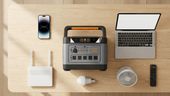
ZacharyWilliamA 500W portable power station is a strong fit for electronics, low-watt appliances, and compact backup setups. It can comfortably handle phones, tablets, laptops, routers, LED lights, fans, CPAP machines, many TVs, and a good amount of camera or work gear, but it still has clear limits around high-heat appliances and motor-heavy loads.
The most useful way to think about this class is simple: 500W is usually enough for one medium appliance or a bundle of smaller essentials, but not for trying to turn a battery into a full kitchen outlet.

Table of Contents
Quick Answer: What a 500W Portable Power Station Can Run
A 500W portable power station is usually best for electronics and low-watt essentials. It is often a strong fit for:
Usually not a good fit: microwaves, hair dryers, space heaters, most coffee makers, electric kettles, air fryers, toaster ovens, and most high-heat kitchen appliances. Those are the devices that make 500W feel small very quickly.
This size works best when your real goal is backup essentials, travel gear, and short bursts of moderate loads—not running the biggest appliance in the room.
Watts vs. Watt-Hours: Why Both Matter
Watts (W) tell you how much power the inverter can supply at once. Watt-hours (Wh) tell you how long the battery can keep supplying that power. A 500W power station describes the inverter’s output limit, not the size of the battery.
Estimated runtime (hours) ≈ (Battery Wh × 0.85) ÷ Device wattsThat 0.85 factor is a simple real-world planning shortcut for AC usage. USB and DC loads often perform a little better because they avoid extra inverter losses.
What a 500W Station Typically Runs
This table assumes a battery in roughly the 250Wh–600Wh range, with around 85% usable capacity on AC. Exact runtime varies by battery size, conversion losses, and device behavior.
| Device | Typical power (W) | Compatible? | What to watch |
|---|---|---|---|
| Phone / tablet charging | 5–25W | Yes | Best through USB ports when possible. |
| Laptop | 45–100W | Yes | USB-C PD often stretches runtime further. |
| Wi-Fi router + modem | 10–25W | Yes | One of the best outage uses for this class. |
| LED lights / lanterns | 5–30W | Yes | Excellent battery efficiency. |
| CPAP without heated humidifier | 30–60W | Usually yes | One of the strongest real-life use cases for 500W. |
| Small fan / box fan | 20–75W | Yes | Great for hot-weather outages and camping. |
| TV + streaming device | 70–150W | Usually yes | Brightness and sound output affect draw. |
| Game console | 120–200W | Usually yes | Useful for a few hours of downtime comfort. |
| Camera / drone charger | 15–60W | Yes | Very common off-grid and travel load. |
| Portable monitor | 10–20W | Yes | Very easy load for remote work. |
| Mini fridge | 60–100W running | Sometimes | Startup surge is the main reason it may fail. |
| 12V compressor cooler | 40–70W average | Usually yes | Often more efficient on DC than AC. |
| Small blender | 300–500W | Maybe | Check startup surge and keep all other major loads off. |
| Low-power tool charger | 80–150W | Yes | Good for worksite charging or DIY kits. |
| Small drill / driver | 300–500W | Maybe | Motor startup can still matter. |
| Rice cooker (small) | 300–500W | Maybe | Possible in some cases, but with little margin. |
| Coffee maker | 800–1200W | Usually no | Most exceed the comfort zone of this class. |
| Microwave | 900–1500W+ input | No | Input draw is usually much higher than shoppers expect. |
| Hair dryer | 1200–1800W | No | Classic overload example. |
| Space heater | 1000–1500W | No | Too much draw and terrible battery use. |
What It Usually Will Not Run Well
These are the most common disappointments for buyers who expect too much from a 500W station:
Those loads either exceed 500W outright or leave so little margin that they are impractical as a real-world battery plan.
Real-World Runtime Examples
Below are quick runtime examples using the simple runtime formula. Real results vary with battery size, device efficiency, temperature, and whether the load cycles on and off.
| Load | 500Wh battery example | UDPOWER C400 (256Wh) | UDPOWER C600 (596Wh) |
|---|---|---|---|
| 10W router / phone load | ~42.5 hours | ~21.8 hours | ~50.7 hours |
| 60W laptop / CPAP load | ~7.1 hours | ~3.6 hours | ~8.4 hours |
| 100W TV load | ~4.25 hours | ~2.2 hours | ~5.1 hours |
| 200W fan + lights + charging | ~2.1 hours | ~1.1 hours | ~2.5 hours |
| 400W appliance mix | ~1.06 hours | ~0.54 hours | ~1.27 hours |
| 500W near-max load | ~0.85 hours | Not applicable / over limit for C400 | ~1.0 hour |
If you care more about runtime than raw output, this is the section that matters most. A 500W station may run your load just fine but still not last as long as you expect.
How to Choose the Right Size
- List the devices you want to run at the same time, not just one device by itself.
- Add the watts together and leave margin below the continuous output ceiling.
- Check startup surge for anything with a motor or compressor.
- Choose battery capacity based on hours needed, not on inverter size alone.
- Use DC and USB where possible to reduce inverter losses and stretch runtime.
Useful comparison path: if 500W feels slightly too small, compare it directly with the 600W guide and the 800W guide. If your loads are mostly electronics and lighting, it also helps to compare the 300W guide and the 200W guide. If your plan already includes more appliance overlap, the next serious step-up is the 1000W guide, followed by 1200W, 2000W, and 3000W.
UDPOWER Picks
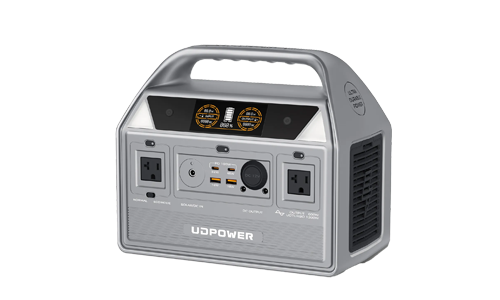
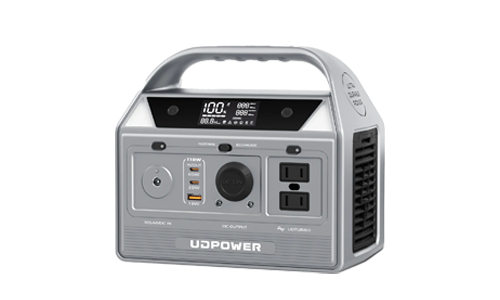
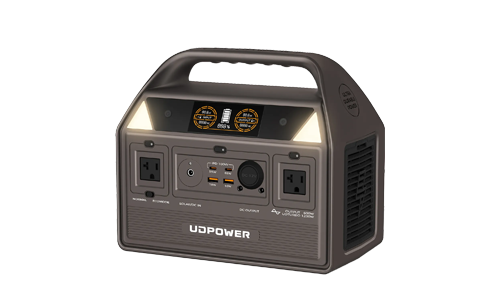
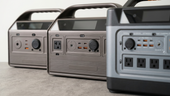
If you are shopping around the 500W class, the two most practical UDPOWER references are the C400 on the lighter side and the C600 on the step-up side. The C600 is technically above 500W, but that extra margin is exactly why many 500W shoppers end up preferring it.
UDPOWER C400

256Wh battery, 400W output, up to 800W max on the product page. Best when your real loads are laptops, routers, lighting, phones, and compact travel gear.
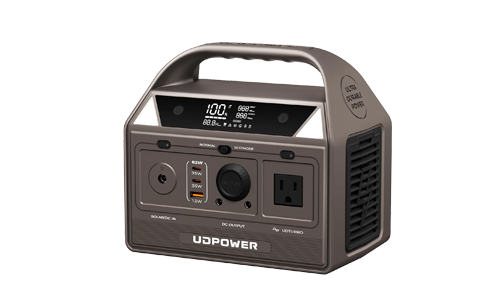
View UDPOWER C400UDPOWER C600

596Wh battery, 600W output, and more runtime plus more surge headroom. This is usually the safer recommendation if your real-world use includes CPAP, mini-fridge experiments, TV time, and small appliance overlap.
View UDPOWER C600Simple recommendation: choose the smallest unit that safely covers your actual loads, not the one that only works on paper under perfect conditions.
FAQ
Can a 500W power station run a 500W device?
Yes, as long as the station’s continuous output is truly 500W and the device does not have a startup surge that exceeds the inverter’s peak capability. The main tradeoff is runtime: even a modest 500Wh battery will usually last well under an hour at a constant 500W draw.
Will a 500W power station run a refrigerator?
Sometimes. Many mini fridges or efficient compact refrigerators run well below 500W once they are on, but startup surge is the issue. A fridge may look safe by running watts and still trip a 500W-class station during startup.
Can a 500W power station run a CPAP overnight?
In many cases, yes—especially without heated humidity. A CPAP is one of the most practical real-world use cases for a 500W station. Battery capacity matters more than inverter size here.
Can it run a coffee maker?
Some compact coffee makers may fit, but many do not. The safest approach is to check the actual wattage label and assume coffee brewing should be the only major load running at that moment.
What can I realistically run at the same time on a 500W station?
Routers, lights, phone charging, laptops, and even a TV can often run together comfortably. Trouble starts when you add motor-driven appliances or any heat-heavy device that quickly eats the remaining headroom.
Is 500W enough for home backup?
For essentials, often yes. A 500W station is very capable for keeping the internet up, charging devices, running lights, and supporting a few comfort loads. It is not intended for whole-home backup or high-heat kitchen use.
Should I buy 300W, 500W, 600W, or 800W?
Choose 300W if your use is mostly phones, laptops, routers, and lights. Choose 500W if you want a stronger middle ground for compact backup and light appliances. Choose 600W if you want more safety margin around mini fridges and moderate loads. Choose 800W if you want more flexibility and less compromise around appliance overlap.
Does higher wattage always mean longer runtime?
No. Runtime depends on battery capacity in watt-hours, not only on inverter size. A bigger inverter can handle bigger loads, but it does not automatically mean the battery lasts longer unless the battery is larger too.











![How to Live In The Woods [Complete Guide]](http://udpwr.com/cdn/shop/articles/Off-Grid_Cabin_Option_f6c94fe7-1ae7-4c3a-baf5-ed9fe684c832.png?v=1763523215&width=170)