How Much Power Does a Radio Use? Watts, Runtime & Backup Power Guide
ZacharyWilliamMost radios use far less electricity than people expect. A small AM/FM or weather radio may only need a few watts, while a more powerful mobile radio can draw well over 100 watts when transmitting at full power. The trick is knowing which kind of radio you have, because a pocket radio, a NOAA alert radio, and a vehicle-mounted two-way radio are not in the same league.
If you only need the short answer, use this rule of thumb: most small household radios fall around 2 to 10 watts, and mobile or high-power two-way radios can go much higher.

Quick Answer
Here is the practical range most readers need:
- Pocket AM/FM radio: about 2.5W
- Portable multi-band or weather radio: about 5W
- Handheld two-way radio on receive: often around 0.5W to 5W
- Handheld two-way radio on transmit: often around 6W to 11W
- Vehicle-mounted high-power radio: can reach 100W+ input draw
That is why a small emergency radio can run for days on a modest battery, but a full-power mobile communication radio needs much more serious backup planning.

Why Radio Wattage Varies So Much
“Radio” is a broad word. A bedside weather radio that mostly sits in standby uses very little power. A handheld marine or ham radio uses more when the speaker is louder or when you transmit. A vehicle-mounted GMRS or mobile radio can draw dramatically more because it is built for range and higher output.
There is another point that confuses a lot of buyers: speaker output power is not the same thing as total power draw from the wall or battery. A spec like “0.5W speaker output” or “50W radio” does not always tell you what your battery will actually see. For backup planning, the better numbers are:
- Input voltage and current, such as 5V 1A or 7.2V 500mA
- Maximum current draw on receive or transmit
- Whether the radio is running from USB, AA batteries, DC, or AC adapter

Typical Watts by Radio Type
The table below uses official product or manual specs from well-known radio brands. The “Planning Watts” column turns those specs into a simple number you can actually use when sizing a battery backup.

| Radio type | Example | Official spec | Planning watts | What that means | Source |
|---|---|---|---|---|---|
| Pocket AM/FM radio | Retekess V112 | Charging voltage 5V 500mA | ≈ 2.5W max | Very low draw. A small USB battery can keep this type of radio going a long time. | Official spec |
| Portable multi-band / weather radio | Retekess V115P | USB-C input 5V 1A | ≈ 5W max | A good planning number for many compact rechargeable emergency radios. | Official spec |
| Home NOAA weather radio | Midland WR120 | 120V AC / 3 AA batteries, 0.5W speaker | Usually only a few watts in use | Good for alerts and standby use, but the exact wall-plug draw is not always listed. | Official guide |
| Home NOAA / AM/FM alert radio | Midland WR400 | 120V AC adapter / 4 AA batteries, 0.5W speaker, USB 5V 1A output | Usually only a few watts in use | Still a light load compared with most household appliances. | Official guide |
| Handheld two-way radio | Icom IC-V3MR | 7.2V DC; receive standby 75mA, receive max audio 500mA, transmit 0.9A | ≈ 0.5W standby, 3.6W listening, 6.5W transmit | Battery life depends heavily on how often you talk versus just listen. | Official spec |
| Handheld marine radio | Icom IC-M94D | 7.2V DC; RX 350–700mA, TX 700–1500mA | ≈ 2.5–5W receive, 5–10.8W transmit | Still modest on receive, but transmitting burns power much faster. | Official spec |
| Vehicle-mounted GMRS radio | Midland MXT575 | Minimum 13.8V; maximum power draw 10A | ≈ 138W max | This is a completely different backup load than a small AM/FM radio. | Product page |
Bottom line: if you are trying to power a normal household radio, emergency radio, or small portable weather radio, you are usually dealing with a tiny load. For most people, the power station question is not “Can it run the radio?” but “How many days do I want the radio, phones, lights, and other basics to run together?”
How to Check Your Radio’s Real Power Use
You do not have to guess. Use one of these three quick methods.
-
Look at the adapter label.
If your radio adapter says 5V 1A, the maximum draw is about 5 watts. If it says 12V 0.5A, that is about 6 watts. -
Check the manual for current draw.
If the manual lists something like 7.2V and 500mA, multiply volts × amps. In that example: 7.2 × 0.5 = 3.6W. -
Plan higher for transmit-heavy radios.
A two-way radio may sip power while listening, then jump much higher when you press the talk button. That is why receive and transmit numbers should be treated separately.
Fast formula: Watts = Volts × Amps
Runtime formula: Hours = Battery Wh × efficiency ÷ device watts

How Long Can a Portable Power Station Run a Radio?
For radios, runtime is usually excellent because the load is so small. A few practical examples make this easier to picture.
These estimates assume about 90% efficiency for DC/USB output and about 85% for AC adapter use. Real results change with volume level, standby time, temperature, battery age, and whether the radio spends time transmitting.

| Power station | Official capacity | 2W pocket radio (USB/DC) |
5W emergency radio (USB/DC) |
10W radio via AC adapter | Best fit |
|---|---|---|---|---|---|
| UDPOWER C400 | 256Wh | ≈ 115 hours | ≈ 46 hours | ≈ 21.8 hours | Short outages, camping, glove-box backup kit |
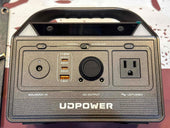
| UDPOWER C600 | 596Wh | ≈ 268 hours | ≈ 107 hours | ≈ 50.7 hours | Storm prep, family emergency kit, radio + phones + lights |
| UDPOWER S1200 | 1,190Wh | ≈ 535 hours | ≈ 214 hours | ≈ 101 hours | Longer outages and larger home backup plans |
| UDPOWER S2400 | 2,083Wh | ≈ 937 hours | ≈ 375 hours | ≈ 177 hours | Whole emergency setup, not just radio backup |
Want to run your own numbers? Use UDPOWER’s battery runtime estimator and plug in the wattage from your radio label or manual.
Best UDPOWER Options for Radios and Emergency Listening
A radio does not need much power by itself, so the better question is what else you want to keep alive at the same time. Here are the three UDPOWER picks that make the most sense for radio users.

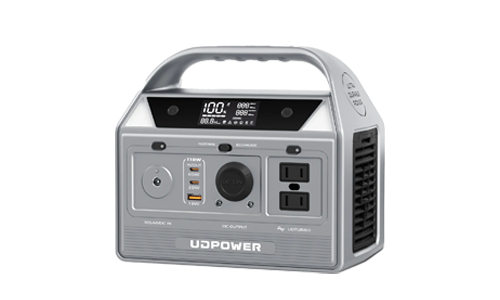
UDPOWER C400
- 256Wh capacity
- 400W output
- Fast charging: 1.5 hours
- LiFePO4 battery, 4,000+ cycles
If your goal is to keep a weather radio, phone, flashlight, and a few small essentials going during a blackout, the C400 is already plenty for most people.

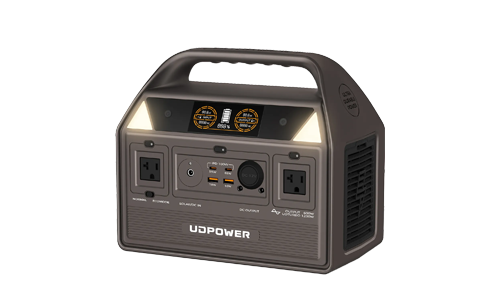
UDPOWER C600
- 596Wh capacity
- 600W output
- LiFePO4 battery
- 4,000+ cycles
This is the sweet spot if the radio is part of a bigger storm kit. It gives you enough room for phones, lights, and other small gear without feeling oversized.
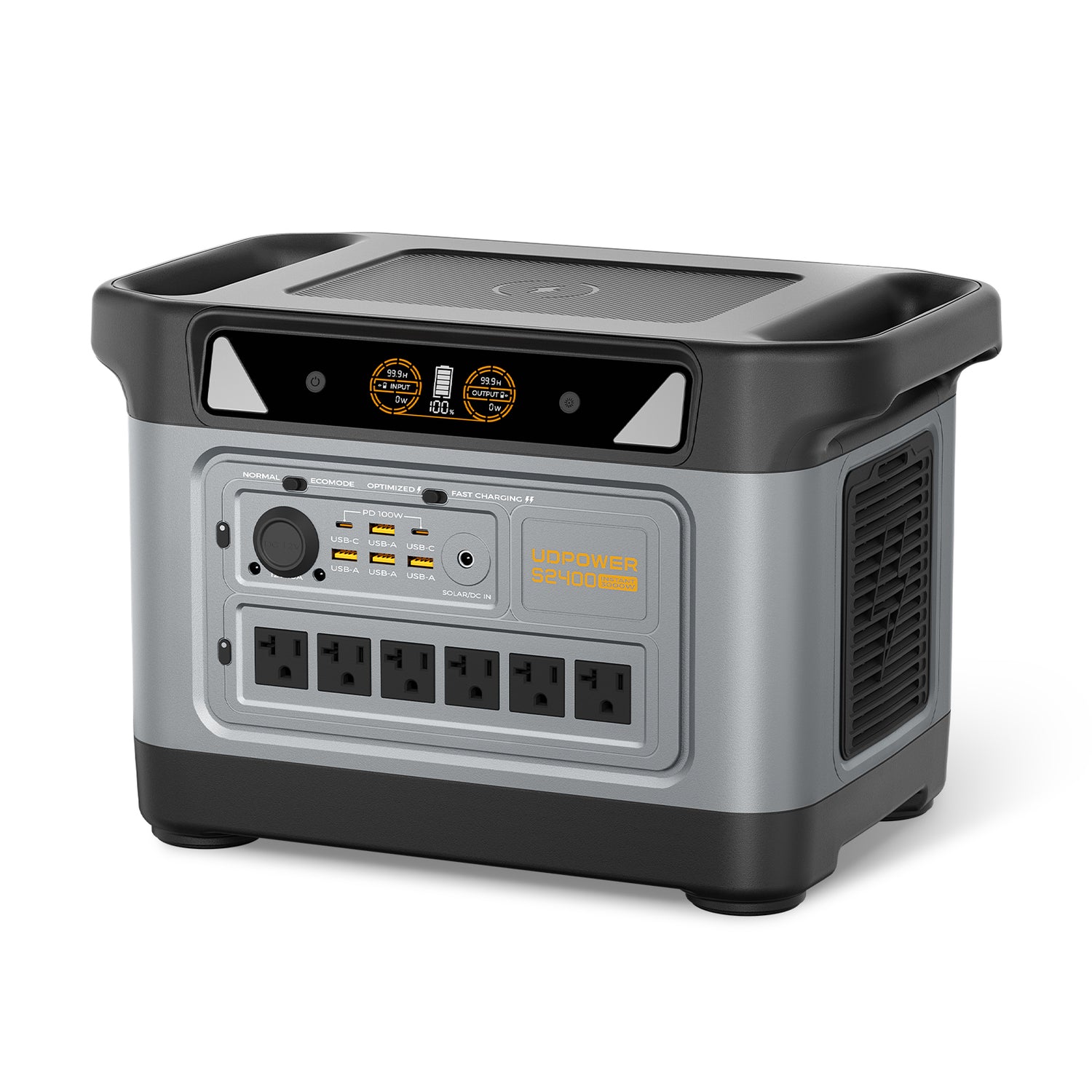
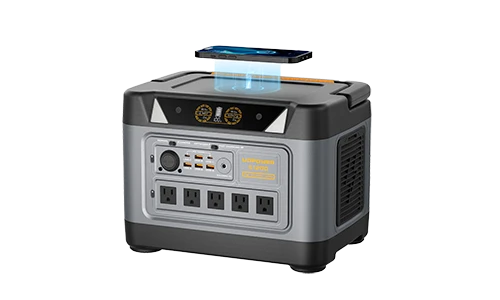
UDPOWER S2400
- 2,083Wh capacity
- 2,400W output
- Up to 3,000W surge
- UPS-style switchover ≤10ms
If the radio is only one part of your outage plan and you also need to cover routers, medical devices, kitchen basics, or refrigerator support, this is the bigger step up.
Best practice: if your radio can run from USB or DC, use that instead of an AC wall adapter. It usually wastes less energy and stretches runtime.
For broader outage planning, these guides also fit naturally with a radio backup setup:
Common Mistakes to Avoid
- Assuming every radio is a 5W device. A little weather radio and a vehicle-mounted GMRS unit are not even close.
- Confusing RF output with battery draw. A “50-watt radio” can pull much more than 50W from your power source.
- Using AC when USB or DC is available. For tiny loads, AC is often the least efficient way to run them.
- Ignoring transmit duty cycle. Two-way radios can look efficient while listening, then drain much faster during active communication.
- Planning only for the radio. In real outages, the radio is usually sharing power with phones, lights, and internet gear.
FAQ
Do radios use a lot of electricity?
No. Most small AM/FM, weather, and portable radios are light loads. Many are only in the 2W to 10W range, which is tiny compared with appliances like microwaves, heaters, or coffee makers.
How many watts does a weather radio use?
Many weather radios use only a few watts. USB-rechargeable models are often easy to plan around at roughly 5W, while basic alert radios with small speakers are also low-demand devices.
Can a portable power station run a radio overnight?
Yes, easily in most cases. Even a small power station can usually run a radio overnight. Mid-size models can often run a small radio for multiple days.
Is a USB radio better than using an AC adapter during an outage?
Usually yes. If the radio supports USB or DC input, that is often the more efficient path and helps stretch battery runtime.
How do I find my radio’s wattage if the manual only shows volts and amps?
Multiply volts by amps. For example, 5V × 1A = 5W, and 7.2V × 0.5A = 3.6W.
Do two-way radios use more power than normal radios?
Yes. Listening power may still be modest, but transmit power is much higher. Mobile two-way radios can be in a completely different power class from small household radios.
Final Takeaway
For most readers, the answer is simple: a normal radio is one of the easiest things to power during an outage. Small AM/FM and weather radios usually need only a few watts, so even a compact power station can keep them running for a long time. The main exception is high-power communication gear like mobile GMRS, marine, or ham radios, especially when they spend a lot of time transmitting.
If you are buying backup power mainly for listening to weather alerts, news, and local updates, you do not need a giant system just for the radio. Buy based on the full kit you want to support: radio, phones, lights, router, and anything else that matters when the grid goes down.














![How to Live In The Woods [Complete Guide]](http://udpwr.com/cdn/shop/articles/Off-Grid_Cabin_Option_f6c94fe7-1ae7-4c3a-baf5-ed9fe684c832.png?v=1763523215&width=170)