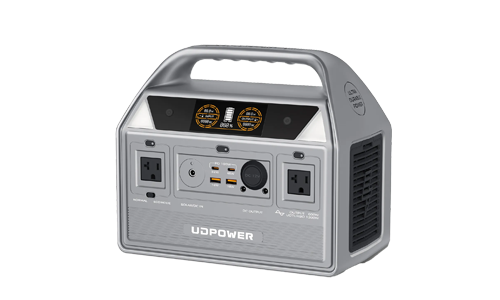
Can a Portable Power Station Charge an EV?
ZacharyWilliamA portable power station can charge an EV in limited situations, but it is not a substitute for a home charger or a public charging station. In most cases, it works best as a backup option when you need a small amount of range to get moving again, not as a practical way to recharge the vehicle on a regular basis.

The short answer
Yes, a portable power station can charge an EV in some setups, but usually only as a slow, limited backup source.
The first requirement is output. The station has to deliver enough continuous AC power for the charger to start and keep running. The second requirement is battery capacity. Even if charging starts, the stored energy in a portable power station is small compared with the battery in a modern EV, so the extra range is usually modest.
That is why this topic often sounds more promising in ads than it feels in real use. Charging the car and usefully charging the car are not always the same thing.

Why this question gets confusing
Most shoppers look at the battery size first. That makes sense, but it is only half the picture. Whether a portable power station can help with EV charging depends on two separate limits:
- Power output determines whether the charger will run at all.
- Battery capacity determines how much range you may gain before the station is empty.
A station may have enough stored energy to add a few miles, but still fail because the charger asks for more power than the inverter can provide. On the other hand, a station may have enough output to start charging, but not enough capacity to add more than a small amount of range. Both parts have to be considered together.
| Question | Main factor | What it means |
|---|---|---|
| Will the car begin charging? | Continuous AC output | If the charger wants more power than the station can supply, charging may not start. |
| How far can the added charge take you? | Battery capacity plus conversion losses | Even when charging works, the range gained is often much smaller than people expect. |
For readers who want to understand the basic watt-hour math behind these estimates, UDPOWER’s Battery Runtime Basics: Watts → Watt-hours + Real-World Runtime and Battery & Power Unit Conversion Tools are helpful supporting resources.

How EV charging works in the real world
According to the U.S. Department of Energy, Level 1 charging from a standard household outlet usually adds about 2 to 5 miles of range per hour. Level 2 charging is much faster and commonly adds around 25 miles of range per hour. DC fast charging is faster again and belongs in a completely different category.
That context matters because a portable power station is generally part of a slow AC charging setup, not a fast one. In other words, it is closer to a limited emergency outlet than to the kind of charging most EV owners rely on day to day.
| Charging type | Typical source | Typical range added | Source |
|---|---|---|---|
| Level 1 | 120V household outlet | About 2–5 miles per hour | DOE / AFDC EV overview |
| Level 2 | 240V outlet | About 25 miles per hour | DOE Energy Saver |
| DC fast charging | Public fast charger | About 100–200+ miles in 30 minutes | DOE Energy Saver |
The Department of Energy also uses a 120V, 12A example for Level 1 home charging. That works out to about 1,440W. Once you compare that number with the AC output of a portable power station, it becomes much easier to see which models are even worth considering for EV charging and which ones are better suited to other jobs.
| UDPOWER model | Official capacity | Official AC output | How it compares with a typical 120V / 12A Level 1 example |
|---|---|---|---|
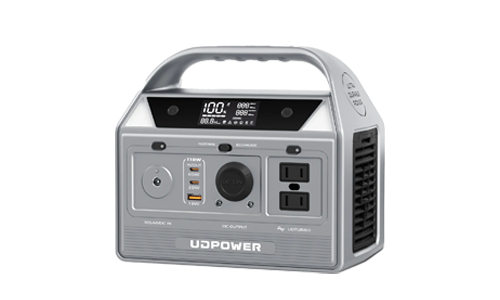
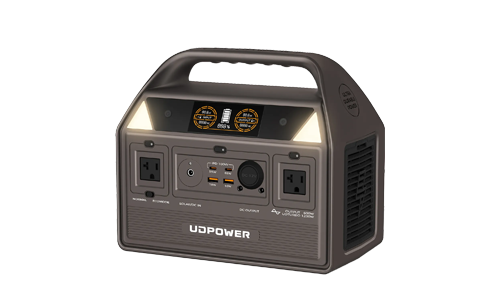
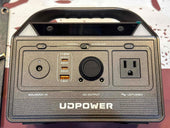
| C600 | 596Wh | 600W | Well below the typical 1,440W example, so it is not a realistic choice for charging an EV’s main battery. |
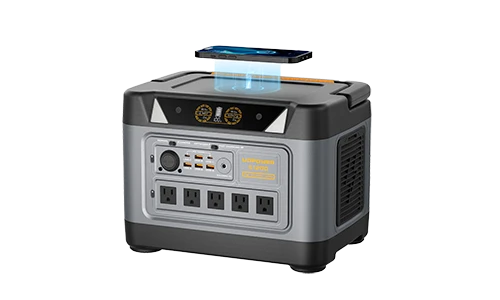
| S1200 | 1,190Wh | 1,200W | Closer, but still below the typical 1,440W example. It only makes sense if the charging setup stays under the station’s AC limit. |
| S2400 | 2,083Wh | 2,400W | The best fit in the lineup for emergency Level 1 charging because it clears the typical power requirement and offers more capacity. |
Official product pages: C600, S1200, S2400. Charging references: DOE charging fact sheet, AFDC home charging.
How much range a portable power station can add
Once output is sufficient, the next question is simple: how much energy can actually reach the car? A useful planning formula looks like this:
Added miles ≈ usable kWh from the power station ÷ EV energy use per mile
The examples below use EPA FuelEconomy.gov efficiency figures for the 2025 Nissan LEAF and the 2023 Tesla Model Y Long Range AWD. The planning column uses an 85% factor to account for inverter losses and other real-world inefficiencies.
| Model | Official battery size | 2025 Nissan LEAF ideal miles (30 kWh/100 mi) |
2025 Nissan LEAF planning miles (85% factor) |
2023 Tesla Model Y LR ideal miles (28 kWh/100 mi) |
2023 Tesla Model Y LR planning miles (85% factor) |
|---|---|---|---|---|---|
| C600 | 596Wh | 2.0 miles | 1.7 miles | 2.1 miles | 1.8 miles |
| S1200 | 1,190Wh | 4.0 miles | 3.4 miles | 4.3 miles | 3.6 miles |
| S2400 | 2,083Wh | 6.9 miles | 5.9 miles | 7.4 miles | 6.3 miles |
Those numbers put the issue in perspective. Even the strongest model in this group is still providing emergency-range support, not a substantial recharge for a modern EV.
Important: the C600 and S1200 numbers above describe battery potential only. They do not guarantee that charging will start in a typical EV setup. Output still has to match the charger’s demand.
| Example vehicle | EPA energy use | EPA range | Why it matters here |
|---|---|---|---|
| 2025 Nissan LEAF | 30 kWh/100 mi | 149 miles | A smaller EV makes portable-station charging look more favorable, but the added range is still limited. |
| 2025 Nissan LEAF SV | 31 kWh/100 mi | 212 miles | Efficiency changes slightly by version, which is why range estimates should always be treated as approximate. |
| 2023 Tesla Model Y Long Range AWD | 28 kWh/100 mi | 330 miles | Even an efficient crossover requires far more stored energy than a portable power station can hold. |
When it actually makes sense
A portable power station makes the most sense when the goal is limited backup charging, not routine charging. That distinction matters. Used in the right situation, it can still be genuinely useful.
| Use case | Why it can help | Main limitation |
|---|---|---|
| Emergency top-up | A few added miles may be enough to reach the next charging location or get out of a difficult spot. | The extra range is usually small. |
| Plug-in hybrid backup charging | PHEVs have much smaller batteries than full EVs, so a modest amount of added energy can matter more. | It is still not a replacement for normal charging. |
| Remote trips and off-grid travel | A power station can serve as backup energy when charging infrastructure is limited. | It is better for contingency use than repeated charging. |
| Supporting gear around the car | Phones, air pumps, lights, laptops, routers, and camping gear are often a better fit for a portable station than charging the vehicle itself. | This helps the trip, but not the traction battery in any meaningful way. |
The Department of Energy notes that all-electric vehicles commonly offer roughly 110 to 300+ miles of range, while plug-in hybrids generally offer around 15 to 60 miles of electric-only range. That difference explains why a portable power station can feel more useful with a PHEV than with a full battery-electric vehicle.
Does adding solar make it better?
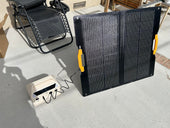
Solar panels can make a portable power station more useful around EV ownership, but they do not change the basic limitation. The station still has a relatively small battery compared with the EV.
Where solar helps is on the station side. It allows the power station itself to be recharged between uses, which is useful for camping, remote travel, or outage preparedness. That can make a backup charging setup more sustainable over time, especially if the station is also being used for lights, communication devices, and small appliances.
What solar does not do is turn a compact power station into an everyday EV charging solution. The gap in stored energy is still too large.
| UDPOWER model | Official solar-ready bundle examples | What that means for EV-related use |
|---|---|---|
| S1200 | Official bundles include 120W, 210W, 240W, and 420W options | Useful if the station will also be part of a broader home, camping, or outage setup. |
| S2400 | Official bundles include 120W, 210W, 240W, and 420W options | The best fit for buyers who want emergency EV support plus more general backup value. |
For readers comparing input limits, solar setup, and cable choices, UDPOWER’s Solar Recharging During a Power Outage and voltage guide are relevant follow-up reads.
Best UDPOWER options for EV-related use
Not every portable power station in a lineup needs to do the same job. For EV owners, the best choice depends on whether the goal is emergency charging, general backup power, or trip support.
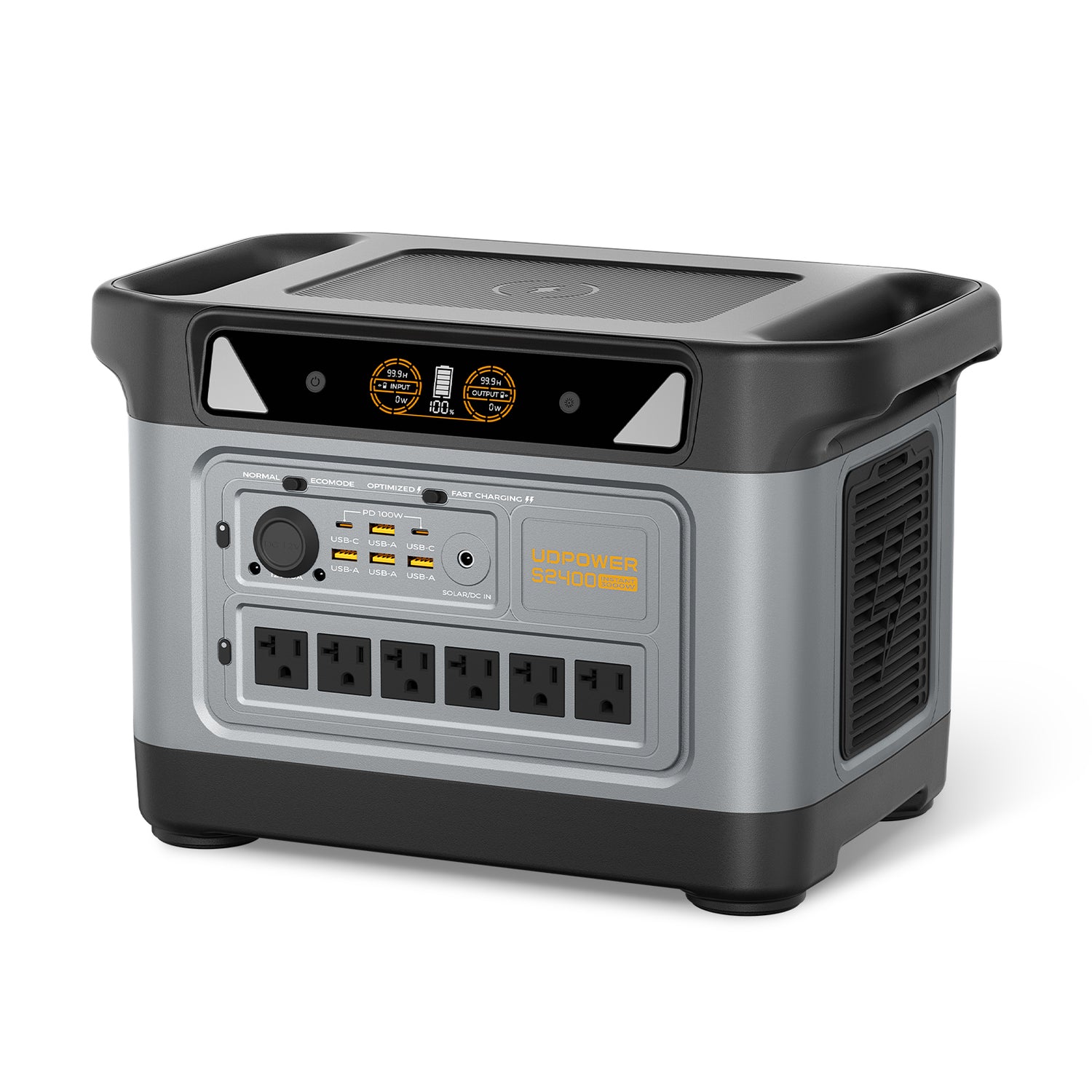
UDPOWER S2400
- Official capacity: 2,083Wh
- Official output: 2,400W
- Official fast charging time: 1.5 hours
The S2400 is the strongest option in the current UDPOWER lineup for EV-related backup use. Its higher AC output gives it a more realistic chance of supporting a typical Level 1 charging scenario, and its larger battery makes the added range more meaningful than what smaller models can provide.
It is still not a replacement for a dedicated EV charger, but it is the clearest fit for drivers who want emergency flexibility.
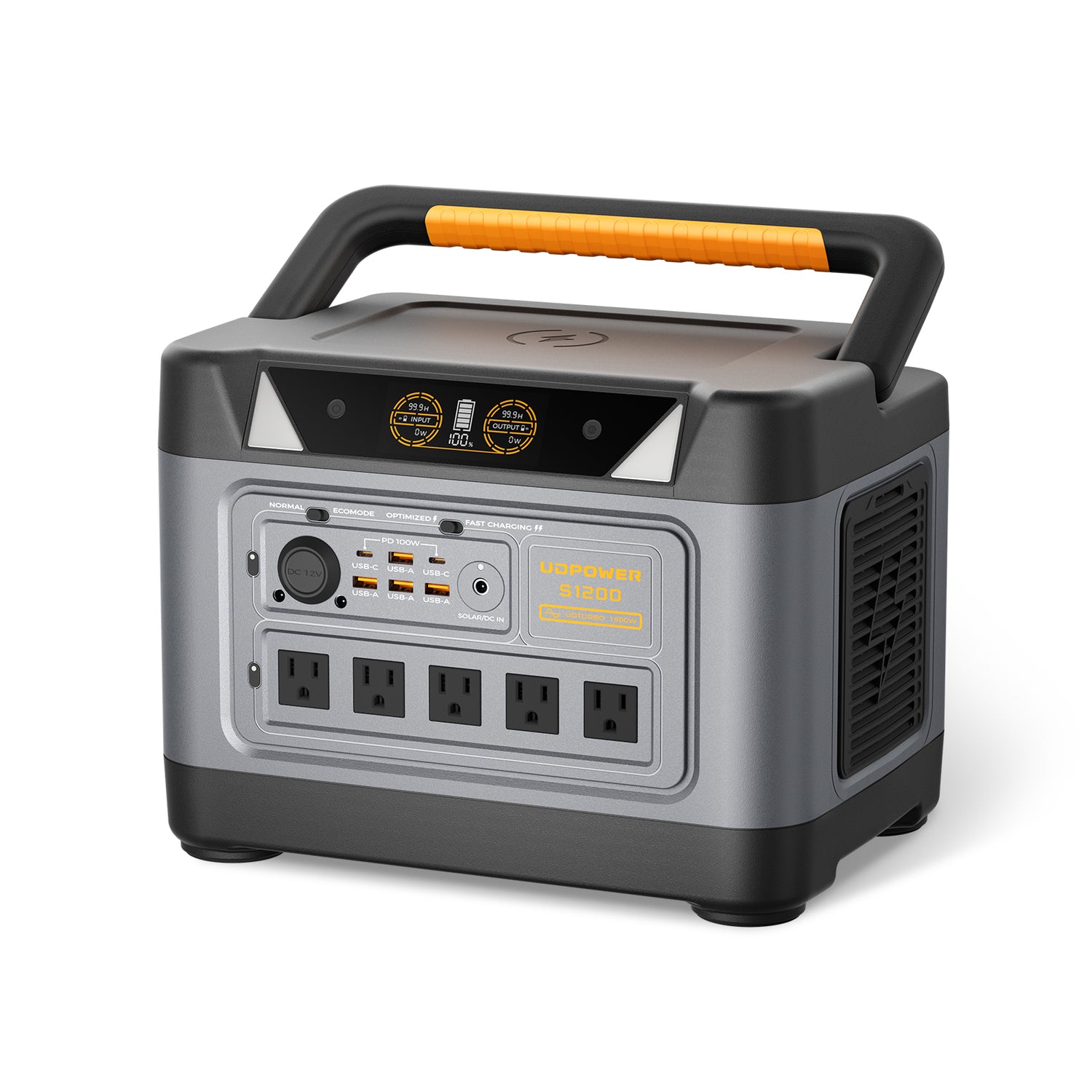
UDPOWER S1200
- Official capacity: 1,190Wh
- Official output: 1,200W
- Official weight: 26.0 lbs
The S1200 is easier to carry and more versatile for general backup use, which makes it attractive for camping, outages, and basic preparedness. For EV charging, however, it is more limited. The output is below the DOE’s common Level 1 example, so compatibility depends heavily on the charging setup.
It is a reasonable choice for buyers who want a compact all-around power station first and only view EV charging as a secondary, limited use case.

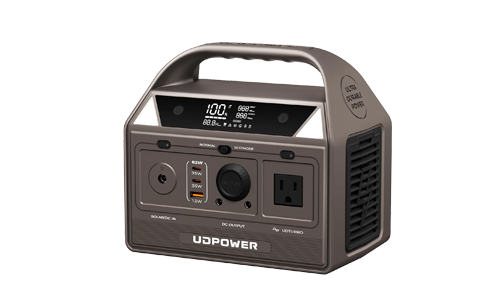
UDPOWER C600
- Official capacity: 596Wh
- Official output: 600W
- Official battery chemistry: LiFePO4
The C600 is the better match for supporting equipment around the vehicle rather than charging the vehicle itself. It can be useful for lights, phones, laptops, cameras, small tools, or roadside accessories, especially during trips where compact backup power matters.
For buyers thinking specifically about EV charging, this is not the right model to lead with. For buyers thinking about travel convenience and portable backup, it makes more sense.
For a wider comparison of capacity and output across the lineup, see the UDPOWER portable power station collection.
What to check before you try it
- Check the station’s continuous AC output, not just its battery size.
- Assume you are planning around slow AC charging, not Level 2 or DC fast charging.
- Estimate the likely range gain using your vehicle’s efficiency rather than the battery size of the station alone.
- Allow for losses when converting stored battery power into AC charging power for the vehicle.
- If solar is part of the plan, stay within the station’s supported input range and cable requirements.
- For regular charging, use a proper home or public EV charger instead of relying on a portable power station.
Bottom line
A portable power station can charge an EV, but for most drivers it only makes sense as an emergency top-up rather than a normal charging method. The real limit is not just whether power can flow to the car. It is whether enough power is available to start charging, and whether enough energy is stored to add meaningful range afterward.
In UDPOWER’s current lineup, the S2400 is the strongest match for this use because it combines higher AC output with the largest battery in the group. The S1200 is better viewed as a flexible backup station with limited EV-charging potential. The C600 is most useful for powering gear around the vehicle, not for charging the vehicle’s traction battery.
Primary references used in this article: AFDC home charging, DOE Energy Saver, DOE charging power fact sheet, DOE / AFDC EV overview, EPA FuelEconomy.gov: 2025 Nissan LEAF, EPA FuelEconomy.gov: 2023 Tesla Model Y Long Range AWD, plus official UDPOWER product pages for the C600, S1200, and S2400.



















![How to Live In The Woods [Complete Guide]](http://udpwr.com/cdn/shop/articles/Off-Grid_Cabin_Option_f6c94fe7-1ae7-4c3a-baf5-ed9fe684c832.png?v=1763523215&width=170)