A Complete Guide to Low, Medium, and High Voltage Currents
ZacharyWilliamVoltage terms get thrown around constantly, but most shoppers, homeowners, RV users, and backup-power buyers are still left with the same questions: What counts as low voltage? When does medium voltage begin? Why can a “small” battery still be dangerous? And what does any of this actually mean when you are picking a portable power station, wiring solar panels, or trying to run essentials during an outage?

What voltage and current actually mean
Think of voltage as electrical pressure and current as electrical flow. Voltage is what pushes charge through a circuit. Current is the amount of charge actually moving. You need both ideas together to understand risk, runtime, and compatibility.

Voltage tells you the potential difference available to push electricity. In everyday life, that might be a 5V USB port, a 12V battery system, a 120V household outlet, or a higher-voltage solar string.
Current tells you how much electricity is actually flowing. A high-current circuit can overheat wires, trip breakers, or create serious shock risk if conditions allow current to pass through the body.
The practical takeaway: A product spec that lists only volts or only amps never tells the full story. For shopping and safety, you also need wattage, connector type, surge behavior, and the intended use case.
Low vs. medium vs. high voltage
There is no single universal table that every country, codebook, and engineering group uses in exactly the same way. But for readers in the U.S., the following breakdown is the most useful real-world framework.

| Voltage class | Typical range | Where regular people actually see it | Why it matters | Source |
|---|---|---|---|---|
| Extra-low / very low | Commonly below 50V | USB power, many DC accessories, small battery devices, some telecom/control circuits | Lower shock risk in many situations, but not “risk-free,” especially with wet skin, damaged wiring, or high-current battery circuits | OSHA |
| Low voltage | Generally under 1,000V AC; many consumer products are far below that | 120V/240V home service, portable power stations, RV circuits, many solar-compatible backup products | This is the range most homeowners and backup-power buyers deal with every day | IEEE, IEC |
| Medium voltage | Often 1kV to 35kV or higher depending on context | Utility distribution equipment, industrial facilities, pad-mounted gear, some campus and commercial distribution systems | Far outside normal plug-and-play consumer gear; requires specialized equipment, procedures, and training | OSHA, IEEE |
| High voltage | Above medium-voltage ranges; IEC often treats anything above 1kV AC as high voltage, while U.S. industry usage may reserve “high” for higher utility classes | Transmission lines, substations, utility infrastructure | This is not DIY territory; clearance, arc risk, insulation coordination, and approach distance become major issues | IEC, NFPA |
Mobile tip: this table is swipeable side to side.
For ordinary readers, the key point is simple: your wall outlets, most home backup products, and portable power stations all live in the low-voltage world, even though they can still be dangerous when current, heat, damaged insulation, moisture, or overload enter the picture.
Where you see each voltage class in real life
| Scenario | Common voltage | Current reality | What to watch for |
|---|---|---|---|
| USB charging | 5V to 20V | Low voltage, often moderate current depending on device and fast-charge protocol | Cheap cables, heat at connectors, damaged ports |
| 12V car/RV accessories | 12V DC nominal | Low voltage but can still carry meaningful current | Fuse sizing, cable thickness, loose cigarette-lighter plugs |
| U.S. household outlets | 120V AC | Standard residential branch-circuit territory | Wet locations, damaged cords, overloaded strips, wrong extension cords |
| Large home appliances | 120/240V systems | Still low voltage by broad classification, but higher power draw and heavier circuits | Startup surge, dedicated circuits, compatibility with backup equipment |
| Portable power station solar input | Often 12V–75V depending on model | Low-voltage DC input, but incorrect panel wiring can exceed safe limits | Open-circuit voltage, series wiring mistakes, connector mismatch |
| Neighborhood distribution lines | Thousands of volts | Medium-voltage utility distribution | Never approach fallen lines or damaged equipment |
In other words, most people interact with low-voltage systems every day, but the consequences range from “phone charges normally” to “breaker trips” to “serious shock” depending on current path, environment, and equipment quality.
Why current matters more than most people think
People often say, “It’s only low voltage,” as if that settles the safety question. It does not. OSHA notes that electric current passing through the body is what causes injury, and even relatively small amounts of current can produce painful shock, loss of muscular control, or worse depending on duration and conditions.
| Current level | Likely effect on the body | Why ordinary users should care | Source |
|---|---|---|---|
| Below 1 mA | Usually not perceptible | You may not even notice it | OSHA |
| About 1 mA | Faint tingle | Early sign that a path exists | OSHA |
| About 5 mA | Slight but disturbing shock | Still enough to trigger panic or secondary injury | OSHA |
| 6–30 mA | Painful shock, loss of muscular control, “let-go” range | This is why wet conditions and damaged cords are such a big deal | OSHA |
| Recognized let-go threshold around 6 mA | May prevent someone from releasing a live object | Time of exposure can get worse fast | OSHA |
Plain-English rule: low voltage does not automatically mean low danger. The real question is whether the setup can drive harmful current through a person, wire, connector, or appliance.
Where portable power stations fit
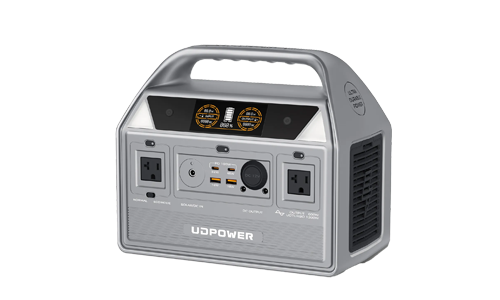
Portable power stations are squarely in the low-voltage category, but they sit at the intersection of several different electrical worlds at once: internal battery DC, inverter-generated AC output, and external charging inputs from wall power, vehicles, or solar panels. That is why shoppers should stop treating “voltage” as a single number and start reading the whole system.
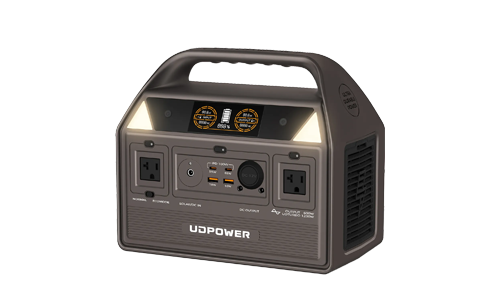
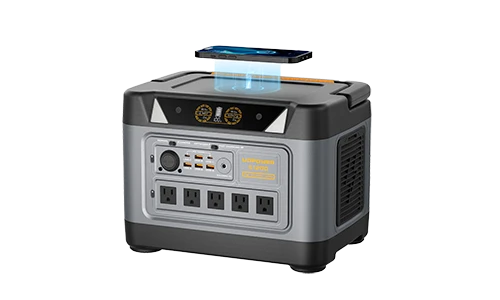
| Model | Picture | Battery capacity | AC output | Solar input | Weight | Certifications | Official link |
|---|---|---|---|---|---|---|---|
| UDPOWER S1200 |  |
1191Wh | 1200W pure sine wave, 1800W surge | 12V–75V, 12A, 400W max | Approx. 26.0 lb | UL2743, PSE, FCC, ROHS, UN38.3 | View product |
| UDPOWER S2400 |  |
2083Wh | 120V~60Hz, 2400W pure sine wave, up to 3000W surge | 12V–50V, 10A max, up to 400W | Approx. 40.8 lb | UL2743, FCC, ROHS, UN38.3 | View product |
Those numbers matter because they affect what you can run, how long you can run it, and how carefully you need to plan your charging setup. If you want a quick way to convert capacity into expected runtime, UDPOWER’s guide on how to calculate watt-hours (Wh) is a useful companion read.
For a side-by-side real-world comparison, the article UDPOWER S1200 vs. S2400 is also worth linking here because it helps readers connect voltage input range, inverter size, and capacity to actual buying decisions.
Solar input voltage and charging safety
For most normal buyers, the most confusing voltage issue is not the AC outlet. It is the solar input side. The common mistake is focusing on wattage first and voltage second. In reality, voltage limits are the hard safety boundary.
Why this matters
- Your solar panel string must stay inside the power station’s allowed input-voltage range.
- Series wiring raises voltage. Parallel wiring raises current.
- Connector fit does not prove electrical compatibility.
- Open-circuit voltage (Voc) matters, especially in cold weather.
If you are comparing UDPOWER models, the S1200 gives you a wider published solar-input voltage window at 12V–75V, while the S2400 is stricter at 12V–50V even though both are listed up to 400W solar charging. That one detail can completely change which panel combinations are safe.
UDPOWER’s article Solar Charging During an Outage: Panel Sizing + Input Voltage Safety explains the same point in a more scenario-based way and fits naturally here as an internal link for readers who are planning panel matching rather than just learning the terms.
Buying shortcut: when reading any portable power station spec sheet, treat the solar input voltage range as a non-negotiable limit. You can work below it. You cannot safely plan above it.
How to read a spec sheet without guessing
A lot of product confusion happens because shoppers see one headline number and ignore the rest. Here is the order that actually makes sense.
| Spec to check | What it tells you | Why it matters in practice |
|---|---|---|
| AC output watts | How much continuous power the inverter can support | If your appliance exceeds this, the unit is the wrong fit no matter how large the battery is |
| Surge rating | Brief startup support for motors and compressors | Fridges, pumps, and some tools may fail to start without enough surge headroom |
| Battery Wh | How much stored energy is available | This controls runtime, not the output watt label alone |
| Input voltage range | Safe charging window for solar or DC input | Go over this and you risk incompatibility or damage |
| Current limit (A) | Maximum input or output current on a given port | Important for cable sizing, panel matching, and real-world charging speed |
| Certifications | Evidence of testing and compliance | Especially important for products used indoors, around families, or during outages |
Once you know the battery’s watt-hours, runtime math becomes much easier. A good next-step internal resource is how to calculate battery charging time, especially for readers comparing wall charging, car charging, and solar charging plans.
Common mistakes people make with low-, medium-, and high-voltage discussions
Low voltage may reduce some types of risk, but it does not eliminate shock, burns, overheating, or fire hazards. Current path and system design still matter.
A 2400W power station is not a “2400-volt” device. Wattage tells you power capability; voltage tells you electrical pressure at a specific point in the system.
Two panels with the same watt rating can have very different voltages. For charging compatibility, voltage comes first.
Bad cables, undersized wires, and cheap adapters can create heat and voltage drop even when the device itself looks compatible on paper.
UDPOWER picks by use case
If this article brought you here because you are choosing backup gear rather than studying electrical theory, these are the practical buying lines.
Choose the model by the job, not just the label
UDPOWER S1200
Best for readers who want a more carry-friendly backup unit for essentials, small appliances, work-from-home gear, and moderate solar flexibility. Its official spec snapshot includes 1191Wh capacity, 1200W rated output, 1800W surge, and a 12V–75V solar input range.

UDPOWER S2400
Best for longer runtimes, heavier appliances, and users who need a bigger inverter. Official specs list 2083Wh capacity, 2400W output, up to 3000W surge, and 12V–50V solar input. It is the stronger choice when output headroom matters more than portability.

For readers building an outage plan, this article also pairs well with Portable Power Station Runtime Planning for Outages and Portable Power Station vs Generator for Power Outages.
FAQ
Is 120V considered low voltage or high voltage?
In normal consumer and residential discussions, 120V is treated as low voltage. That said, it is still absolutely capable of causing shock, burns, and fire if a cord, outlet, or appliance is damaged or misused.
What is medium voltage in plain English?
Medium voltage usually refers to the utility and industrial range above ordinary household wiring and below major transmission classes. It is the world of distribution equipment, not plug-in consumer devices.
Why does current matter if the voltage looks low?
Because injury happens when current passes through the body. Voltage helps drive that current, but the real-world danger depends on the path, the resistance, the environment, and how long the contact lasts.
Are portable power stations low voltage devices?
Yes, but they contain multiple electrical subsystems. Internally they manage battery DC, and they can also provide household-style AC output through an inverter. That makes the full spec sheet more important than the headline number.
What is the biggest voltage mistake people make with solar charging?
They check panel wattage but skip the input-voltage range. A panel setup can look perfect on watts and still be the wrong match if the open-circuit voltage is too high for the power station.
Should I choose a power station based on voltage alone?
No. You should check output watts, battery capacity in watt-hours, surge support, input-voltage range, current limits, certifications, and the actual appliances you plan to run.
Which is better for most homes: a 1200W or 2400W portable power station?
It depends on the loads. A 1200W unit can cover many essentials, while a 2400W unit gives you more headroom for larger appliances and longer runtime when paired with a larger battery.
Does higher voltage always mean more danger?
Higher voltage often increases the potential for dangerous current flow and arcing, but no single number tells the whole story. Environment, insulation, exposure time, current path, and equipment condition all matter.
Final takeaway
Most readers do not need a utility-engineer definition to make smart buying decisions. What they need is a working map. Household outlets, portable power stations, car-charging accessories, and solar inputs all sit in the low-voltage world, but that does not make them foolproof. Current, wattage, cable quality, connectors, environmental conditions, and published voltage limits all shape what is safe and what is practical.
If you are shopping for backup power, the smartest move is to stop asking only, “What voltage is it?” and start asking, “What can it safely run, how long can it run it, and what charging limits do I have to respect?” That shift alone prevents a surprising number of bad purchases and bad setups.
Reference table: linked sources used in this guide
| Topic | Linked source | What it supports in this article |
|---|---|---|
| Electrical current effects on the body | OSHA Basic Electricity Safety PDF | Shock-perception and current-effect ranges |
| Let-go threshold | OSHA Appendix C | Recognized let-go threshold around 6 mA |
| 50V hazard interpretation | OSHA 50V DC interpretation | Why “low voltage” still needs caution |
| Medium-voltage cable definition | OSHA 1910.399 | U.S. code context for medium-voltage terminology |
| Low- vs medium-voltage system context | IEEE C62.92.3 overview | Low voltage under 1kV and medium voltage 1kV to 15kV in the referenced guide scope |
| IEC high-voltage terminology | IEC terminology note | How IEC can use “high voltage” more broadly than common U.S. consumer usage |
| UDPOWER S1200 official specs | UDPOWER S1200 | Capacity, output, solar input, weight, certifications |
| UDPOWER S2400 official specs | UDPOWER S2400 | Capacity, output, solar input, weight, certifications |
| Runtime math | How to Calculate Watt-Hours (Wh) of a Power Bank | Turning battery capacity into runtime |
| Voltage-safe solar planning | Solar Charging During an Outage: Panel Sizing + Input Voltage Safety | Why panel voltage limits matter more than many buyers expect |