Best affordable portable power stations in 2026
ZacharyWilliamPortable Power Station Buying Guide
Updated: April 29, 2026
A cheap portable power station is not always affordable. The better question is: how many useful hours, safe watts, and real-life ports do you get for the money? This guide breaks down the best budget-friendly power station sizes for camping, outages, CPAP backup, small fridges, laptops, routers, and selective home essentials.
Quick answer: what is the best affordable portable power station?
For most buyers, the best affordable portable power station is the one that matches your heaviest real load, not the lowest sticker price. A 200–400W unit is enough for phones, laptops, lights, fans, and short trips. A 600Wh-class unit is the better budget choice for a camping fridge, projector, drone batteries, and overnight backup. A 1,000Wh+ power station is the better value when you need CPAP, fridge backup, Wi-Fi, and weekend camping power.
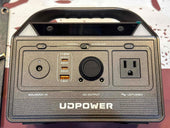
In UDPOWER’s lineup, start with the UDPOWER C600 for practical budget power, step up to the UDPOWER S1200 for the strongest 1kWh-class value, and choose the UDPOWER S2400 when your “affordable” goal is longer backup time and higher appliance compatibility.

What “affordable” really means in 2026
Affordable does not simply mean “under $200.” A small unit can be a good deal for weekend photos, a laptop, and LED lights. It becomes a bad deal the moment you expect it to run a microwave, electric kettle, coffee maker, heater, or full-size refrigerator for hours.
The practical value formula
A portable power station is good value when it gives you the right balance of:
- Battery capacity: measured in watt-hours (Wh). This decides runtime.
- Continuous output: measured in watts (W). This decides what appliances it can run.
- Surge output: useful for compressors and motors that spike at startup.
- Battery chemistry: LiFePO4 is preferred for frequent use and long cycle life.
- Recharge options: wall charging, car charging, and compatible solar input.
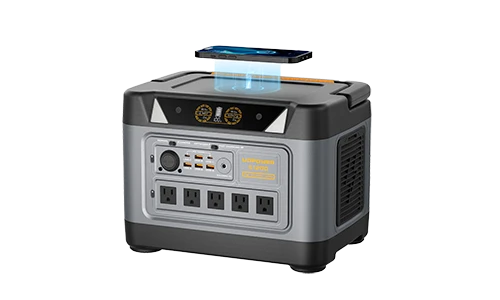
- Port mix: AC outlets, USB-C PD, USB-A, DC5521, car outlet, and wireless charging where available.
- Weight: a power station that is too heavy for your use case will stay in the closet.
A simple way to shop is to ask: What is the most demanding thing I actually need to run? Then buy the smallest power station that can handle that load with a reasonable runtime buffer.
30-second picks by budget and use case
| Buyer type | Best size to consider | Good fit | Skip this size if... | UDPOWER match |
|---|---|---|---|---|
| Day trips, camera gear, phones, lights | 200–400W / 190–260Wh | Phones, cameras, drone batteries, LED lights, laptop top-ups, small fan | You need cooking, heating, microwave use, or long fridge runtime | C400 |
| Budget camping and weekend essentials | 600W / about 600Wh | Camping fridge, projector, laptop, fan, camera batteries, Wi-Fi gear | You need multi-day fridge use without solar or high-watt appliances | C600 |
| Best value for outages and CPAP backup | 1,000–1,200W / about 1,000Wh+ | CPAP, router, lights, TV, laptop, mini fridge, selective refrigerator support | You need to run several high-watt appliances at the same time | S1200 |
| Longer backup and heavier appliance support | 2,000Wh+ / 2,000W+ | Full-size fridge, coffee maker, microwave, larger campsite, longer outage reserve | You want something ultra-light for backpacking | S2400 |
Pricing and stock change during promotions. Always check the live product page before buying.
UDPOWER affordable portable power station comparison
The table below focuses on the specs that usually matter most to budget buyers: capacity, AC output, weight, solar input, and the kind of devices each model realistically fits.
| Model | Capacity | Rated AC output | Surge | Weight | Battery | Solar input | Best use | Source |
|---|---|---|---|---|---|---|---|---|
| UDPOWER C200 | 192Wh | 200W | 400W | Approx. 5.4 lb | LiFePO4 | 150W max | Light backup, phones, cameras, LED lights, small fan, short laptop use | Product page |
| UDPOWER C400 | 256Wh | 400W | 800W | 6.88 lb | LiFePO4 | 150W max | Compact camping, emergency car jump-start, laptop, fan, small fridge for short use | Product page |
| UDPOWER C600 | 596Wh | 600W | 1200W | 12.3 lb | LiFePO4 | 11–28V, up to about 240W | Camping fridge, projector, drone charging, laptop station, short outage backup | Product page |
| UDPOWER S1200 | 1,190Wh | 1,200W | 1,800W | 26.0 lb | LiFePO4 | 12–75V, 12A, 400W max | CPAP, router, fridge support, RV/camping, home essentials, UPS-style backup | Product page |
| UDPOWER S2400 | 2,083Wh | 2,400W | 3,000W | 40.8 lb | LiFePO4 | 12–50V, 10A max, up to 400W | Longer backup, fridge, coffee maker, microwave, campsite base station, heavier selective loads | Product page |
Real-world runtime table: what can an affordable power station actually run?
Runtime is where many “cheap” power stations disappoint. A useful estimate is: runtime ≈ battery Wh × 0.90 ÷ device watts for AC loads. Real results vary by temperature, device settings, startup surge, battery age, and whether the appliance cycles on and off.
| Device or load | Estimated watts | C200 192Wh | C400 256Wh | C600 596Wh | S1200 1,190Wh | S2400 2,083Wh | Buying note |
|---|---|---|---|---|---|---|---|
| Wi-Fi router | 10W | About 17 hr | About 23 hr | About 54 hr | About 107 hr | About 187 hr | Great low-watt load, but check low-load auto shutoff settings on larger units. |
| CPAP without humidifier | 40W | About 4.3 hr | About 5.8 hr | About 13.4 hr | About 26.8 hr | About 46.9 hr | Humidifier and heated hose can raise power draw sharply. |
| Laptop workstation | 60W | About 2.9 hr | About 3.8 hr | About 8.9 hr | About 17.9 hr | About 31.2 hr | USB-C charging is usually more efficient than using an AC brick. |
| Camping fridge average draw | 45W average | About 3.8 hr | About 5.1 hr | About 11.9 hr | About 23.8 hr | About 41.7 hr | Outdoor heat, fridge size, insulation, and lid opening matter a lot. |
| TV or projector | 100W | About 1.7 hr | About 2.3 hr | About 5.4 hr | About 10.7 hr | About 18.7 hr | C600 and above feel more comfortable for movie nights. |
| Coffee maker | 800–1,200W | No | No | Usually no | Often possible if within limits | Better fit | Check the appliance label. Heating appliances drain batteries quickly. |
| Microwave | 1,000–1,500W+ | No | No | No | Depends on wattage and surge | Better fit | Microwave input wattage is often higher than cooking wattage. |
For a deeper planning worksheet, use UDPOWER’s battery runtime estimator guide and the outage runtime planning guide.
Recommended UDPOWER models by budget and power need

UDPOWER C400 — best when you want small, useful, and easy to carry
Choose the UDPOWER C400 if your budget goal is light camping, laptop work, camera charging, small fans, LED lights, and roadside peace of mind. It has a 256Wh LiFePO4 battery, 400W AC output, 800W surge, fast charging, and a built-in jump-start function for 12V vehicles.
- Best for: compact camping, car kit, camera batteries, laptop backup, small fans.
- Not for: microwaves, kettles, heaters, long fridge backup, or whole-home use.
- Value note: It is affordable because it solves small-load problems without making you pay for extra capacity you may not use.

UDPOWER C600 — best affordable pick for camping and everyday backup
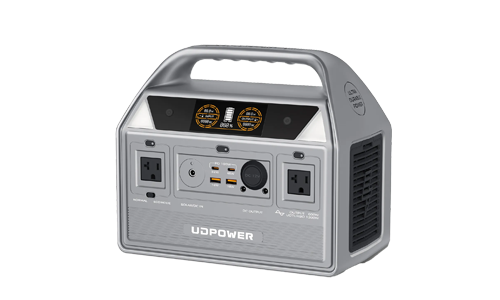
The UDPOWER C600 is the better starting point for most “real use” buyers. Its 596Wh capacity and 600W rated output make it more practical for camping fridges, projectors, drone batteries, laptops, lights, fans, and short outage backup.
- Best for: weekend camping, portable fridge support, small electronics, projector nights, drone charging.
- Not for: high-watt cooking, heaters, and long backup without solar.
- Value note: It gives much more runtime breathing room than 200–300Wh units while staying easy to move.
UDPOWER S1200 — best affordable step-up for outages, CPAP, and fridge support
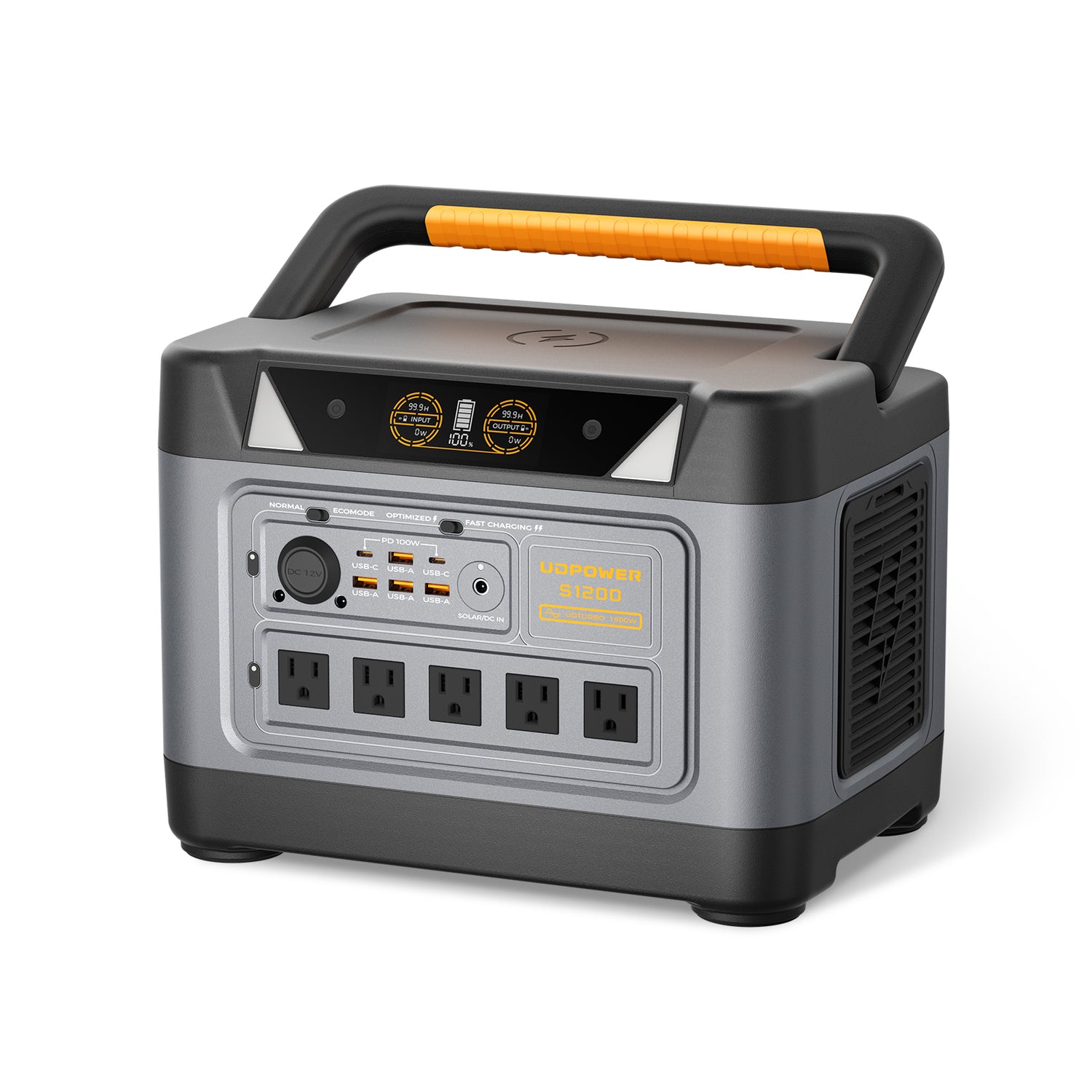
The UDPOWER S1200 is the strongest value pick when you need more than casual charging. It has 1,190Wh capacity, 1,200W rated pure sine wave output, 1,800W surge, UPSPRIME backup switching, 15 total ports, and up to 400W solar input.
- Best for: CPAP backup, Wi-Fi, lights, TV, laptop, fridge support, RV weekends, short outages.
- Not for: running several high-watt appliances at the same time.
- Value note: This is the sweet spot for many homes because it has enough output and capacity for essentials without jumping to a much heavier system.
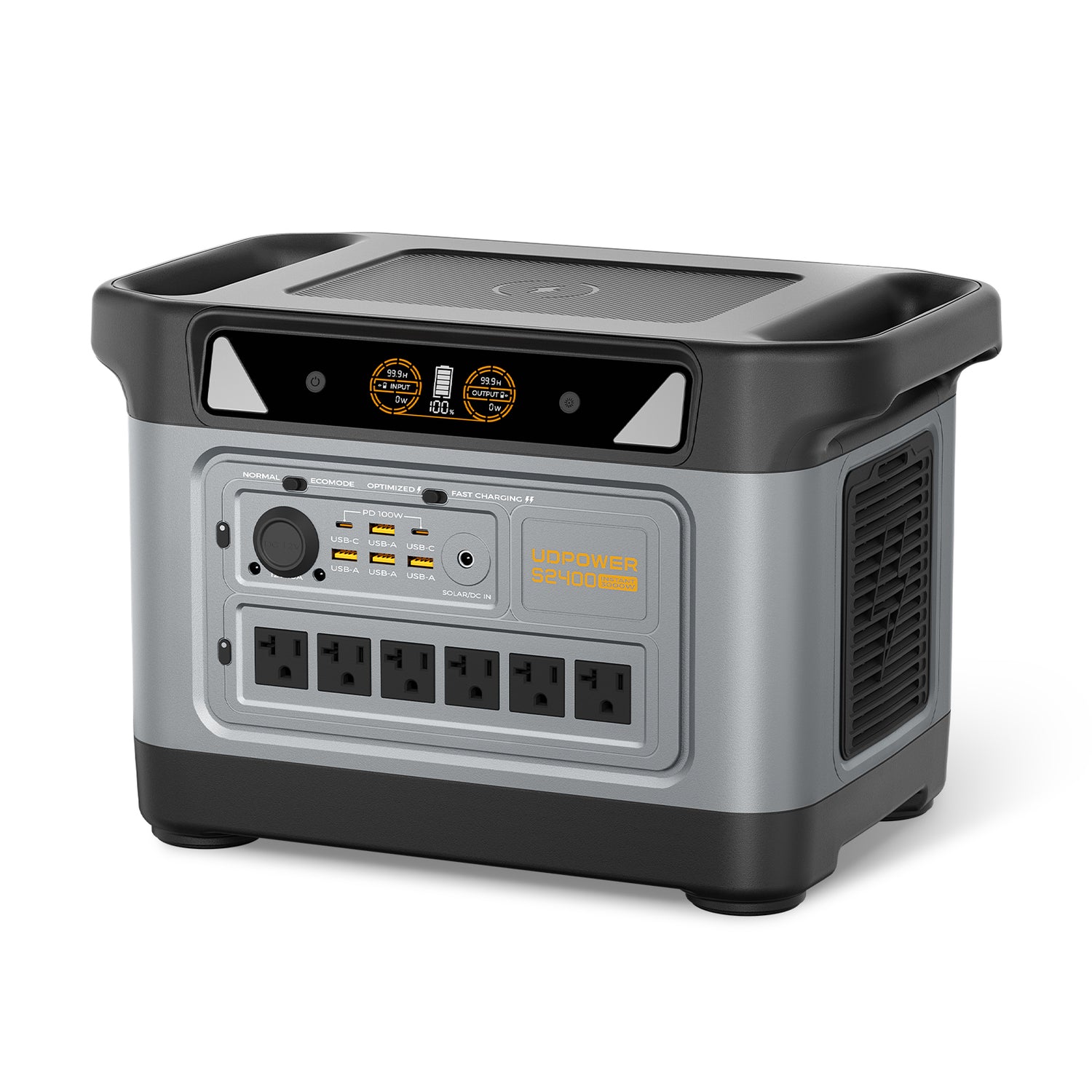
UDPOWER S2400 — best when runtime matters more than minimum price
The UDPOWER S2400 is the better value when you want one unit for bigger loads and longer backup. It has 2,083Wh capacity, 2,400W pure sine wave AC output, 3,000W surge support, six AC outlets, ten DC outputs, UPSPRIME backup switching, and up to 400W solar charging.
- Best for: full-size refrigerator support, coffee maker, microwave use, larger campsite, longer outage reserve.
- Not for: backpacking or buyers who only need to charge phones and laptops.
- Value note: It costs more upfront, but the extra capacity can be cheaper than buying a small unit and replacing it later.
How to choose without overpaying
1. List the devices you actually need
Do not start with brand names. Start with loads. Write down the devices you care about: phone, laptop, Wi-Fi router, CPAP, fridge, fan, lights, projector, camping fridge, or coffee maker. Then check the wattage label or use a plug-in watt meter.
2. Separate “must run” from “nice to run”
In an outage, the must-run list is usually short: medical device, refrigerator, Wi-Fi router, phone, a few lights, and maybe a fan. In camping, the must-run list may be a fridge, lighting, phone, camera batteries, and a laptop. Everything else is optional.
3. Check continuous watts before capacity
A large battery is not useful if the inverter cannot power your appliance. For example, a 600Wh station may have plenty of stored energy for a short microwave run, but a 600W inverter cannot run a 1,200W microwave. Match the appliance’s running watts first, then calculate runtime.
4. Leave a runtime buffer
Do not plan around 100% of the advertised Wh. Inverter losses, temperature, standby draw, device cycling, and battery reserve all reduce usable runtime. For everyday planning, use roughly 85–90% of the listed Wh for AC loads.
5. Buy one size up when the device has a motor or compressor
Refrigerators, air pumps, power tools, and some appliances can spike at startup. A station with enough continuous watts but weak surge support may still shut down. This is why S1200 and S2400 make more sense for fridge and appliance backup than small entry-level units.
What not to buy: common budget mistakes
Do not buy by peak watts alone
Peak or surge wattage is temporary. The number that matters for normal use is continuous AC output. A station advertised with a high surge number can still be the wrong pick if its continuous output is too low.
Do not buy a tiny station for heating appliances
Space heaters, kettles, hair dryers, hot plates, and many coffee makers pull a lot of power. They also drain batteries fast. If heating is the main goal, a budget power station is usually not the best tool.
Do not assume a power station is a whole-house system
Portable power stations are designed to power devices directly from their outlets. They are not automatically whole-house backup systems, and UDPOWER stations provide standard 120V AC output, not 240V whole-home output. Any transfer switch setup should be reviewed and installed by a licensed electrician.
Do not compare price without comparing battery chemistry
LiFePO4 batteries usually cost more than older lithium-ion chemistry, but they are better suited for frequent cycling and long-term ownership. If you plan to use your power station often, cycle life matters.
When solar panels are worth the extra cost
Solar panels are not necessary for every buyer. They become valuable when you need power beyond a single battery charge: weekend camping, RV travel, boondocking, storm season, or longer outage planning.
| Situation | Solar worth it? | Why | Suggested UDPOWER path |
|---|---|---|---|
| Day trip with phones and camera | Usually no | A full battery is normally enough. | C400 or C600 unit only |
| Weekend camping with fridge and fan | Often yes | Solar helps replace daily fridge and fan usage. | Solar generator bundle |
| CPAP overnight backup at home | Optional | Battery capacity matters first; solar helps during longer outages. | S1200, then add solar if outage risk is high |
| Multi-day outage planning | Yes | Solar gives you a way to refill during daylight. | S1200 or S2400 with compatible panels |
| Full-time off-grid power | Solar helps, but plan carefully | You need daily energy math, panel placement, and weather backup. | Start with S2400 and build a realistic load plan |
Browse compatible options on the UDPOWER solar panels page. For S1200 and S2400, check the product page input limits before using third-party panels.
What 2026 review roundups get right—and what budget buyers should add
Many 2026 power station roundups do a good job testing capacity, output, recharge time, portability, and plug options. Those are useful signals. But budget buyers should add one more question: does this unit solve my actual load list at the lowest total cost?
| What review sites often test | Why it matters | What budget buyers should add | Example external source |
|---|---|---|---|
| Output and max load testing | Shows whether the station can run appliances near its rated limit. | Check your own highest-watt device and startup surge before buying. | Popular Mechanics |
| Capacity and recharge testing | Helps reveal how much usable energy you get and how long refilling takes. | Calculate price per useful hour for your exact load. | OutdoorGearLab |
| Portability and weight | A 50 lb station may be fine for home backup but annoying for quick trips. | Decide whether this is a “carry often” station or a “base station.” | Popular Mechanics |
This is where a model like the S1200 can be a better budget decision than a smaller station: it costs more than a compact unit, but it can cover more essential loads and more hours before needing a recharge.
FAQ: affordable portable power stations
What is the best affordable portable power station size for most people?
For casual charging, 200–400W is enough. For most practical camping and short backup needs, a 600Wh-class station is a better starting point. For CPAP, fridge support, Wi-Fi, lights, and longer outage reserve, a 1,000Wh+ model such as the UDPOWER S1200 is usually the better value.
Is a cheaper 200W power station worth it?
Yes, if your loads are small: phones, camera batteries, LED lights, a laptop top-up, or a small fan. It is not the right size for microwaves, kettles, space heaters, or long refrigerator backup.
How many watt-hours do I need for camping?
Light overnight camping may only need 150–300Wh. A weekend setup with a fan, lights, phones, camera batteries, and a laptop often fits better around 500–1,000Wh. If you run a CPAP, portable fridge, Starlink Mini, or multiple devices for several days, plan around 1,000–2,000Wh+.
Can an affordable portable power station run a refrigerator?
Sometimes. A refrigerator has running watts and startup surge, and it cycles on and off. Small power stations are usually too limited for reliable fridge backup. For selective refrigerator support, start with a 1,000Wh-class model like S1200. For longer fridge backup, S2400 is the stronger fit.
Can I run a CPAP with a budget power station?
Yes, but size matters. A CPAP without humidifier may use around 30–60W, while heated humidifiers and heated hoses can use more. For one full night, C600 may work for many low-power CPAP setups. For more reserve, S1200 is the safer choice.
Should I buy a power station with solar panels?
Buy solar if you need to recharge away from the wall: weekend camping, RV travel, boondocking, or longer outage planning. For short day trips or occasional phone charging, a unit-only purchase may be enough.
What should I avoid when buying a cheap power station?
Avoid buying by peak watts alone, ignoring continuous output, assuming all advertised watt-hours are usable, and buying a tiny unit for heating or cooking appliances. Also avoid third-party solar panels unless you confirm voltage, current, wattage, and connector compatibility.
Is a portable power station better than a gas generator?
For indoor essentials, quiet camping, CPAP, Wi-Fi, phones, laptops, and short backup loads, a portable power station is usually easier and cleaner. For very long outages or high continuous power needs, a gas generator may still provide longer refueling flexibility, but it must be used outdoors and away from windows because of carbon monoxide risk.
Final recommendation: buy by load, not by price tag
Choose C400 if you want the lowest practical carry-size option. Choose C600 if you want a better camping and weekend backup balance. Choose S1200 if you need the best affordable 1kWh-class station for real outage essentials. Choose S2400 if you need longer runtime and higher appliance compatibility.










![How to Live In The Woods [Complete Guide]](http://udpwr.com/cdn/shop/articles/Off-Grid_Cabin_Option_f6c94fe7-1ae7-4c3a-baf5-ed9fe684c832.png?v=1763523215&width=170)