

How to Power a Camping Fridge Without Killing Your Battery
Camping Fridge Power Guide
A camping fridge is one of the best upgrades for car camping, overlanding, RV weekends, fishing trips, and family campsites. The hard part is not plugging it in. The hard part is choosing a power setup that keeps food cold through the night, handles hot afternoons, and still leaves enough energy for lights, phones, fans, cameras, or a laptop.
Quick answer: The easiest and most efficient way to power a camping fridge is to use a 12V compressor fridge connected to a portable power station through the DC car outlet. For a small or mid-size camping fridge, plan roughly 250–700Wh per day. A 596Wh power station can cover many overnight trips, a 1,000–1,200Wh power station is a better weekend choice, and a 2,000Wh-class setup with solar is the safer pick for hot weather, dual-zone fridges, or multi-day off-grid camping.

Best Way to Power a Camping Fridge
For most campers, the best setup is simple:
12V compressor camping fridge + portable power station + optional solar panel.
This setup is quiet, safe for campsite use, does not require idling your vehicle overnight, and is easier to manage than a DIY battery box. If your fridge supports 12V DC input, use the power station’s 12V car outlet first. That avoids unnecessary AC inverter loss and usually gives better runtime than plugging a 12V fridge into a wall-style AC adapter.
Think of the power station as the fridge’s “fuel tank.” Watts tell you whether the fridge can run. Watt-hours tell you how long it can run. A small camping fridge may only draw 35–60W while the compressor is running, but it does not run every minute of the day. It cycles on and off based on heat, insulation, set temperature, and how often you open the lid.
Camping Fridge Types and How Much Power They Use
Not every “camping fridge” behaves the same. A true 12V compressor fridge is usually the best match for portable power. Thermoelectric coolers are cheaper, but they often run continuously and can drain batteries faster than expected.
| Fridge Type | Typical Power Behavior | Estimated Daily Energy | Best Power Method | Best For |
|---|---|---|---|---|
| Small 12V compressor fridge, about 25–35L | Often 35–45W while compressor is running; cycles on/off | About 250–450Wh/day in normal conditions | 12V DC car outlet on a power station | Solo camping, drinks, simple meals, overnight trips |
| Mid-size 12V compressor fridge, about 40–55L | Often 45–60W while running; higher cycling in heat | About 350–700Wh/day | 12V DC power station + solar for multi-day trips | Family camping, road trips, weekend food storage |
| Large dual-zone camping fridge, about 60–75L | Often 60–80W while running; can cycle heavily in summer | About 600–1,200Wh/day | 1,000–2,000Wh power station, ideally with solar | Overlanding, meat/frozen food, longer trips |
| Thermoelectric cooler | Often 40–70W almost continuously | About 960–1,680Wh/day | Short use only; not ideal for battery-only camping | Day trips, pre-chilled drinks, limited cooling needs |
| AC mini fridge | Uses AC inverter; may have compressor startup surge | Varies widely by model and temperature | Pure sine wave AC outlet on a larger power station | Cabins, RVs, basecamp, backup use |
The big takeaway: a compressor fridge is usually more battery-friendly because it cycles. A thermoelectric cooler may look small, but if it runs all day and all night, it can use more total energy than a better insulated compressor fridge.
How to Calculate Camping Fridge Runtime
Use this simple planning method before buying a battery or heading out:
Step 1: Find the fridge’s running watts from the label or manual.
Step 2: Estimate compressor duty cycle. Normal weather may be 30–45%. Hot weather can be 50–70%.
Step 3: Calculate daily use:
Running watts × duty cycle × 24 hours = daily Wh
Step 4: Compare that number to your power station’s usable energy.
For DC use, a conservative planning factor is about 90% usable energy after normal conversion and real-world losses. For AC use, plan a little lower because the inverter uses extra power.
| Example | Running Watts | Duty Cycle | Daily Runtime of Compressor | Estimated Daily Use | What It Means |
|---|---|---|---|---|---|
| Efficient small fridge, mild weather | 40W | 30% | 7.2 hours/day | 288Wh/day | Easy overnight load; many mid-size batteries can handle it |
| Mid-size fridge, normal summer camping | 50W | 40% | 9.6 hours/day | 480Wh/day | Good planning baseline for a weekend fridge |
| Large fridge or hot campsite | 65W | 55% | 13.2 hours/day | 858Wh/day | Needs a larger battery or daily solar recovery |
| Thermoelectric cooler | 55W | 100% | 24 hours/day | 1,320Wh/day | Can drain a “big” battery surprisingly fast |
Runtime Table: How Long Will a Power Station Run a Camping Fridge?
The table below uses a conservative 90% usable-energy planning factor. Real results vary by fridge model, ambient temperature, fridge setpoint, food load, cable quality, and whether you use DC or AC.
| Power Station Size | Usable Energy for Planning | Small Fridge 300Wh/day | Mid Fridge 500Wh/day | Hot / Large Fridge 900Wh/day | Best Use Case |
|---|---|---|---|---|---|
| 300Wh class | About 270Wh | Less than 1 day | About half a day | Not recommended | Emergency top-up, short day trip |
| 600Wh class | About 540Wh | About 1.8 days | About 1.1 days | About 0.6 day | Overnight camping, small fridge, careful use |
| 1,200Wh class | About 1,080Wh | About 3.6 days | About 2.1 days | About 1.2 days | Weekend camping, family fridge, better safety margin |
| 2,000Wh class | About 1,800Wh | About 6 days | About 3.6 days | About 2 days | Hot weather, dual-zone fridge, multi-day trips |
These estimates are fridge-only. Add your other campsite loads separately. A few LED lights and phones may not change the plan much, but a fan, laptop, Starlink Mini, coffee maker, kettle, or electric blanket can change it quickly.
5 Ways to Power a Camping Fridge
1. Portable Power Station
This is the cleanest option for most campers. It works at quiet campsites, inside vehicles with ventilation, next to a tent, or at a picnic shelter. You can recharge from a wall outlet before the trip, from a vehicle while driving, or from compatible solar panels at camp.
Best for: car camping, families, CPAP users, quiet campsites, overnight fridge power, solar-ready trips.
2. Vehicle 12V Outlet
A vehicle outlet can power a 12V fridge while driving. It is not a good overnight plan unless you have a protected auxiliary battery system. Running a fridge from the starter battery while parked can leave you unable to start the vehicle.
Best for: driving days, pre-cooling on the road, topping off a power station during travel.
3. Solar Panel
Solar does not replace the battery at night. It refills the battery during the day. The best camping fridge setup is battery first, solar second. That way the fridge keeps running through clouds, shade, dinner, and overnight temperature changes.
Best for: multi-day camping, sunny campsites, overlanding, RV weekends, emergency backup.
4. RV House Battery
RV batteries can run a fridge, but the total system depends on battery chemistry, inverter efficiency, wiring, solar controller, and how many other loads are already on the RV. If you are tent camping or using a regular SUV, a portable power station is usually easier.
Best for: RVs with proper battery monitoring and solar charging.
5. Gas Generator
A generator can power a fridge, but it is noisy, requires fuel, produces exhaust, and is often restricted by campground quiet hours. It also cannot be used indoors or in enclosed spaces. For a single camping fridge, a power station is usually more practical.
Best for: high-power basecamp needs where fuel, noise, and outdoor placement are acceptable.
| Power Option | Quiet? | Safe Around Campsites? | Works Overnight? | Best Match |
|---|---|---|---|---|
| Portable power station | Yes | Yes, when kept dry and ventilated | Yes | Most camping fridge users |
| Vehicle 12V outlet | Yes | Yes while driving | Risky on starter battery | Road-trip charging |
| Solar panel | Yes | Yes | No, charges during daylight | Extending battery runtime |
| RV battery system | Yes | Yes when installed correctly | Yes if sized properly | RV owners |
| Gas generator | No | Outdoor use only | Usually limited by fuel and quiet hours | High-power basecamp use |
How Much Solar Do You Need for a Camping Fridge?
Solar sizing starts with the fridge’s daily Wh use. A practical planning formula is:
Daily fridge Wh ÷ peak sun hours ÷ 0.75 = recommended solar watts
The 0.75 factor leaves room for real-world loss from sun angle, heat, cables, clouds, and panel positioning. For example, if your fridge uses about 500Wh/day and you expect 4 good sun hours:
500Wh ÷ 4 ÷ 0.75 = about 167W of solar
That means a 200W–210W panel is a reasonable starting point for keeping up with a mid-size camping fridge in decent sun. If the campsite is shaded or the fridge is large, move up to a larger solar setup or bring more battery capacity.
| Fridge Use | Expected Sun | Minimum Practical Solar | Better Real-World Choice | Why |
|---|---|---|---|---|
| 300Wh/day | 4 peak sun hours | 100W | 120W–200W | More margin for morning/evening angle and clouds |
| 500Wh/day | 4 peak sun hours | 170W | 200W–300W | Good baseline for a mid-size fridge |
| 800Wh/day | 4 peak sun hours | 270W | 300W–400W+ | Better for hot weather and dual-zone fridges |
| 1,200Wh/day | 4 peak sun hours | 400W | 400W+ plus larger battery | Battery reserve matters because clouds can erase a day of solar gain |
The UDPOWER 210W Portable Foldable Solar Panel is listed with 210W rated power, ≥22% conversion efficiency, adjustable stand, IP65 water resistance, and compatibility with UDPOWER C600, S1200, and S2400. For fridge-focused camping, it is most useful as a daytime recovery tool rather than the only power source.
Best UDPOWER Setups for Camping Fridges
The right UDPOWER model depends on trip length, fridge size, heat, and whether you also want to power phones, lights, laptops, fans, cameras, or a CPAP machine. For camping fridge use, the safest way to choose is by capacity first, then output.

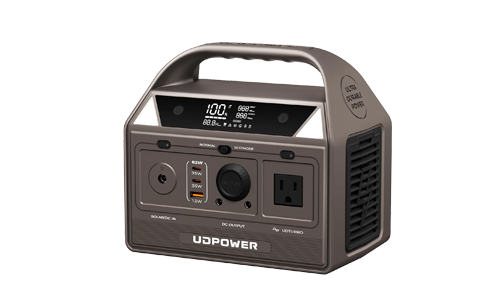
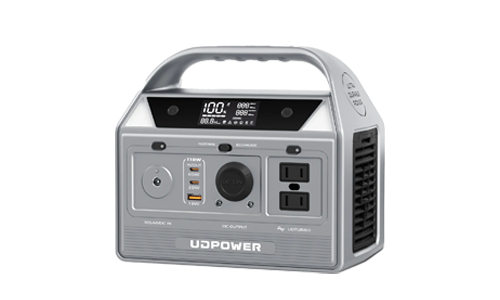
UDPOWER C600 — Best for Overnight Camping and Small Fridges
Choose this if you use a compact 12V fridge, mainly camp overnight, and want a lightweight power station that can also charge phones, cameras, lights, and small devices.
- Capacity: 596Wh
- Output: 600W rated, 1200W peak
- Battery: LiFePO4, 4,000+ cycles
- Ports: 2 AC outlets, USB-C, USB-A, 12V car outlet
- Best fridge match: small compressor fridge, one-night trip, careful power use
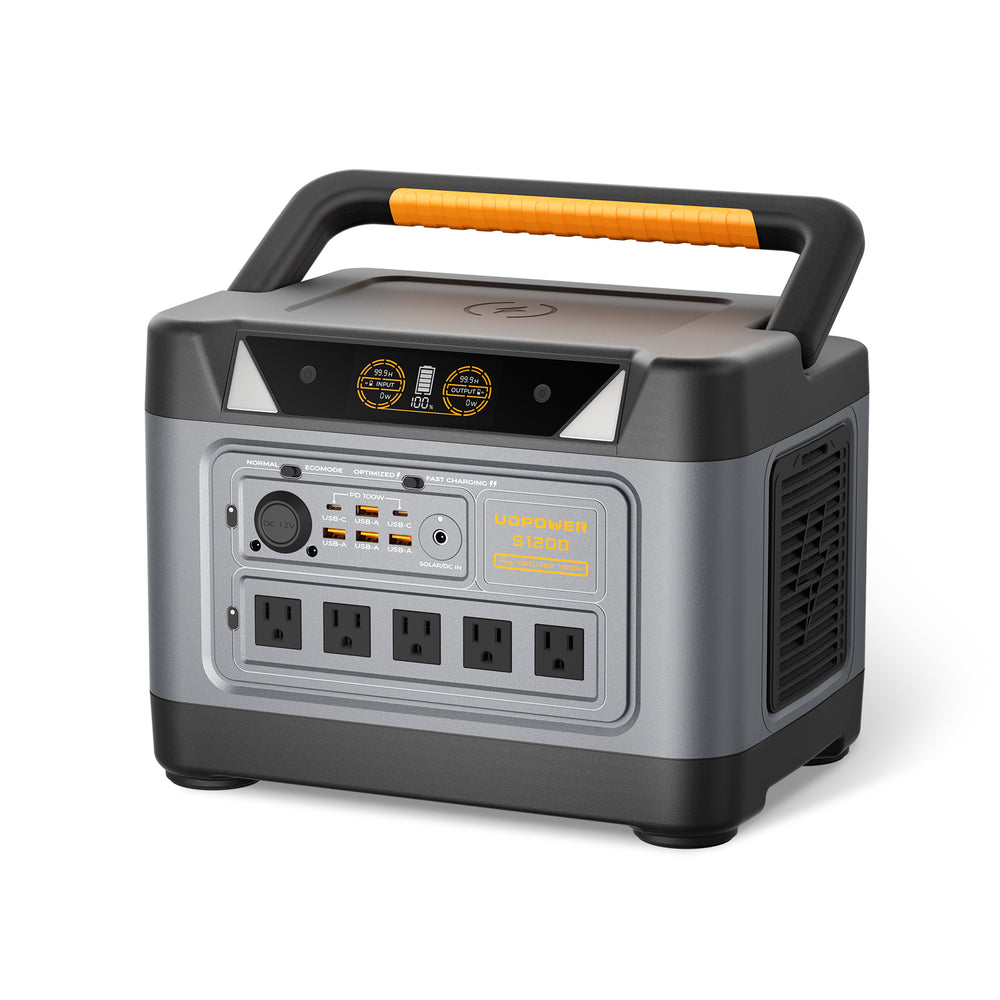
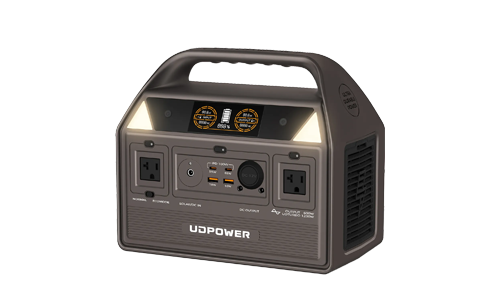
UDPOWER S1200 — Best Weekend Pick for Most Camping Fridge Users
The S1200 is the more comfortable choice if your fridge is mid-size, the trip lasts a full weekend, or you want enough reserve for lights, fan, phones, laptop, drone batteries, and a little bad-weather margin.
- Capacity: 1,190Wh
- Output: 1,200W rated pure sine wave AC output, UDTURBO up to 1,800W surge
- Weight: 26.0 lb
- Battery: LiFePO4, 4,000+ cycles
- Best fridge match: small to mid-size compressor fridge, family weekend, solar-ready campsite
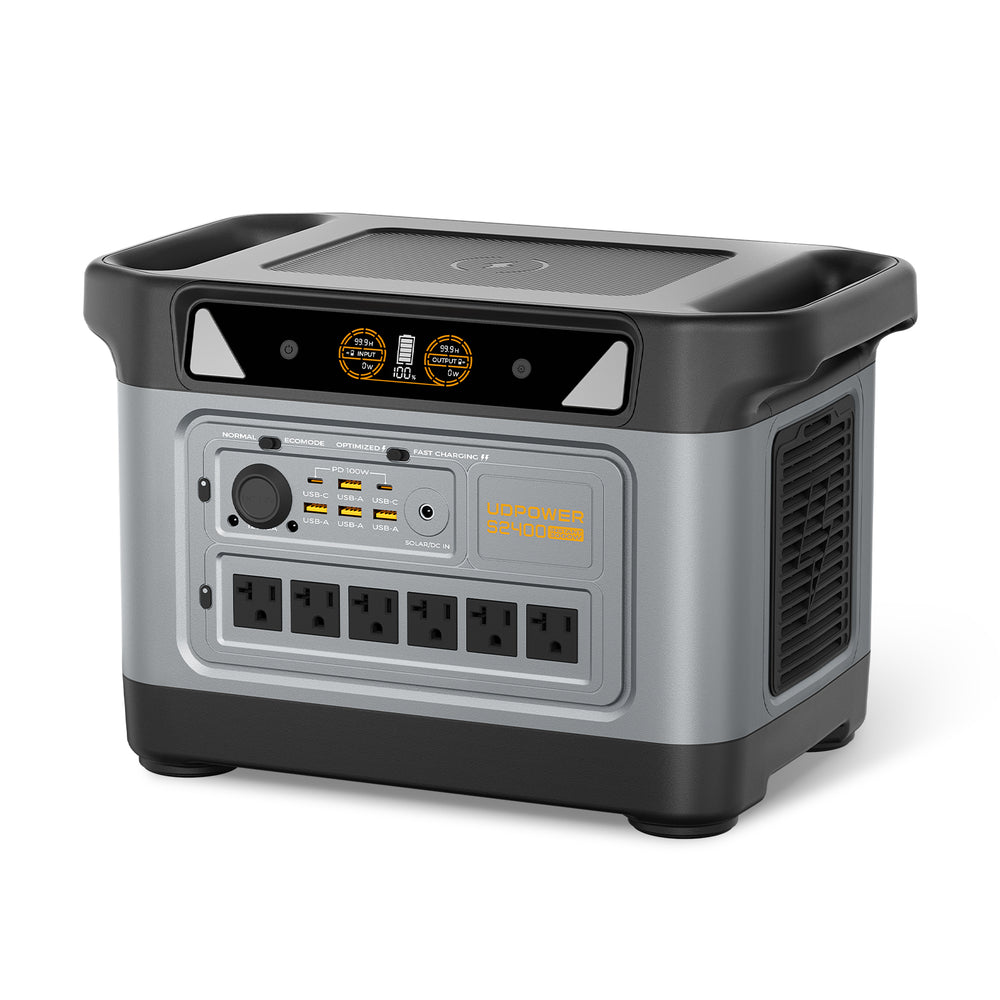
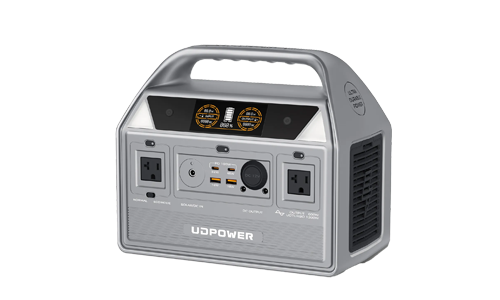
UDPOWER S2400 — Best for Hot Weather, Dual-Zone Fridges, and Longer Trips
Choose the S2400 if you want more runtime margin, run a larger fridge, camp in summer heat, or want one power station to support the fridge plus bigger campsite loads.
- Capacity: 2,083Wh
- Output: 2,400W rated pure sine wave AC output, UDTURBO surge support up to 3,000W
- Battery: LiFePO4
- Solar input: 12–50V, 10A max, up to 400W solar charging
- Best fridge match: large fridge, dual-zone fridge, hot campsites, multi-day off-grid use
| Camping Scenario | Recommended UDPOWER Setup | Why It Fits | Link |
|---|---|---|---|
| One-night car camping with a compact fridge | C600 | Enough capacity for many small fridge overnight setups, easier to carry | C600 product page |
| Family weekend with fridge, lights, phones, fan | S1200 | Better battery reserve and stronger output for mixed campsite loads | S1200 product page |
| Multi-day trip with solar recovery | S1200 + solar panel or S2400 + solar panel | Solar helps recover daily fridge use instead of only draining the battery | Solar generator bundles |
| Hot weather, dual-zone fridge, overlanding | S2400 | More capacity, stronger output, and up to 400W solar charging support | S2400 product page |
Step-by-Step: How to Set Up Your Camping Fridge Power System
- Pre-cool the fridge at home. Plug it into wall power the night before. A warm empty fridge uses more power at camp.
- Freeze water bottles before the trip. They help stabilize temperature and reduce compressor cycling.
- Fully charge the power station. Do not start a weekend fridge trip at 70% unless you have solar or a short itinerary.
- Use the 12V DC connection if your fridge supports it. This is usually more efficient than running an AC adapter through the inverter.
- Put the fridge in shade. Shade can save more energy than people expect. Avoid placing the fridge against hot metal, blacktop, or direct sun.
- Keep the power station dry and ventilated. Do not place it inside the fridge, inside a closed cooler, or under wet gear.
- Check temperature with a thermometer. Do not rely only on the fridge’s display, especially when storing meat, seafood, dairy, or medicine.
- Add solar early in the day. Morning setup gives the battery more time to recover before night.
- Test the whole setup before leaving. Run the fridge for 6–12 hours at home with the same cable and power station.
Food Safety: Keep the Fridge Cold, Not Just Powered
The goal is not only to make the fridge turn on. The goal is to keep food at a safe temperature. The FDA recommends keeping a refrigerator at or below 40°F and a freezer at 0°F. For camping, that means you should carry a small appliance thermometer and check the actual inside temperature.
| Food Safety Point | Practical Camping Action | Source |
|---|---|---|
| Refrigerated food should stay at 40°F or below | Place a thermometer inside the camping fridge and check it during the day | FDA refrigerator thermometer guidance |
| Perishable food should not sit too long in warm conditions | Open the fridge less often and return food quickly after cooking or serving | USDA cooler packing guidance |
| Hot weather shortens the safe window | Above 90°F, be more conservative with meat, seafood, dairy, and leftovers | USDA food safety while camping |
Common Camping Fridge Power Mistakes
| Mistake | Why It Hurts Runtime | Better Habit |
|---|---|---|
| Starting with a warm fridge | The compressor runs hard for hours just to pull temperature down | Pre-cool at home and load cold food |
| Using AC when DC is available | AC inverter loss can reduce battery runtime | Use the 12V DC car outlet for 12V compressor fridges |
| Leaving the fridge in the sun | Heat increases compressor cycling | Keep it shaded and ventilated |
| Opening the lid constantly | Warm air enters and the compressor works harder | Organize food by meal and open the lid less often |
| Depending on the vehicle starter battery overnight | You may drain the battery and fail to start the car | Use a power station or dedicated auxiliary battery |
| Buying by watts only | Watts do not tell you runtime | Compare watt-hours and real daily fridge use |
| Expecting solar to work like wall power | Clouds, shade, and sun angle reduce charging | Bring enough battery reserve for overnight and poor weather |
Fast Sizing Guide
Use this if you want a quick decision before a trip:
| Your Trip | Fridge Type | Battery Size to Consider | Solar Recommendation | UDPOWER Direction |
|---|---|---|---|---|
| Day trip or picnic | Small compressor fridge or cooler | 300–600Wh | Optional | C600 if you want real battery reserve |
| One night | Small to mid-size 12V fridge | 600Wh+ | Optional but helpful | C600 for light use; S1200 for comfort |
| Weekend camping | Mid-size 12V fridge | 1,000–1,200Wh+ | 200W+ solar if staying longer than two days | S1200 |
| Hot summer weekend | Mid-size or large fridge | 1,200–2,000Wh+ | 300W–400W solar if available | S1200 with solar or S2400 |
| Overlanding / multi-day off-grid | Large or dual-zone fridge | 2,000Wh class | 400W-class solar recovery when possible | S2400 |
Build Your Camping Fridge Power Setup
Start with your fridge’s daily Wh use, then choose the battery size that gives you enough reserve for heat, night use, and cloudy weather.
View Portable Power Stations Shop Outdoor Power Stations Get the Camping Power Station GuideFAQ: Powering a Camping Fridge
How many watt-hours do I need to run a camping fridge?
Most small to mid-size 12V compressor camping fridges need about 250–700Wh per day. A large dual-zone fridge or a fridge used in hot weather may need 600–1,200Wh per day. For a weekend, a 1,000–1,200Wh power station is a safer choice than a small battery.
Can a portable power station run a camping fridge overnight?
Yes. A properly sized power station can run a camping fridge overnight. For a compact fridge, a 600Wh-class unit can often cover one night. For a mid-size fridge, hot weather, or extra devices, a 1,000Wh+ unit gives better margin.
Should I plug my camping fridge into AC or DC?
If your fridge supports 12V DC input, use the DC car outlet on the power station. It is usually more efficient than using an AC adapter because it avoids inverter loss. Use AC only when the fridge requires AC power.
Will a camping fridge drain my car battery?
It can if you run it from the starter battery while the vehicle is parked. Use the car outlet while driving, but for overnight use, a portable power station or dedicated auxiliary battery is safer.
How much solar do I need for a camping fridge?
For a fridge using about 500Wh per day, a 200W–210W solar panel is a practical starting point in good sun. For hot weather, large fridges, or cloudy campsites, use more solar or bring a larger battery reserve.
Can I run a camping fridge and charge phones at the same time?
Yes, as long as the total load stays within the power station’s output limit. Phones, lights, and cameras usually use much less energy than the fridge, but fans, laptops, Starlink Mini, kettles, and coffee makers can noticeably reduce runtime.
What temperature should a camping fridge stay at?
For perishable food, keep the fridge at or below 40°F. Use a small appliance thermometer inside the fridge so you know the real temperature, especially in summer.
Is a thermoelectric cooler good for battery camping?
Usually not for multi-day trips. Thermoelectric coolers often run continuously, so they can use more energy than a compressor fridge. They are better for short day trips or pre-chilled drinks.
What is the best UDPOWER model for a camping fridge?
For a small fridge and overnight use, the UDPOWER C600 can work well. For most weekend camping fridge setups, the UDPOWER S1200 is the stronger fit. For hot weather, dual-zone fridges, or multi-day trips, the UDPOWER S2400 gives more runtime margin.
Sources Used for Safety and Product Data
| Source | What It Supports | Link |
|---|---|---|
| FDA | Refrigerator temperature at or below 40°F and freezer at 0°F | FDA refrigerator thermometer guidance |
| USDA | Cooler temperature and camping food safety handling | USDA cooler food safety guidance |
| USDA FSIS | Food safety while hiking, camping, and boating | USDA camping food safety guidance |
| UDPOWER | C600, S1200, S2400, and 210W solar panel specifications | UDPOWER portable power stations |
Runtime estimates in this guide are planning estimates, not guarantees. Actual runtime depends on fridge model, thermostat setting, outside temperature, cable quality, ventilation, battery state of charge, and whether the fridge is powered through DC or AC.
Related Articles


