

How Long Does a 600Wh Power Station Last?
A 600Wh power station can last anywhere from about 1 hour at a 500W load to 50+ hours at a 10W load. That huge range is why the short answer is always “it depends on what you’re running.” The useful answer is this: for a 600Wh-class unit, start with the wattage of your device, then plan with a small efficiency buffer instead of assuming every watt-hour is fully usable.
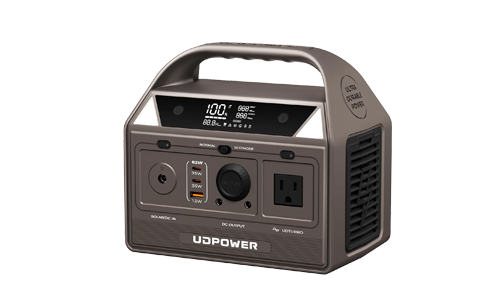
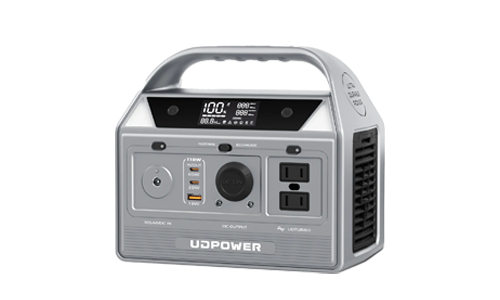
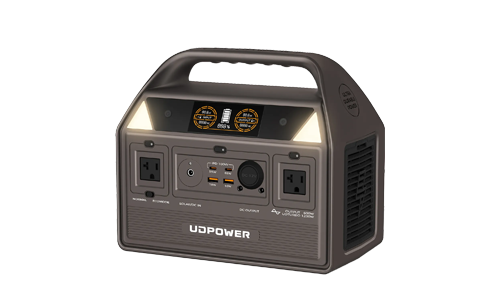
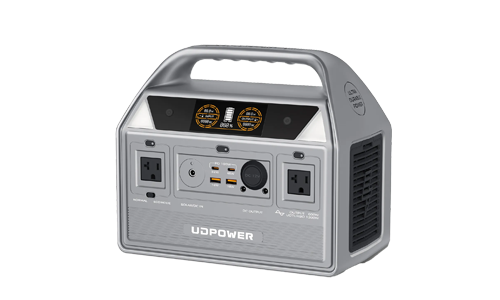
Quick answer: If you're using a 600Wh-class station like the UDPOWER C600, a realistic planning formula is:
Runtime (hours) ≈ usable watt-hours ÷ device watts
For this model, a practical planning number is 596Wh × 0.85 = about 507 usable Wh for many AC-powered scenarios. That means:
- 10W router or light: about 50.7 hours
- 40W CPAP: about 12.7 hours
- 65W laptop: about 7.8 hours
- 100W TV: about 5.1 hours
- 300W appliance: about 1.7 hours
That is the “plan for real life” number. Lab-style math with zero losses will always look a little longer.

Table of Contents
Runtime Table: The Fast Answer
The table below uses the current UDPOWER C600 (596Wh) as the working example. It shows both:
- Ideal math: capacity ÷ watts
- Planning math: capacity × 0.85 ÷ watts
That second column is the one ordinary buyers should use first, especially for AC devices.
| Device Load | Ideal Runtime | Planning Runtime | What That Means in Plain English | Source |
|---|---|---|---|---|
| 5W | 119.2 hrs | 101.3 hrs | Small LED light, tiny always-on electronics | Runtime basics |
| 10W | 59.6 hrs | 50.7 hrs | Router, modem, light string, LED lamp | C600 page |
| 20W | 29.8 hrs | 25.3 hrs | Two low-draw lights or a low-power fan on low | Runtime basics |
| 40W | 14.9 hrs | 12.7 hrs | CPAP-range territory if your setup is modest | C600 page |
| 60W | 9.9 hrs | 8.4 hrs | Light laptop workday or compact TV session | C600 FAQ |
| 65W | 9.2 hrs | 7.8 hrs | Many laptop chargers land around here | Official examples |
| 75W | 7.9 hrs | 6.8 hrs | A fan overnight, but not with lots of extras added | Official examples |
| 100W | 6.0 hrs | 5.1 hrs | TV, projector, audio gear, or small appliance windows | Official examples |
| 150W | 4.0 hrs | 3.4 hrs | A useful load, but battery drain starts to feel fast | Runtime basics |
| 200W | 3.0 hrs | 2.5 hrs | Portable cooler territory depending on cycling | Runtime basics |
| 300W | 2.0 hrs | 1.7 hrs | This is where “short burst use” becomes the smart strategy | Runtime basics |
| 500W | 1.2 hrs | 1.0 hr | Possible only for short, intentional jobs | Runtime basics |
The biggest mistake people make: they focus only on battery size and ignore output limit. A 600Wh station can still refuse to run a device if the appliance needs more than the inverter can deliver. On the C600, the relevant question is not just “How long?” but also “Is it under 600W continuous, with surge in mind?”
How to Calculate Runtime the Right Way
Most articles stop at Wh ÷ W. That’s not wrong, but it is incomplete. A better way to size real-life runtime is to use two numbers:
Runtime = battery capacity ÷ device watts
Using the C600 as the example: 596Wh ÷ 100W = 5.96 hours.
Runtime = battery capacity × efficiency ÷ device watts
With 85% usable energy: 596Wh × 0.85 ÷ 100W = 5.07 hours.
That “planning runtime” is the number you should trust more for ordinary use. It gives you room for inverter losses, cable losses, and the simple truth that real devices rarely behave like a lab test.
A practical shortcut: for a 600Wh-class station, think of it as roughly a 500Wh usable budget when you’re planning AC runtime. That one mental shortcut makes quick decisions much easier.
596Wh on the UDPOWER C600
600W continuous, 1200W surge
About 507 usable Wh for many AC cases
What Changes Runtime in Real Life
Two people can buy the same 600Wh power station and get very different results. That usually comes down to these four things.
Running a laptop from USB-C can be more efficient than plugging a bulky AC charger into the inverter. The more conversion steps you add, the more energy you usually lose.
Mini fridges, portable coolers, and some fans do not draw full power every second. Their average consumption can be lower than the label suggests, but startup surges matter too.
Space heaters, kettles, hot plates, and hair tools are the fastest way to turn a “this should last all evening” battery into a “why is it dead already?” battery.
If you are using backup power for outages, camping, or sleep equipment, leaving a safety cushion matters. Planning to 0% is rarely the smartest move.
My rule of thumb: use the conservative column first, then treat any extra runtime as a bonus. That mindset is boring, but it is exactly how you avoid surprises during a blackout or a night off-grid.
Common Devices and How Long a 600Wh Power Station Can Run Them
This is where 600Wh starts to make sense as a real tool. It is not “whole-house backup.” It is “keep the right things alive long enough” power.
| Device | Typical Working Load Used Here | Ideal Runtime | Planning Runtime | Takeaway | Source Link |
|---|---|---|---|---|---|
| Wi-Fi router / modem | 10W | 59.6 hrs | 50.7 hrs | Excellent match for a 600Wh station | C600 runtime examples |
| LED bulb / light string | 10W | 59.6 hrs | 50.7 hrs | One of the best uses for this battery size | Official examples |
| CPAP | 40W | 14.9 hrs | 12.7 hrs | Often realistic for overnight use, depending on settings | Official examples |
| Laptop | 60–65W | 9.2–9.9 hrs | 7.8–8.4 hrs | Great for work, travel, and emergency productivity | C600 FAQ + product page |
| Fan | 75W | 7.9 hrs | 6.8 hrs | Useful overnight, especially with low-speed discipline | Official examples |
| TV / projector / audio | 100W | 6.0 hrs | 5.1 hrs | Fine for an evening, not for all-day background use | Official examples |
| Portable cooler or compact fridge | Varies | Depends on cycling | Depends on cycling | Think in average daily energy, not just nameplate watts | Runtime planning guide |
| Microwave / coffee maker | Model dependent | Short bursts only | Short bursts only | Possible only if the actual draw stays within output limits | C600 output limit |
| Space heater | Usually too high | Not a smart match | Not a smart match | A 600Wh station is not a heat-first battery | Outage use-case guide |
Best way to think about a 600Wh unit: it is excellent for communication, light, sleep comfort, small electronics, and short controlled appliance use. It is not the battery you buy because you want to run heat-heavy appliances like nothing happened.
How Many Times Can It Recharge Phones, Cameras, and Drones?
Small electronics are where this size class feels generous. The official C600 page gives several charge-count examples, and they line up with what most buyers expect from a 596Wh battery.
| Portable Device | Battery Size Used in Example | Official Example | Planning Estimate | Why This Matters | Source |
|---|---|---|---|---|---|
| Phone | 11Wh | 54 charges | About 46 charges | More than enough for family charging during outages or road trips | Official C600 examples |
| Camera battery | 14.4Wh | 41 charges | About 35 charges | Great for creators, campers, and van travel setups | Official C600 examples |
| Drone battery | 65Wh | 9 charges | About 7.8 charges | A much better fit than many people expect from a “small” station | Official C600 examples |
For small electronics, real-world results often land closer to the official examples than they do for bigger AC appliances. That is one reason 600Wh-class units feel especially strong for travel, content creation, and emergency charging.
Practical 1-Night and Weekend Use Cases
Here is the part many articles skip: runtime feels more useful when you budget energy by scenario, not by one device at a time.
| Scenario | What You Run | Approx. Energy Budget | How a 600Wh-Class Station Feels | Planning Verdict |
|---|---|---|---|---|
| Overnight essentials | Router 10W × 10h, 2 LED lights 10W × 4h, 2 phones, laptop 60W × 2h | About 330Wh | You still have room left for a few extras | Comfortable fit |
| Sleep setup | CPAP 40W × 8h, router 10W × 8h, phone charging, small light | About 470Wh | Very doable, but this is where planning matters | Good fit with discipline |
| Camp workstation | Laptop 65W × 6h, fan 20W × 6h, phone charging, camera batteries | About 525Wh | Possible, but you are near the edge without solar | Tight fit |
| High-draw evening | 100W TV × 4h, 100W audio × 3h, lights, phone charging | About 550Wh | Fun for one evening, not a lot of margin left | Manage carefully |
| Heat-heavy plan | Space heater, kettle, or repeated high-watt cooking | Too aggressive for this class | The battery drains fast and value drops fast | Wrong tool |
One useful buying insight: 600Wh is often the sweet spot for people who want a battery that still feels portable, but has crossed over from “just charge my phone” into “keep my night or my outage organized.” That is exactly why this size class is so popular for camping, road trips, and apartment backup.
For a deeper outage workflow, these related guides fit naturally with this article: what to run first during an outage, 24/48/72-hour outage checklist, runtime planning for outages, and UDPOWER’s runtime calculator.
Best UDPOWER Picks Around This Use Case
If this article is about your actual shopping decision, the right answer depends on whether you want lighter carry, more runtime, or the most balanced middle ground.

UDPOWER C600
Best fit for most “600Wh runtime” readers.
- 596Wh capacity / 600W output
- LiFePO4 battery and 4,000+ cycle claim
- Official examples include laptop, TV, fan, CPAP, router, and lights
- Up to about 240W solar input
- About 12.3 lbs, so it still feels genuinely portable
This is the one to recommend when someone wants a battery that can actually handle a night, a work session, or a short outage without turning into a giant heavy box.

UDPOWER C400
Better when you care more about size than runtime.
- 256Wh capacity / 400W output
- Fast charge claim up to 1.5 hours
- Jump-starter feature
- Good for short trips, glovebox-style backup, and lighter carry
If your real need is “portable first, battery second,” this is the smaller step down. Just do not expect 600Wh-class endurance from it.
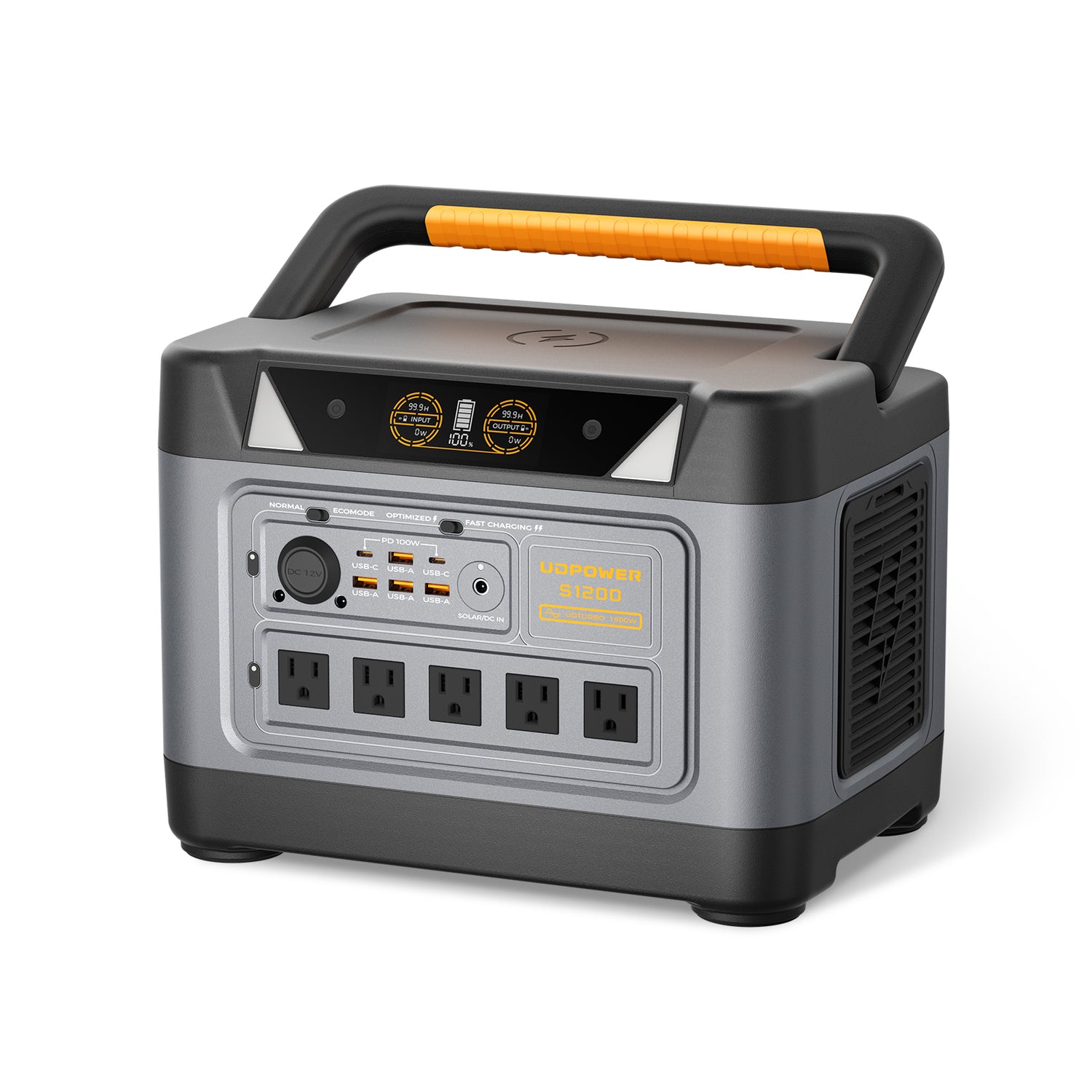
UDPOWER S1200
Move up if you want much more headroom.
- 1,190Wh capacity / 1,200W output
- UPS support noted on the product page
- Much better for longer outages, more devices, and bigger safety margin
- A stronger next step when 600Wh feels just a little too tight
If your planning column keeps landing near the edge, this is the cleaner answer than trying to force a 600Wh station to do a 1,200Wh job.
Pairing the C600 with the UDPOWER 120W portable solar panel makes more sense than most people think. The C600 product page notes support for solar input up to about 240W, while the 120W panel page specifically says the C600 is compatible and also warns that the C600 is for 18V solar panels rather than the 210W panel style.
FAQ
Is a 600Wh power station enough for a power outage?
It is enough for a well-planned essentials setup: router, lights, phone charging, laptop, and in many cases a CPAP or other modest overnight load. It is not enough to make a blackout feel like the grid never went down.
Can a 600Wh power station run a refrigerator?
Sometimes, yes, but do not reduce that question to one watt number. Fridges cycle on and off, startup surge matters, and the smarter way to plan is by average daily energy use and short cooling windows, not by pretending the compressor runs at full power all day.
Can it run a microwave or coffee maker?
Sometimes, but only if the actual draw stays within the inverter limit and you use it in short bursts. Small coffee makers may be fine. Larger heating appliances often are not a good match for a 600Wh-class battery.
How long will a 600Wh power station run a CPAP?
With the UDPOWER C600 example, the official page shows about 14.9 hours at 40W in ideal math. A more conservative planning number is about 12.7 hours. Your exact CPAP setup can change that a lot.
Why do brands show longer runtime than what users sometimes get?
Because “capacity ÷ watts” is the cleanest math, but real use includes inverter losses, charging inefficiency, cable losses, standby draw, and device behavior. That is why the conservative planning column matters.
Is 600Wh better for camping or for home backup?
Both can make sense, but this size is especially strong when you value portability. It is one of the easiest classes to carry, move around, and use in multiple places without feeling like you bought a giant box for small jobs.
How do I make a 600Wh power station last longer?
Run low-draw devices first, use USB-C instead of AC when possible, avoid heat-heavy appliances, and plan around energy budgets instead of impulse plugging. The battery lasts longer when your decision-making gets tighter.
When should I skip 600Wh and buy bigger?
Skip up when your “must-run” list includes multiple long-hour devices, larger AC loads, or a real expectation of multi-day outage support. That is when something like the S1200 starts making a lot more sense.
Sources
- UDPOWER C600 product page — used for the current 596Wh / 600W / LiFePO4 / 4,000+ cycle details, official runtime examples, and C600 FAQ.
- Battery Runtime Basics: Watts → Watt-hours + Real-World Efficiency — used for the practical runtime framing and real-world efficiency logic.
- UDPOWER runtime calculator — used as a companion calculation reference.
- Portable Power Station Runtime Planning for Outages — used for the planning mindset and outage-oriented load strategy.
- Power Priorities: What to Run First — used for essentials-first backup planning.
- Power Outage Checklist (24/48/72 Hours) — used for related internal guidance.
- Portable Power Station vs Generator for Power Outages — used for “right tool for the right job” comparisons.
- UDPOWER C400 product page — used for comparison positioning.
- UDPOWER S1200 product page — used for upgrade positioning.
- UDPOWER 120W portable solar panel — used for solar compatibility notes.
Related Articles


