How Many Watts Does a Crock Pot Use?
ZacharyWilliamA practical, evidence-based guide to Crock-Pot wattage, real cooking power draw, energy cost, and backup power sizing.

A Crock-Pot does not use one universal wattage. The real number depends on the model, capacity, and cooking mode. That is why one article may say “a slow cooker uses around 150 watts,” while another shows numbers above 300 watts. Both can be true for different machines.
Quick answer: Most dedicated slow cookers are still low-watt kitchen appliances, but the exact range is wider than many readers expect. Small 2-quart units can be around 100W, mid-size manual models can be around 210W, and large 8-quart units can reach 370W.
Verified Crock-Pot Wattage Examples
The safest way to answer this topic is to start with specific, brand-confirmed examples rather than rely only on generic size estimates.
| Model type | Capacity | Verified wattage | What it means in practice |
|---|---|---|---|
| Crock-Pot Classic Slow Cooker | 2 quart | Approx. 100W | Good reminder that compact slow cookers can draw much less than people assume. |
| Crock-Pot Design Series Manual Slow Cooker | 4.5 quart | 210W | This is close to what many families think of as a “normal” full-meal slow cooker. |
| Crock-Pot Manual Slow Cooker | 8 quart | 370W | Large-capacity models can sit well above the common 150–210W rule of thumb. |
The key takeaway: readers should stop asking “How many watts does a Crock Pot use?” as if there is one single answer. A better question is: Which Crock-Pot model are you using, and what is its rated wattage?
Why Crock-Pot Wattage Varies So Much
There are three main reasons wattage numbers vary so widely across search results:
1) Capacity changes everything
A 2-quart slow cooker built for dips or meals for two does not need the same heating element as an 8-quart cooker designed for large roasts, chili, or batch cooking.
2) “Typical” ranges are not exact ratings
Brand guidance often gives a broad typical range for Low and High, but those are general operating patterns, not a substitute for the exact nameplate wattage on your unit.
3) Slow cookers cycle on and off
A slow cooker does not necessarily pull the same wattage every second for the entire cook. It heats up, backs off, and self-regulates to maintain cooking temperature.
That last point matters a lot. Readers often think the nameplate wattage equals constant real-world draw for 6 to 10 straight hours. That is usually not how these appliances behave. The rated wattage is still the best planning number, but real average draw over a long cook can be lower.
What Low, High, and Warm Really Mean
Crock-Pot’s own guidance for similar slow cookers puts typical electricity use at about 45–150 watts on Low and 150–210 watts on High. That already tells you why slow cookers are considered relatively economical compared with appliances like air fryers, toaster ovens, or pressure cookers.
But here is the part most articles leave out: Low and High are not always dramatically different end temperatures. On official Crock-Pot Q&A pages, the company explains that both settings can stabilize at about the same simmer point, around 209°F. The real difference is how quickly the cooker gets there. High may take about 3–4 hours, while Low may take about 7–8 hours. Warm is lower, typically around 165–175°F.
Why this matters: users searching this topic usually want one of two answers—either “What will it cost me to cook all day?” or “Can my battery backup run it?” In both cases, the useful insight is not just “High uses more power.” It is that a Crock-Pot is a slow, regulated heat appliance, not a constant full-power heater.
How Much Electricity a Crock Pot Uses
The basic formula is simple:
kWh = (Watts × Hours) ÷ 1000
To make the math easy to follow, the table below uses an example electric rate of $0.15 per kWh. Replace that with your own utility rate for a more exact number.
| Cooker wattage | 8-hour cook | Energy used | Estimated cost at $0.15/kWh |
|---|---|---|---|
| 100W small model | 100 × 8 ÷ 1000 | 0.80 kWh | $0.12 |
| 210W mid-size model | 210 × 8 ÷ 1000 | 1.68 kWh | $0.25 |
| 370W large 8-qt model | 370 × 8 ÷ 1000 | 2.96 kWh | $0.44 |
Even at the higher end, a Crock-Pot is usually not an expensive appliance to operate for one meal. The bigger concern is not your electric bill. It is choosing the right model for your volume of food and, if you need backup power, making sure your battery has enough usable capacity for the cook time you want.
A common mistake: using one “average” wattage for every slow cooker and every recipe. That shortcut might be fine for a quick estimate, but it is not accurate enough for battery sizing, power-outage planning, or comparing a small 2-quart unit to a large 8-quart one.
How to Find the Exact Wattage of Your Unit
Check the rating label
Flip the base over and look for watts, volts, or amps. If amps are listed instead of watts, use Watts = Volts × Amps. In the U.S., that is usually 120V.
Search the official model page
Many Crock-Pot product pages include Q&A answers that state the wattage directly. Use your full model number, not just the capacity.
Use a plug-in watt meter
If you want to see real-world behavior across a full recipe, a watt meter is the best way to observe cycling and average draw over time.
Best Portable Power Stations for Running a Crock Pot
If your goal is off-grid cooking, tailgating, RV use, or power-outage backup, a Crock-Pot is actually one of the easier kitchen appliances to support because the wattage is modest compared with most heating appliances.
The most important rule is to size the battery using your cooker’s rated wattage, then treat simple Wh ÷ W math as an estimate, not a guarantee. Actual AC runtime will vary with inverter loss and how the cooker cycles during the recipe.
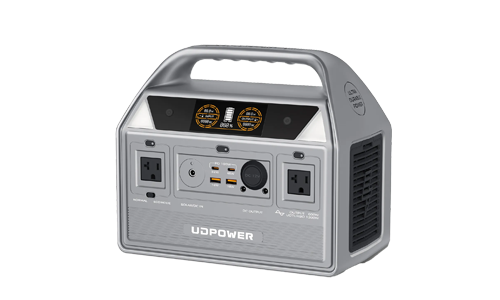
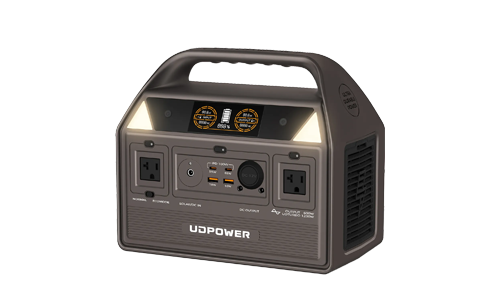
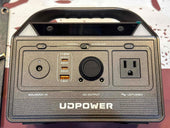
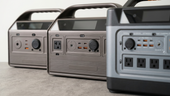
UDPOWER C600 — 596Wh · 600W output

Best for: smaller slow cookers, short recipes, RV lunches, dips, side dishes, and compact outage kits.
- Simple math at 100W load: about 5.9 hours
- Simple math at 210W load: about 2.8 hours
- Simple math at 370W load: about 1.6 hours
It makes the most sense when your Crock-Pot is on the smaller end or when you only need a few hours of runtime.
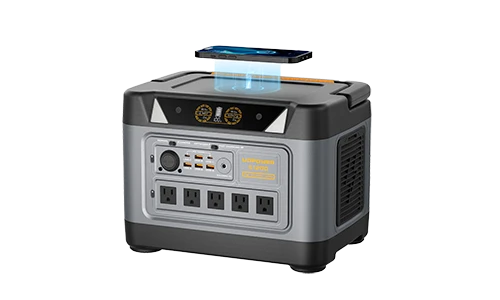
UDPOWER S1200 — 1,190Wh · 1,200W output

Best for: full-size family slow cookers, longer cooks, outage preparedness, and people who want more runtime margin.
- Simple math at 100W load: about 11.9 hours
- Simple math at 210W load: about 5.7 hours
- Simple math at 370W load: about 3.2 hours
This is the better fit if your goal is to keep dinner going through a longer outage or support larger 4.5–8 quart cookers with more headroom.
Plain-English recommendation: If your Crock-Pot is a small 2-quart model and you only need a short cooking window, C600 is the lighter match. If you want a much safer buffer for a typical family-size cooker or longer all-day use, S1200 is the more practical recommendation.
FAQ
Does a Crock Pot use a lot of electricity?
Usually no. A dedicated slow cooker is generally a low-watt appliance compared with most other electric cooking tools. The exact answer still depends on your model and cook time.
Does High use more watts than Low?
Generally yes, but the bigger practical difference is often how fast the cooker reaches the simmer point. On some Crock-Pot models, High and Low end up at roughly the same final simmer temperature.
Why do different websites give different wattage numbers?
Because they are often talking about different capacities, different model families, or generic “typical” slow-cooker ranges instead of your exact product’s rated wattage.
Can a portable power station run a Crock Pot?
Yes, usually. Slow cookers are one of the more realistic kitchen appliances to run from a battery power station because their wattage is relatively modest. The main question is runtime, not starting surge.
What is the best way to size backup power for a Crock Pot?
Start with your unit’s rated watts, multiply by the hours you want to cook, then add some margin for inverter loss and real-world variation.










![How to Live In The Woods [Complete Guide]](http://udpwr.com/cdn/shop/articles/Off-Grid_Cabin_Option_f6c94fe7-1ae7-4c3a-baf5-ed9fe684c832.png?v=1763523215&width=170)