How Long Does a Power Station Last?
ZacharyWilliamWhen people ask “How long does a portable power station last?”, they’re usually mixing together four different questions: runtime per charge, battery lifespan (cycles/years), how long it holds charge in storage, and how long the hardware stays reliable.
If you only read one thing: runtime is mostly about Watt-hours (Wh) ÷ watts, while lifespan is mostly about battery chemistry + heat + how often you cycle it. The rest is optimization.

1) What “last” actually means (4 timelines)
Two customers can ask the same question and need totally different answers. Here’s the clean way to separate it:

| Timeline | What it answers | What it depends on most | How you improve it |
|---|---|---|---|
| Runtime per charge (hours) | “How many hours will it power my devices?” | Battery capacity (Wh), your load (watts), inverter losses, surge peaks | Right-size capacity, avoid running AC for tiny loads, reduce device wattage |
| Battery lifespan (cycles/years) | “How many years before capacity noticeably drops?” | Chemistry (LiFePO4 vs other), temperature, depth-of-discharge, cycle frequency | Keep it cool, avoid living at 100% for months, avoid deep 0% storage |
| Charge retention (weeks/months) | “If I store it, will it still be charged later?” | Self-discharge, standby drain, storage state-of-charge (SoC), storage temp | Store around mid-charge, power it fully off, top-up on a schedule |
| Hardware reliability (years) | “Will the whole unit keep working?” | Thermal design, BMS protection, build quality, fan/dust exposure, usage abuse | Ventilation, clean intake, avoid max load nonstop, follow manual limits |
The biggest mistake we see: people buy based on output watts alone, then get disappointed by runtime. For most use cases, capacity (Wh) is the main number that determines “how long.”
2) How to estimate runtime (the simple calculator)
The practical back-of-napkin formula looks like this:
Estimated runtime (hours) ≈ Battery capacity (Wh) × 0.85 ÷ Device watts (W)
The “0.85” is a real-world planning factor for inverter/conversion losses and normal inefficiencies. If you’re running DC/USB directly (no inverter), losses may be lower.

Two reality checks before you trust the number
- Motors surge. Fridges, pumps, and power tools can spike 2–7× above their “running” watts for a moment. Your power station needs enough output to survive that surge.
- Many appliances don’t run constantly. A refrigerator cycles on/off; average wattage over time can be far lower than the compressor’s running wattage.
If you want a device-first approach, these UDPOWER guides walk through measuring real consumption and avoiding common “watt math” traps: CPAP power consumption and refrigerator runtime.
3) Real-world runtime table (UDPOWER examples)
Below is a straight runtime estimate across common loads, using the planning factor above. Use it as a comparison tool, not a promise—your real-world results will vary.
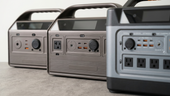
UDPOWER model snapshot (specs from official product pages)
| Model | Capacity | Rated Output | Battery Chemistry | Cycle Life Claim | Weight | Spec Source |
|---|---|---|---|---|---|---|
| C200 | 192Wh | 200W | LiFePO4 | 4,000+ cycles | 5.4 lbs | C200 page |
| C400 | 256Wh | 400W | LiFePO4 | 4,000+ cycles | 6.3 lbs | C400 page |
| C600 | 596Wh | 600W (Peak 1200W) | LiFePO4 | 4,000+ cycles | 12.3 lbs | C600 page |
| S1200 | 1,190Wh | 1,200W | LiFePO4 | 4,000+ cycles | 26 lbs | S1200 page |
| S2400 | 2,083Wh | 2,400W | LiFePO4 | 80%+ capacity after 3,000 cycles (also marketed as long-life 4,000+ cycles) | 40.8 lbs | S2400 page |
Estimated runtime by model at common loads
Assumptions: 85% planning factor. “—” means the load exceeds the model’s rated output.
| Model | Capacity (Wh) | Rated Output | 10W (router, LED) |
60W (small DC fridge avg) |
100W (TV / fan) |
200W (laptop + extras) |
400W | 600W | 1200W | 2400W |
|---|---|---|---|---|---|---|---|---|---|---|
| C200 | 192 | 200W | 16.3 hrs | 2.7 hrs | 1.6 hrs | 0.8 hrs | — | — | — | — |
| C400 | 256 | 400W | 21.8 hrs | 3.6 hrs | 2.2 hrs | 1.1 hrs | 0.5 hrs | — | — | — |
| C600 | 596 | 600W | 50.7 hrs | 8.4 hrs | 5.1 hrs | 2.5 hrs | 1.3 hrs | 0.8 hrs | — | — |
| S1200 | 1,190 | 1,200W | 101.2 hrs | 16.9 hrs | 10.1 hrs | 5.1 hrs | 2.5 hrs | 1.7 hrs | 0.8 hrs | — |
| S2400 | 2,083 | 2,400W | 177.1 hrs | 29.5 hrs | 17.7 hrs | 8.9 hrs | 4.4 hrs | 3.0 hrs | 1.5 hrs | 0.7 hrs |
Want the “fridge answer” everyone searches for? UDPOWER lists S1200 as powering a typical refrigerator for about 10–15 hours (depending on fridge draw and cycling). That lines up with the table above if your fridge averages ~60–100W over time.
4) How long the battery lasts (cycles → years)
Here’s the honest version: if you buy a modern portable power station with a long-cycle battery and you store it sensibly, the battery usually won’t “die suddenly.” It gradually holds less energy over time.
With LiFePO4-based stations, a common industry yardstick is “cycles to ~80% capacity.” UDPOWER uses LiFePO4 across the C-Series and S-Series, and several models are marketed at 4,000+ cycles (with S2400 also stating 80%+ capacity after 3,000 cycles).
What cycles mean in real life
A “cycle” is best understood as an equivalent full cycle. Two half-discharges can roughly add up to one full cycle. So the number that matters isn’t just the rated cycle count—it’s how often you actually drain and refill the pack.
| Usage pattern | Equivalent full cycles per year | 3,000 cycles ≈ years | 4,000 cycles ≈ years | Who this looks like in real life |
|---|---|---|---|---|
| Full cycle daily | 365 | ~8.2 years | ~11.0 years | Off-grid work, frequent outages, daily “power box” routine |
| Half cycle daily | 183 | ~16.4 years | ~21.9 years | Evenings + recharge overnight, not fully draining each time |
| One cycle weekly | 52 | ~57.7 years | ~76.9 years | Weekend camping, occasional backup use |
That weekly-use row looks absurd on purpose: it’s a reminder that for most people, calendar aging and heat become the limiter long before you “run out of cycles.” If you want your station to last, treat it more like a battery than a toolbox: keep it cool, don’t store it dead, and don’t park it at 100% in a hot garage all summer.
If you want a plain-English breakdown, this UDPOWER article is a good companion read: What “4,000 cycles” really means for real owners.
5) How long it holds a charge in storage
“I charged it and put it in the closet. Will it still be charged in six months?” This depends on two things: (1) self-discharge and standby drain, and (2) how you store it.
A practical storage approach (especially for emergency backup): store around mid-charge, keep it in a cool, dry place, and do a quick top-up on a schedule.
A simple storage schedule that works
| When | What to do | Why it helps | Extra note |
|---|---|---|---|
| Before long storage | Charge/discharge to ~40–60% (mid-charge), power the unit fully off | Reduces stress from high-voltage storage and avoids deep-discharge risk | If you need “always ready,” consider a conservative 80% ceiling when feasible (see: 40–80 rule guide). |
| Every 3–6 months | Check battery level and top up back to mid-charge | Prevents storage drift toward very low SoC | More frequent checks if stored in warmer environments |
| After an outage trip | Recharge soon, then return to storage level | Deep “empty storage” is the fastest way to shorten battery life | Don’t leave it at 0% for weeks |
| Seasonal prep | Run a short test load (10–20 minutes), then recharge | Confirms everything works before you need it | Great for hurricane/fire season planning |
For a specific UDPOWER example, the S1200 product page highlights extremely low self-discharge behavior when stored properly. Real-world storage results still depend on temperature and whether the unit is fully powered off.
6) What shortens lifespan (and what to do instead)
Most early “my battery got worse” stories come down to heat + high state-of-charge + deep drains. Here’s a quick playbook.
| What hurts longevity | What it looks like | Do this instead | Why it works |
|---|---|---|---|
| Storing at 100% for long periods | Capacity fades faster over months/years | Store mid-charge; charge to 100% only when you actually need max runtime | High SoC increases battery stress during storage |
| Heat (especially while full) | Warm case, more fan use, faster aging | Keep it shaded/ventilated; avoid closed cars/garages in summer | Heat accelerates chemical degradation |
| Deep 0% storage | Won’t turn on after sitting; “dead” battery fears | Recharge soon after use; top up every few months in storage | Low SoC storage risks cell undervoltage conditions |
| Running near max output nonstop | Hot air exhaust, loud fan, shorter runtime than expected | Leave headroom; spread loads; give it airflow | Lower thermal stress improves long-term reliability |
| Ignoring surge requirements | Device won’t start; power station trips/shuts off | Check surge watts; choose higher output if starting motors | Startup spikes can exceed rated output briefly |
| Using AC for tiny loads | “Why did it drain overnight?” | Use USB/DC ports when possible; avoid inverter-on all night for small devices | Inverter overhead can matter at low loads |
If “leave it plugged in all the time” is your situation (home backup, router, CPAP, security devices), read this first so you don’t accidentally do the one thing that shortens life: Can I leave my portable power station plugged in all the time?
7) Choosing a model without overbuying
The “right” portable power station is the one that matches your daily watt-hours and your surge needs—not the one with the biggest headline output. Here’s a simple way to decide:
- Small electronics, day trips, light emergency kit: look at C200 or C400 (routers, phones, lights, small fans).
- Weekend camping + “real” AC loads: C600 is often a sweet spot for laptops, camera gear, small appliances, and short fridge support.
- Home outage essentials (and longer fridge runtime): S1200 gives a big step up in capacity without becoming uncarryable.
- Higher-power appliances, multi-device households, or “one box runs a lot” plans: S2400 is built for higher output headroom and longer sessions.
A practical rule: if you’re shopping for “how long,” list your devices, estimate daily watt-hours, then choose capacity with a buffer. If you’re shopping for “will it start,” focus on surge and rated output.
8) FAQ
Q1) How long will a portable power station run a refrigerator?
It depends on the fridge’s average draw over time (compressor cycling) and your battery capacity. Start with Wh × 0.85 ÷ average watts, then sanity-check against duty cycle. This guide walks through it step-by-step: How long can a portable battery power a refrigerator?
Q2) Why does my runtime look shorter than the math?
Common reasons: inverter losses, your device draws more than the label suggests, the load surges at startup, or you’re powering small loads on AC (inverter overhead becomes noticeable).
Q3) What’s the difference between “rated output” and “peak output”?
Rated output is what the unit can sustain. Peak output is a short burst for startup surges (like compressor motors). Always size for the surge if you’re running fridges, freezers, or power tools.
Q4) Does LiFePO4 really last longer?
In general, yes—LiFePO4 is known for long cycle life and stability. But heat and storage habits still matter. A great battery can still age fast if it spends months at 100% in high temperatures.
Q5) How many years should I expect from a good portable power station?
For most owners (occasional cycling, stored correctly), you’re typically thinking in many years, not “one season.” Heavy daily cycling can compress that timeline; occasional use usually means calendar aging matters more than cycle count.
Q6) Can I leave a portable power station plugged in 24/7?
It can be a valid setup for certain use cases, but how it manages charge matters. Read this first for the safest approach: Can I leave it plugged in all the time?
Q7) How long will it stay charged if I store it for emergencies?
Storage results vary, but your best odds come from mid-charge storage, cool temperatures, fully powering it off, and doing quick check-ins every few months.
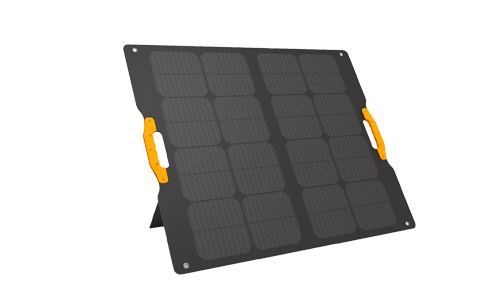
Q8) Does using solar extend how long it “lasts”?
Solar extends runtime by adding energy while you’re using it, but it doesn’t magically increase the battery’s stored capacity. It can reduce how deeply you cycle the battery day-to-day, which may help long-term wear for certain patterns.
Q9) Does cold weather reduce runtime?
It can. Batteries are less efficient in cold conditions, and some units may limit charging/discharging for protection. If winter camping matters, plan extra capacity.
Q10) When will I notice the battery aging?
Usually as a gradual drop in runtime. People notice it first in repeatable routines (same devices, same trip length). That’s why a simple “test load” every season is useful.
Q11) Is it better to run DC/USB instead of AC?
Often, yes. Running devices directly from USB-C/USB-A/12V can avoid some inverter losses. It won’t change the battery’s cycle rating, but it can make your runtime longer in practice.
Q12) What warranty should I look for?
A longer warranty usually signals confidence in long-term reliability—especially when paired with clear support policies. UDPOWER’s published warranty policy states a 5-year limited warranty: Warranty Policy.
9) Sources & further reading
Product specifications in this article are pulled from UDPOWER’s official product pages linked above. For battery storage and degradation background, here are a few readable references:
- Battery University (storage guidance): BU-702: How to Store Batteries
- Battery University (longevity behaviors): BU-808: How to Prolong Lithium-based Batteries
- NREL (why temperature/use patterns matter): Battery Lifespan (NREL)
- NREL SAM (calendar vs cycle degradation definitions): Battery life model overview





















![How to Live In The Woods [Complete Guide]](http://udpwr.com/cdn/shop/articles/Off-Grid_Cabin_Option_f6c94fe7-1ae7-4c3a-baf5-ed9fe684c832.png?v=1763523215&width=170)