

Air Bed Mattress Pump: Can a Generator Power an Air Mattress Pump?
If you rely on an air bed for camping, guests, or emergency sleeping space, the last thing you want is a flat mattress and no way to inflate it. Many people ask the same question: can a generator (or portable power station) power an air mattress pump safely and reliably?
The short answer: Yes. Most air bed pumps draw relatively low power, and even a small portable generator or power station can handle them with ease—as long as you size your power source correctly and follow basic safety rules.

Quick Answer: Generator + Air Mattress Pump

In most cases, you can absolutely power an air bed mattress pump with a generator or portable power station. That includes:
- Small plug-in AC pumps (normally 120V in the U.S.)
- Built-in pumps on many queen/king air beds
- 12V DC car-style air pumps (via an inverter or DC output)
For a typical U.S. air mattress pump:
- Running power: about 70–150 watts for most built-in or plug-in pumps
- Inflation time: roughly 2–5 minutes for a queen mattress
- Total energy per inflation: usually only 5–15 watt-hours (Wh)
That means a relatively small power source—like a compact UDPOWER portable power station—can handle many inflations on a single charge, with far less noise and hassle than a gas generator.
How Many Watts Does an Air Mattress Pump Use?

Every pump is a little different, but manufacturers and real-world measurements show most air bed pumps fall in a fairly narrow range. You can usually find the exact numbers on the pump’s label:
- Look for something like “Input: 120V ~ 60Hz 0.7A” on U.S. pumps.
- Convert to watts: Watts = Volts × Amps. In this example: 120V × 0.7A ≈ 84W.
| Pump Type | Typical Voltage | Typical Wattage Range* | Common Use |
|---|---|---|---|
| Battery-powered handheld pump | 6–12V DC | 20–50W | Small inflatables, single air beds, quick top-offs |
| 12V DC car socket pump | 12V DC | 50–100W | Car camping, inflating air beds from vehicle power |
| 120V AC plug-in pump or built-in air bed pump | 120V AC (U.S.) | 100–200W (most models) | Indoor guest beds, RV or cabin use |
| High-output AC air pump | 120V AC | 200–400W+ | Very large beds, fast fill, or multi-use inflators |
*Ranges based on published pump specs and independent testing from mattress and camping gear reviewers. Always check your own pump’s label.
Rule of thumb: If your pump is a standard U.S. plug-in model for a queen air bed, assuming 100–150W is usually safe unless the label says otherwise.
What Size Generator or Power Station Do You Need?

To decide if your generator (or portable power station) can run an air bed pump, you mainly care about:
- Continuous (running) watts – what the pump uses while it’s running
- Surge (starting) watts – a short spike when the motor starts
A simple sizing formula is:
Minimum power source watts ≈ Pump running watts × 1.25–1.5
That cushion covers startup spikes and keeps the generator or inverter from running at 100% load.
| Pump Running Watts | Recommended Minimum Continuous Watts | Example Gas Generator Size | Suitable UDPOWER Power Stations |
|---|---|---|---|
| Up to 100W | 150W+ | Any 300–500W inverter generator | C200 (200W), C400, C600, S1200 |
| 120–150W | 200–250W+ | 500–1000W inverter generator | C200 (200W), C400, C600, S1200 |
| 200–250W | 300–400W+ | 1000W+ generator | C400 (400W), C600, S1200 |
| 300–400W | 450–600W+ | 1000–2000W generator | C600 (600W), S1200 |
If you only need to inflate one or two air beds, you don’t need a huge generator. In fact, using a compact LiFePO₄ power station is usually simpler, quieter, and safer—especially if you’re inflating the mattress indoors or inside a tent.
Using a Portable Power Station Instead of a Gas Generator

Traditional gas generators can easily run an air bed pump, but they have drawbacks: noise, fumes, and outdoor-only operation. A modern portable power station gives you plug-and-play AC power with no gasoline, no exhaust, and very little noise.
UDPOWER’s LiFePO₄ lineup is particularly well-suited to low-power, short-duration loads like air mattress pumps:
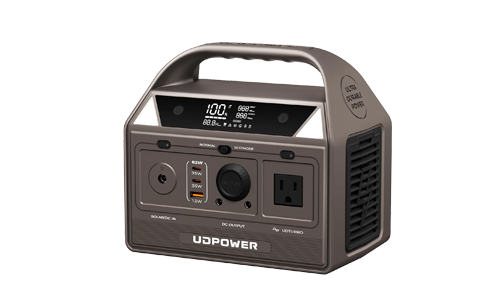
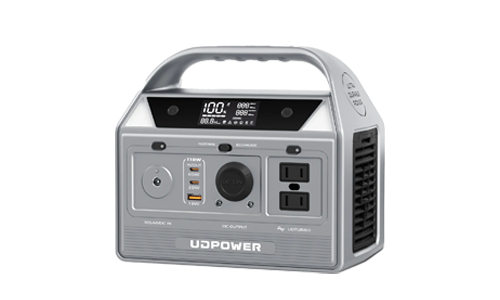
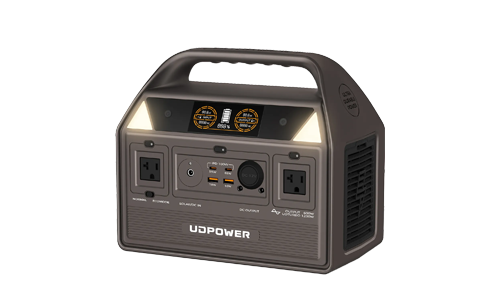
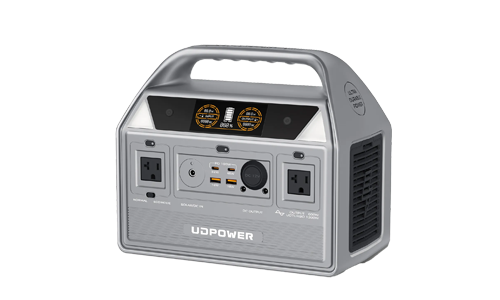
| Model | Picture | Battery Capacity | Rated AC Output | Peak Output | Best Use with Air Pumps |
|---|---|---|---|---|---|
| UDPOWER C200 |  |
192Wh LiFePO₄ | 200W | 400W surge | Occasional air bed inflations, light camping, guest room backup |
| UDPOWER C400 |  |
256Wh LiFePO₄ | 400W | 800W surge | Weekend trips, multiple beds, plus phones, lights, and small devices |
| UDPOWER C600 |  |
596Wh LiFePO₄ | 600W | 1200W surge | Family camping, RV use, running pumps plus fans, lights, and more |
| UDPOWER S1200 |  |
1,190Wh LiFePO₄ | 1,200W | 1,800W max (UDTURBO) | Air beds plus fridges, CPAP, routers, and home backup during outages |
All of these units use long-life LiFePO₄ battery cells (rated for thousands of cycles) and provide pure sine wave AC output, which is ideal for small motors and electronics.
How Long Will a Power Station Run an Air Mattress Pump?
Since air mattress pumps are used for just a few minutes at a time, it’s more helpful to think in terms of “number of inflations per full charge” than hours of runtime.
Below is an estimate using these assumptions:
- Pump power: either 120W (typical built-in pump) or 300W (strong, high-output pump)
- Inflation time: 4 minutes per full inflation
- Conversion efficiency from battery to AC: ≈85%
| UDPOWER Model | Battery Capacity (Wh) | Pump Wattage | Assumed Time per Inflation | Energy per Inflation (Wh) | Estimated Full Inflations per Charge* |
|---|---|---|---|---|---|
| C200 | 192Wh | 120W | 4 minutes | 8Wh | ≈20 inflations |
| C200 | 192Wh | 300W | 4 minutes | 20Wh | ≈8 inflations |
| C400 | 256Wh | 120W | 4 minutes | 8Wh | ≈27 inflations |
| C400 | 256Wh | 300W | 4 minutes | 20Wh | ≈11 inflations |
| C600 | 596Wh | 120W | 4 minutes | 8Wh | ≈63 inflations |
| C600 | 596Wh | 300W | 4 minutes | 20Wh | ≈25 inflations |
| S1200 | 1,190Wh | 120W | 4 minutes | 8Wh | ≈126 inflations |
| S1200 | 1,190Wh | 300W | 4 minutes | 20Wh | ≈51 inflations |
*These are approximate values. Real-world results depend on temperature, battery age, inverter efficiency, and the exact pump load.
Continuous runtime example: If, for some reason, you ran a 120W pump continuously, a C200 (192Wh) would provide roughly 1.3–1.4 hours of runtime, while a C600 (596Wh) would provide roughly 4+ hours.
Safety Tips: Running a Pump on a Generator
Whether you use a gas generator or a portable power station, keep these safety guidelines in mind:
| Topic | Best Practice |
|---|---|
| Carbon monoxide (CO) | Gas generators must stay outdoors, far from windows, doors, and vents. Never run a fuel-powered generator inside a tent, RV, or home. |
| Indoor use | For inflating an air bed indoors, use a battery power station like UDPOWER C200/C400/C600/S1200 instead of a gas generator. |
| Extension cords | Use a grounded, outdoor-rated cord sized properly for the load and distance. Avoid daisy-chaining multiple cords. |
| Wet conditions | Keep pump, power station, and generators off wet ground. Avoid using them in rain without proper weather protection. |
| Overloading | Make sure total load (pump + other devices) stays below the generator’s or power station’s rated wattage. |
| Surge protection | Give yourself 25–50% headroom above the pump’s running watts to handle startup surges comfortably. |
Step-by-Step: How to Inflate an Air Bed with a Generator or Power Station
- Read the pump label. Confirm the input voltage (usually 120V AC in the U.S.) and current or wattage.
- Check your power source rating. Make sure your generator or power station’s rated watts exceed the pump’s watts by at least 25–50%.
-
Place the generator or power station correctly.
- Gas generator: outside in a well-ventilated area, away from windows and doors.
- UDPOWER power station: on a stable, dry surface near the bed or just outside the tent.
- Connect with a proper cord. Use a grounded extension cord if needed; avoid running cords where people will trip over them.
- Turn on the power source. Start the generator and let it stabilize, or power on the UDPOWER unit and switch on the AC output.
- Plug in the air pump. Insert the plug firmly into the AC outlet.
- Inflate the mattress. Turn on the pump and monitor inflation. Most queen air beds fill in 2–5 minutes.
- Shut everything down. Turn off the pump, unplug it, then switch off the AC output or shut down the generator once you’re done.
FAQs About Generators and Air Mattress Pumps
Can I use a small 1000W generator to run an air mattress pump?
Yes. A 1000W inverter generator is more than enough for a typical 100–150W air bed pump, and it will be running at only a small fraction of its capacity. Just remember to keep it outdoors and away from sleeping areas.
Is a portable power station better than a gas generator for air beds?
For air beds specifically, a portable power station is usually more convenient. Units like the UDPOWER C200, C400, C600, or S1200 are quiet, produce no exhaust, and can safely be used indoors. Gas generators make more sense if you also need to run large, continuous loads like RV air conditioners or power tools.
Can I power a 12V car air pump from a portable power station?
Yes. Many portable power stations—including the UDPOWER C-Series and S1200—offer a 12V car socket. You can plug a 12V air pump directly into that port without needing an additional inverter, as long as the pump’s current draw is within the port’s rating.
Will running an air pump damage my power station?
Not if you stay within the rated power. Air pumps are short-duration loads. As long as the pump’s wattage (and brief startup surge) are below the power station’s limits—for example, a 120W pump on a 200W UDPOWER C200—you are using the product as intended.
What if my air bed pump doesn’t list watts, only amps?
Use the formula Watts = Volts × Amps. For a U.S. pump labeled “120V ~ 0.65A,” the wattage is approximately 120 × 0.65 ≈ 78W. That’s easily handled by any UDPOWER model.
Can a solar generator keep my air bed ready all weekend?
Yes. A “solar generator” is just a power station paired with solar panels. For example, pairing a UDPOWER C600 or S1200 with compatible foldable panels lets you recharge during the day, so you can inflate beds, run lights, and top off electronics through a full multi-day camping trip.
Related Articles


