

How Long Does a 5000mAh Battery Last?
Last updated: August 11, 2026
There is no single number of hours that a 5000mAh battery will last. If a device draws an average of 500mA at the same battery voltage, the ideal runtime is about 10 hours. At 1,000mA, it is about 5 hours. A 5000mAh battery rated at 3.7V stores about 18.5Wh, so a constant 5W load has an ideal upper-limit runtime of about 3.7 hours, while a 10W load is about 1.85 hours.
Smartphones are different because their power consumption constantly changes. A 5000mAh phone can therefore last more than a day during normal use even though it may drain much faster during gaming, navigation, hotspot use, video recording, or other demanding tasks.
The most important point is this: 5000mAh tells you electrical charge, not runtime by itself. You also need battery voltage and the device's actual average power consumption.

The number “5000mAh” appears on smartphones, power banks, rechargeable lights, cameras, battery packs, and many other electronics. It looks like a simple capacity rating, but using it as a direct prediction of battery life is one of the most common battery mistakes.
This guide shows you how to calculate 5000mAh battery life correctly, why two 5000mAh batteries can last very different amounts of time, and how to estimate both device runtime and power-bank charging capacity without relying on misleading rules of thumb.
What Does 5000mAh Mean?
mAh stands for milliampere-hour. A 5000mAh battery has a nominal charge capacity of 5,000 milliamp-hours, which is the same as 5 amp-hours (Ah).
In a simplified ideal calculation, that means the battery could supply:
| Average Current Draw | Ideal Runtime | Simple Calculation |
|---|---|---|
| 100mA | 50 hours | 5000 ÷ 100 |
| 250mA | 20 hours | 5000 ÷ 250 |
| 500mA | 10 hours | 5000 ÷ 500 |
| 1,000mA | 5 hours | 5000 ÷ 1000 |
| 2,000mA | 2.5 hours | 5000 ÷ 2000 |
| 5,000mA | 1 hour | 5000 ÷ 5000 |
These are ideal numbers. Real batteries are affected by discharge rate, voltage changes, battery age, temperature, cutoff voltage, electronics inside the device, and energy conversion.
How Many Hours Does a 5000mAh Battery Last?
For a quick answer, start with the device's average current or power draw rather than guessing from the battery capacity alone.
If the load is expressed in milliamps at the battery voltage:
If the device's consumption is expressed in watts, convert the battery to watt-hours first.
Then:
The result is an energy-based upper estimate, not a guarantee. Real usable runtime normally falls below the ideal calculation.
Method 1: Calculate Runtime From Current Draw
The easiest method is appropriate when you know the device's average current draw and it is measured at the same voltage as the battery.
5000mAh ÷ 750mA = approximately 6.67 hours
That is the theoretical runtime. A real device may shut down sooner because batteries do not deliver every last milliamp-hour under every operating condition.
One detail matters more than it may seem: use average current, not maximum current. A device that briefly reaches 2A but averages only 500mA over an hour should not be calculated as though it consumes 2A continuously.
Method 2: Calculate Runtime From Watts
Watts are generally more useful when comparing different devices, battery voltages, power banks, and larger battery systems.
First convert the battery to watt-hours. If your battery label says 5000mAh at 3.7V:
| Continuous Load | Ideal Runtime at 3.7V | What the Number Means |
|---|---|---|
| 0.5W | 37 hours | Very low continuous power draw |
| 1W | 18.5 hours | Low-power electronics |
| 2W | 9.25 hours | Light continuous load |
| 3W | 6.17 hours | Moderate small-device load |
| 5W | 3.7 hours | Higher continuous small-device load |
| 10W | 1.85 hours | Heavy load for an 18.5Wh battery |
| 15W | 1.23 hours | Very demanding for this battery size |
| 20W | 0.93 hour | Less than one hour ideally |
These figures are mathematical upper estimates based on a 5000mAh battery rated at 3.7V. They are not promised real-world runtimes.
If you regularly work with mAh and Wh ratings, see the UDPOWER mAh to Wh conversion guide for additional formulas and examples.
Why Voltage Changes the Answer
This is the part many simple battery-life explanations leave out: 5000mAh does not always represent the same amount of stored energy.
A battery's energy depends on both charge capacity and voltage.
| Battery Rating | Voltage | Calculated Energy | Relative Energy |
|---|---|---|---|
| 5000mAh | 3.7V | 18.5Wh | Baseline example |
| 5000mAh | 3.85V | 19.25Wh | Slightly more energy |
| 5000mAh | 5V | 25Wh | 35% more Wh than 3.7V |
| 5000mAh | 7.4V | 37Wh | Twice the Wh of 3.7V |
| 5000mAh | 12V | 60Wh | More than three times the Wh of 3.7V |
This is why comparing a 5000mAh phone battery directly with a 5000mAh battery pack operating at a different voltage can be misleading.
For cross-device comparisons, watt-hours are usually the better number. UDPOWER also explains this distinction in its guide to calculating watt-hours of a power bank.
How Long Does a 5000mAh Phone Battery Last?
For a smartphone, there is no reliable universal conversion such as “5000mAh equals 10 hours.” A phone constantly moves between different power states.
When the screen is off, power consumption can be relatively low. Turn on a bright display, camera, navigation, hotspot, gaming, or poor-signal cellular connection and consumption can rise sharply. The average over the entire day is what ultimately determines battery life.
Real phones show why mAh alone is not enough
Manufacturer specifications provide a useful illustration. Phones with roughly the same 5000mAh capacity can still have different stated battery-life figures because the display, modem, processor, software, test conditions, and usage pattern are different.
| Example | Battery Capacity | Manufacturer Battery-Life Statement | Source |
|---|---|---|---|
| Samsung Galaxy A57 5G | 5000mAh | Up to 29 hours | Samsung |
| Moto G Power 2025 | 5000mAh | Over a day of battery life | Motorola |
| Google Pixel 9a | 5100mAh typical; 5000mAh minimum | 30+ hours under Google's stated test conditions | Google Store |
Manufacturer battery-life claims use different testing methods and should not be treated as head-to-head benchmark results. The useful takeaway is that battery capacity is only one part of overall phone runtime.
A more useful way to think about phone battery life
| Usage Pattern | Typical Effect on Runtime | Why |
|---|---|---|
| Phone mostly idle | Longest | Display and processor spend more time in low-power states |
| Messaging and light browsing | Relatively long | Short periods of active screen and processor use |
| Video streaming | Shorter | Display, network connection, processor and audio remain active |
| Navigation | Much shorter | Screen, GPS and cellular data may operate continuously |
| Mobile hotspot | Much shorter | Cellular modem and Wi-Fi radio stay active |
| Gaming | Often among the shortest | CPU, GPU, display and network may all operate at high load |
| Camera and video recording | Shorter | Camera sensor, display and image processing remain active |
How Long Does a 5000mAh Power Bank Last?
A 5000mAh power bank should not be treated exactly like a 5000mAh phone battery.
The number printed prominently on a power bank usually describes its internal battery capacity. The power bank then has to convert that stored battery energy to the USB output voltage required by your phone or other device.
That conversion is not lossless. Additional energy is also lost in cables, charging electronics and the receiving device.
This is also why a 5000mAh power bank does not automatically provide one full charge to a phone with a 5000mAh battery.
How Many Times Can a 5000mAh Power Bank Charge a Phone?
The safest way to answer this is to compare energy in watt-hours rather than simply dividing one mAh number by another.
Suppose the power bank contains:
Now compare that with several phone battery sizes at an illustrative 3.85V nominal voltage:
| Phone Battery | Example Voltage | Phone Battery Energy | Absolute Energy Ceiling Before Losses |
|---|---|---|---|
| 3000mAh | 3.85V | 11.55Wh | About 1.60 charges |
| 4000mAh | 3.85V | 15.4Wh | About 1.20 charges |
| 5000mAh | 3.85V | 19.25Wh | About 0.96 charge |
| 6000mAh | 3.85V | 23.1Wh | About 0.80 charge |
These are absolute energy ceilings before conversion losses. Real charging results will be lower.
The 5000mAh-phone example is especially useful. A 5000mAh power bank at 3.7V stores 18.5Wh, while a hypothetical 5000mAh phone battery at 3.85V stores 19.25Wh. The power bank already contains less total energy before any charging loss occurs.
That is why the statement “5000mAh power bank = one full charge for a 5000mAh phone” should never be assumed automatically.
What Makes a 5000mAh Battery Drain Faster?
1. Higher average power consumption
This has the biggest direct effect. Double the continuous power consumption and ideal runtime is approximately cut in half.
2. Screen brightness and refresh rate
On phones and tablets, keeping a large display bright for hours requires substantially more energy than leaving the device mostly idle.
3. Gaming, video processing and other heavy workloads
Demanding applications keep more processing hardware active and therefore increase average battery consumption.
4. Cellular signal quality
A phone that spends long periods maintaining a weak cellular connection can consume more energy than one operating under better network conditions.
5. GPS, hotspot and background connectivity
Location services, continuous navigation, hotspot use, synchronization and other radio activity can keep hardware active even when you are not directly interacting with the device.
6. Temperature
Battery performance is affected by temperature. Very hot or very cold conditions can reduce practical performance and are also undesirable for long-term battery health.
7. Battery age
Rechargeable batteries gradually lose usable capacity as they age. A device that originally contained a 5000mAh battery may therefore deliver noticeably less runtime after substantial use.
8. Power conversion
Conversion becomes especially important with power banks and battery packs. Energy may pass through voltage converters, USB electronics, cables and the receiving device's charging system before reaching its battery.
How to Estimate Your Own 5000mAh Battery Runtime
Instead of relying on a generic “5000mAh lasts X hours” answer, use this process.
- Find the capacity. Confirm that the battery is actually rated at 5000mAh.
- Find the nominal voltage. Do not assume every 5000mAh battery uses the same voltage.
- Convert to watt-hours. Use mAh × V ÷ 1,000.
- Find the average load. Average watts are more useful for runtime than a brief peak consumption figure.
- Calculate the ideal upper limit. Divide battery Wh by average watts.
- Allow for real-world losses. Conversion, electronics, cutoff voltage, temperature and battery condition can all reduce usable runtime.
- Measure when accuracy matters. For externally powered USB devices, a USB power meter can show actual consumption. For AC-powered equipment, use an appropriate plug-in power meter.
Battery energy: 5000 × 3.7 ÷ 1,000 = 18.5Wh
Ideal runtime: 18.5Wh ÷ 3W = approximately 6.17 hours
Treat 6.17 hours as the mathematical ceiling. Your actual result can be lower depending on the battery and the way the device receives power.
When 5000mAh Is Not Enough
A 5000mAh battery makes sense when your goal is to keep one small device running. Once you need to recharge several devices, run a laptop for extended periods, or power equipment that requires an AC outlet, it becomes more useful to shop in watt-hours rather than mAh.
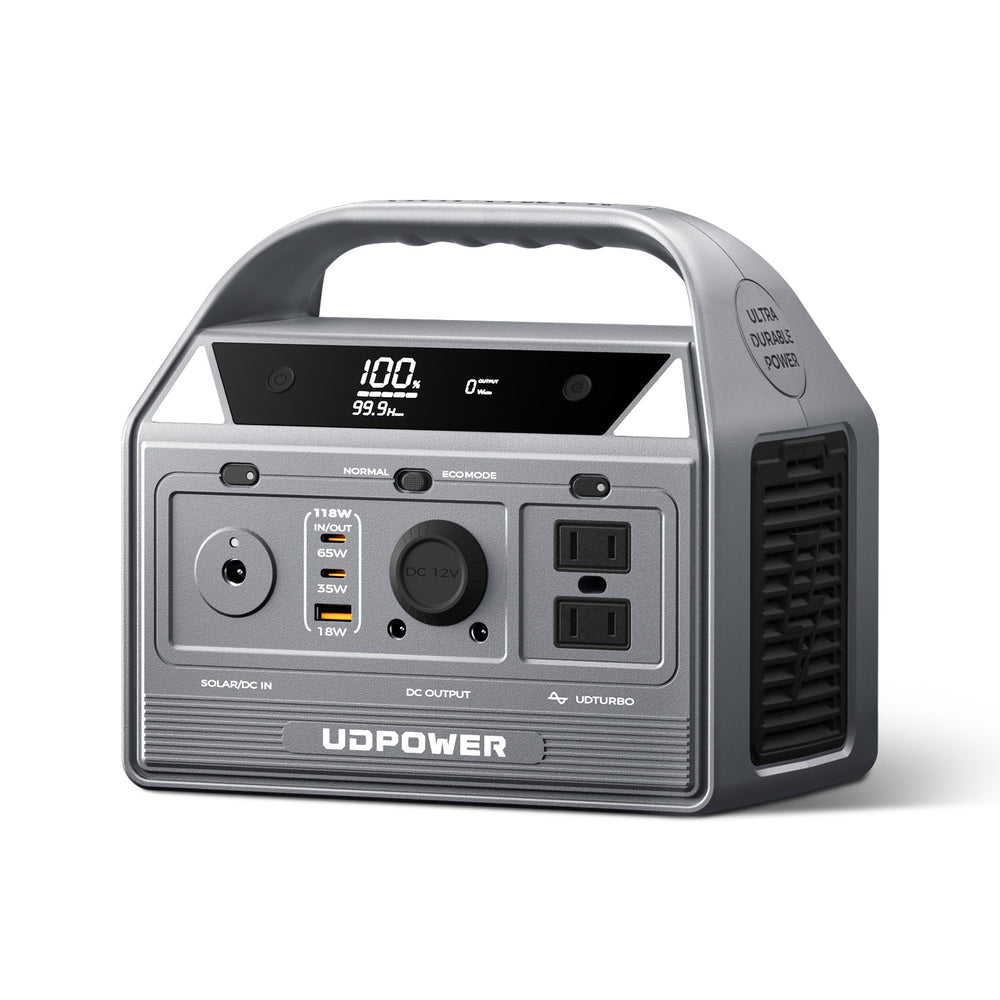
UDPOWER C400: A Practical Step Up From Small Battery Packs
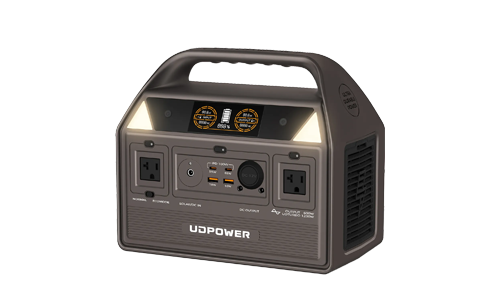
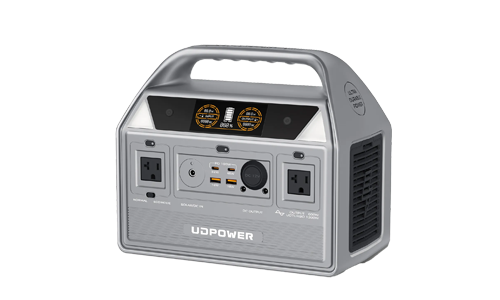
The UDPOWER C400 Portable Power Station stores 256Wh of energy and provides 400W rated AC output, giving you a very different class of backup power from a small 5000mAh battery.
- Battery capacity: 256Wh LiFePO4
- Rated AC output: 400W
- Peak output: up to 800W
- USB-C: up to 65W input/output
- Solar input: up to 150W
- Weight: approximately 6.88 lb
- Battery design: 4,000+ cycles
- Warranty: 5 years
To understand the scale, a 5000mAh battery rated at 3.7V contains about 18.5Wh. Using UDPOWER's 90% planning factor, the C400's 256Wh battery represents approximately 230Wh of usable planning energy.
That does not mean every phone will receive exactly 12.4 full charges. Cable losses, phone charging losses, battery condition and charging behavior still affect the final result. The comparison is intended to show the difference in energy scale.
View UDPOWER C400If you need substantially longer runtime or higher-power appliances, compare capacities and output ratings in the UDPOWER Portable Power Station collection.
Can You Take a 5000mAh Battery on a Plane?
A 5000mAh lithium-ion battery is normally far below the common 100Wh passenger-aircraft threshold when it operates at typical small-battery voltages.
For example:
The U.S. Federal Aviation Administration states that lithium-ion batteries are generally limited to 100Wh per battery without special airline approval. Spare lithium-ion batteries and power banks must be carried in carry-on baggage and protected from damage and short circuit.
Always check your airline's current rules before traveling because airline requirements and battery handling rules can vary.
Source: Federal Aviation Administration — Airline Passengers and Batteries
Common 5000mAh Battery Calculation Mistakes
Mistake 1: Assuming every 5000mAh battery stores the same energy
A 5000mAh battery at 3.7V stores 18.5Wh. A 5000mAh battery at 12V stores 60Wh. The mAh number is the same, but the total energy is very different.
Mistake 2: Assuming a 5000mAh power bank fully charges a 5000mAh phone once
Battery voltages may differ, and energy is lost while converting and transferring power. Compare watt-hours rather than mAh alone.
Mistake 3: Using charger wattage as device consumption
A phone supporting a 30W charger does not continuously consume 30W whenever it operates. Charging power and operating power are different measurements.
Mistake 4: Using peak power instead of average power
Runtime depends mostly on energy consumed over time. A short spike to 10W does not mean the device averages 10W for an entire hour.
Mistake 5: Treating the theoretical result as guaranteed runtime
Battery specifications are useful for planning, but actual results are affected by temperature, battery health, voltage conversion, device electronics and cutoff behavior.
Mistake 6: Confusing battery runtime with charging time
A battery may last 10 hours but recharge in two hours, or last three hours and take longer than that to recharge. These are separate calculations. See how to calculate battery charging time if recharge time is what you need.
5000mAh vs Larger Batteries: A Quick Perspective
| Battery | Approximate Stored Energy | Best Way to Think About It |
|---|---|---|
| 5000mAh @ 3.7V | 18.5Wh | Phone or compact personal-device scale |
| 10,000mAh @ 3.7V | 37Wh | Larger personal power-bank scale |
| 20,000mAh @ 3.7V | 74Wh | High-capacity portable USB charging scale |
| UDPOWER C400 | 256Wh | Multi-device and small AC appliance backup |
| 500Wh battery system | 500Wh | Longer-duration portable backup |
If you are moving from phone-sized batteries into larger backup systems, the next useful concept is watt-hour runtime. See how long a 500Wh battery lasts for larger-device examples.
Frequently Asked Questions About 5000mAh Batteries
How long does a 5000mAh battery last in hours?
It depends on the average load. If the device draws 500mA at the same battery voltage, the ideal runtime is about 10 hours. At 1,000mA, it is about 5 hours. If a 5000mAh battery is rated at 3.7V, it stores about 18.5Wh, giving an ideal runtime of about 3.7 hours at a constant 5W load.
How long does a 5000mAh phone battery last?
A 5000mAh smartphone can often provide more than a full day of typical use, but there is no universal runtime. Display brightness, processor efficiency, cellular signal, gaming, video, navigation, hotspot use and background activity can dramatically change battery life.
How many watt-hours is a 5000mAh battery?
You need the battery voltage. At 3.7V, 5000mAh equals 18.5Wh. At 3.85V it equals 19.25Wh, and at 5V it equals 25Wh. Use Wh = mAh × volts ÷ 1,000.
How long will a 5000mAh battery last at 1 amp?
If the 1A load is measured at the same relevant voltage as the 5000mAh battery, the theoretical runtime is about 5 hours because 5000mAh ÷ 1000mA = 5 hours. Real runtime may be shorter.
How long will a 5000mAh battery last at 2 amps?
Under an ideal same-voltage calculation, a continuous 2A or 2000mA load gives about 2.5 hours: 5000mAh ÷ 2000mA = 2.5 hours. Actual battery performance can be lower.
How long will a 5000mAh 3.7V battery last at 5 watts?
A 5000mAh battery at 3.7V stores about 18.5Wh. Dividing 18.5Wh by 5W gives an ideal upper-limit runtime of about 3.7 hours. Real runtime may be shorter because of conversion losses, cutoff voltage and battery condition.
Can a 5000mAh power bank fully charge a 5000mAh phone?
Not necessarily. The power bank and phone may use different battery voltages, and energy is lost during voltage conversion and charging. Compare their watt-hour ratings rather than assuming that equal mAh ratings mean one complete charge.
Is 5000mAh a good battery capacity?
For a smartphone or small portable device, 5000mAh can provide substantial battery capacity. Whether it is enough depends on the device's power consumption and how long you need it to operate. For laptops, multiple devices or AC appliances, watt-hour capacity becomes more useful than mAh.
Does a higher mAh battery always last longer?
If voltage, device efficiency, battery chemistry and usage are otherwise similar, a higher mAh capacity generally provides more runtime. However, comparing mAh across batteries with different voltages can be misleading, so watt-hours are better for cross-device comparisons.
Does fast charging make a 5000mAh battery drain faster?
Charging speed and operating battery drain are separate issues. A higher-wattage compatible charger can reduce recharge time, but normal runtime is primarily determined by usable battery energy and the device's power consumption.
Can I take a 5000mAh power bank on a plane?
A typical 5000mAh lithium-ion power bank is well below the FAA's 100Wh threshold. For example, 5000mAh at 3.7V is about 18.5Wh. In the United States, spare lithium batteries and power banks must be carried in carry-on baggage and protected from damage and short circuit. Always confirm current airline rules before travel.
When should I choose a portable power station instead of a 5000mAh battery?
Consider a portable power station when you need to charge several devices, run laptops for extended periods, use AC-powered equipment, or maintain backup power during camping or an outage. A product such as the UDPOWER C400 provides 256Wh of battery capacity and 400W rated AC output, which is a much larger energy class than a small 5000mAh battery.
Bottom Line
So, how long does a 5000mAh battery last? The correct answer depends on what is drawing power from it.
At the same voltage, divide 5000mAh by average current in mA. If you know the device's wattage instead, convert the battery to watt-hours first. A 5000mAh battery at 3.7V contains about 18.5Wh, which would theoretically power a 2W load for about 9.25 hours, a 5W load for about 3.7 hours, or a 10W load for about 1.85 hours.
For smartphones, those simple calculations do not translate directly into screen-on hours because phone power consumption changes every second. For power banks, voltage conversion and charging losses mean the advertised mAh should not be treated as the exact amount that reaches your phone.
Once you understand those distinctions, 5000mAh stops being a vague marketing number and becomes something you can actually use to estimate battery life.
Need More Power Than 5000mAh?
Compare battery capacity in watt-hours, check the wattage of the devices you actually need to run, and choose a power source with enough energy and output headroom for your situation.
View Portable Power Stations View UDPOWER C400 Get the mAh to Wh GuideRelated Articles


