

How Many Amps Is a Car Battery? (Real Numbers, Not Myths)
When people search for “How many amps is a car battery?”, they usually want to know two things: how much power it can store and how much power it can deliver at once. The problem is that a car battery doesn’t have just one “amp” number – it has several: amp-hours (Ah), cold cranking amps (CCA), and sometimes reserve capacity.
In this guide, we’ll break down what those numbers really mean in plain English, show typical amp ratings for modern 12 V car batteries, and walk through easy runtime examples. We’ll also compare using a traditional car battery vs. a dedicated portable power station (like UDPOWER) if you’re trying to power devices off-grid, during camping, or in a blackout.

- 1. What Does “How Many Amps Is a Car Battery?” Really Mean?
- 2. Typical Car Battery Amp Ratings (Ah, CCA, RC)
- 3. Amp-Hours (Ah): How Many Amps Over Time?
- 4. Cold Cranking Amps (CCA): Instant Starting Power
- 5. Using a Car Battery as a Power Source (With Runtime Examples)
- 6. Car Battery vs. Portable Power Station (UDPOWER)
- 7. How to Check How Many Amps Your Car Battery Has
- 8. FAQs About Car Battery Amps
- 9. References & Further Reading
1. What Does “How Many Amps Is a Car Battery?” Really Mean?

A 12 V car battery is usually rated in more than one way. When someone asks “how many amps is it,” they might be referring to:
- Amp-hours (Ah) – how much current a battery can deliver over time. This tells you about capacity (for example, 50 Ah).
- Cold cranking amps (CCA) – how many amps it can deliver for 30 seconds at very low temperatures without dropping below a certain voltage. This tells you about starting power.
- Reserve capacity (RC) – how many minutes the battery can supply a small load (often 25 A) at 80 °F before dropping to 10.5 V.
| Rating | Unit | What It Measures | Typical Range for Car Batteries* |
|---|---|---|---|
| Amp-hours (Ah) | Ah | How many amps the battery can (in theory) supply over one hour at 12 V. Used more often on deep-cycle batteries, but many car batteries have an Ah spec. | ~40–70 Ah for most modern 12 V car batteries |
| Cold cranking amps (CCA) | A | The current the battery can deliver for 30 s at about 0 °F (−18 °C) before the voltage drops too low to start the engine. | ~400–850 CCA depending on vehicle and climate |
| Reserve capacity (RC) | Minutes | How long the battery can deliver 25 A at 80 °F before dropping to 10.5 V. Helpful for understanding how long it can run electrical accessories. | ~80–140 minutes for many mid-size batteries |
In other words, there is no single “amp number.” A typical 12 V car battery might be rated around 50 Ah and 600–700 CCA, but the exact values depend on the group size and brand.
*Based on common 12 V automotive batteries in group sizes like H5/H6/H7; real values vary by manufacturer.
2. Typical Car Battery Amp Ratings (Ah, CCA, RC)

Let’s look at some real-world examples. If you browse mainstream automotive batteries in the U.S., you’ll often see specs like:
- 12 V, 60 Ah battery with ~680 CCA
- 12 V, 70 Ah battery with ~760 CCA
- Group 48 battery with ~615 CCA and about 95 minutes reserve capacity
These numbers line up with most battery guides that put the average car battery around 50 Ah, with a practical range of roughly 40–70 Ah depending on group size and vehicle type.
| Example Battery | Voltage | Capacity (Ah) | Approx. CCA | Reserve Capacity (RC) |
|---|---|---|---|---|
| Compact sedan battery (group H5 / 47) | 12 V | ~60 Ah | ~680 CCA | ~90 min |
| Mid-size car/SUV battery (group H6 / 48) | 12 V | ~70 Ah | ~615–760 CCA | ~95–120 min |
| Large SUV/truck battery (group H7 / 94R) | 12 V | ~75–90 Ah | ~750–850 CCA | ~120–140 min |
That’s why a “typical” answer to “how many amps is a car battery?” is: about 50 Ah and 500–700 CCA for a mid-size 12 V automotive battery. Your exact numbers will be printed on the battery label or listed in the owner’s manual.
3. Amp-Hours (Ah): How Many Amps Over Time?
Amp-hours (Ah) tell you how much current a battery can deliver over time. If a battery is rated at 50 Ah, in simple terms it can supply:
- 50 A for 1 hour, or
- 5 A for 10 hours, or
- 2.5 A for 20 hours
In practice, batteries don’t behave perfectly linearly and you don’t want to drain a starter battery all the way down. But Ah is still a useful ballpark for energy.
Since most car batteries are 12 V, you can also convert Ah into watt-hours (Wh), which makes it easier to compare them to portable power stations:
Wh ≈ 12 V × Ah
| Battery Rating | Approx. Energy (Wh) | Recommended Usable Energy* (Wh) | What That Means in Plain English |
|---|---|---|---|
| 40 Ah car battery | 40 × 12 V ≈ 480 Wh | ~240 Wh (50% depth of discharge) | Avoid draining much below 50% if you still want reliable starting and long life. |
| 50 Ah car battery (typical) | 50 × 12 V ≈ 600 Wh | ~300 Wh usable | Common in many passenger cars; good for starting, not ideal as a house battery. |
| 70 Ah car battery | 70 × 12 V ≈ 840 Wh | ~420 Wh usable | More capacity, often found in larger vehicles with more electrical load. |
*Starter batteries are not designed for deep cycling; routinely using more than ~50% of their capacity can shorten their life.
4. Cold Cranking Amps (CCA): Instant Starting Power
If you pop the hood and look at your battery label, there’s a good chance the biggest number on it is CCA.
Cold cranking amps (CCA) measure how many amps a 12 V battery can deliver for 30 seconds at about 0 °F (−18 °C) while maintaining a minimum voltage high enough to start a typical engine. It’s all about short bursts of very high current, not long-term runtime.
| Vehicle / Use Case | Typical CCA Range | What It Tells You |
|---|---|---|
| Small gasoline car (mild climate) | ~400–600 CCA | Enough to crank a small engine in moderate U.S. weather conditions. |
| Mid-size sedan / crossover | ~550–750 CCA | Extra margin for more electronics and occasional cold starts. |
| Truck / SUV in cold climates | ~700–850+ CCA | Higher CCA helps ensure starts in very cold temperatures. |
Because CCA is measured at very low temperature, it’s especially important if you live in a northern U.S. state where winter starting is a concern. If you mostly drive in warm climates, Ah and reserve capacity may matter more for your day-to-day electrical needs.
5. Using a Car Battery as a Power Source (With Runtime Examples)

Many people ask “how many amps is a car battery” because they want to run lights, a small inverter, or a 12 V fridge off the battery, especially during camping or power outages.
You can approximate runtime with this simple formula:
Runtime (hours) ≈ Usable Wh ÷ Load Watts
For a 50 Ah, 12 V car battery:
- Nominal energy ≈ 50 × 12 V = 600 Wh
- Usable energy at 50% depth of discharge ≈ 300 Wh
| Device | Approx. Power | Approx. Current at 12 V | Estimated Runtime on 50 Ah Car Battery* |
|---|---|---|---|
| Small LED light strip | 10 W | ~0.8 A | ≈30 hours |
| 12 V compressor fridge (eco mode) | 30 W | ~2.5 A | ≈10 hours |
| 12 V fan | 60 W | ~5 A | ≈5 hours |
| Small inverter + laptop | 120 W | ~10 A | ≈2.5 hours |
*These are ballpark figures assuming about 300 Wh usable and ignoring inverter losses. Actual runtimes will be shorter once you include conversion losses and aging.
Important safety notes
- Starter batteries are not designed for regular deep discharges – doing this often will shorten their life.
- Running heavy loads while the engine is off can leave you with a dead battery that won’t start the car.
- Indoors, never use a running vehicle as a “generator” – exhaust fumes are deadly.
- For frequent off-grid use, a deep-cycle battery or portable power station is a better tool.
6. Car Battery vs. Portable Power Station (UDPOWER)

If your goal is to power devices (lights, fans, CPAP, small appliances) rather than just start an engine, a dedicated portable power station is usually more convenient and safer than improvising with a car battery.
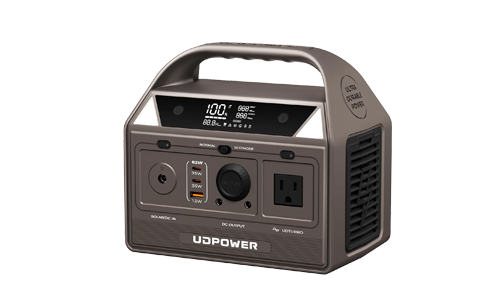
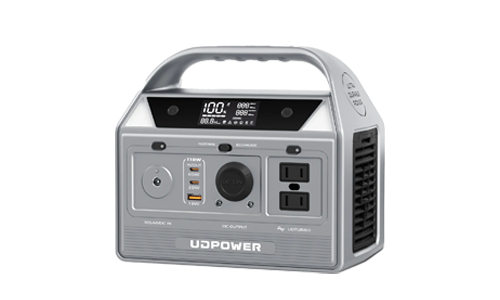
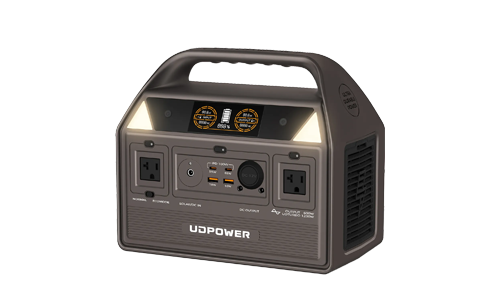
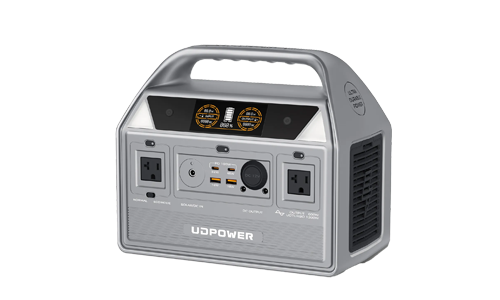
UDPOWER’s LiFePO4 portable power stations list their capacity directly in watt-hours (Wh) and are built for repeated charging and discharging, with thousands of cycles. Below is a simple comparison between a typical 50 Ah car battery and several UDPOWER models using official specifications from udpwr.com.
| Battery / Power Station | Picture | Nominal Energy | Recommended Usable Energy* | Approx. Runtime @ 60 W Load | Best Use Cases |
|---|---|---|---|---|---|
| 50 Ah 12 V car battery |  |
≈600 Wh | ~300 Wh (≈50% DoD) | ≈5 hours | Starting the engine; occasional emergency use for small loads if carefully managed. |
| UDPOWER C200 |  |
192 Wh LiFePO4 | ~170 Wh (≈90% DoD) | ≈2.8 hours | Hand-sized backup for phones, laptops, and small DC loads on short trips. |
| UDPOWER C400 |  |
256 Wh LiFePO4 | ~230 Wh | ≈3.8 hours | Day trips, light camping; can also act as a car jump starter with pure sine AC output. |
| UDPOWER C600 |  |
596 Wh LiFePO4 | ~540 Wh | ≈9.0 hours | Weekend camping, small 12 V fridge, fans, lights, and electronics. |
| UDPOWER S1200 |  |
1,190 Wh LiFePO4 | ~1,070 Wh | ≈17.8 hours | Longer outages; can run mini fridges, routers, CPAP machines, and multiple devices at once. |
*Usable energy estimates assume ~50% depth of discharge for starter batteries and ~90% for LiFePO4 power stations. Actual runtimes will vary based on load, inverter losses, and conditions.
The takeaway: a car battery might look like it has similar watt-hours to a small power station, but it is not designed for repeated deep discharge. If you regularly need off-grid power for camping or emergency backup, a portable power station such as the UDPOWER C600 or S1200 is a more robust, plug-and-play solution than relying on your starter battery.
7. How to Check How Many Amps Your Car Battery Has

To find your battery’s actual amp ratings, check these places:
- On the battery label: Look for markings like “50 Ah,” “600 CCA,” or “RC 95 min.” These may be molded into the case or printed on a sticker.
- In your owner’s manual: Many manuals list the required group size, CCA, and sometimes Ah.
- On the manufacturer’s website: Search the part number or group size for detailed specs.
- With a battery tester: Many auto parts stores in the U.S. can test your battery’s actual CCA and state of health for free.
Once you know your battery’s Ah and CCA ratings, you can estimate runtime for small loads and make better decisions about whether you need a separate deep-cycle battery or portable power station for your setup.
8. FAQs About Car Battery Amps
How many amp-hours is a typical car battery?
Most modern 12 V car batteries fall in the 40–70 Ah range, with an average around 50 Ah for many passenger vehicles. The exact number depends on the battery group size and the vehicle’s electrical requirements.
How many amps does a car battery use to start the engine?
Starting an engine can draw several hundred amps for a few seconds. That’s why the CCA rating is so high (often 400–800 A). This is a short, intense burst of current rather than something the battery delivers continuously.
Can I use a car battery like a deep-cycle battery?
You can temporarily power devices from a car battery, but it’s not designed to be deeply discharged on a regular basis. Repeated deep discharges can dramatically shorten its lifespan. For frequent off-grid use, a deep-cycle battery or a LiFePO4 portable power station (like UDPOWER’s C-Series or S1200) is a better choice.
How many amps can I safely draw from a car battery?
In theory, a car battery can supply very high current (hundreds of amps) for short periods. For longer, steady draws, it’s better to stay in the 5–20 A range and avoid fully discharging the battery, especially if the engine is off. Always consider the wiring, fuses, and inverter ratings in your setup as well.
Is a portable power station safer than using a car battery and inverter?
For most people, yes. A portable power station integrates the battery, battery management system (BMS), inverter, and DC outputs in one unit with built-in protections. It’s easier to move, charge from solar, and use indoors compared with DIY setups that rely on a car battery and separate inverter.
9. References & Further Reading
- Advanced Battery Supplies – What does the Ah number mean on a car battery?
- RELiON Battery – Cold Cranking Amps Explained
- Marshall Batteries – What are cold cranking amps? CCA meaning explained
- Bioenno Power – 12 Volt Battery Guide
- UDPOWER – Portable Power Stations (official specs and capacities)
Always follow your vehicle manufacturer’s recommendations for battery type and specifications, and consult a qualified technician if you’re unsure.
Related Articles


