

Solar Emergency Generator: Everything You Need to Know
Last updated: September 7, 2026
A solar emergency generator can be one of the most useful pieces of backup equipment in a power outage, but only when the battery, inverter, solar input, and appliances are matched correctly. Buying a large battery without calculating your daily energy use can leave you with too little power overnight. Buying too little solar can leave that battery empty on the second day of an outage.
A solar emergency generator is a battery-based portable power station that can be recharged by solar panels. For most U.S. households, it makes the most sense as an essential-load backup rather than a whole-house replacement.
For phones, Wi-Fi, lights and short emergency use, a 200–500Wh system may be enough. For a refrigerator, router, lights, CPAP or laptop during an overnight outage, roughly 1,000–1,500Wh is a much more useful starting range. For longer outages or several essentials at once, around 2,000Wh or more gives you substantially more breathing room.
The important question is not simply, “How big is the generator?” It is: How many watt-hours will you consume before sunlight can replace them?

Table of Contents
- What Is a Solar Emergency Generator?
- What Is a Solar Emergency Generator Actually Good For?
- What Size Solar Emergency Generator Do You Need?
- Build a 24-Hour Emergency Power Budget
- Realistic Runtime Examples
- How Much Solar Do You Need During an Extended Outage?
- How to Handle a Refrigerator During a Power Outage
- Which Devices Should You Power First?
- Different Outages Need Different Power Plans
- Solar Emergency Generator vs. Gas Generator
- What Features Matter Most?
- Recommended UDPOWER Emergency Power Options
- How to Prepare Before the Power Goes Out
- How to Stretch Battery Power During an Outage
- Common Solar Emergency Generator Mistakes
- Solar Emergency Generator FAQs
What Is a Solar Emergency Generator?
A solar emergency generator is usually a portable power station combined with one or more compatible solar panels.
The power station contains the battery, inverter, charging electronics, battery-management system and output ports. The solar panel does not normally store electricity. Its job is to replace energy in the battery when sunlight is available.
During a blackout, that gives you two separate resources:
- Stored energy: the watt-hours already inside the battery when the outage begins.
- Recoverable energy: the electricity you can put back into the battery from solar during daylight.
This distinction becomes critical during multi-day outages. A 2,000Wh battery with no practical way to recharge eventually becomes an empty battery. A smaller system with disciplined energy use and useful daytime solar recovery can sometimes remain useful much longer.
Your battery determines how long you can survive the night. Your solar input determines how well you can recover during the day.
What Is a Solar Emergency Generator Actually Good For?
Portable solar generators are strongest when the goal is to keep a limited number of high-value essentials running safely and quietly.
| Emergency Load | Solar Generator Fit | Why |
|---|---|---|
| Phones and tablets | Excellent | Low total energy use and easy USB charging. |
| Wi-Fi router and modem | Excellent | Low continuous wattage makes communication relatively inexpensive in battery terms. |
| LED lighting | Excellent | A few efficient lights can run for many hours without consuming much battery capacity. |
| CPAP | Very good when properly sized | Nighttime energy requirements are manageable, but heated humidification can substantially increase consumption. |
| Refrigerator | Very good with 1,000Wh+ systems | The compressor cycles rather than running at full power continuously, but startup demand and total daily energy still matter. |
| Fans | Good | Usually far easier to support than whole-home air conditioning. |
| Laptop and home office | Excellent | Relatively modest loads and especially useful when internet access remains available. |
| Microwave or coffee maker | Good for short sessions | High wattage, but usually operated only for a few minutes. |
| Space heater | Poor for long runtime | Resistance heating can consume 1,000–1,500W continuously and drain portable batteries quickly. |
| Central air conditioner | Usually poor for portable systems | High startup power, sustained energy demand and often 240V requirements put it outside the practical range of many portable stations. |
| Electric water heater or electric range | Usually poor | High continuous power makes portable battery backup inefficient for long outages. |
If your goal is closer to whole-house backup, see Can a Solar Generator Power a House? before choosing a portable system.
What Size Solar Emergency Generator Do You Need?
Do not size an emergency generator from the square footage of your house. A 3,000-square-foot house with four carefully selected emergency loads can require less backup energy than a small apartment trying to run an electric heater, portable air conditioner and cooking appliances at the same time.
Use three numbers instead:
- Maximum simultaneous watts: Can the inverter run everything you plan to turn on at the same time?
- Daily watt-hours: How much energy will those devices consume over the number of hours you need them?
- Solar recovery: How much of that energy can you realistically replace before sunset?
Step 1: Calculate watt-hours
A 60W device used for 8 hours consumes approximately 480Wh.
Step 2: Allow for conversion losses
For UDPOWER emergency-runtime planning in this guide, we use approximately 90% conversion efficiency.
If your planned loads consume 900Wh, a battery around 1,000Wh is the mathematical minimum before adding an emergency reserve.
Step 3: Keep an emergency reserve
Planning to reach 0% every night leaves no margin for a longer refrigerator cycle, a cloudy morning, phone charging, a medical comfort device or an unexpected change in the outage.
A more conservative strategy is to plan around using roughly 80% of the battery's available charge before reaching your reserve.
For the same 900Wh load:
900 ÷ 0.72 ≈ 1,250Wh
That difference is why a system that looks adequate on paper can feel undersized during a real blackout.
| Emergency Goal | Useful Starting Capacity | Typical Loads | Best For |
|---|---|---|---|
| Communication backup | 200–500Wh | Phones, router, LED lights, small electronics | Short outages, car kit, apartment go-bag |
| Overnight essentials | 800–1,500Wh | Router, lights, CPAP, laptop, selective refrigerator use | Apartment and typical household outages |
| Family essential backup | 1,500–3,000Wh | Refrigerator, communication, lighting, fans, CPAP, electronics | Longer outages and multiple simultaneous needs |
| Heavy essential backup | 3,000Wh+ | Multiple appliances and longer no-sun periods | Extended outages where portability is less important |
For a more detailed household sizing process, see What Size Solar Generator Do You Need to Power a House?.
Build a 24-Hour Emergency Power Budget
A useful emergency plan is built in watt-hours per day, not just “hours of runtime.”
Start with the things you would realistically use during one full day without utility power.
| Example Load | Planning Wattage | Use | Daily Energy | Battery-Saving Strategy |
|---|---|---|---|---|
| Wi-Fi router | 10W | 24 hours | 240Wh | Turn it off overnight if internet access is not required for alerts, security or work. |
| Two LED lights | 20W total | 6 hours | 120Wh | Light only the room being used. |
| CPAP example | 40W | 8 hours | 320Wh | Actual consumption depends on machine, pressure, heated hose and humidifier settings. |
| Laptop | 60W | 3 hours | 180Wh | Charge in one session and use the laptop's internal battery afterward. |
| Phone charging | Varies | Short sessions | Usually modest | Use USB charging instead of leaving an AC charger and inverter running unnecessarily. |
| Refrigerator | Model dependent | Cycles all day | Use EnergyGuide data | Keep the doors shut and use the appliance's actual annual energy rating for better planning. |
A better way to estimate refrigerator energy
Instead of assuming every refrigerator uses “100 watts,” look for the yellow EnergyGuide label or the manufacturer's annual kWh figure.
For example, if a refrigerator is rated at 500kWh per year:
Actual outage consumption can differ because room temperature, door openings, compressor behavior and refrigerator condition all affect energy use. ENERGY STAR also recommends keeping refrigerator doors closed as much as possible and maintaining proper airflow around the appliance. ENERGY STAR refrigerator guidance.
A refrigerator can easily become the largest continuous energy expense in an emergency plan. Phones and LED lights are rarely what drains a 1,000Wh battery. Cooling, heating and refrigeration are where the energy budget changes quickly.
Realistic Runtime Examples
The table below uses approximately 90% conversion efficiency and assumes the listed load remains constant. Real appliances may cycle, change wattage or have startup demands, so treat these figures as planning estimates rather than guarantees.
| Example Constant Load | C400 256Wh | S1200 1,190Wh | S2400 2,083Wh | Typical Emergency Example |
|---|---|---|---|---|
| 10W | About 23 hours | About 107 hours | About 187 hours | Low-power router or similar electronics |
| 40W | About 5.8 hours | About 26.8 hours | About 46.9 hours | Low-power CPAP planning example |
| 75W | About 3.1 hours | About 14.3 hours | About 25 hours | Box fan |
| 100W | About 2.3 hours | About 10.7 hours | About 18.7 hours | Average-load refrigerator planning example |
| 120W | About 1.9 hours | About 8.9 hours | About 15.6 hours | Lean group of essentials |
| 300W | About 0.8 hour | About 3.6 hours | About 6.2 hours | Larger combined load |
| 1,000W | Not within C400 rated AC output | About 1.1 hours | About 1.9 hours | High-power appliance used continuously |
Product capacity and output references: UDPOWER C400, UDPOWER S1200, and UDPOWER S2400.
If runtime is your main concern, see the dedicated guide How Long Can a Solar Generator Run Essentials?.
How Much Solar Do You Need During an Extended Outage?
This is where emergency planning is different from ordinary portable-power shopping.
A battery answers:
“How much energy do I have?”
Solar answers:
“How much of yesterday's energy can I put back today?”
Do not calculate solar charging from panel wattage alone
A 210W panel does not deliver exactly 210W from sunrise to sunset. Actual input changes with sun angle, cloud cover, temperature, shadows, cable conditions, panel orientation and the power station's input limit.
A more useful emergency formula is:
Imagine that your panels are producing an average of 280W during four strong charging hours:
If your household consumed 1,700Wh over the same 24-hour period, you still have a daily energy deficit of roughly 580Wh. Unless loads are reduced or another charging source is available, the battery will become progressively emptier each day.
The emergency “solar recovery ratio”
You can make multi-day planning easier with one simple comparison:
- Above 1.0: You are potentially replenishing as much or more energy than you consume.
- Around 0.7–1.0: The system may remain useful for a long outage if you manage loads carefully.
- Below 0.5: Solar is extending runtime, but the battery is still losing substantial energy each day.
A larger battery gives you more stored time, but a strong recovery ratio is what makes a solar generator useful after several days without grid power.
UDPOWER solar input examples
| Model | Battery | Maximum Solar Input | Solar Input Range | Emergency Role | Official Source |
|---|---|---|---|---|---|
| S1200 | 1,190Wh class | 400W max | 12–75V, 12A max | Good balance between overnight reserve and daytime recovery | S1200 specifications |
| S2400 | 2,083Wh | 400W max | 12–50V, 10A max | Larger overnight reserve for multiple essentials | S2400 specifications |
UDPOWER also offers 120W and 210W foldable panels. See the current UDPOWER solar panel lineup.
When a kit is described as a 420W solar setup, that normally refers to the nominal wattage of two 210W panels. The actual power accepted by the station remains governed by the power station's voltage, current and solar input limits.
For the best real-world input, place the entire panel surface in unobstructed direct sunlight, avoid partial shade and adjust the angle while watching the live solar input on the power station display. During an emergency, the number shown on the display is more useful than assuming the panel is always producing its nameplate wattage.
How to Handle a Refrigerator During a Power Outage
Many people immediately connect the refrigerator the moment utility power fails. That is understandable, but you may not need to spend battery energy immediately.
FoodSafety.gov states that an unopened refrigerator can keep food safe for up to about four hours during a power outage. A full freezer can maintain a safe temperature for approximately 48 hours, while a half-full freezer is closer to 24 hours, as long as the door remains closed.
See the federal guidance at FoodSafety.gov: Food Safety During Power Outage.
A more efficient refrigerator strategy
- Keep the refrigerator and freezer doors closed when the outage starts.
- Check the expected duration of the outage if reliable information is available.
- Preserve battery energy for communication and other immediate needs during a short outage.
- If the outage is becoming extended, begin powering the refrigerator before food temperatures become unsafe.
- Once connected, avoid repeatedly opening the refrigerator.
- Use solar charging during daylight to offset refrigeration energy whenever possible.
Do not taste food to decide whether it is safe. Follow USDA/FoodSafety.gov temperature and time guidance after an extended outage.
Which Devices Should You Power First?
During a real outage, treating every device equally is one of the fastest ways to waste battery capacity.
| Priority | Devices | Power Strategy |
|---|---|---|
| Priority 1 | Medical equipment, phones, emergency communication, critical alerts | Protect enough battery capacity to keep these available through the night. |
| Priority 2 | Refrigerator or freezer | Manage door openings and use food-safety timing rather than running inefficiently without a plan. |
| Priority 3 | Router, LED lights, laptop | Schedule use and shut down devices when they are not needed. |
| Priority 4 | Fans and comfort devices | Use when temperature or comfort makes them worthwhile, but monitor remaining runtime. |
| Priority 5 | Microwave, coffee maker, kettle and other high-watt conveniences | Use briefly and preferably while strong solar input is available. |
| Avoid unless necessary | Space heater, high-power cooking, large air conditioner | These loads can consume an emergency battery surprisingly quickly. |
Use daytime energy differently from nighttime energy
During a multi-day outage, sunlight should change the way you use electricity.
When solar input is strong, that is the best time to:
- Charge laptops and phones.
- Recharge secondary USB power banks.
- Run a refrigerator.
- Use a microwave or coffee maker briefly if the station supports the load.
- Charge rechargeable lights and radios.
At night, switch back to low-watt loads and preserve enough battery to reach the next useful solar window.
This simple day/night load-shifting strategy can extend emergency usefulness much more than obsessing over a few watts of standby consumption.
Different Outages Need Different Power Plans
Hurricane or tropical storm
The biggest challenge may not be the first night. It may be several cloudy or rainy days after the storm when solar production is weak and roads or fuel supplies are disrupted.
Prioritize:
- Starting with a fully charged battery before the storm arrives.
- Keeping solar panels protected during dangerous weather.
- Using panels only when outdoor conditions are safe.
- Preserving a meaningful overnight reserve.
- Reducing discretionary loads if the forecast shows several poor solar days.
Winter storm or ice storm
Winter emergencies create a different problem: heating often consumes far more energy than electronics.
A portable power station is excellent for phones, communication, lighting, a CPAP, laptop and small electronics, but using a 1,500W electric space heater continuously can drain even a large portable battery quickly.
If loss of heating creates unsafe indoor temperatures, have a separate cold-weather emergency plan rather than assuming a portable solar generator can replace a whole-house heating system.
Wildfire-related or planned utility outage
When advance notice is available, your best advantage is preparation time. Charge every battery before the shutoff, cool the refrigerator beforehand, download offline information, charge phones and laptops, and have solar equipment ready for the following day.
Apartment blackout
A battery-based power station is especially useful in apartments because it does not use a combustion engine. You can keep the battery unit indoors while putting compatible portable solar panels outside only where safely and legally permitted.
Do not operate a gasoline generator indoors, in a garage or near openings into a building.
Short grid interruption
If most outages in your area last only minutes or a few hours, you may not need to power every appliance immediately. Focus on communication, work, lighting and devices that should not shut down unexpectedly.
Solar Emergency Generator vs. Gas Generator
Neither technology wins every emergency. They solve different problems.
| Factor | Solar Emergency Generator | Gas Generator |
|---|---|---|
| Energy source | Stored battery energy plus wall, vehicle or compatible solar recharging | Gasoline or another supported fuel |
| Indoor use | Battery power station can be used indoors when operated according to manufacturer instructions with vents unobstructed | Combustion generators must remain outdoors because of carbon monoxide |
| Noise | Very low compared with an engine generator | Engine noise |
| Fuel storage | No gasoline storage required | Requires a reliable fuel supply |
| Maintenance | Low routine maintenance | Engine and fuel-system maintenance required |
| Very long high-load operation | Limited by battery and recharge rate | Strong advantage when fuel remains available |
| Apartment use | Strong fit | Usually impractical |
| Nighttime essentials | Excellent | Possible, but noise and outdoor placement remain concerns |
| Solar recovery | Built into the purpose of the system | Not normally applicable |
The CDC warns that portable combustion generators must never be used inside a house or garage, even when doors and windows are open. The CDC recommends operating a fuel generator outdoors more than 20 feet from windows, doors and vents. CDC carbon monoxide safety guidance.
For a deeper comparison, read Portable Power Station vs. Generator: Which Is Better?.
What Features Matter Most in a Solar Emergency Generator?
1. Battery capacity in watt-hours
Capacity determines how much energy you have. For emergency use, watt-hours are often more important than marketing terms such as “large” or “heavy duty.”
2. Rated AC output
Your inverter must support the appliances that are running at the same time. A large battery with an undersized inverter may store enough energy but still be unable to operate a high-power appliance.
3. Higher-power compatibility
Motor-driven appliances can require more power when starting. Check both the appliance and power station specifications rather than choosing a system only from average running watts.
4. Solar input limit
A 2,000Wh battery paired with a very small solar input may take much of the day to recover. During multi-day emergencies, charging capability deserves almost as much attention as battery capacity.
5. LiFePO4 battery chemistry
LiFePO4 batteries are widely used in modern emergency power stations because of their long service life and thermal stability.
6. Pure sine wave AC output
Pure sine wave power is the preferred choice for modern electronics and sensitive equipment.
7. UPS capability
If you want the station to sit between wall power and equipment such as a router, desktop computer or CPAP, look at transfer time rather than simply checking whether the word “UPS” appears in the description.
8. Enough useful output ports
During an outage, several family members may need USB charging while a refrigerator occupies an AC outlet. Enough built-in ports can reduce dependence on additional power strips and adapters.
9. Weight and storage location
A battery that cannot be moved safely where you need it may be a poor emergency choice. Think about stairs, closets, vehicles and who in the household might need to move the unit.
10. Charging temperature limits
Battery charging has temperature limits. This matters during winter outages and hot-weather emergencies. Do not assume a unit can safely recharge in every temperature just because it can discharge there.
Recommended UDPOWER Solar Emergency Generator Options
UDPOWER's current lineup covers three useful emergency tiers. The right choice depends much more on your daily watt-hour budget than on buying the largest model available.
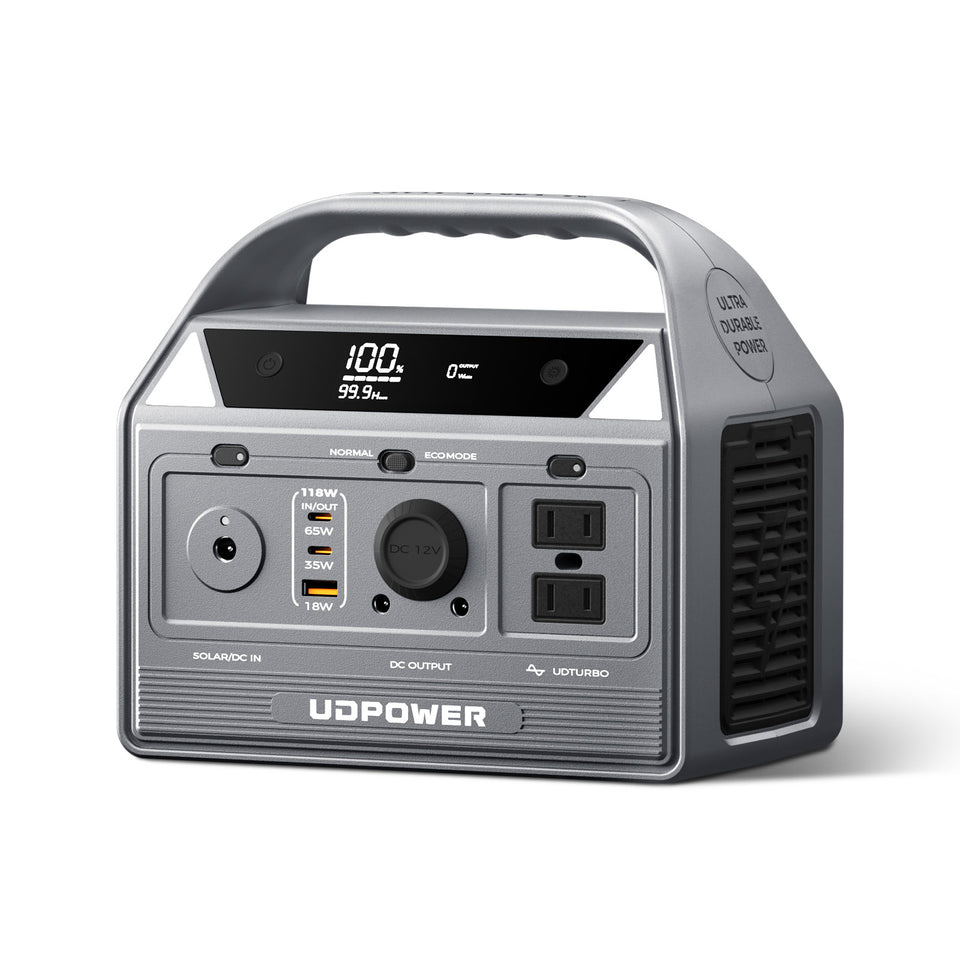
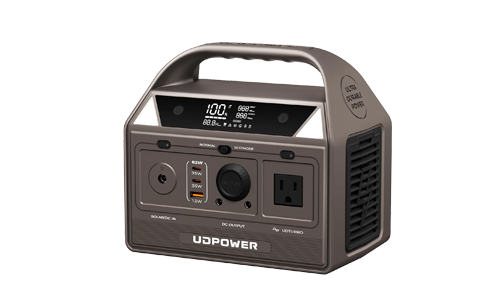
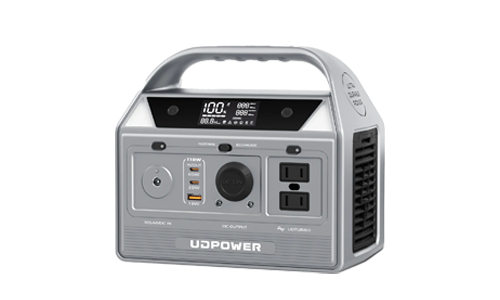
UDPOWER C400: Best for a Compact Emergency Kit
The C400 is designed for people who want a small unit for communication, lighting, short CPAP use, electronics and roadside emergencies rather than full household backup.
- 256Wh LiFePO4 battery
- 400W rated AC output
- Up to 150W solar charging input
- Approximately 6.88 lb
- USB, AC, DC and 12V outputs
- 12V vehicle jump-start capability
Best use: phones, router, LED lights, laptop charging, short CPAP backup and vehicle emergency kit.
Not the best fit: long refrigerator backup or a full overnight family-essential load.
View UDPOWER C400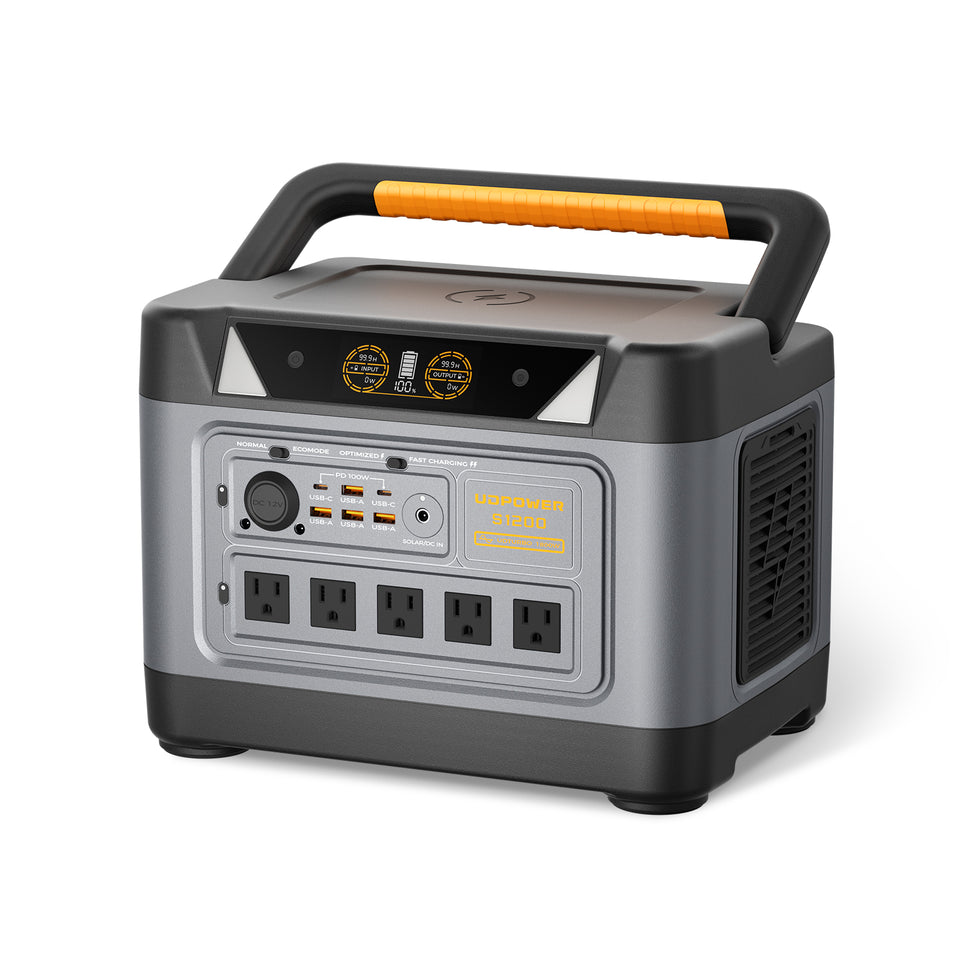
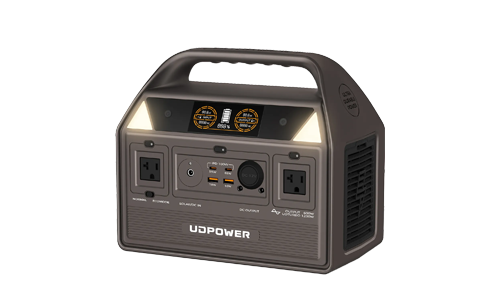
UDPOWER S1200: Best Balance for Typical Home Essentials
For many households, the S1200 sits in the most practical emergency range. Its roughly 1.19kWh battery is large enough to make refrigerator, CPAP, router, lighting and electronics backup realistic without moving into a much larger system.
- Approximately 1,190Wh LiFePO4 battery capacity
- 1,200W rated pure sine wave AC output
- UDTURBO support up to 1,800W for compatible higher-power loads
- 400W maximum solar input
- 5 AC outlets plus USB and DC outputs
- Up to 100W USB-C output
- UPSPrime transfer response of 10ms or less
- Approximately 26 lb
- 5-year warranty
Best use: overnight outages, refrigerator plus communications, CPAP backup, apartment emergency preparation and families that want useful capacity without moving to a 2kWh-class unit.
The S1200 can be paired with compatible portable solar panels. A larger solar configuration becomes particularly useful if your goal is to replace meaningful energy during a multi-day outage rather than simply slow the battery's decline.
View UDPOWER S1200
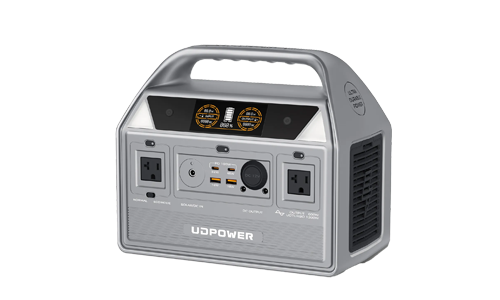
UDPOWER S2400: Best for Longer Outages and More Essentials
The S2400 moves into a more useful range for families who want a larger overnight reserve, longer refrigerator runtime or several devices operating through the same outage.
- 2,083Wh LiFePO4 battery
- 2,400W rated pure sine wave AC output
- UDTURBO support up to 3,000W for compatible higher-power loads
- 400W maximum rated solar input
- 6 AC outlets
- Up to 15 connected devices across AC, USB and DC outputs
- Two USB-C ports supporting up to 100W each
- UPSPrime transfer response of 10ms or less
- Approximately 40.8 lb
- 5-year warranty
Best use: refrigerator, router, lighting, CPAP, laptops, fans and occasional high-watt appliances during longer outages.
The S2400 is available with solar panel configurations including a two-panel 420W nominal setup. Actual solar charging remains subject to the power station's supported voltage, current and input limits.
View UDPOWER S2400UDPOWER emergency model comparison
| Model | Capacity | Rated AC Output | Solar Input | Weight | Best Emergency Role | Source |
|---|---|---|---|---|---|---|
| C400 | 256Wh | 400W | Up to 150W | About 6.88 lb | Communication, lights, electronics, roadside backup | Official specs |
| S1200 | About 1,190Wh | 1,200W | Up to 400W | About 26 lb | Typical home essentials and overnight backup | Official specs |
| S2400 | 2,083Wh | 2,400W | Up to 400W rated input | About 40.8 lb | Longer outages and multiple household essentials | Official specs |
Browse all UDPOWER solar generators, portable power stations, or the dedicated home backup collection.
How to Prepare Before the Power Goes Out
The best time to discover that your refrigerator has an unexpectedly high startup load is not at 11 p.m. during a storm.
- Charge the power station before severe weather arrives.
- Write down the wattage of every device you consider essential.
- Test the refrigerator, CPAP, router and other important loads in advance.
- Confirm which devices can operate at the same time without exceeding rated output.
- Calculate one full day of expected watt-hour consumption.
- Test your solar panel and charging cable before an emergency.
- Store the correct charging cables together with the station.
- Keep the power station in an accessible, dry location.
- Make sure air vents will remain unobstructed during operation.
- Know the station's charging and discharging temperature limits.
- Charge secondary power banks and rechargeable lights.
- Download important phone numbers and information for offline use.
Do a real appliance test
If an appliance is important enough to depend on during an outage, test it before the outage.
Connect it to the power station and check:
- Normal running wattage
- Startup behavior
- Whether the station remains stable
- How quickly the battery percentage changes
- Whether other essential devices can operate simultaneously
A simple real-world test is more useful than relying exclusively on generic appliance wattage charts.
How to Stretch Battery Power During an Outage
1. Reduce simultaneous loads
Do not run appliances together just because the inverter can support them. Output capacity tells you what the station can deliver, not how long the battery will last.
2. Use USB or DC output when practical
For compatible phones, laptops and other electronics, direct USB or DC charging can avoid leaving the AC inverter active solely for a small load.
3. Run high-watt appliances in short sessions
A microwave drawing 1,000W for five minutes is very different from a 1,000W heater running for five hours.
High wattage is not automatically a problem. High wattage multiplied by long runtime is the problem.
4. Shift discretionary loads into the solar window
When the display shows strong solar input, charge phones, laptops, secondary batteries and other noncritical devices. Save stored battery energy at night for loads that truly need it.
5. Protect the final 20%
If you are unsure when the grid or good sunlight will return, do not treat the last portion of the battery as normal discretionary energy.
6. Watch watts, not just battery percentage
A battery percentage tells you how much remains. Output wattage tells you how quickly you are spending it.
If your power station has approximately 1,000Wh of usable energy remaining:
- 50W load means roughly 20 hours before additional real-world losses.
- 200W load means roughly 5 hours.
- 1,000W load means roughly 1 hour.
The easiest way to extend runtime is often simply to identify the appliance creating the largest number on the output display.
Common Solar Emergency Generator Mistakes
Buying by watts instead of watt-hours
A 2,400W inverter tells you how much power the station can deliver at one time. It does not tell you how long it can deliver it. Runtime is primarily an energy-capacity question.
Buying a huge battery with too little recharge capability
That works well for a one-night outage but becomes increasingly limiting over several days.
Assuming panel wattage equals actual input
Solar-panel ratings are not a promise of constant real-world output. Shade, cloud cover, sun angle, heat and input limits change actual charging power.
Waiting until 0% to reduce loads
Energy rationing is much easier at 50% than at 5%.
Using electric resistance heating without checking the math
A high-watt heater can consume more energy in one hour than phones, lights and a router use during much of a day.
Opening the refrigerator repeatedly
Every door opening adds heat and forces additional compressor work later.
Ignoring startup demand
Compressors, pumps and some appliances may need significantly more power during startup than their normal running level.
Testing the system for the first time during an emergency
Know your cables, ports, appliance loads and solar setup beforehand.
Treating solar as guaranteed daily energy
Storms, smoke, snow and clouds can reduce charging just when you need it most. A serious emergency plan should survive at least one poor solar day without immediately reaching 0%.
Trying to backfeed a house through a wall outlet
If you want a backup system connected to household circuits, use approved transfer equipment installed according to applicable electrical requirements by a qualified professional.
Solar Emergency Generator FAQs
Is a solar generator good for emergencies?
Yes. A properly sized solar generator is particularly useful for phones, Wi-Fi, lights, laptops, CPAP equipment, fans, refrigerators and other essential loads. It is less suitable for continuous whole-house heating, central air conditioning and other very high-energy appliances unless the system is specifically designed for those loads.
What size solar generator do I need for an emergency?
For phones, a router and lighting, roughly 200–500Wh may be enough for a short outage. Around 1,000–1,500Wh is more useful when a refrigerator, CPAP or several household essentials are involved. Around 2,000Wh or more provides substantially more reserve for longer outages and multiple loads. Always calculate your own watt-hours rather than choosing from capacity alone.
Can a solar emergency generator run a refrigerator?
Yes, many medium and large portable power stations can run a refrigerator if the inverter supports both its running load and startup demand. Runtime depends on the refrigerator's actual energy consumption, room temperature, door openings, battery capacity and other devices connected to the station.
How long will a 1,000Wh solar generator run a refrigerator?
There is no single answer because refrigerators cycle on and off. If the refrigerator averaged 100W continuously, a 1,000Wh battery at about 90% usable efficiency would provide roughly 9 hours. A real refrigerator may average more or less depending on the model and operating conditions. Its EnergyGuide annual kWh figure is a better planning starting point.
Can I use a solar generator indoors?
A battery-based portable power station does not use a combustion engine and can normally be operated indoors according to manufacturer instructions. Keep the unit dry, leave ventilation openings unobstructed and follow its temperature and operating requirements. This is different from a fuel-powered generator, which must remain outdoors because of carbon monoxide risk.
Can a solar emergency generator power a whole house?
Most portable solar generators are better suited to essential-load backup than normal whole-house operation. Central HVAC, electric ovens, electric water heaters, large pumps and 240V appliances can require much larger batteries, inverters and professionally installed backup equipment.
How much solar do I need for an emergency generator?
Start with how many watt-hours you expect to consume each day and compare that with how much solar energy you can realistically return during daylight. For extended outages, larger solar input becomes valuable because the goal is not merely to recharge eventually; it is to replace a meaningful portion of each day's consumption before sunset.
Will solar panels charge a generator on cloudy days?
Solar panels can still produce electricity under some cloudy conditions, but output may be much lower than in direct sunlight. Do not plan a long emergency around receiving full rated panel power every day.
Is a solar generator better than a gas generator during a blackout?
It depends on the job. A solar generator is excellent for quiet indoor essential-load backup without storing gasoline. A fuel generator can be more practical for very high continuous loads and long operation when an adequate fuel supply and safe outdoor operating location are available.
Should I keep my emergency power station fully charged?
Before a forecast storm or planned outage, starting with a high state of charge gives you the most useful emergency reserve. For normal long-term storage, follow the battery manufacturer's storage and maintenance recommendations rather than assuming one storage percentage applies to every model.
Can I use a solar generator while it is charging?
Many modern portable power stations support powering devices while the station is receiving charge, but operating behavior and limits depend on the model. Check the manufacturer's specifications and avoid assuming every charging and output combination can operate at maximum power simultaneously.
Is LiFePO4 better for emergency backup?
LiFePO4 is a strong choice for emergency portable power because it offers long service life and good thermal stability. Battery chemistry is still only one part of the system; inverter quality, BMS protection, solar input, usable capacity and warranty also matter.
What should I power first during a blackout?
Start with safety, medical needs and communication. After that, protect food, provide essential lighting and maintain necessary cooling or comfort. High-watt convenience appliances should generally be used only after you know there is enough battery and recharge capacity available.
How can I make a solar generator last longer during an outage?
Reduce unnecessary simultaneous loads, use USB or DC outputs when practical, limit high-watt appliances to short sessions, keep refrigerator doors closed, move discretionary charging into daylight hours and maintain a battery reserve for overnight use.
The Bottom Line
A good solar emergency generator is not the one with the largest number printed on the front. It is the system that can carry your essential loads through the night and replace enough energy during daylight to remain useful when an outage lasts longer than expected.
Start with your actual appliances. Calculate watt-hours. Protect an emergency reserve. Pay attention to solar recovery. Run high-power devices strategically instead of continuously.
For a small communication and roadside kit, a compact system such as the UDPOWER C400 may be enough. For typical household essentials, the S1200 provides a much stronger balance of capacity and portability. For longer outages and larger multi-device loads, the S2400's 2,083Wh battery offers substantially more reserve.
A solar emergency generator will not turn a portable battery into the electric grid. Used intelligently, however, it can keep the parts of your home that matter most powered when the grid is unavailable.
Build Your Emergency Power Setup
Choose your system by the devices you actually need to keep running, how many hours they must operate, and how much energy you can replace from solar each day.
View Home Backup Options View Solar Generators View Solar Panels Get the Solar Generator Sizing GuideRelated Articles


1 comment
I want a unit up towards 5000 watts with panels