How to Charge the Galaxy S25 Ultra: 45W, Qi2 & More
Learn the best ways to charge the Samsung Galaxy S25 Ultra at home, in a car, while traveling, or during a power outage. This guide explains 45W Super Fast Charging 2.0, USB-C PD and PPS requirements, compatible cables, Qi2 Ready wireless charging, realistic charging times, battery protection settings, troubleshooting steps, and suitable UDPOWER portable power stations.
Galaxy S25 Ultra Charging Guide
Last updated: July 10, 2026
Quick Answer: How Do You Charge the Galaxy S25 Ultra?
The best way to charge a Samsung Galaxy S25 Ultra is with a 45W USB-C Power Delivery charger that supports PPS and a compatible USB-C to USB-C cable. Connect the cable directly to the phone, make sure Fast charging is enabled under Settings > Battery > Charging settings, and leave the screen off when you need the quickest top-up.
Samsung rates the Galaxy S25 Ultra for 45W Super Fast Charging 2.0. Under Samsung's laboratory conditions, its 5,000mAh battery can reach approximately 65% in around 30 minutes when starting from 0% with a compatible 45W adapter. Actual charging is usually slower when the phone is warm, the screen is on, apps are running, or the battery is already partly full.
A 25W charger is safe and still reasonably fast, but it will not provide the phone's maximum wired charging speed. A 65W or 100W USB-C charger is also safe when it supports USB Power Delivery and PPS—the phone will only request the amount of power it can use.

Galaxy S25 Ultra Charging Specifications
The Galaxy S25 Ultra does not draw one fixed wattage from empty to full. Its charging controller continuously adjusts voltage and current based on battery level, temperature, charger compatibility, cable capability, and what the phone is doing.
| Charging feature | Galaxy S25 Ultra specification | What it means in real use | Source |
|---|---|---|---|
| Battery capacity | 5,000mAh typical; 4,855mAh rated minimum | Battery capacity is similar to the previous Ultra generation. Charging efficiency and battery management matter as much as the capacity number. | Samsung S25 Series specifications |
| Maximum wired charging | 45W Super Fast Charging 2.0 | Requires a compatible USB-C PD/PPS charger and cable. A charger merely labeled “45W” may not support Samsung's required charging profile. | Samsung S25 accessories and charging support |
| Samsung laboratory result | Up to approximately 65% in around 30 minutes | Tested from 0% with the screen and services turned off. Everyday results vary with heat, background activity, and charger setup. | Samsung launch specifications |
| Wireless charging | Fast Wireless Charging 2.0; Qi2 Ready | The phone can use wireless charging without a magnetic case, but a compatible magnetic case improves alignment with Qi2-style magnetic chargers. | Samsung Galaxy S25 support |
| Reverse wireless charging | Wireless PowerShare | Useful for topping up compatible Galaxy Buds, watches, or another Qi-enabled phone. It is intended for convenience, not fast charging. | Samsung Wireless PowerShare guide |
| Wall charger in the box | Not included | Samsung includes a USB-C cable with current Galaxy devices, but the wall adapter is purchased separately. | Samsung wall charger guide |
The phrase “up to 45W” is important. The phone may briefly approach its highest charging rate while the battery is low and cool, then reduce power as the battery fills. Seeing less than 45W later in the charging session does not automatically mean anything is wrong.
Back to topWhat Charger and Cable Do You Need?
Best setup for maximum wired speed
- A 45W or higher USB-C wall charger.
- USB Power Delivery support.
- Programmable Power Supply, usually written as PPS.
- A USB-C to USB-C cable that supports the required current.
- A direct wall outlet rather than a low-power computer USB port.
The safest no-guesswork option is Samsung's official 45W adapter and matching USB-C cable. A reputable third-party charger can work just as well, but check the technical specifications for USB-C PD PPS and Samsung Super Fast Charging 2.0 compatibility.
Do you need a 5A USB-C cable?
The Galaxy S25 Ultra supports more than one 45W charging profile. Some compatible chargers can provide 45W through a 15V/3A profile, while other setups may use a higher-current PPS profile. This is why some 3A cables work at full speed and others do not produce the expected result with a particular charger.
For ordinary buyers, the practical recommendation is simple: use a 5A e-marked cable when buying a new cable for 45W charging. It gives the charger more flexibility and removes one common compatibility problem.
Is a charger rated above 45W safe?
Yes. A properly designed 65W, 100W, or higher USB-C PD charger does not force its full rated power into the phone. The charger and phone negotiate a supported voltage and current, and the Galaxy S25 Ultra limits what it accepts.
A higher-watt charger can make sense when one adapter also needs to power a laptop or tablet. It will not make the S25 Ultra charge beyond its own 45W limit.
| Charger setup | Will it charge? | Expected experience | Best use |
|---|---|---|---|
| 45W USB-C PD PPS charger | Yes | Best chance of reaching Super Fast Charging 2.0 | Fastest everyday wired charging |
| 65W or 100W USB-C PD PPS charger | Yes | Phone remains limited to its supported charging rate | One charger for phone, tablet, and laptop |
| 25W Samsung-compatible PD PPS charger | Yes | Super fast charging, but below the phone's 45W maximum | Routine charging and overnight use |
| 15W USB-C or USB-A charger | Yes | Noticeably slower | Overnight charging when speed does not matter |
| 45W charger without PPS | Usually | May fall back to a lower USB PD charging level | Basic charging, not guaranteed maximum speed |
| Computer USB port | Usually | Often slow, especially while the computer is asleep | Emergency top-ups and data transfer |
| USB-A to USB-C cable | Usually | Does not provide the normal 45W USB-C PD PPS path | Older chargers when speed is not important |
How to Charge the Galaxy S25 Ultra at the Full Wired Speed
- Connect a compatible USB-C to USB-C cable to a 45W USB-C PD PPS wall charger.
- Plug the charger directly into a working wall outlet.
- Connect the other end of the cable firmly to the Galaxy S25 Ultra.
- Open Settings > Battery > Charging settings and confirm that Fast charging is enabled.
- Check the charging message that briefly appears on the lock screen or battery screen.
- Turn off the display and avoid gaming, video recording, navigation, or other heavy tasks while charging.
- Keep the phone uncovered and away from direct sun or a hot car dashboard.
Depending on software version and charger combination, the phone may display Super fast charging or Super fast charging 2.0. The message may only appear briefly before the screen switches to a general charging status and estimated completion time.
Best conditions for a quick top-up
- Begin with the battery below approximately 30%.
- Use a cool phone at normal room temperature.
- Leave the screen off.
- Pause wireless hotspot, gaming, camera use, and navigation.
- Use one dedicated charger port rather than a shared multi-port output.
- Remove a thick insulated case if the phone becomes noticeably warm.
Multi-port chargers deserve special attention. A unit advertised as “100W” may divide that output across several ports. When another laptop or tablet is connected, the phone's port may drop to 30W, 25W, or less. Check the charger's port-allocation chart rather than relying on its total wattage.
Back to topHow Long Does the Galaxy S25 Ultra Take to Charge?
Samsung's clearest official benchmark is up to approximately 65% in around 30 minutes with a compatible 45W adapter, starting from an empty battery under controlled conditions. That is a useful best-case reference, not a promise for every charging session.
| Situation | What you can reasonably expect | Why results change |
|---|---|---|
| 0% battery, 45W PD PPS charger, screen off | Fastest available charging; Samsung cites up to about 65% in around 30 minutes | Low battery and cool temperature allow a higher charging rate |
| 20% to 60% | Usually the most useful fast-charging window | The phone can accept more power before the later taper |
| 60% to 80% | Charging gradually slows | Battery management begins reducing stress and heat |
| 80% to 100% | Noticeably slower than the first half | The final portion uses a more conservative charging rate |
| Screen on with gaming or navigation | Longer total charging time | The phone is consuming power and producing heat while charging |
| Hot room, hot vehicle, or direct sunlight | Charging may slow sharply or pause | Thermal protection limits battery input |
| 25W charger | Slower than the 45W setup but still practical | The adapter cannot provide the phone's maximum charging input |
| 15W wireless charger | Best for convenience rather than urgent charging | Wireless transfer produces more heat and has greater energy loss |
Do not judge a charger only by the estimated “time until full” displayed during the first few seconds. The estimate can change as the phone measures temperature, background activity, and incoming power.
Back to topGalaxy S25 Ultra Charging Methods Compared
| Charging method | Typical maximum | Speed | Heat and efficiency | Best for |
|---|---|---|---|---|
| 45W USB-C PD PPS wall charger | Up to 45W | Fastest | Generally cooler and more efficient than wireless | Quick top-ups before work, travel, or an emergency |
| 25W USB-C PD PPS wall charger | Up to 25W | Fast | Often runs slightly cooler than the maximum-speed setup | Daily desk or bedside charging |
| Fast Wireless Charging 2.0 | Up to the supported wireless rate | Moderate | More sensitive to heat, alignment, and case thickness | Desk, nightstand, and short convenience top-ups |
| Wireless PowerShare | Low-power reverse charging | Slow | Uses the S25 Ultra's own battery and may generate heat | Galaxy Buds, a watch, or an emergency top-up |
| USB-C PD car charger | Depends on the adapter | Fast when PPS is supported | Vehicle heat can reduce performance | Road trips, commuting, and navigation use |
| USB-C power bank | Depends on PD/PPS output | Fast with the right model | Usually more efficient than using an AC outlet | Flights, city travel, events, and day trips |
| Portable power station USB-C port | 45W or more when the port supports PPS | Fast | Direct USB-C avoids unnecessary AC conversion | Camping, outages, RVs, storms, and remote work |
Which method is best?
Use wired 45W charging when time matters. Use wireless charging when convenience matters more than speed. Use a USB-C power bank for airline and daily carry, and use a portable power station when the phone is part of a larger backup setup that also includes lights, laptops, cameras, a router, or other devices.
Back to topWhy Is My Galaxy S25 Ultra Not Charging at 45W?
A charger can have “45W,” “65W,” or “100W” printed on it and still fail to provide Samsung's fastest charging mode. Maximum charging requires the phone, charger, cable, battery level, and temperature to agree on a compatible power profile.
| Possible cause | What happens | What to do |
|---|---|---|
| Charger lacks PPS | The phone falls back to a lower USB PD or basic charging level | Check the charger's specification label for PPS output |
| Cable cannot support the required profile | Charging works, but the highest mode may not appear | Try a 5A e-marked USB-C to USB-C cable |
| Battery is already partly full | Power naturally falls as the battery percentage rises | Test the charger when the phone is below approximately 30% |
| Phone is warm | Thermal protection reduces charging input | Stop heavy apps, remove excess insulation, and let the phone cool |
| Fast charging is disabled | The phone uses a lower charging mode | Open Settings > Battery > Charging settings |
| Multi-port charger is sharing power | The phone's port receives less than the charger's total rating | Disconnect other devices or use the charger's primary USB-C port |
| Dirty or damaged USB-C port | Charging may connect intermittently or remain slow | Inspect for lint or damage; do not insert metal tools |
| Screen, camera, or games are active | Some incoming power is consumed immediately and heat rises | Lock the phone and pause demanding tasks |
| Battery Protection is limiting charge | The phone stops at the selected percentage | Review Settings > Battery > Battery protection |
How to Charge the Galaxy S25 Ultra Wirelessly
- Connect the wireless pad to its recommended wall adapter.
- Place the center of the Galaxy S25 Ultra over the pad's charging coil.
- Confirm that the phone displays a wireless charging message.
- Enable Fast wireless charging under Settings > Battery > Charging settings.
- Remove cards, metal plates, pop sockets, or thick layers between the phone and charger.
- Move the phone slightly if charging repeatedly starts and stops.
What does “Qi2 Ready” mean?
The Galaxy S25 Ultra does not have the same built-in magnetic ring arrangement found in a phone with native magnetic alignment. Its Qi2 Ready experience depends on a compatible magnetic case to align the phone with magnetic charging accessories.
Without a magnetic case, the phone can still charge on a compatible Qi pad, but you must position it manually over the charging coil. Poor alignment wastes energy, increases heat, and may cause the charge to start and stop.
Why wireless charging may feel slow
- The phone is not centered over the coil.
- The pad's wall adapter is underpowered.
- The case is thick or contains metal.
- The charger is covered or cannot release heat.
- The phone is running navigation, video, or gaming.
- The room or vehicle is already hot.
- Fast wireless charging is turned off in Settings.
Wireless charging is useful on a nightstand or desk, but wired USB-C is usually the better choice when the battery is very low or you need to leave soon.
Back to topWhich Battery Protection Setting Should You Use?
Samsung provides Battery Protection options under Settings > Battery > Battery protection. The exact wording or available charge limit may change slightly after a One UI update.
| Mode | How it works | Best for | Trade-off | Source |
|---|---|---|---|---|
| Basic | Charging stops at 100% and starts again after the battery drops to approximately 95%. | People who want a full battery every morning | The battery still spends time close to full | Samsung battery guide |
| Adaptive | Learns your routine, pauses around 80% while you sleep, then switches modes before you normally wake. | Predictable overnight charging | May be less useful with irregular sleep schedules | Samsung battery guide |
| Maximum | Stops charging at the limit selected in the phone's settings. | Users who keep the phone plugged in often or plan to keep it for years | Less battery available between charges | Samsung battery guide |
A practical recommendation
Adaptive is the easiest choice for most people who charge overnight. Maximum makes sense for a desk phone, vehicle-mounted phone, or device that spends much of the day connected to power. Basic is the better fit before a long travel day when maximum runtime matters more than minimizing time at a high state of charge.
You do not need to avoid fast charging completely. Heat and extended time at very high battery levels are more useful things to manage than the occasional 45W top-up.
Back to topCharging in a Car, While Traveling, During Camping, or in an Outage
Charging in a car
Use a USB-C car adapter that supports PD and PPS, with at least 45W available from the port connected to the phone. A two-port car adapter may reduce output when both ports are in use.
- Do not leave the phone charging in direct sunlight.
- Keep it away from a hot dashboard or windshield mount.
- Direct air-conditioning toward the phone when using navigation.
- Use a wired connection when heat is already high.
- Disconnect the charger if the vehicle outlet remains powered after the engine is off.
Charging on an airplane
A phone-sized USB-C power bank is usually the most practical flight option. Spare lithium batteries and power banks must follow airline and FAA watt-hour rules and normally belong in carry-on baggage, not checked luggage.
Charging during camping or a power outage
A phone uses little energy compared with appliances such as a refrigerator, microwave, or space heater. Even a compact portable power station can provide many Galaxy S25 Ultra recharges while also powering lights, a camera, a laptop, a hotspot, or other essentials.
Use the power station's USB-C PD port directly whenever possible. Plugging a wall adapter into the AC outlet works, but it adds an extra conversion stage and usually wastes more stored energy.
For broader planning, see How Many Wh Do I Need for Camping? and the UDPOWER Wh-to-mAh conversion guide .
Back to topRecommended UDPOWER Options for Galaxy S25 Ultra Backup Charging
A power station is more capacity than most people need for charging one phone. It becomes useful when the phone is part of a larger setup: multiple family phones, cameras, lights, laptops, a router, a CPAP machine, or essential outage equipment.
Best for short trips and light charging

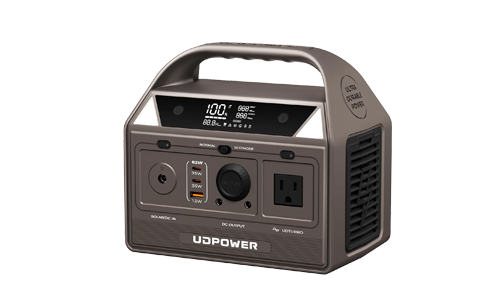
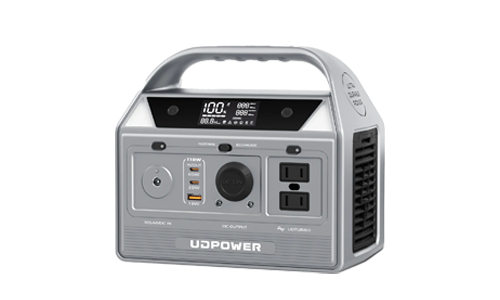
UDPOWER C400 Portable Power Station
The C400 is the most practical choice when your main loads are a Galaxy phone, lights, camera batteries, a tablet, or a small laptop. At about 6.88 pounds, it is easier to place in a vehicle or camping kit than a full home-backup unit.
- Battery capacity: 256Wh
- Rated AC output: 400W
- Surge output: 800W
- USB-C outputs: 65W and 35W
- USB-C profiles: Includes 15V/3A and PPS
- Weight: Approximately 6.88 lb
- Battery type: LiFePO4
- Estimated S25 Ultra recharges: About 10
Connect the Galaxy S25 Ultra to the C400's 65W USB-C port with a compatible USB-C cable. The phone remains limited to its supported charging rate.
View UDPOWER C400Best for weekend camping and mobile work

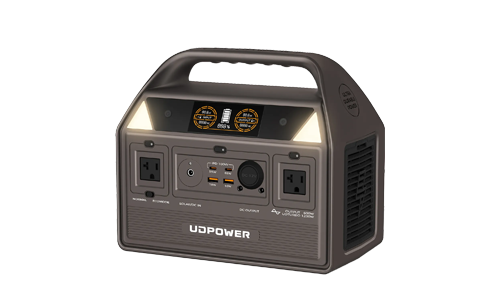
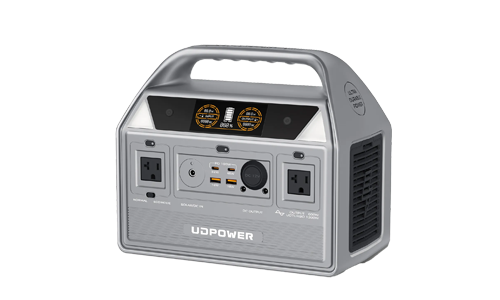
UDPOWER C600 Portable Power Station
The C600 is a useful middle ground for several phones, a laptop, camera gear, lights, and other weekend-trip electronics. Its 596Wh capacity provides substantially more reserve than the C400 without moving into full-size home-backup weight.
- Battery capacity: 596Wh
- Rated AC output: 600W
- Peak output: 1,200W
- USB-C outputs: 65W and 35W
- USB-C profiles: Includes 15V/3A and PPS
- Weight: Approximately 12.3 lb
- Battery type: LiFePO4
- Estimated S25 Ultra recharges: About 24
Best for family outages and multi-device backup
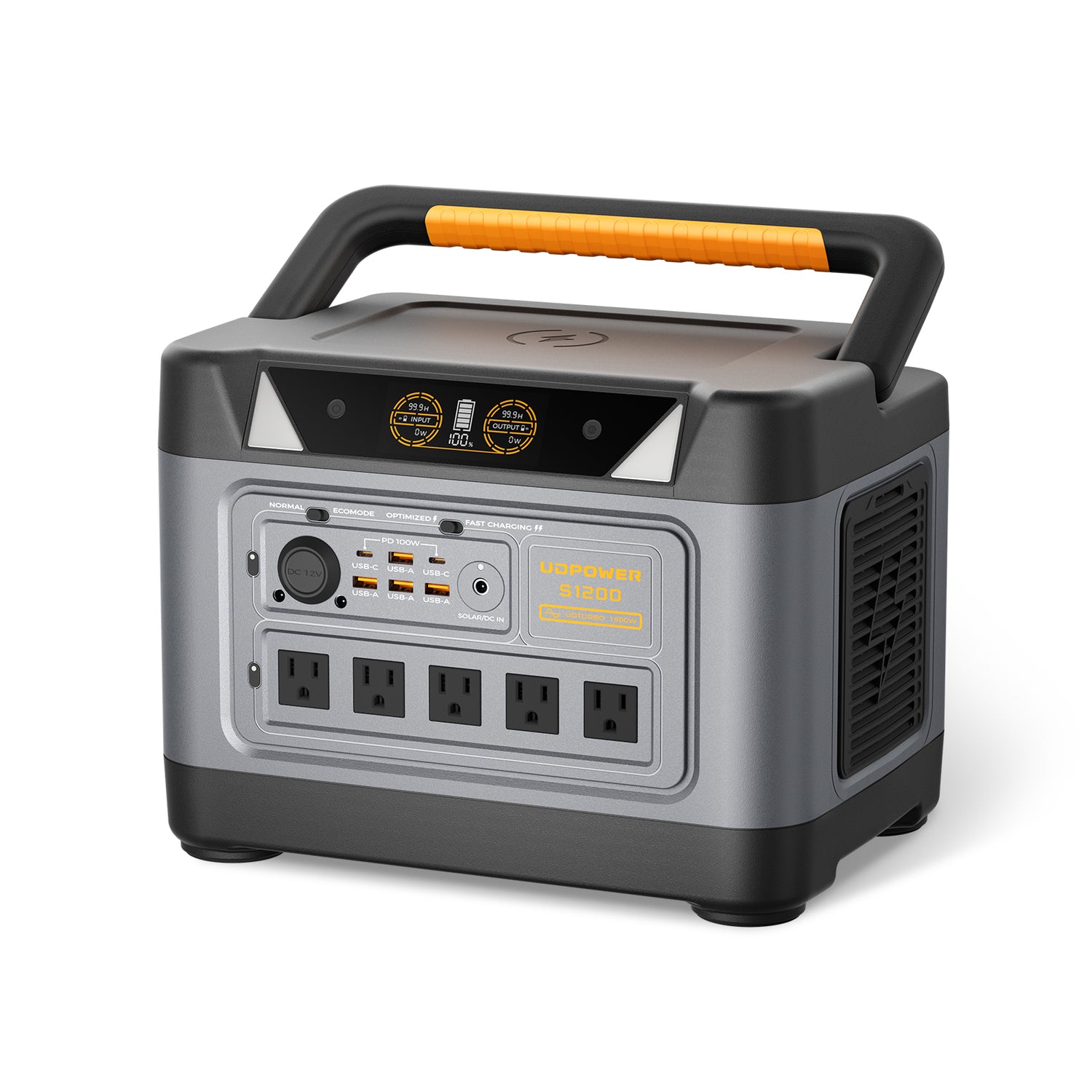
UDPOWER S1200 Portable Power Station
The S1200 makes sense when phone charging is only one part of an outage plan. Its 1,190Wh battery can support several phones along with a Wi-Fi router, lights, laptops, medical equipment, and selected household essentials.
- Battery capacity: 1,190Wh
- Rated AC output: 1,200W
- Surge output: 1,800W
- USB-C system: Up to 100W total with PPS
- Wireless charging pad: Up to 15W
- AC outlets: Five
- Weight: Approximately 26.0 lb
- Estimated S25 Ultra recharges: About 48
Direct USB-C is normally the most efficient way to charge the phone. The built-in wireless pad is convenient, but wired charging is the better choice when you want to preserve backup energy.
View UDPOWER S1200How Many Times Can a Portable Power Station Charge the Galaxy S25 Ultra?
A 5,000mAh phone battery does not mean you can divide a power station's advertised mAh directly by 5,000. The two batteries operate at different voltages, and some energy is lost through voltage conversion, the cable, heat, and the phone's charging circuit.
The estimates below use a conservative planning method: approximately 90% usable station energy and about 22.5Wh drawn from the station for one complete 0% to 100% Galaxy S25 Ultra recharge.
| UDPOWER model | Battery capacity | Recommended phone connection | Estimated full S25 Ultra recharges | Best use case | Official specifications |
|---|---|---|---|---|---|
| C400 | 256Wh | 65W USB-C PD/PPS port | About 10 | Short trips, vehicle kit, light camping | C400 product page |
| C600 | 596Wh | 65W USB-C PD/PPS port | About 24 | Weekend camping and multiple devices | C600 product page |
| S1200 | 1,190Wh | USB-C PD/PPS output | About 48 | Family outages and home communication backup | S1200 product page |
These are planning estimates rather than guaranteed laboratory totals. Results fall when the phone is being used during charging, the power station is also running other devices, wireless charging is used, or the station remains on with unnecessary outputs enabled. Partial daily top-ups may produce a different practical count than repeated 0% to 100% cycles.
Galaxy S25 Ultra Slow-Charging Troubleshooting
Start with this five-minute check
- Disconnect the charger from both the wall and phone.
- Restart the Galaxy S25 Ultra.
- Check Settings > Battery > Charging settings.
- Reconnect the charger with the phone below 30% battery.
- Use only one charger port and disconnect other devices.
- Turn off the screen and wait several minutes.
- Try another known-good USB-C cable.
- Try another PD PPS charger if available.
The phone says “Cable charging” instead of “Super fast charging”
The charger may not support PPS, the cable may be limiting the available profile, or Fast charging may be disabled. Test with a verified Samsung-compatible 45W PPS charger and 5A cable.
The phone charges quickly at first, then slows down
That is usually normal. Charging power tapers as the battery fills and as temperature rises. The final 20% is intentionally slower than the early part of the session.
The charger repeatedly connects and disconnects
Inspect the cable ends and USB-C port for damage, looseness, moisture, or compacted lint. Do not place metal objects in the port. Replace a damaged cable and seek professional service when the port feels loose or shows corrosion.
The phone stops at 80%, 85%, 90%, or another selected level
Open Settings > Battery > Battery protection. Maximum protection may be set to stop charging at that percentage. This is a setting, not necessarily a battery or charger fault.
The phone shows a moisture warning
Disconnect the cable. Do not force wired charging while the phone reports moisture in the USB port. Allow the port to dry naturally in a ventilated place and follow Samsung's on-screen instructions. Wireless charging may be available while the port dries, provided the rest of the phone and charger are dry and undamaged.
The phone becomes hot while charging
Stop demanding apps, move the phone out of sunlight, remove a thick case, and place it on a hard ventilated surface. Avoid cooling it abruptly in a refrigerator or freezer, which can create condensation.
Samsung recommends an optimal battery-use environment of approximately 32°F to 95°F. Charging may be limited outside a safe temperature range. See Samsung's battery care and maintenance guidance .
Back to topCharging Safety and Battery-Care Habits
- Use reputable chargers and undamaged cables.
- Keep the phone and charger away from blankets, pillows, and enclosed spaces.
- Do not charge a visibly swollen, punctured, or damaged phone.
- Do not use a cable with exposed conductors or a loose connector.
- Avoid charging in direct sun or inside a parked hot vehicle.
- Keep metal objects and payment cards away from wireless charging surfaces.
- Use Battery Protection when the phone remains connected for long periods.
- Use wired USB-C when you need the coolest and most energy-efficient option.
- Keep the phone's software updated.
- Disconnect and inspect the setup if charging repeatedly starts and stops.
Should you charge to 100% every day?
Charging to 100% is useful before travel, a long workday, severe weather, or any situation where runtime matters. For routine days when the phone remains close to a charger, a lower Maximum protection limit can reduce the time the battery spends at a high state of charge.
Should you let the battery reach 0%?
There is no need to drain the Galaxy S25 Ultra completely before recharging it. Partial charging is normal for a lithium-ion battery. Plugging in at 20%, 30%, or 40% is perfectly reasonable.
Is overnight charging safe?
The phone manages charging automatically, but Adaptive Battery Protection is a better fit for regular overnight use because it reduces how long the battery remains fully charged while you sleep. Place the phone and charger on a firm, uncovered surface rather than under bedding.
Back to topFrequently Asked Questions
What charger should I use for the Galaxy S25 Ultra?
Use a 45W USB-C charger that supports USB Power Delivery and PPS for the phone's fastest supported wired charging. Pair it with a compatible USB-C to USB-C cable.
Does the Galaxy S25 Ultra come with a charger?
It does not include a wall charging adapter. Current Samsung Galaxy devices include a USB-C cable, while the wall charger is purchased separately.
Does the Galaxy S25 Ultra support 45W charging?
Yes. Samsung lists the Galaxy S25 Ultra as compatible with 45W Super Fast Charging 2.0 when used with a suitable charger and cable.
Do I need a 5A cable for the Galaxy S25 Ultra?
Some compatible 15V/3A charger combinations can work with a 3A cable, but a 5A e-marked USB-C cable is the simplest recommendation when buying a new cable for reliable 45W compatibility.
Can I use a 65W or 100W charger?
Yes, provided it is a reputable USB-C Power Delivery charger. PPS support is needed for the best Samsung charging compatibility. The phone will not draw more power than it supports.
Will a 25W charger work with the Galaxy S25 Ultra?
Yes. A compatible 25W charger will charge the phone safely and reasonably quickly, but it cannot provide the phone's maximum 45W wired charging rate.
Why does the Galaxy S25 Ultra charge slowly after 80%?
The phone intentionally reduces charging power as the battery fills. This helps control heat and battery stress. The final portion of a charge normally takes longer than the first portion.
How do I turn on Super Fast Charging?
Open Settings, tap Battery, select Charging settings, and enable Fast charging. Then connect a compatible USB-C PD PPS charger and cable.
Does the Galaxy S25 Ultra support Qi2?
It is Qi2 Ready. A compatible magnetic case is needed for the full magnetic alignment experience with Qi2-style chargers. The phone can also charge on compatible non-magnetic Qi pads when positioned correctly.
Is wireless charging bad for the battery?
Wireless charging is a supported feature, but it can create more heat than wired charging. Good alignment, ventilation, and a compatible charger help reduce unnecessary heat.
Can I charge the Galaxy S25 Ultra from a portable power station?
Yes. Use a portable power station USB-C PD/PPS port capable of at least 45W for the best wired speed. Direct USB-C charging is usually more efficient than plugging the phone's wall adapter into the station's AC outlet.
How many times can the UDPOWER C400 charge the Galaxy S25 Ultra?
A conservative planning estimate is about 10 complete recharges. Actual results depend on conversion loss, battery condition, temperature, cable quality, and whether the phone is being used while charging.
Can I take a UDPOWER power station on a passenger airplane?
The C400, C600, and S1200 are all above 160Wh, so they are not permitted on passenger aircraft under normal FAA passenger battery limits. Use them for road trips, camping, RV use, and home backup instead.
Why does my phone stop charging before 100%?
Battery Protection may be enabled with a lower Maximum limit, or the phone may have paused charging because of heat or moisture. Check Battery Protection settings and any warning shown on screen.
How This Guide Was Checked
Charging specifications and menu guidance were checked against current Samsung product announcements and support pages. UDPOWER capacities, USB-C profiles, weights, outputs, and product images were taken from the current official UDPOWER product pages.
Build a Charging Setup That Still Works When the Power Goes Out
A 45W USB-C PD PPS charger is the right everyday accessory for the Galaxy S25 Ultra. For camping, road trips, severe weather, and home outages, add a portable power station sized for the other devices you need to keep running.
Choose the compact C400 for phones and light electronics, the C600 for weekend travel and mobile work, or the S1200 for family communication and broader home backup.
View All Portable Power Stations Compare UDPOWER ModelsRelated Articles