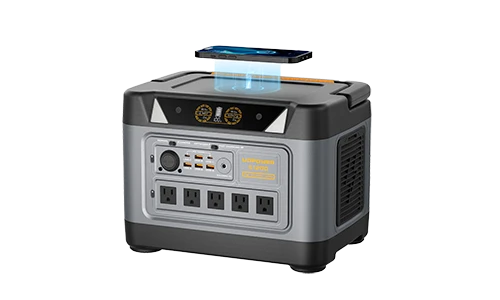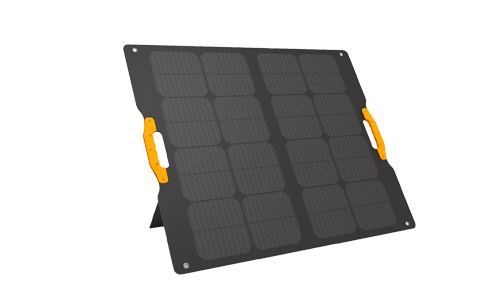
What Can a 3000W Portable Power Station Run?
ZacharyWilliam
Quick answer: A true 3000W portable power station can run almost all everyday essentials at the same time, including refrigerators, freezers, lights, routers, TVs, laptops, CPAP machines, fans, many microwaves, many coffee makers, rice cookers, slow cookers, and some window air conditioners. It can also power many common 1500W space heaters or toasters, but those are usually terrible battery choices because they drain capacity fast.
The real limit: 3000W tells you what the inverter can handle right now. It does not tell you how long the battery lasts. That is why a 3000W unit may run a heater easily, but only for a short stretch, while it can keep a fridge, lights, Wi-Fi, and phones going much longer.
The easy rule: if your device stays under the power station’s continuous output and does not exceed surge during startup, it can probably run. If it creates heat or uses a compressor, you still need to check runtime and startup behavior before you count on it.
Table of Contents
- What a 3000W power station really means
- Quick yes / maybe / no list
- Common devices a 3000W unit can run
- What it can run at the same time
- Why runtime matters more than most buyers expect
- What usually catches people off guard
- Where UDPOWER fits in
- FAQ
Not sure you need a 3000W-class unit? Compare the 200W, 300W, 500W, 600W, 800W, 1000W, 1200W, and 2000W guides to see which size better matches your devices, runtime needs, and budget.
What a 3000W Power Station Really Means
Most buyers mix up three numbers:
- Continuous output: what the inverter can deliver steadily
- Surge output: the short burst it can handle during startup
- Battery capacity: how much energy is stored, usually listed in watt-hours
That is why “What can a 3000W portable power station run?” is only half the question. The other half is “For how long?”
Think of it this way: 3000W is your ceiling. Watt-hours are your fuel tank.
A true 3000W unit is a major step up from mid-size models. It gives you enough inverter headroom to run heavier kitchen appliances, several home essentials together, and more demanding loads that smaller 1000W–1500W stations struggle with. But it still does not mean “whole-house freedom.” A battery station this size is best when you run the right things, not everything.
If you want the same question framed from the solar-generator angle, read what a 3000 watt solar generator can power. If you are still deciding whether this size is enough for a house, the better follow-up is can a solar generator power a house.
If you are still deciding whether 3000W is more than you need, compare the 2000W and 1200W guides first, then work down to 1000W, 800W, 600W, 500W, 300W, and 200W. Seeing the smaller classes side by side makes it much easier to choose the right size for your actual appliance list instead of paying for more inverter power than you will really use.
Quick Yes / Maybe / No List
This table gives you the fast version before we get into device-by-device details.
| Category | Usually Yes | Maybe / Check First | Usually No or Not Smart |
|---|---|---|---|
| Home essentials | Fridge, freezer, Wi-Fi, lights, TV, laptop, phones, modem, CPAP | Older refrigerators with harder startup behavior | Trying to run your entire kitchen and comfort loads at once |
| Kitchen appliances | Rice cooker, slow cooker, blender, many microwaves, many coffee makers | Air fryer, toaster oven, induction burner, pressure cooker | Multiple heat appliances at the same time for long periods |
| Heating / cooling | Many fans, many smaller window AC units | Some 12,000 BTU inverter window AC units, soft-start RV AC setups | Central AC, electric dryer, electric range, large resistance heaters as a long-runtime plan |
| Workshop / garage | Battery chargers, many smaller tools, lighting | Circular saws, shop equipment with startup spikes | Large compressors, welders, or anything that exceeds surge headroom |
| Comfort loads | Electric blanket, fan, TV, gaming setup | 1500W space heater on a short burst plan | Using battery power like grid power for hours of electric heat |
Common Devices a 3000W Unit Can Run
This table answers the question shoppers usually mean: Can I plug it in and expect this to work without drama?
| Device | Typical / Example Power | Will a True 3000W Unit Run It? | What to Know First | Source |
|---|---|---|---|---|
| Router / modem | About 10–30W for many home setups | Yes, easily | One of the easiest and most useful outage loads. | NETGEAR |
| CPAP | Often roughly 40W to 90W depending on setup | Yes | Heated hose and humidifier can change runtime a lot. | ResMed battery guide |
| Air circulator / fan | About 34–50W on official examples | Yes | Great battery use because airflow comfort is cheap compared with electric heat. | Vornado 630 |
| Compact refrigerator / mini fridge | Lower daily energy use than full-size models | Yes | Usually easy for 3000W output. Runtime depends on compressor cycling. | Frigidaire compact fridge guide |
| Full-size refrigerator | Usually an easy output match | Yes | Great use case. Battery size matters more than inverter size here. | USDA |
| Microwave | Many home units around 1200–1600W input | Yes, often | A 3000W unit can usually handle microwaves that smaller stations reject. Still check actual wall draw, not just cooking power. | LG 1600W input example · Panasonic 1200W example |
| Coffee maker | About 1400W on one official example | Yes, often | Much easier for a 3000W unit than for a 1200W unit, but still a short-runtime load. | Keurig K-1500 |
| Rice cooker | About 1240W on one official example | Yes | A comfortable match for this inverter class. | Zojirushi NP-NWC18 |
| Space heater | 900W–1500W on common models | Yes, but not for long | Output is fine. Runtime is the problem. This is where buyers waste battery the fastest. | Lasko 1500W |
| Window air conditioner | Some 12,000 BTU inverter models are more efficient than older designs | Sometimes yes | Check startup behavior and real draw. A 3000W unit is strong enough to make this realistic for some models, not all. | Midea U-shaped 12,000 BTU · Camping World RV AC basics |
| Circular saw | Some jobsite saws demand strong startup current | Sometimes | Tool motors care more about surge than nameplate comfort. Test before you buy around a single use case. | DEWALT circular saw category |
Simple rule: a 3000W inverter usually handles the power side of the problem. The bigger trap is still runtime, startup spikes, and stacking too many heat loads together.
For refrigerator-heavy backup plans, two UDPOWER guides are especially useful: best refrigerator power backup options and can a portable power station run your refrigerator. They pair well with this article because a 3000W-class setup is often chosen for exactly that fridge-first use case.
What It Can Run at the Same Time
This is where a 3000W unit starts to feel meaningfully different from mid-size backup batteries.
| Real-Life Setup | Example Load Mix | Approx. Combined Load | Can a 3000W Unit Handle It? |
|---|---|---|---|
| Outage essentials | Fridge + Wi-Fi + 4 LED bulbs + TV + phone charging | About 200W–350W average, depending on fridge cycling | Yes, comfortably |
| Work-from-home blackout setup | Laptop + monitor + router/modem + fan + lights | About 150W–250W | Yes, easily |
| Kitchen burst use | Microwave or coffee maker + lights + fridge in the background | About 1400W–1900W during active use | Yes, usually |
| Cold-weather comfort plan | 1500W space heater + Wi-Fi + one lamp | About 1520W–1550W | Yes on output, poor on runtime |
| Small-room cooling plan | Efficient window AC + router + lights | Often under 1800W while running | Sometimes yes, if startup stays in bounds |
| RV basics | TV + lights + fan + phone charging + coffee maker in short sessions | Usually manageable | Yes, with basic load discipline |
The practical takeaway: a 3000W portable power station is strong enough for combination living. That means you no longer have to choose between “fridge or TV” or “Wi-Fi or coffee.” But you still have to respect the battery when you bring in electric heat or cooking.
Why Runtime Matters More Than Most Buyers Expect
This is the part many comparison pages skip: output tells you what can run, but runtime tells you whether the purchase makes sense.
Estimated runtime (hours) ≈ usable watt-hours ÷ average load (watts)
That is why even a powerful unit can feel “small” if you use it like wall power. A heater, toaster, or coffee maker may fit the inverter perfectly and still empty the battery quickly.
Example 1: Smart outage use
- Fridge average: 80W
- Router/modem: 15W
- Lights: 30W
- TV: 80W
Total average: about 205W
This kind of setup is exactly where a large inverter earns its keep. You are powering several useful things together without stressing the system.
Example 2: Bad battery habits
- Space heater on high: 1500W
- Coffee maker: 1400W
Total if both overlap: about 2900W
That may still fit a true 3000W inverter, but it is the wrong mindset for battery backup. Heavy heat loads are exactly how people end up disappointed with big power stations.
For planning your own load list, pair the UDPOWER runtime calculator with this runtime basics guide and this outage planning worksheet.
If your question is shifting from “what can 3000W run?” to “what size do I need for my actual home?”, the next logical read is what size solar generator you need to power a house. That page is more useful when you are sizing around daily household use instead of a single appliance list.
What Usually Catches People Off Guard
- 3000W does not mean whole-home backup. It is powerful, but still selective.
- Higher-load headroom still matters. Compressors and motors can trip a station even when average watts look easy, so you still need to check startup behavior and the model’s boosted-output support.
- Heat destroys runtime. Space heaters, toaster ovens, and electric hot plates burn through stored energy fast.
- 120V limits still apply. Some larger appliances want more than a portable 120V battery setup is meant to give.
- Cooling is often a better battery choice than heating. Fans and some efficient window AC units make more sense than electric resistance heat.
- Recharge planning matters. A big inverter without a realistic recharge plan still leaves you short in a long outage.
If you are buying mainly for emergency backup, these pages pair naturally with this topic: what to run first in a power outage, how to keep Wi-Fi running, CPAP battery backup planning, and fridge/freezer food safety during outages.
If you are building a longer outage strategy instead of a one-night backup plan, also add portable power station vs generator for power outages. That comparison helps readers decide whether a 3000W-class battery is enough on its own or works better as part of a larger backup setup.
Where UDPOWER Fits In
Here is the honest answer: if you are shopping specifically for a true 3000W continuous portable power station, UDPOWER’s current lineup does not present that as a clean, simple rated-output spec on its main product page. The closest official heavy-duty option today is the UDPOWER S2400, which is listed with 2,083Wh capacity, 2,400W rated output, and up to 3,000W UDTURBO surge support for motor start-ups.
That matters because a lot of shoppers confuse 3000W UDTURBO support with a generic, split-second surge spec. On UDPOWER, that is a brand-specific boosted-output mode rather than the usual “blink and it’s over” surge wording many shoppers are used to. In practical use, it is meant to give heavier loads and motor-driven appliances more headroom, though conversion efficiency is not as favorable at the higher output level.
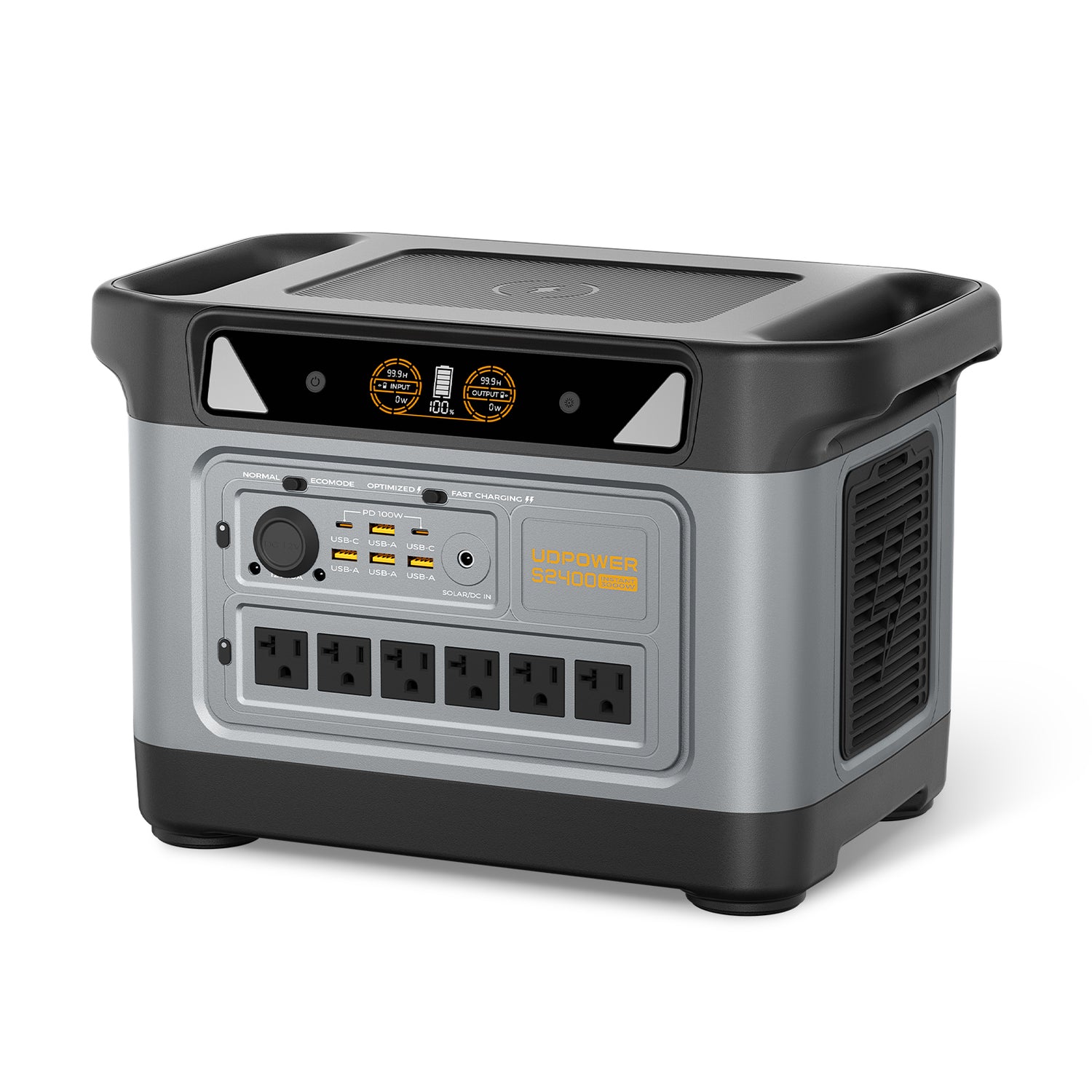
1) Best UDPOWER choice if your loads are near 3000W-class territory: S2400
The UDPOWER S2400 is the closest fit in the current lineup for readers shopping heavier appliance use, longer outages, RV backup, or larger mixed home loads. It gives you much more headroom than mid-size stations and is the better match when your backup plan includes a fridge, microwave, coffee maker, lights, connectivity gear, and other real-life overlap.
- Best for: larger outage setups, longer runtime, heavier appliance overlap, more output margin
- Why it stands out: 2,083Wh LiFePO₄ battery, 2,400W rated output, UDTURBO support up to 3,000W, UPS-style backup, and up to 400W solar charging
- Who should choose it: buyers who know smaller stations will force too much appliance juggling
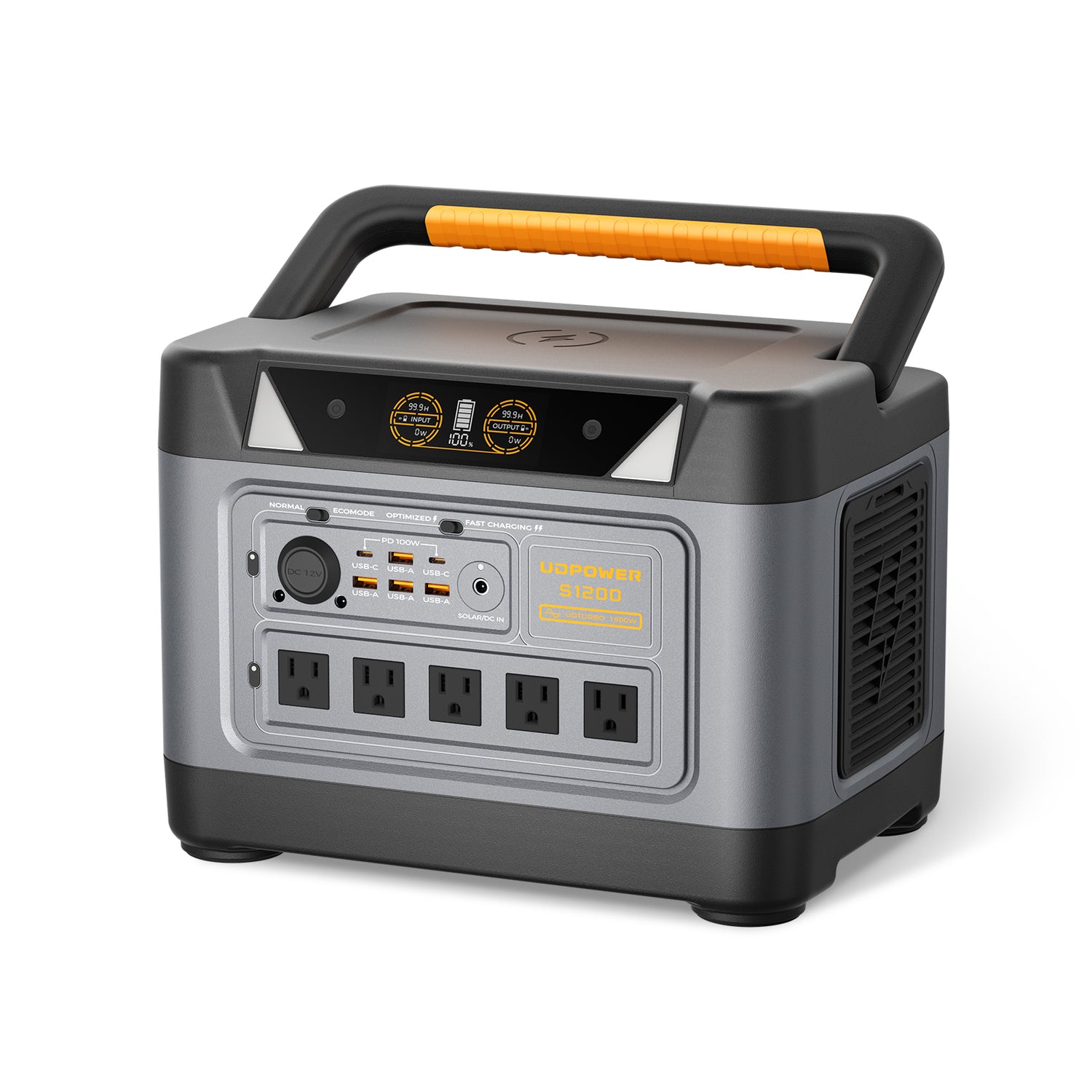
2) Better value if your real needs are lower: S1200
If your actual load list is fridge support, Wi-Fi, CPAP, lights, TV, fans, laptops, and small kitchen use, the UDPOWER S1200 may be the smarter buy. Many shoppers think they need “3000W” when what they really need is a reliable essentials-first backup plan with enough battery for one night or one day.
- Best for: outage essentials, RV basics, camping, home office backup, medical backup
- Why not to overspend: bigger inverter power only pays off if your real appliances actually need it
Also worth reading: how to choose the best portable power station for the money, portable power station vs generator for outages, and what size solar generator you need for a house.
FAQ
Can a 3000W portable power station run a refrigerator and a microwave?
Yes, in many cases it can. A true 3000W unit usually has enough inverter headroom for that kind of overlap. The bigger question is whether you should run both together from a battery when one of them is a short-burst kitchen load.
Can a 3000W portable power station run a space heater?
Usually yes on output. But that does not automatically make it a smart plan. A 1500W heater burns through stored energy fast, so it is one of the least efficient ways to use battery backup.
Can it run a window air conditioner?
Sometimes yes, especially with efficient inverter-style models. You still need to check startup behavior, the unit’s actual running draw, and how much runtime you expect.
Can it power an RV air conditioner?
Some RV AC setups may work, especially when startup current is controlled well. But this is not something to assume from BTU alone. AC type, compressor behavior, and startup demand matter more than the label most buyers look at first.
What is the difference between 3000W rated output and 3000W UDTURBO support?
Rated output is the baseline continuous output. On many brands, “surge” means a very short startup burst. UDPOWER uses UDTURBO as a boosted-output mode, so it should not be described with the same simplistic split-second surge language. The practical takeaway is still the same: you need to know the model’s base rated output, the higher-load mode it supports, and the efficiency tradeoff at that higher output level.
Is a 3000W portable power station enough for home backup?
It can be excellent for essentials and several comfort loads together. It is still not the same as whole-house backup. Think selective, high-value loads first.
What drains a large power station the fastest?
Electric heat and other high-watt resistance loads. Space heaters, toaster ovens, hot plates, and similar appliances can eat battery much faster than refrigerators, routers, lights, or fans.
Should I buy a 3000W unit if my biggest load is a fridge?
Not necessarily. If your real use is fridge backup, Wi-Fi, lights, CPAP, and device charging, a smaller model may be a better value. Bigger is only better when your real appliance list justifies it.
Final Take
A 3000W portable power station is a serious step up in flexibility. It can power the kind of mixed home and RV loads that smaller stations force you to juggle: refrigeration, connectivity, entertainment, work gear, medical devices, and many kitchen appliances. That is the upside.
The limit is not whether it can start a lot of things. The limit is whether your battery size and recharge plan match the way you actually live. That is why the best buyers look at continuous output, surge, battery capacity, and daily load habits together instead of chasing the biggest watt number they can find.
If you want the closest current UDPOWER fit for heavy-duty use, start with the S2400. If your real loads are more modest, the S1200 may be the smarter and more cost-effective choice.