

Can a Portable Power Station Run Your Refrigerator?
Last updated: July 8, 2026
Yes, a properly sized portable power station can run a refrigerator. The key is not only the fridge’s running watts. You also need enough surge power to start the compressor and enough battery capacity to cover the outage window.
Quick answer
For most U.S. homes, a 1,000–1,200Wh-class power station is a practical starting point for short refrigerator backup, while a 2,000Wh-class unit is the safer choice for overnight outages, older refrigerators, warmer kitchens, or households that want more margin.
If you are choosing from UDPOWER, the UDPOWER S1200 is a strong short-outage refrigerator backup option, while the UDPOWER S2400 is the better fit for longer runtime and higher startup surge headroom.

Can a portable power station run a refrigerator?
Yes. A portable power station can run a refrigerator when the power station meets two requirements:
- Output power: the inverter must handle the refrigerator’s running watts and compressor startup surge.
- Battery capacity: the battery must store enough watt-hours to cover the number of hours you need.
A common mistake is shopping only by “watts.” A 2,000W power station rating tells you how much power it can deliver at once. It does not automatically tell you how long your refrigerator will run. Runtime comes mostly from battery capacity, measured in watt-hours.

The 3 numbers that matter before you plug in a refrigerator
| Number to check | What it means | Where to find it | Why it matters |
|---|---|---|---|
| Running watts | The power the fridge uses while the compressor is running. | Appliance label, watt meter, or the refrigerator manual. | This tells you whether the power station can support the load after startup. |
| Startup surge | The short burst of power required when the compressor starts. | Manual, manufacturer support, or real-world watt meter testing. | If surge is too high, the power station may shut off even if the running watts look acceptable. |
| EnergyGuide kWh/year | The estimated annual energy use of the refrigerator. | Yellow EnergyGuide label or the DOE refrigerator energy rating tool. | This is often the best number for estimating real refrigerator runtime because fridges cycle on and off. |
For many modern full-size refrigerators, the compressor may only run part of the time. That is why a fridge rated at 150W while running may average much less over a full day. For backup planning, the EnergyGuide kWh/year number is usually more useful than a single running-watt number.
How to estimate refrigerator runtime
Use one of these two methods.
Method 1: Use the EnergyGuide label
This is the better method for full-size refrigerators because it accounts for cycling behavior.
Formula:
Average watts = annual kWh × 1,000 ÷ 365 ÷ 24
Estimated runtime = power station capacity × 0.90 ÷ average watts
Example: if your refrigerator uses 600 kWh/year, its estimated average draw is about 68.5W. A 1,190Wh-class power station with 90% usable conversion efficiency gives about 1,071Wh usable energy. Estimated runtime is about 15.6 hours before recharging.
Method 2: Use measured watts
If you use a plug-in watt meter, run the refrigerator long enough to capture several compressor cycles. A 10-minute reading is usually not enough. A 12–24 hour reading is much more helpful.
Conservative formula:
Estimated runtime = power station capacity × 0.90 ÷ measured average watts
If your meter only shows the compressor running watts, your estimate may look too short. If it shows a long-term average, your estimate will be closer to real use.
Runtime tables by fridge type
The estimates below use 90% usable conversion efficiency. Actual results vary with refrigerator age, compressor behavior, room temperature, door opening, ice maker use, and whether the fridge starts warm or already cold.
Estimated runtime by EnergyGuide annual use
| Refrigerator energy use | Average watts | UDPOWER C600 596Wh | UDPOWER S1200 1,190Wh | UDPOWER S2400 2,083Wh | Best interpretation |
|---|---|---|---|---|---|
| 300 kWh/year | 34W | About 15.7 hours | About 31.3 hours | About 54.8 hours | Efficient smaller fridge or very efficient full-size unit. |
| 400 kWh/year | 46W | About 11.7 hours | About 23.4 hours | About 41.1 hours | Good modern full-size refrigerator. |
| 600 kWh/year | 68W | About 7.8 hours | About 15.6 hours | About 27.4 hours | Common full-size refrigerator backup scenario. |
| 900 kWh/year | 103W | About 5.2 hours | About 10.4 hours | About 18.3 hours | Older, larger, garage, or less efficient refrigerator. |
| 1,200 kWh/year | 137W | About 3.9 hours | About 7.8 hours | About 13.7 hours | High-consumption refrigerator or fridge/freezer in hot conditions. |
Estimated runtime by measured average watt draw
| Measured average load | Common example | UDPOWER C600 596Wh | UDPOWER S1200 1,190Wh | UDPOWER S2400 2,083Wh |
|---|---|---|---|---|
| 30W | Efficient mini fridge or cycling 12V camping fridge | About 17.9 hours | About 35.7 hours | About 62.5 hours |
| 60W | Efficient full-size fridge average | About 8.9 hours | About 17.9 hours | About 31.2 hours |
| 100W | Less efficient full-size refrigerator | About 5.4 hours | About 10.7 hours | About 18.7 hours |
| 150W | Heavy cycling, warm room, or larger fridge | About 3.6 hours | About 7.1 hours | About 12.5 hours |
| 200W | High draw or compressor-on estimate | About 2.7 hours | About 5.4 hours | About 9.4 hours |
Important: if you estimate from compressor running watts only, your runtime may look shorter than real life because many refrigerators cycle on and off. If you estimate from the EnergyGuide label or a 24-hour watt-meter reading, the result is usually more useful.
Recommended UDPOWER models for refrigerator backup
Choose based on your refrigerator type, outage length, and how much safety margin you want.
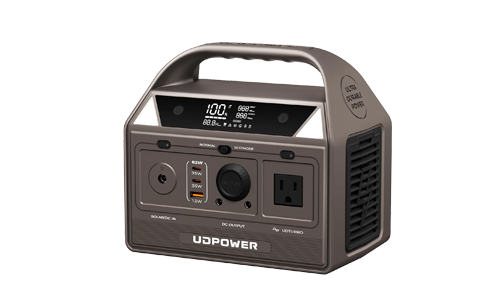
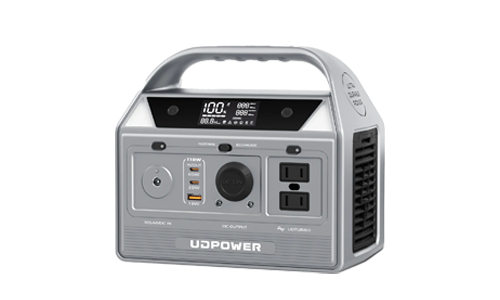
UDPOWER C600 Portable Power Station
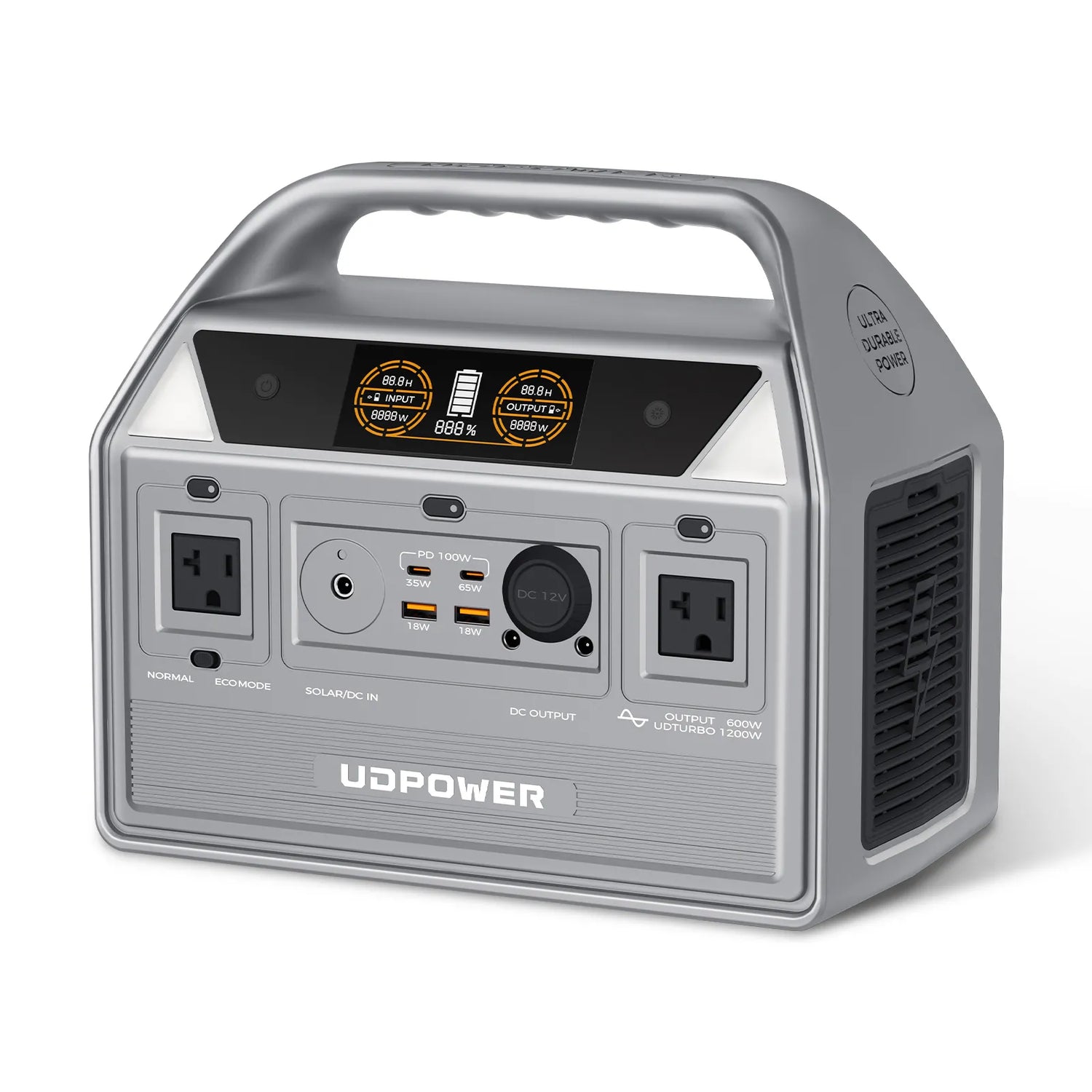
The C600 is best for camping fridges, mini fridges, beverage coolers, routers, lights, laptops, and compact emergency loads. It is not the first choice for a full-size kitchen refrigerator unless you have measured the refrigerator and know the startup surge is within range.
- Capacity: 596Wh LiFePO4
- AC output: 600W pure sine wave, 1200W surge
- Solar input: up to 240W
- Weight: about 12.3 lbs
- Best fit: camping fridge, mini fridge, short backup window, portable travel use
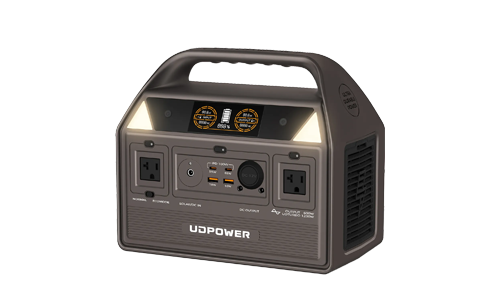
UDPOWER S1200 Portable Power Station
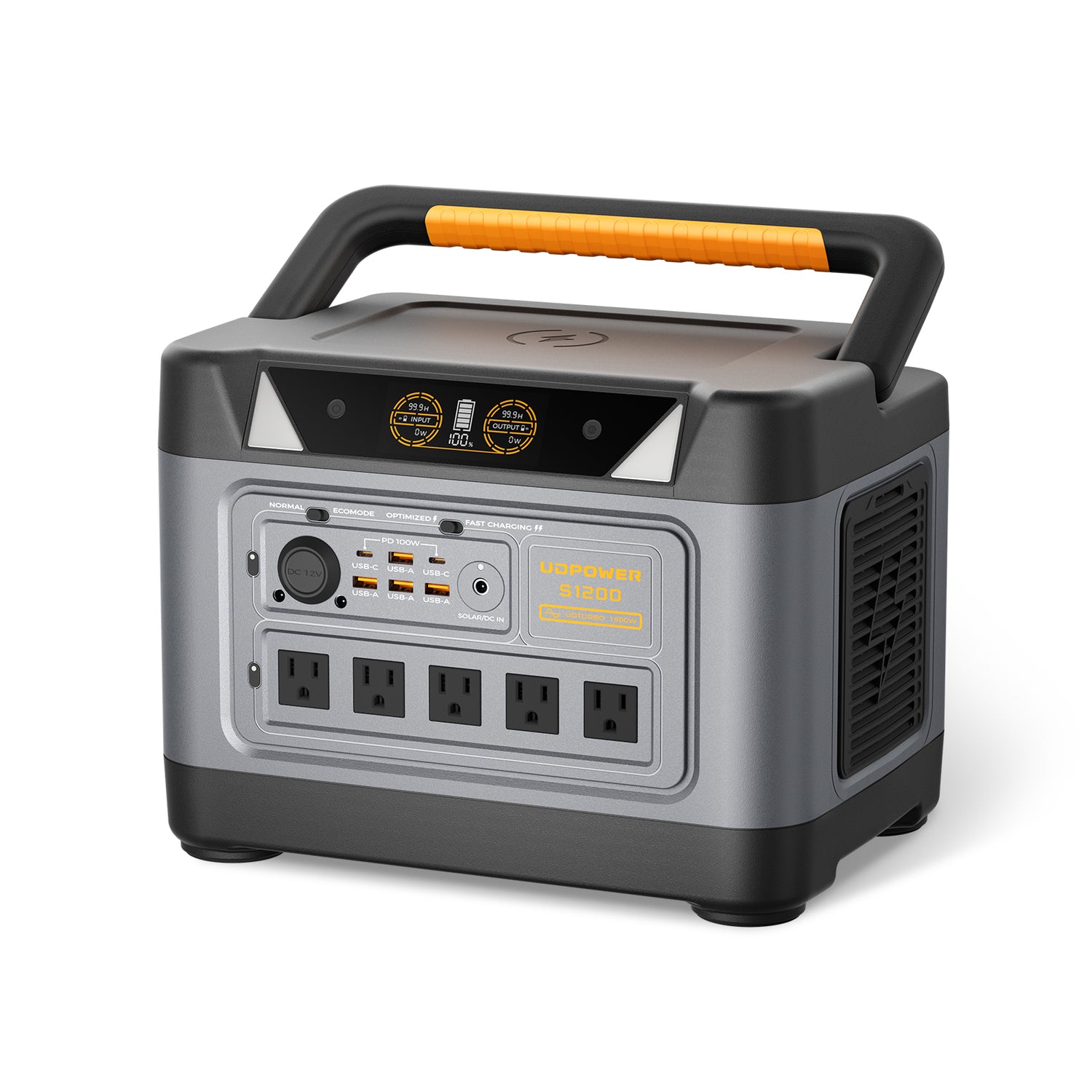
The S1200 is the practical middle choice for many refrigerators. It gives more inverter headroom than compact units, enough battery capacity for short outages or overnight protection with many efficient refrigerators, and UPS-style backup for selected essentials.
- Capacity: 1,190Wh-class LiFePO4
- AC output: 1200W pure sine wave, 1800W surge
- Solar input: DC7909, 12V–75V, 12A, 400W max
- UPS Prime: response time ≤10ms
- Weight: about 26.0 lbs
- Best fit: modern refrigerator, short outage, overnight backup, refrigerator plus small essentials
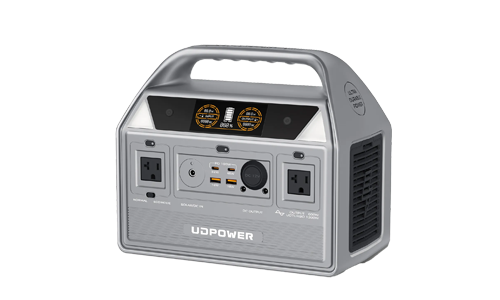
UDPOWER S2400 Portable Power Station
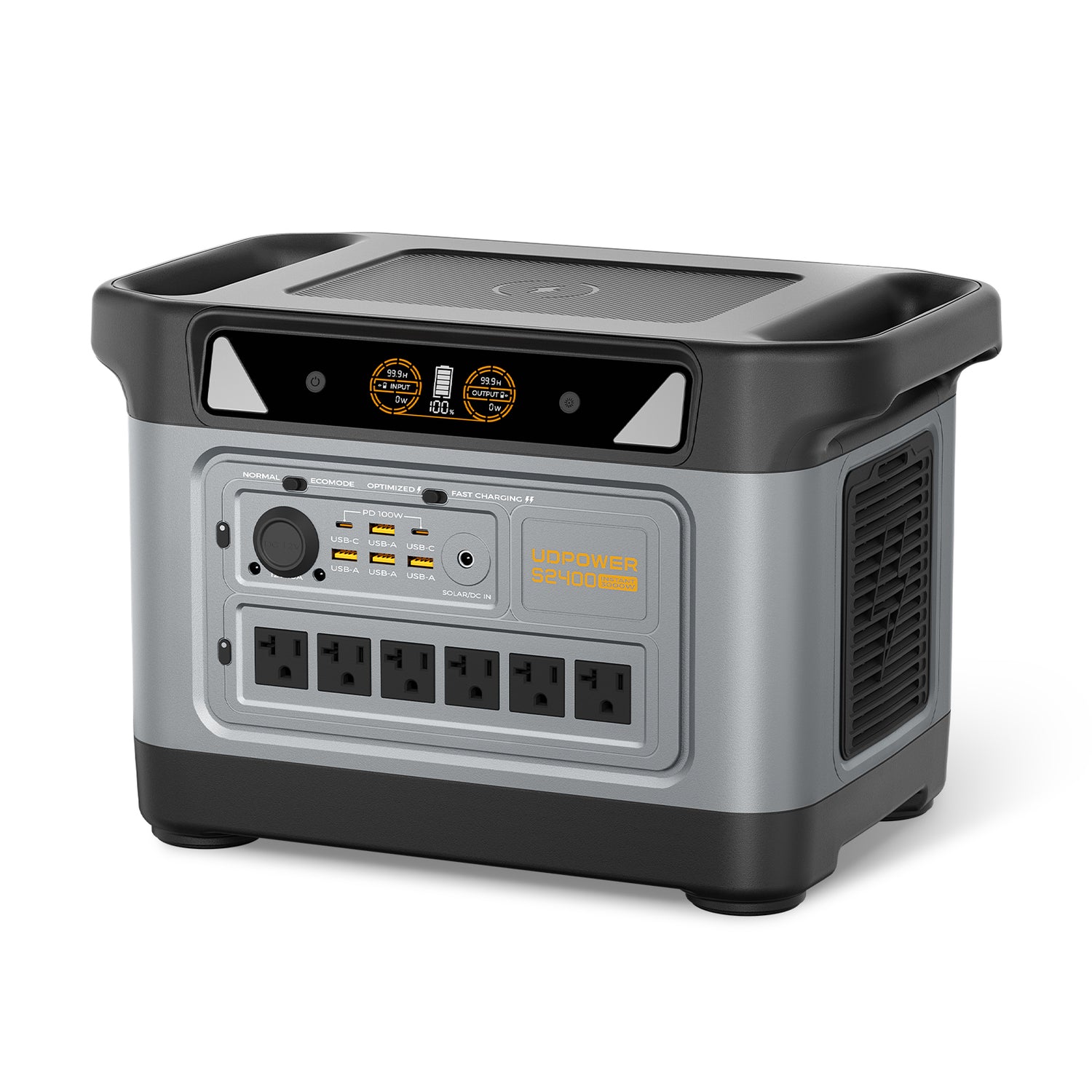
The S2400 is the better choice when refrigerator backup is a serious outage-prep priority. It has more capacity, more continuous AC output, and more surge headroom for compressor startup. It is also better when you want to run a refrigerator along with a Wi-Fi router, lights, fan, CPAP, or device chargers.
- Capacity: 2,083Wh LiFePO4
- AC output: 2400W pure sine wave, 3000W surge
- Solar input: DC7909, 12V–50V, 10A max, up to 400W
- UPS Prime: response time ≤10ms
- Weight: about 40.8 lbs
- Best fit: longer outages, older refrigerators, garage refrigerators, refrigerator plus other essentials
What size portable power station should you choose for a refrigerator?
| Your situation | Recommended capacity | Recommended output | UDPOWER fit | Why |
|---|---|---|---|---|
| Mini fridge, beverage cooler, camping fridge | 500–600Wh+ | 600W+ pure sine wave | C600 or larger | Compact fridges usually need less energy, but compressor startup still matters. |
| Modern full-size refrigerator for a short outage | 1,000–1,200Wh+ | 1200W+ with surge headroom | S1200 | Good balance of capacity, portability, and refrigerator startup headroom. |
| Full-size refrigerator overnight or longer | 2,000Wh+ | 2000W-class or higher | S2400 | More battery capacity gives real margin when the room is warm or the door is opened. |
| Older fridge, garage fridge, or high-surge compressor | 2,000Wh+ recommended | Higher surge headroom recommended | S2400 | Older compressors and hot garages can increase startup and runtime demand. |
| Refrigerator plus router, lights, fan, phones, or CPAP | 2,000Wh+ recommended | Enough output for all devices at once | S2400 | Extra loads reduce refrigerator runtime, so larger capacity is safer. |
For a deeper appliance-by-appliance estimate, use the UDPOWER runtime calculator. If you are comparing broader backup options, see the portable power station collection and solar generator kits.
Can solar panels keep a refrigerator running?
Solar can extend refrigerator runtime, but it should not be treated as guaranteed 24/7 power unless your daily solar input reliably exceeds your refrigerator’s daily energy use.
Solar estimate: daily solar watt-hours ≈ panel watts × peak sun hours × 0.70
The 0.70 factor allows for real-world losses from heat, angle, clouds, cable loss, and charging conversion.
| Solar setup | Example peak sun hours | Estimated daily solar input | What it can do for refrigerator backup |
|---|---|---|---|
| 120W panel | 4 hours | About 336Wh/day | Helpful for small loads, but usually not enough to fully offset a full-size refrigerator. |
| 210W panel | 4 hours | About 588Wh/day | May cover part of a modern refrigerator’s daily use in good sun. |
| 420W dual-panel setup | 4 hours | About 1,176Wh/day | Can significantly extend runtime and may offset many efficient refrigerators on sunny days. |
| 400W effective input limit | 5 hours | About 1,400Wh/day | Good target for longer daytime outage support, depending on refrigerator consumption. |
For solar-specific refrigerator planning, see How Many Solar Panels Do I Need to Run a Refrigerator? and Is It Worth Getting a Portable Solar Panel?.
How to connect a refrigerator to a portable power station safely
- Start with a fully charged power station. For storm season, charge it before the outage, not after the lights go out.
- Use the AC outlet, not low-power DC ports. A household refrigerator normally needs 120V AC power.
- Do not overload the power station. Add the refrigerator plus any router, lights, fan, or CPAP loads you plan to run.
- Let the refrigerator start by itself first. Avoid starting a microwave, coffee maker, or other large appliance at the same moment.
- Keep the refrigerator door closed. Every door opening adds heat and shortens runtime.
- Leave ventilation space around the power station. Do not cover the vents or place it in direct rain.
- Test before an emergency. Run your refrigerator through several compressor cycles and watch for overload warnings.
Do not use a portable power station as a whole-home electrical system unless your setup is designed and installed for that purpose. For a refrigerator, the simplest setup is usually direct plug-in from the refrigerator to the power station’s AC outlet.
Food safety during a power outage
A power station helps protect your refrigerator, but food safety still depends on temperature and time. U.S. food-safety guidance says a refrigerator can keep food safe for up to 4 hours during a power outage if the door stays closed. Perishable refrigerated foods should be discarded if they have been above 40°F for 4 hours or more.
| Situation | What to do | Why it matters | Source |
|---|---|---|---|
| Power just went out | Keep the refrigerator and freezer doors closed. | Closed doors slow temperature rise and reduce the power you need from backup. | FoodSafety.gov |
| Refrigerator has been off up to 4 hours | Food is generally safe if the door stayed closed. | This gives you a short window before refrigerator backup becomes urgent. | FDA |
| Perishable food above 40°F for 4+ hours | Discard perishable foods such as meat, poultry, seafood, milk, eggs, and leftovers. | Backup power does not make unsafe food safe again. | FoodSafety.gov |
| Preparing before storm season | Keep an appliance thermometer in the refrigerator and freezer. | Temperature is more reliable than guessing from outage length alone. | FDA |
Common refrigerator backup mistakes
| Mistake | Why it causes problems | Better approach |
|---|---|---|
| Buying by watts only | A high watt rating does not guarantee long runtime. | Check both output watts and battery watt-hours. |
| Ignoring startup surge | The refrigerator may trip the power station when the compressor starts. | Choose a pure sine wave unit with enough surge headroom. |
| Using compressor running watts as daily average | Runtime may look worse than real use because fridges cycle. | Use EnergyGuide kWh/year or a long watt-meter test. |
| Opening the door repeatedly | Warm air enters, the compressor runs more, and the battery drains faster. | Plan what you need before opening the fridge. |
| Expecting solar to work like a wall outlet | Clouds, shade, heat, and panel angle reduce real solar input. | Use solar as runtime extension and size panels with margin. |
Related UDPOWER guides
FAQ
Can a 1000Wh power station run a refrigerator?
Yes, in many cases. A 1000Wh-class power station can run many modern refrigerators for several hours, and sometimes overnight, depending on the fridge’s EnergyGuide consumption, compressor surge, room temperature, and door opening. For more margin, a 1,190Wh-class unit like the UDPOWER S1200 is a better starting point than smaller compact stations.
How long will a portable power station run a full-size refrigerator?
A full-size refrigerator may run anywhere from several hours to more than a day depending on its energy use and the power station capacity. Using 90% efficiency, an efficient 400 kWh/year refrigerator may run about 23 hours on the UDPOWER S1200 and about 41 hours on the UDPOWER S2400. A less efficient 900 kWh/year refrigerator may run about 10 hours on the S1200 and about 18 hours on the S2400.
Is a 600W power station enough for a refrigerator?
Sometimes for a mini fridge, beverage cooler, or camping fridge. For a full-size household refrigerator, 600W may be too close to the limit because compressor startup surge can be much higher than running watts. For home refrigerator backup, a 1200W or higher pure sine wave power station is usually a safer choice.
Does a refrigerator need pure sine wave power?
Pure sine wave AC output is recommended for refrigerators because they use compressor motors and control electronics. A pure sine wave inverter gives cleaner, more stable power than a basic modified sine wave inverter.
Can I run a refrigerator and other devices at the same time?
Yes, as long as the combined load stays within the power station’s rated output and the refrigerator still has enough surge headroom to start. For refrigerator plus router, lights, fan, phones, or CPAP, the UDPOWER S2400 gives more comfortable capacity and output margin than smaller units.
Can solar panels run a refrigerator forever?
Only if daily solar input consistently exceeds the refrigerator’s daily energy use plus system losses. In real life, clouds, shade, panel angle, heat, and shorter winter days reduce solar output. Solar panels are best viewed as a way to extend runtime and recharge during daylight, not as a guaranteed unlimited power source.
Should I plug the refrigerator into the power station before or after the outage?
If your power station supports UPS-style backup and your refrigerator is compatible with that setup, you may test it before an outage. For many homes, the simpler method is to keep the power station fully charged and plug the refrigerator into the AC outlet when grid power goes out. Always test your setup before relying on it in a storm.
Will a portable power station damage my refrigerator?
A properly sized pure sine wave power station should not damage a compatible refrigerator. Problems usually come from undersized output, insufficient startup surge, poor-quality extension cords, blocked ventilation, or overloading the power station with too many devices at once.
Choose the right refrigerator backup setup
For short outages, start with a 1,000–1,200Wh-class power station. For overnight protection, older refrigerators, garage refrigerators, or refrigerator plus other essentials, move up to a 2,000Wh-class setup with solar charging support.
View selection guide View portable power stations Get a runtime estimateRelated Articles


