

What Can a 3000 Watt Solar Generator Power?
A 3000W solar generator can run a lot more than phones and lights—but the real answer depends on three things: continuous output (watts), startup surge, and battery capacity (Wh). This guide shows what a 3000W-class unit can realistically power, what combinations work together, and how long it will last in real use.

Table of Contents
- Quick answer: what 3000W can handle
- 3000W vs 3000Wh (the mistake that causes bad estimates)
- 3 checks before plugging anything in
- What a 3000W solar generator can power
- Real load combinations that fit under 3000W
- How long it runs (runtime examples)
- How much solar you need to recharge it
- Best UDPOWER options by use case
- Common mistakes to avoid
- FAQ
- Related UDPOWER guides
Quick planning rules
- Keep total running load under the inverter limit
- Motors/compressors may need a startup spike
- Battery size (Wh) determines runtime
- Solar input limit caps recharge speed
- Check the appliance nameplate before buying
Quick answer: what a 3000W solar generator can handle
A 3000W solar generator can usually run most everyday household devices and many appliances, including a mix of lights, routers, TVs, laptops, kitchen appliances, and some motor loads—as long as the combined running wattage stays within the unit’s continuous output and the startup surge is supported.
In real life, a 3000W-class unit is often used for power outage essentials, RV/camping comfort loads, and off-grid cabin basics rather than “whole-home everything at once.”
3000W vs 3000Wh: the mistake that causes bad estimates
These two numbers sound similar, but they answer different questions:
- 3000W (watts) = how much power the inverter can deliver right now.
- 3000Wh (watt-hours) = how much energy is stored in the battery (runtime).
Example: if your battery has about 3000Wh nominal capacity, and your devices draw 600W total, your runtime is roughly 3000 ÷ 600 = 5 hours before efficiency losses and cycling behavior.
Real runtime is usually lower on AC loads because of inverter losses and because some appliances cycle on and off.
Back to top3 checks before plugging anything in
1) Check the device’s running watts
The safest number is the one on the appliance label, power brick, or spec sheet. Don’t rely only on generic lists. Different models can vary a lot.
2) Check startup surge (especially motors and compressors)
Pumps, fridges, freezers, and air-conditioning compressors can pull extra power when they start. That startup spike is why a device may trip a power station even if its “normal” wattage looks fine.
3) Check battery capacity and solar input limit
Even if the inverter can run the load, a small battery may not run it for long. Also, your recharge speed is limited by the station’s max solar input (for example, 150W, 240W, or 400W).
What a 3000W solar generator can power
The table below is a planning guide. Use it to estimate what fits under a 3000W inverter, then verify your exact device labels before you buy.
| Device / Category | Typical Running Watts | 3000W-Class Unit | What to watch for |
|---|---|---|---|
| LED lights (multiple rooms) | Usually low (depends on bulb count) | Yes, easy | Check total bulb wattage, not just bulb count. |
| Wi-Fi router + modem | Usually low | Yes, easy | Use the power adapter label (often shown in volts/amps). |
| Laptop(s) + phone charging | Usually low to moderate | Yes, easy | Charger labels are the fastest way to estimate load. |
| Flat-screen TV | About 120W (sample value) | Yes | Large TVs vary a lot by size and brightness setting. |
| Box fan / room fan | ~200W (box fan sample) | Yes | Lower-speed settings usually reduce draw. |
| Microwave | ~750–1100W (sample range) | Yes | Avoid stacking it with other heavy loads at the same time. |
| Coffee maker | ~900–1200W (sample range) | Yes | Heating devices draw hard but usually for short periods. |
| Toaster / toaster oven | ~850W / ~1200W (sample values) | Yes | Run these one at a time if you are also powering other appliances. |
| Hair dryer | ~1200W (sample value) | Yes | High setting may be much higher on some models. |
| Space heater | ~1000–1500W (sample range) | Yes, but limited runtime | Heaters drain batteries fast. Great for short use, not all-night heating. |
| Vacuum cleaner | ~800W (sample value) | Yes | Some vacuums spike higher at startup. |
| Well pump / water pump | ~1000–2000W (sample range) | Maybe | Motor startup can exceed running watts—check surge needs carefully. |
| Refrigerator / freezer | Varies by model | Usually yes (if startup is supported) | Check the nameplate, EnergyGuide label, or use a plug-in meter for a real reading. |
| Portable / window AC | Varies a lot by BTU and model | Sometimes | Compressor startup and running watts vary widely. Verify the exact model specs. |
| Electric range / whole-house HVAC / 240V appliances | Often too high or wrong voltage/output type | Usually no | Check both wattage and output voltage/outlet type before assuming compatibility. |
Sample watt values above are for planning only. Always verify your actual device label for the final decision.
Back to topReal load combinations that fit under 3000W
This is where 3000W units shine: not just one big appliance, but a useful combination of essentials.
| Scenario | Example devices | Estimated running load | Fit under 3000W? | Notes |
|---|---|---|---|---|
| Outage essentials | Router + modem, 6 LED bulbs, TV, phone chargers, laptop | Low to moderate (often under 400W) | Yes, very comfortable | This is an easy use case and gives the best runtime. |
| Kitchen burst use | Microwave + lights + router | ~900–1400W total (depending on microwave) | Yes | Use microwave in short bursts to preserve battery. |
| Morning coffee setup | Coffee maker + toaster + lights | ~1800–2200W total | Yes | Still fine, but avoid adding more heating loads at the same time. |
| Comfort + entertainment | TV + box fan + router + laptop + lights | ~350–650W total | Yes | Great for home backup and RV evenings. |
| Space-heater moment | Space heater + router + a few lights | ~1100–1700W total | Yes | Works, but runtime drops fast because heaters are constant heavy loads. |
| Pump load | Well pump or water pump + basic electronics | ~1000–2200W running (varies) | Maybe | Startup surge is the key risk. Verify specs before relying on this. |
| “Too much at once” example | Microwave + coffee maker + space heater | ~2600–3800W total | Usually no / not reliable | This is why load scheduling matters more than headline wattage. |
How long it runs (runtime examples)
Runtime depends on battery size, not just inverter watts. The table below uses a practical planning approach for AC loads.
The 0.85 factor is a simple planning shortcut for inverter losses and real-world usage. Actual results vary by device type and conditions.
| Battery size (nominal) | Usable for planning (≈85%) | 300W load | 600W load | 1000W load | 1500W load |
|---|---|---|---|---|---|
| 3000Wh class | ~2550Wh | ~8.5 hours | ~4.3 hours | ~2.6 hours | ~1.7 hours |
| 2500Wh class | ~2125Wh | ~7.1 hours | ~3.5 hours | ~2.1 hours | ~1.4 hours |
| UDPOWER S2400 (2083Wh) | ~1771Wh | ~5.9 hours | ~3.0 hours | ~1.8 hours | ~1.2 hours |
| UDPOWER S1200 (1190Wh) | ~1012Wh | ~3.4 hours | ~1.7 hours | ~1.0 hour | ~0.7 hour |
| UDPOWER C600 (596Wh) | ~507Wh | ~1.7 hours | ~0.8 hour | ~0.5 hour | ~0.3 hour |
Fridge note (important)
Refrigerators don’t draw full power nonstop—they cycle on and off. That’s why plug-in meters and EnergyGuide labels are more useful than generic “fridge wattage” lists. For outage planning, test your actual refrigerator if possible.
Back to topHow much solar you need to recharge it
Solar recharge speed depends on your panel wattage, weather, season, panel angle, and the power station’s solar input limit.
A simple planning factor is 0.65 to 0.80. For quick estimates, many people use 0.70. Use your location in a solar production estimator for a better answer.
| Solar array size | 3 peak sun hours | 4 peak sun hours | 5 peak sun hours | 6 peak sun hours |
|---|---|---|---|---|
| 200W array | ~420Wh/day | ~560Wh/day | ~700Wh/day | ~840Wh/day |
| 400W array | ~840Wh/day | ~1120Wh/day | ~1400Wh/day | ~1680Wh/day |
| 600W array | ~1260Wh/day | ~1680Wh/day | ~2100Wh/day | ~2520Wh/day |
| 800W array | ~1680Wh/day | ~2240Wh/day | ~2800Wh/day | ~3360Wh/day |
Why the power station input limit matters
Even if you own more panels, the station can only accept up to its rated solar input. For example, a station capped at 400W solar input won’t charge faster just because you connect 700W of panels beyond what it can use.
Best UDPOWER options by use case
If you’re shopping in this “3000W discussion” range, the key is whether you need true 3000W-class behavior for short high-load moments, or you mainly need longer runtime for essentials. Here’s a practical UDPOWER lineup view:
| UDPOWER model | Capacity | AC output | Solar input | Best for | Why it fits |
|---|---|---|---|---|---|
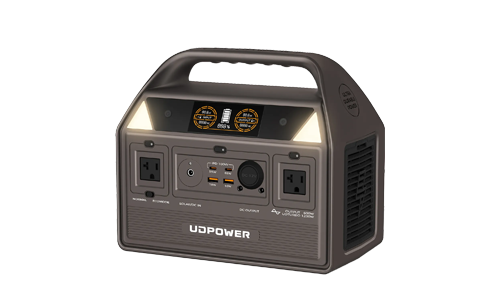
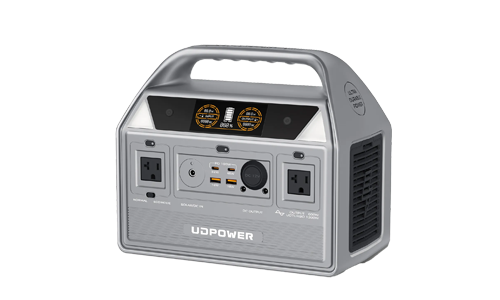
| S2400 | 2083Wh | 2400W AC + 3000W UDTURBO | 400W max | Home backup essentials, RV, higher-load appliance scheduling | Closest match for people searching “3000W” behavior, with stronger inverter headroom than mid-size units. |
| S1200 | 1190Wh | 1200W (1800W surge) | 400W max | Fridge + router + lights style outage backup | Excellent balance for essentials and strong solar input for its size. |
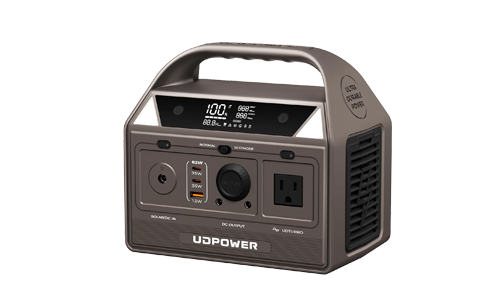
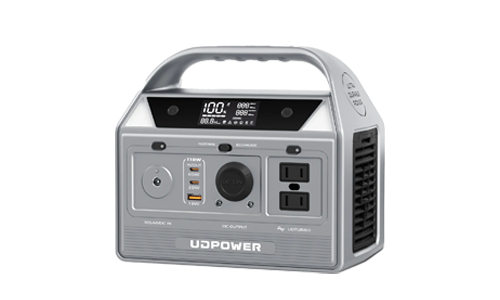
| C600 | 596Wh | 600W (1200W peak) | 240W max | Camping, routers, laptops, CPAP-type low/moderate loads | Portable and efficient for small bundles, but not a substitute for 3000W-class appliance use. |
| C400 | 256Wh | 400W (800W surge) | 150W max | Lights, charging, short trips, emergency electronics | Great for compact backup, but capacity and output are intentionally limited. |
Use your actual load list and compare it with a runtime calculator: Battery Runtime Estimator (Watts to Wh).
Make sure panel voltage and connector compatibility are correct before connecting: Solar Charging Voltage & Safety Guide.
Common mistakes to avoid
-
Confusing 3000W with 3000Wh
Output and runtime are not the same thing. A high-output unit can still have a short runtime if battery capacity is small. -
Ignoring startup surge
Motor and compressor loads can trip a station even when running watts look safe. -
Using generic appliance watt lists as final numbers
They are fine for planning, but your actual device label wins every time. -
Overlooking the solar input cap
Your panels may be bigger than what the station can accept. -
Trying to power everything at once
Load scheduling is usually the difference between “works great” and “why did it shut off?”
FAQ
Can a 3000W solar generator run a refrigerator?
Usually yes, but you need to confirm the refrigerator’s label specs and startup behavior. Fridges cycle on and off, so real-world runtime can be better than a simple constant-load estimate.
Can it run a microwave and a coffee maker together?
Often yes, but it depends on the exact microwave and coffee maker. Many combinations will still fit under 3000W, but stacking more heating loads at the same time can push you over the limit.
Can a 3000W solar generator run a space heater?
Yes, many space heaters are in the 1000–1500W range, which is within 3000W. The bigger issue is battery runtime, because heaters draw high power continuously.
Can it run a portable air conditioner?
Sometimes. Portable and window AC units vary a lot, and compressor startup matters. Check your model’s wattage and startup demand before relying on it.
How long will a 3000W solar generator run my devices?
Runtime depends on battery capacity (Wh) and your total running load. A 3000Wh-class battery running a 600W load may deliver roughly 4–5 hours in practical AC use, depending on efficiency and device behavior.
What solar panel size is best for a 3000W-class setup?
It depends on your daily energy use and the power station’s solar input limit. A common planning range is 400W–800W of panels, but the station can only accept up to its rated solar input.
Is the UDPOWER S2400 a true 3000W power station?
The S2400 is rated at 2400W AC output and supports a 3000W UDTURBO mode. It’s a strong option for people comparing “3000W-class” use cases, but always match the unit’s continuous output to your actual load plan.
What’s the safest way to size a solar generator for home backup?
Start with your must-run devices, read their labels, add running watts, then check startup surge for motors/compressors. After that, choose battery capacity based on how many hours you want the system to last.
Related UDPOWER guides
If you want to turn this into a real outage-ready setup, these guides make the next step easier:
External sources used in this guide
- U.S. Department of Energy: Estimating Appliance and Home Electronic Energy Use
- FTC Consumer Advice: How to Use the EnergyGuide Label
- Virginia Cooperative Extension: Providing Backup Power During a Power Outage
- NREL PVWatts Calculator
Related Articles


