Can a 3000 Watt Generator Run a House?
A 3000 watt generator can usually power essential household loads like a refrigerator, lights, Wi-Fi, TV, and some small appliances during an outage, but it typically cannot run an entire house the way you normally live. This guide explains what a 3000W generator can realistically handle, which appliances are too demanding, how to estimate startup and running loads, and when a battery backup option like UDPOWER makes more sense for quiet indoor emergency power.
Yes—but only if you mean the right part of your house, not your entire home the way you normally use it. A 3000 watt generator can usually keep the most important things going during an outage: a refrigerator, internet gear, lights, TV, phone charging, and in some cases a furnace blower, sump pump, or small window AC. What it usually cannot do is make your home feel like the power never went out.
If you’re comparing battery backup or solar generator setups instead of fuel-only generators, you may also want to read What Can a 3000 Watt Solar Generator Power? and Can a Solar Generator Power a House?. They’re helpful if you’re trying to balance power, runtime, and recharge options for longer outages.

Quick answer
A 3000 watt generator can usually run essential parts of a house. It usually cannot run an entire home the way you normally live in it.

What “run a house” really means

This question causes confusion because different people mean different things when they say “run a house.”
- Essential backup: keeping food cold, communication working, some lights on, and maybe one comfort or safety load.
- Normal living: heating, cooling, hot water, laundry, cooking, entertainment, and convenience loads with no real trade-offs.
A 3000 watt setup can often handle the first situation well. It usually struggles with the second.
Common appliance watts and startup load
The numbers below are best used as planning references. Your actual appliance may draw more or less power, so it’s always smart to check the label on your own unit before buying a generator.

| Appliance | Typical running load | Typical startup / peak | 3000W-class verdict | Source |
|---|---|---|---|---|
| Refrigerator / freezer | 132–192W | Up to 1200W | Usually yes. One of the most common must-run loads. | Honda wattage guide |
| Gas furnace blower | 500W | 750W | Often yes, especially if the rest of your setup is modest. | Honda wattage guide |
| Sump pump (1/2 HP) | 1050W | 2150W | Possible, but it becomes one of the main loads you have to plan around. | Honda wattage guide |
| Window AC (10,000 BTU) | 1500W | 2200W | Sometimes, if you keep everything else light. | Honda wattage guide |
| Microwave | 1000–1500W | Near running load | Usually fine one at a time, but not alongside several other medium loads. | Honda wattage guide |
| TV + streaming | 71–180W | Minimal | Easy load. Entertainment rarely causes the problem. | Silicon Valley Power |
| Electric range element | 2100W | 2100W | Possible by itself in some cases, but not a practical whole-home plan. | Honda wattage guide |
| Electric water heater | 4500W | 4500W | No. | Honda wattage guide |
| Central AC (3 ton example) | 3000W | Often much higher at startup | Not realistic for normal whole-house cooling. | Silicon Valley Power |
If you’re comparing this with battery-based backup instead of a fuel generator, you may also find this helpful: What Can a 3000 Watt Solar Generator Power?.
Real load plans that fit under 3000W
This is where the question becomes practical. Most people don’t need a theory lesson—they need to know what a realistic backup setup actually looks like.

| Scenario | Example loads | Total running load | Startup stress moment | Verdict |
|---|---|---|---|---|
| Essentials in a gas-heated home | Fridge 192W + furnace blower 500W + router 25W + 8 LED bulbs 80W + TV 120W | 917W | Fridge startup with the rest already on | Very realistic and comfortable. |
| Essentials + microwave use | Fridge 192W + blower 500W + router 25W + 4 bulbs 40W + microwave 1000W | 1757W | Fridge startup while microwave is running | Often workable if you keep other loads low. |
| Small room cooling plan | Window AC 1500W + fridge 192W + router 25W + 4 bulbs 40W | 1757W | Window AC startup | Possible in many cases. Much more realistic than central AC. |
| Basement protection first | Sump pump 1050W + fridge 192W + router 25W + 4 bulbs 40W | 1307W | Sump startup | Very reasonable if flood protection is the priority. |
| Electric cooking + “normal life” expectations | Range 2100W + fridge 192W + blower 500W + router 25W + lights 40W | 2857W | Any motor startup pushes comfort margin away | Bad plan, even if the math looks close. |
What usually won’t work
This is where a lot of articles get overly optimistic. A 3000 watt generator can be extremely useful, but it is not a full replacement for normal utility power.

Best UDPOWER options for this use case
If you’re looking at UDPOWER specifically, the most practical approach is to match the product to what you actually need during an outage—not just chase the biggest number.
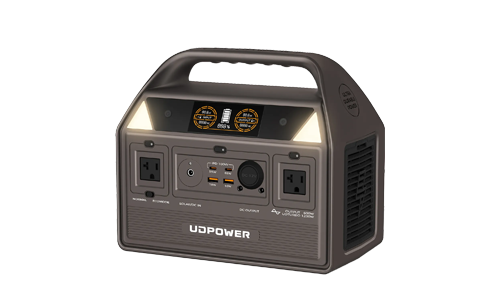
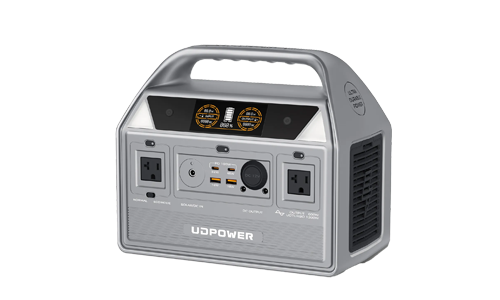
UDPOWER S2400
A strong option if you want more headroom for home essentials like a refrigerator, internet gear, lights, small kitchen use, and selected motor loads.
- 2083Wh battery
- 2400W pure sine wave AC output
- Surge support up to 3000W
- Solar input 12–50V, 10A max, up to 400W
- UPSPRIME switchover ≤10ms
- 6 AC outlets + broad DC output mix

UDPOWER S1200
A solid choice if your real goal is food safety, communication, lighting, device charging, and a few smaller essential loads.
- 1190Wh battery
- 1200W output
- UDTURBO up to 1800W
- Solar input up to 400W
- UPSPRIME <10ms listed on page
- About 26.0 lbs

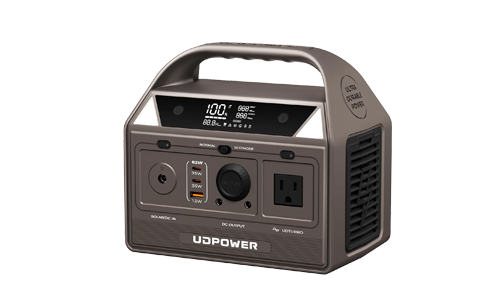
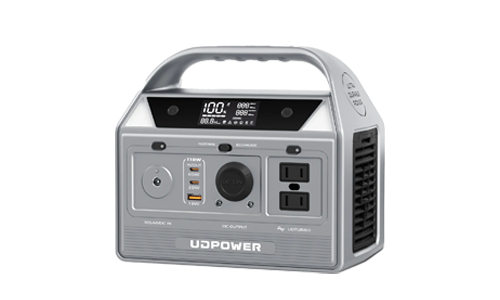
UDPOWER C600
Best for lighter outage needs such as routers, charging, lights, laptops, and other small emergency electronics.
- 596Wh battery
- 600W rated output
- Peak 1200W
- 2 AC outlets
- LiFePO4 battery
- Compact emergency / travel backup role

If you’re deciding between the two most relevant home-backup models, this comparison may help: UDPOWER S1200 vs. S2400.
Battery runtime examples
If you’re comparing a fuel generator with a battery backup setup, runtime matters just as much as power output. A watt number alone never tells the whole story.
That 0.85 planning factor is a simple way to estimate real-world AC runtime. If you want a deeper explanation of how the math works, this guide breaks it down clearly: Battery Runtime Basics: Watts → Watt-hours + Real-World Efficiency.
| Example load | C600 (596Wh) | S1200 (1190Wh) | S2400 (2083Wh) | What it means |
|---|---|---|---|---|
| Router + modem only (25W) | About 20.3 hours | About 40.5 hours | About 70.8 hours | Internet continuity is one of the easiest outage wins. |
| Fridge planning load (80W average) | About 6.3 hours | About 12.6 hours | About 22.1 hours | Real fridges cycle on and off, so actual results vary. |
| Essentials bundle (200W average) | About 2.5 hours | About 5.1 hours | About 8.9 hours | Useful for lights, charging, Wi-Fi, and small electronics. |
How solar fits into longer outages
A 3000W-class setup is not only about what you can run at one time. In a long outage, the bigger question is often: how will you recharge?

That is where solar can make a real difference. It can turn a one-night backup plan into something much more useful over a multi-day outage. But the solar side has to be matched correctly. Panel voltage, current, and input limits matter more than many people expect.
If you’re still choosing between a battery setup and a fuel generator, this comparison can help: Portable Power Station vs Generator for Power Outages.
Safe setup rules
No generator article is complete without safety. The most expensive mistake is not buying the wrong size—it’s using the right size the wrong way.
| Rule | Why it matters | Source |
|---|---|---|
| Run portable generators outdoors and at least 20 feet away from the home, doors, windows, and vents. | Carbon monoxide can move indoors fast and kill without warning. | Ready.gov |
| Keep the setup dry and use heavy-duty, outdoor-rated cords. | Shock and fire risk rise quickly when cords are under-rated or wet. | Ready.gov |
| Never backfeed a house through an outlet. | It is dangerous for occupants, neighbors, and utility workers. | NIOSH |
FAQ
Can a 3000 watt generator run a refrigerator and freezer?
Usually yes, especially if they are modern units and you are not stacking several other medium loads at the same time. If keeping food cold is your main concern, this guide may help: Best Refrigerator Power Backup Options.
Can a 3000 watt generator run central air?
Usually no for realistic home backup. A small window AC is much more realistic than a central system.
Can it run a gas furnace?
It can often run the blower on a gas furnace. That is very different from running an electric furnace, which is generally far beyond this size class.
Can a 3000 watt generator run a well pump?
Sometimes yes, sometimes no. Pumps are startup-heavy loads, so the exact model matters more than the headline wattage on the generator box.
What if I want quiet indoor backup instead of a gas generator?
That is where a battery power station becomes attractive. The strongest current UDPOWER fit in this conversation is the S2400. If you want a side-by-side comparison, see S1200 vs. S2400.
How do I estimate whether my exact load list will fit?
Start with Watts → Watt-hours, then move to Runtime Planning for Outages. That will give you a much better answer than guessing from one watt number alone.
Final takeaway
A 3000 watt generator can run a house only if your definition of “run a house” is realistic. It is usually strong enough for a smart essentials-first outage plan. It is usually not strong enough for normal all-electric comfort.
For most homeowners, the better question is not whether 3000 watts can run the whole house. It is whether 3000 watts can keep the right things running for the amount of time that actually matters.
Once you think about backup power that way, it becomes much easier to choose between a generator, a battery power station, or a larger backup solution.
Related Articles