

How Much Does a Portable Power Station Cost?
Last updated: July 24, 2026
How Much Does a Portable Power Station Cost?
Most consumer portable power stations cost between $150 and $1,500, although compact models may sell for less than $150 and expandable home-backup systems can cost $5,000 or more.
A practical 500–600Wh model generally costs about $250–$750. A 1,000–1,200Wh unit usually costs about $350–$1,300, while a 2,000Wh power station commonly falls between $700 and $2,000.
Capacity is only part of the price. Inverter output, battery chemistry, charging speed, solar input, UPS capability, weight, warranty coverage and included accessories can make two similarly sized power stations cost very different amounts.
The fastest way to judge value is to compare the actual checkout price per watt-hour, confirm that the inverter can start your appliances and then calculate the total system cost after solar panels, cables and other accessories.

Portable Power Station Prices by Capacity
Battery capacity is measured in watt-hours, or Wh. A 1,000Wh battery contains roughly twice the stored energy of a 500Wh battery, but it will not necessarily cost exactly twice as much.
Larger power stations often deliver a lower cost per watt-hour because the display, battery management system, enclosure, charging electronics and control board are shared across a larger battery. Smaller units may cost more per watt-hour in exchange for easier carrying and storage.
| Battery capacity | Typical current price | Common output range | Usually suitable for | Market references |
|---|---|---|---|---|
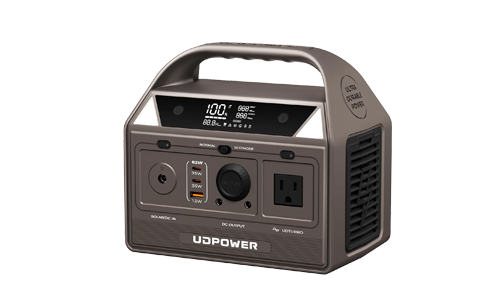
| Under 300Wh | $100–$350 | 200–600W | Phones, cameras, lights, routers, laptops and brief CPAP backup | UDPOWER C400 |
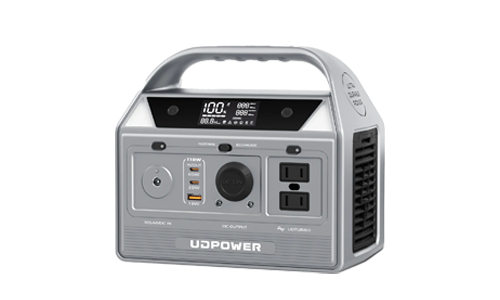
| 300–700Wh | $250–$750 | 500–1,000W | Weekend camping, laptop work, CPAP, small refrigerators and electronics | UDPOWER C600; BLUETTI AC60 |
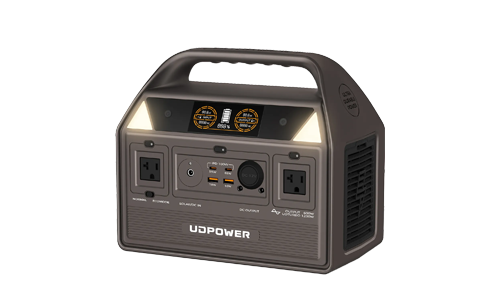
| 700–1,500Wh | $350–$1,300 | 1,000–2,200W | Home-outage essentials, larger appliances, long CPAP use and RV trips | UDPOWER S1200; Anker SOLIX C1000 |
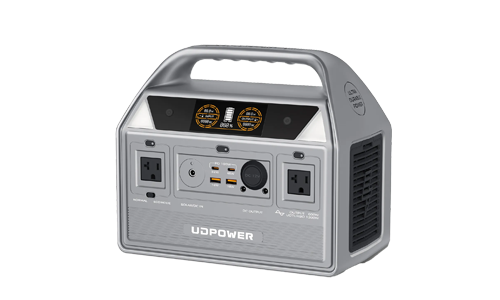
| 1,500–2,500Wh | $700–$2,000 | 1,800–3,000W | Refrigerators, microwaves, sump pumps, power tools and heavier outage loads | UDPOWER S2400; BLUETTI AC200P L |
| 2,500–5,000Wh or expandable | $1,500–$5,000+ | 3,000–7,000W+ | Longer home backup, 240V-capable systems, high-demand RVs and expandable installations | Anker SOLIX F3800; BLUETTI AC500 |
The Three Prices Every Buyer Should Compare
A product page normally shows one large price, but that number does not tell you whether the power station is affordable for your actual use. Compare these three figures instead.
1. The Actual Checkout Price
Use the price of the exact variant you plan to buy. A page may default to a solar-generator bundle even when a lower-priced unit-only option is available. The crossed-out list price is less useful than the amount shown in your cart.
2. The Price per Watt-Hour
Price per Wh shows how much you are paying for stored battery capacity. It is useful for comparing differently sized products, especially when both use similar battery chemistry.
3. The Complete System Price
The complete system price includes anything required to make the purchase work for your situation:
- Portable power station
- Solar panel, when off-grid recharging is required
- Parallel or extension cables
- Protective bag or weather-safe storage
- Taxes and location-dependent shipping charges
- Professional electrical equipment when connecting to home circuits
What Makes One Portable Power Station Cost More?
Two products may both advertise 1,000Wh, yet one may cost several hundred dollars more. The difference usually comes from the complete electrical system rather than the battery capacity alone.
| Cost factor | What it changes | Why it matters in real use | What to verify |
|---|---|---|---|
| Battery capacity | How much energy can be stored | Determines how long equipment can run before recharging | Rated watt-hours, not only marketing terms such as “large capacity” |
| Continuous inverter output | How much AC power can be delivered at once | Determines whether microwaves, tools, pumps and other high-watt devices can run | Rated output and surge output separately |
| Battery chemistry | Cycle life, weight, temperature behavior and long-term value | LiFePO4 batteries are commonly selected for frequent use and long ownership | Chemistry, advertised cycle conditions and remaining-capacity definition |
| Fast AC charging | How quickly the battery can be restored from a wall outlet | A short recharge window can matter during rolling outages or travel stops | Time from 0% to 80% and 0% to 100% |
| Solar input | How much solar power the station can accept | A larger panel is not helpful when the station limits input to a much lower wattage | Voltage range, current limit, connector and maximum accepted wattage |
| UPS or EPS function | How quickly connected equipment transfers to battery power | Useful for routers, computers, medical-support equipment and other interruption-sensitive loads | Published transfer time and whether the function covers your intended outlets |
| Ports and controls | Number and type of devices that can connect | More outlets may reduce the need for power strips and adapters | AC outlets, USB-C wattage, regulated DC outputs and app dependence |
| Weight and enclosure | Portability, protection and cooling | A lower-cost unit that is too heavy to move may not fit an emergency plan | Total weight, handle design, dimensions and storage requirements |
| Warranty and support | Risk after purchase | A longer warranty may provide more value than a small initial discount | Warranty term, registration rules, return window and who pays return shipping |
How to Calculate Portable Power Station Price per Watt-Hour
Price per Wh is one of the quickest ways to identify an unusually expensive or unusually competitive power station.
| Price per rated Wh | General interpretation | What to check before buying |
|---|---|---|
| Below $0.40/Wh | Very strong sale value, especially for a larger LiFePO4 model | Confirm it is a complete power station rather than an expansion battery |
| $0.40–$0.70/Wh | Competitive for many mainstream products | Compare inverter output, charging speed, weight and warranty |
| $0.70–$1.00/Wh | Common for compact, rugged or feature-rich models | Decide whether portability or special features justify the premium |
| Above $1.00/Wh | Premium pricing or a small-capacity product | Look for waterproofing, unusually low weight, special certifications or included accessories |
Independent testing publications have noted that competitive sale pricing for some current power stations has moved toward approximately $0.40 per Wh, compared with much higher pricing several years ago. See the latest OutdoorGearLab portable power station comparison for an additional market reference.
Current UDPOWER Cost and Value Comparison
The following table compares current unit prices with rated capacity. Estimated usable AC energy applies a 90% planning efficiency so the numbers are more useful for appliance-runtime calculations.
Actual efficiency changes with load size, temperature, inverter idle consumption, battery state and whether AC, USB or DC outputs are used.
| Model | Price checked July 24, 2026 | Rated capacity | Rated AC output | Estimated usable AC energy | Price per rated Wh | Official source |
|---|---|---|---|---|---|---|
| UDPOWER C400 | From $169.99 unit only | 256Wh | 400W | About 230Wh | About $0.66/Wh | C400 product page |
| UDPOWER C600 | $289.99 unit only | 596Wh | 600W | About 536Wh | About $0.49/Wh | C600 product page |
| UDPOWER S1200 | $399.99 unit only | 1,190Wh | 1,200W | About 1,071Wh | About $0.34/Wh | S1200 product page |
| UDPOWER S2400 | $699.99 unit only | 2,083Wh | 2,400W | About 1,875Wh | About $0.34/Wh | S2400 product page |
How Much Does It Cost to Charge a Portable Power Station?
Charging from a household outlet is normally one of the smallest costs of owning a portable power station.
The U.S. Energy Information Administration reported a national residential average electricity price of 18.44 cents per kWh for May 2026. Local utility rates may be higher or lower.
| Model | Battery capacity | Estimated wall energy for a full charge | Estimated cost at $0.1844/kWh | Cost for 50 full charges |
|---|---|---|---|---|
| UDPOWER C400 | 0.256kWh | About 0.284kWh | About $0.05 | About $2.62 |
| UDPOWER C600 | 0.596kWh | About 0.662kWh | About $0.12 | About $6.10 |
| UDPOWER S1200 | 1.190kWh | About 1.322kWh | About $0.24 | About $12.19 |
| UDPOWER S2400 | 2.083kWh | About 2.314kWh | About $0.43 | About $21.33 |
Electricity price source: U.S. Energy Information Administration, Electric Power Monthly Table 5.3.
Does Adding a Solar Panel Save Money?
A solar panel can restore power when a wall outlet is unavailable, but it should not automatically be treated as a fast way to reduce a household electricity bill.
Grid charging costs only a few cents to a few dimes for most portable power stations. The main value of a portable solar panel is access to energy during camping, RV travel, extended outages and other off-grid situations.
| Configuration checked July 24, 2026 | Unit-only price | Bundle price | Solar add-on difference | Official source |
|---|---|---|---|---|
| C400 with 40W solar panel | $169.99 | $239.99 | $70 | C400 configurations |
| C600 with 120W solar panel | $289.99 | $439.99 | $150 | C600 configurations |
| S1200 with 120W solar panel | $399.99 | $549.99 | $150 | S1200 configurations |
| S1200 with 420W solar package | $399.99 | $799.99 | $400 | S1200 configurations |
| S2400 with 120W solar panel | $699.99 | $849.99 | $150 | S2400 configurations |
| S2400 with 420W solar package | $699.99 | $1,149.99 | $450 | S2400 configurations |
A More Useful Way to Think About Solar Value
At the national electricity rate used above, a complete grid recharge of the 2,083Wh S2400 costs approximately $0.43. A $450 solar-package upgrade would therefore require more than 1,000 equivalent full recharges to offset its price through avoided grid electricity alone.
Real solar production also changes with season, clouds, temperature, panel angle, shade and conversion losses.
Browse complete combinations on the UDPOWER solar generator collection.
Hidden Costs and the Total System Budget
The unit price may be the largest part of the purchase, but it is not always the final amount. Build a complete budget before choosing between two products.
| Possible additional cost | When it may be needed | How to avoid an unnecessary purchase |
|---|---|---|
| Solar panel | Off-grid trips or outages that may last longer than one battery charge | First decide whether vehicle or wall charging will already meet your needs |
| Parallel cable | Connecting two compatible solar panels to one supported input | Check whether the selected dual-panel bundle already includes one |
| Extension cable | Placing a solar panel in sunlight while keeping the station indoors or in shade | Confirm connector type, cable length and supported voltage/current |
| Protective storage | Frequent vehicle travel, dusty storage or transporting the unit with other equipment | Store indoors in a dry, temperature-controlled location when possible |
| Higher-output charger | Some models require an optional adapter to reach their fastest advertised charging rate | Check what is included in the product box |
| Taxes and special-area shipping | Depends on destination, product classification and local tax rules | Enter the complete delivery address before comparing final cart prices |
| Professional home connection equipment | When safely powering selected household circuits instead of plugging appliances directly into the station | Request a local licensed-electrician quote before buying the power system |
| Expansion battery | When a supported system needs longer runtime without a second inverter | Verify expandability before buying the base unit |
Check the Box Contents
A lower price may stop being a bargain when basic charging cables are optional. Before ordering, confirm whether the package includes:
- AC wall-charging cable or adapter
- Vehicle-charging cable
- Solar-charging cable
- Parallel cable for a dual-panel package
- User manual and warranty information
UDPOWER Portable Power Station Recommendations by Budget
These recommendations are organized by practical use rather than simply ranking the largest battery first.

UDPOWER C400: Best for a Low-Cost, Lightweight Setup
From $169.99 for the unit-only variant when checked
The C400 is suited to people who value low weight more than long appliance runtime. It can support phones, tablets, cameras, LED lighting, routers, laptops and other loads that remain within its 400W continuous-output limit.
It is not the right choice for heaters, kettles, most microwaves, large coffee makers or other appliances that exceed 400W.
View UDPOWER C400
UDPOWER C600: Best for Camping, CPAP and Mobile Work
$289.99 for the unit-only configuration when checked
The C600 offers more than twice the battery capacity of the C400 while remaining easy to carry. It fits weekend camping, remote work, CPAP backup, portable refrigerators and small electronics.
The 600W inverter remains an important limit. Always verify the running and startup wattage of coffee makers, blenders, refrigerators and other motor-driven or heat-producing devices.
View UDPOWER C600 See What a 600W Power Station Can Run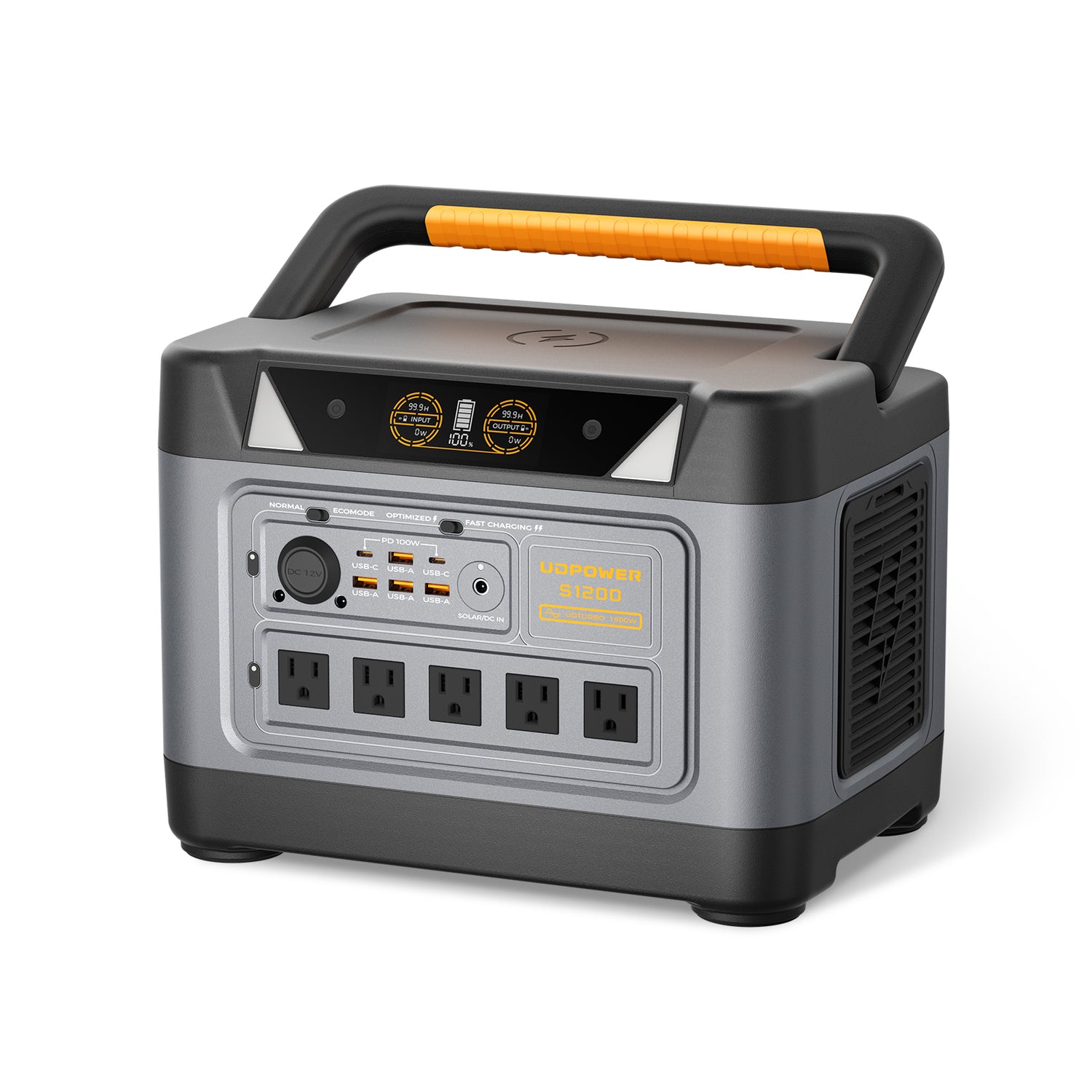
UDPOWER S1200: Best Overall Value for Home Essentials
$399.99 for the unit-only configuration when checked
The S1200 currently delivers the lowest price per rated Wh among the smaller UDPOWER models in this comparison. Its combination of approximately 1.2kWh of storage and 1,200W AC output fits routers, computers, CPAP machines, televisions, lighting, many refrigerators and other priority loads.
It should not be selected for an appliance that continuously requires more than 1,200W, even when the battery capacity appears sufficient.
View UDPOWER S1200 See What a 1,200W Power Station Can Run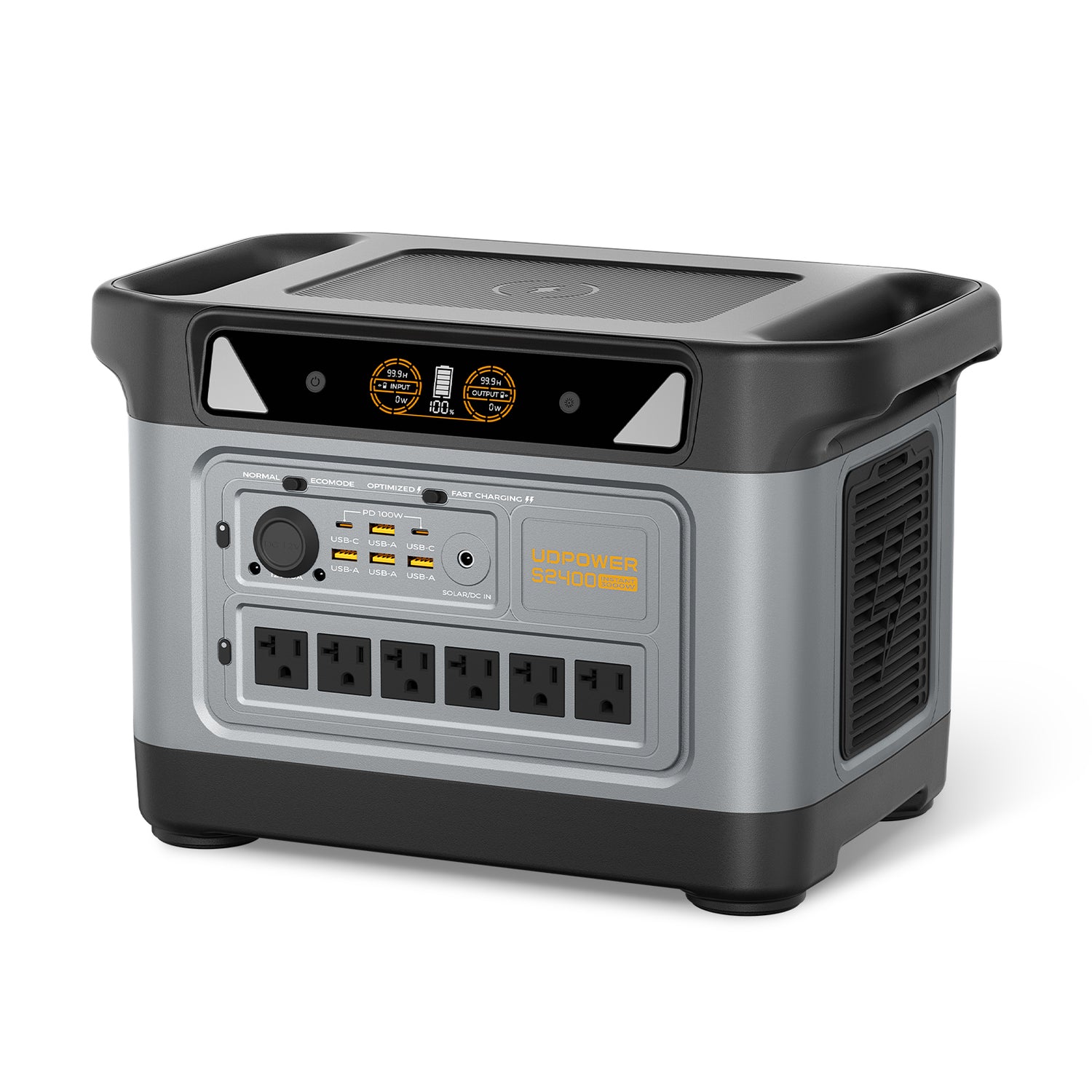
UDPOWER S2400: Best for Larger Appliances and Longer Outages
$699.99 for the unit-only configuration when checked
The S2400 is a stronger match for refrigerators, microwaves, sump pumps, cooking appliances, power tools and multi-device backup because both its battery and inverter are substantially larger.
Its 40.8 lb weight makes it less convenient for daily carrying than the C400 or C600. It is better viewed as a movable high-capacity backup unit than an ultralight travel battery.
View UDPOWER S2400How Much Should You Spend for Each Use?
Start with the job the power station must perform. A lower-cost unit is a good purchase when it reliably covers that job. Buying much more battery than you can carry or recharge can waste money.
| Main use | Suggested capacity class | Suggested inverter class | Typical budget | Important check |
|---|---|---|---|---|
| Phones, cameras, router and LED lights | 200–300Wh | 200–400W | $100–$350 | USB-C output and router voltage requirements |
| Laptop work or one night of CPAP use | 300–700Wh | 400–700W | $250–$750 | Heated CPAP humidifiers can increase consumption substantially |
| Weekend camping and portable refrigerator | 500–1,200Wh | 600–1,200W | $300–$1,000 | Measure refrigerator cycling and account for cloudy solar days |
| Basic home-outage essentials | 1,000–2,000Wh | 1,200–2,400W | $400–$1,600 | Prioritize loads instead of attempting to run the entire home |
| Microwave, tools, sump pump or heavier RV use | 2,000–3,000Wh | 2,400–3,600W | $700–$2,500 | Confirm startup surge and simultaneous appliance wattage |
| Extended or partial-home backup | 3,000Wh or expandable | 3,600W or more | $1,500–$5,000+ | Determine whether 120V, 240V or professional circuit integration is required |
For an outage plan, identify the devices that should run first using the power-outage load priority guide.
How Much Runtime Does Each Price Level Provide?
Battery capacity becomes easier to compare when converted into estimated runtime. The table below applies the same 90% usable-energy planning assumption to every model.
| Model | Estimated usable energy | 40W continuous load | 100W continuous load | 500W continuous load |
|---|---|---|---|---|
| UDPOWER C400 | About 230Wh | About 5.8 hours | About 2.3 hours | Not supported continuously; rated output is 400W |
| UDPOWER C600 | About 536Wh | About 13.4 hours | About 5.4 hours | About 1.1 hours |
| UDPOWER S1200 | About 1,071Wh | About 26.8 hours | About 10.7 hours | About 2.1 hours |
| UDPOWER S2400 | About 1,875Wh | About 46.9 hours | About 18.7 hours | About 3.7 hours |
Enter your own appliance wattage in the portable power station runtime calculator.
Calculate the Right Size Before Buying
The most expensive mistake is buying a power station that cannot complete the intended job. Use this process before comparing prices.
-
List every device.
Include the appliance name, running watts and expected hours of use. -
Calculate daily energy.
Multiply each device’s watts by the hours it will run. -
Add the energy totals.
The result is the number of watt-hours your plan requires. -
Allow for conversion loss.
Divide the required load energy by 0.90 for a practical UDPOWER planning estimate. -
Add a reserve.
Adding about 20% helps account for changing use, cold weather and battery aging. -
Check simultaneous wattage.
Add the running watts of devices that may operate at the same time. -
Check startup surge.
Refrigerators, pumps and compressors may briefly require more power when starting.
Example: Work, Communication and CPAP Backup
| Device | Estimated watts | Planned use | Energy required |
|---|---|---|---|
| Internet router | 12W | 12 hours | 144Wh |
| Laptop | 65W | 3 hours | 195Wh |
| LED light | 10W | 6 hours | 60Wh |
| CPAP | 40W | 8 hours | 320Wh |
| Total load energy | — | — | 719Wh |
A power station in the 1,000–1,200Wh class would be a more comfortable choice than a 700Wh model for this example.
When only volts, amps, milliamps or milliamp-hours are shown, use the battery unit conversion tools before calculating runtime.
Portable Power Station Versus Generator Cost
A fuel generator may provide more continuous power for the purchase price, while a portable power station offers indoor usability, quiet operation and simpler routine maintenance. The lower upfront price is therefore not always the lower total-cost choice.
| Cost consideration | Portable power station | Fuel generator |
|---|---|---|
| Purchase cost for high output | Usually higher for the same continuous wattage | Often lower for sustained high-power output |
| Energy or fuel cost | Household charging generally costs cents per full charge | Requires gasoline, propane or another fuel during operation |
| Routine maintenance | No oil changes, spark plugs or carburetor maintenance | May require oil, filters, fuel management and periodic exercise |
| Indoor operation | Can be used indoors when operated according to the product instructions | Combustion generators must remain outdoors and safely away from openings |
| Noise | Normally quiet apart from cooling fans | Produces engine noise |
| Runtime extension | Requires recharging, solar input or additional battery capacity | Runtime can be extended by safely refueling after shutdown and cooling |
| Best financial fit | Electronics, overnight essentials, indoor backup and moderate loads | Long-duration, high-wattage loads where fuel storage and outdoor placement are practical |
Read the complete portable power station versus generator comparison before choosing solely by purchase price.
An additional consumer overview is available from The Associated Press.
Common Cost-Related Buying Mistakes
Confusing Watts With Watt-Hours
Watts describe how much power the inverter can deliver at a moment in time. Watt-hours describe how much energy the battery stores. A “2,000W power station” is not automatically a “2,000Wh power station.”
Comparing MSRP With a Sale Price
Use the current price of the exact variant. A large discount percentage can look impressive while a competing model still has a lower checkout price.
Buying the Cheapest Product That Runs the Appliance
A station may technically start an appliance but provide only a few minutes of useful runtime. Check inverter wattage and energy capacity separately.
Ignoring Startup Power
Refrigerators, pumps, compressors and some tools can briefly draw far more than their normal running wattage. The inverter must handle that startup event.
Assuming the Solar Panel Is Included
“Solar generator” listings may refer to a power station that is compatible with solar charging, not necessarily a package that includes a panel.
Paying for Too Much Battery
Larger models often have a better price per Wh, but paying for unused capacity still increases cost, weight and storage requirements.
Buying Too Little Solar Input
A large battery paired with a low-wattage panel may require several good-sun days to recharge. Compare accepted solar input with the battery size and your available charging window.
Ignoring Return and Warranty Terms
Return shipping for a large lithium battery can be expensive. Review the return window, packaging requirements and warranty process before ordering.
Seven-Step Portable Power Station Buying Checklist
-
Write down the exact devices you need to run.
Do not start by choosing a brand or battery size. -
Calculate the total watt-hours required.
Use realistic operating time rather than assuming every device runs all day. -
Verify running and startup watts.
The inverter must support both. -
Select an appropriate capacity reserve.
Allow for conversion losses, changing use and future battery aging. -
Compare the current unit price per Wh.
Use the same battery chemistry and product type when possible. -
Add panels, cables, taxes and shipping.
Compare the final system price instead of the product-page headline. -
Review weight, charging time, warranty and return terms.
These factors often determine whether a lower-priced unit remains a good value after purchase.
The appliance compatibility guide explains how to check wattage before buying.
How We Estimated 2026 Portable Power Station Prices
The price ranges in this guide were created from current manufacturer pricing, current UDPOWER unit and bundle configurations, independently published market comparisons and direct calculations based on rated battery capacity.
Sale prices were used where clearly available because many portable power stations regularly sell below their crossed-out list prices. Taxes, optional financing charges and destination-dependent shipping were not added.
Runtime estimates use 90% of rated battery capacity as a practical UDPOWER planning assumption. These are not guaranteed runtimes. Real results change with inverter load, idle consumption, ambient temperature, battery condition, output type and appliance cycling.
Primary Price and Specification Sources
- UDPOWER portable power station collection
- UDPOWER C400 official product page
- UDPOWER C600 official product page
- UDPOWER S1200 official product page
- UDPOWER S2400 official product page
- Anker SOLIX C1000 official product page
- Anker SOLIX F3800 official product page
- BLUETTI AC60 official product page
- BLUETTI AC200P L official product page
- BLUETTI AC500 official product page
- U.S. Energy Information Administration residential electricity prices
Frequently Asked Questions
What is the average cost of a portable power station?
Most mainstream consumer models cost approximately $150–$1,500. Compact units may cost less, while large expandable home-backup systems can cost $5,000 or more.
How much should a 1,000Wh portable power station cost?
A current 700–1,500Wh model commonly costs around $350–$1,300. The lower end usually reflects a strong promotion, while premium models may charge more for output, charging speed, weight, ruggedness, expandability or warranty coverage.
How much does a 2,000Wh portable power station cost?
Most 1,500–2,500Wh power stations fall between about $700 and $2,000. High-output or expandable systems may exceed that range.
Is a $200 portable power station worth buying?
It can be worthwhile for charging electronics, running lights, maintaining internet access or providing short low-wattage backup. It is unlikely to provide long refrigerator runtime or power high-wattage cooking appliances.
What is a good price per watt-hour?
Below $0.40 per rated Wh is currently strong value for a larger LiFePO4 power station. About $0.40–$0.70 per Wh is competitive for many mainstream models. Compact or specialized products may reasonably cost more.
Are solar panels included with a portable power station?
Not always. Many listings offer separate unit-only and solar-bundle variants. Confirm the selected configuration and box contents before purchasing.
How much does it cost to fully charge a portable power station?
At the May 2026 U.S. residential average electricity price, a complete charge generally costs about $0.05 for a 256Wh battery, $0.12 for a 596Wh battery, $0.24 for a 1,190Wh battery and $0.43 for a 2,083Wh battery, using a 90% charging-efficiency estimate.
Is charging with solar cheaper than charging from the grid?
Solar energy has no fuel charge after the panel is purchased, but portable panels can cost hundreds of dollars. Their strongest value is off-grid availability and outage resilience rather than rapid savings on inexpensive grid charging.
Is a portable power station cheaper than a generator?
A fuel generator is often cheaper for sustained high-wattage output. A portable power station can have lower routine maintenance, lower charging cost, less noise and indoor usability. The better value depends on load size, outage duration and access to fuel or recharging.
How much capacity do I need for a refrigerator?
Refrigerator consumption varies widely with size, age, room temperature, door openings and compressor cycling. Measure actual energy use when possible, verify startup surge and calculate the required hours before choosing a battery.
Can a portable power station power an entire house?
Most consumer portable power stations are designed for selected essential loads, not every circuit and appliance in a home. Whole-home or partial-home systems may require expandable batteries, higher-voltage output and professional electrical integration.
How long does a portable power station last before replacement?
Service life depends on battery chemistry, cycle count, storage temperature, charging habits and depth of discharge. Review both the advertised cycle condition and warranty rather than relying on a single lifespan claim.
When is the best time to buy a portable power station?
Major holiday promotions can reduce prices, but the best time is before an emergency season begins. Buying early provides time to test appliances, learn the controls, charge the battery and correct any sizing mistake.
Choose the Right Power Station Without Overspending
Compare battery capacity, AC output, weight, charging options and current price before selecting a model. The right purchase is the smallest system that can reliably handle your required loads and runtime with a reasonable reserve.
Compare Portable Power Stations View All Portable Power Stations Calculate Your Required RuntimeRelated Articles


