

Portable Power Station for Food Truck: Equipment, Runtime & Sizing Guide

For a lighter food truck built around refrigeration, lighting, payment equipment and intermittent appliances, a 2,000Wh-class battery can be genuinely useful. A full electric kitchen with fryers, griddles, water heating, air conditioning and multiple refrigeration compressors can require far more power and energy than a portable station can provide by itself. In that case, shore power, a properly sized generator, or a hybrid system is usually the practical answer.
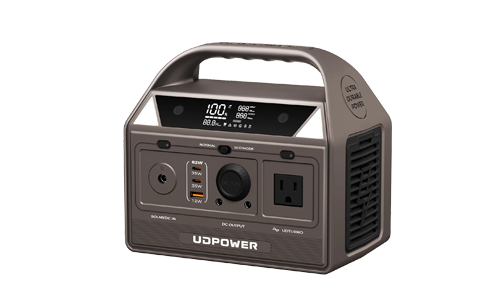
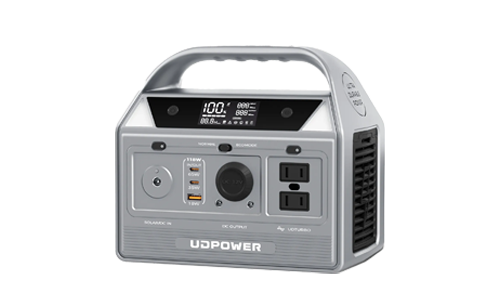
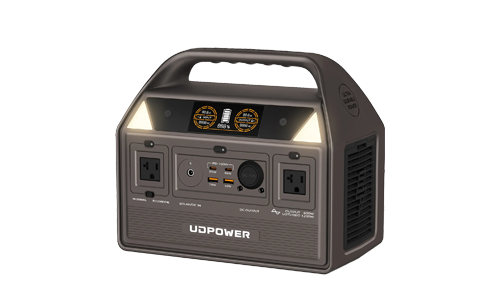
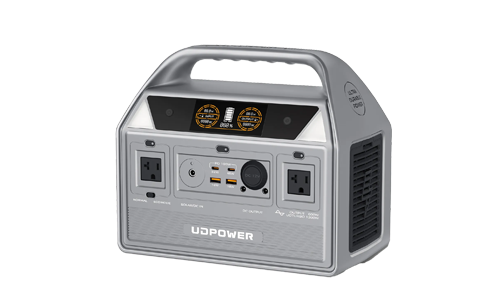
If I were choosing from the current UDPOWER lineup for food-truck use, I would start with the UDPOWER S2400 for the highest-output mobile setup, while the S1200 makes more sense for lighter support loads.
Can a Portable Power Station Run a Food Truck?
Yes, but "run a food truck" can mean very different things.
Powering a POS terminal, LED lights, phones and a refrigerator is one problem. Powering two refrigerators, a freezer, exhaust fan, electric water heater, microwave, induction burner, rooftop air conditioner and electric fryer at the same time is a completely different problem.
That distinction is why I would never choose a food truck power station based only on a product's maximum wattage.
I size mobile battery systems using two separate questions:
- Can the inverter handle everything that may be running at the same time?
- Does the battery contain enough energy to run those loads for the required number of hours?
A 2,400W portable power station can theoretically supply a 2,000W appliance, but a roughly 2,000Wh battery will not run a continuous 2,000W load for an eight-hour food-truck shift. Output capacity and runtime are separate limits.
Understanding Food Truck Power Requirements
Before shopping for a battery generator for a food truck, separate your equipment into four groups.
1. Critical Continuous Loads
These are the loads you normally cannot switch off during service without creating an operational problem.
- Commercial refrigerator
- Freezer
- Refrigerated prep table
- Ventilation or exhaust equipment where required
- POS system
- Router or cellular gateway
- Required lighting
Refrigeration deserves special attention because the compressor cycles rather than drawing the same wattage continuously. The correct number for runtime planning is usually the appliance's measured average consumption over time, not simply its highest instantaneous draw.
For more detail on compressor startup and refrigeration runtime, see UDPOWER's guide to running a refrigerator from a portable power station.
2. Intermittent Loads
These may draw a lot of power but operate only briefly.
- Blender
- Microwave
- Coffee grinder
- Espresso accessories
- Water pump
- Small food processor
An appliance that draws 1,200W for five minutes has a very different battery impact from a 1,200W appliance running continuously for six hours.
3. High-Heat Loads
Electric resistance heating is where a battery-powered food truck becomes difficult very quickly.
- Electric fryer
- Electric griddle
- Toaster oven
- Induction cooktop
- Hot-water heater
- Warming equipment
These appliances convert electricity into heat and can consume a large amount of energy even when their wattage fits within the inverter's output rating.
4. Motor and Compressor Loads
Refrigerators, freezers, air conditioners, pumps and some ventilation equipment may require more power when the motor or compressor starts than once it is running.
This is why a station rated for 2,400W should not automatically be paired with appliances whose normal combined draw already reaches 2,400W. You still need room for startup events and real-world load changes.
Food Truck Equipment Wattage Guide
The table below is a screening tool, not a substitute for the electrical label or manual on your actual equipment. Commercial kitchen appliances vary dramatically by size, voltage, heating element, compressor and operating mode.
| Equipment | Typical Planning Range | What Matters Most | Battery-Power Difficulty |
|---|---|---|---|
| POS terminal / tablet / card reader | Low load | Long operating hours and reliability | Low |
| LED lighting / menu lighting | Low load | Number of fixtures and service hours | Low |
| Water pump | Low to moderate, intermittent | Motor startup and duty cycle | Low to moderate |
| Commercial refrigerator | Varies widely | Compressor startup and average cycling energy | Moderate |
| Commercial freezer | Varies widely | Startup surge, ambient temperature and door openings | Moderate |
| Ventilation / hood fan | Moderate to high | Motor load and continuous operating time | Moderate |
| Blender | Often roughly 800–1,800W | High short-duration load | Moderate |
| Coffee maker | Often roughly 900–1,800W | Heating element and duty cycle | Moderate to high |
| Microwave | Often roughly 1,000–1,800W electrical input | Actual input can exceed advertised cooking output | Moderate to high |
| Single 120V induction burner | Often roughly 1,200–1,800W | Long heating duration | High |
| Countertop electric fryer | Often 1,500W+; commercial units may be much higher | Continuous heat demand | High |
| Electric griddle | Often 1,500W to several kilowatts | Voltage and heating-element size | Very high |
| Electric water heater | Often 1,500W to several kilowatts | Heating time and recovery demand | Very high |
| Rooftop air conditioner | High, with compressor startup | Running load plus compressor start | Very high |
Commercial food-service equipment varies significantly by model. For equipment categories and efficiency information, see the ENERGY STAR Commercial Food Service Equipment program. Always use the actual nameplate, manual or measured wattage of the equipment installed in your truck.
How to Size a Portable Power Station for a Food Truck
A useful food-truck sizing process has three checks.
Step 1: Calculate Simultaneous Running Watts
Write down every device that can realistically operate at the same time.
Suppose your measured working combination is:
- Refrigeration and cold storage: 450W at that moment
- Ventilation: 350W
- Lights, POS and network equipment: 150W
- Water pump: 100W when active
That gives a working load of roughly 1,050W before adding any microwave, blender, coffee maker or other high-draw appliance.
If someone then turns on a 1,500W appliance, the combined demand becomes roughly 2,550W. A 2,400W-rated power station is no longer a comfortable normal operating match even if it has higher-load capability available.
Step 2: Check Startup Power
A refrigerator compressor, freezer compressor, pump or air conditioner can briefly require more power during startup.
I therefore avoid sizing a food truck so that normal running loads already consume essentially all available inverter output. Operational margin matters because food-truck equipment does not coordinate its startup timing.
Step 3: Calculate Total Energy in Watt-Hours
This is where many otherwise reasonable food-truck power plans fail.
The basic calculation is:
Watts × hours = watt-hours
UDPOWER runtime planning:
Estimated runtime ≈ Battery capacity × 90% ÷ average load watts
I use 90% as a practical planning factor for UDPOWER portable power stations. Actual runtime changes with inverter losses, temperature, battery condition, load behavior and other operating conditions.
UDPOWER explains the same runtime method in its portable power station device compatibility guide.
How Much Battery Do You Need for an 8-Hour Food Truck Shift?
Instead of asking only "what size generator for a food truck?", battery users should also ask: What is my average electrical load over the entire shift?
The following table shows why.
| Average Load | Energy Used in 8 Hours | Approx. Battery Capacity Needed at 90% Planning Efficiency | What It Means |
|---|---|---|---|
| 100W | 800Wh | About 889Wh | Light electronics, lighting and communications |
| 150W | 1,200Wh | About 1,333Wh | Light support system with long runtime |
| 200W | 1,600Wh | About 1,778Wh | A 2,000Wh-class station becomes realistic |
| 250W | 2,000Wh | About 2,222Wh | Already slightly beyond a 2,083Wh battery for a full eight hours |
| 300W | 2,400Wh | About 2,667Wh | Requires recharge, a larger battery bank or shorter service |
| 400W | 3,200Wh | About 3,556Wh | One 2,000Wh-class station will not cover the whole shift |
| 500W | 4,000Wh | About 4,444Wh | Hybrid or larger battery system becomes more practical |
| 750W | 6,000Wh | About 6,667Wh | Well beyond most single portable stations |
| 1,000W | 8,000Wh | About 8,889Wh | Large battery bank, shore power or generator territory |
This is the difference between food truck power requirements and ordinary portable-power sizing.
A food truck may have no single appliance above 1,000W and still consume several kilowatt-hours over a working day because refrigeration, ventilation, lighting and electronics run for so long.
A Realistic Planning Example
Imagine a lighter cold-service or beverage truck where the operator measures an average combined draw of approximately 200W after accounting for refrigerator cycling, lights, POS equipment, networking and intermittent water-pump use.
Over eight hours:
1,600Wh ÷ 0.90 ≈ 1,778Wh of nominal battery capacity
A 2,083Wh station such as the UDPOWER S2400 has enough nominal capacity for that planning model, with an estimated 90%-based runtime of about 9.4 hours at a steady 200W.
Raise the average load to 400W and the same station drops to roughly 4.7 hours. That is why measuring the truck matters more than choosing a battery from the truck's physical size.
Food Truck Battery Runtime Table
Here is a useful comparison for the UDPOWER S1200 and S2400 using the 90% planning method.
| Average AC Load | S1200 1,190Wh Estimated Runtime | S2400 2,083Wh Estimated Runtime | Food Truck Interpretation |
|---|---|---|---|
| 100W | About 10.7 hr | About 18.7 hr | Light support loads |
| 150W | About 7.1 hr | About 12.5 hr | Lighting, POS and modest cycling loads |
| 200W | About 5.4 hr | About 9.4 hr | S2400 reaches an eight-hour planning window |
| 250W | About 4.3 hr | About 7.5 hr | Near but below a full eight-hour S2400 shift |
| 300W | About 3.6 hr | About 6.2 hr | Mid-shift recharge may be needed |
| 400W | About 2.7 hr | About 4.7 hr | Half-shift territory for S2400 |
| 500W | About 2.1 hr | About 3.7 hr | Better suited to supplemental use |
| 750W | About 1.4 hr | About 2.5 hr | Heavy sustained battery demand |
| 1,000W | About 1.1 hr | About 1.9 hr | Not an all-day battery-only load |
| 1,200W | About 0.9 hr | About 1.6 hr | Near S1200 rated output |
| 1,500W | Higher-load mode required if compatible | About 1.2 hr | High-energy heating appliances drain batteries quickly |
| 2,000W | Not a normal rated-load match | About 0.9 hr | Short-duration use rather than shift-long power |
Product specifications: UDPOWER S1200 and UDPOWER S2400. Runtime figures are planning estimates rather than guaranteed operating times.
Can a Portable Power Station Replace a Food Truck Generator?
Sometimes. I would not make "generator replacement" the default promise.
A battery system is especially attractive when the truck's electrical needs are dominated by:
- Refrigeration
- POS equipment
- Lighting
- Phones and tablets
- Routers and cellular equipment
- Water pumps
- Short-duration microwave or blender use
- Other moderate 120V loads
It becomes much harder to use a portable power station as the only power source when the business depends heavily on:
- Electric fryers
- Large electric griddles
- Electric ovens
- Large electric water heaters
- Rooftop air conditioning
- Several refrigeration compressors
- Multiple high-wattage appliances operating simultaneously
- 240V commercial appliances
| Power Source | Strength | Main Limitation | Best Food Truck Role |
|---|---|---|---|
| Portable power station | Quiet, no combustion exhaust during operation, easy startup, low routine maintenance | Finite battery energy and recharge time | Critical loads, light trucks, quiet events and supplemental power |
| Gas / fuel generator | Can support high sustained energy demand as long as fuel is available | Noise, exhaust, fuel handling and location restrictions | High-demand kitchens and long operating periods |
| Shore power | Excellent for long continuous operation when adequate service is available | Not available at every vending location | Commissaries, event hookups and fixed private-property locations |
| Hybrid system | Separates quiet critical loads from high-demand cooking loads | Requires load planning and more than one power source | Many working food trucks |
UDPOWER has a more general comparison in its guide to portable power stations versus generators.
The Food Truck Hybrid Power Setup I Prefer
For many operators, the better question is not whether a battery can replace the generator completely. It is:
Which loads should stay on battery, and which loads truly need the generator or shore connection?
I like dividing the truck into two practical groups.
Battery Group: Critical and Quiet Loads
- POS system
- Router or cellular gateway
- LED lighting
- Refrigeration where startup requirements are compatible
- Phones and tablets
- Menu display
- Selected water pumps
- Short-duration appliances that fit the station
Heavy-Power Group
- Electric fryer
- Large griddle
- Large water heater
- High-output air conditioner
- Large commercial oven
- 240V equipment
This setup has an operational benefit that is easy to miss: your POS, refrigerator and communications do not necessarily have to shut down simply because you stop the generator, refuel, change locations or temporarily disconnect shore power.
It can also reduce the amount of time a fuel generator needs to operate when local rules, noise or customer experience make generator use undesirable.
Recommended UDPOWER Portable Power Stations for Food Trucks
I would focus on the S-Series for a commercial mobile-power application. Smaller stations can still be useful for electronics or auxiliary loads, but they do not provide the same capacity and AC headroom.
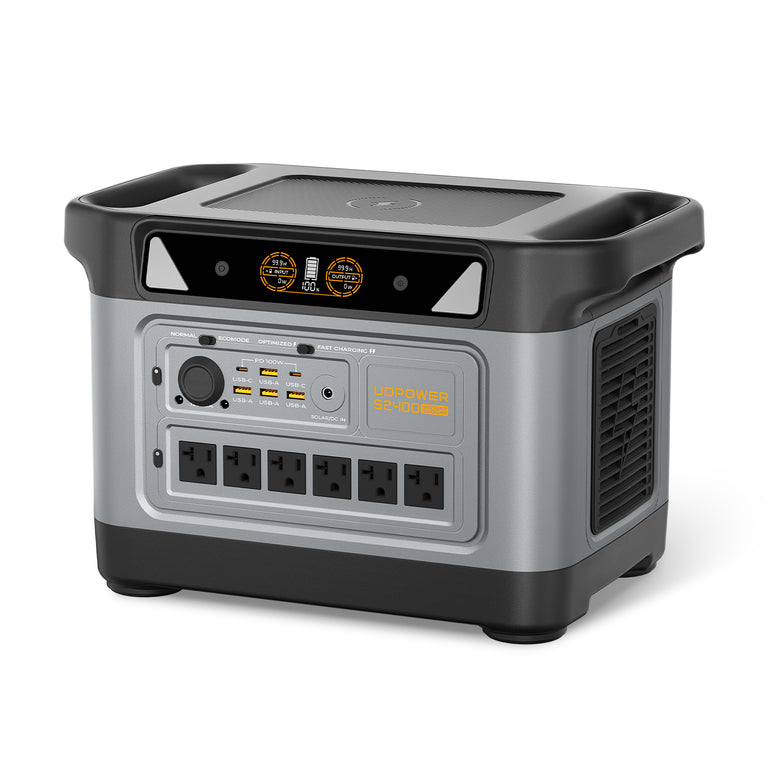
UDPOWER S2400: Best UDPOWER Starting Point for Food Truck Power
- Battery capacity: 2,083Wh
- Rated AC output: 2,400W pure sine wave
- UDTURBO capability: up to 3,000W for compatible higher-power and startup loads
- AC output: 120V / 60Hz
- AC outlets: 6
- Total outputs: 15
- Maximum recommended solar input: 420W
- Weight: approximately 40.8 lb
- Battery chemistry: LiFePO4
- Cycle-life specification: 80%+ capacity after 3,000 cycles
- AC recharge: about 1.5 hours under appropriate conditions
For a food truck, the S2400 makes the most sense when you need to support refrigeration, POS equipment, lights and selected 120V appliances without immediately moving into a much larger stationary battery system.
Its 2,400W rated output also gives much more room than a 1,200W station when a refrigerator compressor and an intermittent appliance overlap.
I would still use the normal 2,400W rating as the primary sizing target. UDTURBO can support compatible loads above the normal rated level, but operating above rated output provides less efficiency and less system margin. For a commercial workflow, conservative sizing is more useful than designing around the maximum capability.
The other major limitation is voltage: the S2400 supplies 120V AC, not 240V. A 240V fryer, griddle, oven or other commercial appliance is therefore not a match.
View UDPOWER S2400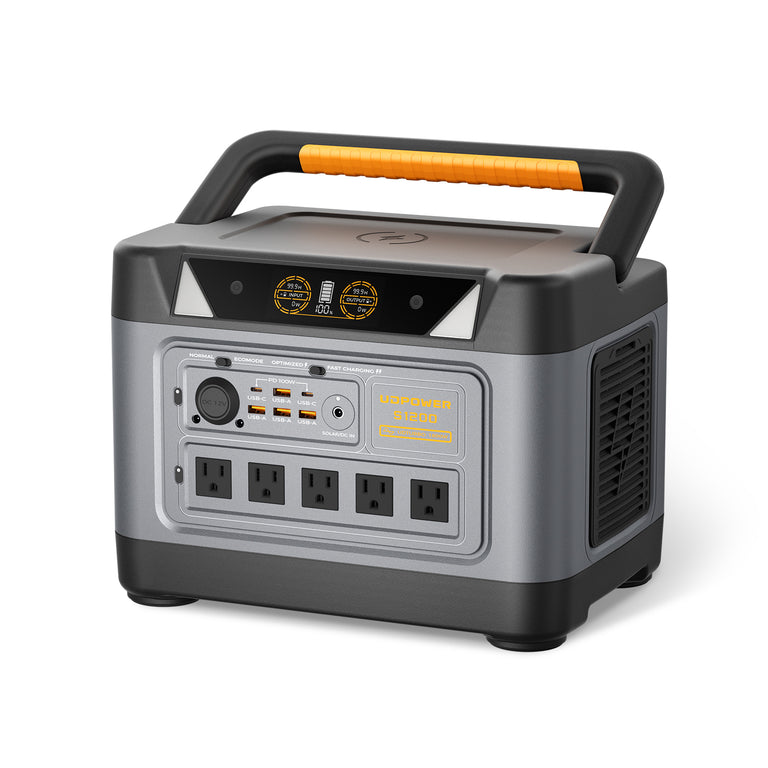
UDPOWER S1200: Better for Light or Dedicated Support Loads
- Battery capacity: 1,190Wh
- Rated AC output: 1,200W pure sine wave
- UDTURBO capability: up to 1,800W for compatible higher-power loads
- AC output: 120V / 60Hz
- Maximum solar input: 400W
- Weight: approximately 26 lb
- Battery chemistry: LiFePO4
- Cycle-life specification: 80%+ capacity after 3,000 cycles
- AC recharge: about 1.5 hours under appropriate conditions
The S1200 is a better fit when the goal is not to power the whole kitchen. It can make sense for POS equipment, lights, networking, device charging and compatible refrigeration or appliances whose actual power requirements have been checked.
At a steady 100W average load, the 90% planning estimate is about 10.7 hours. At 200W, that falls to roughly 5.4 hours.
That makes it particularly useful as a dedicated support battery even when the truck uses another source for cooking equipment.
View UDPOWER S1200S1200 vs. S2400 for Food Truck Use
| Specification | UDPOWER S1200 | UDPOWER S2400 |
|---|---|---|
| Battery capacity | 1,190Wh | 2,083Wh |
| Rated AC output | 1,200W | 2,400W |
| Higher-load capability | Up to 1,800W for compatible loads | Up to 3,000W for compatible loads |
| AC voltage | 120V / 60Hz | 120V / 60Hz |
| Maximum solar input | 400W | 420W recommended maximum |
| Weight | About 26 lb | About 40.8 lb |
| Estimated runtime at 200W | About 5.4 hr | About 9.4 hr |
| Best food-truck role | Dedicated support loads | Primary UDPOWER option for larger 120V loads |
You can also compare the complete lineup on the UDPOWER Power Station Comparison page or browse all portable power stations.
Can a Solar Generator Power a Food Truck?
A solar generator for a food truck can be valuable, but the role of solar is often misunderstood.
Solar does not increase the inverter's maximum AC output. A 2,400W power station remains a 2,400W-rated power station even when solar panels are connected.
What solar can do is replace some of the energy the truck is consuming during the day or recharge the battery between service windows.
The current S2400 setup supports up to 420W of recommended solar input. In a theoretical hour at the full 420W input ceiling, that represents up to 420Wh of incoming solar energy before real-world conditions are considered.
Real solar production varies with:
- Sun angle
- Cloud cover
- Panel temperature
- Shade from buildings or the truck itself
- Panel orientation
- Cable and conversion losses
- Available roof or ground space
This means solar works very differently against a 150W average truck load than against a 1,000W average load.
| Average Truck Load | 420W Solar Input at Maximum | Practical Interpretation |
|---|---|---|
| 100–200W | Potentially higher than the instantaneous average load in strong conditions | Solar can meaningfully extend runtime |
| 300–400W | Can offset a substantial part of the load in strong sun | Useful daytime support, but conditions matter |
| 500–800W | Solar cannot keep up with the full load | Battery state of charge still falls during operation |
| 1,000W+ | Solar supplies only a fraction of demand | Best treated as supplemental charging |
For that reason, I would describe a solar-equipped food truck system as a way to extend runtime and reduce recharge dependence, not as an automatic all-day replacement for shore power or a high-output generator.
See current combinations in the UDPOWER Solar Generator collection.
Food Truck Electrical Requirements: What You Need to Check
There is no single electrical rule that applies identically to every food truck in every U.S. city and state.
Requirements can depend on your location, whether the unit is a truck or trailer, whether employees work inside, total amperage, voltage, number of circuits, generator installation, photovoltaic equipment, gas appliances, ventilation and the way shore power is connected.
| Example Authority | Relevant Point | Source |
|---|---|---|
| Washington State L&I | Food trucks may require plan review depending on electrical load, voltage, circuit count and alternative-energy systems. | Washington L&I |
| City of San Diego | Electrical connections and generator placement can be restricted depending on where the mobile food truck operates. | City of San Diego |
| Alameda County Health | Occupied mobile food facilities with electrical systems, gas appliances or generators can be subject to additional certification requirements. | Alameda County Health |
| U.S. CPSC | Fuel-burning portable generators create carbon-monoxide hazards and must not be operated indoors or in enclosed spaces. | U.S. Consumer Product Safety Commission |
Before changing a food truck's electrical system, adding solar, installing a transfer arrangement or integrating a new generator, check with the authority having jurisdiction and use a qualified electrician when required.
120V vs. 240V Matters
One of the easiest mistakes is looking only at watts.
The UDPOWER S1200 and S2400 provide 120V / 60Hz AC output. If an appliance requires 208V or 240V, it is not compatible simply because its wattage appears to fit.
Check:
- Voltage
- Frequency
- Running watts or amps
- Startup requirements
- Plug and circuit requirements
Use Amps When Watts Are Missing
For a simple first-pass screen on a 120V appliance:
Example: 120V × 12A ≈ 1,440VA
Motors, compressors and equipment with different power factors require more careful evaluation, so treat that calculation as a screening tool rather than a guarantee.
Protect the Battery From Kitchen Conditions
Food trucks can become much hotter than ordinary indoor environments. Keep a power station away from direct heat, cooking grease, water, steam and obstructed airflow.
The current S2400 specification lists a discharge operating range of approximately -4°F to 113°F (-20°C to 45°C) and a charging range of approximately 32°F to 104°F (0°C to 40°C). Do not assume that a battery can be placed beside a fryer or inside a poorly ventilated hot equipment compartment just because the electrical load fits.
Food Truck Power Station Sizing Checklist
If I were sizing a food-truck battery system from scratch, this is the order I would use.
- List every electrical device. Include refrigerators, freezers, hood fans, pumps, lights, POS equipment, Wi-Fi, chargers, menu displays, cooking appliances and air conditioning.
- Record voltage and amps or watts from the actual nameplate. Do not rely only on internet averages.
- Mark which appliances can run simultaneously. This determines required AC output.
- Identify compressors and motors. Check startup requirements for refrigeration, pumps, fans and air conditioners.
- Measure real power if possible. A plug-in watt meter can provide better information than guessing.
- Estimate daily operating time. A 1,500W appliance used for ten minutes is different from a 400W load running all day.
- Calculate watt-hours. Multiply average watts by operating hours.
- Account for conversion losses. UDPOWER runtime estimates commonly use a 90% planning factor.
- Keep operational margin. Do not design a commercial workflow that depends on running the inverter at its absolute limit all day.
- Check voltage. A 120V power station cannot directly run a 240V appliance.
- Plan recharging before buying. Decide whether you will recharge from a wall outlet, solar, another approved source or between service windows.
- Check local food-truck and electrical requirements. Solar, generator, shore-power and electrical-system modifications may trigger inspection or plan-review requirements.
How to Reduce Food Truck Battery Consumption
If you want battery power to cover more of the working day, reducing average load can be more effective than chasing a bigger peak-watt number.
Pre-Cool Refrigeration Before Leaving the Commissary
Starting the service window with cold product and an already-cooled refrigerator can reduce the amount of initial work the compressor has to do from battery power.
Keep Refrigerator and Freezer Doors Closed
Repeated door opening introduces warm air and increases compressor runtime. In a mobile kitchen, workflow and product organization can affect energy consumption.
Move Heat-Producing Loads Off Battery When Possible
If propane or another approved energy source already handles primary cooking, reserving battery energy for refrigeration, POS equipment, lights and small appliances can make a battery system far more practical.
Sequence High-Power Appliances
If the microwave and blender do not need to operate at the same moment, operating them separately reduces simultaneous inverter demand.
Use Efficient Commercial Refrigeration
Because refrigeration may run throughout the service period, efficiency improvements can have a larger effect on daily watt-hours than a short burst from a high-wattage appliance. The ENERGY STAR commercial refrigeration program provides information on qualifying equipment.
Which Food Trucks Are the Best Match for Battery Power?
| Food Truck Type | Battery-Only Potential | Why |
|---|---|---|
| Cold beverage / prepackaged food truck | Good candidate | Electrical load can be dominated by refrigeration, lighting and electronics rather than electric cooking |
| Small coffee or beverage trailer | Possible with careful measurement | Brewers and heating elements can create high intermittent loads |
| Dessert / blender-based operation | Possible | Blenders may draw high watts but usually run for short periods |
| Propane-cooking truck with electrical support loads | Strong hybrid candidate | Battery can support refrigeration, lights and POS while fuel handles cooking heat |
| Full electric burger / grill truck | Usually difficult with one portable station | Griddles, ventilation, refrigeration, water heating and HVAC can overlap |
| Electric fryer-heavy operation | Poor single-station candidate | Heating elements create sustained high energy demand |
| Truck with multiple 240V appliances | Not a match for current S-Series AC output | S1200 and S2400 provide 120V AC output |
Frequently Asked Questions
Can a portable power station run a food truck?
Yes. A properly sized portable power station can run food-truck loads such as refrigeration, POS equipment, lighting, networking, water pumps and selected 120V appliances. Whether it can run the entire truck depends on simultaneous wattage, startup requirements, battery capacity, operating hours and appliance voltage.
What size portable power station do I need for a food truck?
Size the station in two stages. First, add the wattage of equipment that may operate at the same time to determine the required AC output. Second, multiply average load by operating hours to determine the required watt-hours. For example, an average 200W load running eight hours uses 1,600Wh before conversion losses.
How many watts does a food truck need?
There is no single number. A light truck using mostly refrigeration, electronics and lighting may have much lower demand than an all-electric kitchen using fryers, griddles, water heating, ventilation and air conditioning. Build the number from the actual equipment installed in your truck rather than choosing a generic food-truck wattage.
Can the UDPOWER S2400 power a food truck?
The S2400 is the strongest current UDPOWER option for food-truck applications. It provides 2,083Wh of capacity and 2,400W rated 120V pure-sine-wave AC output, with UDTURBO capability up to 3,000W for compatible higher-power loads. It can be a good match for refrigeration, POS systems, lights and selected appliances, but it is not intended to replace a much larger electrical supply for every full commercial kitchen.
Can a portable power station replace a food truck generator?
It can replace a generator in some lower-demand food trucks or handle a dedicated group of loads in a larger truck. High-demand electric cooking, large HVAC systems, multiple compressors and long operating hours may still require shore power, a larger battery system, a generator or a hybrid setup.
Can a portable power station run a food truck refrigerator?
Yes, if the station can handle both the refrigerator's compressor startup requirement and its ongoing energy consumption. For runtime planning, measured average consumption over several hours is more useful than looking only at the refrigerator's peak wattage.
Can a portable power station run a microwave in a food truck?
Yes, when the microwave's actual electrical input stays within the power station's limits. Check the input rating rather than assuming the microwave's advertised cooking wattage equals the power it draws from the outlet.
Can a portable power station run an electric fryer?
Some small 120V fryers may fit within the output rating of a large portable station, but electric heating drains batteries quickly. Commercial fryers can require several kilowatts or higher-voltage service, so they are often better handled by another approved power source.
How long will a 2,000Wh power station run a food truck?
It depends on average load. Using the UDPOWER 90% planning method, the 2,083Wh S2400 is estimated at about 9.4 hours at 200W, 6.2 hours at 300W, 4.7 hours at 400W, 3.7 hours at 500W and 1.9 hours at 1,000W. Actual runtime varies.
Can solar panels power a food truck all day?
Sometimes for very light electrical loads, but not automatically. Solar production changes throughout the day, and the current S2400 accepts up to 420W of recommended solar input. If the truck is averaging 800W or 1,000W, a 420W solar array cannot replace energy as quickly as the truck consumes it, even under ideal instantaneous conditions.
Is a battery power station safer than a gas generator for a food truck?
A battery power station does not burn fuel or create generator-style carbon-monoxide exhaust while operating, which removes one major generator hazard. It still needs to be installed and operated correctly, protected from heat, grease, moisture and physical damage, and used within its electrical and temperature limits.
Do food trucks use 120V or 240V power?
Food trucks can contain either 120V or higher-voltage equipment depending on the build. Always check each appliance. The current UDPOWER S1200 and S2400 provide 120V / 60Hz AC output, so equipment requiring 208V or 240V is not directly compatible.
What is the best food truck generator alternative?
For a lower-demand truck, a sufficiently large portable power station may replace a fuel generator. For higher-demand trucks, a hybrid arrangement is often more practical: use battery power for refrigeration, POS, lighting and other critical loads while shore power or a properly installed generator handles high-energy cooking and HVAC equipment.
Should I size a food truck battery by peak watts or average watts?
Use both. Peak and simultaneous watts determine whether the inverter can operate the equipment without overloading. Average watts over time determine how many watt-hours the battery needs to finish the service period.
Build a Food Truck Power Setup Around Your Real Load
Do not start with the biggest watt number on the box. Start with your refrigerator, freezer, ventilation, POS, lights, cooking equipment and operating hours, then choose the power source that covers both simultaneous watts and total daily energy.
Compare UDPOWER Models View Portable Power Stations Read the Power Sizing GuideRelated Articles


