

-20°C Camping Power Strategy: Sodium-Ion vs LiFePO₄ — Which Handles Cold Better?
Audience: winter campers and overlanders planning overnight trips around −20 °C (−4 °F).

1) Quick answer
Sodium-ion (Na-ion) currently handles deep-cold charging better than typical Li-ion chemistries, and early products advertise operation down to about −25 °C discharge / −15 °C charge. LiFePO₄ (LFP) — used in most modern portable power stations — discharges fine around −20 °C but shouldn’t be charged below 0 °C unless the pack has active self-heating; otherwise you risk lithium plating. For most campers, an LFP power station + simple warming tactics is still the most practical combo today thanks to mature ecosystems, high cycle life, and value.
Bottom line If you’ll be routinely charging below freezing, sodium-ion is promising. If you can keep the battery warm (sleeping bag/insulated case/cabin pre-warm) and schedule charging above 0 °C, LiFePO₄ remains an excellent choice.
2) Why cold hurts batteries
- Electrolyte viscosity rises and ion diffusion slows; internal resistance climbs — capacity and power sag in the cold.
- LFP charging below 0 °C can cause lithium plating on the anode, permanently damaging cells. Many manufacturers explicitly specify charge ≥ 0 °C and discharge down to about −20 °C.
- Na-ion chemistries show better low-temperature kinetics in lab and early products, enabling sub-zero charging/discharging, at the cost of lower energy density per kg/L.
3) Sodium-Ion vs LiFePO₄ at −20 °C (comparison table)
| Aspect | Sodium-Ion (Na-ion) | LiFePO₄ (LFP) | What it means for campers @ −20 °C |
|---|---|---|---|
| Low-temp discharge | Vendors demo down to ~−25 °C on first gen power stations. | Commonly rated to −20 °C discharge on portable stations. | Both can power gear at −20 °C if warm-started; expect some runtime loss. |
| Low-temp charging | Early products advertise charging near −15 °C. | Do not charge below 0 °C unless pack self-heats; standard spec is 0–40 °C charge. | If you can’t keep the pack ≥0 °C when recharging, Na-ion has the edge. |
| Energy density | Lower — tends to be bulkier/heavier per Wh. | Higher than Na-ion at pack level. | LFP packs are typically more compact for the same Wh. |
| Cycle life & safety | Good safety; cycle life improving (varies by chemistry). | Excellent safety; 3000–4000+ cycles common on quality packs. | LFP still wins long-term value today for most buyers. |
| Ecosystem & price | Early-stage; limited models so far. | Mature; many models, accessories and deals. | LFP offers broader choices and proven accessories. |
Specs vary by model and are subject to each brand’s documentation; always check the product page before purchase.
4) Field strategy for −20 °C camping
Keep the pack warm
- Stow the power station inside the tent or in a sleeping bag/insulated soft cooler.
- Pre-warm in your vehicle cabin before charging; avoid direct snow contact.
- Use low-watt heat sources (heating pad/hand warmers) outside the vents; never block cooling grills.
Charge smart
- For LFP, charge only when cell temp ≥ 0 °C. Many units list 0–40 °C charge range.
- Prefer midday solar or cabin-warmed AC. If the unit supports UPS, warm it while connected.
- Favor DC loads (12 V fridge/routers) to avoid inverter losses in the cold.
Plan your Wh budget
- Expect 15–30% less runtime in deep cold from increased internal resistance.
- Carry a larger Wh buffer or a solar panel; keep cables short and flexible.
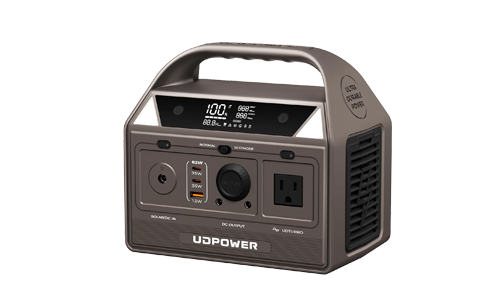
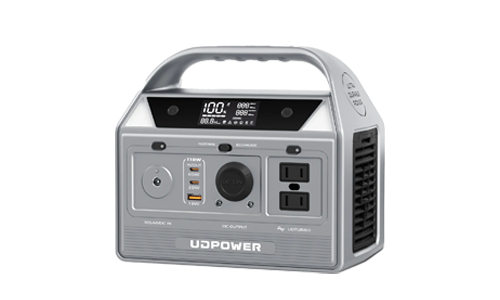
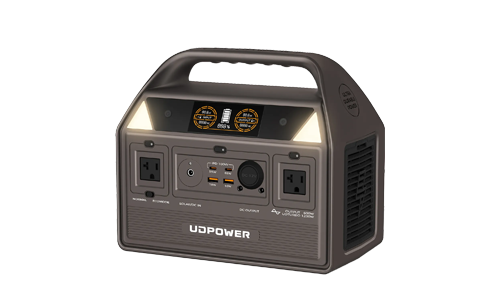
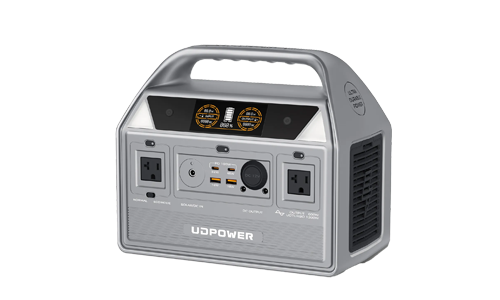
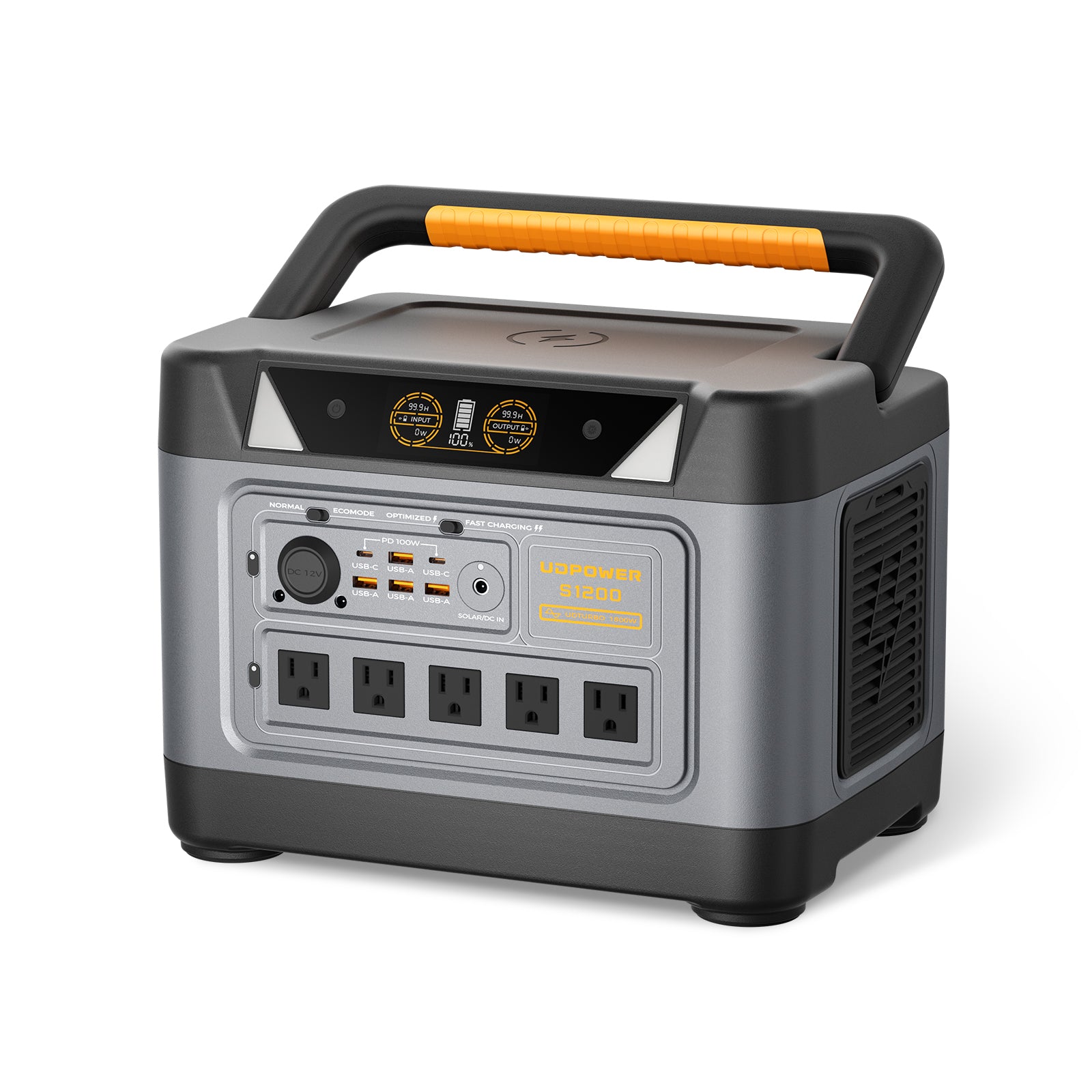
5) UDPOWER picks (accurate specs & images)

6) FAQ
Can I charge an LFP power station below 0 °C?
No — unless the unit includes an internal heater that raises cell temperature above freezing. Standard guidance is charge ≥ 0 °C and discharge down to around −20 °C.
So is sodium-ion “better” for winter camping?
It’s promising for sub-zero charging, but current Na-ion power stations are limited in choice and tend to be heavier per Wh. If you can keep your LFP pack warm for charging, LFP still provides excellent value and longevity.
What about keeping electronics warm?
Keep phones and camera batteries inside clothing pockets or a sleeping bag. Cold lithium packs in small devices also sag — not just the power station.
Sources
- The Verge — Bluetti Pioneer Na sodium-ion power station (−25 °C discharge / −15 °C charge)
- TechRadar Pro — Bluetti sodium-ion portable power station (IFA 2025 coverage)
- MDPI (2024) — Sodium-ion batteries at low temperature: challenges & advances
- Battery University — No charging Li-ion at freezing; reduce current below 5 °C
- AIMS LiFePO₄ manual — charge 0–45 °C (example spec)
- UDPOWER S1200 — official product page (1190 Wh, 1200 W/1800 W, <10 ms UPS, 26 lb, 4,000+ cycles)
- UDPOWER C600 — official product page (596 Wh, 12.3 lb, charge/discharge temp, 3000+ cycles)
- UDPOWER — Warranty policy (5-year limited)
- EcoFlow DELTA 2 Max — LFP with 3000 cycles to 80% (reference)
Related Articles


