What Appliances Cannot Be Used With Solar Power?
ZacharyWilliamSolar power guide · Last updated: April 29, 2026
Most people ask this question after seeing a solar panel, a portable power station, or a quote from a rooftop solar company and wondering, “Can this really run my house?” The honest answer is: solar can run many appliances, but not every appliance belongs on every solar setup.
Quick answer
Appliances that usually should not be used with a small solar generator or direct solar panel setup include electric dryers, central air conditioners, electric ovens, electric water heaters, space heaters, hot tubs, Level 2 EV chargers, and many 240V hardwired appliances.
They are not “impossible” for solar power in every situation. A properly designed rooftop solar installation with a large inverter, battery storage, transfer equipment, and professional electrical work may support some of them. But a portable solar setup is best for priority loads: refrigerators, Wi-Fi, CPAP machines, lights, laptops, fans, TVs, and small kitchen appliances used briefly.

Best for solar: essentials Hard for solar: heat + motors Check watts + surge first
Solar definition: what “solar power” really means
Here is the plain-English solar definition: solar panels use photovoltaic cells to turn sunlight into electricity. A panel by itself usually produces variable DC power, not the steady household AC power your appliances expect. To use that energy safely, the system usually needs a charge controller, battery, inverter, wiring protection, and correctly rated outlets or circuits.
That is why the question is not only “Can solar power run this appliance?” The better question is: Can this specific solar system deliver the appliance’s voltage, running watts, startup surge, and daily watt-hours without overloading?
Useful source: The U.S. Energy Information Administration explains that photovoltaic cells convert sunlight directly into electricity. Energy.gov also notes that PV modules are only one part of a complete system; inverters and other components are needed before that electricity becomes useful for a home or business. EIA solar PV explanation · Energy.gov PV system design basics
Why not all solar setups are the same
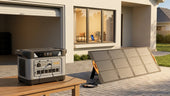
A 120W portable panel, a 2,083Wh power station, and a professionally installed rooftop solar system are all “solar,” but they are not the same tool. Appliance compatibility changes completely depending on the system type.
| Solar setup | What it is | Best use | What it should not be expected to run | Planning source |
|---|---|---|---|---|
| Direct solar panel only | A panel producing variable DC power in sunlight | Charging a compatible battery, controller, or power station input | Most household AC appliances directly; never plug panel output into a wall-style AC outlet | Energy.gov |
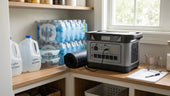
| Portable solar generator | A portable power station paired with compatible solar panels | Fridge, Wi-Fi, CPAP, lights, laptops, fans, TV, camping and outage essentials | Central AC, electric dryer, whole-home heating, large 240V loads, long high-heat loads | UDPOWER solar generators |
| Rooftop solar without battery | Grid-tied solar panels feeding your home and utility grid | Reducing utility energy use during normal grid operation | Most backup loads during an outage unless the system is designed for backup operation | NREL PVWatts |
| Rooftop solar with battery backup | Solar array plus inverter, battery, transfer equipment, and selected backup circuits | Essential home circuits and, if sized correctly, some larger appliances | “Everything at once” unless the inverter, battery, wiring, and load panel are designed for it | Energy.gov appliance energy use |
The biggest mistake is treating solar like a magic outlet. It is not. Solar is a power system. The appliance either fits the system limits, or it does not.
Appliances that are usually a bad fit for solar power
The appliances below are not always impossible, but they are the ones most likely to disappoint people using small solar systems, portable power stations, or undersized rooftop installations.
| Appliance | Typical power issue | Can a portable solar generator run it? | Why it is difficult | Better solar plan | Source / check point |
|---|---|---|---|---|---|
| Electric clothes dryer | Often several thousand watts during a drying cycle | Usually no | Heating element runs for a long time; many dryers are 240V | Use grid power, gas dryer, heat pump dryer, or a professionally sized home battery system | Appliance wattage ranges |
| Central air conditioner | High running load plus compressor startup surge | Usually no | Large motor load, long runtime, hot-weather demand, and possible 240V circuit | Ask solar installation companies to size inverter output, battery capacity, and backup circuits specifically for HVAC | AC wattage ranges |
| Electric oven or electric range | High heat load, often 2,000W–5,000W+ | Usually no | Resistive heating drains batteries quickly and may exceed inverter output | Use short-cook alternatives during outages: microwave under rated wattage, induction plate only if within limits, propane camping stove outdoors | Check actual wattage |
| Electric water heater | Large heating element and long recovery time | No for most portable systems | Consumes too much energy for comfort backup; may be hardwired | Consider heat pump water heater, gas water heating, timer scheduling, or large rooftop solar plus battery design | Energy use calculator |
| Space heater | Commonly around 1,500W while heating | Technically sometimes, but not recommended for long use | It turns battery capacity into heat very quickly | Use insulation, heated blankets with lower wattage, safe non-electric heating, or run only in short windows | Device label and manual |
| Hot tub or spa heater | High heating load plus pump load | No | Water heating requires large sustained energy, not just a short startup burst | Dedicated electrical circuit and professionally designed solar offset system, not portable backup | Equipment nameplate |
| Level 2 EV charger | Large 240V load, often several kW | No for normal charging | Battery capacity and inverter output are usually far too small for meaningful EV charging | Use a rooftop solar installation sized for annual EV energy use, or grid charging with solar offset | EVSE nameplate and breaker size |
| Well pump / large sump pump | Motor startup surge can be much higher than running watts | Only after checking surge and voltage | Some pumps need 240V or a high surge that trips smaller inverters | Use a pump-rated backup system or verify running watts, locked-rotor amps, voltage, and surge output first | Pump nameplate |
| Hair dryer, kettle, toaster, air fryer | Small appliance, but high heat draw | Sometimes for short use if under inverter rating | High wattage can overload smaller systems and drain batteries fast | Use briefly, one at a time, and never combine with other high-watt loads | Device label |
| Any appliance requiring 240V when your system only has 120V | Voltage mismatch | No | Wrong voltage is not a runtime problem; it is an electrical compatibility problem | Use a system designed for split-phase 240V with proper transfer equipment | Appliance plug, breaker, and nameplate |
Safety rule: Do not improvise wiring. Do not backfeed a home panel with a portable power station. Do not connect solar panels to ports that are not labeled for solar/DC input. For permanent solar panel installation, transfer switches, rooftop installations, or hardwired appliances, use a licensed electrician or qualified solar energy company.
Appliances that usually work well with solar power
Solar works best when you choose efficient appliances, keep the load list short, and run big loads only when needed. These are the devices most people should prioritize during an outage, camping trip, RV stay, or off-grid weekend.
| Appliance / device | Typical power range | Solar compatibility | Best practice | Good UDPOWER fit |
|---|---|---|---|---|
| Phone, tablet, camera batteries | Low draw | Excellent | Use USB-C or USB-A when possible to reduce inverter loss | C400 or larger |
| LED lights | Very low draw | Excellent | Use LED bulbs or rechargeable lanterns instead of high-watt lighting | C400 or larger |
| Wi-Fi router / modem | Low to moderate draw | Excellent | Keep internet on a priority outlet; avoid running unnecessary devices at the same time | C600 or larger |
| Laptop / monitor | Moderate draw | Very good | Charge directly through USB-C if supported | C600 or larger |
| CPAP machine | Varies by humidifier and pressure setting | Good with proper sizing | Check your actual wattage; heated humidifiers can raise consumption | S1200 or larger for longer nights |
| TV | Moderate draw | Good | Lower brightness; avoid pairing with high-heat appliances | S1200 or larger |
| Refrigerator | Cycles on/off; startup surge matters | Good if surge fits | Use the EnergyGuide label or nameplate; keep doors closed during outages | S1200 or S2400 |
| Microwave | High draw, short use | Possible with larger systems | Run briefly and alone; check input watts, not just cooking watts | S2400, if within rating |
For more load-planning help, see UDPOWER’s Battery Runtime Basics and Portable Power Station Runtime Planning for Outages.
The 5-rule test before plugging any appliance into solar power
- Check the appliance voltage. A normal 120V plug is very different from a 240V hardwired appliance.
- Check running watts. Look at the appliance label, manual, or EnergyGuide information. If it lists amps, multiply volts × amps for a rough watt estimate.
- Check startup surge. Refrigerators, pumps, compressors, and power tools may need much more power for a moment when they start.
- Check battery capacity. Watts tell you whether the appliance can start. Watt-hours tell you how long it can run.
- Check solar recharge limits. Your panel voltage, current, and wattage must stay within the power station or solar controller’s input limits.
Simple runtime estimate: usable runtime ≈ battery watt-hours × efficiency factor ÷ appliance watts. For AC appliances, use a realistic efficiency factor because the inverter and wiring have losses. For refrigerators, average usage is usually lower than the nameplate because the compressor cycles on and off.
Need a deeper solar charging safety check? Read Solar Recharging During a Power Outage and Power Priorities: What to Run First.
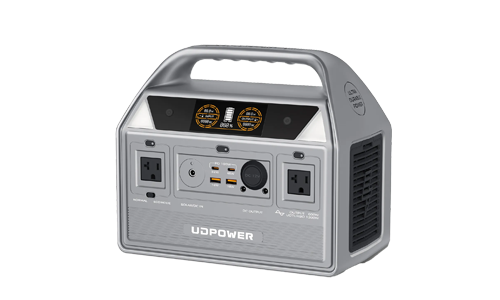
UDPOWER solar-ready power station picks
For portable solar power, choose by appliance load. Do not buy only by battery size. Match the appliance’s running watts, startup surge, and daily runtime to the power station.

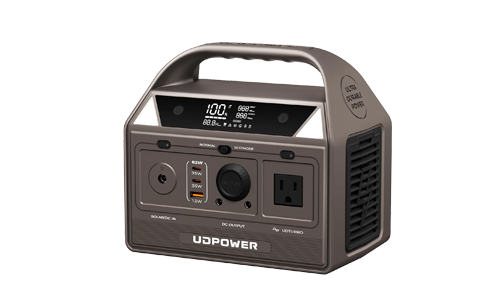
UDPOWER C400 — small electronics and light camping loads
256Wh capacity 400W output Up to 150W solar input
Best for phones, tablets, cameras, LED lights, laptop charging, compact fans, and light backup tasks. It is not the right choice for refrigerators, microwaves, heaters, or motor-heavy appliances.
View UDPOWER C400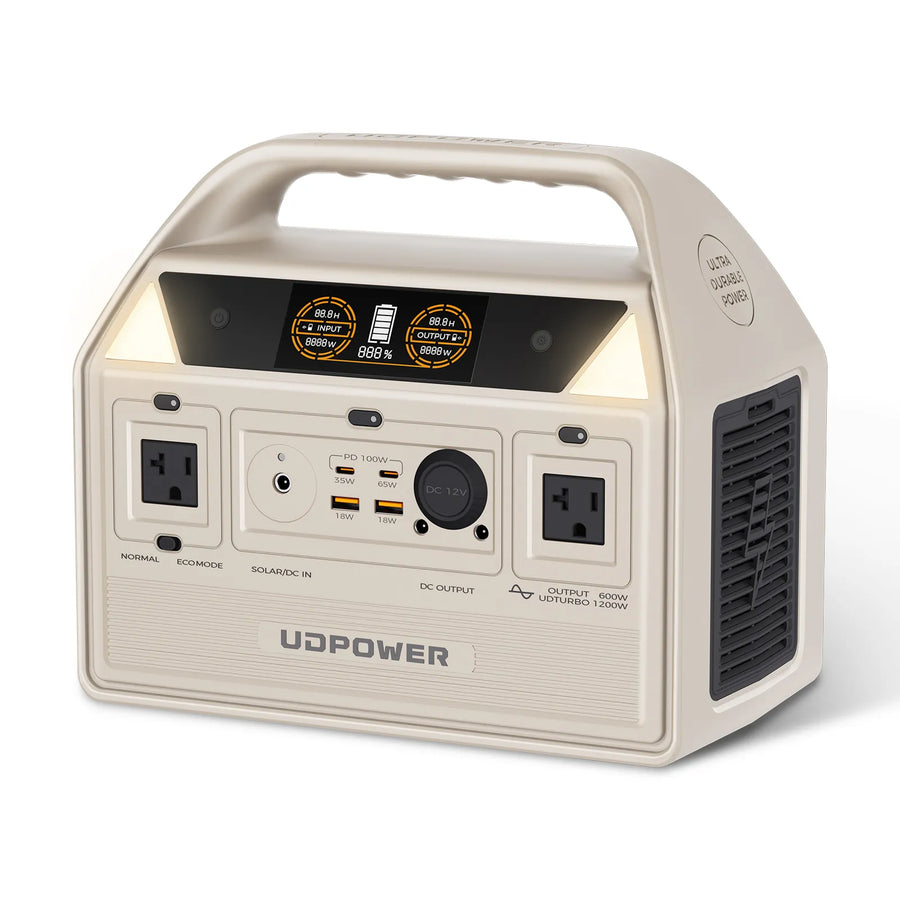
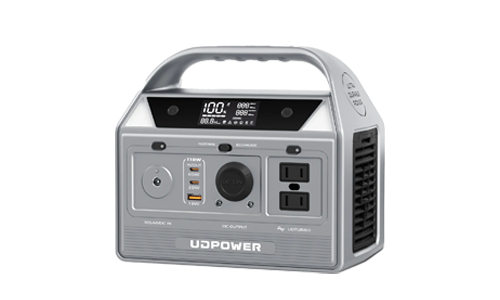
UDPOWER C600 — stronger camping and outage essentials
596Wh capacity 600W output 240W max solar input LiFePO4
Best for Wi-Fi, laptops, lights, fans, camera gear, small camping appliances, and carefully sized mini-fridge scenarios. Avoid high-heat appliances and large compressor loads.
View UDPOWER C600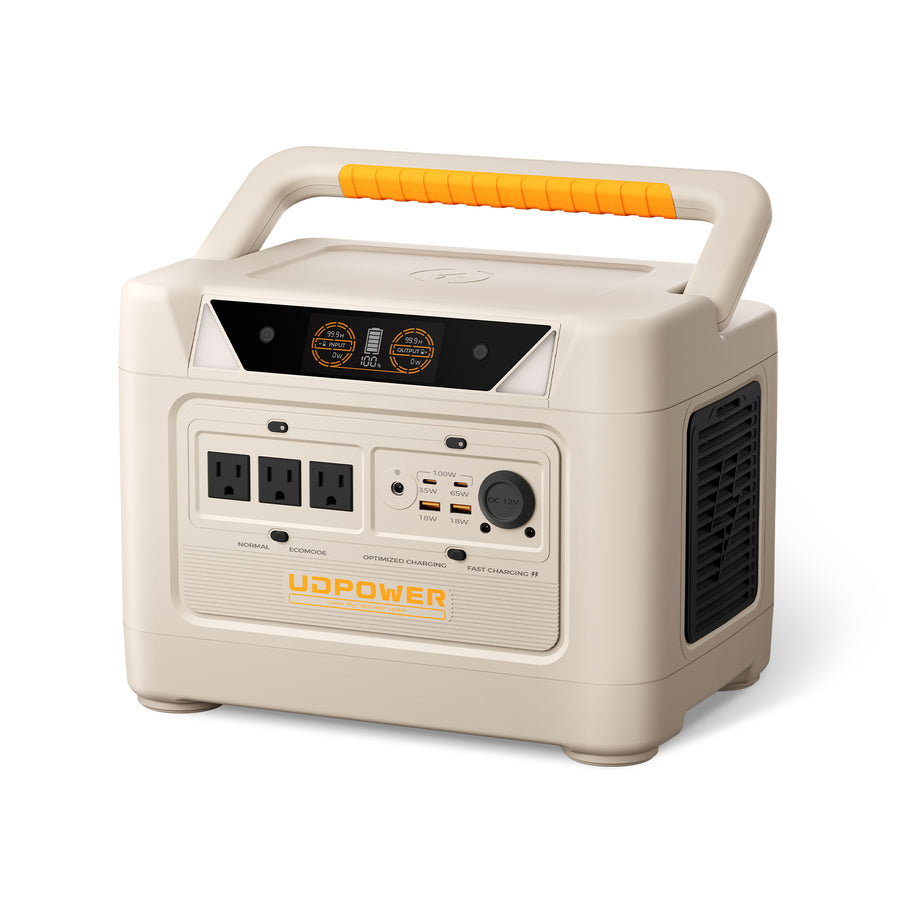
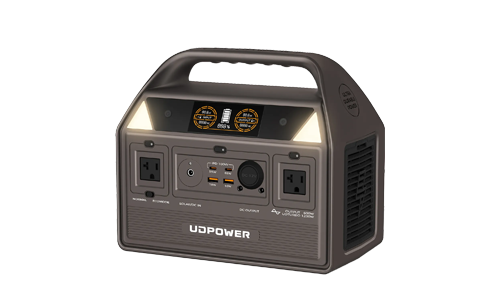
UDPOWER S1200 — refrigerator, CPAP, Wi-Fi, TV, and family essentials
1,190Wh capacity 1,200W AC output 1,800W surge LiFePO4
Best for practical home backup: refrigerator cycling, router/modem, CPAP, lights, laptop charging, fans, and TV. It can support many daily essentials, but it is still not a whole-home system for central AC, dryers, electric heating, or 240V circuits.
View UDPOWER S1200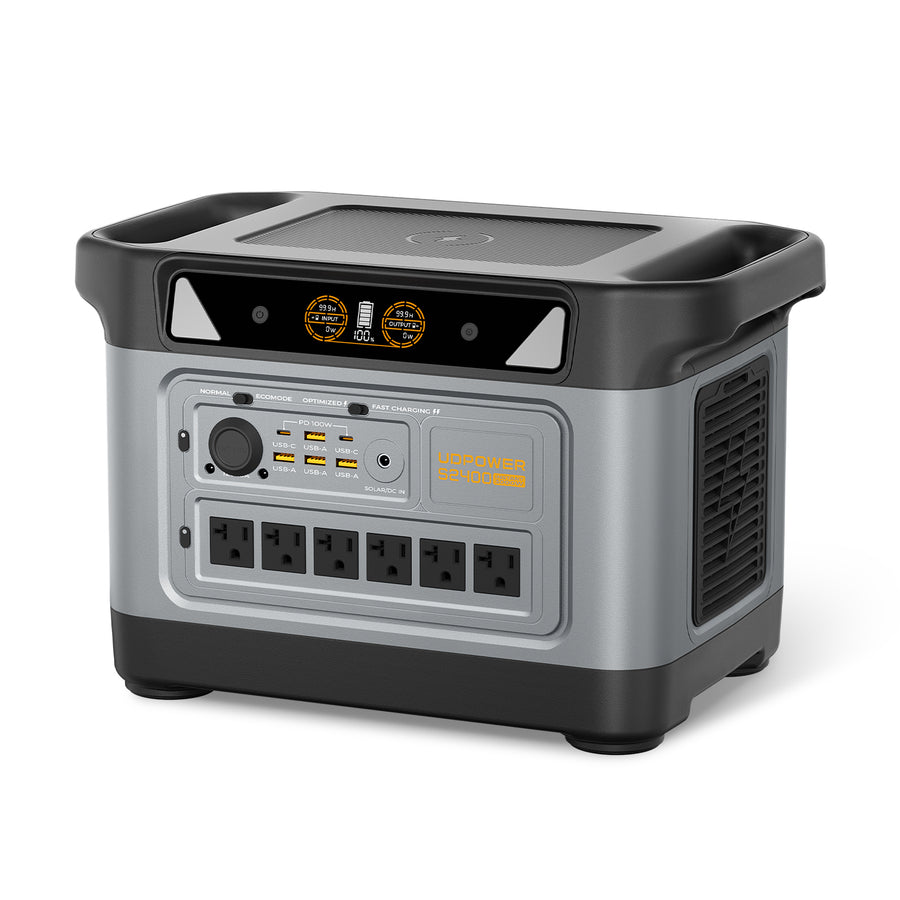
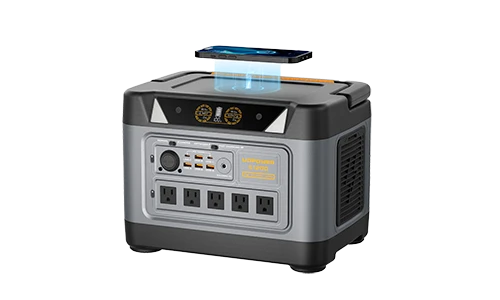
UDPOWER S2400 — larger backup loads and multi-device runtime
2,083Wh capacity 2,400W output 40.8 lb Solar input: 12–50V, 10A max, up to 400W
Best for longer refrigerator backup, multiple essentials at once, RV/camping comfort loads, and short use of some high-watt appliances when the appliance stays within the 2,400W output rating. It is still not intended for central AC, electric dryers, large water heaters, or Level 2 EV charging.
View UDPOWER S2400Browse the full portable power station collection, compare solar generator kits, or view compatible solar panels.
When rooftop installations change the answer
A portable power station is for selective backup. A rooftop solar installation is a building electrical project. That difference matters.
With professionally designed rooftop installations, some “not for portable solar” appliances may become possible because the system can include a larger solar array, higher inverter output, battery storage, a critical-loads panel, and code-compliant transfer equipment. But even then, the system must be designed around your real loads.
| Question to ask solar installation companies | Why it matters | Good answer should include |
|---|---|---|
| Which appliances will be backed up during an outage? | Not every rooftop system powers every circuit when the grid is down | A written essential-loads list, not a vague “whole home” claim |
| Can the inverter support my largest startup surge? | Motors and compressors can trip undersized systems | Continuous output, surge output, and appliance startup assumptions |
| Can the system support 240V loads? | Dryers, central AC, well pumps, and ranges may require split-phase 240V | Clear 120V/240V design details and backed-up circuit list |
| How many battery kWh are usable? | Large appliances may start but not run long | Usable battery capacity, not only nameplate capacity |
| How was solar production estimated? | Roof angle, shade, location, and season change output | A production estimate using tools such as NREL PVWatts |
| Who handles permits and interconnection? | Permanent solar panel installation must follow local code and utility rules | Permit scope, inspection plan, utility approval process, and warranty terms |
A trustworthy solar energy company should talk about load calculation, not just panel count. More panels help with daily energy, but inverter size and battery output decide whether a large appliance can actually start and run.
Best practical answer: separate “must-run” from “nice-to-have”
During an outage or off-grid trip, solar power works best when you stop trying to run a normal home day and start protecting the important loads.
| Priority level | Run these first | Run only if you have extra capacity | Avoid on portable solar |
|---|---|---|---|
| Safety | Medical devices, phone, lighting | Extra electronics | High-heat comfort appliances |
| Food | Refrigerator or freezer in planned cycles | Small microwave use under rating | Electric oven, electric range, hot plate used for long cooking |
| Communication | Wi-Fi router, modem, laptop | TV, game console | Entertainment loads running all day |
| Comfort | Fan, heated blanket with low wattage | Small portable AC only if verified | Central AC, space heater, electric fireplace |
Related reading: If your main concern is outage planning, start with Power Outage Checklist, then compare Portable Power Station vs Generator for Power Outages.
FAQ: appliances and solar power
Can solar panels run appliances directly?
Usually no. Most household appliances need stable AC power. A solar panel produces variable DC power, so you normally need a charge controller, battery, and inverter, or a properly installed grid-tied solar system.
What appliances cannot be used with a small solar generator?
Electric dryers, central AC, electric ovens, electric water heaters, hot tubs, large space heaters, Level 2 EV chargers, and many 240V hardwired appliances are usually not suitable for small solar generators.
Can a solar generator run a refrigerator?
Yes, if the refrigerator’s running watts and startup surge fit the power station. Refrigerators cycle on and off, so runtime depends on the model, room temperature, door openings, and battery capacity.
Can rooftop solar run central air conditioning?
It can in some homes, but only when the rooftop solar, inverter, battery, and backup circuits are designed for that load. Central AC is not a good assumption for portable solar backup.
Why are heating appliances hard for solar power?
Heating appliances turn electricity directly into heat, which uses a lot of energy fast. Space heaters, electric ovens, kettles, dryers, and water heaters can drain a battery much faster than lights, laptops, or routers.
Can I run a microwave on solar power?
Sometimes. A microwave is a short-use, high-watt appliance. Check the input watts on the label, not only the cooking watts. Use it alone and only if it stays within your inverter’s continuous output rating.
Are 240V appliances impossible with solar?
No, but they require the right system. If your solar generator or inverter only provides 120V AC, it cannot run a 240V appliance. A split-phase system and code-compliant installation may be required.
Should I call solar installation companies for large appliances?
Yes. If you want solar backup for central AC, a well pump, electric range, dryer, EV charger, or hardwired circuits, speak with qualified solar installation companies or a licensed electrician before buying equipment.
What is the safest solar setup for outages?
For most homes, the safest approach is an essentials-first plan: refrigerator, medical device, Wi-Fi, lights, phones, laptop, and fans. Use a properly rated portable power station for plug-in loads, or a professionally installed backup system for home circuits.
What UDPOWER model should I choose for home essentials?
For light electronics, consider C400 or C600. For refrigerator, CPAP, Wi-Fi, TV, and longer outage planning, S1200 is a practical starting point. For larger multi-device backup, S2400 offers more output and capacity.
Choose the right solar backup setup before the next outage
Start with the appliances you truly need to run. Then match their watts, surge, runtime, and solar recharge needs to the right system.
View Portable Power Stations View Solar Generator Kits Get the Runtime Planning Guide