

Are Solar Generators Any Good? Pros, Cons & Real-World Use
Latest update: October 19, 2026
Quick answer: Yes, solar generators are very good when you need quiet, rechargeable backup power for a defined group of devices such as a refrigerator, Wi-Fi equipment, phones, lights, laptops, a CPAP machine, camping gear, or RV equipment.
They are much less impressive when you expect a portable battery to run central air conditioning, electric heat, an electric dryer, or an entire house for days without a realistic way to recharge it.
The best way to judge a solar generator is not simply by asking how many watts it has. Check three things together: what it can run, how long it can run it, and how much energy you can put back into the battery the next day.

What Is a Solar Generator, Exactly?
The name can be slightly misleading. A portable solar generator does not generate electricity from sunlight by itself. It is normally a portable power station plus one or more compatible solar panels.
The power station contains the battery, battery management system, inverter, charging electronics, AC outlets, and DC or USB outputs. The solar panels produce DC electricity during daylight and send it to the power station's charging controller.
| Part | What It Does | Why It Matters |
|---|---|---|
| Battery | Stores energy in watt-hours | Determines how much electricity you have available before recharging |
| Inverter | Converts battery DC power into 120V AC power | Determines which normal household appliances the station can support |
| Solar charge controller | Accepts power from compatible solar panels | Sets voltage, current, and maximum solar-input limits |
| Solar panels | Produce electricity from sunlight | Can refill part or all of the energy used during the previous day |
This distinction explains one of the biggest misunderstandings about the category: the battery can supply electricity at night, but the solar panel cannot recharge it without useful sunlight.
If you are still comparing product types, see the UDPOWER solar generator collection and portable power station collection.
Are Solar Generators Actually Good?
Yes—but only if you judge them against the job they are designed to do.
A solar generator is excellent at selected-load backup. It can keep relatively efficient equipment running without operating a fuel-burning engine beside your home or campsite. It is especially useful when quiet operation, indoor battery use, portability, and repeatable recharging matter.
It becomes a poor choice when the energy demand is dramatically larger than the battery or the amount of solar you can realistically collect.
| Situation | How Good Is a Solar Generator? | Why |
|---|---|---|
| Phones, router, modem and lights | Excellent | These are relatively low-power loads and can often run for many hours |
| Laptop and remote-work setup | Excellent | Moderate power use and easy load management |
| CPAP backup | Very good when sized correctly | Quiet operation is valuable overnight, but humidifier and heated-hose use can materially change runtime |
| Refrigerator during an outage | Very good with correct sizing | Useful for food protection, but compressor startup and cycling need to be considered |
| Camping and RV electronics | Excellent | No fuel storage, low noise, and solar can extend multi-day use |
| Apartment backup | Excellent for essentials | A battery station does not create gasoline-engine carbon monoxide exhaust during battery operation |
| Microwave or coffee maker for a few minutes | Good with enough inverter output | High power is manageable when run briefly |
| Space heater for many hours | Poor | Resistance heating consumes stored battery energy extremely quickly |
| Central air conditioning | Usually poor for a normal portable unit | Many systems require 240V plus substantial running and startup power |
| Normal whole-house operation for several days | Poor for a single portable unit | Total household energy demand is usually far beyond a portable battery and folding-panel system |
The useful question is therefore not simply “Are solar generators any good?” It is:
Where Solar Generators Are Genuinely Good
1. Keeping communication equipment running during an outage
A modem, router, phone, and laptop use far less energy than electric heating or large HVAC equipment. That makes communications one of the strongest solar-generator use cases.
If internet continuity matters to you, see How to Keep Wi-Fi Running During a Power Outage.
2. Protecting food during shorter outages
A correctly sized power station can support many refrigerators and freezers, provided the inverter can handle compressor startup demand.
Refrigeration is also a good example of why watts alone are misleading. A refrigerator may briefly draw more power when its compressor starts, then cycle on and off instead of consuming its rated power continuously.
3. CPAP and quiet overnight loads
Battery power is especially useful at night because it does not require a gasoline engine running outside while you sleep. Actual CPAP energy use varies significantly with pressure, humidification, heated tubing, and machine model.
For a dedicated setup, use the CPAP Battery Backup for Power Outages guide.
4. Camping and RV travel
Camping is where the solar-generator concept makes intuitive sense. Charge the battery before leaving home, use it overnight, then recover part of the energy with solar during the day.
The system becomes particularly useful for camping fridges, camera batteries, laptops, fans, lighting, drones, phones, and CPAP machines.
For camping-specific sizing, see portable power stations for outdoor use and the camping power sizing guide.
5. Apartments, condos and places where a fuel generator is impractical
This is one of the clearest advantages of battery backup. A portable power station does not burn gasoline while supplying power, so it does not produce combustion-engine carbon monoxide exhaust during normal battery operation.
That does not remove normal electrical and battery precautions. Keep the unit dry, maintain ventilation around it, follow the operating-temperature limits, and use it according to the manufacturer's instructions.
By comparison, the U.S. Consumer Product Safety Commission says portable fuel generators must be used outside and at least 20 feet from the home, with exhaust directed away from the building. See CPSC carbon monoxide guidance.
Where Solar Generators Are Not a Good Fit
Long-duration electric heating
A 1,500W space heater can consume more energy in one hour than a router and modem use in several days. A large inverter may be able to operate the heater, but that does not make heating an efficient use of stored battery energy.
For example, using a 90% runtime-planning factor, a 2,083Wh battery supporting a steady 1,500W load would mathematically provide about:
That is why inverter capability and useful runtime must be treated as separate questions.
Normal whole-house operation
Most portable solar generators sold for the U.S. market are designed around standard 120V loads. Central HVAC, many water heaters, clothes dryers, electric ranges, and other large household equipment commonly require 240V and much more stored energy.
A portable system can still be very useful for selected essentials. For broader planning, read Can a Solar Generator Power a House?.
Anyone expecting unlimited solar power
Solar charging is variable. Clouds, haze, season, panel angle, panel temperature, partial shade, cable losses, and the power station's maximum input all affect how much energy reaches the battery.
If your loads use 1,500Wh every day but your solar setup only replaces 600Wh, you still lose about 900Wh of stored energy every day. A larger battery delays the problem; it does not eliminate the energy deficit.
High-power air conditioning without doing the math first
Some 120V window, portable, and RV air conditioners can work with sufficiently powerful solar generators. Central air is a different class of load.
Before buying specifically for cooling, use Can a Solar Generator Power an AC?.
Solar Generator Pros and Cons
| Advantage | Why It Matters | Limitation Behind the Advantage |
|---|---|---|
| Quiet operation | Useful at night, in campgrounds and around homes | Cooling fans may still run under load or while charging |
| No gasoline engine during battery operation | No engine exhaust, fuel storage or oil changes | Battery energy is finite and must eventually be recharged |
| Solar rechargeable | Can recover energy when the grid is unavailable | Solar output changes with weather, season, shade and panel position |
| Fast startup | Turn it on and connect compatible devices | You still need to confirm watts and startup demand |
| Low routine maintenance | No engine oil, spark plugs or gasoline stabilization | The battery still ages over time |
| Portable | One system can serve home, RV, camping and work uses | Large-capacity units become heavy |
| Pure sine wave AC on suitable models | Appropriate for many electronics and household loads | Voltage and inverter-output limits still apply |
| Useful for low and medium loads | Excellent runtime for communication and electronics | High-watt heat and cooling can empty batteries quickly |
For a deeper look at the downsides before buying, see 14 Disadvantages of Portable Power Stations.
The Three-Number Test: The Fastest Way to Know If a Solar Generator Will Be Good for You
Ignore brand names for a moment. Before comparing products, calculate these three numbers.
Number 1: Maximum simultaneous watts
Add the running wattage of the devices that may operate at the same time.
For motor-driven equipment such as refrigerators, pumps, compressors and air conditioners, also check startup demand.
Number 2: Daily watt-hours
Watts tell you whether the power station can operate a device. Watt-hours tell you how much energy that device uses over time.
| Example Load | Planning Watts | Daily Use | Daily Energy |
|---|---|---|---|
| Router + modem | 20W | 12 hours | 240Wh |
| Laptop | 60W | 4 hours | 240Wh |
| LED lighting | 10W | 5 hours | 50Wh |
| Example CPAP setup | 40W | 8 hours | 320Wh |
| Example refrigerator average | 70W | 12 equivalent running hours | 840Wh |
These are examples for planning, not universal appliance ratings. Your actual equipment may use substantially more or less electricity. A plug-in watt meter is usually more useful than a generic appliance chart.
Number 3: How many watt-hours can you replace each day?
This is the number that separates a one-day battery from a useful multi-day solar system.
| Daily Use | Daily Recovery | Energy Balance | What Happens |
|---|---|---|---|
| 600Wh | 900Wh | +300Wh | The system can recover if similar conditions continue |
| 900Wh | 900Wh | 0Wh | Balanced on paper but with little reserve for bad weather |
| 1,200Wh | 700Wh | -500Wh | The battery becomes about 500Wh emptier each day |
| 2,000Wh | 700Wh | -1,300Wh | A larger battery only delays depletion |
This daily energy balance is one of the most useful ways to judge a solar generator because it tells you whether the system merely stores electricity or can actually sustain your intended routine.
How Long Will a Solar Generator Actually Run?
Battery capacity is normally shown in watt-hours. For UDPOWER planning within the unit's normal rated operating range, this guide uses a 90% AC conversion-efficiency estimate.
For example, a 1,190Wh battery powering a steady 100W load:
This is planning math rather than a guaranteed runtime. Real results change with inverter overhead, battery condition, temperature, device cycling, standby draw, operating mode, and the exact load.
| UDPOWER Model | Battery Capacity | 90% Planning Energy | 20W Load | 100W Load | 300W Load | 400W Load | Official Specs |
|---|---|---|---|---|---|---|---|
| C400 | 256Wh | About 230Wh | About 11.5 hr | About 2.3 hr | About 46 min | About 35 min | C400 specs |
| S1200 | 1,190Wh | About 1,071Wh | About 53.6 hr | About 10.7 hr | About 3.6 hr | About 2.7 hr | S1200 specs |
| S2400 | 2,083Wh | About 1,875Wh | About 93.7 hr | About 18.7 hr | About 6.2 hr | About 4.7 hr | S2400 specs |
For a more detailed load-planning method, see Portable Power Station Runtime Planning for Outages.
The Bigger Question: Can Solar Replace the Energy You Use?
For a short outage, battery size may be the most important number. For a three-day camping trip or multi-day blackout, energy recovery becomes just as important.
A simple planning formula is:
The table below uses four equivalent full-sun hours and a 75% field-planning factor only as an illustration. It is not a guaranteed output forecast.
| Accepted Solar Power | 4-Hour Theoretical Energy | 75% Planning Example | What That Can Mean |
|---|---|---|---|
| 120W | 480Wh | About 360Wh | Useful for electronics, lighting, phone charging and partial overnight recovery |
| 210W | 840Wh | About 630Wh | Meaningful recovery for camping and moderate daily loads |
| 400W | 1,600Wh | About 1,200Wh | Potentially enough to replace a substantial daily essentials load in favorable conditions |
| 420W | 1,680Wh | About 1,260Wh | Strong portable-solar recovery for a larger battery when conditions cooperate |
The U.S. National Renewable Energy Laboratory's PVWatts resources demonstrate why solar production changes with location, weather and system losses. A foldable portable panel is not identical to a rooftop solar array, but the same basic lesson applies: nameplate watts are not guaranteed continuous output. NREL PVWatts Calculator.
Use the Solar Recovery Ratio
A useful way to plan a portable system is to compare what you consume with what you can realistically replace.
| Recovery Ratio | Interpretation | Practical Meaning |
|---|---|---|
| Above 1.0 | Potential energy surplus | Your solar plan may replace the day's consumption and rebuild reserve under similar conditions |
| 0.75–1.0 | Close to balanced | Good conditions may keep you going, but weather margin is limited |
| 0.4–0.75 | Partial recovery | Solar extends runtime but the battery generally trends downward |
| Below 0.4 | Large energy deficit | Solar helps, but another charging source or significant load reduction is needed for extended use |
For a complete outage-specific solar strategy, read Solar Recharging During a Power Outage.
Are Solar Generators Any Good on Cloudy Days?
The battery is still useful on a cloudy day because the stored energy does not disappear when clouds arrive. What changes is the amount of new energy the solar panels can collect.
Solar panels can still produce electricity under some cloudy conditions, but input is normally lower than under strong, unobstructed sunlight. The exact reduction varies too much with cloud thickness, weather, season, panel angle and location to use one reliable percentage for every situation.
This leads to an important planning rule:
Partial shade deserves special attention
A branch, roof rack, tent pole, vehicle, railing or another panel can shade part of a folding solar panel. The lost output can be much greater than the shaded area appears to suggest.
For better results, keep the active panel surface clear, face it toward direct sunlight, and use the power station's live input display to adjust the panel angle when practical.
Solar Generator vs. Gas Generator: Which One Is Actually Better?
Neither is automatically better. They solve different backup-power problems.
| Feature | Portable Solar Generator | Portable Fuel Generator |
|---|---|---|
| Energy source | Stored battery energy; rechargeable from wall, vehicle or compatible solar | Gasoline, propane or another supported fuel |
| Indoor battery operation | No fuel-burning engine exhaust during battery operation; follow product ventilation and electrical instructions | Never operate a portable fuel generator indoors or in a garage |
| Noise | Generally low | Engine noise |
| Routine maintenance | Relatively low | Engine and fuel-system maintenance |
| Refueling speed | Charging takes time | Rapid if fuel is available and the generator has cooled as required |
| Long-duration heavy loads | Limited by battery capacity and recharge rate | Strong advantage while fuel remains available |
| Apartment use | Strong fit for selected indoor electrical loads when used according to instructions | Usually impractical because safe generator placement outdoors is required |
| Camping at night | Quiet and convenient | Noise rules and fuel storage may matter |
| Solar recovery | Yes, with compatible panels | Not normally part of the fuel-generator system itself |
The CDC recommends keeping portable fuel generators outside at least 20 feet from doors, windows and vents. CDC generator safety guidance.
For a deeper comparison, see Portable Power Station vs. Generator for Power Outages.
Which UDPOWER Solar Generator Is a Good Fit?
The best choice depends on the job. A smaller battery can be better than a large one when portability matters. A larger system becomes more useful when refrigerator backup, CPAP, longer outages or multiple appliances enter the plan.
The specifications below were checked against current UDPOWER product pages on October 19, 2026.
| Model | Capacity | Normal Rated AC Output | Higher-Power Support | Maximum Solar Input | Weight | Best Fit |
|---|---|---|---|---|---|---|
| C400 | 256Wh | 400W | Up to 800W UDTURBO for compatible loads | 150W | Approx. 6.88 lb | Day trips, electronics, light camping, roadside backup |
| S1200 | 1,190Wh | 1,200W | Up to 1,800W UDTURBO for compatible loads | 400W | Approx. 26 lb | Balanced home essentials, CPAP, refrigerator, camping and RV use |
| S2400 | 2,083Wh | 2,400W | Up to 3,000W UDTURBO support | 420W | Approx. 40.8 lb | Larger appliances, longer outages, RVs and multi-device backup |
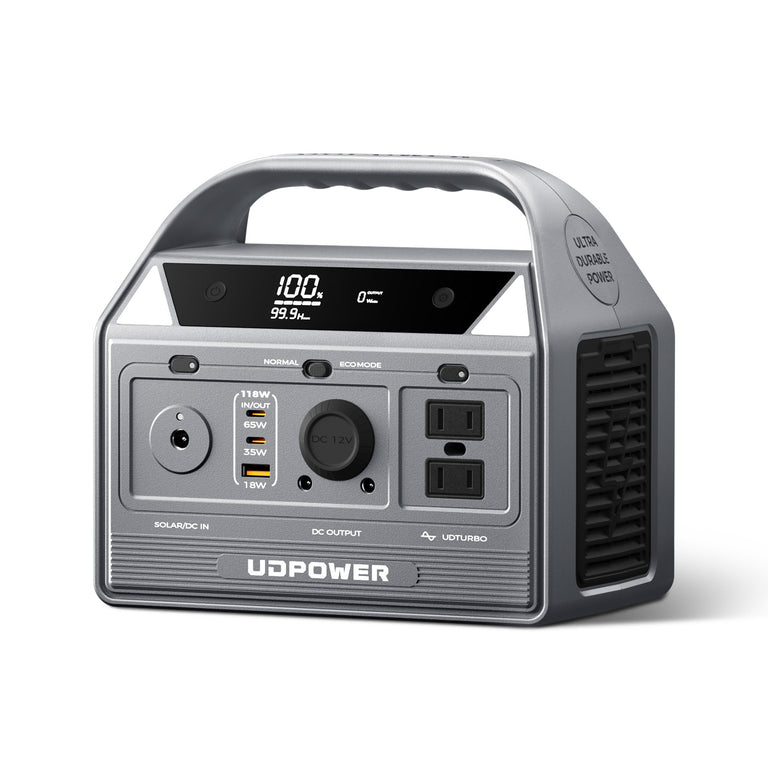
UDPOWER C400
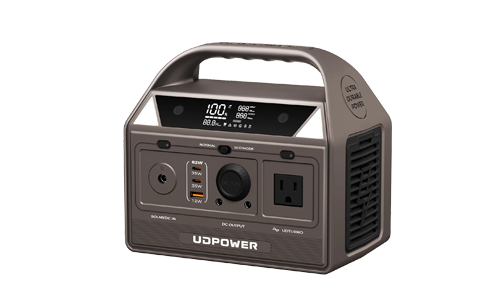
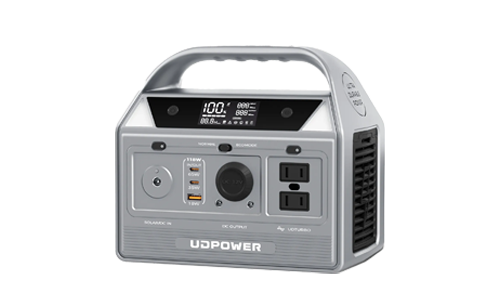
The C400 is the better answer when “good” means easy to carry rather than maximum runtime. It has a 256Wh LiFePO4 battery, 400W rated AC output, up to 150W solar input, and weighs about 6.88 lb.
It makes the most sense for phones, cameras, laptops, lights, smaller fans, vehicle emergency kits and light camping. It is not the model to choose if your main objective is long refrigerator backup or several large household appliances.
View UDPOWER C400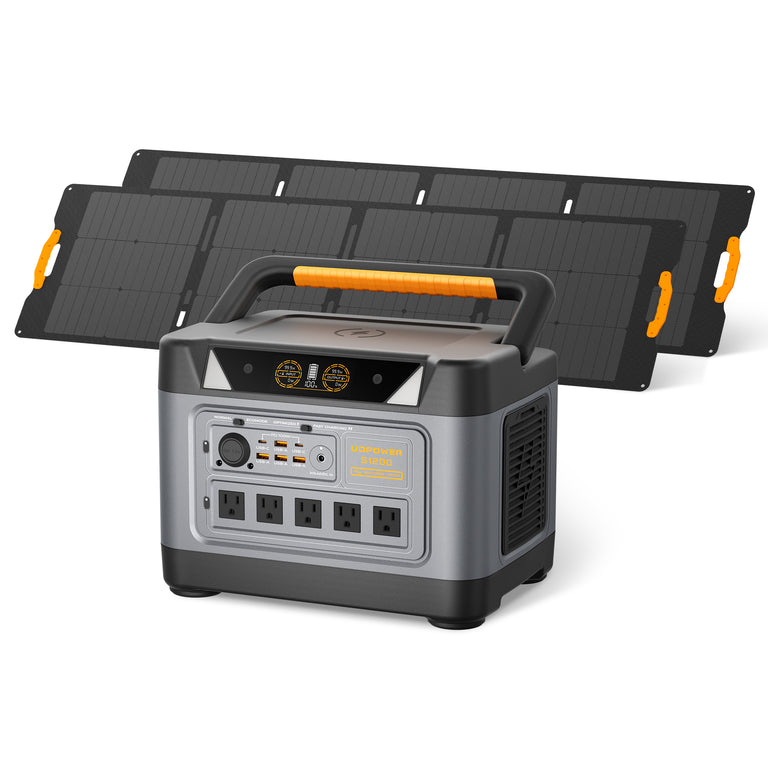
UDPOWER S1200
The S1200 is the most balanced option when you want enough stored energy for meaningful backup without moving into the weight of a 2kWh-class system.
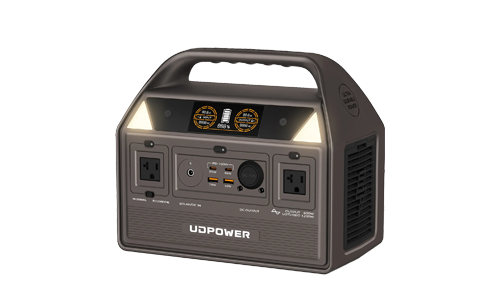
Current official specifications include a 1,190Wh LiFePO4 battery, 1,200W rated pure sine wave AC output, UDTURBO support up to 1,800W for compatible loads, 12V–75V / 12A / 400W maximum solar input, and UPS-style transfer of 10ms or less.
A 420W panel bundle is available, while the power station itself accepts up to 400W solar input. That makes the S1200 a practical fit for refrigerator support, CPAP, Wi-Fi, laptops, lighting, camping, RV use and essentials-first home backup.
View UDPOWER S1200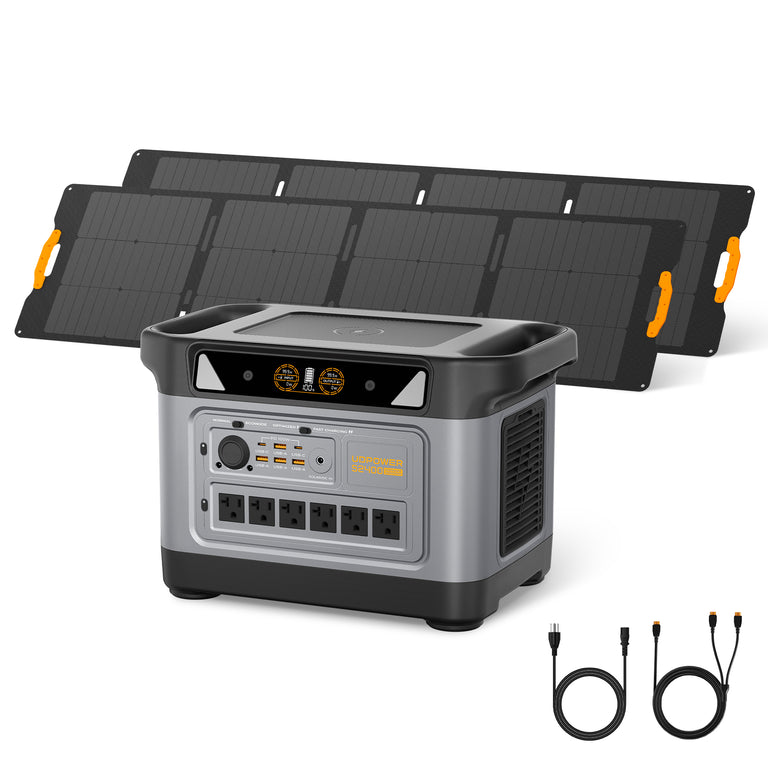
UDPOWER S2400
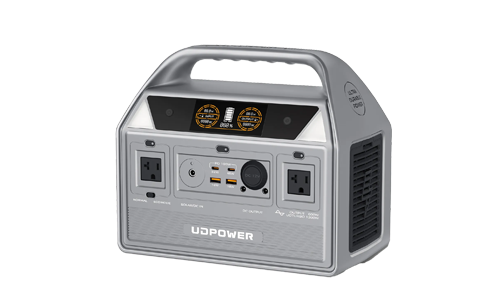
The S2400 is the stronger choice when output headroom and runtime matter more than carrying weight. It provides a 2,083Wh LiFePO4 battery and 2,400W rated pure sine wave AC output, with UDTURBO support up to 3,000W.
Current official specifications support solar charging up to 420W through the DC7909 input, with a 12V–50V input range and 10A maximum current.
This model is better suited to longer refrigerator support, multiple simultaneous household essentials, RV use, larger kitchen appliances used in controlled periods, and backup plans where a 1kWh-class battery does not leave enough reserve.
View UDPOWER S2400If you want the station and solar panels together, compare the current UDPOWER solar generator kits.
How to Tell Whether a Solar Generator Is Good Before You Buy It
- List only the devices you truly need. Separate essential loads from convenience loads.
- Measure actual watts when possible. Appliance labels and generic charts are useful starting points, but a watt meter is better.
- Check simultaneous output. Make sure the inverter can support everything that may run at the same time.
- Check startup demand. Refrigerators, air conditioners, pumps and compressors may need more power when starting.
- Calculate daily watt-hours. Watts × hours gives you the energy requirement.
- Allow for conversion losses. For normal rated UDPOWER AC loads, use the 90% planning method rather than assuming every advertised watt-hour reaches the appliance.
- Decide how many hours or days you need before reliable recharging.
- Calculate solar recovery. Ask how many watt-hours your solar setup can reasonably put back each day.
- Verify solar voltage and current limits. A connector fitting physically does not prove the panel is electrically compatible.
- Leave a weather reserve. Do not size a critical backup system around a perfect sunny-day forecast.
- Test your setup before an outage or trip. Run the actual refrigerator, CPAP, router, laptop or other priority load.
- Store the correct cables with the station. A charged battery is much less useful when the needed cable is somewhere else.
The test most buyers skip
Once you receive the power station, do a real-world trial instead of waiting for the next blackout:
- Fully charge the station.
- Connect one important appliance.
- Record its actual running watts.
- Confirm startup does not overload the station.
- Run it long enough to measure battery percentage loss.
- Repeat with your normal group of essential devices.
- Test the solar panel or other backup charging method separately.
This simple test tells you more about whether your solar generator is “good” than a long list of headline specifications.
The Most Important Insight: Battery Size Is Only Half of Off-Grid Runtime
For one-night use, buying more battery capacity works exactly as expected: more watt-hours generally means more runtime.
For multi-day use, the problem changes. The limiting factor becomes the difference between daily consumption and daily recovery.
Imagine two systems:
| Setup | Battery | Daily Use | Daily Solar Recovery | Daily Deficit |
|---|---|---|---|---|
| System A | 1,200Wh | 600Wh | 600Wh | 0Wh |
| System B | 2,400Wh | 1,500Wh | 500Wh | -1,000Wh |
System B has twice as much stored energy, but it is losing 1,000Wh every day. System A is much smaller but is close to energy-neutral under the assumed conditions.
That is why the best solar generator is not automatically the one with the largest battery. For extended use, a well-balanced system often beats a much larger battery paired with inadequate solar recovery.
Frequently Asked Questions
Are solar generators actually any good?
Yes. They are particularly good for selected essential loads such as phones, Wi-Fi equipment, laptops, lights, CPAP machines, refrigerators, camping gear and RV equipment. They are much less suitable for continuous electric heat, central HVAC or normal whole-house operation unless the system is specifically sized for those loads.
What is the biggest disadvantage of a solar generator?
The biggest limitation is finite stored energy combined with variable recharging. Once the battery is depleted, the system needs wall, vehicle, generator or solar charging. Solar recovery depends on sunlight, panel size, weather, temperature, shade and the power station's input limit.
Do solar generators work on cloudy days?
Yes. The battery continues supplying stored electricity normally, while the solar panels may continue producing some electricity at a reduced rate. The amount varies with cloud cover and other conditions, so cloudy-day charging should not be planned around one fixed percentage.
Can you use a solar generator indoors?
The battery power station itself can generally be used indoors according to the manufacturer's operating instructions because it does not burn gasoline or create engine exhaust while supplying battery power. Keep it dry, provide appropriate ventilation and follow temperature and electrical limits. Solar panels normally need useful outdoor sunlight for effective charging.
Can a solar generator run a refrigerator?
Yes, many medium and large solar generators can run refrigerators. Check both normal running consumption and compressor startup demand. Runtime depends on battery capacity, room temperature, refrigerator efficiency, door opening, cycling behavior and any solar energy being added during the day.
Is a solar generator good for CPAP backup?
Yes, a properly sized solar generator can be a strong CPAP backup because battery operation is quiet. Actual energy use depends heavily on the CPAP model, pressure settings, humidifier and heated hose, so test your exact setup before relying on an estimated runtime.
Can a solar generator power an entire house?
A portable solar generator can power selected household essentials, but one portable unit should not automatically be treated as a whole-home backup system. Central HVAC, electric dryers, ranges, water heaters and other 240V loads usually require a much larger system and appropriate electrical integration.
How long does a solar generator last on one charge?
Divide usable battery energy by the average load. For normal rated UDPOWER AC loads, a planning estimate is battery watt-hours × 0.90 ÷ load watts. A 1,190Wh battery at a steady 100W load works out to about 10.7 hours mathematically, while a 2,083Wh battery works out to about 18.7 hours. Real results vary.
How much solar do I need for a solar generator?
Start with daily energy use rather than battery capacity alone. If you consume roughly 800Wh per day, a solar setup capable of replacing roughly 800Wh on a normal day will be much more useful for extended off-grid use than a small panel that only recovers a fraction of your consumption. Always stay within the power station's voltage, current and wattage limits.
Are solar generators better than gas generators?
They are better for quiet, low-maintenance, selected-load backup, indoor battery use, camping and electronics. Fuel generators remain stronger for long-duration high-energy use when fuel is available and the generator can be operated safely outdoors. The better choice depends on the job rather than the technology alone.
Are solar generators worth buying if I only need phone charging?
Usually not. If phones and small USB devices are your only concern, a normal USB power bank is cheaper, lighter and easier to carry. A solar generator becomes more useful when you also need AC outlets, much more stored energy, refrigerator or CPAP support, camping equipment, or multi-device backup.
Final Verdict: Are Solar Generators Any Good?
Yes. For the right job, solar generators are one of the most practical forms of portable backup power.
They are especially good when you want to protect a short list of important loads without storing gasoline or running a combustion engine: refrigeration, communications, lighting, laptops, CPAP equipment, camping gear and RV electronics.
They are not unlimited power sources. High-watt heating, large air-conditioning systems, whole-home 240V loads and several days of unrestricted electricity use can quickly move beyond what a portable battery-and-panel system is designed to provide.
The most reliable buying strategy is simple:
- Calculate the highest watts you need at one time.
- Calculate the watt-hours you use each day.
- Calculate how much energy you can realistically recharge each day.
When those three numbers fit together, a solar generator can be extremely useful. When they do not, buying a larger headline wattage rarely fixes the underlying problem.
Choose a Solar Generator Based on What You Actually Need to Power
Start with your appliances, required runtime and recharge plan. Then choose enough battery capacity and output to cover that job without paying for capacity you will never use.
View Solar Generator Kits Compare Portable Power Stations Get the Sizing GuideSources and Method
Product specifications in this guide were checked against the current UDPOWER C400, S1200 and S2400 product pages on October 19, 2026. Runtime tables use a 90% AC conversion-efficiency planning estimate for loads within the normal rated operating range. Actual runtime depends on appliance behavior, temperature, battery condition, inverter overhead, operating mode and other real-world factors.
Related Articles


1 comment
Wow thank you for sharing, and education 🙏