

North Carolina Hurricane Power Outage: What Should You Prepare to Keep Running?
Latest updated: September 9, 2026
North Carolina Hurricane Power Outage: What Should You Prepare to Keep Running?
For most North Carolina households, the practical goal during a hurricane outage is not to power the entire house. Protect the loads that matter most: medically necessary equipment, phones, basic lighting, a refrigerator or freezer, internet equipment if service is still available, and a fan when heat is a concern.
A roughly 1,000–1,200Wh portable power station can be a useful starting point for short outages and a small group of essentials. A 2,000Wh-class unit is much better suited to a refrigerator plus CPAP, communications, lights, or other loads when the outage lasts overnight or longer.
North Carolina residents should also plan for something many generic hurricane guides overlook: hurricane-related outages are not limited to the coast. Wind, flooding, fallen trees, damaged roads, landslides, and damaged utility infrastructure can affect the Piedmont and western mountains as well as coastal communities.

North Carolina's hurricane season officially runs from June 1 through November 30, with the busiest portion typically from mid-August into late October. More importantly, the state's own emergency-management guidance notes that hurricane impacts have reached every part of North Carolina, not just communities immediately along the Atlantic coast.
That became impossible to ignore after Hurricane Helene. According to North Carolina emergency officials, power outages in western North Carolina peaked at more than one million customers. Days later, large numbers of customers were still without electricity while damaged roads and communications complicated recovery.
This guide focuses specifically on what North Carolina households can do before, during, and after a hurricane-related power outage—and how to build a realistic backup-power plan without assuming a portable battery can run everything in the house.
Why North Carolina Needs a Different Hurricane Outage Plan
It is easy to think of a North Carolina hurricane as a Wilmington, Outer Banks, or coastal problem. That is a mistake.
ReadyNC warns that tropical systems can bring damaging wind, tornadoes, storm surge, heavy rain, flooding, and landslides. The combination changes depending on where you live.
| North Carolina area | Common hurricane-related problems to plan around | Backup-power implication |
|---|---|---|
| Coast and Outer Banks | Wind damage, storm surge, flooding, evacuation orders, damaged distribution equipment | Keep backup power portable, fully charged, and ready to move. Backup electricity is never a reason to ignore an evacuation order. |
| Wilmington and southeastern NC | Wind, flooding, fallen trees, extended utility restoration after major storms | Refrigeration, communications, fans, and device charging often become the first practical priorities. |
| Triangle and Piedmont | Tropical-storm winds, falling trees and limbs, local flooding, damaged distribution lines | A several-hour outage can turn into an overnight event. Do not size backup power only for phone charging. |
| Charlotte and western Piedmont | Wind, tree damage, thunderstorms, localized flooding | Plan for refrigerator loads plus communication and basic comfort rather than only emergency lights. |
| Western mountains | Heavy rainfall, flash flooding, landslides, blocked roads, damaged communications and electric infrastructure | Plan for a longer period of self-sufficiency and do not assume roads, cellular service, fuel, or rapid utility access will always be available. |
The lesson from Hurricane Helene is especially important. A storm does not have to make a direct North Carolina coastal landfall to create a serious inland power emergency. North Carolina officials reported that more than one million customers in the western part of the state lost power at the peak of Helene's impact.
Source: North Carolina Department of Public Safety — Hurricane Helene Recovery.
Where to Check Current North Carolina Power Outages
When the power goes out, use an official utility or state outage map rather than relying only on neighborhood social-media reports.
The North Carolina Department of Public Safety maintains a statewide outage page that receives outage data from major utilities, electric cooperatives, and municipal providers. The state says the information is generally reported about every 30 minutes.
| Resource | Best use | Link |
|---|---|---|
| NC Department of Public Safety | Best starting point when you want a statewide picture or are unsure which utility map to use | View NC power outages |
| ReadyNC | Hurricane watches, warnings, evacuation preparation, shelters, emergency information | View Hurricane Guide |
| Duke Energy | Duke Energy Carolinas and Duke Energy Progress customers | View Duke Energy outages |
| NC Electric Cooperatives | Customers served by North Carolina electric cooperatives | View cooperative outage map |
| NC 211 | Finding local disaster, shelter, food, health, and community assistance | View NC 211 outage resources |
Do not build your battery plan around an estimated restoration time. An ETR is a useful planning signal, not a guarantee. Damage assessment can reveal broken poles, inaccessible roads, flooded equipment, fallen trees, or additional faults after restoration work begins.
What Should You Power First During a Hurricane Outage?
The easiest way to waste backup energy is to plug in everything simply because outlets are available.
During an extended outage, think of battery capacity as a limited emergency resource. Every watt spent on a low-priority appliance is energy that cannot later be used for refrigeration, communication, a CPAP machine, or basic lighting.
| Priority | Device or need | Typical planning load | Why it matters | Best strategy |
|---|---|---|---|---|
| 1 — Critical | Essential medical equipment | Varies by device | Health consequences can be serious if power fails | Use a tested dedicated backup plan and maintain an alternative location with reliable power |
| 1 — Critical | Phone and emergency communication | 5–20W while charging | Weather alerts, emergency calls, family communication | Charge periodically rather than leaving every device connected continuously |
| 2 — High | Refrigerator or freezer | Often around 60–150W average, with higher compressor startup demand | Food preservation becomes increasingly important during longer outages | Keep doors closed and verify compressor startup compatibility before storm season |
| 2 — High | Wi-Fi modem and router | About 10–30W combined | Useful if the upstream cable, fiber, or cellular infrastructure remains operational | Turn it off if your internet provider is down and the equipment is only wasting battery |
| 2 — High | LED lighting | About 5–15W per light | High practical value for very little energy | Light only occupied rooms |
| 3 — Comfort | Box or pedestal fan | About 30–75W | Can materially improve comfort during humid warm-weather outages | Use one efficient fan in the occupied room rather than multiple fans throughout the house |
| 3 — Optional | TV, laptop, entertainment | About 40–150W+ | Useful for news and work, but not usually critical | Use after essential loads are covered |
| Usually avoid | Space heater, electric kettle, air fryer, hair dryer | Often 900–1,800W+ | Heat-producing appliances consume battery energy extremely quickly | Use only briefly when the power station supports the load and sufficient reserve remains |
For appliance-specific compatibility, see How to Know If a Portable Power Station Can Run Your Device.
How Much Backup Power Do You Actually Need?
There are two separate questions:
- Can the power station run the device? Check the unit's AC output and the appliance's running and startup requirements.
- How long can the power station run it? Check battery capacity in watt-hours.
A 2,400W output rating does not mean 2,400Wh of battery capacity, and a 2,000Wh battery does not automatically mean it can operate every 2,000W appliance.
UDPOWER planning formula used in this guide:
Estimated runtime = battery capacity (Wh) × 0.90 ÷ average load (W)
The 90% factor provides a practical allowance for power conversion. Real results still change with inverter standby consumption, temperature, battery condition, compressor cycling, device efficiency, and changing loads.
A Better Method: Build a 24-Hour Energy Budget
North Carolina hurricane outages can extend well beyond a few hours. Instead of asking only, “Can this power station run my refrigerator?” ask, “How much energy will my household consume during one full outage day?”
Here is an example for a household trying to preserve food, run a CPAP overnight, stay connected, and keep one room comfortable.
| Essential load | Example use | Estimated daily energy | Planning note |
|---|---|---|---|
| Refrigerator | Measured example | 800Wh/day | Actual refrigerators vary substantially. Measure yours over a full day if possible. |
| CPAP | 40W × 8 hours | 320Wh | Heated humidification or heated tubing can substantially increase consumption. |
| Router + modem | 20W × 12 hours | 240Wh | Turn off if upstream internet service is unavailable. |
| Box fan | 50W × 6 hours | 300Wh | Useful during hot, humid outages but becomes a significant energy load over many hours. |
| Two LED lights | 10W combined × 6 hours | 60Wh | One of the best uses of limited battery capacity. |
| Phone charging | Daily charging allowance | 30Wh | Actual demand depends on phone battery size and number of devices. |
| Total example | 1,750Wh/day | This is why “a few small devices” can become a large daily energy requirement. |
Using a 90% planning efficiency, a 2,083Wh battery provides about 1,875Wh of planning energy. The sample household above would therefore consume almost an entire S2400-class battery in one day without recharging.
A 1,190Wh battery provides about 1,071Wh of planning energy, so the same load package would require either fewer operating hours, fewer devices, or recharging.
This is the biggest difference between a realistic hurricane plan and a product-specification comparison: daily energy use matters more than the number of outlets on the front of the power station.
Estimated Backup Battery Runtime for Common Hurricane Loads
The following calculations use 90% conversion efficiency for UDPOWER examples. Treat them as planning estimates, not guaranteed runtimes.
| Average load | Example | S1200 1,190Wh × 90% |
S2400 2,083Wh × 90% |
|---|---|---|---|
| 20W | Router/modem or light electronics | About 53.6 hours | About 93.7 hours |
| 40W | Lower-power CPAP setup | About 26.8 hours | About 46.9 hours |
| 70W | CPAP + communication + light | About 15.3 hours | About 26.8 hours |
| 100W | Illustrative average refrigerator load | About 10.7 hours | About 18.7 hours |
| 150W | Refrigeration plus small electronics | About 7.1 hours | About 12.5 hours |
| 220W | Refrigerator + CPAP + router + light + fan | About 4.9 hours | About 8.5 hours |
Refrigerators deserve special attention because compressors cycle on and off. Their instantaneous power draw and their average energy use are different numbers. For a deeper calculation, see Can a Portable Power Station Run Your Refrigerator?.
Coast, Piedmont, and Mountains: Build the Plan Around Where You Live
Coastal North Carolina: Make Evacuation the First Decision
For households in places such as the Outer Banks, Wilmington area, Carteret County, Brunswick County, or other storm-surge zones, backup power is secondary to evacuation safety.
If authorities order an evacuation, leave. A charged battery does not solve storm surge, rising water, inaccessible roads, structural damage, or emergency-service delays.
Before leaving:
- Fully charge your portable power station and smaller power banks.
- Charge phones, radios, flashlights, and medical equipment.
- Keep cables and adapters together.
- Download important documents and offline maps.
- Do not leave backup batteries where storm water can reach them.
Triangle, Charlotte, and Piedmont: Plan for Trees and Overnight Outages
Residents far from the shoreline can still lose power when tropical systems bring strong winds and saturated soil. Falling trees and limbs can damage local distribution lines even when storm surge is not a concern.
A useful Piedmont backup package often prioritizes:
- Refrigerator
- Router and modem
- Phones
- LED lighting
- One efficient fan
- CPAP or other essential medical equipment
Western North Carolina: Plan Beyond a Single Night
Helene demonstrated why mountain residents should not think of hurricanes as a coastal-only risk. Heavy rain, flooding, landslides, road damage, power outages, and communications failures can happen together.
For western North Carolina, add another question to your power plan: How will I recharge if roads, utility service, cellular networks, or normal shopping access remain disrupted?
A larger battery, carefully controlled loads, vehicle charging where appropriate, and solar recharging after conditions become safe can provide more resilience than depending on a single fully charged battery with no recharge plan.
Portable Power Station vs. Portable Generator vs. Standby Generator
There is no single backup-power system that is best for every North Carolina home.
| Backup type | Best for | Main advantage | Main limitation |
|---|---|---|---|
| Portable battery power station | Phones, refrigerator, CPAP, routers, lights, laptops, fans and selected appliances | No gasoline combustion or exhaust during operation; quiet; simple direct connection | Finite stored energy; not a whole-home system; most portable models provide only 120V |
| Portable gasoline/propane generator | Higher sustained loads and longer outages when fuel is available | Can continue operating as long as fuel and maintenance needs are met | Carbon monoxide, noise, fuel storage, refueling and weather-safety requirements |
| Permanently installed standby generator | Homeowners who want automatic backup for larger portions of the home | Automatic operation and potentially much higher continuous output | Professional installation, higher cost, permitting, maintenance and fuel requirements |
A portable power station is particularly useful when your actual goal is to keep a small group of critical devices alive rather than energize the entire electrical panel.
For more background, read Basics of LFP Home Battery Backups and browse UDPOWER Portable Power Stations.
Recommended UDPOWER Backup Power for North Carolina Hurricane Outages
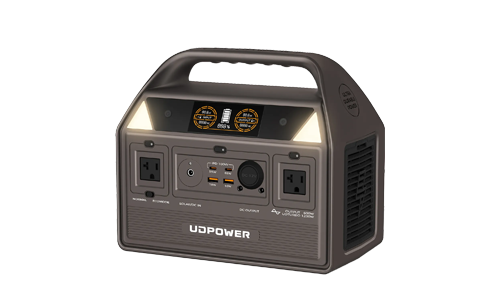
For this type of outage planning, the S1200 and S2400 are the most practical UDPOWER options because they combine larger LiFePO4 batteries with enough AC output for refrigerator-class loads and multiple smaller essentials.
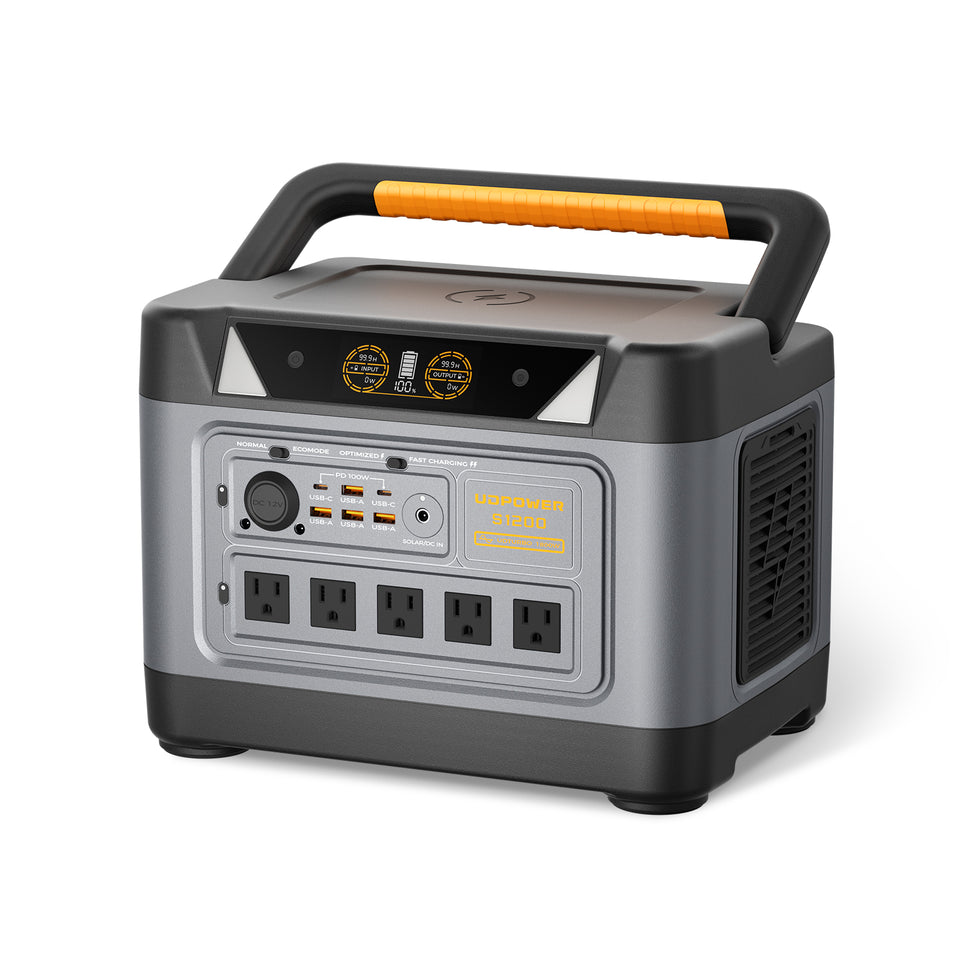
UDPOWER S1200: Best for Core Home Essentials
The UDPOWER S1200 is a practical choice for households that want refrigerator backup plus phones, lights, internet equipment, a CPAP machine, or other moderate loads without moving to a 2,000Wh-class battery.
| Battery capacity | 1,190Wh |
|---|---|
| Rated AC output | 1,200W pure sine wave |
| UDTURBO output | Up to 1,800W for compatible higher-power loads |
| AC outlets | 5 |
| UPS Prime | ≤10ms switchover |
| Solar input | Up to 400W |
| Weight | Approximately 26.0 lb |
| Best hurricane-outage fit | Refrigerator, CPAP, communications, lights, phones and other selected essentials during shorter or carefully managed outages |
100W average-load planning runtime: approximately 10.7 hours using the 90% efficiency calculation.
Current S-series models do not support wireless charging. Use the available wired USB, DC, or AC outputs.
View UDPOWER S1200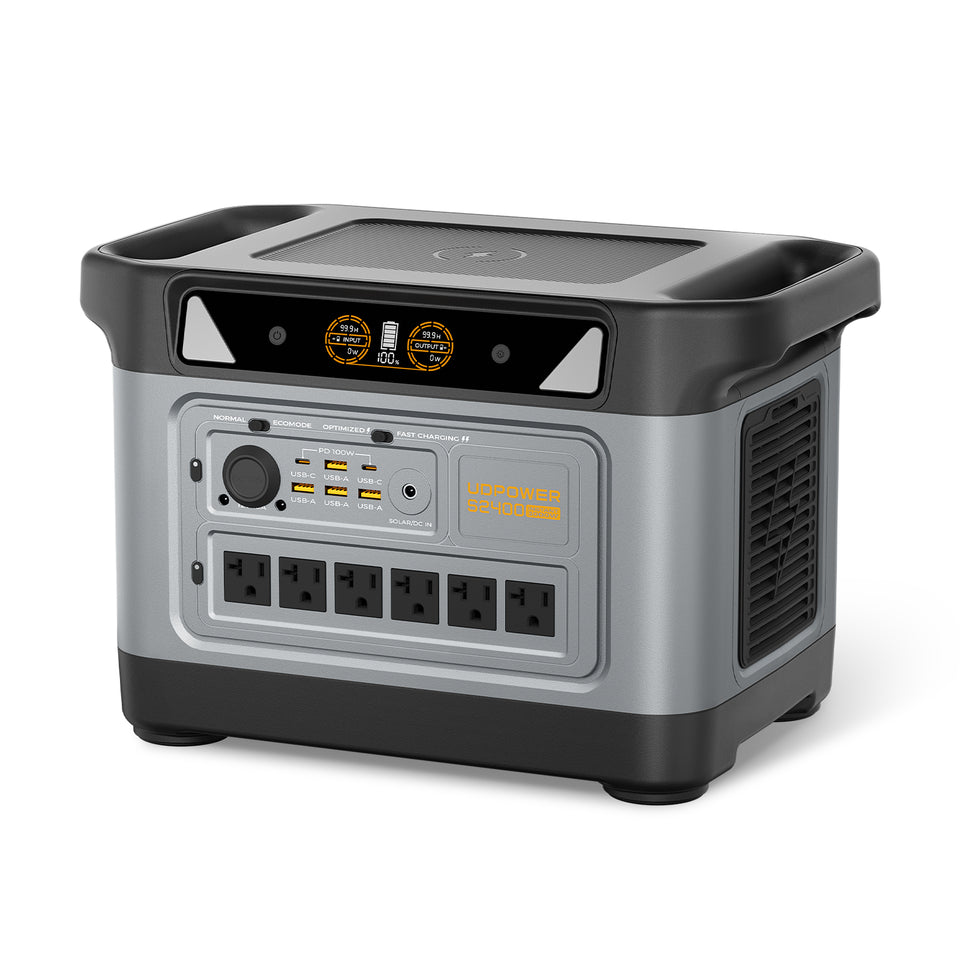
UDPOWER S2400: Better for Longer Outages and Multiple Essentials
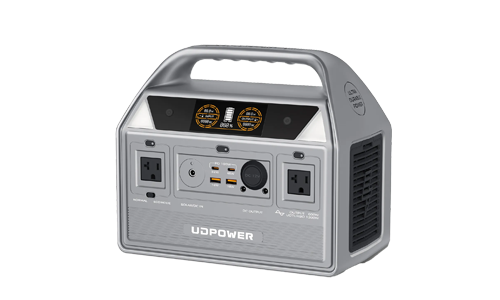
The UDPOWER S2400 is better suited to a household that wants more runtime margin for a refrigerator while simultaneously supporting CPAP, lights, communications, fans, laptops, or other essential devices.
| Battery capacity | 2,083Wh |
|---|---|
| Rated AC output | 2,400W pure sine wave |
| UDTURBO output | Up to 3,000W for compatible higher-power loads |
| AC outlets | 6 |
| UPS Prime | ≤10ms switchover |
| Solar input | Up to 400W |
| Weight | Approximately 40.8 lb |
| Best hurricane-outage fit | Longer refrigerator backup, refrigerator plus CPAP, communications, lighting and multiple smaller household essentials |
100W average-load planning runtime: approximately 18.7 hours using the 90% efficiency calculation.
The S2400 provides U.S. standard 120V AC output. It is not a 240V whole-home battery and should not be treated as a replacement for a properly designed standby or whole-home system. Current S-series models do not support wireless charging.
View UDPOWER S2400Which one makes more sense?
Choose the S1200 when portability and core essentials are the main priorities. Choose the S2400 when refrigeration is important, several devices need to run together, or you want more energy reserve for an outage that may extend overnight.
You can also compare larger-capacity options on the 1,000Wh+ Portable Power Station page or explore UDPOWER Solar Generator Kits.
North Carolina Hurricane Power-Outage Timeline
A backup system is most useful when it is prepared before the first outage notification arrives.
Before Hurricane Season
- List every device you would want during a blackout.
- Record voltage, rated watts, and startup requirements.
- Test your refrigerator and any motor-driven equipment with the actual backup unit.
- Measure refrigerator energy consumption over 24 hours if possible.
- Test the battery, AC outlets, USB ports, solar equipment, and charging cables.
- Keep your power station in a dry, temperature-controlled location.
72–48 Hours Before Possible Impacts
- Charge the power station to 100%.
- Charge phones, flashlights, radios, tablets, and power banks.
- Check the official ReadyNC and National Weather Service forecast.
- Confirm evacuation routes and shelter plans if you live in an evacuation area.
- Lower refrigerator temperature before the outage while utility power is still available.
- Freeze water containers or cold packs where practical.
- Store drinking and sanitation water, especially if your home depends on an electric well pump.
When a Hurricane Watch Is Issued
ReadyNC describes a hurricane watch as hurricane conditions being possible within about 48 hours. At this point, finish preparations rather than waiting for the first outage.
When a Hurricane Warning Is Issued
A hurricane warning means hurricane conditions are expected, generally within about 36 hours. Secure outdoor equipment, stop unnecessary travel, follow evacuation instructions, and do not plan to place solar panels or other equipment outside during dangerous winds.
First Hour of an Outage
- Check whether the outage affects the neighborhood or only your home.
- Report the outage to your utility.
- Disconnect unnecessary electronics.
- Keep the refrigerator and freezer closed.
- Turn on only the backup loads you actually need.
After the Storm Passes
- Wait until officials say conditions are safe.
- Stay away from downed or hanging power lines.
- Do not walk or drive through flood water.
- Inspect backup equipment and cables for water exposure or damage before use.
- Begin solar charging only when wind, flooding, lightning, and site conditions are safe.
Preparedness timing source: ReadyNC Hurricane Guide.
Can You Recharge a Portable Power Station With Solar After a Hurricane?
Yes. Solar can be extremely useful after grid power fails, but it should be treated as a recharge method—not as guaranteed continuous power.
The S1200 and S2400 support up to 400W of solar input. UDPOWER also offers solar-generator packages through its Solar Generator collection.
Do Not Confuse Panel Rating With Actual Charging Power
A solar array labeled 420W does not mean the battery will receive exactly 420W every hour. With a power station whose solar-input limit is 400W, input is capped by the station, and real production can be lower because of:
- Cloud cover after the storm
- Panel temperature
- Sun angle
- Partial shade
- Morning and late-afternoon sun
- Conversion losses
- Input limits of the power station
In other words, “400W solar input” is a maximum capability, not a promise that you will collect 400Wh during every hour of daylight.
When Should You Put Solar Panels Outside?
Only after dangerous weather has passed. Do not deploy portable solar panels in tropical-storm-force winds, lightning, rapidly rising water, or unsafe debris conditions.
Once conditions are safe, place the panel in unobstructed direct sunlight, adjust the angle while watching charging input, and keep connectors and electrical equipment away from standing water.
For more solar planning, see How Long Can a Solar Generator Run Home Essentials?.
Refrigerator, Food, CPAP, and Medical-Device Planning
How Long Is Food Safe Without Power?
According to the CDC, when doors remain closed:
| Appliance | Food-safety window without power | What to do |
|---|---|---|
| Refrigerator | Up to about 4 hours | Keep the door closed. After that point, use ice or another safe cold source if available. |
| Full freezer | About 48 hours | Keep the door closed as much as possible. |
| Half-full freezer | About 24 hours | Keep closed and monitor food condition when power returns. |
Source: CDC — Keep Food Safe After a Disaster or Emergency.
An appliance thermometer is one of the cheapest tools you can add to a hurricane kit. It tells you far more about food safety than guessing based on how cold the refrigerator feels.
CPAP Backup During a Hurricane
A CPAP can consume much less power than a refrigerator, but heated humidification and heated tubing can significantly change overnight energy use.
For example:
- A 40W average CPAP load for 8 hours requires about 320Wh before adding reserve.
- An 80W heated setup for 8 hours requires about 640Wh.
If CPAP backup is a major concern, read Sleep Apnea Equipment Backup Power: CPAP, APAP and BiPAP Guide.
For life-sustaining or medically critical equipment, do not rely only on a calculated battery runtime. Discuss outage planning with the medical provider, understand the device manufacturer's backup recommendations, and identify an alternative powered location if an extended outage could create a medical emergency.
Critical Hurricane Power-Outage Safety Rules
Keep Gas Generators Outside
Battery power stations and combustion generators are not the same thing. A gasoline or propane generator produces carbon monoxide.
The CDC says portable combustion generators should be operated outdoors and at least 20 feet away from windows, doors, and vents.
Source: CDC Power Outage Safety and National Weather Service Wilmington Hurricane Preparedness.
Do Not Backfeed Your Electrical System
Never connect a portable generator or power station to a household wall outlet in an attempt to energize the home. Improper backfeeding can create serious shock and fire hazards and may endanger utility crews.
Treat Every Downed Line as Energized
A power line on the ground may still be live. Trees, fences, water, vehicles, and other objects touching electrical lines can also become hazardous.
Keep Battery Equipment Dry
Do not operate, connect, charge, or handle a portable power station that has been submerged or exposed to significant water until it has been properly assessed.
Do Not Use Backup Power as a Reason to Stay in an Evacuation Zone
Storm surge, flash flooding, landslides, structural damage, and inaccessible roads cannot be solved by having a battery. Follow emergency-management instructions first.
For additional battery-specific information, read the UDPOWER Portable Power Station Safety Guide.
72-Hour North Carolina Hurricane Outage Checklist
Backup Power
- Portable power station fully charged
- Phone power banks charged
- Correct AC, USB, DC, car-charging, and solar cables packed together
- Solar panels inspected and ready for use after the storm
- Refrigerator startup tested before hurricane season
- CPAP or critical equipment tested on backup power
Communication
- Phones fully charged
- NOAA weather radio or battery radio available
- Utility outage page bookmarked
- ReadyNC information bookmarked
- Family contact plan written down
Food and Water
- Refrigerator and freezer pre-cooled
- Appliance thermometers installed
- Ice, frozen water containers, or cold packs prepared
- Nonperishable food available
- Drinking water stored
- Extra water stored if an electric well pump supplies the home
Safety
- Battery-operated smoke and CO alarms working
- Flashlights available instead of candles
- Outdoor generator extension cords ready if using a combustion generator
- Evacuation route confirmed
- Flood and storm-surge risk checked
- Emergency medications and important documents ready
Frequently Asked Questions
How long can a hurricane power outage last in North Carolina?
There is no fixed duration. A localized outage may last only a few hours, while widespread hurricane damage can take days or longer to fully restore. Hurricane Helene caused more than one million peak customer outages in western North Carolina, demonstrating why households should not plan only for a brief blackout.
Where can I check current North Carolina power outages?
Use the North Carolina Department of Public Safety power-outage page for a statewide view, then check your electric utility's outage map for account-specific restoration information.
What should I power first during a hurricane outage?
Prioritize medically necessary equipment, phones and communication, basic lighting, refrigeration, and temperature-related needs such as an efficient fan. Entertainment and high-wattage cooking appliances should usually come after those essentials.
How much battery backup do I need for a refrigerator?
For many households, approximately 1,000–1,200Wh is a practical starting point for shorter refrigerator outages. A 2,000Wh-class battery provides significantly more margin for overnight outages or for running a refrigerator alongside CPAP, internet equipment, lights, or fans. Always verify compressor startup power as well as energy capacity.
Can the UDPOWER S1200 run a refrigerator during a power outage?
Yes, when the refrigerator's running and startup requirements remain within the S1200's capabilities. The S1200 provides 1,200W rated AC output, UDTURBO output up to 1,800W for compatible higher-power loads, and a 1,190Wh battery.
Is the UDPOWER S2400 better for a long hurricane outage?
It is the better of the two S-series options when more runtime is important. Its 2,083Wh battery and 2,400W rated AC output provide more energy and power headroom for a refrigerator plus several smaller essentials.
Can the S2400 run my central air conditioner or entire house?
No. The S2400 is a portable 120V power station for selected devices. It is not a 240V whole-home power system and should not be expected to operate central AC, a large electric water heater, electric range, dryer, or an entire household electrical panel.
Can I recharge a portable power station with solar after a hurricane?
Yes, after outdoor conditions are safe. The UDPOWER S1200 and S2400 support up to 400W of solar input. Actual solar charging power depends on sunlight, cloud cover, panel angle, temperature, shading, and the power station's input limit.
How long will food stay safe in a refrigerator during a blackout?
The CDC says a closed refrigerator can generally keep food safe for up to about four hours without power. A full freezer can hold safe temperatures for about 48 hours and a half-full freezer for about 24 hours if the door remains closed.
Can I use a portable battery power station indoors?
A battery power station does not burn gasoline or produce combustion exhaust during normal operation, so it is fundamentally different from a gas generator. It should still be operated according to the manufacturer's instructions, kept dry, given adequate airflow around cooling vents, and protected from excessive temperatures and physical damage.
Can I plug a power station into a wall outlet to power my house?
No. Do not attempt to backfeed household wiring through a wall receptacle. Plug supported appliances directly into the power station. Any connection to household circuits should be reviewed and installed by a qualified electrician using compatible equipment.
Do western North Carolina residents need hurricane backup power?
Yes. North Carolina emergency officials specifically note that hurricane impacts can occur throughout the state. Hurricane Helene demonstrated that western North Carolina can experience severe flooding, damaged roads, communications failures, and widespread extended power outages even far from the coast.
What if my home uses an electric well pump?
Check the pump voltage before assuming a portable power station can run it. Many deep-well pumps use 240V, while UDPOWER S-series portable stations provide standard 120V AC output. Households dependent on a well should store emergency water before the storm and develop a separate water-supply plan.
How far should a gas generator be from the house?
The CDC recommends operating portable combustion generators outdoors and at least 20 feet away from windows, doors, and vents to reduce the risk of carbon monoxide entering the home.
Official North Carolina Hurricane and Power-Outage Resources
| Source | What it provides |
|---|---|
| ReadyNC Hurricane Guide | North Carolina hurricane watches, warnings, preparation, evacuation and recovery guidance |
| NC DPS Power Outages | Statewide utility outage information |
| National Weather Service Wilmington | Hurricane preparedness and post-storm safety information for southeastern North Carolina |
| CDC Power Outage Safety | Carbon monoxide, food, water and outage health guidance |
| CDC Food Safety After an Emergency | Refrigerator and freezer food-safety timelines |
| NC 211 | Local disaster assistance and community resources |
Build Your Hurricane Backup Plan Before the Forecast Turns Serious
The right backup system is not the one with the biggest watt number. It is the one that can safely run your actual essentials, provide enough watt-hours for the outage window you are preparing for, and give you a realistic way to recharge if utility service remains down.
View Portable Power Stations View Solar Generator Options View S1200 View S2400Related Articles


