

Are Partial Power Outages Dangerous? Causes & Fixes
Last updated: September 16, 2026
If one room or a few outlets lose power because a breaker or GFCI tripped, the cause may be relatively simple. The situation becomes much more concerning when unrelated rooms lose power at the same time, roughly half the house goes dark, no breaker appears tripped, 240V appliances stop working, or lights become unusually bright, dim, or unstable.
Those patterns can point to a lost service leg, loose service connection, failing main breaker, or open neutral. An open neutral is especially important because it can produce abnormal voltage on 120V circuits and damage appliances or electronics.
What should you do? Check the outage scope, inspect breakers without removing the panel cover, reset a clearly tripped breaker or GFCI once when conditions are safe, and report broad partial power to your electric utility. If the utility confirms its service is normal, call a licensed electrician. Do not open the electrical panel, remove the meter, touch service wiring, or repeatedly reset a breaker that trips again.

Stay away from damaged or downed power lines and assume they are energized. For an active fire or immediate threat, call 911. Report damaged utility lines to your electric company as well.
What Is a Partial Power Outage?
A partial power outage happens when electricity is unavailable to only part of a home while other lights, outlets, or appliances continue working.
That can look very different from one house to another. You might lose power to a bedroom while everything else remains normal. Several kitchen and bathroom outlets may stop working together. Unrelated rooms on different floors may go dark. In another case, roughly half of the home's circuits may stop working while the rest appear completely normal.
The pattern matters because these situations do not all have the same cause.
| Power Problem | Typical Pattern | Common Explanation | How Urgent Is It? |
|---|---|---|---|
| Single outlet has no power | One receptacle is dead while nearby devices work | Outlet failure, switched outlet, upstream GFCI, wiring connection | Usually localized, but damage, heat, or burning odor requires prompt attention |
| One circuit loses power | One room or group of connected devices goes out | Tripped breaker, AFCI/GFCI trip, overload, branch-circuit fault | Often straightforward if the breaker resets and stays on |
| Several unrelated rooms lose power | Outlets and lights in different parts of the house fail together | Lost service leg, service connection, main breaker, panel problem | Needs utility or electrician diagnosis |
| Half the house loses power | Many 120V circuits are dead while others remain normal | One incoming service leg may be lost | Treat as a service problem, not just a normal branch breaker trip |
| Lights get brighter and dimmer | Brightness changes when appliances switch on or off | Loose or open neutral, other voltage problem | Potentially serious because appliance voltage may become abnormal |
| Entire property loses power | Everything turns off | Utility outage, main disconnect, main breaker, service failure | Check the utility outage status and property conditions |
Are Partial Power Outages Dangerous?
They can be. A partial outage caused by a normal protective device doing its job is very different from a partial outage caused by a failing service connection.
A circuit breaker is designed to interrupt current when conditions exceed safe limits. A GFCI is designed to disconnect a circuit when it detects a ground-fault condition. When one of these devices trips, loss of power may actually be the electrical system protecting you.
The higher-risk situation is when the outage is caused by something that is not cleanly disconnecting the affected circuit. A loose conductor, failing service connection, damaged neutral, failing breaker connection, or arcing component can create heat, unstable voltage, or intermittent power.
The Electrical Safety Foundation International lists dimming or flickering lights, sparks, buzzing or sizzling sounds, overheated components, and burning odors among warning signs that should be inspected by a qualified electrician.
In a 120/240V residential electrical system, an open service neutral can cause the two 120V sides of the system to become unbalanced. The National Institute of Standards and Technology explains that the lightly loaded side can rise substantially above normal voltage when the neutral is open and the loads are unequal.
Warning Signs That Deserve Immediate Attention
- Some lights become unusually bright while others become dim.
- Lights change brightness when the refrigerator, microwave, dryer, HVAC equipment, or another large load starts.
- Roughly half of the home's circuits suddenly stop working.
- Several unrelated rooms lose power at the same time.
- 240V appliances stop operating normally at the same time as multiple 120V circuits.
- You smell burning plastic, hot insulation, or an unusual electrical odor.
- You hear buzzing, sizzling, crackling, or arcing near the panel, meter, service entrance, outlet, or switch.
- A panel, outlet, or switch plate is abnormally warm or discolored.
- Power repeatedly comes back and disappears without a breaker tripping.
- A storm has damaged the service line, meter area, weatherhead, or nearby utility equipment.
What Your Partial Outage Symptoms May Mean
You cannot reliably diagnose electrical service equipment by symptoms alone, but the pattern can help you decide what to do next.
| What You Notice | Possible Cause | What You Can Safely Do | Who to Contact |
|---|---|---|---|
| One room is out and one breaker is in the middle or OFF position | Tripped branch breaker | Unplug loads and reset the breaker once | Electrician if it trips again |
| Bathroom, garage, outdoor, basement, or kitchen outlets stop working | Tripped GFCI | Locate the upstream GFCI and reset it if the area is dry and undamaged | Electrician if it will not reset or trips again |
| Scattered rooms are dead but breakers look normal | Lost service leg, main breaker problem, service connection | Stop using unnecessary loads and report partial power | Utility first, then electrician if utility service checks normal |
| About half the 120V circuits are dead and large 240V appliances stop | Possible lost hot leg | Do not open the panel or meter | Utility or licensed electrician |
| Lights become very bright in one area and dim in another | Possible loose or open neutral | Disconnect sensitive electronics if it is safe to do so | Prompt utility and electrician evaluation |
| Breaker resets but trips again | Overload, damaged appliance, wiring fault, ground fault, arc fault | Leave it OFF rather than repeatedly resetting it | Electrician |
| Burning odor, smoke, sparks, hot panel, or arcing | Potential overheating or electrical fault | Stay clear; do not touch damaged equipment | 911 for an active fire or immediate danger; utility/electrician as appropriate |
Why Does Half the House Lose Power?
This is one of the most confusing partial-outage patterns because the dead circuits may not be physically next to each other.
Most U.S. homes receive 120/240V split-phase electrical service. In simplified terms, the home is supplied with two energized conductors and a neutral. Either energized conductor to neutral supplies roughly 120V. The two energized conductors together supply roughly 240V for equipment designed for that voltage.
The electrical panel distributes 120V branch circuits across the two incoming sides. That means a problem with one incoming leg can disable circuits scattered throughout the house rather than simply shutting down one room or one side of the building.
This is also why “half the house has no power” often deserves more attention than “one bedroom has no power.”
The U.S. Fire Administration's electrical training material describes typical U.S. residential split-phase service as a 120/240V system, while electrical equipment manufacturers likewise identify 120/240V as a standard residential single-phase configuration.
Lost Leg vs. Open Neutral: They Are Not the Same Problem
Two service problems are frequently grouped together online even though their symptoms and risks can be different.
| Condition | Typical Symptoms | What Happens Electrically | Main Concern |
|---|---|---|---|
| Lost hot leg | Many 120V circuits are completely dead while others remain apparently normal; 240V equipment may stop operating | One side of the incoming 120/240V service is missing | Failed utility connection, service conductor, main equipment, or related connection still requires professional repair |
| Open or loose neutral | Lights brighten or dim, voltage changes as loads switch, electronics behave strangely, symptoms may come and go | The two 120V sides may no longer stay properly balanced relative to neutral | Overvoltage or undervoltage can damage 120V equipment; a loose connection may also overheat or arc |
| Tripped branch breaker | One defined circuit loses power | The breaker intentionally opens the circuit | Find out why it tripped, especially if it repeats |
A clean pattern where many circuits are simply dead while the remaining lights look normal is more consistent with a lost leg than a neutral problem. A pattern where lights become noticeably brighter and dimmer as loads change is more concerning for a neutral or voltage problem.
These are clues, not a homeowner diagnostic test. Confirming the fault requires proper electrical measurements by the utility or a qualified electrician.
Common Causes of a Partial Power Outage
1. A Tripped Circuit Breaker
A breaker may not always sit obviously in the OFF position. Some breakers move to a center or tripped position that can look nearly normal at first glance.
According to ESFI's home electrical system guidance, a tripped breaker should first be moved fully to OFF and then back to ON. If the problem continues, a more serious electrical issue may be present.
A breaker that repeatedly trips is not something to defeat, hold in place, or keep resetting. It is telling you that the circuit needs attention.
2. A Tripped GFCI
A GFCI receptacle can protect outlets farther downstream on the same circuit. As a result, a GFCI in a garage, bathroom, basement, laundry room, kitchen, or outdoor area may cause another outlet to lose power even when that second outlet has no RESET button of its own.
The U.S. Consumer Product Safety Commission recommends testing GFCIs after a power failure and explains that downstream outlets may also be protected by one GFCI receptacle.
3. A Failed Outlet or Branch-Circuit Connection
If one outlet or a group of outlets on a single circuit is dead but the breaker remains on, a connection somewhere along that branch circuit may have failed.
That does not mean the supposedly dead wiring is safe to touch. Electricity may still be present elsewhere in the box or circuit. Removing receptacles, switches, panel covers, or wire connections is beyond the basic troubleshooting recommended here.
4. A Lost Incoming Service Leg
A damaged connection at the utility transformer, service drop, underground service, meter area, service entrance, main breaker, or related equipment can interrupt one side of the home's split-phase supply.
This can create the classic pattern where many unrelated 120V circuits stop working at once.
5. A Loose or Open Neutral
This is one of the more important partial-outage faults because power may remain on while the voltage is no longer behaving normally.
NIST's consumer power-quality guidance explains that when the neutral opens in a 120/240V installation and the two sides are unevenly loaded, the voltage can become heavily unbalanced. The lightly loaded side may experience a significant rise above normal 120V.
That can put televisions, computers, LED drivers, refrigerator electronics, chargers, networking equipment, appliances, and other 120V devices at risk.
6. A Failing Main Breaker or Panel Connection
A main breaker can fail internally, and electrical connections inside service equipment can loosen, corrode, or overheat.
These are not DIY troubleshooting points. The energized portions of service equipment can remain dangerous even when individual branch breakers are turned off.
7. Utility-Side Equipment Problems
A partial outage can originate outside the house. A failed utility connection may affect only one customer, so the fact that your neighbors still have power does not prove the problem is inside your home.
For example, Entergy specifically lists dim or flickering lights and partial power as electrical power problems customers can report.
8. Storm, Tree, Vehicle, or Water Damage
Wind, falling branches, ice, lightning, construction activity, vehicle impacts, flooding, and other physical damage can affect service wiring and utility equipment.
If a line is down, do not inspect it closely. Utility safety guidance says to assume downed lines are energized, even when they are not sparking or making noise.
How to Fix a Partial Power Outage Safely
The right fix depends on the pattern. Homeowner troubleshooting should stop well before opening the electrical panel or working on wiring.
Make a quick list of what works and what does not. Is it one outlet? One room? Several unrelated rooms? Roughly half the house? Are 240V appliances also affected? Do any lights look unusually bright or dim?
Use your electricity provider's outage map, app, text service, or outage phone number. Report the problem even if your neighbors still have power when you are experiencing widespread partial service.
Do this only when the panel is dry, undamaged, cool, and free of smoke, sparks, buzzing, or burning odor.
Unplug or switch off appliances on the affected circuit. If a breaker is visibly tripped, move it fully to OFF and then back to ON once.
If it immediately trips again, leave it OFF and call an electrician.
Look in bathrooms, kitchens, garages, laundry areas, basements, outdoor receptacles, and other locations where GFCI protection is common.
If the outlet is dry, intact, and safe to access, press RESET. If it will not reset, loses power again, shows damage, or feels unusually warm, stop troubleshooting and arrange electrical service.
If several unrelated rooms are out, roughly half the home has no power, the breakers look normal, or 240V appliances fail at the same time, report partial power to the utility.
If lights are changing dramatically in brightness, devices behave differently when other appliances turn on, or power repeatedly appears and disappears, safely unplug sensitive equipment where possible and contact the utility and a licensed electrician.
The utility can determine whether normal service is reaching the customer connection. If its equipment and supply check out, a licensed electrician can investigate the customer-owned service equipment, main breaker, panel, and branch circuits.
- Do not remove the electrical panel's dead-front cover.
- Do not remove or tamper with the utility meter.
- Do not touch service entrance conductors.
- Do not probe the panel with a multimeter unless you are qualified to work on energized electrical equipment.
- Do not keep resetting a breaker that repeatedly trips.
- Do not bypass a GFCI, AFCI, breaker, fuse, or other protective device.
- Do not use a cord with two male plugs or any other method to backfeed power through a household receptacle.
Should You Call the Power Company or an Electrician?
For a broad partial outage with no obvious branch breaker trip, calling the utility first is often the most efficient starting point.
A problem can occur at the transformer, utility service conductor, underground service, connection point, meter, service entrance, main breaker, panel, or branch wiring. Exactly where the utility's responsibility ends and the property owner's responsibility begins varies by utility and local rules.
| Situation | Best First Call | Why |
|---|---|---|
| Neighborhood or multiple homes have lost power | Electric utility | Likely distribution-system outage |
| Half the house is dead and no breaker is tripped | Electric utility | A lost incoming leg can occur before the home's branch circuits |
| Lights are dramatically brightening and dimming | Utility and licensed electrician | Possible service-neutral or voltage problem should be evaluated promptly |
| Utility says incoming service is normal | Licensed electrician | The fault may be in customer-owned service equipment or wiring |
| One breaker repeatedly trips | Licensed electrician | Likely branch-circuit, load, or protective-device problem |
| One GFCI will not reset | Licensed electrician | Could indicate a ground fault, failed device, moisture, or wiring issue |
| Smoke or active electrical fire | 911 | Immediate life-safety risk takes priority |
| Downed power line | Utility and local emergency services as appropriate | Assume the conductor is energized and stay away |
What to Do After Power Comes Back
Power returning does not automatically mean the original problem has been permanently fixed.
If the outage was caused by a utility event and service has been officially restored, check the house before reconnecting everything at once.
- Look at your lighting first. Confirm that lights appear to have returned to normal brightness without unusual flickering.
- Listen and smell. Buzzing, crackling, burning odor, or abnormal heat still requires attention.
- Reconnect sensitive electronics carefully. Ready.gov recommends unplugging appliances, equipment, and electronics during outages to help avoid surge damage when electricity returns.
- Check GFCIs. CPSC recommends testing GFCI receptacles after a power failure.
- Verify refrigerators, freezers, HVAC systems, pumps, and other important appliances are actually operating normally.
- Do not ignore recurring symptoms. If partial power returns again later, arrange further diagnosis even if the system temporarily appears normal.
For official outage preparation guidance, see Ready.gov's power outage safety guide.
What About Food in the Refrigerator?
If your refrigerator circuit lost power for a meaningful period, food safety may become the next problem even after the electrical fault is corrected.
A closed refrigerator generally keeps food cold for about four hours during an outage. A full freezer generally holds its temperature substantially longer when the door stays closed.
For a practical food-by-food explanation, see UDPOWER's guide: Power Out for 12 Hours: Is Refrigerator Food Still Safe?
Can You Use Backup Power During a Partial Power Outage?
Yes, but backup power should be used to run selected devices while the electrical fault is being handled. It is not a repair for the partial outage itself.
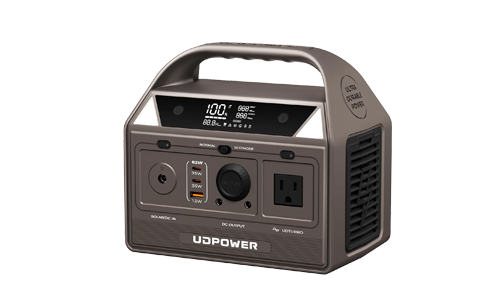
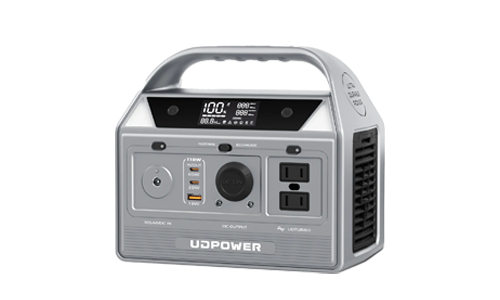
A portable power station can be useful for keeping communication, lighting, refrigeration, a CPAP machine, laptops, networking equipment, phones, and other compatible 120V devices running while the utility or electrician works on the problem.
Plug the device directly into the portable power station and operate within the power station's ratings. Do not attempt to energize household wiring by connecting a portable power station to a wall receptacle.
If your home's incoming voltage is behaving abnormally, do not assume a portable power station operating in pass-through or UPS mode will somehow repair poor utility voltage. A suspected lost neutral or service fault should still be addressed by the utility or electrician.
For a deeper explanation of the difference between outage runtime and seamless switchover, read Portable Power Station vs. UPS for Home Backup.
You can also review UDPOWER's Indoor Generator Guide if you are deciding between battery backup and a fuel-powered generator.
UDPOWER Backup Power Options for Essential Loads
For a partial outage, the goal should usually be to keep important individual appliances and electronics running rather than trying to energize the entire home's electrical system.
Two UDPOWER models are particularly relevant for home outage preparedness.
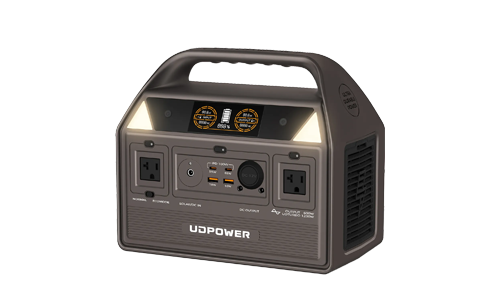
UDPOWER S1200: A Practical Essential-Load Backup

The S1200 is a good fit when your outage plan focuses on a refrigerator, router, lights, phones, laptop, CPAP machine, television, fans, and similar essentials within its output limits.
- 1,190Wh LiFePO4 battery capacity
- 1,200W rated AC output
- Up to 1,800W surge support
- Pure sine wave AC output
- UPSPrime switchover under 10 ms
- Approximately 26 lb
- 5-year product warranty
UDPOWER's current product guidance estimates roughly 10–15 hours of refrigerator operation for a refrigerator averaging about 60–100W, although actual runtime depends on compressor cycling, ambient temperature, inverter losses, refrigerator efficiency, and other connected loads.
View UDPOWER S1200UDPOWER S2400: More Capacity for Longer or Heavier Outage Loads

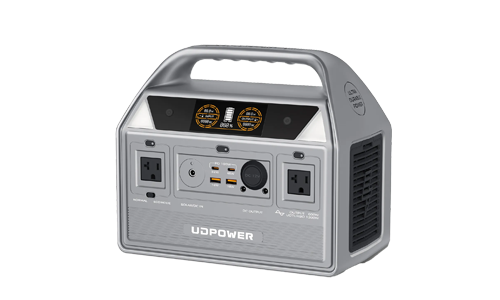
The S2400 provides substantially more battery capacity and AC output for households that want to run several compatible essentials or support higher-power 120V appliances.
- 2,083Wh LiFePO4 battery capacity
- 2,400W pure sine wave AC output
- Up to 3,000W surge support
- 6 AC outlets
- UPSPrime response time of 10 ms or less
- Approximately 40.8 lb
- 5-year product warranty
UDPOWER's current product page estimates approximately 18–30 hours of refrigerator operation for a standard refrigerator averaging about 60–100W.
Important: The S2400 provides standard U.S. 120V AC output. It is not intended to power an entire home electrical panel, central air conditioner, electric water heater, or other 240V hardwired household system.
View UDPOWER S2400S1200 vs. S2400 for an Outage
| Feature | UDPOWER S1200 | UDPOWER S2400 | Why It Matters During an Outage |
|---|---|---|---|
| Battery capacity | 1,190Wh | 2,083Wh | More watt-hours generally means longer runtime at the same load |
| Rated AC output | 1,200W | 2,400W | Determines how much compatible equipment can run at once |
| Surge capability | Up to 1,800W | Up to 3,000W | Useful for compatible appliances with startup demand |
| Weight | About 26 lb | About 40.8 lb | S1200 is easier to move; S2400 offers more energy |
| Typical role | Core essentials and easier portability | Longer runtime or more simultaneous loads | Choose based on actual wattage and runtime needs |
For a more detailed comparison, see UDPOWER S1200 vs. S2400.
To compare the full range, visit the UDPOWER Portable Power Stations collection or the Portable Power Stations for Home Backup collection.
How to Reduce the Risk of Partial Power Problems
You cannot prevent every utility failure or storm-related outage, but several steps can reduce the chance that a minor electrical issue becomes a larger one.
Pay Attention to Early Warning Signs
Do not normalize lights that repeatedly flicker, outlets that feel hot, buzzing switches, frequent breaker trips, or circuits that behave differently when large appliances start.
These symptoms are often easier to diagnose before they become intermittent failures.
Have Older Electrical Systems Inspected
ESFI recommends electrical inspections for older homes and homes that have undergone significant renovations or major appliance additions.
If your electrical service has been modified repeatedly over decades, an inspection can identify overloaded circuits, deteriorated connections, outdated equipment, grounding issues, or other conditions that deserve attention.
Keep Your Panel Properly Labeled
A clear circuit directory makes it much easier to determine whether an outage follows one branch circuit or cuts across unrelated circuits.
That distinction is useful information for both the utility and your electrician.
Test GFCIs
Use the TEST and RESET functions according to the device manufacturer's instructions. CPSC recommends testing GFCIs regularly and after power failures.
Protect Electronics From Outage-Related Surges
Ready.gov recommends unplugging appliances, equipment, and electronics during outages when practical and using surge protection devices.
For electronics that must remain online through short interruptions, a properly selected UPS or compatible power station with UPS functionality can add another layer of continuity.
Build an Essential-Load Backup Plan Before the Outage
Write down the devices you actually need:
- Refrigerator or freezer
- Router and modem
- Phones
- Essential lighting
- Laptop
- CPAP equipment
- Fans
- Small medical or accessibility equipment where compatible
Then check both running watts and expected runtime rather than buying backup equipment based only on its maximum watt rating.
To understand that distinction, see How Does a Portable Power Station Work?
Frequently Asked Questions About Partial Power Outages
Can a partial power outage damage appliances?
Yes. The risk depends on the cause. A normal tripped breaker simply disconnects a circuit. A loose or open neutral can create abnormal voltage that may damage electronics, appliance controls, lighting, chargers, or motors. Low or unstable voltage can also be hard on some motor-driven equipment.
Why is half my house without power but no breaker is tripped?
One possible cause is the loss of one incoming leg of the home's 120/240V electrical service. The problem may be at the utility connection, service conductor, meter area, service entrance, main breaker, or panel. Report broad partial power to your utility and arrange electrician diagnosis if utility service is normal.
Why do I have power in some rooms but not others?
Homes are divided into multiple electrical circuits. A branch breaker or GFCI can disable only certain outlets, while a service-leg problem can affect multiple unrelated circuits throughout the house. The location of the rooms alone does not identify the cause.
Can a partial power outage fix itself?
Power may return temporarily, but that does not prove the underlying problem is repaired. Intermittent power can result from loose or failing connections. If broad partial power repeatedly disappears and returns, have the problem diagnosed.
Should I reset all my breakers during a partial outage?
Not automatically. If one specific breaker has clearly tripped and there are no warning signs, you can unplug loads and reset that breaker once. If multiple unrelated circuits are out with no tripped breaker, repeatedly cycling breakers is unlikely to repair an incoming service problem.
What does it mean if lights get brighter when another appliance turns on?
Large, unusual brightness changes can indicate a voltage or neutral problem rather than an ordinary outage. Because an open neutral can cause voltage imbalance in a 120/240V system, this symptom deserves prompt utility or electrician attention.
Should I call the electric company if only my house is affected?
Yes, if the symptoms suggest a broad service problem. A utility connection serving only your property can fail while every neighboring home remains powered. If the utility confirms normal service at your connection, the next call should be a licensed electrician.
Can a bad GFCI make several outlets stop working?
Yes. One GFCI receptacle can protect downstream receptacles on the same circuit. That is why an outlet in another room may lose power when an upstream GFCI trips.
What should I do if a breaker trips again after I reset it?
Leave it off. Repeated tripping can indicate an overload, equipment fault, wiring problem, ground fault, or arc-fault condition. Continually resetting the breaker removes the warning without addressing the cause.
Is a partial outage the same as a brownout?
No. A partial outage generally means some circuits or parts of the property have lost usable power while others remain powered. A brownout refers to reduced voltage. However, some service faults can produce symptoms that resemble both, which is why brightening, dimming, or unstable lights matter.
Can I use a portable power station while waiting for an electrician?
Yes, for compatible essential devices. Plug those devices directly into the power station and stay within its output rating. A portable power station does not repair the home's electrical fault and should never be used to backfeed a household wall outlet.
Will a portable power station run my entire house during the outage?
Portable units such as the UDPOWER S1200 and S2400 are designed to power selected compatible 120V loads. They are not replacements for a professionally designed whole-home backup system, and the S2400 does not provide 240V output for central air conditioning, electric water heaters, or other hardwired 240V systems.
Should I unplug electronics during a partial power outage?
If the power is unstable, lights are changing brightness, or the cause is unknown, disconnecting sensitive electronics where it is safe to do so can reduce exposure to abnormal voltage or restoration surges. Ready.gov also recommends unplugging appliances and electronics during power outages to help protect them from surge damage.
Is it dangerous if power keeps going on and off in only part of the house?
It can be. Repeated intermittent power can indicate a loose connection or failing electrical component. If the problem affects multiple unrelated circuits or comes with flickering, heat, noise, or odor, stop treating it as a normal breaker trip and have the service evaluated.
Bottom Line
A partial power outage is not one single electrical problem. Sometimes it is simply a breaker or GFCI doing exactly what it is supposed to do. Other times it is the first visible symptom of a lost service leg, failing connection, main equipment problem, or open neutral.
The pattern gives you the best first clue:
- One circuit out: check the breaker or GFCI.
- Breaker trips again: leave it off and call an electrician.
- Half the house out with no breaker trip: report partial power to the utility.
- Lights dramatically brightening and dimming: treat it as a possible voltage or neutral problem.
- Smoke, fire, sparks, burning odor, hot equipment, or damaged lines: stay away and get emergency help.
The most useful rule is simple: reset normal protective devices when it is clearly safe to do so, but do not turn a service-level electrical fault into a DIY project.
Prepare for the Next Outage Before It Happens
A battery power station cannot repair a partial outage, but it can keep selected essentials running safely and independently while utility crews or an electrician diagnose the problem.
View Portable Power Stations Explore Home Backup Options Compare S1200 vs. S2400Safety Sources and Further Reading
- National Institute of Standards and Technology — Consumer Power Quality Problems
- Ready.gov — Power Outage Safety
- Electrical Safety Foundation International — Understanding Your Home Electrical System
- Electrical Safety Foundation International — Home Wiring Safety Tips
- U.S. Consumer Product Safety Commission — GFCI Fact Sheet
- Entergy — Reporting Partial Power, Flickering Lights and Power Problems
- Entergy — Downed Power Line Safety
Related Articles


