

Sleep Apnea Equipment Backup Power: How to Keep CPAP, APAP, and BiPAP Running During an Outage
Latest updated: August 19, 2026
Quick Answer: How Much Backup Power Does Sleep Apnea Equipment Need?
For a CPAP, APAP, or BiPAP machine, the right backup battery depends much more on how many watt-hours your exact setup uses overnight than on the wattage printed on the power adapter.
As a practical starting point, an 8-hour load averaging 20W needs about 178Wh of nominal battery capacity after allowing for 90% conversion efficiency. A 40W average load needs about 356Wh, a 65W load about 578Wh, and a 90W heated setup about 800Wh. Adding a 25% emergency reserve raises those targets to roughly 222Wh, 444Wh, 722Wh, and 1,000Wh.
That means you do not automatically need a 1,000Wh power station for every CPAP. A 596Wh UDPOWER C600 can be a practical one-night option for many low-to-moderate power CPAP setups, while the 1,190Wh UDPOWER S1200 makes more sense when you use heated humidification, want greater reserve, need automatic UPS-style switchover, or plan to power other essentials during an outage.
The most reliable method is simple: run your normal CPAP setup through a watt meter for one full night, record the energy used, and size your backup from that measurement.

Why Backup Power Matters for Sleep Apnea Equipment
CPAP therapy depends on electricity. When utility power disappears, a standard CPAP plugged into the wall normally stops unless another power source is already available.
The National Heart, Lung, and Blood Institute describes CPAP as a machine that uses mild air pressure to keep the breathing airway open during sleep. APAP adjusts that pressure automatically, while BiPAP or BPAP delivers different pressures during inhalation and exhalation.
For someone who uses PAP therapy every night, an outage plan should therefore answer four practical questions before bad weather arrives:
- How many watt-hours does my actual nighttime setup consume?
- How many hours or nights do I want to cover?
- Will I use heated humidification and heated tubing during the outage?
- How will I recharge if utility power remains unavailable the next day?
The American Lung Association's outage-preparation guidance specifically recommends planning backup power for devices such as CPAP and BiPAP machines before an outage occurs. It also recommends practicing the emergency plan rather than waiting for an actual blackout to discover whether the equipment works together.
The important distinction: a battery that can turn your CPAP on is not automatically large enough to run it through a full night. Backup planning is an energy-capacity problem measured in watt-hours (Wh), not just a question of whether the power station has a large enough AC watt rating.
What Sleep Apnea Equipment Needs Backup Power?
When someone says “CPAP backup battery,” they may actually be powering several electrical functions at once. Understanding which ones are active makes runtime estimates much more useful.
| Equipment or Feature | What Uses Power | How It Affects Backup Planning | What to Check |
|---|---|---|---|
| CPAP | Blower maintains continuous prescribed pressure. | Usually manageable with a portable power station. | Actual overnight Wh, normal pressure, mask leak and comfort settings. |
| APAP | Blower automatically changes pressure through the night. | Power consumption can vary as pressure changes. | Measure an entire normal night rather than relying on one instant watt reading. |
| BiPAP / BPAP | Provides separate inhalation and exhalation pressures. | Do not assume a generic CPAP runtime table exactly matches your machine. | Use the exact device model and an overnight energy measurement. |
| Heated humidifier | Uses energy to heat water. | Can materially reduce battery runtime. | Know whether you can lower or disable heat during an emergency. |
| Heated tubing | Uses electrical heat to control tube temperature and condensation. | Adds another continuous or cycling heating load. | Check climate-control and tube-temperature settings. |
| Oxygen concentrator | Runs a compressor and oxygen-separation system. | May use far more energy than the PAP machine itself. | Use the concentrator's exact power specification and medical backup instructions. |
PAP therapy definitions: NHLBI Sleep Apnea Treatment.
How Much Power Does a CPAP Really Use?
There is no single accurate wattage for every CPAP machine. Device model, prescribed pressure, mask leak, humidifier setting, heated tubing, room temperature and the type of power connection can all change energy use.
One mistake is treating the wattage printed on the power brick as if the machine consumes that much power continuously. For example, ResMed lists a 65W power supply for the AirSense 11. That tells you about the power supply, but it does not mean an AirSense 11 continuously consumes exactly 65 watts all night.
For battery sizing, it is more useful to treat 20W, 40W, 65W and 90W as planning scenarios rather than universal CPAP ratings.
| Planning Load | What It Represents | 8-Hour Energy Delivered to the Load | Why It Is Useful |
|---|---|---|---|
| 20W | Efficient PAP setup with little or no heating. | 160Wh | Useful low-consumption example. |
| 40W | Moderate overnight PAP load. | 320Wh | Good middle-of-the-road sizing scenario. |
| 65W | Conservative planning load for a higher-consumption full-size setup. | 520Wh | Shows why a 500–600Wh battery may have little reserve at higher loads. |
| 90W | High-consumption example with heating or additional accessories active. | 720Wh | Useful for sizing a larger emergency reserve. |
If you want a deeper breakdown of blower load, humidity, heated tubing and runtime, see How Much Power Does Your CPAP Use?
The Best Way to Measure Your Overnight CPAP Power Use
A real overnight measurement is more useful than trying to guess from an online wattage table. It automatically captures your machine, prescribed pressure, mask behavior, humidifier, heated tube and normal sleeping environment.
Step 1: Use your normal CPAP setup
Do not change settings just for the test. Use the same humidifier level, heated hose, pressure settings and mask you normally use.
Step 2: Connect a plug-in energy meter
Place a consumer watt meter between the wall outlet and your CPAP's original AC power supply.
Step 3: Run the CPAP for one complete night
An instant watt reading is less useful because heating elements and pressure can change throughout the night. Record the total energy consumed after a normal sleep period.
Step 4: Record kWh or Wh
If the meter shows 0.30kWh, that equals 300Wh of AC energy used during the night.
Step 5: Add conversion loss and reserve
UDPOWER runtime planning in this guide uses a 90% conversion-efficiency assumption. Divide the measured energy by 0.90, then add reserve if the backup is important.
Minimum nominal battery capacity:
Overnight energy use ÷ 0.90
Capacity with a 25% emergency reserve:
(Overnight energy use ÷ 0.90) × 1.25
Example: if your CPAP uses 300Wh during a normal night:
300Wh ÷ 0.90 = about 333Wh minimum nominal battery capacity.
Adding a 25% reserve:
333Wh × 1.25 = about 416Wh.
In that case, a 596Wh-class power station gives much more useful breathing room than a battery that is only slightly larger than 333Wh.
How Many Watt-Hours Do You Need for One Night?
The following table assumes an 8-hour sleep period and 90% usable conversion efficiency. The reserve column adds another 25% so you are not designing the entire backup plan around reaching 0% battery at exactly eight hours.
| Average CPAP Load | 8-Hour Load Energy | Minimum Battery at 90% Efficiency | With 25% Reserve | Practical Capacity Class |
|---|---|---|---|---|
| 20W | 160Wh | About 178Wh | About 222Wh | 250Wh+ can work if actual consumption is confirmed. |
| 40W | 320Wh | About 356Wh | About 444Wh | 500–600Wh gives a practical one-night buffer. |
| 65W | 520Wh | About 578Wh | About 722Wh | 700Wh+ is preferable; 1,000Wh-class adds stronger reserve. |
| 90W | 720Wh | About 800Wh | About 1,000Wh | 1,000Wh+ is the safer planning range. |
Calculations use an 8-hour operating period and UDPOWER's standard 90% conversion-efficiency assumption for runtime planning. Actual runtime varies with the machine and operating conditions.
This is why battery capacity should follow measured energy use. A low-consumption CPAP may run overnight from a compact power station, while the same person may need a much larger battery after turning on aggressive heated humidification and heated tubing.
CPAP Backup Power Runtime Chart for UDPOWER Power Stations
The table below applies the same formula to current UDPOWER power-station capacities:
Estimated runtime = battery capacity (Wh) × 0.90 ÷ average load (W)
| UDPOWER Model | Battery Capacity | 20W Load | 40W Load | 65W Load | 90W Load | Official Specs |
|---|---|---|---|---|---|---|
| C400 | 256Wh | About 11.5 hrs | About 5.8 hrs | About 3.5 hrs | About 2.6 hrs | C400 |
| C600 | 596Wh | About 26.8 hrs | About 13.4 hrs | About 8.3 hrs | About 6.0 hrs | C600 |
| S1200 | 1,190Wh | About 53.5 hrs | About 26.8 hrs | About 16.5 hrs | About 11.9 hrs | S1200 |
| S2400 | 2,083Wh | About 93.7 hrs | About 46.9 hrs | About 28.8 hrs | About 20.8 hrs | S2400 |
Product capacities are from the linked UDPOWER official product pages. Runtime values are planning estimates using capacity × 90% ÷ load and are not guaranteed operating times.
Important for very low AC loads: inverter self-consumption matters more when the connected appliance itself uses only a small amount of power. That means a 20W CPAP connected through AC may not achieve the mathematical maximum shown above. Temperature, battery state, inverter overhead, battery age and device behavior can all shorten runtime. Test your exact setup overnight before relying on a calculated figure.
For more runtime examples by battery size, see How Long Will a CPAP Run on a Battery Backup?
Choose Backup Power by Outage Length, Not Just CPAP Wattage
A battery that works for a two-hour interruption may be a poor choice for a hurricane, winter storm or planned wildfire shutoff. Think about the outage you are actually preparing for.
| Outage Scenario | Main Goal | Battery Strategy | What Else to Plan |
|---|---|---|---|
| Brief outage: 1–4 hours | Finish part of the night without interruption. | A compact battery may be sufficient if measured consumption is low. | Keep it charged and easy to connect in the dark. |
| One full night: about 8–10 hours | Protect the entire normal sleep period. | Size from actual overnight Wh and retain 20–25% reserve. | Decide in advance whether humidity and heated tubing stay on. |
| 24-hour outage | Cover one night and keep enough energy for daytime essentials. | Move up one capacity class rather than buying the bare minimum. | Phone, router, lights and daytime battery conservation matter. |
| Multi-day outage | Repeat nightly CPAP operation without grid power. | Use a larger battery plus a realistic recharging plan. | Solar availability, weather and daily energy budget become important. |
A useful rule is to separate your energy into two budgets: therapy power and everything else. If you have 500Wh available for the night, do not assume all 500Wh can also be used for phones, laptops, lights and a refrigerator.
AC vs. DC: Which Is Better for CPAP Backup Power?
Option 1: Use the CPAP's Original AC Adapter
This is the simplest setup for many home users. Plug the CPAP's normal power supply into a pure-sine-wave AC outlet on the portable power station.
The advantage is compatibility: you are still using the power supply designed for your machine. The downside is that energy has to move through the power station's AC inverter before the CPAP's adapter converts it back to the low-voltage DC required by the machine.
Option 2: Use a Manufacturer-Compatible DC Adapter
Some PAP machines can operate from a compatible DC supply. For example, ResMed offers DC/DC converter options for certain devices.
A direct DC route can avoid the power station's AC inverter and may improve efficiency, particularly when a low-wattage PAP machine has to run for many hours.
Do not buy a DC cable simply because the connector looks correct. Voltage, polarity, connector dimensions and communication requirements can differ between CPAP models. Use a cable or converter specifically approved or confirmed for the exact PAP device.
ResMed AirSense users can also read How to Power a ResMed AirSense CPAP .
Do You Need UPS Backup for a CPAP Machine?
There are two different backup situations:
- Manual backup: the power fails, you wake up, then plug the CPAP into a battery.
- UPS-style backup: the CPAP is already connected through a compatible backup system and the power source switches to battery automatically when utility power disappears.
Automatic switchover is useful when you do not want a nighttime outage to require waking up and reconnecting equipment.
The current UDPOWER S1200 and UDPOWER S2400 list UPSPRIME switchover of less than 10 milliseconds.
But test it. A fast UPS specification does not mean every medical device is guaranteed to react identically. Connect your exact PAP machine and run a controlled wall-power interruption test before depending on the setup overnight.
Also remember that a portable power station with a UPS function should not automatically be treated as a hospital-grade or life-support UPS. If uninterrupted electricity is medically critical for your situation, follow the backup requirements provided by your clinician and equipment provider.
Recommended UDPOWER Backup Power Options for Sleep Apnea Equipment
Instead of calling one model “best” for everyone, the following recommendations match different levels of overnight energy use and outage risk.

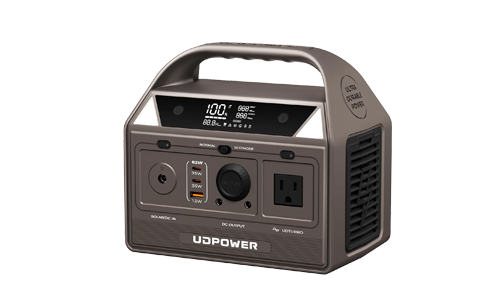
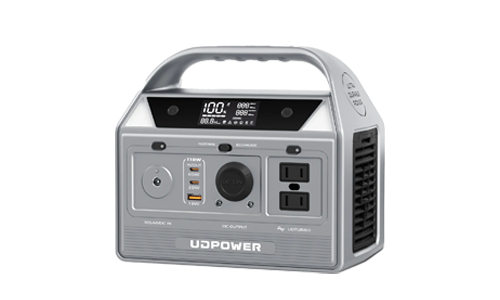
UDPOWER C400 — Best for Short Backup or Very Efficient CPAP Setups
- Capacity: 256Wh
- Rated AC output: 400W
- Battery: LiFePO4
- Cycle life: 4,000+ cycles listed
- Best CPAP role: short interruptions or confirmed low-consumption setups
The C400 is attractive when portability matters, but its 256Wh battery should not be treated as a universal full-night CPAP solution.
Using the 90% planning formula, a 20W load is about 11.5 hours, but a 40W load falls to about 5.8 hours. If your measured CPAP consumption is anywhere near the higher end, step up to a larger battery instead of trying to use every last watt-hour.
View UDPOWER C400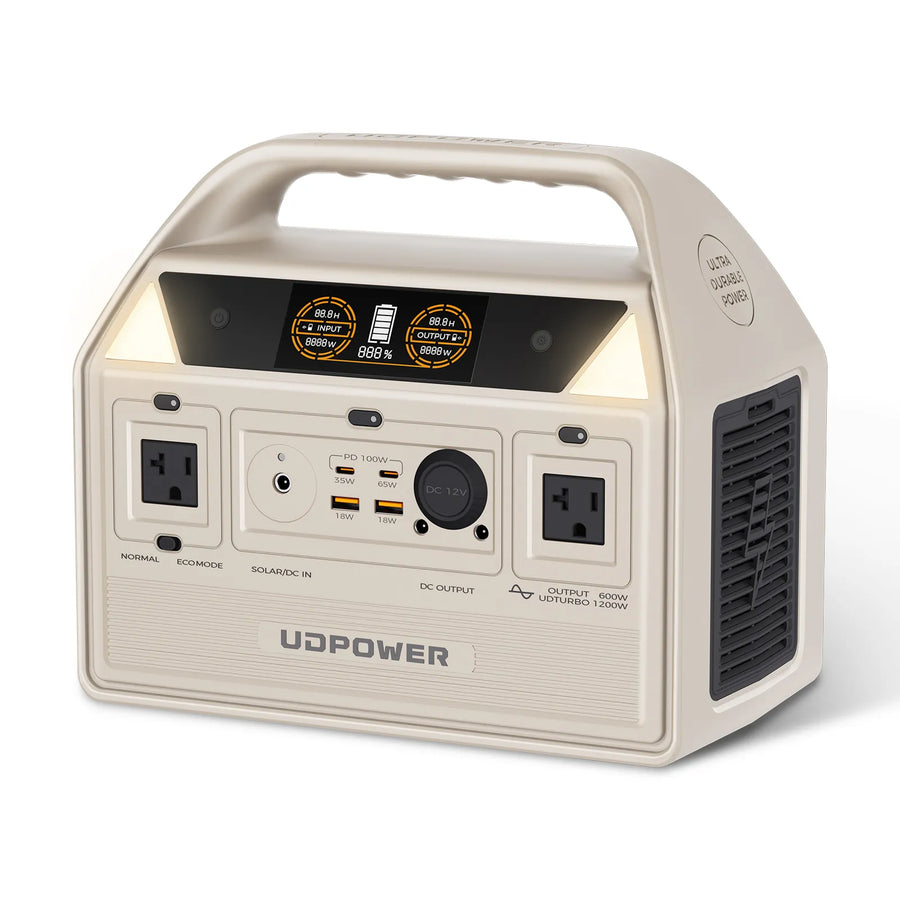
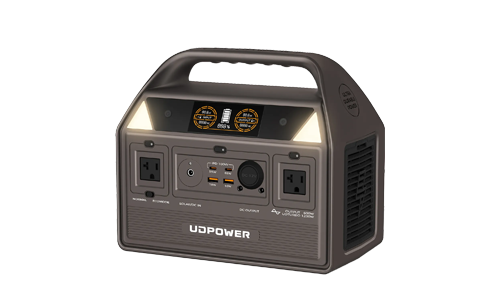
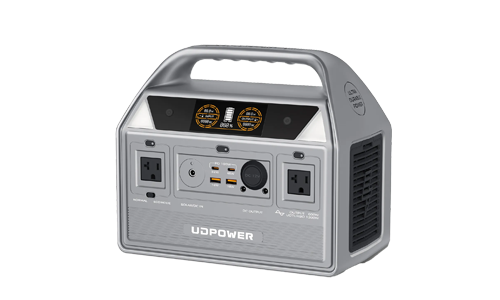
UDPOWER C600 — Best Value for One-Night CPAP Backup
- Capacity: 596Wh
- Rated AC output: 600W
- Peak output: 1,200W
- Battery: LiFePO4
- Cycle life: 4,000+ cycles listed
- AC outlets: 2
- Best CPAP role: one-night backup for many low-to-moderate consumption setups
The C600 is the most balanced choice when the main goal is powering a PAP machine rather than backing up several large household appliances.
At a 40W planning load, its estimated runtime is about 13.4 hours. At 65W, the estimate drops to about 8.3 hours. That difference is exactly why humidifier settings and actual overnight measurement matter.
If your normal setup measures roughly 250–350Wh per night, the C600 leaves a more useful reserve than a smaller 250–300Wh battery.
View UDPOWER C600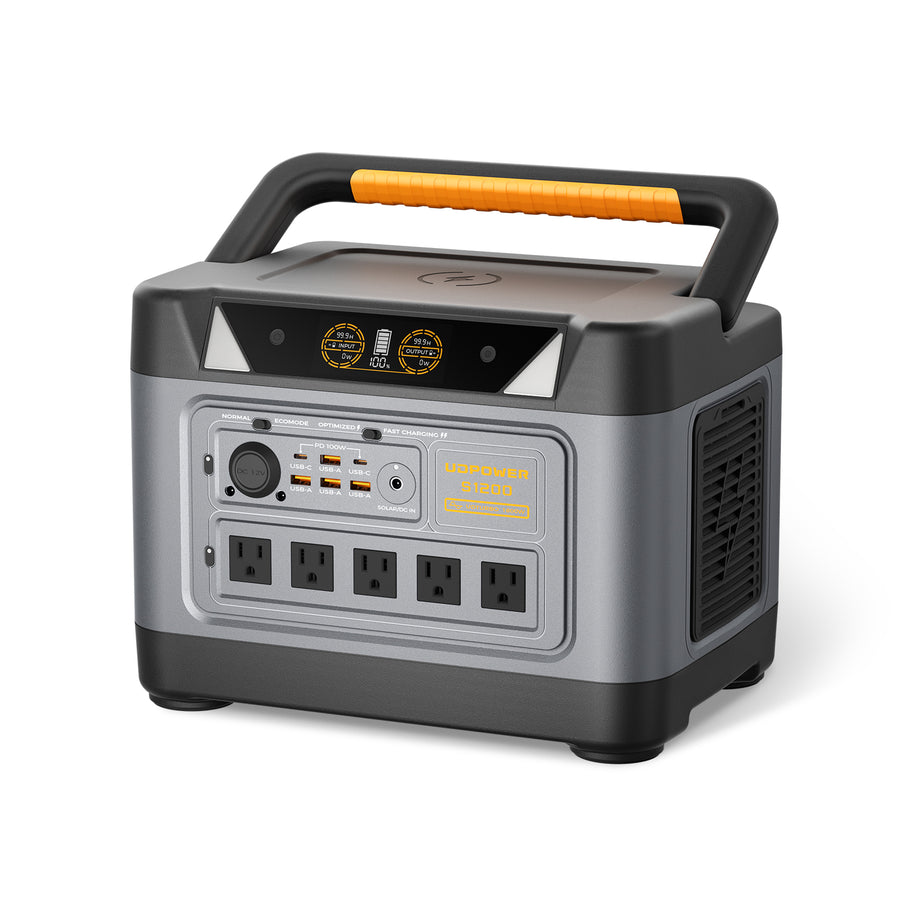
UDPOWER S1200 — Best Overall for Home CPAP Outage Backup
- Capacity: 1,190Wh
- Rated output: 1,200W pure sine wave
- UDTURBO output: up to 1,800W for compatible higher-power loads
- Battery: LiFePO4
- Cycle life: 4,000+ cycles listed
- UPS: UPSPRIME <10ms
- Noise: listed below 25dB
- Weight: about 26 lb
The S1200 makes the most sense when you want a larger safety margin instead of sizing your backup around the exact minimum needed for eight hours.
It is particularly useful for users who want to retain heated humidification longer, have uncertain overnight consumption, want automatic UPS-style switchover, or expect to share some battery capacity with a phone, router or light during a blackout.
Using the same 90% calculation, estimated runtime is about 26.8 hours at 40W, 16.5 hours at 65W and 11.9 hours at 90W.
View UDPOWER S1200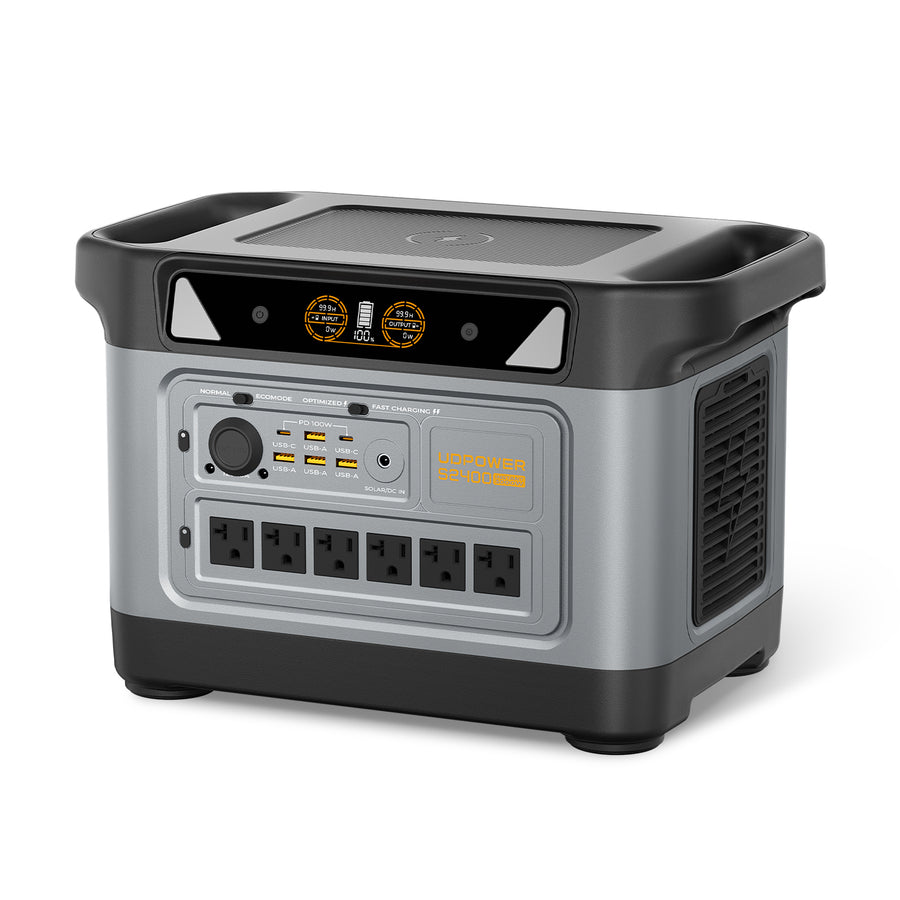
UDPOWER S2400 — Best for Multi-Night Backup and Additional Essentials
- Capacity: 2,083Wh
- Rated output: 2,400W pure sine wave
- UDTURBO output: up to 3,000W for compatible loads
- Battery: LiFePO4
- Cycle life: 4,000+ cycles listed
- AC outlets: 6
- UPS: UPSPRIME <10ms
- Solar charging: up to 400W official input rating
- Weight: about 40.8 lb
A 2,083Wh station is usually more capacity than a CPAP alone needs for one night. Its advantage appears during longer outages when the same battery may need to cover several nights or power selected household essentials as well.
Estimated CPAP runtime is about 46.9 hours at 40W, 28.8 hours at 65W and 20.8 hours at 90W using the same 90% planning assumption.
If you are preparing for a multi-day storm, however, do not simply divide battery capacity by one night's CPAP consumption. Daytime phone charging, router use, lighting, refrigerator cycling and conversion losses all compete for the same stored energy.
View UDPOWER S2400| Model | Capacity | Rated Output | UPS | Best Sleep Apnea Backup Use | Official Product Page |
|---|---|---|---|---|---|
| C400 | 256Wh | 400W | No dedicated UPS feature listed | Short backup or measured low-consumption setup | Source |
| C600 | 596Wh | 600W | No dedicated UPS feature listed | One-night CPAP backup for many users | Source |
| S1200 | 1,190Wh | 1,200W | <10ms UPSPRIME | Home CPAP backup with substantial reserve | Source |
| S2400 | 2,083Wh | 2,400W | <10ms UPSPRIME | Multi-night backup and additional home essentials | Source |
You can also compare current models in the UDPOWER CPAP Battery Backup collection or browse all portable power stations .
How to Set Up CPAP Backup Power Before an Outage
The best time to discover a compatibility problem is on a normal evening with the lights on, not at 2 a.m. during a storm.
Before-Outage CPAP Power Checklist
- Identify the exact CPAP, APAP or BiPAP model.
- Keep its original AC power adapter with the machine.
- Measure one normal night's energy use if possible.
- Fully charge the backup power station.
- Know how to disable or reduce heated humidification if necessary.
- Know how to reduce heated-tube temperature if necessary.
- Test the exact CPAP and power station together overnight.
- If using UPS mode, perform a controlled utility-power interruption test.
- Keep all required cables together in one place.
- Plan how the battery will be recharged during an extended outage.
A Simple Nighttime Setup
- Place the power station on a stable, dry, ventilated surface.
- Keep its ventilation openings clear of bedding and blankets.
- Turn on the required output.
- Connect the CPAP using its original AC supply or confirmed compatible DC adapter.
- Start therapy normally.
- Confirm the power station shows an active load.
- Check remaining battery percentage after your first test night.
Do not place the power station under blankets, inside bedding, directly next to water, or where ventilation openings can be blocked.
How to Make a CPAP Backup Battery Last Longer
If utility power is expected to return in an hour, battery conservation may not matter. During a multi-day outage, it matters a great deal.
| Action | Potential Benefit | Tradeoff | When It Makes Sense |
|---|---|---|---|
| Reduce or disable heated humidification | Often one of the largest energy savings | Air may feel drier | Long outages where runtime is more important than comfort |
| Reduce or disable heated tubing | Removes another heating load | Greater chance of condensation in cool rooms | When battery reserve is getting low |
| Use a compatible DC converter | Can avoid AC inverter conversion | Requires exact device compatibility | Long-duration battery operation |
| Keep mask leaks under control | Helps the PAP system operate as intended | Requires normal mask adjustment | Every night |
| Stop charging nonessential devices overnight | Preserves energy for therapy | Phones and accessories may need charging later | Multi-day outages |
| Recharge during daylight | Restores battery for the next night | Solar output depends on weather and available sunlight | Extended outages or off-grid use |
If you use humidification for comfort or because of instructions specific to your therapy, do not permanently change treatment settings based solely on battery life. The purpose of an outage mode is to have a plan you already understand before an emergency occurs.
What If You Use a CPAP and an Oxygen Concentrator?
Do not size a combined CPAP-and-oxygen backup from the CPAP tables above.
Oxygen concentrators can have very different energy requirements depending on model, continuous-flow or pulse-flow operation and prescribed settings. In some households, the oxygen equipment can become the dominant electrical load.
The American Lung Association recommends that people who depend on supplemental oxygen discuss outage preparation with their healthcare provider and oxygen supplier, including backup oxygen options and additional batteries where applicable.
If oxygen is part of your prescribed therapy: obtain the exact electrical requirements and outage instructions for the oxygen device. Do not assume a CPAP power station automatically provides an adequate medical oxygen backup plan.
Common CPAP Backup Power Mistakes
1. Buying by output watts instead of battery watt-hours
A CPAP may only need tens of watts to operate, so even a modest inverter can have enough output power. Runtime is determined primarily by battery capacity in watt-hours.
2. Treating the power adapter rating as normal consumption
A 65W or 90W power supply rating is not proof that your CPAP draws that amount continuously. Measure total overnight energy whenever possible.
3. Ignoring the humidifier
A runtime estimate made with climate features off can be very different from the same machine with heated humidity and heated tubing operating all night.
4. Buying a battery with zero reserve
If your math says you need exactly 355Wh, buying a battery that only barely clears that figure leaves little room for conversion loss, cold temperatures, battery aging or a longer-than-normal sleep period.
5. Never performing an overnight test
The first full-night test tells you far more than a product label. Record starting percentage, morning percentage, hours used and whether humidification was enabled.
6. Assuming UPS means guaranteed medical-device continuity
A fast power-station switchover can be useful, but always test the exact CPAP and backup system together.
7. Using an unknown DC cable
A connector physically fitting into the machine does not prove that voltage, polarity or wiring is correct.
8. Spending the CPAP reserve on other appliances
A refrigerator, television, fan or laptop can quickly reduce the energy you intended to save for nighttime therapy.
9. Relying on solar without a bad-weather plan
Solar can be extremely useful during extended outages, but production is not guaranteed. Clouds, shade, panel angle, season and daylight hours all affect how much energy is recovered.
10. Waiting until the outage to learn the controls
Know how to turn AC output on, disable ECO settings when appropriate, read remaining charge, and adjust your CPAP's comfort features before the house goes dark.
Frequently Asked Questions About Sleep Apnea Equipment Backup Power
What is the best backup power for a CPAP machine?
The best option depends on your actual overnight energy use and how long you need backup. For many low-to-moderate consumption CPAP setups, a power station around 500–600Wh can provide practical one-night coverage. A 1,000Wh-class unit provides more reserve for heated humidification, higher consumption, longer outages or additional essential devices.
How many watt-hours does a CPAP need for eight hours?
An average 20W load uses 160Wh in eight hours, 40W uses 320Wh, 65W uses 520Wh and 90W uses 720Wh. After allowing for 90% conversion efficiency, the minimum nominal battery capacities are about 178Wh, 356Wh, 578Wh and 800Wh respectively. Adding reserve is recommended.
Can a 500Wh or 600Wh power station run a CPAP all night?
It can for many setups, but not every setup. A 596Wh battery using a 90% planning factor provides about 536Wh of calculated usable energy. That is roughly 13.4 hours at a 40W load or 8.3 hours at a 65W load before accounting for additional real-world variation.
Is 1,000Wh too large for a CPAP?
Not necessarily, but a CPAP alone may not require that much for one night. A 1,000Wh-class battery becomes useful when you want stronger reserve, heated humidification, multi-night capability, automatic UPS-style backup or enough energy for other outage essentials.
Does a CPAP humidifier use more battery?
Yes. Heated humidification requires additional energy to heat water and can materially reduce battery runtime. Heated tubing can add another heating load. Measure your normal setup with those features enabled if you intend to keep using them during an outage.
Should I turn off the humidifier during a power outage?
Reducing or disabling heated humidification can conserve battery energy when runtime is more important than comfort. However, use an outage setting that is appropriate for your therapy and that you have tested in advance rather than making unfamiliar changes during an emergency.
Is AC or DC better for powering a CPAP from a battery?
The original AC adapter is usually the simplest connection because it is already designed for the machine. A compatible manufacturer-approved DC converter can be more efficient because it may avoid the power station's AC inverter. Never use an unverified DC cable simply because its plug fits.
Does a CPAP need a pure sine wave power station?
When using the CPAP's normal AC power supply, a pure sine wave output is the preferred choice for providing clean AC power to sensitive electronics. Current UDPOWER C400, C600, S1200 and S2400 models provide pure sine wave AC output.
Do I need a UPS for my CPAP?
A UPS feature is useful if you want the backup source to take over automatically during an outage. It is not required if you are comfortable reconnecting the CPAP manually. Regardless of switchover specification, test your exact PAP machine with the backup system before relying on it overnight.
Can the UDPOWER S1200 be used as CPAP backup power?
Yes. The S1200 provides 1,190Wh capacity, 1,200W pure sine wave rated output and a listed UPSPRIME switchover below 10ms. Its larger battery gives substantially more overnight reserve than compact 200–600Wh power stations, but actual CPAP runtime still depends on the connected equipment and settings.
Can solar panels recharge CPAP backup power during a long outage?
Yes. Compatible solar panels can recharge a portable power station during daylight and can be useful during multi-day outages. Actual solar energy depends on weather, direct sunlight, panel angle, temperature and the power station's input limits, so solar should be treated as part of an outage plan rather than guaranteed daily energy.
Can I run a CPAP and oxygen concentrator from the same power station?
Possibly, but the system must be sized from the combined electrical load. Oxygen concentrators can consume substantially more power than PAP machines and may have medically important backup requirements. Check the exact concentrator specification and follow the outage plan provided by your healthcare and oxygen-equipment providers.
How much battery reserve should I keep for a CPAP?
A useful planning target is around 20–25% beyond the calculated minimum rather than choosing a battery that reaches zero at exactly the end of the expected sleep period. Extra reserve helps account for longer sleep, conversion losses, cold weather, battery aging and unexpected power use.
What is the most accurate way to calculate CPAP battery runtime?
Measure the CPAP's total energy consumption over a normal night with a plug-in watt meter. Then divide the required watt-hours by the expected usable efficiency of the backup battery. This is more reliable than estimating runtime from the CPAP power supply's maximum wattage.
Build Your CPAP Backup Plan Before the Next Outage
Start with your real overnight energy use, add a reasonable reserve, and choose enough capacity for the outage you actually want to survive. A smaller station may be enough for an efficient CPAP, while a larger model gives more flexibility for heated humidification, longer outages and other essential devices.
View CPAP Backup Power Options Compare Portable Power Stations Get the CPAP Runtime GuideSources and Further Reading
- National Heart, Lung, and Blood Institute — CPAP
- National Heart, Lung, and Blood Institute — Sleep Apnea Treatment
- American Lung Association — Preparing for a Power Outage as a Medical Device User
- ResMed — AirSense 11 CPAP Device
- ResMed — CPAP Batteries and Power Converters
- UDPOWER — CPAP Battery Backup
- UDPOWER C400 Official Product Page
- UDPOWER C600 Official Product Page
- UDPOWER S1200 Official Product Page
- UDPOWER S2400 Official Product Page
Related Articles


