

Louisiana Hurricane Preparedness: Safety & Power Guide
Last updated: September 7, 2026
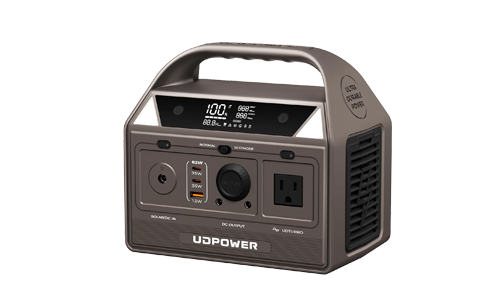
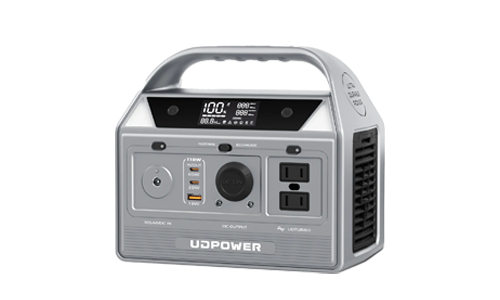
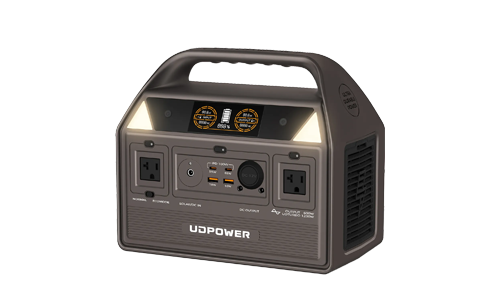
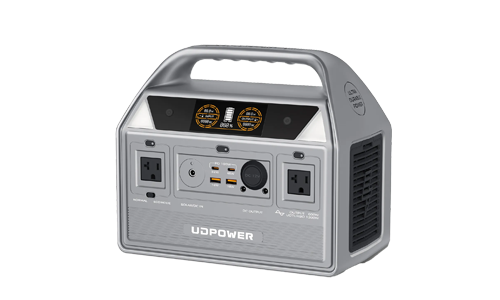
For power outages, prioritize medical equipment, refrigeration, phones, weather information, lights, fans and internet before high-wattage comfort appliances. A portable power station such as the UDPOWER S1200 works well for a smaller essential-load plan, while the UDPOWER S2400 provides more stored energy and higher AC output for households running several critical devices.

Louisiana residents do not prepare for hurricanes for one hazard alone. A tropical system can bring destructive wind, storm surge, flash flooding, tornadoes, road closures, extended power outages and days of oppressive heat after the storm has passed.
That changes how a useful hurricane plan should be built. Buying bottled water the day before landfall is not enough. A better plan answers five questions before the weather deteriorates: Where will we go if we need to leave? What will we take? How will we receive reliable information? What will we power if electricity fails? And what will we do if the outage lasts longer than expected?
Why Louisiana Hurricane Preparedness Is Different
The official Atlantic hurricane season runs from June 1 through November 30, with most activity historically concentrated from mid-August through mid-October. Louisiana's Gulf Coast location means residents need to prepare not only for the storm itself but also for what happens after it: flooded roads, damaged transmission infrastructure, limited fuel availability, communications outages and prolonged loss of air conditioning.
The National Hurricane Center's Atlantic climatology is useful for understanding the season, but your household decisions should always be based on the current forecast and instructions from Louisiana and local emergency officials.
| Hazard | Why It Matters | Practical Preparation |
|---|---|---|
| Storm surge | Water can rise well beyond the immediate coastline and make evacuation routes unusable. | Know your local evacuation instructions and leave before roads deteriorate. |
| Heavy rain and flooding | Flooding may continue or worsen even after the strongest winds pass. | Keep documents, medicines, electronics and backup power above possible water levels. |
| High winds | Falling trees, roof damage and downed lines can cause widespread outages. | Secure outdoor objects and charge essential equipment before winds increase. |
| Extended outage | Refrigeration, communications, lighting and cooling can be lost for hours or days. | Create a load-priority list rather than trying to power everything normally. |
| Extreme heat after the storm | A home without air conditioning can become dangerously hot. | Plan for fans, hydration and an alternate cooled location if indoor temperatures become unsafe. |
| Fuel disruption | Gas stations may lose power, run out of fuel or become difficult to reach. | Do not make a fuel-burning generator your only source of emergency electricity. |
Use the Warning Clock, Not the Landfall Clock
One of the most common hurricane mistakes is waiting for a projected landfall time before taking action. Conditions can become unsafe many hours earlier, especially once tropical-storm-force winds make travel, outdoor preparation and emergency response more difficult.
A hurricane watch generally means hurricane conditions are possible, while a hurricane warning means they are expected. The National Hurricane Center aims to issue hurricane warnings about 36 hours before the anticipated onset of tropical-storm-force winds, not 36 hours before the eye reaches the coast.
| Stage | What You Should Do | Do Not Wait To... | Source |
|---|---|---|---|
| Before hurricane season | Review insurance, photograph belongings, build your kit, test backup power and plan evacuation routes. | Buy essential medical supplies, replacement batteries and charging cables. | GOHSEP |
| Storm being monitored | Follow official forecasts, refill prescriptions, check vehicles, charge battery backups and review family contacts. | Make your first evacuation plan. | NHC |
| Hurricane watch | Finish outdoor preparation, obtain remaining supplies and be ready to leave quickly. | Begin charging your power station from empty. | NHC Glossary |
| Hurricane warning | Follow evacuation orders immediately. Stay off roads once travel becomes unsafe. | Travel to buy nonessential supplies. | Louisiana GOHSEP |
| During the storm | Remain in your safe location, monitor official alerts and conserve battery power. | Go outside to deploy solar panels, inspect damage or operate a generator. | NHC |
| After local all-clear | Check for hazards before using equipment, photograph damage and begin controlled recovery. | Touch wet electrical devices or approach downed power lines. | CDC |
Decide When to Evacuate and When to Shelter
A backup battery does not make an unsafe home safe. If Louisiana or your parish issues a mandatory evacuation order, the correct response is to evacuate. The same applies if your home is vulnerable to storm surge, significant flooding, structural failure or a medical situation that cannot safely continue through a long outage.
Before each hurricane season, decide where you would go and how you would get there. A family plan should include a primary destination, a backup destination and more than one route whenever possible.
-
Identify your destination.
Decide whether you would stay with family, use a hotel or follow local shelter instructions. Include pets in the plan because not every destination handles animals the same way. -
Know two routes.
Flooding, debris and emergency closures may make your normal route unusable. Check Louisiana road conditions through 511LA before departure. -
Keep the vehicle ready.
Do not plan to refuel at the last possible moment. Fuel demand often increases dramatically before a storm. -
Pack the things that cannot be easily replaced.
Bring medications, identification, insurance information, essential medical equipment, chargers and critical documents in a waterproof container. -
Take portable backup power only when it can be transported safely.
Keep the unit dry, secure it against movement in the vehicle and do not leave it exposed to flooding or extreme heat.
Build a Realistic 72-Hour Hurricane Kit
Louisiana's Build a Kit guidance recommends supplies for at least 72 hours. That should be treated as a minimum starting point, not a prediction that power and services will return within three days.
| Category | Minimum Planning Target | Often Forgotten |
|---|---|---|
| Water | At least 1 gallon per person per day for at least 3 days | Extra water for pets, medications and special needs |
| Food | At least a 3-day supply of nonperishable food | Manual can opener and foods that do not require cooking |
| Medication | Essential prescriptions and medical supplies | Refrigeration needs and charging requirements for medical devices |
| Lighting | Flashlights and spare batteries | Hands-free lights for nighttime cleanup |
| Information | Battery or hand-crank radio and charged phones | Printed phone numbers in case a phone is lost or dead |
| Power | Charged battery banks or portable power station | Correct USB, AC, DC and medical-device cables |
| Documents | Identification, insurance and emergency information | Waterproof portable container and digital backup |
| Cash | Useful emergency amount in small denominations | Card terminals and ATMs may not work during outages |
| Pets | Food, water, carrier, medications and identification | Leash, vaccination records and pet-friendly evacuation destination |
If your household has infants, older adults, people with disabilities, refrigerated medicine or powered medical devices, the generic checklist is only the beginning. Build the kit around the person with the highest consequence if power, transportation or water fails.
Build an Outage Power Plan Before the Storm
The most useful question is not simply, “How big a power station should I buy?” It is, “Which devices need electricity first, and for how long?”
Trying to reproduce normal household electricity use from a portable battery usually wastes stored energy on loads that are not critical. Instead, divide appliances into priority levels before the outage begins.
| Priority | Examples | How to Use Them |
|---|---|---|
| Priority 1: Health and safety | CPAP, essential medical equipment, phone, emergency radio, basic lighting | Reserve energy for these first. Know their actual wattage before the storm. |
| Priority 2: Food and communication | Refrigerator, freezer, router, modem | Run strategically rather than adding unnecessary loads at the same time. |
| Priority 3: Heat relief | Efficient fans and small personal cooling devices | Use lower-wattage cooling where practical to preserve runtime. |
| Priority 4: Short-duration appliances | Microwave, coffee maker, small cooking appliance | Use briefly and only when the station's output rating supports the appliance. |
| Low priority | Entertainment devices, decorative lighting and nonessential appliances | Delay these until you know how long the outage may last. |
For a more detailed hour-by-hour approach, see UDPOWER's What to Run First During a Power Outage and 24-, 48- and 72-Hour Power Outage Checklist.
Measure appliances instead of guessing
Appliance labels and manufacturer specifications are a useful starting point, but actual consumption can differ. Refrigerators cycle on and off. A CPAP may use substantially more electricity when a heated humidifier is enabled. Pumps and compressors may draw more power when starting.
Whenever possible, test your emergency setup before hurricane season. Confirm that the equipment starts correctly, measure real consumption and see how much battery remains after several hours of normal use.
Estimate Backup-Power Runtime Before You Need It
Battery capacity is measured in watt-hours, while appliance power is usually listed in watts. For a simple planning estimate, use:
This is a planning estimate for normal loads within the power station's rated operating range. Real runtime changes with inverter losses, temperature, battery state, appliance cycling and load behavior.
| Constant Load | Example Use | S1200 1,190Wh | S2400 2,083Wh |
|---|---|---|---|
| 20W | Small communications or low-power electronics | About 53.6 hours | About 93.7 hours |
| 40W | Router plus small electronics | About 26.8 hours | About 46.9 hours |
| 60W | Fan or moderate continuous load | About 17.9 hours | About 31.2 hours |
| 100W | Combined small essentials | About 10.7 hours | About 18.7 hours |
| 300W | Larger continuous load | About 3.6 hours | About 6.2 hours |
| 500W | High continuous load | About 2.1 hours | About 3.7 hours |
| 1,000W | Very high continuous load | About 1.1 hours | About 1.9 hours |
These numbers demonstrate why conservation matters during a hurricane outage. A 60W average load can last many times longer than a 1,000W load using the same battery.
A refrigerator is different because its compressor normally cycles rather than drawing its rated power continuously. For more realistic refrigerator examples, read Can a Portable Power Station Run a Refrigerator?.
Which UDPOWER Portable Power Station Makes Sense for Hurricane Backup?
For hurricane preparedness, capacity and output solve two different problems. Battery capacity determines roughly how long your equipment can run. Rated output determines how much equipment the station can power at one time.
For most households choosing between the S1200 and S2400, the decision is therefore not “Which one is better?” but “How many critical loads do I need to support, and how long must I support them?”
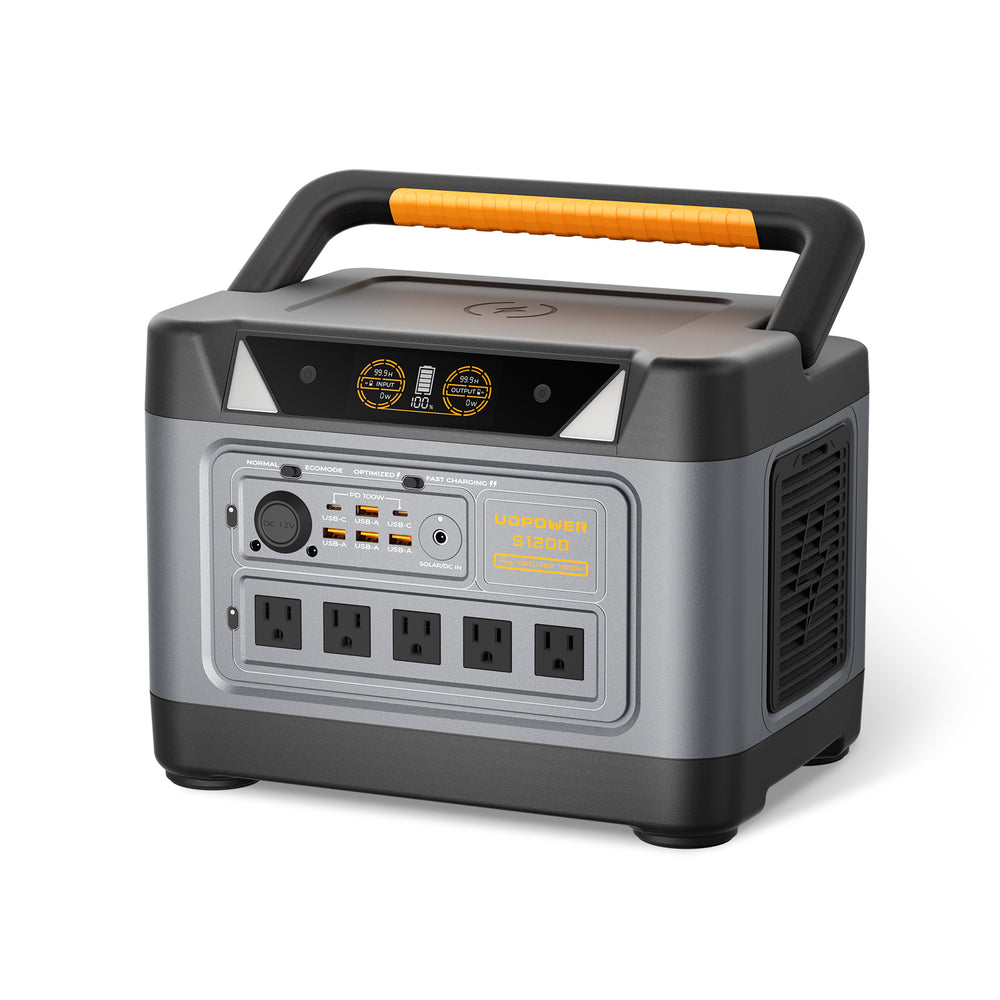
UDPOWER S1200: A Practical Essential-Load Hurricane Backup
The UDPOWER S1200 is a strong fit for households focused on refrigeration, communications, CPAP or other medical equipment, lights, fans and short-duration appliance use without moving to a much larger power station.
- Battery capacity: 1,190Wh
- Rated AC output: 1,200W pure sine wave
- Higher-power support: UDTURBO up to 1,800W for compatible higher-power devices
- AC outlets: 5
- Total output ports: 14
- USB-C: up to 100W
- Solar input: up to 400W
- UPS switching: ≤10ms
- Battery chemistry: LiFePO4
- Weight: approximately 26.0 lb
- Dimensions: 13.7 × 9.5 × 9.7 in
- Warranty: 5 years
At roughly 26 lb, the S1200 is also easier to relocate than a larger station if you need to move it away from possible water intrusion or take it during an evacuation.
View UDPOWER S1200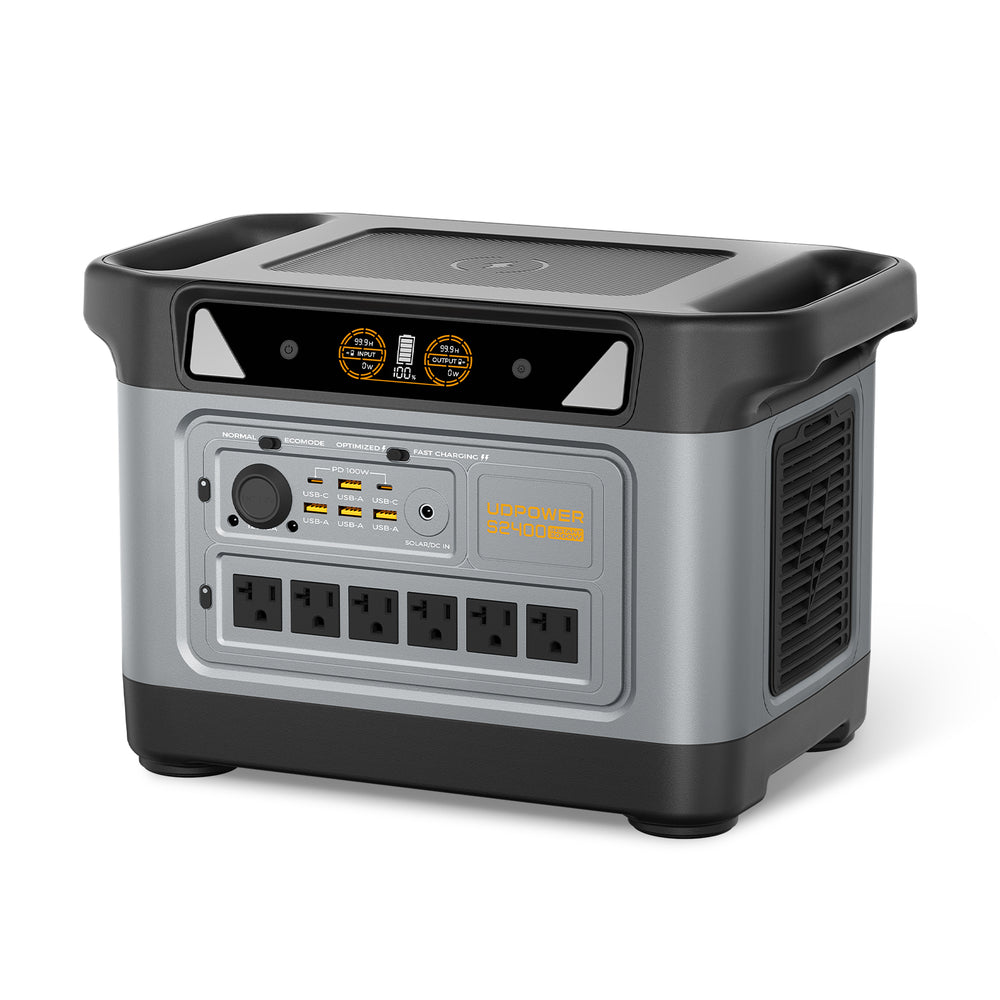
UDPOWER S2400: More Runtime and More Simultaneous Output
The UDPOWER S2400 is better suited to households that expect to power several essential devices, need more refrigerator or medical-equipment runtime, or want additional output capacity for larger 120V appliances.
- Battery capacity: 2,083Wh
- Rated AC output: 2,400W pure sine wave
- Surge support: up to 3,000W
- AC outlets: 6
- Total output ports: 15
- Solar input: up to 400W
- UPS switching: ≤10ms
- Battery chemistry: LiFePO4
- Weight: approximately 40.8 lb
- Dimensions: 15.8 × 9.5 × 10.1 in
- Warranty: 5 years
The extra capacity matters during a multi-day outage because it gives you more room to preserve refrigeration, communications and nighttime medical-device power without immediately depending on sunshine or another charging source.
View UDPOWER S2400| Feature | UDPOWER S1200 | UDPOWER S2400 | Why It Matters During a Hurricane |
|---|---|---|---|
| Capacity | 1,190Wh | 2,083Wh | More Wh generally means longer backup time. |
| Rated AC output | 1,200W | 2,400W | Determines how much AC load can run simultaneously. |
| Higher-power support | UDTURBO up to 1,800W for compatible loads | Up to 3,000W surge support | Provides additional headroom for compatible appliances. |
| AC outlets | 5 | 6 | Useful when several critical devices need AC connections. |
| Solar input | Up to 400W | Up to 400W | Allows daytime recharging when safe conditions and adequate sun are available. |
| UPS | ≤10ms | ≤10ms | Useful for compatible equipment that should remain powered through brief utility interruptions. |
| Weight | About 26.0 lb | About 40.8 lb | S1200 is easier to relocate; S2400 trades additional weight for more stored energy. |
| Best hurricane role | Core essentials and easier portability | Longer outages and more simultaneous loads | Choose based on your measured load plan rather than capacity alone. |
| Official specifications | S1200 product page | S2400 product page | Check the current official product page before purchase. |
For a deeper side-by-side comparison, see UDPOWER S1200 vs. S2400.
Portable Power Station vs. Gas Generator During a Hurricane
Battery power stations and fuel-burning generators solve different problems. Understanding the difference is especially important after a hurricane, when improper generator use can create a deadly carbon monoxide hazard.
| Factor | Portable Power Station | Fuel-Burning Generator |
|---|---|---|
| Indoor use | No combustion exhaust, but the unit must remain dry and undamaged. | Never operate indoors, in garages or near openings. |
| Noise | Low | Usually much louder |
| Fuel | Stored battery energy; can be recharged when a source is available | Requires a continuing fuel supply |
| Runtime | Limited by battery capacity and recharge opportunity | Can continue while fuel is safely available |
| Maintenance | Relatively low | Engine, fuel and storage maintenance required |
| Best role | Indoor essential loads, overnight use, communication, refrigeration and medical devices | High-energy recovery needs when safe outdoor operation is possible |
For some Louisiana households, the strongest multi-day strategy is not choosing one system exclusively. A charged battery power station can handle quiet indoor critical loads and overnight needs, while a properly placed outdoor generator may provide additional energy later when conditions are safe and fuel is available.
See Portable Power Station vs. Generator for Power Outages for a broader comparison.
Can You Recharge With Solar During a Hurricane Outage?
Solar panels can be valuable after a storm, but they should be considered a recovery charging source, not something to deploy while dangerous wind, lightning or flooding is occurring.
Charge the power station fully from utility power before severe weather arrives. After officials indicate conditions are safe, solar can help replace some of the energy used during the outage.
A safer solar recovery routine
-
Wait until hazardous weather has passed.
Do not go outside during severe wind, lightning or dangerous flooding simply to increase battery charge. -
Inspect the area first.
Watch for downed lines, standing water, unstable trees, roof damage and sharp debris. -
Keep the power station dry.
Place the station in a protected, ventilated, dry location. Never set electrical equipment in standing water. -
Use compatible solar input.
The S1200 supports solar input up to 400W through its specified input range. The S2400 also supports up to 400W within its specified solar input limits. -
Plan for less than nameplate output.
Clouds, panel temperature, sun angle, shading and time of day can reduce real-world solar charging power. -
Recharge priorities first.
Restore the energy needed for overnight medical devices, refrigeration and communications before using recovered solar energy on nonessential loads.
Browse UDPOWER solar generators or portable solar panels when building a rechargeable hurricane backup system.
Refrigerator and Food Safety During a Power Outage
Keeping food safe is one of the first practical problems after utility power fails. The refrigerator door should stay closed as much as possible.
According to FoodSafety.gov, an unopened refrigerator keeps food safely cold for about 4 hours. A full freezer can maintain its temperature for about 48 hours, while a half-full freezer lasts about 24 hours if the door remains closed.
| Appliance | Typical Safe-Cold Window Without Power | Best Action | Source |
|---|---|---|---|
| Refrigerator | About 4 hours if unopened | Keep the door closed and restore cooling as early as practical. | FoodSafety.gov |
| Full freezer | About 48 hours if unopened | Leave it closed unless food or safety requires access. | FoodSafety.gov |
| Half-full freezer | About 24 hours if unopened | Minimize door opening and monitor temperature when possible. | FoodSafety.gov |
If food preservation is one of your hurricane priorities, powering a refrigerator is generally more valuable than spending stored battery energy on high-wattage comfort appliances during the first uncertain hours of an outage.
Do not rely on smell or appearance alone to decide whether perishable food is safe. Follow official food-temperature and outage-duration guidance.
Medical Devices, CPAP and Heat Planning
A power outage is inconvenient for most households. For someone dependent on powered medical equipment, it can become a medical emergency. Those households should build redundancy rather than relying on a single battery number from a product specification.
For CPAP and similar equipment
- Check the actual wattage of the exact machine.
- Account for heated humidifiers and heated tubing, which can significantly increase consumption.
- Test the machine with your backup power before hurricane season.
- Keep the required power adapter with the emergency kit.
- Reserve enough battery for the full night rather than using that energy on discretionary loads.
- Have a second plan if the outage could exceed your battery capacity.
For more detailed planning, read CPAP and Sleep Apnea Equipment Backup Power.
Do not underestimate post-hurricane heat
A portable power station may operate fans and selected small cooling equipment, but that does not mean it can replace a home's central air-conditioning system. Central HVAC systems often involve high starting loads, substantial continuous consumption, hardwired connections or 240V service.
For window units, always compare the specific air conditioner's running and startup requirements with the power station's specifications. Our window air conditioner wattage guide explains why cooling demand can consume stored energy quickly.
What to Do After the Hurricane Passes
The calm after the storm is not automatically an all-clear. Floodwater, damaged electrical systems, carbon monoxide, unstable structures and road hazards can cause injuries after the strongest weather has ended.
-
Wait for official information.
Do not assume roads are safe because rain or wind has weakened. -
Stay away from downed power lines.
Treat every downed line as energized and keep away from water near electrical equipment. -
Do not use wet electrical equipment.
If a power station, appliance, extension cord or outlet has been submerged or significantly exposed to water, do not simply turn it on to see if it works. -
Document damage before major cleanup.
Take photographs and video when it is safe to do so. Preserve receipts for emergency expenses and repairs. -
Check road conditions before driving.
Use 511LA for current Louisiana road information. -
Check utility outage information.
The Louisiana Public Service Commission outage map can help residents understand wider utility conditions. -
Reassess your power budget.
Once you know the likely outage duration, decide whether to continue strict conservation, recharge with solar or use another safe power source.
Review insurance before the storm, not after it
Louisiana homeowners should understand both their hurricane deductible and their flood coverage before a storm threatens. A named-storm or hurricane deductible may be expressed as a percentage of the insured property value rather than a small flat-dollar deductible.
Also remember that standard homeowners insurance generally does not cover flood damage. Review the Louisiana Department of Insurance Storm Resource Center, make a home inventory and confirm which policies protect your property before hurricane season.
Louisiana Hurricane Resources to Save Before the Storm
Do not depend on social-media screenshots or forwarded messages for critical storm decisions. Bookmark official sources while your internet connection is still reliable.
| Resource | What It Helps With | Link |
|---|---|---|
| National Hurricane Center | Official tropical forecasts, storm tracks, warnings and advisories | NHC |
| Louisiana GOHSEP | State emergency preparedness information and Get A Game Plan | Get A Game Plan |
| GOHSEP Build a Kit | Louisiana's emergency supply recommendations | Build a Kit |
| 511LA | Louisiana road conditions and closures | 511LA.org |
| Louisiana Public Service Commission | Statewide utility outage information | Outage Map |
| Louisiana Department of Insurance | Insurance preparation, claims and storm resources | Storm Resource Center |
| FoodSafety.gov | Refrigerator and freezer safety during outages | Power Outage Food Safety |
| CDC | Carbon monoxide and generator safety | CO Safety |
Louisiana Hurricane Preparedness Checklist
Use this final check before hurricane season and repeat it whenever a significant storm threatens the Louisiana coast.
- I know whether my household may need to evacuate and where we would go.
- I have a primary and alternate evacuation route.
- My vehicle is ready and does not depend on a last-minute fuel stop.
- I have at least 72 hours of drinking water.
- I have at least 3 days of nonperishable food.
- I have essential prescriptions and medical supplies.
- Important documents are protected in a waterproof portable container.
- I have cash available in case electronic payments are unavailable.
- Pet food, water, medicine and transportation are included in the plan.
- Phones, battery banks and portable power stations are fully charged.
- I know the actual wattage of my refrigerator, medical equipment and other priority loads.
- I have tested critical equipment with my backup power source.
- I have the correct charging and appliance cables together with the equipment.
- I know which loads will be turned off first if the outage becomes long.
- My power station can be kept in a dry location above possible floodwater.
- I will not deploy solar panels until outdoor conditions are safe.
- If I use a fuel-burning generator, it will remain outdoors more than 20 feet from windows, doors and vents.
- I have working carbon monoxide detectors.
- I know the refrigerator and freezer food-safety limits.
- I have bookmarked NHC, GOHSEP, 511LA and local emergency resources.
- I have reviewed my homeowners, hurricane and flood insurance coverage.
Related UDPOWER Hurricane and Outage Guides
Frequently Asked Questions
When is hurricane season in Louisiana?
The official Atlantic hurricane season runs from June 1 through November 30. Historically, activity is highest during the late summer and early fall, but Louisiana residents should keep their hurricane plan ready throughout the entire season.
How many days of emergency supplies should Louisiana residents keep?
Louisiana GOHSEP recommends building an emergency kit with at least 72 hours of supplies. That includes at least one gallon of water per person per day for at least three days and at least a three-day supply of nonperishable food. Households that can safely store more should consider the possibility of a longer outage.
Can a portable power station run a refrigerator during a hurricane outage?
Yes, many refrigerators can be powered by a sufficiently sized portable power station, but you must check the refrigerator's running consumption and compressor startup demand. Runtime depends on how often the compressor cycles, ambient temperature, door opening and the battery's usable energy.
Should I choose the UDPOWER S1200 or S2400 for hurricane backup?
The S1200 is a practical choice when you want a more portable 1,190Wh system for core essentials such as refrigeration, communications, lights, fans and compatible medical equipment. The S2400 provides 2,083Wh of capacity and 2,400W rated AC output, making it better suited to longer outages or households running more devices at the same time.
Can I use a portable power station inside the house?
A battery power station does not produce combustion exhaust like a gasoline generator, so it can power compatible indoor equipment when the station is kept dry, undamaged and operated according to its instructions. Do not expose it to floodwater, rain or other unsafe conditions.
Can I recharge a power station with solar panels during a hurricane?
Do not deploy solar panels while dangerous wind, lightning, flooding or other severe weather is occurring. Fully charge the power station before the storm. After officials indicate outdoor conditions are safe, compatible solar panels can help restore battery energy. Actual solar production will vary with cloud cover, shading, temperature, panel angle and available sunlight.
How far should a gas generator be from the house?
The CDC advises operating portable fuel-burning generators outdoors and more than 20 feet from windows, doors and vents. Never run one inside a house, garage, carport or other enclosed or partially enclosed area.
Can a portable power station run central air conditioning?
Portable power stations such as the S1200 and S2400 are designed for selective 120V loads rather than replacing a whole-home electrical system. Many central air-conditioning systems require substantially more starting and continuous power, may be hardwired and may use 240V service. Check the exact HVAC specifications rather than assuming compatibility from wattage alone.
How long will refrigerated food stay safe if the power goes out?
FoodSafety.gov states that an unopened refrigerator keeps food safely cold for about four hours. A full freezer can maintain temperature for about 48 hours and a half-full freezer for about 24 hours if the door remains closed. Follow official food-safety guidance when deciding whether perishable food should be discarded.
What should I do if my portable power station gets wet or is exposed to floodwater?
Do not turn on electrical equipment that has been submerged or significantly exposed to water simply to test whether it still works. Move away from electrical hazards and follow the manufacturer's safety and service instructions before attempting further use.
Prepare the Power Plan Before the Forecast Gets Urgent
The best hurricane backup system is the one you have already charged, tested and matched to the loads that actually matter. For a Louisiana household, that usually means starting with evacuation readiness and a 72-hour emergency kit, then building a power plan around refrigeration, medical needs, communication and heat relief.
If you only remember one rule, make it this: backup electricity supports a hurricane safety plan; it does not replace one. Evacuate when authorities tell you to leave, keep electrical equipment away from floodwater and never create a carbon monoxide risk in an attempt to keep the lights on.
Build Your Hurricane Backup Power Setup
Choose the amount of stored energy and output capacity around the appliances your household actually needs during an outage.
View Portable Power Stations Compare 1000Wh+ Power Stations View Solar Generators Get the 24–48–72 Hour Outage GuideProduct specifications should always be confirmed on the current UDPOWER product page before purchase. Runtime figures in this guide are planning estimates rather than guaranteed operating times because real appliance consumption and operating conditions vary.
Related Articles


