

Are There California Portable Power Station Rebates in 2026?
Last updated: August 27, 2026
Quick Answer: Are There California Portable Power Station Rebates in 2026?
Yes, but there is no single statewide rebate that automatically applies to every California resident or every portable power station.
In 2026, the most important portable backup-power programs are run through individual electric utilities. PG&E, Southern California Edison (SCE), and San Diego Gas & Electric (SDG&E) each use different eligibility rules, rebate amounts, product lists, fire-risk requirements, and application processes.
As of August 27, 2026:
- PG&E: The Generator and Battery Rebate Program offered up to $300 per qualifying account, plus up to an additional $200 for CARE or FERA customers. However, PG&E states that the 2026 program is now full and applications are closed.
- SCE: Eligible customers in Tier 2 or Tier 3 high-fire-risk areas can receive a $150 rebate for a qualifying portable power station, with a limit of up to five rebates per SCE residential address.
- SDG&E: Its 2026 Generator Assistance Program is open. The standard portable power station rebate is $150. Eligible CARE/FERA customers can receive $200 total, while qualifying Medical Baseline or Access and Functional Needs customers may receive a much larger $525 portable power station rebate.
The biggest mistake is buying a battery first and assuming it will qualify later. Utility programs can restrict capacity, model number, customer category, purchase location, purchase date, fire-risk zone and even the retailer. Check your utility and its current qualified-product list before paying.

PG&E's 2026 Generator and Battery Rebate Program filled before the end of the year. Although its published rules reference a December 31, 2026 application deadline, PG&E currently states that applications are closed because 2026 funding is full. The utility directs customers to check back in January 2027.
2026 California Portable Power Station Rebate Overview
California's portable backup-power incentives make more sense once you stop thinking of them as one statewide program.
Your electric utility is usually the first filter. A customer in PG&E territory may face a completely different product-capacity rule from someone served by SCE. A San Diego County household may qualify for a substantially larger rebate if someone in the home is enrolled in Medical Baseline or falls within an eligible Access and Functional Needs category.
| Utility | 2026 Portable Power Station Incentive | Main Location Requirement | Important Limitation | Status on Aug. 27, 2026 | Official Source |
|---|---|---|---|---|---|
| PG&E | Up to $300; CARE/FERA customers may receive up to an additional $200 | Eligible PG&E account in Tier 2/3 HFTD, HFRA, or served by an EPSS circuit | Portable battery must be 290Wh to 1,000Wh; one rebate per customer account | Closed / full for 2026 | PG&E official program |
| SCE | $150 per qualifying portable power station | Tier 2 or Tier 3 high-fire-risk area | Maximum five rebates per SCE residential address; qualifying product required | Program listed as available, subject to funding and program rules | SCE official rebate information |
| SDG&E | $150 standard; $200 CARE/FERA; up to $525 for qualifying Medical Baseline/AFN customers | Tier 2 or 3 HFTD plus at least one qualifying PSPS experience | One portable power station rebate per household; model must be on qualified list | Open for 2026 | SDG&E official program |
This comparison also explains why a generic search for “California battery rebate” can be misleading. A program may exist in California but still be unavailable at your address, unavailable for your battery capacity, or already out of funding.
Who Actually Qualifies for a California Portable Power Station Rebate?
Living in California by itself is not enough.
The utility programs examined for this guide are largely resilience programs aimed at customers exposed to elevated wildfire or Public Safety Power Shutoff risk. That means your service address often matters more than your ZIP code or county.
High Fire-Threat Districts: Tier 2 and Tier 3
The California Public Utilities Commission's High Fire-Threat District system identifies areas with elevated or extreme utility-related wildfire risk. Tier 2 generally represents elevated fire threat, while Tier 3 represents extreme fire threat.
You can review the CPUC High Fire-Threat District map, but utility-specific address tools should still be used when available because rebate eligibility can depend on the circuit serving the property.
Two homes in the same city can be served by different circuits and have different wildfire or PSPS eligibility. Use the exact service address whenever the utility provides an address checker.
If you are mainly researching how California Public Safety Power Shutoffs work rather than rebates, see our separate California PSPS 2026 Guide. This article focuses specifically on the financial-assistance side.
PG&E Portable Battery Rebate in 2026
PG&E's Generator and Battery Rebate Program is one of the more restrictive programs from a battery-size standpoint.
The program offered a rebate of up to $300 per qualified customer account. Customers participating in CARE or FERA could receive up to an additional $200, potentially bringing the total incentive to $500.
However, PG&E's official program page currently states that applications for 2026 are closed because the program is full. Customers are instructed to check back in January 2027.
If you are reading this after August 27, 2026, check the official PG&E page again before making a purchase based on this rebate. Funding status can change from one program year to the next.
PG&E Customer Eligibility
PG&E states that an applicant must have an active residential or business PG&E account and meet at least one of the following location or circuit conditions:
- Located in a Tier 2 or Tier 3 High Fire-Threat District;
- Located in a High Fire Risk Area; or
- Served by an Enhanced Power Safety Settings circuit.
PG&E provides a Wildfire Safety Progress Map that customers can use to check their address.
The PG&E Battery Capacity Rule Is Strict
This is where many shoppers can make an expensive mistake.
For the portable battery portion of the program, PG&E states that capacity:
- Cannot be less than 290Wh;
- Cannot be greater than 1,000Wh.
The 1,000Wh limit is not rounded. PG&E specifically warns that batteries rated at 1,024Wh, 1,057Wh or 2,000Wh exceed the limit.
| Battery Capacity | PG&E Capacity Test | Reason |
|---|---|---|
| 256Wh | Does not pass | Below the 290Wh minimum |
| 296Wh | Passes capacity test | At or above 290Wh and below 1,000Wh |
| 596Wh | Passes capacity test | Falls inside the allowed range |
| 999Wh | Passes capacity test | Does not exceed 1,000Wh |
| 1,000Wh | Passes capacity test | At the published maximum |
| 1,024Wh | Does not pass | Exceeds the strict 1,000Wh maximum |
| 1,191Wh | Does not pass | Exceeds the maximum |
| 2,083Wh | Does not pass | Exceeds the maximum |
Does a Battery Have to Be on PG&E's Product List?
PG&E publishes examples of eligible portable batteries, but its official list also states that a battery not appearing on that list may still participate if it meets the 290Wh–1,000Wh capacity requirement and does not fall under the exclusion criteria.
PG&E advises customers with an unlisted battery to verify the manufacturer's specifications and contact the rebate program to confirm eligibility.
The official PG&E Portable Batteries Qualified Product List currently includes the UDPOWER C600.
PG&E Purchase and Application Documents
PG&E requires proof of purchase and proof of delivery. The product must have been delivered and received before the customer submits the application.
The receipt should clearly document the retail cost, payment method and delivery status of the qualifying product.
Other exclusions include certain rebuilt, refurbished, open-box, warranty-replacement, rented and non-integrated battery products. Always review the current terms before buying.
Southern California Edison Portable Power Station Rebate in 2026
SCE's portable power station program is easier to understand from a capacity standpoint because the public-facing utility page emphasizes the qualifying-product requirement rather than PG&E's specific 1,000Wh capacity ceiling.
Eligible residential customers living in a Tier 2 or Tier 3 high-fire-risk area can receive a $150 rebate for a qualifying portable power station.
SCE allows a maximum of five $150 portable power station rebates per residential address.
SCE's structure is unusual compared with programs that limit a household to a single portable battery rebate. For a qualified household that wants several smaller batteries assigned to different rooms, family members or essential-load groups, the five-unit allowance can materially change the economics.
Already Bought a Power Station?
SCE states that customers who already purchased a qualifying product within the previous 90 days can visit the SCE Marketplace and select “Product Rebate.” Proof of purchase is required.
This does not mean that every battery purchased in the last 90 days automatically qualifies. The specific product must still meet the Marketplace terms and conditions.
Check the SCE Marketplace before purchasing if receiving the rebate is important to your decision.
Do Not Confuse the $150 Power Station Rebate With SCE's Generator Rebate
SCE also advertises portable generator incentives. Those amounts are different:
- $150 for a qualifying portable power station;
- $200 for a qualifying portable generator;
- Up to $600 for qualifying portable generators purchased by eligible income-qualified or Medical Baseline customers.
A search result mentioning a $600 SCE backup-power incentive therefore does not mean SCE will pay $600 toward any portable battery.
SDG&E Generator Assistance Program: Portable Power Station Rebates in 2026
SDG&E has the most important customer-category distinctions of the three utilities covered here.
The 2026 Generator Assistance Program is currently open for new rebate requests, but the portable power station amount depends on which eligibility group you belong to.
| SDG&E Customer Category | Portable Power Station Rebate | Key Additional Requirement | Official Source |
|---|---|---|---|
| Standard qualifying customer | $150 | HFTD Tier 2 or 3 and at least one PSPS | SDG&E Generator Assistance Program |
| CARE or FERA | $200 total | Must be enrolled in CARE or FERA and satisfy program location/PSPS requirements | SDG&E CARE/FERA program page |
| Medical Baseline or eligible Access and Functional Needs | $525 | Must meet MBL/AFN requirements plus HFTD and PSPS requirements | SDG&E MBL/AFN program page |
Standard $150 SDG&E Rebate
For the standard program, SDG&E says a customer must reside in a Tier 2 or Tier 3 High Fire Threat District and must have experienced one or more Public Safety Power Shutoffs.
The offer is limited to one portable power station rebate per household for qualifying new models purchased in California during 2026.
CARE/FERA Customers: $200 Total
SDG&E states that CARE or FERA customers meeting the other program requirements are eligible for a $200 portable power station incentive.
The program documentation explains this as the standard rebate plus an additional amount for CARE/FERA participation, resulting in a $200 total portable power station rebate.
Medical Baseline / Access and Functional Needs: Up to $525
This is one of the most significant details that shorter California rebate summaries often miss.
SDG&E's dedicated Medical Baseline and Access and Functional Needs Generator Assistance Program page currently advertises a $525 rebate on a new portable power station for qualifying customers.
To qualify, the customer must be a current SDG&E electric customer who is Medical Baseline or Access and Functional Needs, reside in Tier 2 or Tier 3 HFTD, and have experienced at least one PSPS.
SDG&E Requires a Qualified Model
SDG&E publishes qualified-product lists. The utility states that a portable power station must appear on the Qualified Product List to receive the rebate.
In our August 27 review of SDG&E's 2026 portable power station qualified lists, UDPOWER models were not listed. Therefore, do not purchase a UDPOWER unit expecting an SDG&E rebate unless the utility updates its list and confirms that specific model.
See the current SDG&E portable power station rebate page and eligibility requirements before buying.
Instant Coupon vs. Post-Purchase Rebate
SDG&E offers two different ways for some qualifying customers to use the program:
- Post-purchase rebate: Purchase an eligible model and then submit proof of purchase for a rebate check.
- Instant rebate coupon: Reserve a coupon and use it with participating retailers on a more limited set of products.
SDG&E warns that reserving an instant coupon can affect a pending post-purchase rebate application. Choose one route deliberately rather than trying both for the same product.
Its 2026 coupon page also states that instant portable power station coupons must be reserved by December 21, 2026 and redeemed before the coupon expires on December 31, 2026, subject to program availability and current terms.
PG&E vs. SCE vs. SDG&E: The Rules That Matter Most
| Rule | PG&E | SCE | SDG&E |
|---|---|---|---|
| Base portable battery rebate | Up to $300 | $150 | $150 |
| Higher assistance-tier rebate | Up to $500 total for qualifying CARE/FERA customers | Higher published amounts apply to portable generators, not the standard portable power station rebate | $200 CARE/FERA; $525 qualifying Medical Baseline/AFN |
| Fire-risk connection | HFTD Tier 2/3, HFRA, or EPSS circuit | Tier 2 or Tier 3 high-fire-risk area | Tier 2 or Tier 3 HFTD plus qualifying PSPS history |
| Battery capacity rule | Strict 290Wh–1,000Wh range | Follow current SCE qualifying-product terms | Must be on SDG&E qualified-product list |
| Maximum portable battery rebates | One per customer account | Up to five per residential address | One per household |
| 2026 availability as of Aug. 27 | Closed / full | Available subject to funding and current program terms | Open |
| Best first step | Check 2027 update if applying later | Check exact address and SCE Marketplace | Confirm customer category, PSPS history and current QPL |
Portable Power Station Rebates Are Not the Same as California SGIP
Another common source of confusion is the Self-Generation Incentive Program, usually called SGIP.
SGIP can provide substantial incentives for installed home battery storage. Depending on the customer category and program budget, installed systems may qualify for incentives that cover a meaningful share of the project cost.
That does not mean you can buy any portable power station and submit it under SGIP.
| Feature | Portable Power Station Rebate | SGIP / Installed Battery Storage |
|---|---|---|
| Typical equipment | Plug-and-play portable battery power station | Installed residential or commercial battery storage system |
| Installation | Usually no permanent electrical installation | Professional system design, permitting and interconnection may be involved |
| Typical use | Selected appliances, electronics and emergency loads | Broader home-energy management and backup |
| Incentive structure | Fixed-dollar utility rebate | Program-specific installed storage incentive |
| Portability | Portable | Generally permanently installed |
If your goal is whole-home or professionally integrated battery storage, investigate SGIP separately. If your goal is a movable battery for a refrigerator, medical equipment, Wi-Fi, lighting, laptops or emergency essentials, the portable power station programs discussed in this article are the more relevant starting point.
What to Check Before Buying a Portable Power Station for a Rebate
The rebate amount is usually the easy part. Eligibility is where applications fail.
-
Confirm which utility serves the exact address.
PG&E, SCE and SDG&E rules are not interchangeable. -
Check the address or circuit for wildfire-program eligibility.
Do not assume that living in a wildfire-prone county automatically qualifies the account. -
Check whether the 2026 program still has funding.
PG&E is a good example of why this matters: its 2026 program filled before year-end. -
Check customer-category requirements.
CARE, FERA, Medical Baseline and Access and Functional Needs status can substantially change the available incentive. -
Verify the exact model number.
A brand name is not enough. Utilities can approve one model while excluding another model from the same manufacturer. -
Check battery capacity.
This is especially important for PG&E's strict 290Wh–1,000Wh portable-battery rule. -
Check retailer and purchase-location rules.
SDG&E, for example, requires qualifying 2026 purchases to be made in California under its program terms. -
Save the full itemized receipt.
A bank or credit-card transaction alone may not show the model, retailer, retail price and discounts required by the program. -
Keep delivery confirmation.
PG&E specifically requires proof of delivery in addition to proof of purchase. -
Apply promptly.
Funding can be exhausted before the nominal end-of-year date.
Which UDPOWER Portable Power Stations Fit California Rebate Planning?
The answer depends on whether your priority is rebate eligibility or backup runtime and output.
Those are not always the same thing.
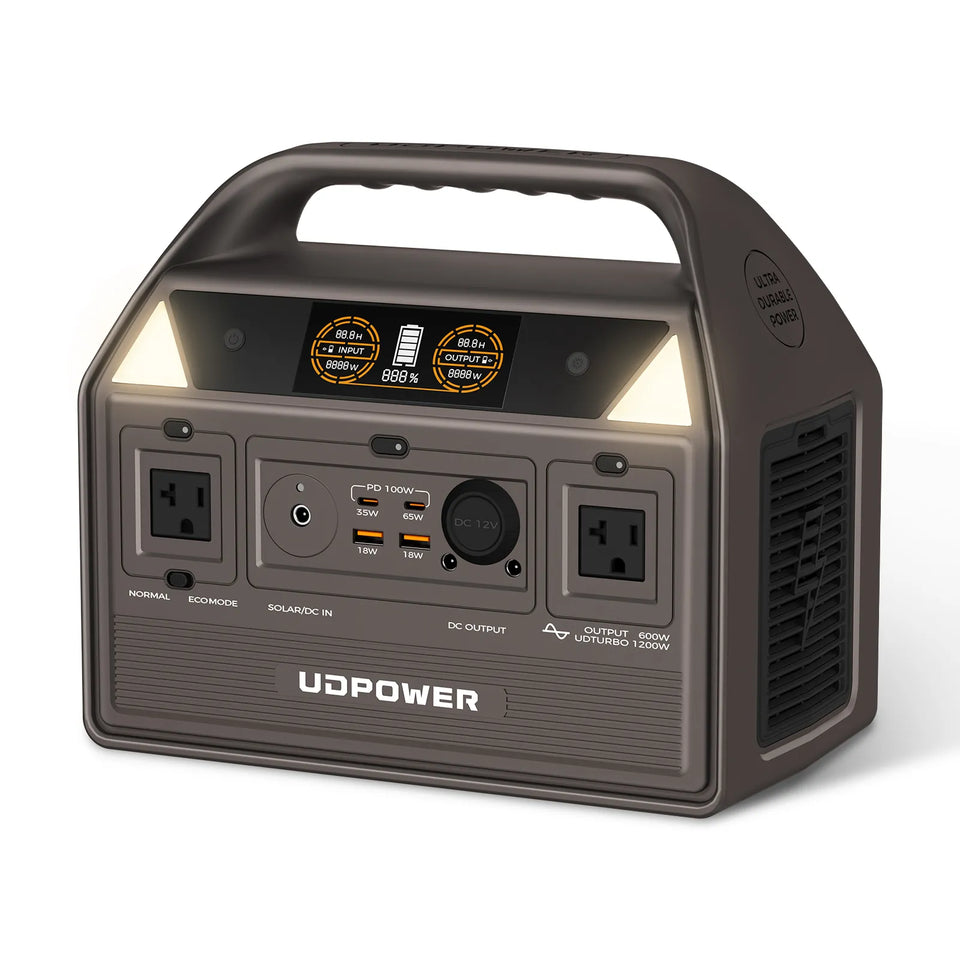
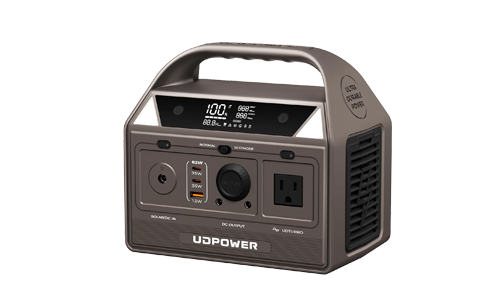
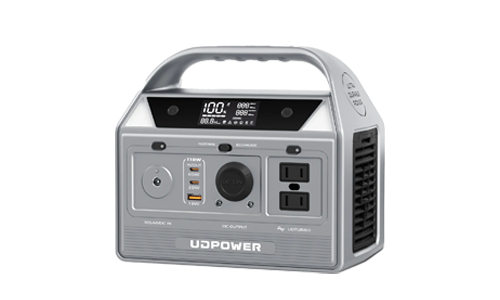
UDPOWER C600: The Most Relevant UDPOWER Model for PG&E Rebate Rules
The UDPOWER C600 has a 596Wh LiFePO4 battery and 600W rated AC output. That capacity sits squarely inside PG&E's published 290Wh–1,000Wh portable-battery range.
More importantly, the current PG&E Portable Batteries Qualified Product List explicitly includes UDPower C600.
- Capacity: 596Wh
- Rated AC output: 600W
- Peak output: 1,200W
- Battery chemistry: LiFePO4
- Weight: 12.3 lb
- Solar input: up to 240W
- 2 AC outlets
- USB-C, USB-A and 12V DC outputs
The C600 is better suited to focused outage loads such as Wi-Fi equipment, phones, laptops, lighting, CPAP equipment and modest appliances than to whole-home backup.
Important: Its appearance on PG&E's qualified list does not reopen the 2026 rebate program. PG&E's 2026 funding is currently full. Eligibility should be checked again when the 2027 program opens.
View UDPOWER C600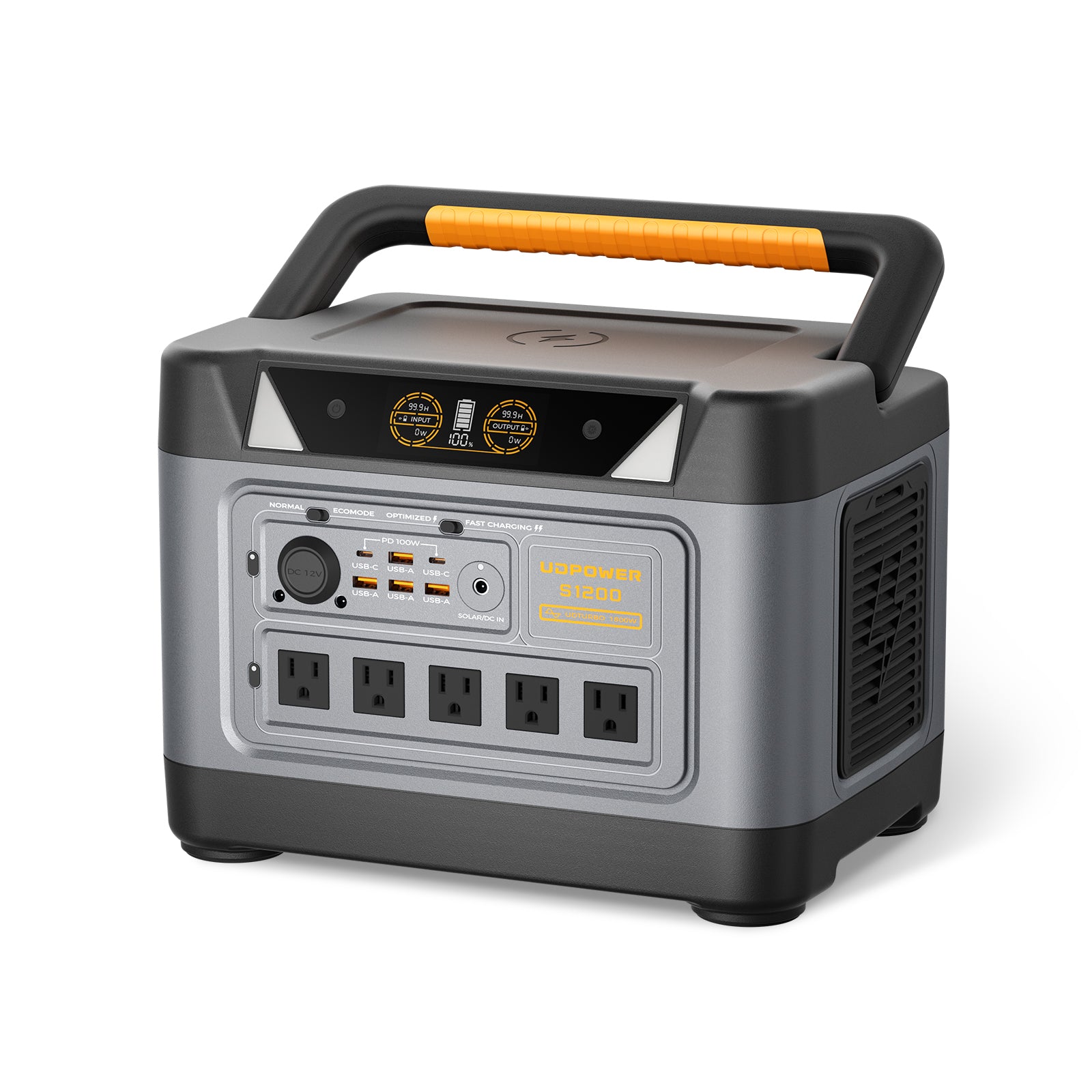
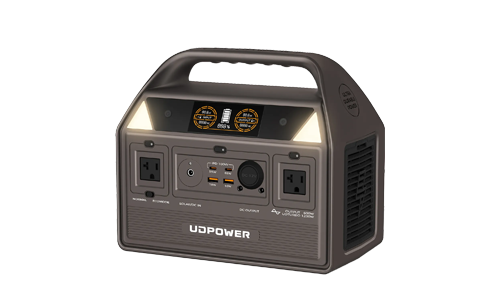
UDPOWER S1200: More Backup Capacity, But Too Large for PG&E's Portable Battery Rebate
The UDPOWER S1200 is designed for customers who need more runtime and output than a compact 500–600Wh power station can provide.
- Capacity: 1,191Wh
- Rated AC output: 1,200W
- UDTURBO output: up to 1,800W for compatible higher-power loads
- LiFePO4 battery
- 5 AC outlets
- Solar input: up to 400W
- UPSPrime transfer time: ≤10ms
- Weight: approximately 26.0 lb
Because its 1,191Wh battery exceeds PG&E's strict 1,000Wh ceiling, the S1200 does not qualify for PG&E's portable-battery rebate under the current capacity rule.
For SCE or SDG&E customers, do not assume eligibility based on specifications alone. Verify the exact model against the utility's current approved-product list before purchase.
View UDPOWER S1200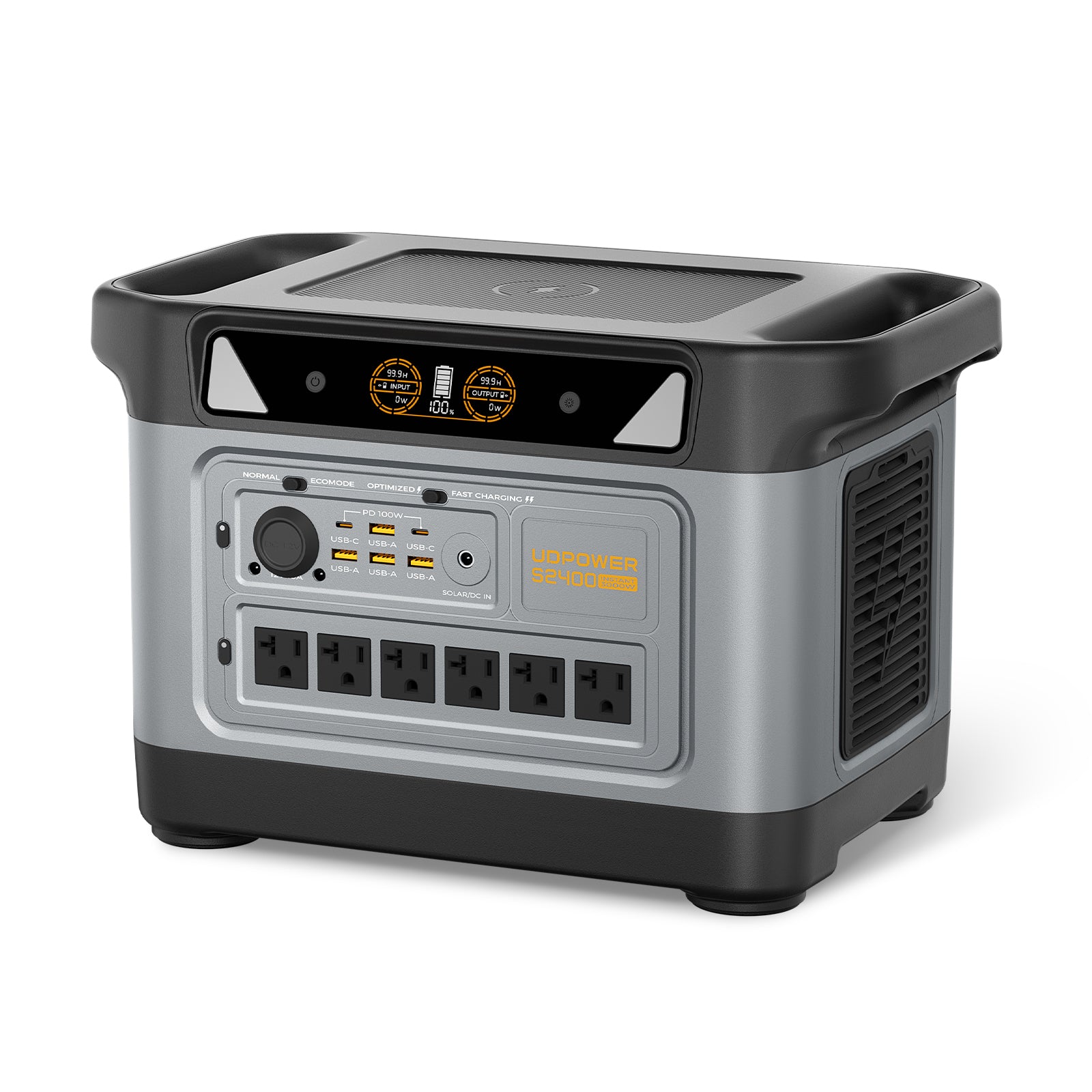
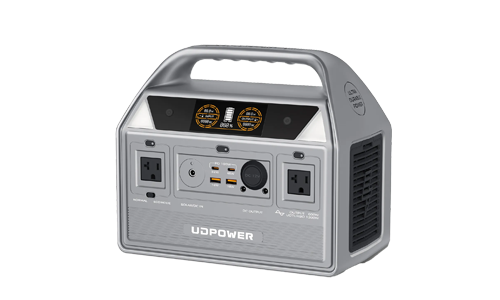
UDPOWER S2400: Choose It for Runtime and Output, Not the PG&E Rebate
The UDPOWER S2400 is a substantially larger portable backup system for households that want to keep more essential loads operating or extend runtime through a longer outage.
- Capacity: 2,083Wh
- Rated AC output: 2,400W
- UDTURBO output: up to 3,000W for compatible higher-power loads
- LiFePO4 battery
- 6 AC outlets
- Solar input: up to 400W
- UPSPrime transfer time: ≤10ms
- Weight: approximately 40.8 lb
Its 2,083Wh capacity is more than double PG&E's maximum portable-battery capacity, so it is not eligible under PG&E's current portable-battery rebate rule.
That does not make it a poor California outage choice. It simply means the buying decision should be based on required runtime and appliance load rather than an expected PG&E rebate.
View UDPOWER S2400UDPOWER Models vs. PG&E's Current Capacity Rule
| UDPOWER Model | Battery Capacity | Rated Output | PG&E 290–1,000Wh Capacity Rule | PG&E Published QPL | Best Fit |
|---|---|---|---|---|---|
| C400 | 256Wh | 400W | No — below 290Wh | Not applicable under current capacity rule | Light electronics and short-duration backup |
| C600 | 596Wh | 600W | Yes | Yes — listed | Rebate-focused compact backup planning |
| S1200 | 1,191Wh | 1,200W | No — exceeds 1,000Wh | No under current capacity rule | Longer essential-load backup |
| S2400 | 2,083Wh | 2,400W | No — exceeds 1,000Wh | No under current capacity rule | Higher-capacity outage and appliance backup |
For more options, browse all UDPOWER portable power stations or compare models designed specifically for home backup use.
Should You Choose a Smaller Battery Just to Get a Rebate?
Not automatically.
This is one of the most important practical decisions in the entire rebate process.
A $150, $300 or even $500 incentive can be valuable, but a portable battery is useful only if it can support the devices you actually need during an outage.
Suppose a household needs to keep a refrigerator, Wi-Fi router, lights and a medical device running through a long PSPS event. Choosing a smaller battery solely because it fits a utility rebate could leave the household with inadequate runtime.
Conversely, a renter who only needs a CPAP machine, phone, router and laptop may not benefit from carrying a 2,000Wh-class battery.
Use This Order When Choosing
- Identify your essential devices.
- Add their realistic average running watts.
- Decide how many hours of backup you need.
- Calculate the necessary watt-hours.
- Check startup or peak power requirements.
- Then see whether a utility rebate can reduce the cost of a model that already fits the job.
A useful planning formula is:
For UDPOWER planning examples, using approximately 90% usable energy provides a more realistic estimate than dividing nameplate watt-hours directly by appliance wattage. Actual runtime varies with load behavior, temperature, conversion losses and battery condition.
Example: 100W Average Essential Load
| Model | Capacity | Approx. Usable Energy at 90% | Estimated Runtime at 100W Average Load | PG&E Capacity Rule |
|---|---|---|---|---|
| UDPOWER C600 | 596Wh | About 536Wh | About 5.4 hours | Within range |
| UDPOWER S1200 | 1,191Wh | About 1,072Wh | About 10.7 hours | Over 1,000Wh limit |
| UDPOWER S2400 | 2,083Wh | About 1,875Wh | About 18.7 hours | Over 1,000Wh limit |
This table shows the trade-off clearly: rebate-friendly capacity and longer outage runtime can point in different directions.
For a deeper look at household demand, read How Many Watts Does a House Use?. For battery chemistry and backup planning, see Basics of LFP Home Battery Backups.
2026 California Portable Power Station Rebate Checklist
Use this checklist before buying anything:
- Identify whether you are served by PG&E, SCE or SDG&E.
- Check your exact service address for applicable wildfire-risk eligibility.
- Confirm that the program is still open and funded.
- Check CARE or FERA enrollment where relevant.
- Check Medical Baseline or Access and Functional Needs eligibility where relevant.
- Confirm PSPS history if required by the utility.
- Verify the exact portable power station model.
- Verify battery capacity limits.
- Check whether the model is on the current qualified-product list.
- Check retailer restrictions.
- Check whether the purchase must occur in California.
- Save the itemized receipt.
- Save shipping and delivery confirmation.
- Record the product model and serial number if requested.
- Submit the application before funding is exhausted.
- Keep copies of everything you submit.
If receiving the rebate is essential to your budget, verify eligibility before placing the order. Do not treat a rebate as guaranteed money until the utility confirms your account, product and purchase satisfy the current terms.
What If You Do Not Qualify for a Portable Power Station Rebate?
Not qualifying for one of these rebates does not necessarily mean there are no backup-power resources available.
PG&E Portable Battery Program for Medical Needs
PG&E operates a separate Portable Battery Program for certain customers who rely on electricity for medical devices, assistive technology or durable medical equipment.
This is different from the Generator and Battery Rebate Program. PG&E says qualifying customers can receive backup portable batteries after an assessment process.
Potential eligibility includes customers who rely on qualifying medical or assistive equipment, are Medical Baseline or Self-Identified Vulnerable customers, and have experienced certain PSPS or Enhanced Powerline Safety Setting outages.
Consider Installed Battery Incentives
If your backup goal is larger than a portable battery can reasonably cover, investigate SGIP and professionally installed home battery programs instead of forcing a portable product into a whole-home role.
Buy for the Load, Not the Rebate
If you are not eligible for assistance, the same sizing rules still apply. Prioritize the devices that matter most and avoid paying for battery capacity or inverter output you will never use.
If you experience both voltage problems and complete outages, our Brownout vs. Blackout Guide explains why the right response can differ depending on whether power is completely lost or simply operating at abnormal voltage.
California Portable Power Station Rebates 2026 FAQ
Is there a California portable power station rebate in 2026?
Yes, but there is not one universal rebate available to every California resident. PG&E, SCE and SDG&E operate different backup-power programs with different eligibility, product and funding rules.
How much is the PG&E portable battery rebate in 2026?
PG&E's Generator and Battery Rebate Program offered up to $300 per qualified customer account, with qualifying CARE or FERA customers potentially receiving up to an additional $200. However, PG&E currently states that the 2026 program is full and applications are closed.
Is PG&E still accepting 2026 battery rebate applications?
No. As of August 27, 2026, PG&E says applications for the 2026 Generator and Battery Rebate Program are closed because the program is full. PG&E advises customers to check back in January 2027.
What battery capacity qualifies for the PG&E rebate?
PG&E's portable battery rules require a capacity of at least 290Wh and no more than 1,000Wh. The 1,000Wh maximum is strict, so a 1,024Wh battery exceeds the limit.
Does the UDPOWER C600 qualify for the PG&E portable battery program?
The UDPOWER C600 has a 596Wh capacity and is explicitly listed on PG&E's current Portable Batteries Qualified Product List. However, customers must still satisfy account and address requirements, and the 2026 program is currently closed.
Does the UDPOWER S1200 qualify for the PG&E rebate?
No under the current portable-battery capacity rule. The S1200 has a 1,191Wh battery, which exceeds PG&E's strict 1,000Wh maximum.
Does the UDPOWER S2400 qualify for the PG&E rebate?
No under the current portable-battery capacity rule. Its 2,083Wh battery is above PG&E's 1,000Wh maximum.
How much is the SCE portable power station rebate?
SCE currently lists a $150 rebate for a qualifying portable power station purchased by an eligible customer living in a Tier 2 or Tier 3 high-fire-risk area.
Can SCE customers receive more than one portable power station rebate?
Yes. SCE states that qualifying residential addresses can receive up to five $150 portable power station rebates, subject to the current program rules and qualifying products.
Can I claim an SCE rebate after I already bought the battery?
SCE says customers who purchased a qualifying product within the previous 90 days may apply through the SCE Marketplace's Product Rebate process. Proof of purchase and compliance with the Marketplace terms are still required.
How much is the SDG&E portable power station rebate in 2026?
The standard qualifying rebate is $150. Eligible CARE/FERA customers can receive $200 total, while qualifying Medical Baseline or Access and Functional Needs customers may receive a $525 portable power station rebate under the dedicated program.
Does SDG&E require a specific portable power station model?
Yes. SDG&E requires the portable power station to appear on its Qualified Product List. Always review the current list before buying.
Are UDPOWER portable power stations currently on the SDG&E qualified list?
Our review of the current 2026 SDG&E qualified portable power station lists on August 27 did not find UDPOWER models. Do not assume SDG&E rebate eligibility unless the utility later updates its approved list and confirms the exact model.
Is SGIP the same as a portable power station rebate?
No. SGIP primarily supports qualifying installed battery-storage projects. Utility portable power station rebates cover qualifying movable battery power stations under separate program rules.
Do I have to live in a wildfire area to get a portable power station rebate?
For the PG&E, SCE and SDG&E resilience programs discussed here, wildfire-risk location or circuit criteria are central to eligibility. Exact requirements differ by utility, so check the service address directly.
Should I buy the smallest battery that qualifies for the rebate?
Not necessarily. Choose a battery that can support your required appliances and runtime first. A rebate saves money only if the qualifying power station is also large enough for your actual outage needs.
Choose Backup Power Around Your Actual Outage Needs
A utility rebate can reduce the upfront cost, but it should not be the only factor in your decision. Start with your refrigerator, medical equipment, internet, lighting and other essential loads. Calculate how much power and runtime you actually need, then check whether a qualifying utility program can lower the cost of the right-sized system.
Compare UDPOWER Portable Power StationsOfficial Sources and Further Reading
- PG&E — Generator and Battery Rebate Program
- PG&E — Portable Batteries Qualified Product List
- PG&E — Portable Battery Program
- Southern California Edison — Battery and Portable Power Incentives
- SCE Marketplace
- SDG&E — 2026 Generator Assistance Program
- SDG&E — Generator Assistance for CARE/FERA Customers
- SDG&E — Generator Assistance for Medical Baseline / AFN Customers
- SDG&E — Portable Power Station Coupon and Eligibility
- California Public Utilities Commission — High Fire-Threat District Map
Related UDPOWER Guides
Related Articles


