What Can a 1200W Portable Power Station Run?
ZacharyWilliamPortable Power Station Knowledge
Quick answer
A 1200W portable power station can comfortably run phones, tablets, laptops, Wi-Fi gear, LED lights, TVs, fans, many CPAP setups, and a lot of low-to-medium household devices.
It can sometimes run a mini fridge, a compact refrigerator, or a small portable AC, but only if the actual running watts and startup surge stay within the station’s limits.
It is usually not the right tool for a full-size microwave, a 1500W space heater on high, a full-power hair dryer, most coffee makers, or overlapping kitchen loads.
What “1200W” really means
When shoppers ask, “What can a 1200W portable power station run?”, they usually mean three different things without realizing it:
1) Continuous output
1200W is the inverter’s steady AC limit. If your load is under that number, the station may run it. If it is over, it usually will not.
2) Startup surge
Some devices need a higher burst for a second or two when they first turn on. This matters most with compressors, motors, pumps, and some tools.
3) Battery runtime
Watts tell you if a device can run. Watt-hours tell you how long it can run.
Quick yes / maybe / no chart
If you want the plain-English answer first, start here.
| Device type | Typical fit for a 1200W station | Reality check |
|---|---|---|
| Phones, tablets, cameras, battery chargers | Yes | One of the easiest, most efficient uses—especially through USB ports. |
| Laptops, Wi-Fi router, modem, monitors, printers | Yes | Excellent for work-from-home backup and travel setups. |
| LED lights, TVs, fans, CPAP | Yes | This is where a 1200W unit usually feels “just right.” |
| Mini fridge, compact fridge, some full-size refrigerators | Maybe | Running watts may be fine, but compressor startup is what decides it. |
| Small portable AC | Maybe | Possible with a small unit, but headroom gets tight fast. |
| Microwave, coffee maker, toaster oven, air fryer | Usually no | Many of these exceed 1200W input even if the cooking number looks lower. |
| Space heater, full-power hair dryer, induction cooktop | No | These are classic high-draw loads that belong in a larger power class. |
Real device examples with source links
The table below uses real product-page examples so you can see why a 1200W station feels comfortable with some devices and tight with others. These are examples, not guarantees—your exact model may pull more or less power.
| Example device | Example power | Will a 1200W station run it? | What this means in real life | Source |
|---|---|---|---|---|
| Phone fast charger | 20W | Yes | Easy load. Great use case for USB output. | Apple 20W adapter |
| Laptop charger | 70W | Yes | Still very manageable, especially one at a time. | Apple 70W adapter |
| Wi-Fi router | 12V × 1.5A = 18W | Yes | One of the best outage loads because runtime is long. | TP-Link EX510 |
| 43" TV | 52W typical / 120W max | Yes | A TV night during an outage is an easy fit if you keep the rest of the load modest. | Samsung 43" T5300 |
| Pedestal fan | 43W to 58W | Yes | Excellent overnight comfort load compared with a heater or AC. | Lasko pedestal fan |
| CPAP power supply | 65W | Yes | Good match for medical backup. Real draw can be lower, but humidifier settings matter. | ResMed AirSense 11 PSU |
| BiLevel / heavier CPAP setup power supply | 90W | Yes | Still within range, but runtime drops faster with heated tubing and humidification. | ResMed AirCurve 11 PSU |
| Compact refrigerator family | 220–327 kWh/year on some models | Maybe | Energy labels suggest low average consumption, but fridge startup surge is the real test. | Frigidaire compact refrigerators |
| Small portable AC | 883W | Maybe | Possible one-at-a-time on a small unit, but there is not much headroom left. | LG LP0621WSR |
| Countertop microwave | 1550W input | Usually no | This is why “1200W microwave” often confuses buyers: the appliance input can be much higher than the cooking number. | GE microwave specs |
| Coffee maker | 1550W | Usually no | Many coffee makers are surprisingly high-draw for a 1200W station. | Ninja single-serve coffee maker |
| Space heater | 1500W high / 750W low | High: No / Low: Maybe | Even when it works on low, it drains battery very quickly. | Honeywell heater |
| Hair dryer | 1600W | No | A classic example of a device that needs a bigger inverter class. | Dyson Supersonic Nural |
How long a 1200W-class station can run things
For runtime, the easiest planning formula is:
Estimated runtime (hours) ≈ battery Wh × 0.85 ÷ device watts
That 0.85 factor is a practical planning shortcut for AC use. USB and DC loads can be more efficient, while heavy AC loads can be a little less forgiving.
Using the UDPOWER S1200 as a real example, you start with 1,190Wh. A practical AC planning number is about 1,011Wh usable.
| Load example | Estimated load | Approx runtime on a 1,190Wh S1200-class unit | Best use case |
|---|---|---|---|
| Router only | 20W | About 50.6 hours | Long internet backup |
| Router + modem + phone charging | 30W | About 33.7 hours | Basic communications during an outage |
| 43" TV only (using the 52W example above) | 52W | About 19.5 hours | Entertainment or weather/news coverage |
| Fan overnight | 50W | About 20.2 hours | Bedroom comfort, camping, RV |
| CPAP planning load | 65W | About 15.6 hours | Overnight medical backup |
| Laptop + router + light | 95W | About 10.6 hours | Work-from-home essentials |
| TV + internet + a few lights | 200W | About 5.1 hours | Short evening outage coverage |
| Small portable AC example | 883W | About 1.1 hours | Short burst cooling only |
The 3-check rule before you plug anything in
- Check the running watts. Look at the label, the power brick, the manual, or the EnergyGuide sticker. If it only shows amps, use a quick estimate: watts ≈ volts × amps.
- Check the startup behavior. Compressors, pumps, and motors may need more power at turn-on than while running.
- Check the real-world load combination. A 900W device by itself may be fine, but 900W + TV + router + charger can quickly push you past the limit.
One smart rule of thumb
If you expect regular overlap, do not size right to the edge. A 1200W station feels much better when your “normal active load” is well below the limit, not pressed right against it.
Best real-life use cases for a 1200W station
This is the part many articles skip. A 1200W power station shines most when you use it for the loads people actually care about in a blackout, on a trip, or in an RV.
| Scenario | Why 1200W works well | Typical load style | When to move up |
|---|---|---|---|
| Home outage basics | Handles Wi-Fi, phones, lights, laptop, TV, and many CPAP setups without drama. | Low and steady | If you want to add microwave, heater, or more kitchen overlap |
| Work-from-home backup | Strong fit for laptop-centered setups and internet continuity. | Moderate, efficient | If you run desktop towers, multiple monitors, or bigger office gear |
| RV and road trips | Great for charging electronics, running fans, lights, and many small comfort loads. | Mixed but manageable | If AC, cooking appliances, or multiple people are sharing one unit heavily |
| CPAP and overnight essentials | Excellent size for medical backup plus phone/light charging. | Light but important | If you need multi-night backup without recharging |
| Small-fridge or compact-fridge support | Sometimes works well, especially if the startup is friendly. | Motor-driven, surge-sensitive | If fridge reliability is your top priority and you want more headroom |
When 1200W is not enough
A 1200W station is not “too small” in general. It is just the wrong class for certain habits.
You probably want a bigger class if your goal is:
- Running a refrigerator and microwave without juggling loads
- Powering a portable AC with more comfort and headroom
- Using heat-heavy kitchen devices more freely
- Covering longer outages with less rationing
- Creating a more relaxed family backup setup instead of a strict essentials-only plan
If that sounds like you, jump to the larger class here: What Can a 2000W Portable Power Station Run?
Best UDPOWER picks for this use case
If your shopping question is really, “Which UDPOWER model makes sense for this kind of load?”, here is the simple answer.
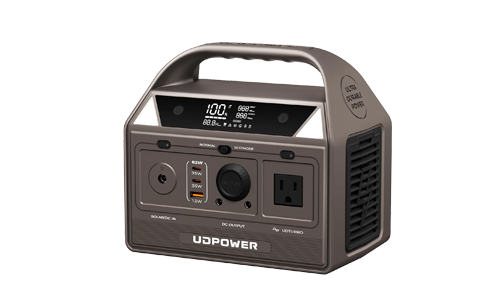
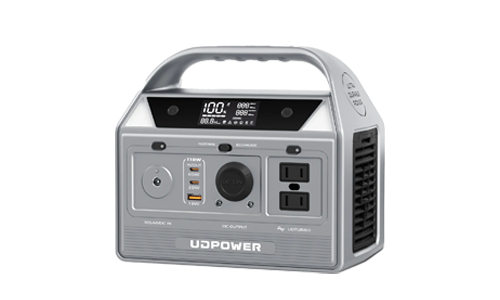
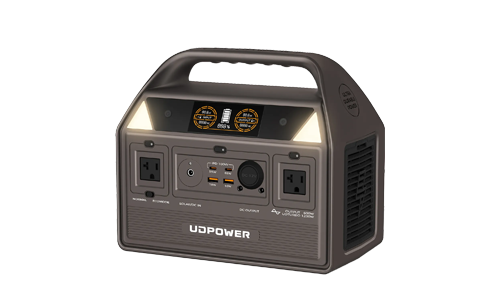
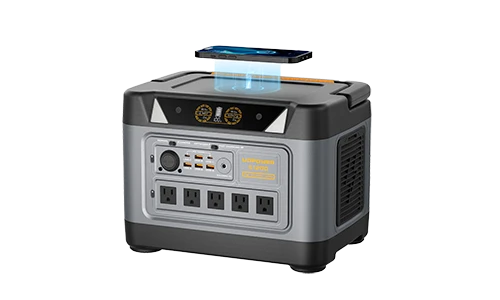
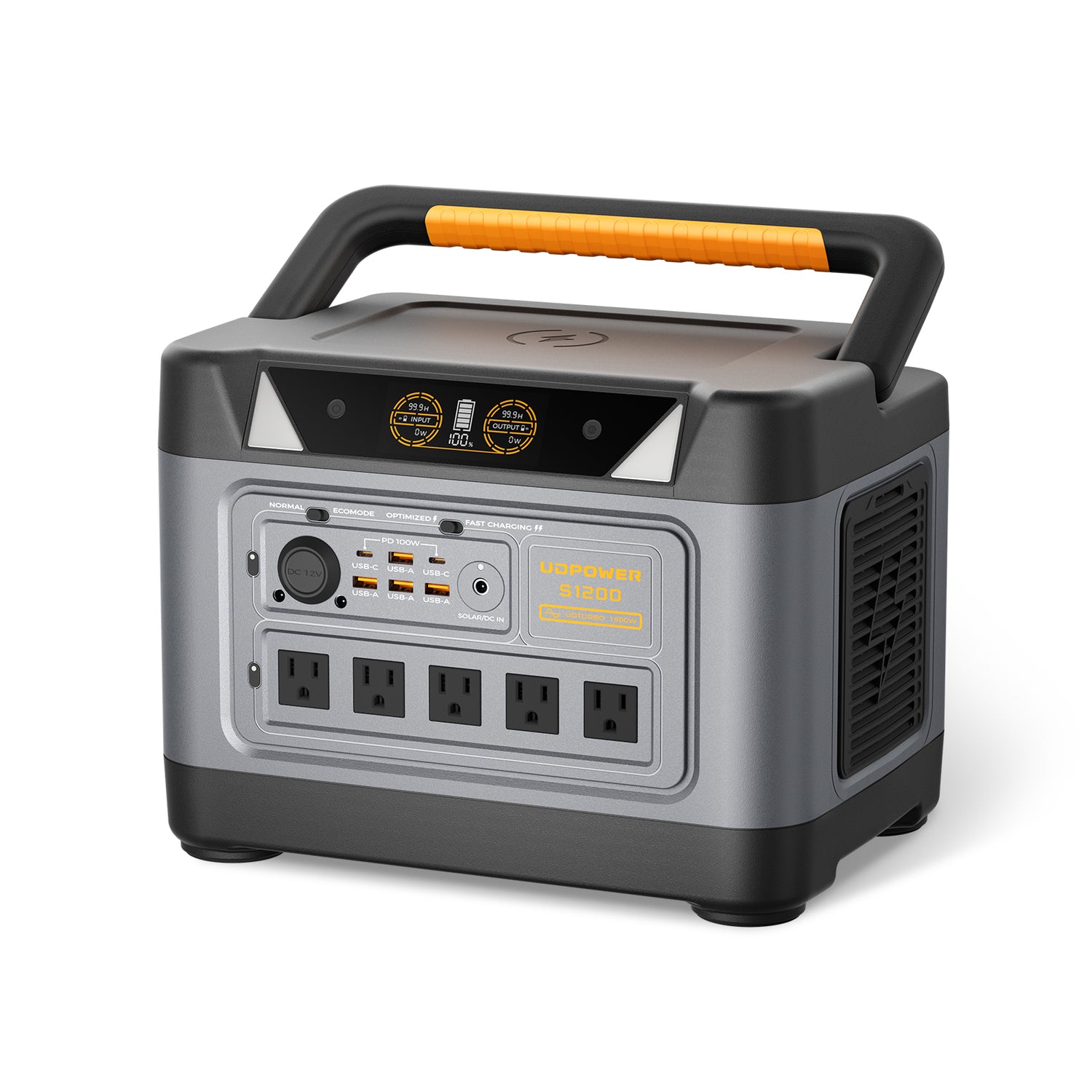
UDPOWER S1200 Portable Power Station
This is the cleanest match for the topic of this article. It sits right in the sweet spot for Wi-Fi, laptops, TVs, fans, CPAP, lights, and many smaller appliance scenarios.
- Capacity: 1,190Wh
- AC output: 1,200W pure sine wave
- Surge support: up to 1,800W
- Battery chemistry: LiFePO4
- Cycle life: 4,000+ cycles
- Weight: about 26.0 lb
- UPS: <10 ms backup switching

UDPOWER Solar Generator Kits for longer outages and off-grid use
If your main concern is not just “Can it run this?” but also “How do I recharge during the day?”, this is the smarter path. A solar kit makes a 1200W-class station much more useful for camping, RV weekends, and extended outage planning.
- Best for: daytime recovery, camping, road trips, and outage resilience
- Good match if you want: less wall dependence and more time off-grid
- Best advice: choose your panel setup based on recharge speed, not just battery size
UDPOWER S2400 Portable Power Station
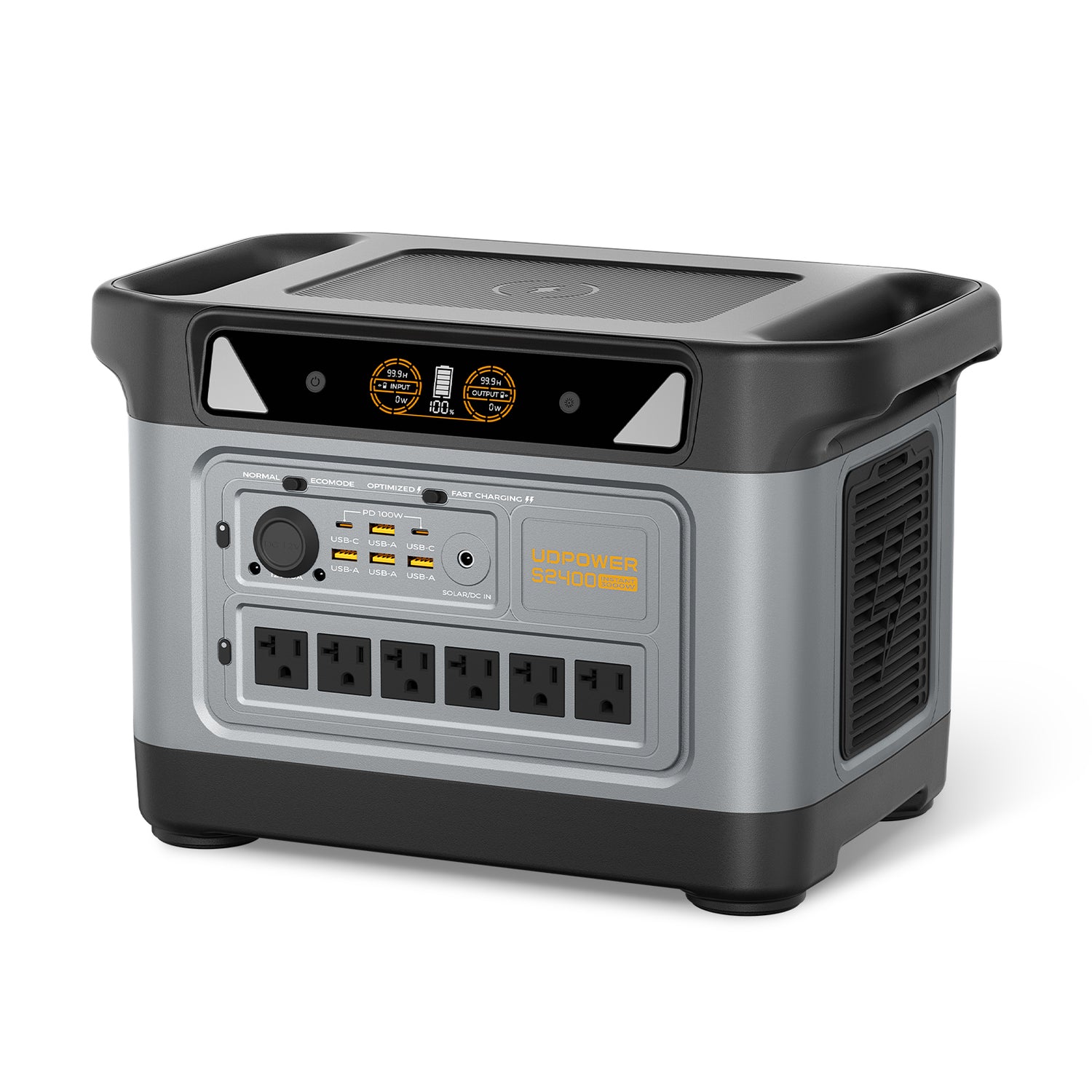
If you already know you want more fridge confidence, more appliance overlap, or a less restrictive outage setup, skip the squeeze and step up. This is the better fit when 1200W feels borderline.
- Capacity: 2,083Wh
- AC output: 2,400W
- Weight: about 40.8 lb
- Best for: bigger home backup, more kitchen freedom, more headroom
FAQ
Can a 1200W portable power station run a refrigerator?
Often yes for a mini fridge or compact refrigerator, and sometimes yes for a full-size fridge. The real question is not just running watts—it is compressor startup. If refrigerator backup is your top priority, more inverter headroom usually feels better in real life.
Can a 1200W portable power station run a microwave?
Usually not for a full-size countertop microwave. Many microwaves with “1200W cooking power” actually pull more than 1200W from the wall, so they exceed the station’s limit.
Can a 1200W station run a CPAP all night?
In many cases, yes. A 1200W station is usually more than powerful enough for CPAP use. The bigger variable is runtime, especially if heated humidification or heated tubing is on.
Can it run a small portable AC?
Sometimes. A small unit can fit under a 1200W ceiling, but runtime will be short and the remaining headroom will be limited. This is one of those loads where buyers often end up happier in a bigger class.
What is the difference between 1200W and 1200Wh?
1200W is power output—how much the station can supply right now. 1200Wh is battery capacity—how much energy it stores. One tells you whether a device can run; the other tells you how long it can run.
Is 1200W enough for a home power outage?
Yes, if your plan is realistic. It is excellent for essentials like internet, phones, lights, laptop, TV, fan, and many medical devices. It is not the right size if your goal is “keep the kitchen and comfort loads feeling normal.”
Should I choose a 1200W unit or move straight to 2400W?
Choose 1200W if your priority is portability, lower-cost entry, and essentials-first power. Move to 2400W if you want more appliance overlap, more fridge confidence, more kitchen flexibility, or a less restrictive outage setup.
Bottom line
A 1200W portable power station is one of the most useful sizes you can buy—if you buy it for the right job. It is great for communications, work gear, lights, TVs, fans, CPAP, and many smaller real-life loads. It is usually the wrong size for high-heat and heavy-kitchen appliances.
If your mindset is “keep the essentials running well,” 1200W is a smart class. If your mindset is “make the outage feel almost normal,” step up sooner.
Tip: if you want better conversion and longer runtime on small electronics, use USB-C or DC outputs when possible instead of plugging everything into AC.