

How Many Watts of Solar Do I Need for an RV?

Quick answer: most RVs land in 200W–800W (air conditioner changes everything)
Common ranges (what they usually cover)
These are realistic “starting points” for most RV travelers. Your exact number depends on where you camp, shade, season, and how much battery you have.
200–300W 400–600W 700–900W 1000W+
- 200–300W: light use + topping off batteries (lights, phones, fans, some laptop time).
- 400–600W: the “sweet spot” for many boondockers (more laptop, longer fans, better recovery after cloudy hours).
- 700–900W: heavier inverter use (more microwave/coffee/TV time) and better resilience.
- 1000W+: only makes sense if you have roof space, storage to match, and you’re chasing fast recharge or bigger loads. AC still needs a big battery plan.

Rule-of-thumb checks (quick sanity tests)
These don’t replace real math, but they quickly tell you if you’re wildly under- or over-sizing.
- A well-known RV solar rule-of-thumb is that a 100W panel can produce about ~30Ah/day in decent conditions. Source: etrailer RV solar sizing guide.
- Peak Sun Hours (PSH) are not daylight hours. They’re a way to convert your location’s sunlight into “equivalent full-sun hours.” Sources: Unbound Solar (PSH definition), Solar Energy World (PSH definition).
Running an RV air conditioner from solar is possible, but it’s mainly a battery problem, not a “just add more panels” problem. Panels refill during the day; the battery has to cover startup surges and nighttime runtime. If AC is your goal, plan storage first, then size solar to refill that storage.
Step-by-step sizing (the simple formula that actually works)
Step 2: Look up your location’s Peak Sun Hours (PSH).
Step 3: Size panel watts with a realistic “real-world” factor.
Here’s the practical sizing formula most RV owners can use without turning this into an engineering project:
Panel W ≈ Daily Wh ÷ (Peak Sun Hours × 0.75)
The “0.75” is a conservative real-world factor to cover common losses (heat, imperfect angle, dust, wiring/controller/inverter losses, partial shade, etc.). If you’re disciplined about tilt + no shade + clean panels, your factor can be higher. If you camp in trees or winter, it can be lower.

Then add margin so you’re not stressed every time a cloud shows up:
Baseline watts × 1.25 (about a 25% buffer)
If you boondock in forests, or you travel in shoulder season/winter, you may want a bigger buffer or a backup charging plan.
If you want to convert amps/amp-hours ↔ watts/watt-hours quickly (common for RV battery talk), these UDPOWER tools can help: Battery & Power Unit Conversion Tools and Portable Power Station Runtime Calculator.
Estimate your daily energy (Wh/day) without guessing
A lot of “how many watts of solar” guides skip the part that matters most: you don’t consume “watts,” you consume watt-hours. A 600W appliance used for 10 minutes is very different from a 60W fan that runs all night.
Fast method (10 minutes)
- Write down everything you’ll run (even “small” stuff like routers and phone charging).
- Find the wattage on the label, manual, or a plug-in watt meter.
- Estimate hours per day for each item.
- Wh/day = watts × hours. Add everything up.
Want a ready conversion page for watts ↔ Wh and runtime planning? This UDPOWER guide is designed for “real appliance planning”: Battery Runtime Estimator (Watts to Wh).

Reality check: common appliance wattage ranges
Your exact numbers vary (always verify nameplates), but these ranges help you spot the big energy hogs quickly. Source: RV Tech Library appliance load chart.

| Appliance | Load range (W) | Average (W) | Source |
|---|---|---|---|
| Air conditioner (each) | 1400–2000 | 1700 | RV Tech Library |
| Microwave oven | 1000–1500 | 1250 | RV Tech Library |
| Electric coffee pot | 550–750 | 650 | RV Tech Library |
| Refrigerator (AC style) | 600–1000 | 800 | RV Tech Library |
| TV (older CRT example) | 200–600 | 400 | RV Tech Library |
Note: modern DC fridges and LED TVs can be far lower than older AC examples. The point is identifying the “big hitters” that decide your solar size.
Example daily energy budgets (use these to pick a solar “lane”)
These scenarios show how quickly daily Wh adds up. Copy the idea, swap in your own items, and you’ll get a number you can size confidently.
| Scenario | What you’re running (example) | Daily total (Wh/day) | Notes |
|---|---|---|---|
| Light weekend boondocking | LED lights, phones, water pump, vent fan, small laptop time | 900–1,800 | Great fit for 200–400W if you get decent sun and you’re not parked in shade. |
| Comfortable off-grid (work + entertainment) | More laptop hours, hotspot/router, longer fans, more lighting, occasional microwave/coffee | 2,000–3,800 | Often lands in 400–800W, plus enough battery to carry you overnight. |
| Heavy inverter lifestyle | Frequent microwave/coffee, more AC outlets in use, longer TV time | 4,000–6,000 | Usually 800W+ or a hybrid strategy (solar + alternator + occasional shore/generator). |
| Air conditioner goal | AC + everything else | 6,000–12,000+ | Battery capacity + surge handling become the gatekeepers. Solar alone is rarely the whole story. |
If you can run more loads on DC (lights, fans, some fridges, charging), you reduce inverter loss and lower your daily Wh. That can drop your solar requirement by hundreds of watts over a day.
Find your real sun hours (Peak Sun Hours)
Peak Sun Hours (PSH) are a standardized way to describe how much “usable sun” you get. Many RVers average around 4–5 PSH in good seasons, but it can be lower in winter, cloudy regions, or tree cover.

Two easy ways to get PSH
- Use the NREL PVWatts Calculator to estimate monthly solar production for your location.
- Learn what PSH means (and why it’s not daylight hours): Unbound Solar, Solar Energy World.
Practical PSH picks (if you don’t want to overthink it)
- 3 PSH: conservative / winter / partial shade / cloudy regions
- 4 PSH: “average safe” planning number for many travelers
- 5 PSH: good sun season, open sky parking
- 6 PSH: strong summer sun in sunny regions (best-case, not everyday)
If you’re often parked in trees, treat it like a lower PSH day even if the weather app says “sunny.”
Sizing tables: Wh/day ↔ panel watts ↔ daily harvest

Table A: Solar watts needed for your daily energy (includes a recommended buffer)
How to read: each cell shows baseline watts, and the number in parentheses is a recommended target (~25% buffer). Method sources: PSH definition (NREL PVWatts, Unbound Solar).
| Daily use (Wh/day) | 3 PSH | 4 PSH | 5 PSH | 6 PSH |
|---|---|---|---|---|
| 1,000 | 450 (~550) | 350 (~450) | 250 (~300) | 200 (~250) |
| 1,500 | 650 (~800) | 500 (~650) | 400 (~500) | 350 (~450) |
| 2,000 | 900 (~1,100) | 650 (~800) | 550 (~700) | 450 (~550) |
| 3,000 | 1,350 (~1,700) | 1,000 (~1,250) | 800 (~1,000) | 650 (~800) |
| 4,000 | 1,800 (~2,250) | 1,350 (~1,700) | 1,100 (~1,350) | 900 (~1,100) |
| 6,000 | 2,650 (~3,300) | 2,000 (~2,500) | 1,600 (~2,000) | 1,350 (~1,700) |
| 8,000 | 3,550 (~4,450) | 2,650 (~3,300) | 2,150 (~2,700) | 1,800 (~2,250) |
If you’re charging a portable power station, your solar watts might be limited by the unit’s max solar input. For example, a 400W max input means adding 800W of panels won’t speed up charging past what the unit can accept. (See the “portable power stations” section below.)
Table B: What your panels can realistically harvest per day
This table uses a conservative real-world factor (0.75). Sources: PSH definition (NREL PVWatts, Solar Energy World).
| Panel size (W) | 3 PSH | 4 PSH | 5 PSH | 6 PSH |
|---|---|---|---|---|
| 100 | 225 (0.23 kWh) | 300 (0.30 kWh) | 375 (0.38 kWh) | 450 (0.45 kWh) |
| 200 | 450 (0.45 kWh) | 600 (0.60 kWh) | 750 (0.75 kWh) | 900 (0.90 kWh) |
| 300 | 675 (0.68 kWh) | 900 (0.90 kWh) | 1,125 (1.12 kWh) | 1,350 (1.35 kWh) |
| 400 | 900 (0.90 kWh) | 1,200 (1.20 kWh) | 1,500 (1.50 kWh) | 1,800 (1.80 kWh) |
| 600 | 1,350 (1.35 kWh) | 1,800 (1.80 kWh) | 2,250 (2.25 kWh) | 2,700 (2.70 kWh) |
| 800 | 1,800 (1.80 kWh) | 2,400 (2.40 kWh) | 3,000 (3.00 kWh) | 3,600 (3.60 kWh) |
| 1000 | 2,250 (2.25 kWh) | 3,000 (3.00 kWh) | 3,750 (3.75 kWh) | 4,500 (4.50 kWh) |

Table C: The “100W ≈ ~30Ah/day” check (why it’s a useful shortcut)
Many RV battery conversations happen in amp-hours. This is a quick conversion example at 5 PSH using a conservative factor. Rule-of-thumb source: etrailer (~30Ah/day per 100W).
| Panel size (W) | Approx Wh/day (5 PSH) | Approx Ah/day @ 12V | Source |
|---|---|---|---|
| 100 | ~375 | ~31 | etrailer |
| 200 | ~750 | ~62 | etrailer |
| 400 | ~1,500 | ~125 | etrailer |
| 600 | ~2,250 | ~188 | etrailer |
| 800 | ~3,000 | ~250 | etrailer |
Another step-by-step approach (appliance list → Wh/day → PSH → panel sizing) is outlined here: Renogy: How much solar do I need for my RV?
What changes real output (and how to get more from the same watts)
Biggest output killers
- Shade (even partial): a small shadow can cut output dramatically.
- Flat mounting: roof panels laid flat lose a lot versus a good tilt angle.
- Heat: panels usually make less power in high heat than in mild temps.
- Dirty panels: road dust + pollen adds up fast.
- “Voltage too high” wiring mistakes: series wiring can exceed your controller/power station limits.
Simple ways to boost production without buying more panels
- Chase the sun: park with open sky, avoid roof A/C shadow lines if possible.
- Tilt portable panels: especially in winter and mornings/afternoons.
- Clean the surface: quick wipe can bring output back.
- Use DC where you can: reduce inverter losses (lower daily Wh).
- Build a cloudy-day plan: alternator charging, short shore-power top-off, or “energy discipline” days.
When you connect solar to a power station, the “voltage limit” is non-negotiable. If you’re unsure how to match panel voltage to your device safely, this UDPOWER guide breaks it down in plain language: Solar Charging Voltage Safety.
Roof vs. portable panels for RVs (which gives better results?)

Roof-mounted: set-and-forget
- Always collecting whenever you’re in sun.
- No setup time.
- But: flat angle + roof shade can reduce real output.
- Roof space often caps your max watts.
Portable/foldable: best for “park in shade, panels in sun”
- You can place panels away from trees and shadows.
- Easy to tilt toward the sun.
- Great if you move camps frequently or want flexible setups.
- But: setup/pack time, security, and cable routing to consider.
A modest roof system (for “background charging”) plus a portable panel (for heavy recharge days) can feel better than maxing roof space alone.
If you’re charging a portable power station: input limits matter
If your solar plan includes a portable power station (instead of—or alongside—your RV’s house battery bank), check two specs: max solar input watts and solar input voltage range.
UDPOWER examples: solar input limits (why your panel wiring matters)
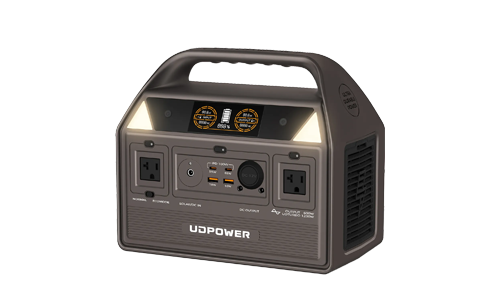
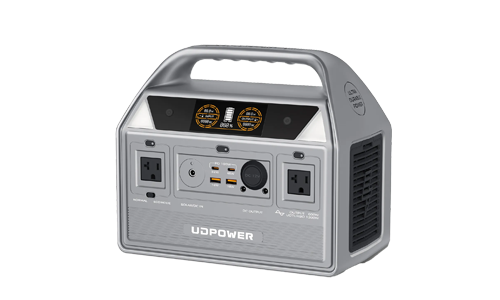
| Model | Picture | Capacity | AC output | Solar input spec | Source |
|---|---|---|---|---|---|
| UDPOWER S1200 |  |
1,190Wh | 1,200W | Solar input: 12–75V, 12A max, 400W max | UDPOWER S1200 page |
| UDPOWER S2400 |  |
2,083Wh | 2,400W | Solar input: 12–50V, 10A max (supports 75W–400W) | UDPOWER S2400 page |
UDPOWER portable panel reference (so you can sanity-check volts/amps)
| Panel | Picture | Rated power | Voltage (as listed) | Current (as listed) | Source |
|---|---|---|---|---|---|
| UDPOWER 120W Portable Solar Panel |  |
120W | Open Circuit Voltage 17.8V; Maximum Voltage 21.7V | Short Circuit Current 6.65A; Running Current 6.17A | 120W panel page |
| UDPOWER 200W Portable Foldable Solar Panel |  |
210W | Open Circuit Voltage 48.0V; Maximum Voltage 40.0V | Short Circuit Current 5.40A; Running Current 5.00A | 200W/210W panel page |
Series wiring increases voltage. Parallel wiring increases current. For most RV portable setups, avoid series unless you are 100% sure your voltage stays below the power station’s limit (including cold-weather increases).
If you need to connect two panels in parallel to a power station, a parallel adapter cable can simplify it. Example: XT60 to DC7909 Y Parallel Adapter Cable.
Starter kit picks (light, medium, heavy)
This section is meant to help you choose a reasonable “first build” without overbuying. You can always expand later if roof space, budget, and storage make sense.
| Your style | Daily target (Wh/day) | Recommended solar range | What it feels like in real life | Helpful links |
|---|---|---|---|---|
| Light / weekend | ~1,000–1,800 | ~250–500W (depending on PSH) | Lights, charging, fans; recover well on sunny days. | PVWatts (PSH/production) · Unit conversion tools |
| Comfortable boondocking | ~2,000–3,800 | ~500–900W | Better resilience for cloudy hours; easier to work remote. | etrailer rule-of-thumb · Watts → Wh planning |
| Heavy inverter use | ~4,000–6,000 | ~900–1,700W+ | Microwave/coffee more often; still needs a backup plan in poor weather. | Renogy sizing steps · Runtime calculator |
If your solar is already refilling your batteries by early afternoon on sunny days, your next upgrade may be more storage or better parking/tilt, not more panel watts.
FAQ
1) Is a 100W solar panel enough for an RV?
Usually only for very light needs (keeping batteries from slowly draining, phone charging, a few lights). If you’re boondocking and you want consistent daily recovery, 100W tends to feel small fast—especially in shade or winter.
2) Is 200W enough?
200W can work for light weekend use in good sun. It struggles if you’re working remote, running lots of fans, or you’re parked in partial shade. Use Table B to see what 200W realistically harvests per day at your PSH.
3) Is 400W enough?
For many RVers, yes—400W is a common “comfortable” level for boondocking if you manage big heating loads and avoid heavy AC inverter use. Your battery size still matters a lot for nighttime.
4) Is 600W–800W worth it?
It’s often worth it if you want faster recovery after cloudy hours, you use a lot of laptop/hotspot time, or you run higher inverter loads regularly. It can also reduce how often you need alternator or shore top-offs.
5) How do I know my RV’s daily Wh without guessing?
Use a plug-in watt meter for AC devices, read nameplates/manuals, and track hours used. Then add it up. If you want to sanity-check your totals, run your numbers through: UDPOWER conversion tools.
6) What are Peak Sun Hours (PSH), and why do they matter?
PSH converts your location’s sunlight intensity into “equivalent full-sun hours,” which makes sizing solar straightforward. Sources: Unbound Solar, Solar Energy World.
7) Why does my “400W solar” not produce 400W?
Rated watts assume perfect lab conditions. In real RV life you have heat, angle losses, partial shade, dust, and wiring/controller inefficiencies. That’s why this guide uses a conservative factor and recommends a buffer.
8) Can I run my RV air conditioner with solar?
It’s possible, but most people underestimate the battery and surge requirements. If AC is your goal, plan storage and inverter capability first, then size solar to refill that storage during the day.
9) Should I wire panels in series or parallel?
In general RV portable setups, parallel is safer because it keeps voltage lower. Series increases voltage and can exceed your controller/power station limit. Always check your solar input voltage spec.
10) If I use a portable power station, how much solar can I connect?
You can’t charge faster than the station’s max solar input. Example: if the station accepts up to 400W solar input, adding 800W of panels won’t double charging speed. Check the spec first. (See the UDPOWER S1200 / S2400 input table above.)
11) What’s the easiest beginner setup for boondocking?
Start with a realistic daily Wh estimate, then pick a solar range from Table A for your PSH. Many beginners feel best around 400–600W plus enough battery to cover nighttime loads.
12) What should I do if my camping spot is shaded?
Use portable panels you can place in sun, reduce daytime loads, and build a backup charging plan (alternator or occasional shore top-off). Shade is one of the biggest reasons “the math” doesn’t match reality.
Related Articles


