

Where Should You Not Put a Portable Generator? Safety Guide
Last updated: July 16, 2026
Quick answer: Never operate a fuel-powered portable generator inside a home, garage, basement, crawlspace, shed, enclosed trailer, tent, screened room, covered porch, breezeway, or carport. It should also not sit beside a door, window, attic vent, dryer vent, HVAC intake, neighboring building, combustible material, standing water, or flood-prone ground.
Run it outdoors in a fully open area, more than 20 feet from doors, windows, vents, garages, and occupied buildings. Point the exhaust away from people and structures, keep the generator dry, and use a working carbon monoxide alarm inside the home.
A garage with the door open is still indoors for generator-safety purposes.

Portable generator placement is not simply a matter of finding a spot where the engine noise is tolerable. The location must control four hazards at the same time: carbon monoxide, fire, electric shock, and unsafe cable routing.
This guide explains the locations to avoid, how to evaluate a possible operating area, what to do during rain or snow, and when a battery-powered portable power station may be the safer choice for indoor backup.
Emergency warning: If a carbon monoxide alarm sounds, or anyone develops headache, dizziness, nausea, weakness, confusion, chest pain, or unusual sleepiness while a generator is running, move everyone into fresh air immediately and call 911. Do not go back inside until emergency personnel say it is safe.
First Identify Which Type of Generator You Have
The word “generator” is commonly used for two very different types of equipment. Their placement rules are not the same.
| Power source | How it produces electricity | Carbon monoxide exhaust | Can it operate indoors? | Primary placement concern |
|---|---|---|---|---|
| Gasoline, propane, or dual-fuel portable generator | An internal-combustion engine drives an alternator | Yes | No | CO exposure, fire, rain, refueling, noise, and cord routing |
| Battery-powered portable power station or “solar generator” | A rechargeable battery supplies an inverter and DC outputs | No combustion exhaust | Generally yes, when used as directed | Heat, moisture, blocked cooling vents, overload, and damaged batteries |
If the unit burns gasoline, propane, natural gas, or diesel, every fuel-generator warning in this guide applies. A CO shutoff sensor does not make an engine generator safe for indoor or garage operation.
For a detailed comparison of indoor backup options, read the UDPOWER indoor generator guide.
Where Should You Not Put a Portable Generator?
The following locations may appear convenient during an outage, but each creates a predictable path for exhaust, heat, fuel, water, or electricity to become dangerous.
| Do not place the generator here | Why it is dangerous | Safer alternative | Safety source |
|---|---|---|---|
| Inside any room of the home | Carbon monoxide can accumulate quickly and cannot be seen or smelled. | Move the generator fully outdoors and more than 20 feet from openings. | CDC carbon monoxide guidance |
| Garage, even with the main door fully open | CO can build up in the garage and enter connected living areas through doors, walls, ceilings, or air leakage. | Use an open outdoor location away from both the garage and the house. | CPSC generator guidance |
| Basement or crawlspace | These spaces trap exhaust and may connect directly to the home through ductwork, utility openings, and floor gaps. | Operate outdoors only. | CPSC generator hazards |
| Shed, workshop, barn stall, or enclosed outbuilding | Opening a door or window does not guarantee enough airflow to prevent dangerous CO buildup. | Move the running generator outside the structure and away from occupied buildings. | CPSC post-storm safety guidance |
| Covered porch, breezeway, carport, or screened patio | A roof, wall, screen, or nearby building surface can slow exhaust dispersal and redirect fumes indoors. | Choose a fully open location at least 20 feet from all occupied structures. | CPSC hurricane safety guidance |
| Near a window, exterior door, pet door, or garage opening | Wind and indoor pressure differences can pull generator exhaust through openings. | Measure more than 20 feet from every opening, not merely from the nearest wall. | CDC power outage guidance |
| Near dryer vents, attic vents, soffit vents, crawlspace vents, or HVAC air intakes | A closed window does not help if another opening carries exhaust into the building. | Inspect the entire exterior wall and roofline before selecting the site. | Ready.gov generator guidance |
| Against an exterior wall | Exhaust can rise along the wall and enter through soffits, roof vents, windows, or hidden gaps. | Use the recommended distance and point the exhaust away from the building. | NIST placement research |
| Beside a neighboring house, apartment, RV, tent, or occupied building | Moving exhaust away from your own home may direct it toward someone else. | Check doors, windows, vents, campsites, and people on every side of the generator. | CPSC building-clearance guidance |
| In rain, standing water, snow accumulation, or a flood-prone low spot | Moisture increases electric-shock risk and can damage outlets, cords, or the generator. | Use a dry, elevated, level location with a manufacturer-approved ventilated running cover. | American Red Cross generator tips |
| On a steep slope, unstable platform, mud, or loose ground | The generator can shift, tip, spill fuel, obstruct airflow, or damage connected cords. | Use a stable, level, dry surface that supports the generator throughout operation. | American Red Cross safety guidance |
| On dry leaves, mulch, tall grass, cardboard, or beside stored fuel | Hot exhaust and engine components can ignite combustible material. | Clear the area and follow the generator manufacturer’s required combustible clearances. | CPSC portable generator safety alert |
| Inside a vehicle, truck bed with a cap, cargo trailer, or RV storage compartment | These areas can trap exhaust, heat, and gasoline vapor and may place the generator near occupants. | Remove the generator and operate it in a fully open outdoor area. | CPSC CO safety guidance |
| Under a tightly draped tarp or inside an improvised sealed box | Restricted airflow can trap heat and exhaust, create a fire hazard, or cause the generator to shut down. | Use only a properly ventilated running cover compatible with the generator. | American Red Cross weather guidance |
Do not evaluate only the floor beneath the generator. Look outward and upward. Windows on the second floor, soffit vents, attic vents, air intakes, nearby RV openings, and a neighbor’s doorway can all be exposed to the exhaust path.
How Far Should a Portable Generator Be From the House?
Current U.S. safety guidance commonly uses a minimum distance of at least 20 feet. The CDC advises operating a generator outdoors more than 20 feet from windows, doors, and vents. CPSC guidance also says portable generators should be at least 20 feet from the home and other occupied buildings.
Measure the distance from the generator to the nearest point where exhaust could enter—not only to the middle of the house or the nearest solid wall.
| Nearby feature | What to measure | Placement decision |
|---|---|---|
| Closed exterior wall with no visible opening | Also check soffits, roof vents, utility penetrations, and windows above the wall | Do not assume the wall alone blocks CO entry |
| Window or exterior door | Generator to the nearest edge of the opening | Keep the generator more than 20 feet away |
| Attached garage | Generator to garage doors, service doors, windows, and vents | Keep it away from the garage as well as the living space |
| HVAC intake or whole-house fan opening | Generator to the intake opening | Relocate the generator so exhaust cannot be drawn indoors |
| Neighboring house or apartment | Generator to the neighbor’s doors, windows, and vents | Do not solve your risk by transferring it to another household |
| RV or tent | Generator to every fabric opening, window, roof vent, and occupied sleeping area | Move the generator farther away and downwind from occupants |
Twenty Feet Is a Minimum, Not a Force Field
A generator does not become automatically safe the moment it crosses a 20-foot mark. Exhaust direction, wind, building shape, open windows, nearby walls, and ventilation intakes still matter.
Move the generator farther away when:
- Wind carries exhaust back toward the home.
- The exhaust outlet faces a building or occupied area.
- The home has windows, vents, or HVAC intakes in the exhaust path.
- A wall, fence, vehicle, or dense landscaping may redirect the exhaust.
- The selected area is between two buildings where air movement is limited.
- You cannot maintain the required distance from a neighboring structure.
The generator’s own owner’s manual may require additional clearance around the engine, exhaust, cooling intake, or combustible surfaces. Follow the stricter requirement.
The Four-Part Generator Placement Test
Before starting the engine, evaluate the location in four steps. A location fails if it cannot pass every step.
1. Distance
Is the generator more than 20 feet from doors, windows, vents, garages, neighboring buildings, tents, RV openings, and occupied areas?
If not, move it. An open garage door, closed window, or CO sensor does not replace adequate distance.
2. Airflow
Does the exhaust point away from buildings and people? Could the wind, a wall, a fence, or a parked vehicle push fumes toward an opening?
Recheck wind direction while the generator is operating. Weather can change during a long outage.
3. Weather and Surface
Is the generator on dry, level, stable ground and protected from rain without being enclosed?
A storage cover, blue tarp wrapped around the frame, garage, or shed is not a safe substitute for a ventilated running cover.
4. Electrical Path
Can power reach the appliance without using a damaged cord, pinching a cord in a door, creating a trip hazard, or connecting the generator to a wall receptacle?
When powering household circuits, use a properly installed transfer switch or other code-compliant inlet system installed by a qualified electrician.
A useful rule: Do not move the generator closer to compensate for a short extension cord. Obtain a properly rated longer cord or change the backup plan.
Where Should You Put a Generator During Rain or Snow?
A fuel generator must remain outdoors, but it should not be operated where rain, snow, runoff, or floodwater can reach its electrical components. The solution is weather protection with unrestricted ventilation—not moving it into the garage.
A Safer Bad-Weather Setup
- Select a fully outdoor location that meets the distance and airflow requirements.
- Use firm, level ground above nearby runoff paths.
- Use a generator running cover or open canopy specifically designed for safe generator operation.
- Keep the exhaust outlet completely unobstructed.
- Do not allow the cover to touch hot exhaust or engine components.
- Keep plugs and cord connections off wet ground.
- Do not operate or handle the generator with wet hands.
- Shut the generator down if water reaches the unit or the operating site becomes unstable.
| Weather solution | Suitable while running? | Main concern |
|---|---|---|
| Manufacturer-approved running cover | Potentially, when installed and used as directed | Must preserve cooling and exhaust clearance |
| Open canopy with secure supports | Potentially | Must remain open on the sides and stable in wind |
| Normal fitted storage cover | No | Usually blocks ventilation and traps heat |
| Tarp wrapped around the generator | No | Can trap exhaust, restrict cooling, or contact hot parts |
| Garage, shed, carport, or covered porch | No | CO can accumulate or enter an occupied building |
| Low area surrounded by floodwater | No | Shock, equipment damage, unstable footing, and inaccessible shutdown controls |
The American Red Cross recommends keeping a generator dry and operating it on a dry surface beneath an open canopy-like structure rather than inside an enclosed space. Review its generator safety instructions before severe weather arrives.
Extension Cords, Windows, and Backfeeding
A generator may be outdoors in the correct location while the electrical connection remains unsafe. Placement and cord planning must be handled together.
Do Not Put the Generator Beside the House Because the Cord Is Too Short
The CDC specifically recommends using an extension cord long enough to keep the generator at a safe outdoor distance. Use a heavy-duty, outdoor-rated, three-wire grounded extension cord with adequate capacity for the connected load.
Before use, inspect the entire cord for:
- Cuts, cracks, exposed conductors, or melted insulation
- Missing or damaged grounding prongs
- Loose plugs or burned contacts
- Connections resting in water or wet grass
- Sections pinched beneath doors, windows, furniture, or vehicle tires
- A rating that is too low for the appliance load or cord length
Never Plug a Fuel Generator Into a Household Wall Outlet
Connecting a generator to a wall receptacle with a male-to-male cord is known as backfeeding. It can energize utility lines, expose workers and neighbors to electrocution, bypass household protection devices, and create a fire hazard.
CPSC has issued repeated warnings about male-to-male extension cords. These cords should not be used under any circumstances.
| Connection method | Recommended? | What to know | Source |
|---|---|---|---|
| Appliance plugged directly into generator | Yes, when permitted by the manual | Use a properly rated outdoor cord and remain within output limits. | CPSC safety alert |
| Professionally installed transfer switch and inlet | Yes | Required when supplying selected household circuits from a portable generator. | OSHA portable generator guidance |
| Generator plugged into a wall outlet | No | Creates dangerous backfeeding and electrocution risks. | CPSC backfeeding warning |
| Male-to-male “suicide cord” | Never | Exposed energized prongs can cause electrocution or fire. | CPSC product warning |
Electrical rules can vary according to the generator design, neutral bonding, transfer equipment, and local code. Have household generator connections installed or inspected by a qualified electrician.
Where Should You Not Refuel or Store Generator Fuel?
The generator’s operating location is only part of the setup. Gasoline and other flammable fuels also need a safe location.
Do Not Refuel a Running or Hot Generator
Switch the generator off and let the engine cool before adding fuel. Gasoline spilled onto a hot muffler, engine, or exhaust component can ignite.
Do Not Store Fuel in Living Areas
Store fuel outside living areas in an approved, labeled safety container. Keep it away from ignition sources, heaters, water heaters, electrical equipment, sparks, direct sun, and the running generator.
| Location | Suitable for generator fuel? | Reason |
|---|---|---|
| Kitchen, basement, hallway, bedroom, or utility room | No | Fuel vapor and fire would directly endanger occupants. |
| Beside a gas water heater, furnace, dryer, or open flame | No | Pilot lights, burners, heating elements, and sparks can ignite vapor. |
| Next to the running generator | No | Heat, exhaust, sparks, or spilled fuel can start a fire. |
| Approved safety container outside living areas | Potentially | Follow the container instructions and local fire-code limits. |
Local fire codes may limit how much gasoline can be stored and where it can be kept. Consult the local fire department when planning long-term emergency fuel storage.
Real-World Generator Placement Examples
Detached Garage 30 Feet From the House
Unsafe plan: Run the generator inside the detached garage with the door open.
Better plan: Move it completely outside the garage, maintain the required clearance from both the garage and house, and make sure the exhaust does not point toward either building. A detached garage is still an enclosed structure.
Driveway Beside an Attached Garage
Unsafe plan: Place the generator just outside the open garage door so the extension cord reaches the refrigerator.
Better plan: Move it more than 20 feet from the garage opening, exterior doors, windows, soffit vents, and neighboring home. Use a longer outdoor-rated cord rather than moving the generator closer.
Covered Front Porch
Unsafe plan: Put the generator at the far end of the porch because the sides are open.
Better plan: Use a fully open outdoor area away from the porch roof and exterior wall. A covered porch can trap or redirect exhaust toward the house.
Backyard During Heavy Rain
Unsafe plan: Move the generator into a shed or cover it tightly with a tarp.
Better plan: Use a properly ventilated running cover on a dry, elevated, stable surface while maintaining outdoor clearance. Shut it down if the site begins flooding.
Apartment or Townhouse With No 20-Foot Operating Area
Unsafe plan: Operate a fuel generator on a balcony, walkway, shared garage, patio, or beside a neighboring unit.
Better plan: Do not use the fuel generator there. Choose a battery power station for suitable indoor loads or use a professionally managed building backup system.
RV Campsite
Unsafe plan: Place the generator beneath the RV awning, next to a tent, or near an open roof vent to reduce cord length.
Better plan: Position it in an open area away from your RV, tents, neighboring campsites, and all windows and vents. Direct the exhaust away from occupied areas and account for changing wind.
For a deeper camping comparison, see Portable Power Station vs. Generator for Camping.
When Safe Outdoor Placement Is Not Possible
A battery-powered portable power station does not burn fuel and does not produce carbon monoxide exhaust during operation. That makes it a practical indoor option for selected appliances when a fuel generator cannot be safely positioned outside.
Common indoor backup loads include:
- Wi-Fi routers and modems
- Phones, tablets, and laptops
- LED lighting
- CPAP equipment
- Televisions and communication devices
- Refrigerators and freezers, when startup power is compatible
- Fans and selected small appliances
Important distinction: “No carbon monoxide exhaust” does not mean “no safety rules.” Battery stations should still be kept dry, unobstructed, within their specified operating temperature, and away from damaged batteries or combustible clutter.
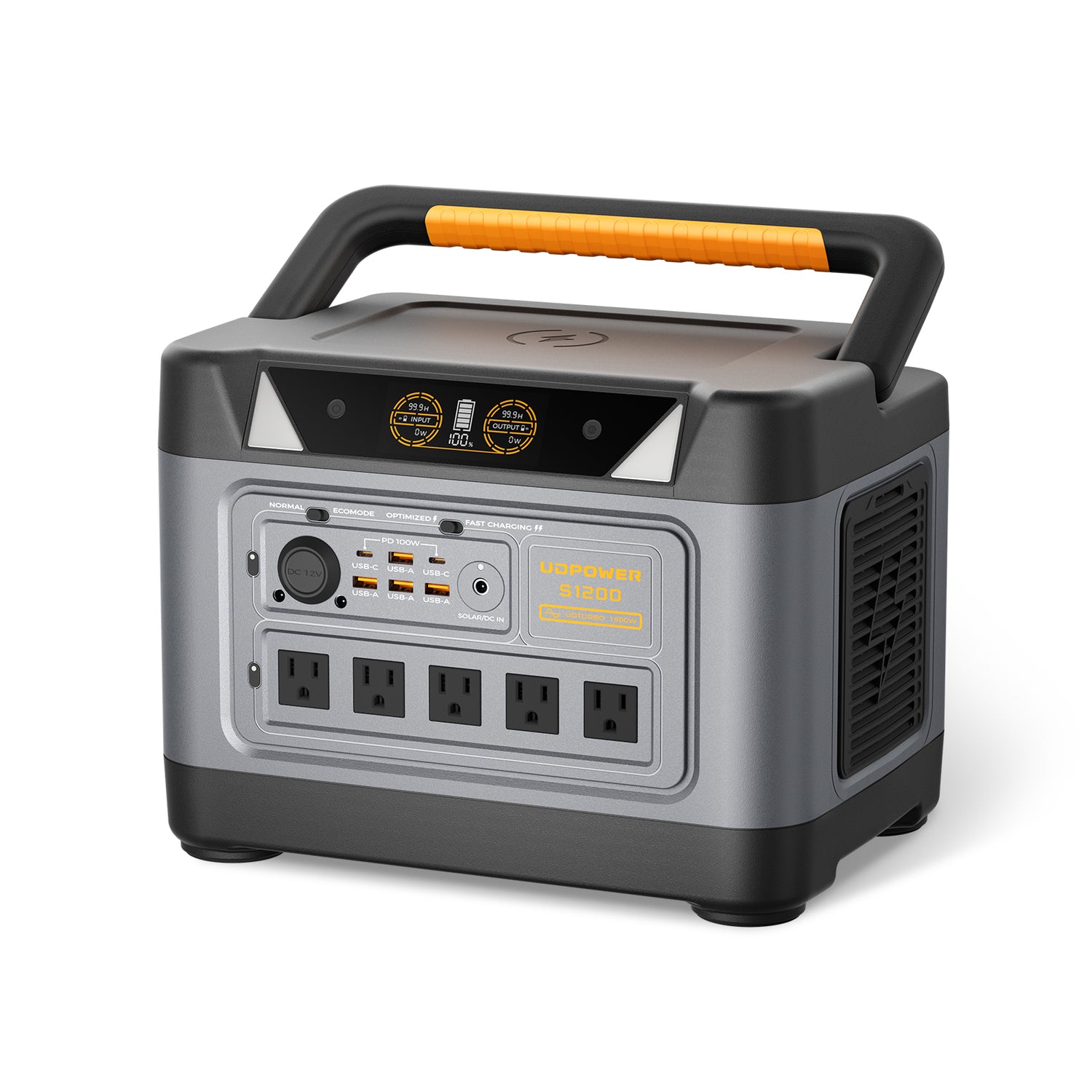
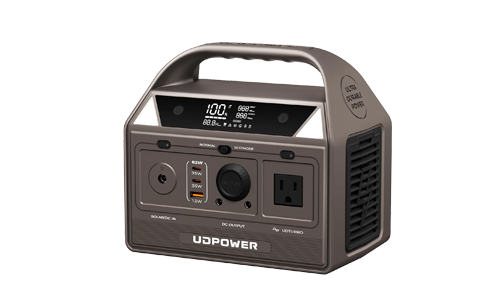
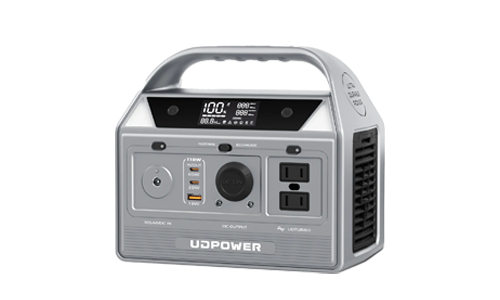
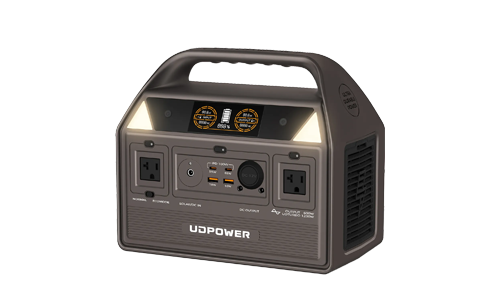
UDPOWER S1200 Portable Power Station
The S1200 is suited to essential indoor backup where a fuel generator cannot be safely operated. It can support communication equipment, lights, CPAP devices, electronics, and many refrigerators or small appliances after their wattage and startup requirements are checked.
| Battery capacity | 1191Wh |
|---|---|
| Rated AC output | 1200W pure sine wave |
| Startup support | UDTURBO up to 1800W |
| AC outlets | 5 |
| UPS response | 10ms or less |
| Solar input | 12V–75V, 12A, up to 400W |
| Battery chemistry | LiFePO₄ |
| Weight | Approximately 26.0 lb |
| Dimensions | 13.7 × 9.5 × 9.7 inches |
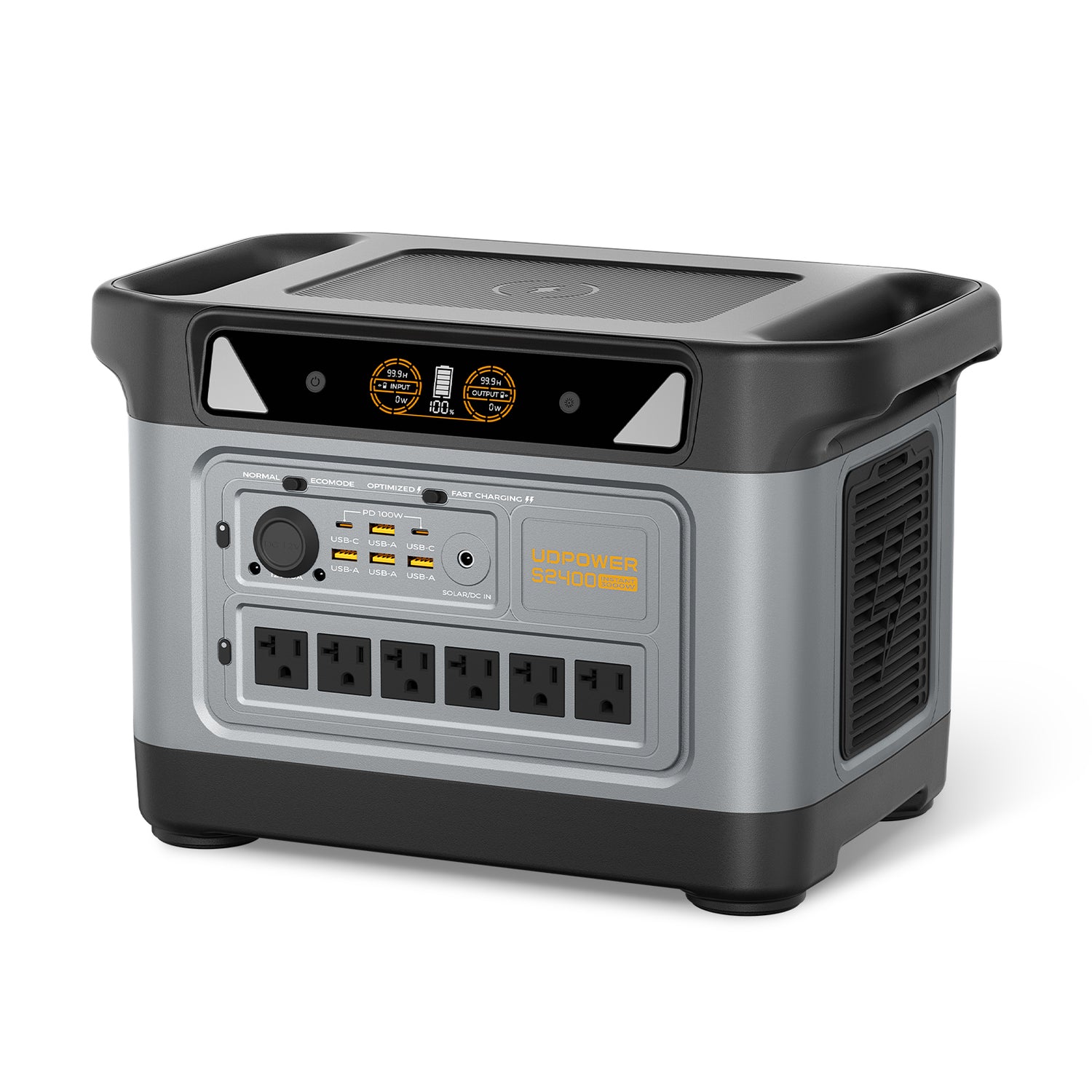
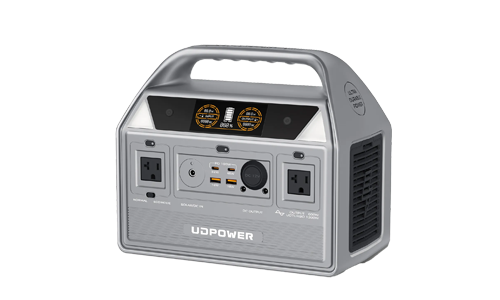
UDPOWER S2400 Portable Power Station
The S2400 offers more battery capacity and output for users who need to support a refrigerator, freezer, communications equipment, medical equipment, cooking appliances, or multiple essentials during an outage.
| Battery capacity | 2083Wh |
|---|---|
| Rated AC output | 2400W pure sine wave |
| Startup support | UDTURBO up to 3000W |
| AC outlets | 6 |
| UPS response | 10ms or less |
| Solar input | 12V–50V, 10A maximum, up to 400W |
| Battery chemistry | LiFePO₄ |
| Weight | Approximately 40.8 lb |
| Dimensions | 15.8 × 9.5 × 10.1 inches |
Which Size Is the Better Fit?
| Backup need | Suggested starting point | Why |
|---|---|---|
| Router, phones, lights, laptops, and CPAP | UDPOWER S1200 | 1191Wh capacity with 1200W rated output suits many essential-load plans. |
| Refrigerator plus communication and lighting | S1200 or S2400 after checking startup watts | The correct choice depends on refrigerator startup demand and desired runtime. |
| Refrigerator, freezer, CPAP, router, lighting, and occasional cooking | UDPOWER S2400 | 2083Wh capacity and 2400W rated output provide more runtime and load headroom. |
| Apartment or townhouse without a safe fuel-generator location | Battery power station sized to essential loads | No engine exhaust during operation, but normal battery safety rules still apply. |
| Whole-house central HVAC, electric range, dryer, or other large 240V systems | Professional whole-home backup assessment | These loads are generally beyond the intended scope of a portable 120V power station. |
To compare all available sizes, visit the UDPOWER portable power station collection. For panel-and-station packages, see UDPOWER solar generators.
For appliance planning, read What Can a 2400 Watt Generator Run? and Can a Portable Power Station Run Your Refrigerator?.
Where Should You Not Put a Battery Power Station?
A portable power station avoids the carbon monoxide problem of an engine generator, but its battery, inverter, charging electronics, and cooling system still require sensible placement.
| Avoid this location | What can go wrong | Better placement |
|---|---|---|
| Direct rain, puddles, wet floors, or floodwater | Moisture can damage electronics and create an electric-shock risk. | Keep the unit indoors or in a dry, protected area permitted by the manual. |
| Beside a heater, fireplace, stove, or in direct intense sun | Excessive temperature can trigger protection systems and shorten battery life. | Use a cool, dry, ventilated location within the specified temperature range. |
| Inside a closed cabinet while powering a heavy load | Heat may build up and cooling airflow may be restricted. | Leave clear space around the cooling vents. |
| On a bed, sofa, blanket, or deep carpet that blocks vents | Soft material can restrict airflow and make the unit unstable. | Use a firm, level surface. |
| Where children or pets can pull cords or press controls | The station can be tipped, disconnected, damaged, or operated unintentionally. | Choose a stable location with managed cords and controlled access. |
| Near gasoline, solvents, aerosols, or other flammable materials | Damaged electrical equipment or loose connections may create heat or sparks. | Maintain a clean area away from flammable storage. |
| Where the unit has been dropped, crushed, punctured, swollen, or exposed to water | A damaged lithium battery may be unsafe to charge or operate. | Stop using it, isolate it from combustible material, and contact support. |
Read the portable power station safety guide for more information about charging, ventilation, storage, and battery protection.
Portable Generator Placement Checklist
Complete this check before every use, even if the generator has operated in the same area before. Storm damage, wind, open windows, parked vehicles, and neighboring activity can change the risk.
- The generator is outdoors in a fully open area.
- It is more than 20 feet from the house and other occupied buildings.
- It is more than 20 feet from doors, windows, garages, vents, and air intakes.
- It is not on a porch, carport, breezeway, balcony, or inside a shed.
- The exhaust points away from homes, tents, RVs, people, and animals.
- The current wind does not carry exhaust toward an opening.
- The generator sits on a dry, level, stable surface.
- Rain protection does not block cooling airflow or exhaust.
- Leaves, mulch, fuel, cardboard, and other combustibles have been cleared away.
- Outdoor extension cords are grounded, undamaged, and rated for the load.
- Cords are not pinched, submerged, or placed where people or vehicles will damage them.
- No male-to-male cord or wall-outlet backfeeding connection is being used.
- Household circuit connections use professionally installed transfer equipment.
- Fuel is stored outside living areas in an approved container.
- The engine will be turned off and cooled before refueling.
- Working battery-powered or battery-backup CO alarms are installed inside the home.
- Everyone in the household knows the symptoms of CO exposure and when to call 911.
Frequently Asked Questions
Can I run a portable generator in a garage with the door open?
No. An open garage door does not provide reliable protection from carbon monoxide. Exhaust can accumulate in the garage and enter attached living areas. Move the generator fully outdoors and maintain the recommended clearance.
Can I put a generator just outside the garage?
Only when the location is more than 20 feet from the garage opening, house doors, windows, vents, and other occupied buildings, and the exhaust points away from all structures. A spot immediately outside an open garage is too close.
Is it safe to run a generator on a covered porch?
No. A porch roof and nearby walls can trap or redirect exhaust toward the home. CPSC guidance specifically warns against operating portable generators on porches and in carports.
Can a generator run in a shed if the doors and windows are open?
No. A shed remains an enclosed or partially enclosed structure. Open doors and windows do not guarantee enough ventilation to prevent dangerous carbon monoxide buildup.
How far should a portable generator be from the house?
Keep it outdoors more than 20 feet from windows, doors, vents, garages, and occupied buildings. Move it farther away when wind or nearby structures could direct exhaust toward an opening.
Should the generator exhaust point toward or away from the house?
Point the exhaust away from the house, neighboring buildings, RVs, tents, people, and animals. Recheck wind direction while it is running.
Can I put a generator under a tarp when it rains?
Do not wrap or tightly cover a running generator with a tarp. Use a manufacturer-approved ventilated running cover or a secure open canopy that keeps rain off without blocking cooling airflow or exhaust.
What should a portable generator sit on?
Use a dry, level, stable surface that supports the generator and is clear of standing water, dry leaves, mulch, tall grass, fuel containers, and other combustible material. Follow the manufacturer’s surface and clearance instructions.
Can I run a generator near an HVAC unit?
Do not place it near a fresh-air intake, open vent, window, or other route through which exhaust could enter the building. An outdoor air-conditioning condenser is not necessarily the intake, but the surrounding wall and roofline must still be inspected for vents and openings.
Is a portable generator safe on an apartment balcony?
No. Balconies are too close to windows, doors, vents, neighboring units, and occupied areas. Exhaust can enter your apartment or another residence. Use an appropriate battery power station or building-managed backup solution instead.
Can I plug a generator into a wall outlet?
No. This creates dangerous backfeeding. Plug suitable appliances directly into the generator with properly rated cords, or use a professionally installed transfer switch and generator inlet for household circuits.
Does a generator with a CO shutoff sensor work safely indoors?
No. A CO shutoff feature is an additional layer of protection, not permission to operate the generator inside a home, garage, shed, porch, carport, or other enclosed or partially enclosed area.
Can I leave a portable generator running overnight?
A fuel generator should not be operated unattended or in a location where changing wind, rain, flooding, theft, fuel exhaustion, or cord damage could go unnoticed. Follow the manufacturer’s instructions, maintain CO alarms, and consider a properly sized battery power station for quiet indoor overnight essentials.
Can a portable power station be used indoors?
A battery power station does not produce combustion exhaust and can generally be used indoors when operated according to its manual. Keep it dry, ventilated, stable, within its temperature limits, and away from blocked vents or damaged batteries.
What should I do if I cannot place a fuel generator 20 feet away?
Do not move it into a garage, porch, balcony, shed, or doorway. Reduce the backup load and use a battery power station, relocate to a suitable operating area, or consult a qualified generator installer about a code-compliant backup system.
Build a Safer Backup Power Plan
Start with the appliances that must remain powered, confirm their running and startup watts, and choose a power source that can be operated safely in your available space.
View the Product Comparison Shop Portable Power Stations Get the Indoor Backup GuideSafety basis: This article summarizes current public guidance from the CDC, U.S. Consumer Product Safety Commission, Ready.gov/FEMA, OSHA, and the American Red Cross. Always follow the instructions supplied with your exact generator and applicable local electrical and fire codes.
Related Articles


