Texas Tornado Emergency Guide: What to Do Before, During, and After a Warning
ZacharyWilliamTornadoes in Texas can move fast, arrive at night, knock out power, damage roofs, and make roads unsafe within minutes. This guide is built for ordinary Texas households: homeowners, renters, apartment residents, RV travelers, mobile-home residents, families with pets, and anyone who needs a clear action plan before the sirens or phone alerts start.
Quick answer: what should you do during a Texas tornado warning?
If a tornado warning is issued for your location, stop what you are doing and shelter immediately. Go to a basement, storm shelter, safe room, or a small interior room on the lowest floor of a sturdy building. Stay away from windows. Protect your head and neck with a helmet, pillow, heavy blanket, mattress, or your arms. Do not wait to see the tornado.
- Best shelter: FEMA-rated safe room, storm shelter, basement, or interior room with no windows.
- Worst places: mobile homes, vehicles, open fields, sheds, tents, and large open rooms like gyms or auditoriums.
- Power rule: protect people first. Backup power is useful after the warning passes, not while you are deciding where to shelter.
- After the tornado: watch for downed lines, gas leaks, broken glass, unstable structures, and carbon monoxide hazards from fuel-burning equipment.

Why Texas tornado prep needs a different plan
Texas is not one single weather zone. North Texas, Central Texas, East Texas, the Panhandle, the Hill Country, and the Gulf Coast can all face different storm setups. Tornadoes can happen in Texas at any time of year, but they are most common in spring and summer and often occur from late afternoon into early night. For the official hazard overview, see the Texas tornado hazard summary from the Southern Climate Impacts Planning Program.
The practical problem is not only the funnel cloud. A Texas tornado event can also bring hail, straight-line wind, flash flooding, tree damage, road closures, and extended power outages. That is why your plan should cover three things: shelter, communication, and essentials-first power.
| Texas situation | Why it matters | What to prepare |
|---|---|---|
| Night storms | You may be asleep when the alert arrives. | Enable Wireless Emergency Alerts, use a NOAA weather radio, and keep shoes, flashlight, and glasses near the bed. |
| Homes without basements | The safest available space may be an interior bathroom, closet, hallway, or safe room. | Pick the shelter room now. Do not decide during the warning. |
| Mobile homes and RVs | They are not safe shelters in a tornado warning. | Identify a sturdy nearby building or community shelter before storm day. |
| Power outages after storms | Food, medication, phones, Wi-Fi, CPAP machines, fans, and lights may become priority loads. | Use an essentials-first power plan and avoid indoor fuel-burning generators. |
| Rural properties | Help may take longer to arrive after debris blocks roads. | Store water, first aid, offline maps, battery radio, and a written contact list. |
Tornado watch vs warning vs tornado emergency
The fastest way to stay safe is to understand the alert language before the storm. The National Weather Service explains tornado alert levels at its official tornado alert page.
| Alert | Meaning | What you should do | Mistake to avoid |
|---|---|---|---|
| Tornado Watch | Conditions are favorable for tornadoes in or near the watch area. | Charge devices, check radar, bring pets inside, move shoes and helmets near shelter, and avoid unnecessary travel. | Ignoring it because there is no tornado yet. |
| Tornado Warning | A tornado has been spotted or indicated by radar. Danger is imminent. | Shelter immediately in the lowest, most interior room available. Stay away from windows. | Walking outside to look, driving to another place too late, or waiting for a siren. |
| Tornado Emergency | A confirmed, dangerous tornado is causing or expected to cause severe damage. | Take the most protective shelter you have. Cover your head and neck. Stay sheltered until the warning expires or officials give the all-clear. | Trying to outrun it or leaving shelter too early. |
What to do before severe weather arrives
A tornado plan should be simple enough to follow under stress. Use this order: shelter first, people second, supplies third, power fourth. Do not start with gear. Start with where everyone will go.
1. Pick one shelter room and label it mentally
Choose the lowest-floor interior room with the most walls between you and the outside. Good choices include an interior bathroom, closet, hallway, or under-stair space. Avoid windows, exterior walls, garages, and large open rooms.
2. Build a “shelter bin” instead of a random emergency kit
Keep tornado-specific items close to the shelter space. Texas Ready recommends supplies such as first aid, medications, emergency radio, flashlights, document copies, pet supplies, and a carbon monoxide detector if fuel-burning devices are used. You can compare your kit with the Texas Ready disaster supply checklist.
| Item | Why it belongs near your shelter | Texas-specific note |
|---|---|---|
| Bike or sports helmets | Head injuries are a major tornado risk from debris. | One per person if possible, especially for children. |
| Closed-toe shoes | Broken glass, nails, insulation, and shingles may be on the floor after impact. | Keep shoes near beds during overnight severe weather. |
| Flashlights and headlamps | Power may go out before or after the warning. | A headlamp keeps both hands free when checking damage. |
| NOAA weather radio | Works when cell networks are overloaded or power is out. | Choose a model with battery backup or hand-crank charging. |
| Water | Water service can be interrupted by power loss or infrastructure damage. | Ready.gov recommends one gallon per person per day for several days. |
| Prescription medication list | Helps if you must leave home quickly or refill after damage. | Keep a paper copy in a waterproof bag. |
| Pet leash or carrier | Pets may hide or run during sirens, thunder, and debris noise. | Bring pets into the shelter area early during a watch. |
| Portable power station | Keeps phones, lights, Wi-Fi, medical comfort devices, and fridge windows powered after the warning passes. | Store charged, ventilated, and away from standing water. |
3. Close the “last 10 minutes” gap
Many households prepare supplies but lose time doing last-second tasks. When a tornado watch is issued, move quickly through these steps:
- Charge phones, power banks, and your portable power station.
- Bring pets indoors and keep carriers nearby.
- Put shoes, helmets, flashlights, and a blanket in the shelter room.
- Move patio items, trash cans, and loose outdoor objects if storms are not yet close.
- Park vehicles away from weak trees if you can do so safely.
- Do not delay sheltering to protect property once a warning is issued.
Where to shelter during a tornado warning
The National Weather Service says that during a tornado warning you should move to a basement, safe room, or interior room away from windows. If you are outside, in a vehicle, tent, shed, or mobile home, get to a sturdy building if there is time. See the official NWS tornado shelter guidance.
| Where you are | Best action | Do not do this |
|---|---|---|
| House with a basement | Go to the basement, under a sturdy table or stair area if possible. Cover your head and neck. | Do not stand near basement windows or glass doors. |
| House without a basement | Use a small interior room on the lowest floor, such as a bathroom, closet, or hallway. | Do not shelter in a garage, sunroom, or room with large windows. |
| Apartment | Go to the lowest level you can reach quickly. Use an interior hallway, stairwell landing, or designated shelter area. | Do not use elevators during severe weather or power instability. |
| Mobile home or RV | Leave early during a watch if storms are approaching. Go to a sturdy building or community shelter. | Do not remain inside a mobile home or RV during a tornado warning. |
| School or workplace | Follow the tornado drill route. Move quickly and calmly to the shelter area. | Do not shelter in gyms, cafeterias, auditoriums, or rooms with wide-span roofs. |
| Vehicle | If time allows, drive to the nearest sturdy building and get inside. | Do not park under an overpass. Do not try to outrun a tornado through traffic. |
| Outdoors | Get inside a sturdy building immediately. If no shelter exists, protect your head and neck from debris as a last resort. | Do not hide in a shed, tent, or under trees. |
Safe room note for Texas homeowners
A safe room is a hardened structure designed to provide protection during extreme wind events, including tornadoes and hurricanes. The Texas Division of Emergency Management describes safe rooms as structures built to FEMA criteria. Learn more from the TDEM Safe Room Program.
Power outage planning after a Texas tornado
Backup power should not distract from sheltering. During the warning, your job is to stay alive. After the warning passes and the area is safe, backup power can help with communication, lighting, food safety, medical comfort devices, fans, and Wi-Fi.
Gas generator vs portable power station after a tornado
Fuel-burning generators can be useful, but they create carbon monoxide. The CDC warns that carbon monoxide cannot be seen or smelled and can cause sudden illness or death. Never run a generator, grill, camp stove, or pressure washer inside a home, garage, carport, camper, or near open windows. Read the CDC tornado recovery safety guidance.
| Backup option | Best use after a tornado | Main safety concern | Practical recommendation |
|---|---|---|---|
| Portable power station | Phones, lights, router, laptop, CPAP, fans, mini fridge, timed refrigerator support. | Keep dry, ventilated, and within rated output. | Best indoor-friendly option for essential electronics and quiet overnight backup. |
| Gas generator | Higher-power appliances and longer outages if fuel is available. | Carbon monoxide, fuel storage, noise, extension cord safety. | Only operate outdoors, far from openings, with exhaust pointed away. |
| Car charging | Phone top-ups and short emergency charging. | Fuel use, garage CO risk, limited output. | Never idle a vehicle in a garage. Use only in a safe outdoor location. |
For a deeper outage plan, see UDPOWER’s related guide: Portable Power Station vs Generator for Power Outages.
Recommended UDPOWER backup power options for Texas tornado outages
The right model depends on what you must keep running after the storm. For tornado prep, buy for essentials first: phone, lights, Wi-Fi, CPAP, fan, fridge windows, and small electronics. Do not size a power station as if it will run the whole home.
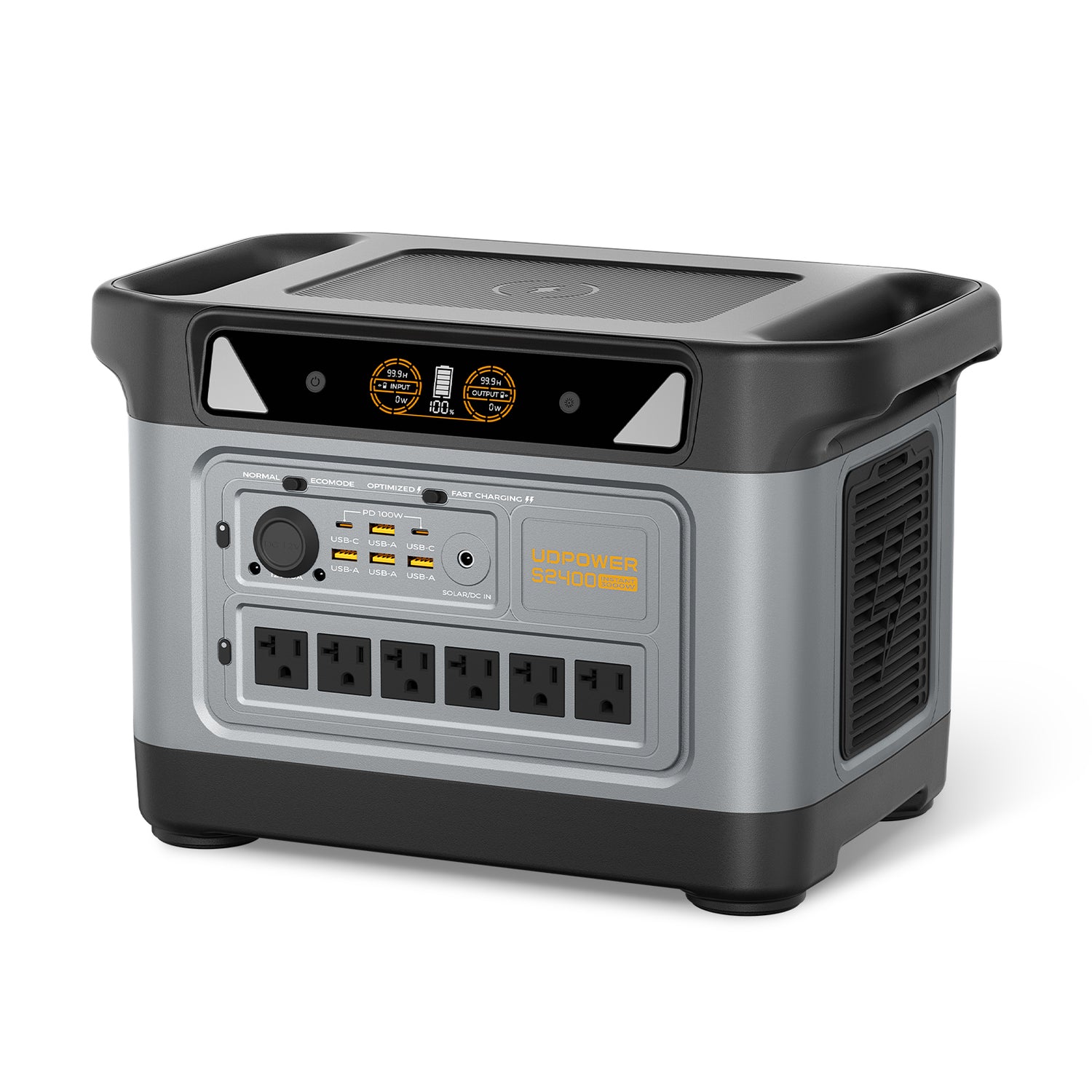
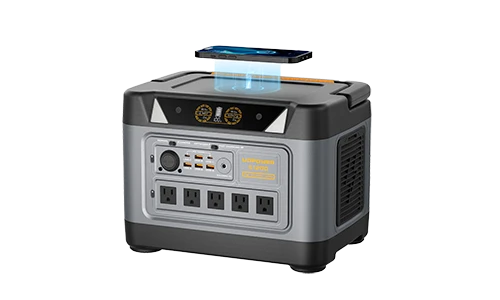
UDPOWER S2400 Portable Power Station
Best for Texas households that want stronger backup for a refrigerator, Wi-Fi, phones, lights, fans, and multiple small devices after a tornado-related outage.
- Capacity: 2,083Wh
- AC output: 2,400W pure sine wave
- Surge support: up to 3,000W
- Ports: 6 AC outlets + 10 DC outputs
- Battery: LiFePO4, 4,000+ cycle class
- UPS-style switchover: ≤10ms
- Solar input: up to 400W
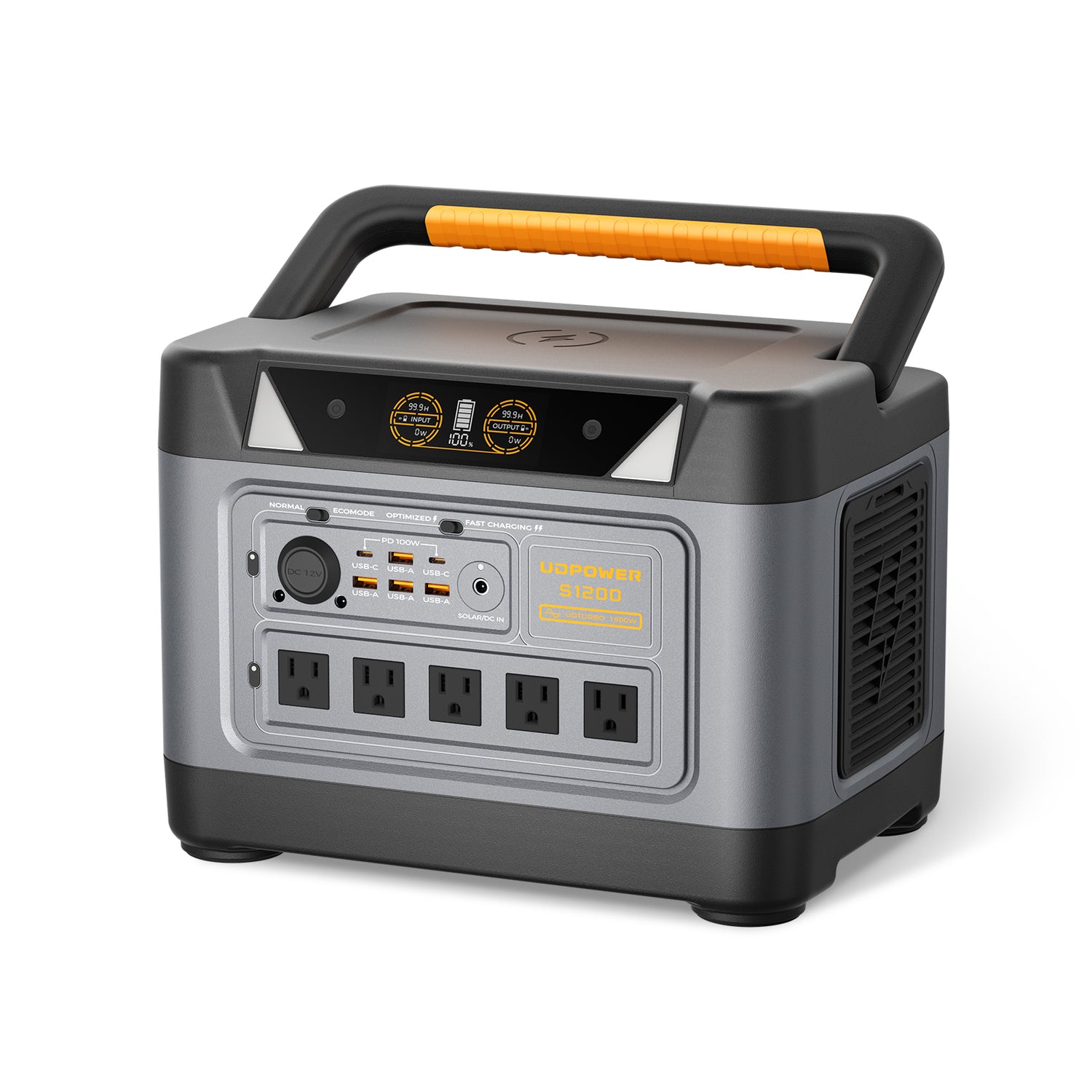
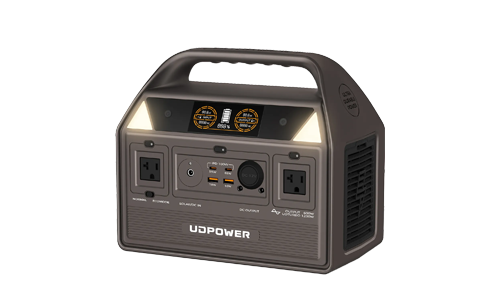
UDPOWER S1200 Portable Power Station
Best for homeowners and apartment residents who want a strong but easier-to-move option for phones, router, lights, CPAP, fan, laptop, and shorter refrigerator support.
- Capacity: 1,190Wh
- AC output: 1,200W pure sine wave
- Surge support: up to 1,800W
- Weight: about 26.0 lb
- Ports: 5 AC outlets + 10 DC outputs on the 5-AC version
- UPSPrime: <10ms switchover
- Noise: <25dB listed on product page

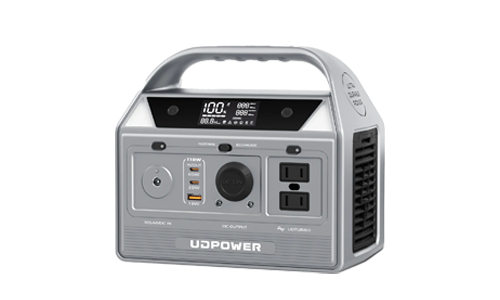
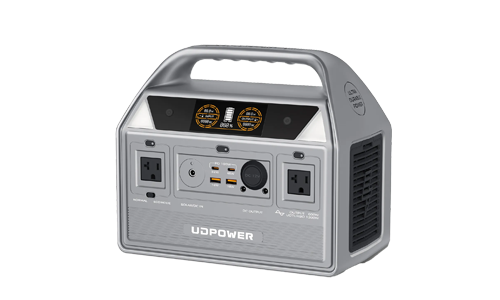
UDPOWER C600 Portable Power Station
Best for a tornado go-kit, apartment emergency shelf, short Wi-Fi support, phones, lights, camera batteries, laptop charging, and compact comfort loads.
- Capacity: 596Wh
- AC output: 600W
- Peak output: 1,200W
- Battery: LiFePO4
- Long-life rating: 4,000+ cycles
- Ports include 2 AC outlets, USB-C, USB-A, and 12V car outlet

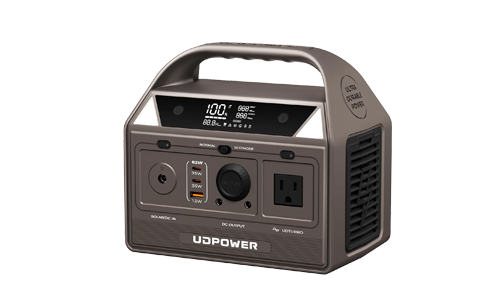
UDPOWER C400 Portable Power Station
Best for people who want a light, simple backup for phones, LED lights, laptop charging, small fans, and emergency communication gear.
- Capacity: 256Wh
- AC output: 400W
- Fast charging: 1.5 hours listed on product page
- Long-life rating: 4,000+ cycles
- Solar charging input: 150W max
- Car charging input: 120W max
- Dual LED panels with brightness and SOS modes
See the full collection here: UDPOWER portable power stations.
Runtime estimates for common tornado outage loads
Use this simple planning formula for rough estimates:
The 0.85 factor allows room for inverter loss, device variation, and a small reserve. Real results vary by temperature, appliance cycling, battery condition, and whether the device is connected by AC or DC.
| Emergency load | Typical watts | S2400 2,083Wh | S1200 1,190Wh | C600 596Wh | C400 256Wh |
|---|---|---|---|---|---|
| Phones + small LED light | 20W | About 88 hours | About 50 hours | About 25 hours | About 10 hours |
| LED lights + phone charging | 30W | About 59 hours | About 33 hours | About 16 hours | About 7 hours |
| CPAP without heated humidifier | 40W | About 44 hours | About 25 hours | About 12 hours | About 5 hours |
| Wi-Fi router + phones + lamp | 60W | About 29 hours | About 16 hours | About 8 hours | About 3.5 hours |
| Mini fridge average load | 60W | About 29 hours | About 16 hours | About 8 hours | About 3.5 hours |
| Standard refrigerator average load | 80W | About 22 hours | About 12 hours | About 6 hours | About 2.5 hours |
| Refrigerator under heavier cycling | 120W | About 14 hours | About 8 hours | About 4 hours | About 1.8 hours |
Important: refrigerator startup surge varies by model. Always check your appliance label or use a watt meter if possible. For more runtime planning, read Battery Runtime Basics: Watts to Watt-hours and Portable Power Station Runtime Planning for Outages.
Food safety during a tornado outage
Keep refrigerator and freezer doors closed. FoodSafety.gov says a refrigerator can keep food safe for up to 4 hours during a power outage if the door stays closed, while a full freezer can hold a safe temperature for about 48 hours and a half-full freezer for about 24 hours. Check the official FoodSafety.gov power outage chart.
Related UDPOWER guide: Food Safety During a Power Outage: Fridge & Freezer Guide.
What to do after the tornado passes
Do not leave shelter just because the wind sounds quieter. Wait until the warning expires or local officials say it is safe. Tornado-producing storms can have multiple circulations, and dangerous lightning, hail, or straight-line wind may continue after the first damage.
| Priority | Action | Why it matters |
|---|---|---|
| People | Check injuries, call 911 for life-threatening emergencies, and apply basic first aid if trained. | Medical response may be delayed if roads are blocked. |
| Power lines | Stay far away from downed wires and anything touching them. Report them to 911 or your utility. | Lines can remain energized even when the neighborhood looks dark. |
| Gas smell | Leave immediately if you smell gas or hear hissing. Do not use switches, flames, or phones inside the structure. | Damaged gas lines can ignite. |
| Structure | Do not enter heavily damaged buildings until officials or qualified professionals say it is safe. | Walls, roofs, ceilings, and stairs may fail after impact. |
| Carbon monoxide | Keep fuel-burning equipment outside and away from windows, doors, vents, garages, and carports. | CO is invisible, odorless, and potentially deadly. |
| Food and medication | Use thermometers, coolers, ice, and backup power to protect perishables and temperature-sensitive medication. | Do not taste food to decide whether it is safe. |
| Insurance | Photograph damage before cleanup if it is safe. Keep receipts for temporary repairs, hotel stays, and supplies. | Documentation can help with claims. |
If you are in an Oncor service area, Oncor provides outage reporting, downed power line safety, and alert instructions on its Power Outage Safety Checklist. If you use a different utility, save that utility’s outage page and phone number before storm season.
Printable Texas tornado checklist
When a tornado watch is issued
- Charge phones, radio, power banks, and portable power station.
- Move pets, shoes, helmets, flashlight, and medication near the shelter room.
- Review where everyone will shelter.
- Fill water bottles and check nonperishable food.
- Bring loose outdoor items inside if storms are not yet close.
- Park vehicles away from weak trees if it is safe to move them.
- Keep local weather audio on, especially at night.
When a tornado warning is issued
- Go to shelter immediately.
- Stay on the lowest floor in the most interior space available.
- Stay away from windows and exterior doors.
- Cover head and neck with helmet, pillow, mattress, blanket, or arms.
- Keep pets leashed or crated if possible.
- Do not go outside to look for the tornado.
- Do not drive unless you are already in a vehicle and can reach sturdy shelter quickly.
After the warning
- Wait for the warning to expire or for official all-clear information.
- Check injuries first.
- Avoid damaged buildings, broken glass, sharp debris, and downed lines.
- Do not use matches or switches if you smell gas.
- Use flashlights instead of candles.
- Run fuel-burning generators outdoors only.
- Start your essentials-first power plan: phone, light, medical comfort device, router, fan, and food safety.
Related UDPOWER reading for outage planning
If you are building a complete tornado and power-outage plan, these guides fit naturally with this Texas tornado checklist:
Texas tornado emergency FAQ
What is the safest place during a Texas tornado warning?
The safest place is a storm shelter, FEMA-rated safe room, basement, or a small interior room on the lowest floor of a sturdy building. Stay away from windows and cover your head and neck.
Should I leave a mobile home during a tornado warning?
Yes, but the key is to leave before the warning if storms are approaching. Mobile homes and RVs are not safe tornado shelters. Know your nearest sturdy shelter before severe weather arrives.
Is a bathtub a good tornado shelter?
An interior bathroom can be a good option if it is on the lowest floor and away from windows. Getting into the tub and covering yourself with a mattress, thick blanket, or pillows may add protection from debris.
Are Texas tornado sirens enough?
No. Outdoor sirens may not wake you indoors, and not every area has sirens. Use several alert methods, including Wireless Emergency Alerts, a NOAA weather radio, local weather apps, and county emergency notifications.
Can I shelter in my garage?
No. Garages usually have large doors and exterior walls, making them poor tornado shelters. Choose a small interior room on the lowest floor instead.
What should I keep in my tornado shelter area?
Keep helmets, shoes, flashlight, weather radio, first aid, medications, water, pet leash or carrier, document copies, and phone charging options nearby.
Can a portable power station run a refrigerator after a tornado?
Yes, if the refrigerator’s running watts and startup surge are within the power station’s rating. A larger unit such as the UDPOWER S2400 is a better fit for refrigerator support than a small go-kit unit.
Can I use a gas generator indoors if the garage door is open?
No. Never use fuel-burning generators inside a home, garage, carport, camper, or near open windows. Carbon monoxide can build up quickly and can be deadly.
How long is food safe in the fridge after a tornado outage?
If the refrigerator door stays closed, refrigerated food is generally safe for up to 4 hours. A full freezer can hold a safe temperature for about 48 hours, and a half-full freezer for about 24 hours.
Is UDPOWER a replacement for a whole-home generator?
No. A portable power station is best for essential loads such as phones, lights, Wi-Fi, CPAP, fans, laptops, and limited refrigerator support. It is not a whole-home generator replacement.
Sources used for safety guidance
- National Weather Service: Tornado Watch, Warning, and Emergency
- National Weather Service: What to Do During a Tornado
- Ready.gov: Tornadoes
- CDC: Stay Safe After a Tornado
- Texas Division of Emergency Management: Safe Room Program
- Texas Ready: Disaster Supply Checklist
- FoodSafety.gov: Food Safety During Power Outage
Build your Texas tornado outage plan before the next warning
Pick your shelter room, prepare your emergency bin, and size backup power around the essentials you cannot afford to lose: communication, lights, medical comfort devices, Wi-Fi, fans, and food safety.
View UDPOWER portable power stations Get the runtime planning guide