

Deep Cycle Batteries Explained: Types, Size, Life & Uses
Last updated: September 4, 2026
Quick Answer: A deep cycle battery is a rechargeable battery designed to supply energy steadily over an extended period and withstand repeated discharge-and-recharge cycles. Unlike a car starting battery, which is optimized for a short burst of high current, a deep cycle battery is built to repeatedly power loads such as RV appliances, trolling motors, lights, refrigerators, electronics, solar systems, and backup equipment.
The main deep cycle battery choices are flooded lead-acid, AGM, gel, and lithium iron phosphate (LiFePO4 or LFP). Lead-acid batteries can still make sense when upfront cost is the priority. LiFePO4 is generally better suited to frequent cycling when lower weight, more usable energy, low maintenance, and long cycle life matter.
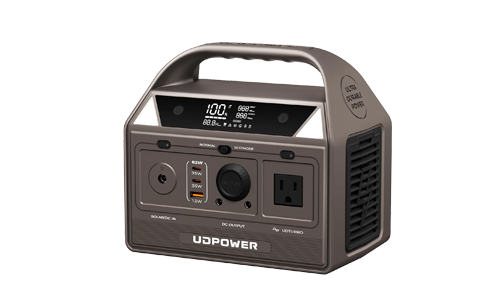
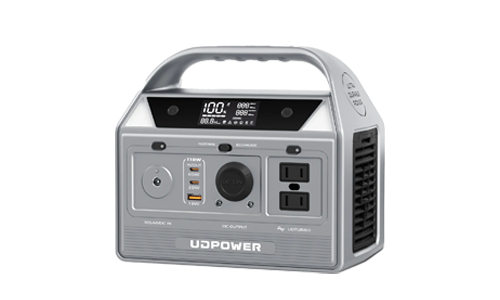
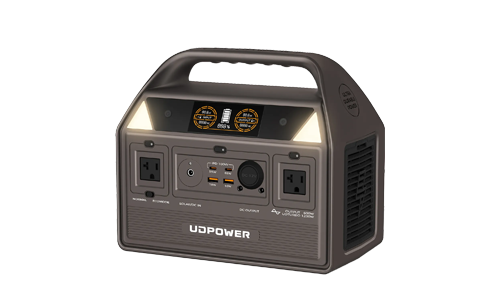
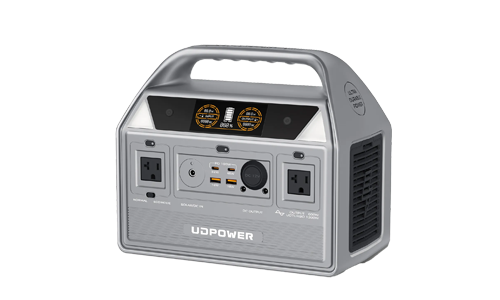
For most consumers who want backup power rather than a DIY electrical system, a LiFePO4 portable power station can be simpler than buying a bare deep cycle battery because the battery, BMS, inverter, charger, AC outlets, USB ports, DC outputs, and display are already integrated.

What Is a Deep Cycle Battery?
A deep cycle battery is designed for energy over time. It can repeatedly supply a meaningful portion of its stored energy and then be recharged for the next cycle.
That is different from a conventional car starting battery. A starting battery is designed to deliver very high current for a few seconds to crank an engine. Once the engine starts, the alternator begins replenishing the small amount of energy that was used.
A deep cycle battery may instead spend hours running equipment before it is recharged.
| Application | What the Battery Does | What Matters Most |
|---|---|---|
| RV or camper | Runs lights, fans, refrigerator, water pump, electronics and other house loads | Usable Wh, weight, charging method, inverter output |
| Boat | Powers trolling motors, electronics, pumps and onboard accessories | Voltage, Ah capacity, marine suitability, charger compatibility |
| Solar storage | Stores daytime solar energy for later use | Cycle life, DoD, charge controller, voltage compatibility |
| Home backup | Keeps selected essentials operating during an outage | Wh capacity, inverter watts, surge capability, recharge speed |
| Camping | Runs lights, phones, laptops, fans, CPAP and refrigeration | Portability, Wh, available outputs and solar charging |
| Golf cart or mobility equipment | Provides sustained propulsion energy | Voltage, capacity, discharge current and battery compatibility |
Interstate Batteries describes deep cycle batteries as batteries designed to provide electricity for extended periods and tolerate repeated cycling. For marine applications, Discover Boating makes the same basic distinction between batteries intended to start engines and batteries intended to power onboard equipment over time. See Interstate Batteries' deep cycle guide and Discover Boating's battery guide.
“Deep cycle” does not mean “drain it to zero every time.” It describes the battery's intended duty cycle. How deeply you should discharge a specific battery depends on its chemistry, manufacturer specifications, desired lifespan, temperature, and operating conditions.
Deep Cycle Battery vs. Starting Battery vs. Dual-Purpose Battery
These batteries can look similar from the outside, especially in marine and RV sizes. Their intended jobs are different.
| Feature | Starting Battery | Deep Cycle Battery | Dual-Purpose Battery |
|---|---|---|---|
| Main job | Start an engine | Supply energy over time | Handle some starting and cycling duties |
| Typical discharge pattern | Short, shallow discharge | Repeated longer discharge | Compromise between both |
| Important rating | CCA or MCA | Ah, Wh, usable capacity and cycle life | CCA/MCA plus cycling capability |
| Best example | Starting a car or boat engine | RV house loads, trolling motor, solar storage | Smaller boats where space limits separate battery banks |
| Good choice for repeated appliance use? | No | Yes | Depends on the specific battery and duty cycle |
| Source | Discover Boating: Boat Battery Basics | ||
Can a Car Battery Be Used as a Deep Cycle Battery?
A normal starting battery may power lights or electronics temporarily, but repeatedly drawing it down deeply is not what it was designed to do. Frequent deep discharge can shorten its useful life.
If you need power for appliances, camping equipment, a trolling motor, an RV house system, or solar storage, use a battery designed for that duty.
What About a Marine Battery?
The word marine by itself does not tell you whether a battery is a starting battery, a dedicated deep cycle battery, or a dual-purpose design. Check the actual battery type and specifications.
Better buying habit: Ignore the picture of the boat or RV on the label for a moment. Look for the actual battery designation, voltage, Ah rating, cycle information, charging instructions and intended use.
Types of Deep Cycle Batteries
Deep cycling is a use pattern, not one single battery chemistry. Several battery technologies can be designed for deep-cycle applications.
| Battery Type | Main Advantages | Main Trade-Offs | Good Fit | Reference |
|---|---|---|---|---|
| Flooded lead-acid | Low upfront cost, widely available, mature technology | Heavy, requires maintenance and ventilation, electrolyte must be monitored on serviceable designs | Budget-focused stationary, RV or marine systems where maintenance is acceptable | Renogy |
| AGM | Sealed design, lower maintenance, resistant to vibration, versatile | Still relatively heavy and generally offers less usable energy per pound than LFP | RV and marine users who want sealed lead-acid | Interstate Batteries |
| Gel | Sealed, spill-resistant, useful in appropriate deep-cycle applications | Charging profile matters; incorrect charging can shorten battery life | Systems specifically designed around gel batteries | Renogy |
| LiFePO4 / LFP | Long cycle life, high usable capacity, low maintenance, relatively low weight | Higher upfront cost and requires a suitable BMS and charger | Frequent RV, solar, camping and portable backup use | UDPOWER LFP Battery Guide |
Flooded Lead-Acid
Traditional flooded batteries use liquid electrolyte around lead plates. They remain attractive when purchase price is the main concern, but ownership includes more maintenance than sealed or lithium alternatives.
Flooded lead-acid batteries need to be installed and maintained according to the manufacturer's ventilation, orientation and electrolyte instructions.
AGM
AGM stands for Absorbent Glass Mat. The electrolyte is held in fiberglass matting rather than moving freely around the case. AGM batteries are sealed and need less routine maintenance than traditional flooded batteries.
They remain lead-acid batteries, however. Do not assume AGM automatically has the usable energy, cycle life or weight advantages of LiFePO4.
Gel
Gel batteries immobilize the electrolyte in a gelled form. They can work well when the charger and system are designed around their requirements, but charging voltage and profile matter.
If an existing RV, boat or solar setup was built for another lead-acid chemistry, confirm charger compatibility before simply replacing the battery with gel.
LiFePO4
Lithium iron phosphate, abbreviated LiFePO4 or LFP, is now widely used in portable power stations and deep-cycle systems because it is well suited to repeated charging and discharging.
For consumers, one of its biggest practical advantages is not just chemistry. Modern LFP products frequently combine the cells with a battery management system that monitors voltage, temperature and current and can protect the battery against unsafe operating conditions.
For a deeper chemistry comparison, read Pros and Cons of LiFePO4 Batteries.
Ah, Wh, DoD, Cycles, C-Rate and BMS Explained
You can avoid many battery-buying mistakes by understanding six terms.
| Term | Plain-English Meaning | Why It Matters | Example |
|---|---|---|---|
| Voltage (V) | The electrical potential of the battery system | You need voltage to turn Ah into real energy | A 12V 100Ah battery stores less energy than a 24V 100Ah battery |
| Amp-hours (Ah) | A measure of electrical charge capacity | Useful for DC systems but incomplete without voltage | 100Ah at 12V is roughly 1,200Wh nominal |
| Watt-hours (Wh) | A measure of stored energy | Better for comparing battery capacity across voltages | 1,200Wh is 1.2kWh |
| Depth of Discharge (DoD) | The percentage of capacity removed before recharge | Depth of cycling affects usable energy and battery life | Using 800Wh from a 1,000Wh battery is 80% DoD |
| Cycle life | Number of charge/discharge cycles before reaching a stated remaining capacity | Helps compare longevity when test conditions are stated | “4,000+ cycles” is more useful when you also understand the test criteria |
| C-rate | Charge or discharge rate relative to battery capacity | Higher current can increase stress and heat | A 100Ah battery discharged at 100A is approximately a 1C discharge |
| BMS | Battery management system | Monitors and protects lithium battery operation | May stop charging or discharging when operating limits are exceeded |
Nominal watt-hours = Battery voltage × Amp-hours
For more battery-capacity math, see mAh to Wh Conversion: Formula, Chart and Examples.
What Does a 100Ah Deep Cycle Battery Really Mean?
“100Ah” is one of the most common battery labels—and one of the easiest to misunderstand.
Amp-hours alone do not tell you how much energy a battery stores. You need the battery voltage too.
| Battery Rating | Calculation | Nominal Energy | What Changes? |
|---|---|---|---|
| 12V 100Ah | 12 × 100 | 1,200Wh | Common simple planning value for a 12V system |
| 12.8V 100Ah | 12.8 × 100 | 1,280Wh | Common nominal voltage for some 12V-class LiFePO4 packs |
| 24V 100Ah | 24 × 100 | 2,400Wh | Twice the energy of 12V 100Ah |
| 48V 100Ah | 48 × 100 | 4,800Wh | Four times the energy of 12V 100Ah |
This is why “Which is bigger, 100Ah or 80Ah?” is incomplete. An 80Ah battery at a much higher voltage can store more total energy than a 100Ah battery at a lower voltage.
How Long Will a 100Ah Battery Run an Appliance?
You first convert the battery to Wh, then account for how much of that capacity the battery manufacturer allows you to use and any conversion losses.
For example, assume a 12.8V 100Ah LFP battery:
12.8V × 100Ah = 1,280Wh nominal energy
If that specific battery allows 80% of its capacity to be used for your planned cycle, that gives:
1,280Wh × 0.80 = 1,024Wh before inverter losses.
If you run AC equipment through an inverter, usable energy at the outlet will be lower.
This is an illustration, not a universal recommendation to stop every LFP battery at 80% DoD. Follow the specifications of the battery you own.
Nominal Capacity Is Not the Same as Usable Capacity
This distinction is one of the most important parts of comparing deep cycle batteries.
A battery can be advertised as 1,200Wh while the amount you plan to use per cycle is lower. That can happen because of your chosen depth of discharge, BMS reserve, inverter losses, temperature, battery age or discharge rate.
Planning usable energy = Nominal Wh × planned usable fraction
For an AC appliance, another useful planning step is:
Estimated AC energy = Battery Wh × usable fraction × conversion efficiency
The “50% Rule” Is Not a Universal Battery Rule
You will often see advice saying you should use only 50% of a deep cycle battery. That advice comes largely from traditional lead-acid battery planning and should not automatically be copied onto every battery chemistry.
Lead-acid batteries generally benefit from shallower cycling when long service life is important. Modern LiFePO4 batteries are designed around different cycling characteristics and commonly allow a larger portion of their rated capacity to be used.
Interstate's current marine comparison, for example, lists substantially greater usable capacity for its LiFePO4 products than its flooded and AGM alternatives. The exact numbers remain product-specific. See Interstate's current deep-cycle marine comparison.
Do not apply one DoD percentage to every battery. Use the manufacturer's recommended operating range, especially when calculating runtime or estimating cycle life.
Why a Lead-Acid Battery May Deliver Less Than the Simple Ah Math Suggests
Lead-acid battery capacity is affected by how quickly you remove energy from it. A battery discharged gently can provide more usable capacity than the same battery subjected to a very heavy load.
This behavior is commonly associated with the Peukert effect. You do not need the full equation to make a good buying decision. The practical lesson is simpler:
If you plan to run a large inverter load from a relatively small lead-acid battery bank, do not assume the full nameplate Ah capacity will be available at that high discharge rate.
LiFePO4 batteries generally maintain voltage more consistently under load, but they still have defined maximum discharge-current and BMS limits. Every chemistry has operating limits.
How to Size a Deep Cycle Battery Without Guessing
Start with the devices, not the battery.
Step 1: List Everything You Need to Run
Write down each device, its watts and how many hours per day you expect to use it.
Step 2: Calculate Watt-Hours
Energy needed in Wh = Device watts × Hours of use
Step 3: Add the Loads Together
| Device | Example Watts | Daily Use | Daily Energy |
|---|---|---|---|
| Wi-Fi router | 10W | 10 hours | 100Wh |
| LED lighting | 20W | 5 hours | 100Wh |
| Laptop | 65W | 3 hours | 195Wh |
| Fan | 50W | 8 hours | 400Wh |
| Other charging | Varies | Daily | 100Wh |
| Total | — | — | 895Wh/day |
Step 4: Account for Conversion Loss
When using UDPOWER portable power stations for AC loads, this guide uses a 90% planning conversion efficiency.
Required battery capacity ≈ AC energy needed ÷ 0.90
For the 895Wh example:
895Wh ÷ 0.90 ≈ 994Wh.
A battery around 1,000Wh would therefore be the minimum mathematical starting point for one day of this example load. In real planning, additional reserve is useful for changing loads, colder weather, battery aging and unplanned use.
Step 5: Check Watts, Not Just Watt-Hours
A 2,000Wh battery does not automatically run a 2,000W appliance.
Battery capacity tells you how much energy is stored. Inverter output tells you how large an AC load can be operated.
| Specification | Question It Answers | Example |
|---|---|---|
| 1,190Wh | How much energy is stored? | Useful for estimating runtime |
| 1,200W output | How large a normal AC load can it support? | Determines appliance compatibility |
| 1,800W higher-power capability | What higher-power compatible loads can the system support? | Relevant to selected high-watt appliances |
You can also enter your own appliance watts into the UDPOWER Portable Power Station Runtime Calculator.
Choosing a Deep Cycle Battery for RV, Marine, Solar and Backup Use
The best battery depends more on the application than on which chemistry has the longest specification sheet.
| Use Case | Prioritize | Watch For | Useful Starting Point |
|---|---|---|---|
| RV house battery | Usable Wh, weight, DC compatibility, charging sources, cycle life | Converter/charger compatibility when changing chemistry | RV & Camping Power Options |
| Trolling motor | Correct voltage, Ah, continuous current and marine installation requirements | Do not use the trolling battery as your only engine-starting battery unless the system is specifically designed for it | Discover Boating |
| Solar storage | Cycle life, DoD, charge controller, battery voltage and solar input | Panel voltage and charger compatibility | UDPOWER Solar Generators |
| Home outage backup | Wh capacity, AC output, surge capability, recharge speed and UPS needs | Trying to power every household circuit instead of prioritizing essentials | Home Backup Power Stations |
| Camping | Weight, Wh capacity, USB/DC ports, quiet operation and solar charging | Carrying far more battery than the trip actually needs | Camping Power Stations |
For an RV
Decide whether you are replacing the RV's installed house battery or simply adding independent portable power.
Replacing an installed lead-acid battery with LiFePO4 may require checking the RV converter, solar controller, alternator charging arrangement and low-temperature charging behavior.
A portable power station avoids much of that integration work because the battery, charger and inverter are contained in one system.
For a Boat
First determine whether the battery's job is engine starting, trolling, electronics or a combination. Starting and house loads are often better treated as separate jobs.
For a trolling motor, match the motor's required system voltage and current requirements. Do not choose a battery simply because it says “marine.”
For Solar
Battery capacity alone is not enough. You also need a compatible charge controller and a solar array that fits the charging limits of the system.
A large battery paired with a very small solar array may work, but recovery after a deep discharge can take a long time.
Deep Cycle Battery vs. Portable Power Station
A portable power station contains a deep-cycle rechargeable battery, but the terms are not interchangeable.
| Feature | Bare Deep Cycle Battery | Portable Power Station |
|---|---|---|
| Battery | Included | Included |
| BMS | Depends on battery type and design | Integrated on modern lithium models |
| AC inverter | Usually purchased separately | Integrated |
| AC outlets | No | Yes |
| USB outputs | No | Usually integrated |
| Solar charge controller | Usually separate | Integrated on solar-ready models |
| Display | Usually separate | Integrated |
| DIY flexibility | High | Lower |
| Installation work | Potentially substantial | Minimal for standalone use |
| Best for | Custom RV, marine and off-grid electrical systems | Camping, emergency backup, CPAP, electronics, appliances and temporary off-grid use |
Choose a Bare Battery When...
- You are building a permanent RV, marine or off-grid DC system.
- You already understand the inverter, fuses, wiring, busbars and charging system you need.
- You want to build a custom battery bank.
- You need a voltage or capacity architecture not available in a portable unit.
Choose a Portable Power Station When...
- You want AC, USB and DC power without building a battery system.
- You need backup power that can move between rooms, vehicles or campsites.
- You want an integrated display and battery management system.
- You want straightforward wall, car and solar charging.
- Your priority is powering ordinary consumer devices rather than building a permanent electrical system.
The simplest decision: If your goal is “build an electrical system,” a bare battery bank may make sense. If your goal is “plug in my refrigerator, CPAP, laptop, lights or camping equipment,” a portable power station is usually the easier route.
Recommended UDPOWER LiFePO4 Deep-Cycle Power Options
UDPOWER portable power stations use LiFePO4 batteries designed for repeated charging and discharging while integrating the inverter, BMS, charging system and outputs into one unit.
| Model | Capacity | Rated AC Output | Higher-Power Capability | Solar Input | Cycle Life | Weight |
|---|---|---|---|---|---|---|
| C400 | 256Wh | 400W | Up to 800W | Up to 150W | 4,000+ cycles | 6.88 lbs |
| S1200 | 1,190Wh | 1,200W | UDTURBO up to 1,800W for compatible loads | Up to 400W | 4,000+ cycles | 26.0 lbs |
| S2400 | 2,083Wh | 2,400W | Up to 3,000W | Up to 400W | 4,000+ cycles | 40.8 lbs |
UDPOWER C400
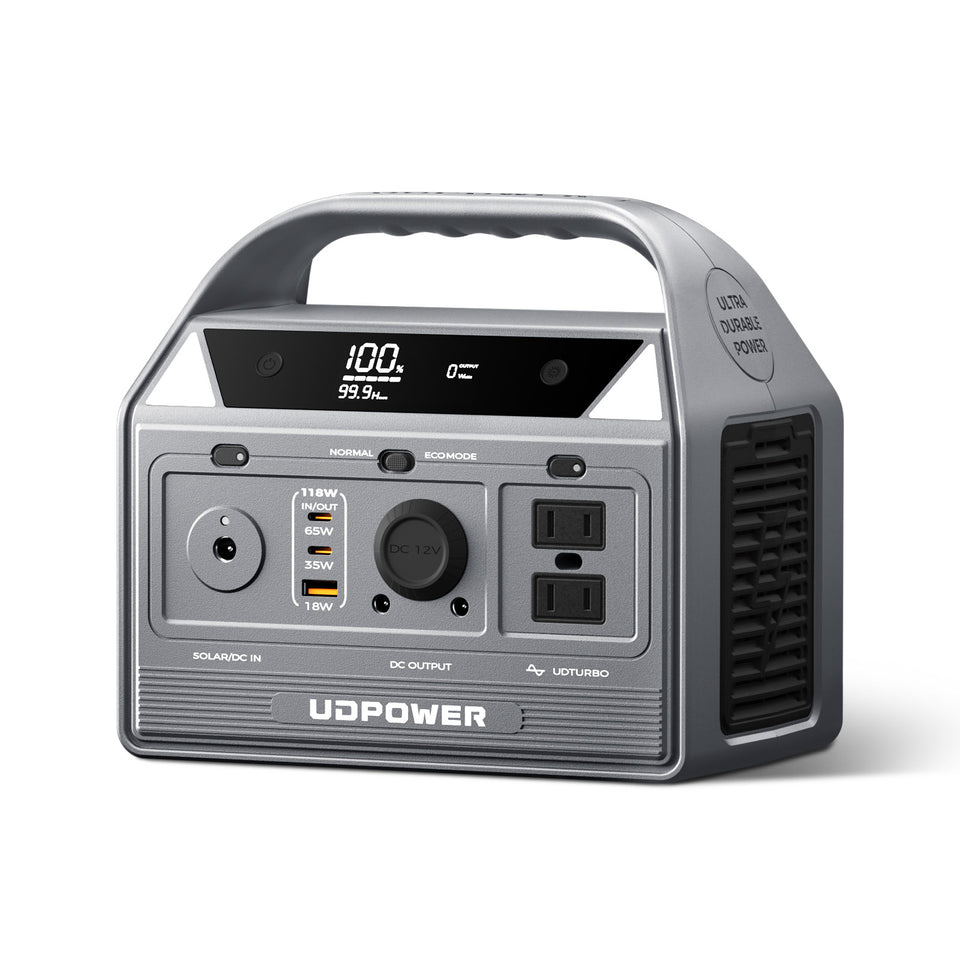
The C400 is the practical choice when portability matters more than large capacity. It uses a 256Wh LiFePO4 battery and provides 400W rated AC output.
- Capacity: 256Wh
- Rated output: 400W
- Higher-power capability: up to 800W
- Battery: LiFePO4
- Cycle life: 4,000+ cycles
- Solar input: up to 150W
- Weight: 6.88 lbs
It fits light camping, phones, cameras, laptops, LED lighting, routers and other low-to-moderate power needs.
View UDPOWER C400UDPOWER S1200
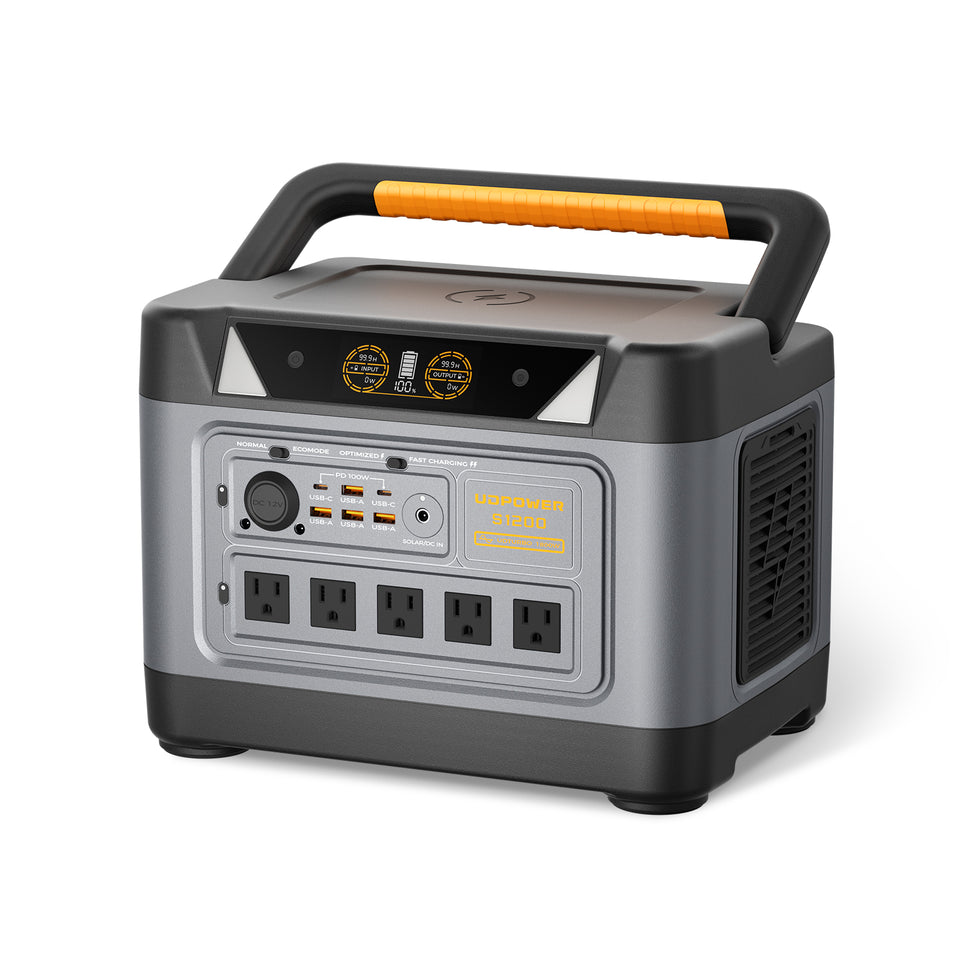
The S1200 is a stronger all-around option for users who want deep-cycle battery capacity without building a separate inverter and charging system.
- Capacity: 1,190Wh
- Rated AC output: 1,200W pure sine wave
- UDTURBO: up to 1,800W for compatible higher-power loads
- Battery: LiFePO4
- Cycle life: 4,000+ cycles
- Solar input: up to 400W
- Weight: approximately 26.0 lbs
- UPS: under 10 ms switchover
It is well suited to RV weekends, CPAP backup, Wi-Fi, laptops, fans, lights, compatible refrigeration and moderate home-outage planning.
View UDPOWER S1200UDPOWER S2400
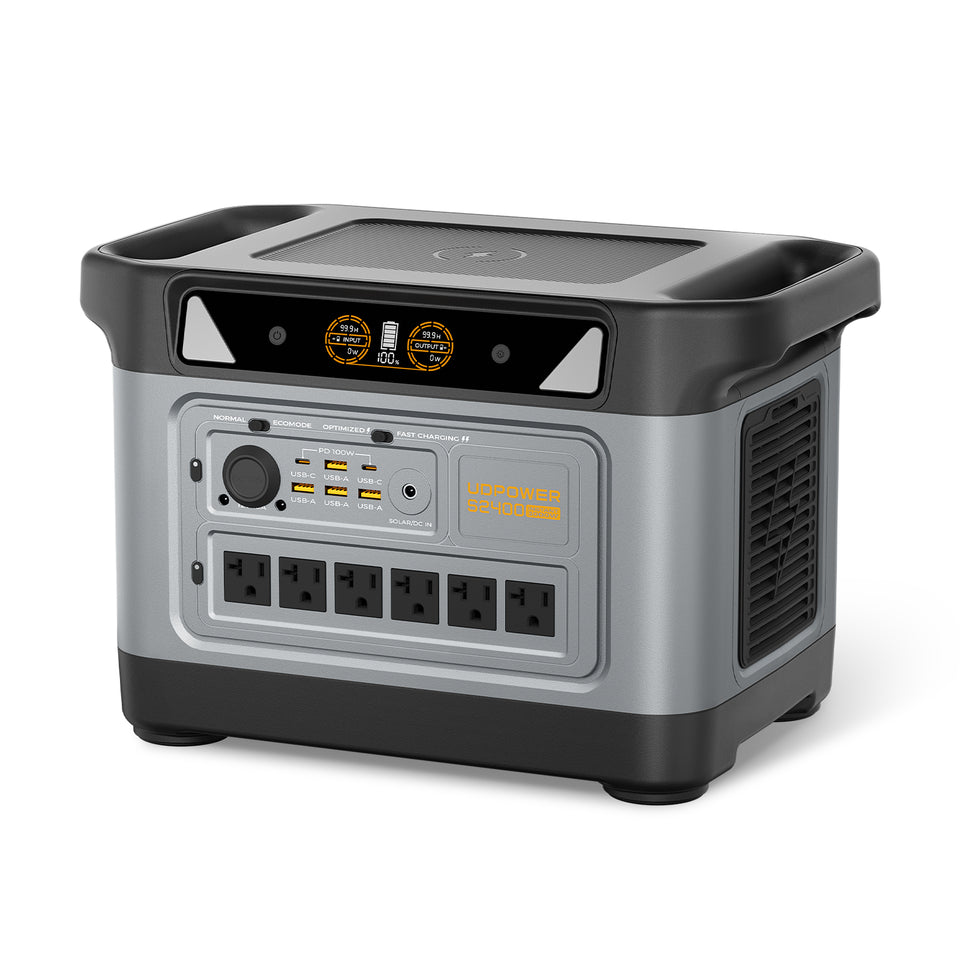
The S2400 is the better fit when longer runtime and higher AC output are priorities.
- Capacity: 2,083Wh
- Rated AC output: 2,400W pure sine wave
- Higher-power capability: up to 3,000W
- Battery: LiFePO4
- Cycle life: 4,000+ cycles
- Solar input: up to 400W
- Weight: approximately 40.8 lbs
- UPS: under 10 ms switchover
It makes more sense for refrigerators, larger RV setups, extended outages, multiple devices and users who need substantially more power headroom than a compact battery provides.
View UDPOWER S2400For a side-by-side comparison, see the UDPOWER Power Station Comparison.
Real-World Runtime Examples
For the UDPOWER examples below, AC runtime is estimated with a 90% conversion-efficiency planning factor.
Estimated AC runtime = Battery Wh × 0.90 ÷ Device watts
| Device Load | C400 256Wh | S1200 1,190Wh | S2400 2,083Wh |
|---|---|---|---|
| 10W | About 23 hours | About 107 hours | About 187 hours |
| 40W | About 5.8 hours | About 26.8 hours | About 46.9 hours |
| 65W | About 3.5 hours | About 16.5 hours | About 28.8 hours |
| 100W | About 2.3 hours | About 10.7 hours | About 18.7 hours |
| 300W | About 0.8 hour | About 3.6 hours | About 6.2 hours |
| 600W | Above normal C400 rated output | About 1.8 hours | About 3.1 hours |
| 1,000W | Not suitable | About 1.1 hours | About 1.9 hours |
These figures assume a steady AC load. Real appliances can behave very differently.
- A refrigerator turns its compressor on and off.
- A CPAP may use more power with a heated humidifier and heated hose.
- A laptop charger does not necessarily draw its maximum rating continuously.
- A motor can require extra power when starting.
- Battery temperature and state of charge affect results.
Do not calculate a refrigerator from compressor watts multiplied by 24 hours. Measure or estimate its average energy use over time. Cycling appliances are one of the biggest reasons simple runtime calculations can be misleading.
How to Charge a Deep Cycle Battery Correctly
The safest charging rule is simple: the charger must match the battery chemistry, voltage and manufacturer requirements.
| Charging Method | What You Need | Main Check |
|---|---|---|
| AC wall charger | Battery-compatible charger | Correct chemistry and charging voltage |
| Solar | Solar panels plus suitable charge controller for a bare battery | Panel voltage/current and battery charging profile |
| Vehicle alternator | Proper vehicle-to-house-battery charging system | Compatibility with alternator and battery chemistry |
| Generator | Compatible AC charging equipment | Charger input requirements and generator safety |
| Portable power station | Charging system is integrated | Use only supported AC, car and solar inputs |
Can You Connect a Solar Panel Directly to a Deep Cycle Battery?
For a conventional bare battery system, solar charging normally requires an appropriate solar charge controller between the panels and battery. The controller regulates the charging process.
With a solar-ready portable power station, the solar charging electronics are already integrated. You still need to stay within the unit's stated solar input voltage, current and wattage limits.
For ready-to-use combinations, see UDPOWER Solar Generator Kits.
Can You Use a Lead-Acid Charger on LiFePO4?
Do not assume chargers are interchangeable simply because both batteries are described as “12V.” Charging profiles differ.
Before changing battery chemistry in an RV, boat or solar bank, verify compatibility with every charging source connected to the battery.
A battery replacement can become a system change. Moving from lead-acid to LiFePO4 may affect the AC charger, converter, solar controller and vehicle charging system. Check the complete charging path rather than only the battery terminals.
Series vs. Parallel Deep Cycle Batteries
Connecting multiple batteries can increase system voltage, amp-hour capacity, or both. The two basic arrangements are series and parallel.
| Configuration | Two 12V 100Ah Batteries | Result | Nominal Energy |
|---|---|---|---|
| Series | Voltage adds, Ah stays the same | 24V 100Ah | About 2,400Wh |
| Parallel | Voltage stays the same, Ah adds | 12V 200Ah | About 2,400Wh |
Notice that both examples store approximately the same nominal energy. The system voltage and current architecture are what change.
Why Use a Higher-Voltage Battery Bank?
For the same amount of power, raising system voltage reduces current.
Current = Power ÷ Voltage
A 1,200W load would theoretically require about:
| Battery Bank Voltage | Approx. Current at 1,200W |
|---|---|
| 12V | 100A before losses |
| 24V | 50A before losses |
| 48V | 25A before losses |
That is one reason larger off-grid systems often use higher battery-bank voltages.
Do not randomly combine batteries. Series and parallel configurations must be supported by the battery manufacturer. Avoid mixing different chemistries, incompatible models, substantially different ages or different capacities unless the system is explicitly designed for it.
How Long Does a Deep Cycle Battery Last?
There is no reliable answer based on battery chemistry alone. Battery life depends on both calendar aging and how the battery is cycled.
| Factor | Why It Matters | Better Practice |
|---|---|---|
| Depth of discharge | Deeper cycling generally creates more battery stress | Follow the battery's recommended operating range |
| Temperature | High heat accelerates battery aging; cold affects performance and charging | Keep batteries within manufacturer temperature limits |
| Charge voltage | Incorrect charging can reduce life or damage the battery | Use the correct charging profile |
| Discharge rate | Very heavy loads can increase stress and heat | Size the battery bank for the expected load |
| Time spent empty | Especially problematic for some lead-acid batteries | Recharge promptly according to manufacturer guidance |
| Storage conditions | Heat and unsuitable state of charge can accelerate aging | Follow the storage instructions for the specific chemistry |
| Cell balance and BMS behavior | Important for maintaining lithium battery packs | Use a well-designed system with appropriate battery management |
What Does “4,000 Cycles” Mean?
A cycle-life figure should not be read as “the battery works perfectly for 3,999 cycles and dies on cycle 4,000.”
Cycle specifications normally refer to repeated testing until the battery reaches a defined remaining-capacity threshold under specified conditions.
Temperature, DoD, charging rate, discharge rate and test methodology can all affect the result.
Battery University also notes the broader relationship between cycle depth and lithium battery longevity. See Battery University's lithium battery life guide.
When comparing cycle claims, ask four questions: At what depth of discharge? At what temperature? At what charge/discharge rate? And what remaining capacity defines the end of the cycle-life specification?
Deep Cycle Battery Maintenance and Storage
Maintenance depends heavily on chemistry.
| Battery Type | Routine Attention | Storage Priority |
|---|---|---|
| Flooded lead-acid | Inspect electrolyte as specified, terminals and ventilation | Avoid leaving discharged; follow manufacturer storage charging schedule |
| AGM | Inspect terminals, case and charging behavior | Use appropriate charger and avoid prolonged discharged storage |
| Gel | Correct charging profile is particularly important | Follow manufacturer voltage and storage guidance |
| LiFePO4 | Low routine maintenance; monitor system and BMS behavior | Store within manufacturer temperature and state-of-charge recommendations |
Five Habits That Apply to Almost Every Battery
- Keep it within its operating temperature range.
- Use the correct charger.
- Keep terminals and connectors clean and secure.
- Do not exceed rated charge or discharge limits.
- Follow the manufacturer's long-term storage instructions.
Cold Weather Needs Special Attention With LiFePO4
LFP batteries can behave differently when charging in cold conditions. Many lithium systems use a BMS to limit or stop charging when temperature conditions are outside the permitted range.
Do not assume that because a battery can discharge in cold weather it can also be charged at the same temperature. Follow the product's charging-temperature specification.
10 Deep Cycle Battery Buying Mistakes to Avoid
1. Comparing Amp-Hours Without Voltage
A 100Ah number cannot tell you stored energy without the voltage. Compare Wh when batteries use different voltages.
2. Assuming Every Deep Cycle Battery Should Be Limited to 50% DoD
DoD guidance varies by chemistry and product. The traditional lead-acid planning rule should not automatically be applied to modern LFP systems.
3. Looking Only at Cycle Life
A large cycle number does not tell you capacity, output current, BMS quality, charging speed, temperature limits or warranty.
4. Ignoring the Charger
A battery is only one part of the system. Confirm how it will be charged before buying it.
5. Buying a Battery Before Calculating Daily Wh
Build a device energy budget first. Otherwise, you may buy too little capacity or carry far more battery than necessary.
6. Confusing Capacity With Output
Wh determines stored energy. Watts determine load capability. You need enough of both.
7. Ignoring High-Load Behavior
A large inverter load can place substantial current demand on a 12V battery bank. Make sure the battery, BMS, cables, fuses and inverter are sized for that current.
8. Assuming Any “Marine Battery” Is a True Deep Cycle Battery
Marine batteries can be starting, deep cycle or dual-purpose. Read the actual specifications.
9. Mixing Batteries Without Checking Compatibility
Combining mismatched batteries can create charging and balancing problems. Follow the battery manufacturer's series and parallel rules.
10. Forgetting Recharge Time
A huge battery is not automatically useful if your available charger or solar array cannot restore the energy you use each day.
A better way to shop: calculate daily Wh → identify your largest watt load → choose chemistry → check usable capacity → verify charging → check cycle life → check weight and warranty.
Deep Cycle Battery Buying Checklist
- What will the battery power?
- How many watt-hours do those devices use per day?
- What is the largest simultaneous load?
- Do you need DC power only, or AC power through an inverter?
- What battery voltage does the system require?
- What is the battery's usable DoD?
- What cycle-life test conditions are stated?
- What is the maximum continuous discharge current?
- What charging profile is required?
- Will you recharge from AC, alternator, solar or generator?
- Does the battery support the series or parallel configuration you need?
- What are the charging and discharging temperature limits?
- How much does the battery weigh?
- What maintenance is required?
- What warranty applies?
Related UDPOWER Guides
| Guide | Why Read It Next? |
|---|---|
| Things You Should Know About LFP Batteries | Explains LiFePO4 chemistry, charging and buying considerations in more detail. |
| Pros and Cons of LiFePO4 Batteries | Useful when deciding whether LFP is worth the higher upfront price. |
| mAh to Wh Conversion | Explains why voltage must be included when comparing battery capacity. |
| Portable Power Station Runtime Calculator | Calculate runtime using the wattage of your own appliances. |
| Portable Power Stations | Browse ready-to-use LiFePO4 battery systems with integrated AC and DC outputs. |
| Portable Power Stations for RV & Camping | Compare models around common RV and camping loads. |
| Solar Generator Kits | Pair deep-cycle LiFePO4 storage with portable solar charging. |
| UDPOWER Power Station Comparison | Compare current battery capacity, output, solar input and weight. |
Frequently Asked Questions About Deep Cycle Batteries
What is a deep cycle battery?
A deep cycle battery is a rechargeable battery designed to supply power over an extended period and tolerate repeated discharge-and-recharge cycles. It is commonly used for RV house power, trolling motors, boats, solar storage, golf carts, backup systems and portable power stations.
What is the difference between a deep cycle battery and a regular car battery?
A regular car starting battery is designed to deliver a large burst of current for a few seconds to start an engine. A deep cycle battery is designed to provide energy for much longer periods and withstand repeated deeper discharges. Using a starting battery for repeated deep cycling can shorten its life.
Is a marine battery the same as a deep cycle battery?
Not necessarily. Marine batteries can be starting batteries, dedicated deep cycle batteries or dual-purpose batteries. Check the battery's actual specifications rather than assuming that every product labeled marine is designed for repeated deep discharge.
How many watt-hours are in a 12V 100Ah battery?
A nominal 12V 100Ah battery contains about 1,200Wh because watt-hours equal volts multiplied by amp-hours. A 12.8V 100Ah LiFePO4 battery would contain about 1,280Wh nominally. Actual usable energy depends on depth of discharge, battery limits and conversion losses.
How far can you discharge a deep cycle battery?
There is no universal depth-of-discharge limit for every deep cycle battery. The recommended limit depends on chemistry, battery design and the manufacturer's cycle-life goals. Traditional lead-acid batteries often benefit from shallower cycling, while LiFePO4 products commonly allow a larger percentage of their rated capacity to be used.
Is LiFePO4 better than lead-acid for deep cycle use?
LiFePO4 is often the better choice for frequent cycling because it typically provides more usable capacity, lower weight, low maintenance and long cycle life. Lead-acid can still make sense when the lowest upfront purchase price is more important than weight, maintenance or long-term cycling performance.
How long does a deep cycle battery last?
Battery life depends on chemistry, depth of discharge, temperature, charging method, discharge rate, storage conditions and build quality. Compare cycle-life specifications together with their test conditions rather than using chemistry alone to predict lifespan.
Do deep cycle batteries need a special charger?
The charger must match the battery chemistry, voltage and charging requirements. Flooded lead-acid, AGM, gel and LiFePO4 batteries do not necessarily use the same charging profile. Always verify charger compatibility before changing battery type.
Can you charge a deep cycle battery with a solar panel?
Yes, but a conventional bare battery system normally needs an appropriate solar charge controller between the panels and battery. A solar-ready portable power station already contains its charging electronics, but the connected panels must still stay within the unit's specified solar voltage, current and wattage limits.
Can you use a car battery instead of a deep cycle battery?
A car starting battery may temporarily power equipment, but it is not designed for repeated long discharges. For appliances, RV house loads, trolling motors, solar storage or frequent backup use, choose a battery designed for deep cycling.
Can deep cycle batteries be connected in series or parallel?
Many deep cycle batteries can be connected in series or parallel when the manufacturer supports it. Series connections increase voltage while amp-hour capacity stays the same. Parallel connections keep voltage the same while increasing amp-hour capacity. Do not mix incompatible batteries or exceed the manufacturer's connection limits.
Is a portable power station a deep cycle battery?
A portable power station contains a rechargeable battery designed for repeated cycling, but it is more than a bare deep cycle battery. It also integrates a battery management system, inverter, charging electronics, AC outlets, USB ports, DC outputs and a display.
What size deep cycle battery do I need for an RV?
Size an RV battery from the appliances you actually use. Multiply each device's watts by its daily hours of operation, add the watt-hours together, account for usable battery capacity and conversion losses, then confirm that the system can handle your largest simultaneous wattage load.
What size deep cycle battery do I need for a refrigerator?
It depends on the refrigerator's average energy consumption, compressor cycling, room temperature, desired backup duration and startup requirements. For portable backup, a 1,000Wh to 2,000Wh-class system is a practical range to evaluate for many refrigerators, but actual sizing should use the refrigerator's measured energy consumption.
What is the best UDPOWER option for deep-cycle backup power?
The C400 is best when portability and light loads are the priority. The S1200 provides 1,190Wh capacity and 1,200W rated output for balanced RV, camping and home-essential backup. The S2400 provides 2,083Wh capacity and 2,400W rated output for longer runtime and larger compatible loads. All three currently use LiFePO4 batteries rated for 4,000+ cycles.
Sources and Further Reading
| Source | Used For |
|---|---|
| Interstate Batteries | Deep cycle battery definition, cycling, Ah and lead-acid battery basics |
| Interstate Deep-Cycle Marine Battery Comparison | Current comparison of flooded, AGM and LiFePO4 usable capacity and cycling characteristics |
| Discover Boating | Starting, deep cycle and dual-purpose battery distinctions |
| Discover Boating Trolling Motor Guide | Marine deep-cycle battery and trolling-motor planning |
| Renogy Deep Cycle Solar Battery Guide | Flooded, sealed lead-acid, LiFePO4 and solar-storage considerations |
| Battery University | Depth of cycling and lithium battery longevity |
| UDPOWER C400 Product Page | Current C400 capacity, output, cycle life, weight, solar input and official product image |
| UDPOWER S1200 Product Page | Current S1200 capacity, output, cycle life, solar input, UPS and official product image |
| UDPOWER S2400 Product Page | Current S2400 capacity, output, cycle life, solar input, UPS and official product image |
| UDPOWER Power Station Comparison | Current model specifications and product positioning |
Choose Battery Capacity Around What You Actually Need to Run
Start with daily watt-hours, check your largest appliance load, then choose enough battery capacity and output for the way you actually use power. If you do not want to build a separate battery, inverter and charger system, a ready-to-use LiFePO4 power station is the simpler option.
Compare UDPOWER Power Stations View Portable Power Stations View Solar Generator Kits Calculate Your RuntimeRelated Articles


